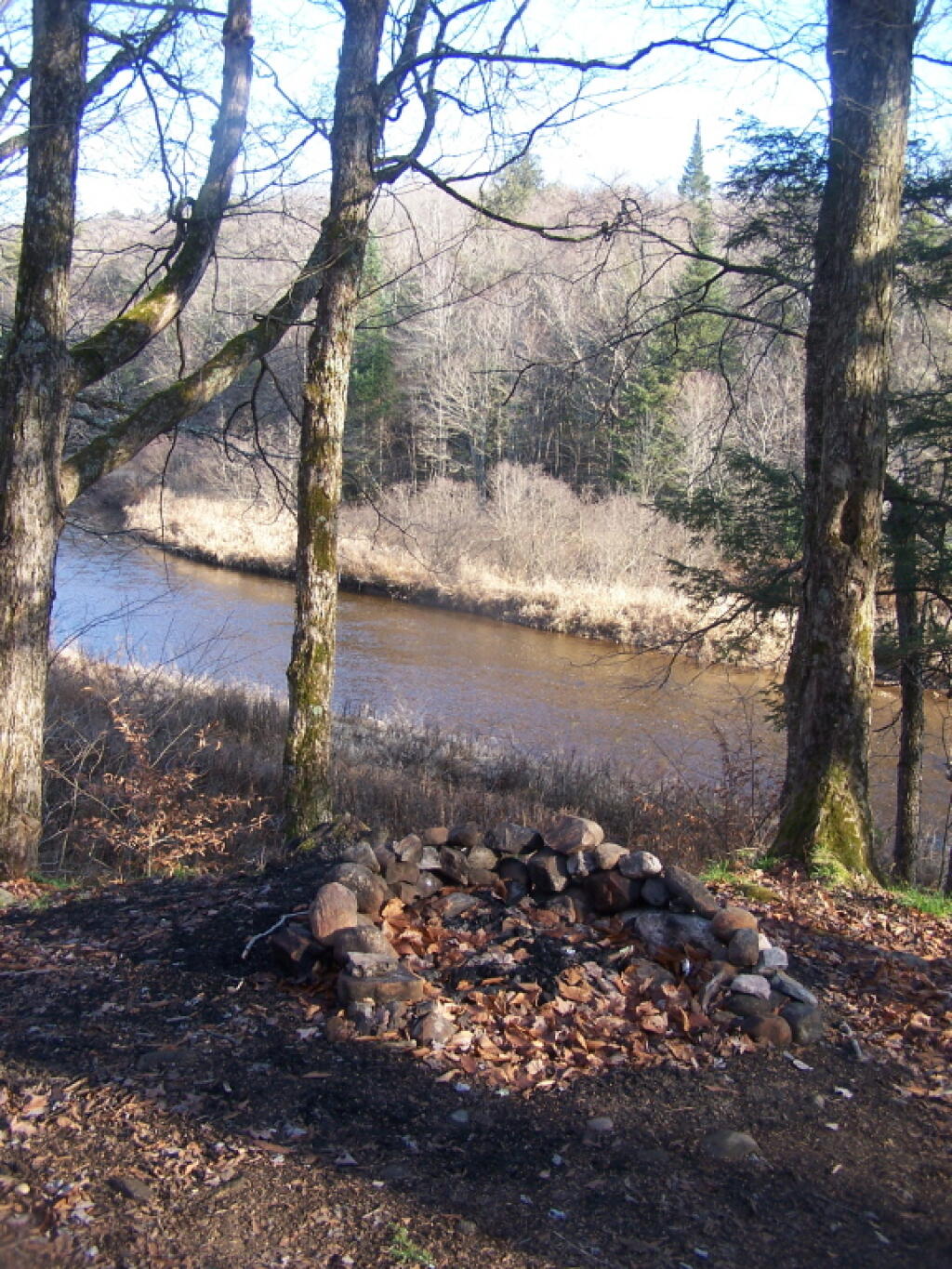
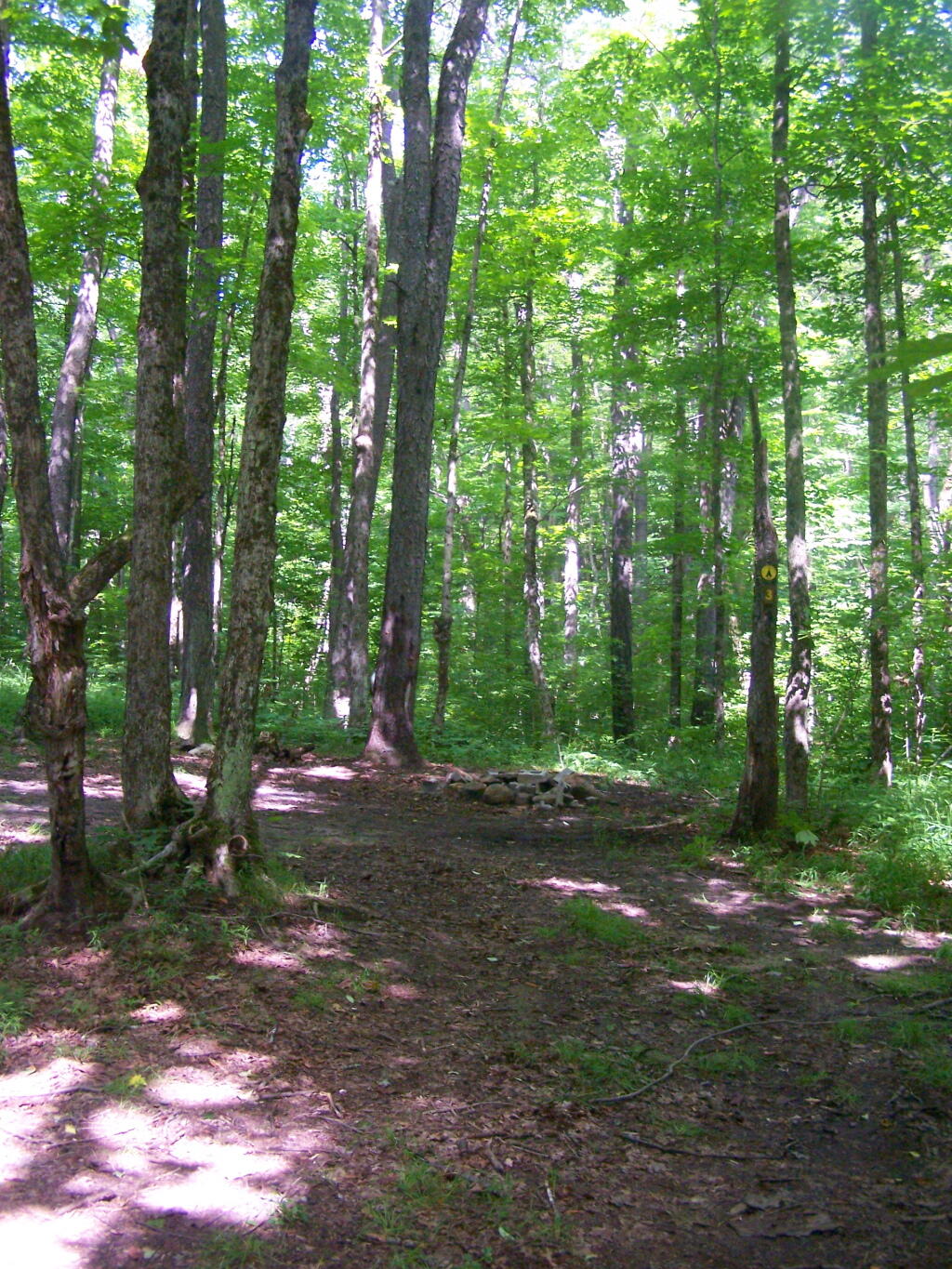
25. Primitive Tent Site–a designated tent site of an undeveloped character providing space for not more than three tents, which may have an associated pit privy and fire ring, designed to accommodate a maximum of eight people on a temporary or transient basis, and located so as to accommodate the need for shelter in a manner least intrusive on the surrounding environment. (page)
The Adirondack State Land Master Plan uses the definition of a “primitive tent site” in a wilderness area to explain campsites in wild forest.
1. All structures and improvements permitted under the guidelines covering wilderness areas will be allowed in wild forest areas. […]
Here is the wilderness “primitive tent site” regulations per the APSLMP:
1. The structures and improvements listed below will be considered as conforming to wilderness standards and their maintenance,rehabilitation and construction permitted:
— primitive tent sites below 3,500feet in elevation that are out of sight andsound and generally one-quarter mile from any other primitive tent site or lean-to:
(i) where physical and biological conditions are favorable, individual unit management plans may permit th establishment, on a site-specific basis, of primitive tent sites between 3,500 and 4,000feet in elevation, and,
(ii) where severe terrain constraints prevent the attainment of the guideline for a separation distance of generally one-quarter mile between primitive tent sites, individual unit management plans may provide, on a site-specific basis, for lesser separation distances, provided such sites remain out of sight and sound from each other, be consistent with the carrying capacity of the affected area and are generally not less than500 feet from any other primitive tent site;
Also, in wild forest, so-called groups of primitive campsites are allowed:
Small groupings of primitive tent sites designed to accommodate a maximum of 20people per grouping under group camping conditions may be provided at carefully selected locations in wild forest areas, even though each individual site may be within sight or sound and less than approximately one-quarter mile from any other site within such grouping, subject to the following criteria:
— such groupings will only be established or maintained on a site specific basis in conformity with a duly adopted unit management plan for the wild forest area in question;
— such groupings will be widely dispersed (generally a mile apart) and located in a manner that will blend with the surrounding environment and have a minimum impact on the wild forestcharacter and natural resource quality of thearea;
— all new, reconstructed or relocated tent sites in such groupings will beset back a minimum of 100 feet from themean high water mark of lakes, ponds,rivers and major streams and will be located so as to be reasonably screened from the water body to avoid intruding on the natural character of the shoreline and the public enjoyment and use thereof.
Despite threats from PROTECT! and Residents Committee to Protect the Adirondacks, the Adirondack State Land Master Plan has never been litigated in court, so there is no legal interpretations of the ASLMP outside what has been decided by the DEC and Adirondack Park Agency.
Many different wild forests have taken that definition to different meanings…
Generally Open to All Campers…
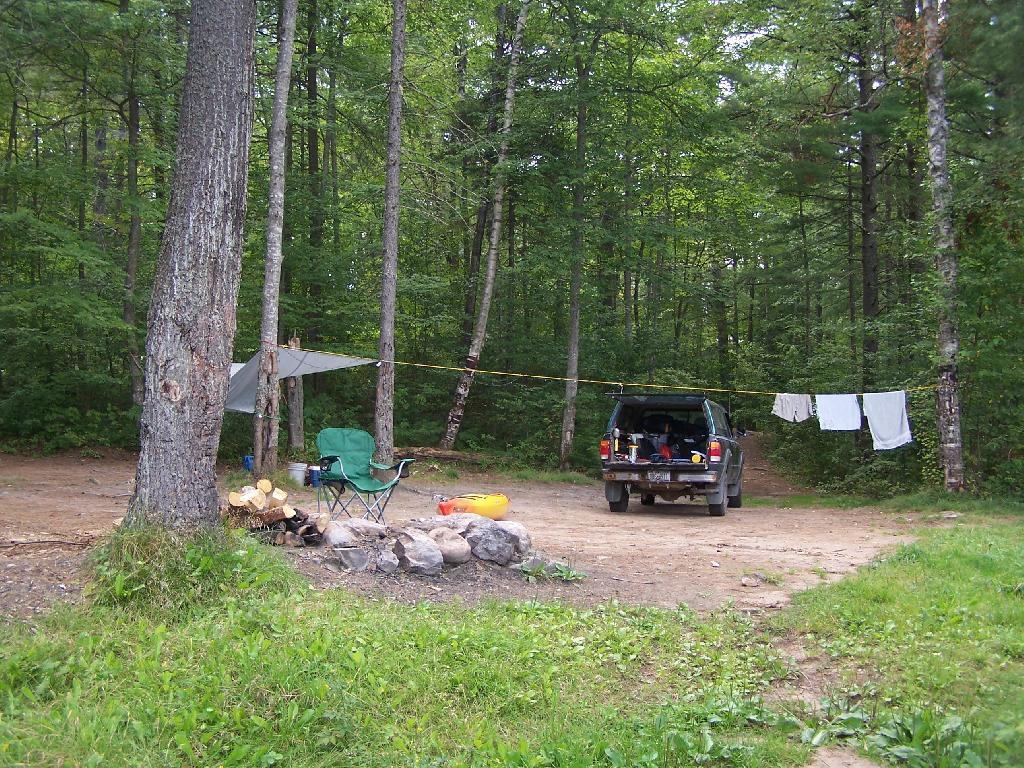
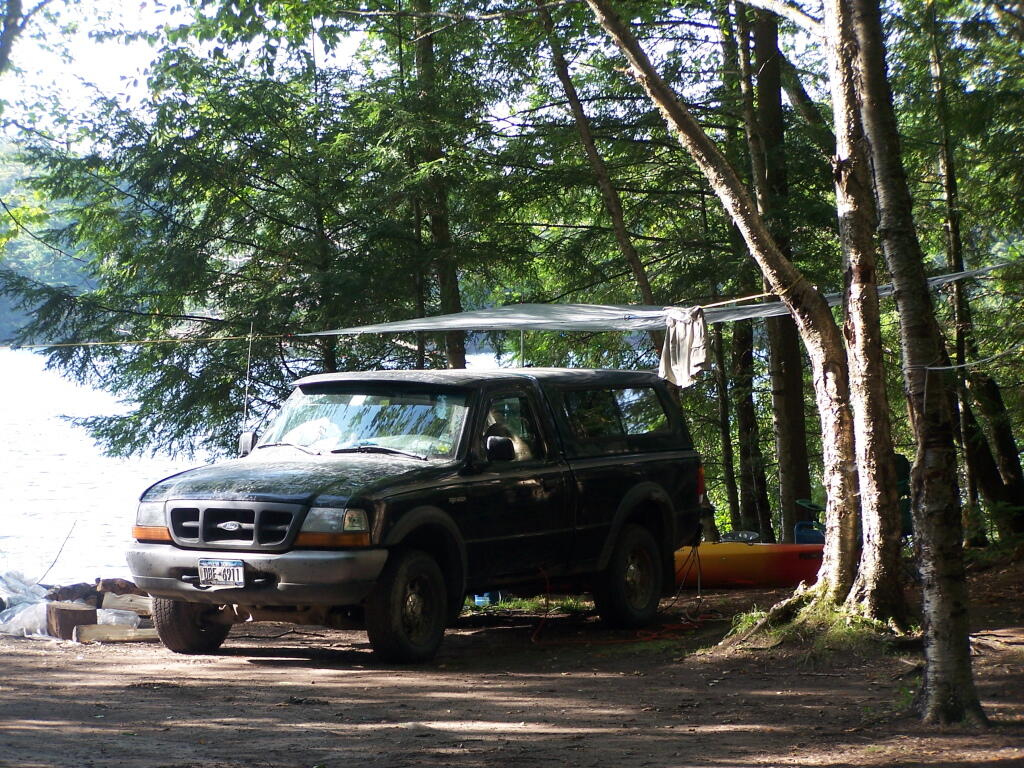
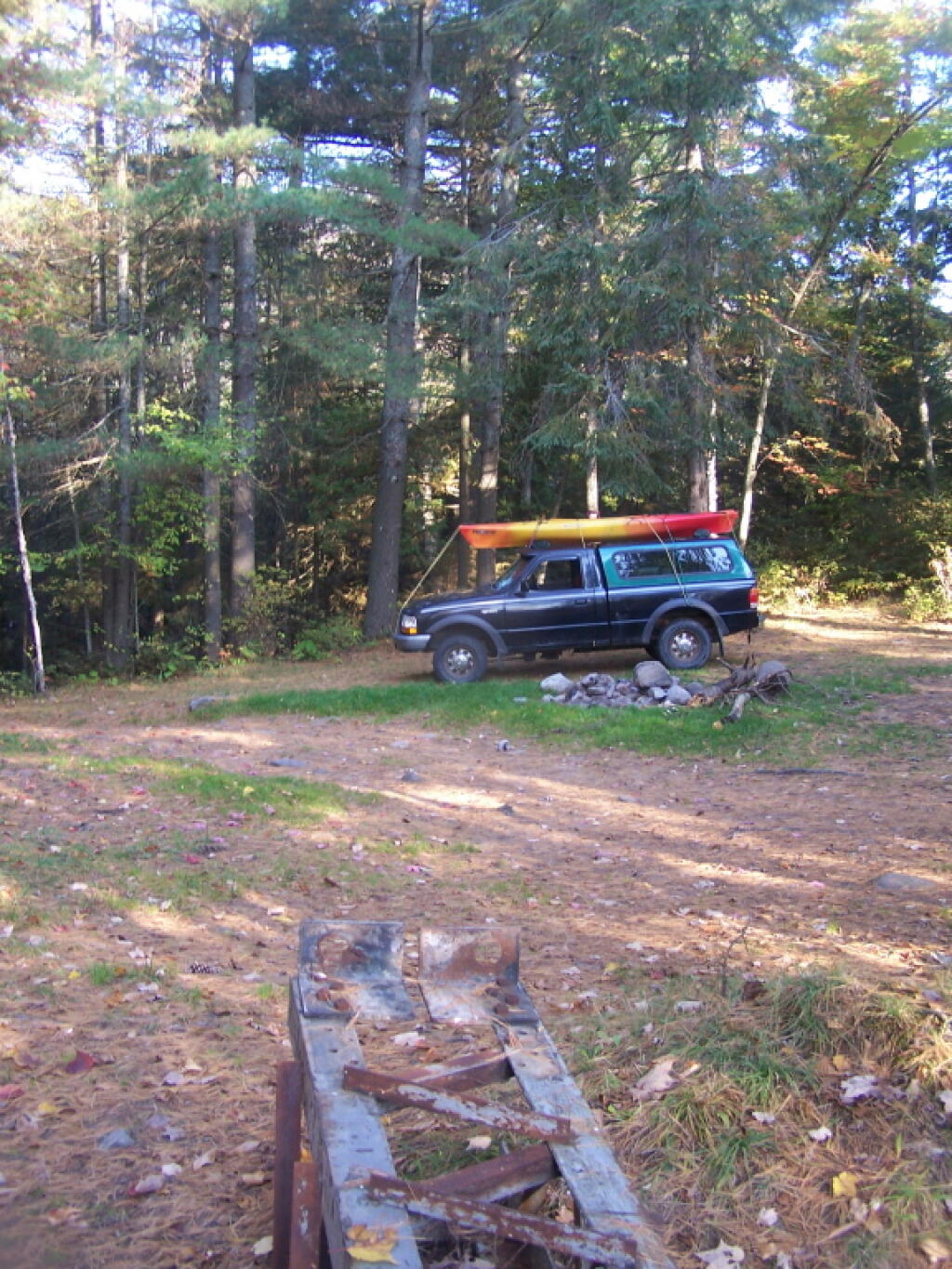
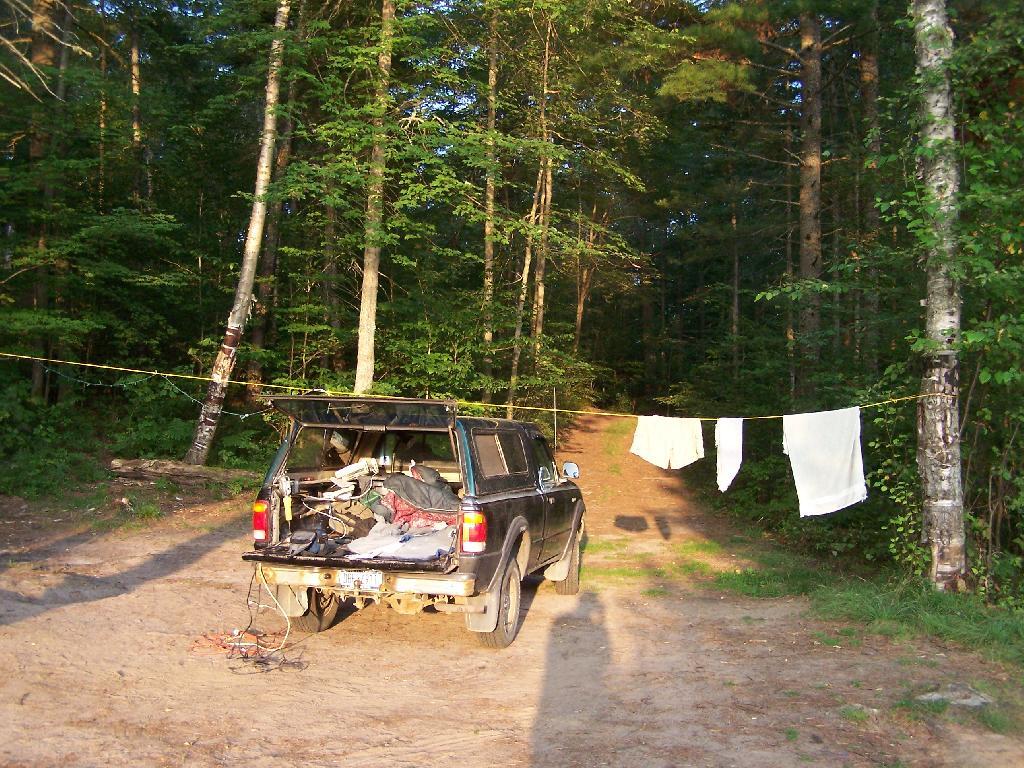
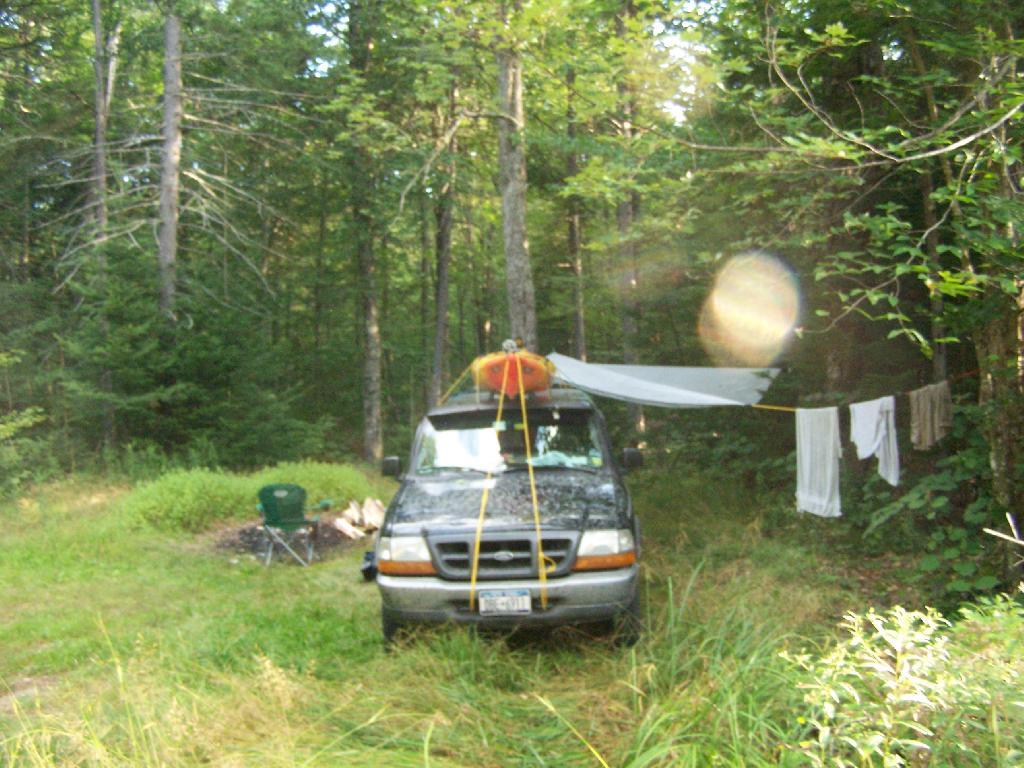
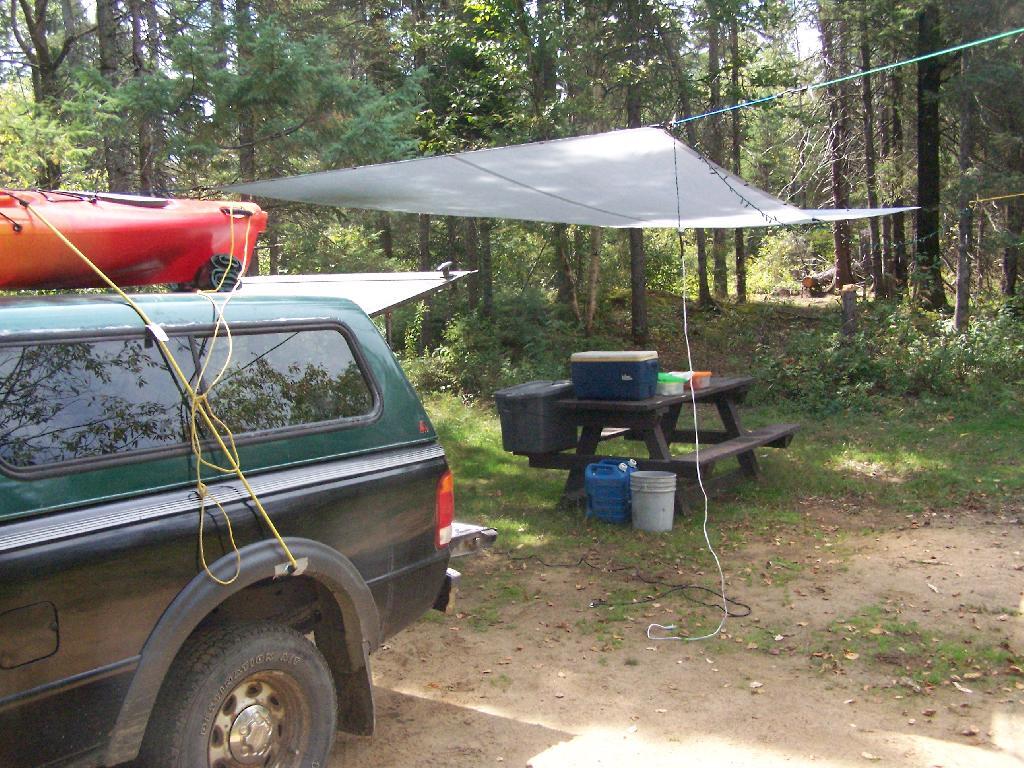
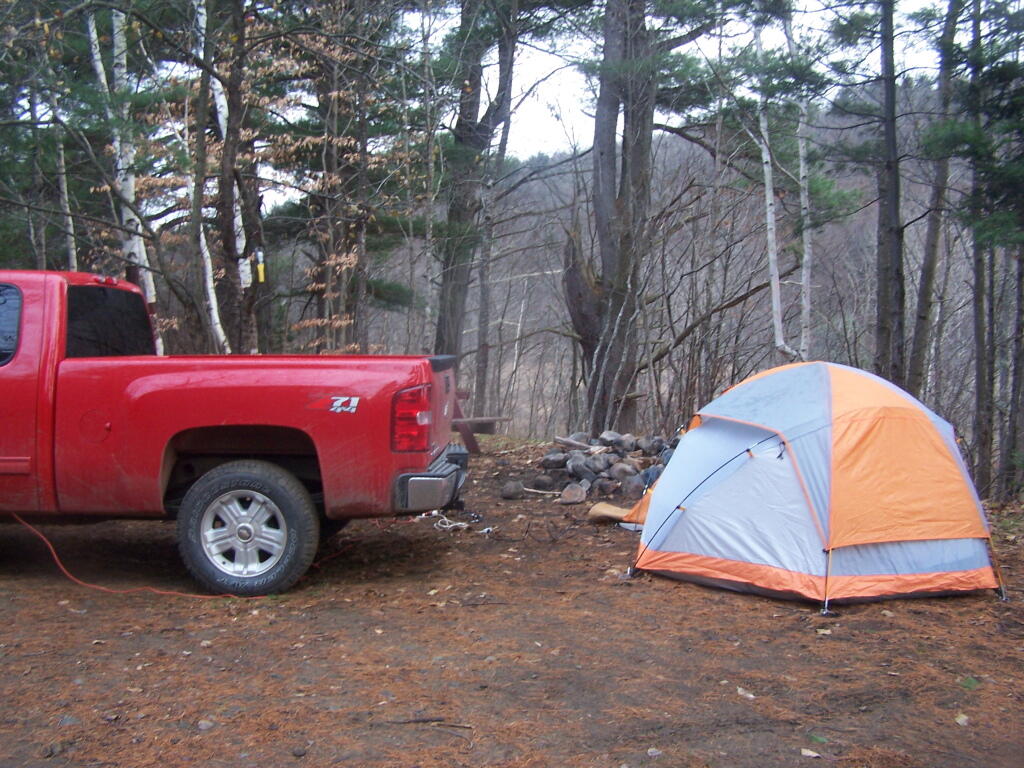
At Ferris Lake Wild Forest, particularly on Piseco-Powley Road, it has been taken to mean roadside campsites, where vehicles can access, and people are free to bring in a pickup camper or recreational vehicle if they so choose. Indeed, the draft UMP and the Adirondack State Land Master Plan both mention roadside camping. The Ferris Lake UMP goes as far as to describe various sites, and how big of a vehicle can fit in individual campsites. The sites have fire rings and outhouses, which is consistent with that definition. A minority of sites also have picnic tables.
This is common in most wild forests with roadside campsites, including Black River Wild Forest (North Lake, Woodhull Lake), Debar Mountain (Mountain Pond, Jones Pond, etc.), Ferris Lake Wild Forest (Powley Road, G-Lake Road, Edick Road, Mountain Road, etc.), Moose River Plains, and Vanderwhacker Wild Forest (Moose Club Way, Northwoods Club Road, NY 28N, Cheney Pond, Blue Ridge Road), Wilcox Lake Wild Forest (NY 8, Pumpkin Hollow, Hope Falls, etc.).
Tent Site Use Only…
On the polar opposite would be Lake George Wild Forest, particularly along Darcy Clearing Road and Hogstown Road, where all of the campsites have been relocated and blocked off to prevent any vehicle use or non-tent use. The argument here is that primitive tent site must be taken literally in the dictionary sense, and that any use of vehicles, such as truck campers or recreational vehicles are inconsistent with the Adirondack Park State Land Master Plan.
Similar policies on restricting use of motor vehicles in roadside campsites exist in a minority of other wild forest campsites (like the lower portion of Harrietstown Road and Garnet Lake in Wilcox Lake Wild Forest), however the majority of forests allow some roadside campsites, with vehicle access.
History Looms Large.
But let’s be honest, most wild forests allow unrestricted roadside campsites for a variety of vehicles, including pickup campers and recreational facilities. This has been going on for over 100 years, basically as long as their has been motor vehicles in the Adirondacks, and certainly as long as recreational vehicles and truck campers have existed. Most public lands, outside of NY State also do not have much in restrictions on roadside camping.
It’s tough to take away from people what they are already granted, and enjoy, especially if the rational is limited. People enjoy roadside camping in a variety of vehicles, and in many locations. For many people, they have been coming to the backcountry for decades, parking their truck or RV, and enjoying all of the solitude and pleasure that roadside camping.
When I go camping, I rarely stay at a campsite more then 2 or 3 nights. After a while, staying at a single campsite tends to become boring, and uninteresting, after you’ve explored all of the land around the campsite. Camping should be a break from the routine, not a repetition of the same experience over and over again.
You need a camping permit if you plan to stay at the same site more then 3 nights in a row in NY State. Which is fine, especially because I never really reach that level. I am always traveling and going to new places, because frankly staying in the same campsite more then a couple of nights is real boring.
I would much rather travel and go place to place, rather then spend all night in same old campsite, night after night. New vistas and new experiences are more important, then the temporary inconvience of breaking camp, the reassembling camp, in the next state forest or wild forest I am camping in.
Maybe I’m just young and like to ramble. But I also get tired of same repetition, and are always seeking new vistas and places to explore, and not the same old boring experience.
The two longest back country roads in Adirondacks — Cedar River-Limekiln Lake Road and Piseco-Powley Road — are generally closed during mud season. Other dirt roads like Moose Club Way tend to be muddy, and their is a risk you’ll get stuck back there.
It’s always a good idea to bring extra weight in your truck bed, a come-a-long or whinch, and snow shovel. You might not be far from a blacktop road at these campsites, but that is no guarantee you won’t get stuck.
1) NY Route 8 / East Branch of Sacandaga River
The campsites are all off NY 8, an all season plowed and maintained asphalt road. Some sites are reinforced with gravel. Be aware some sites may be plowed full of snow from the winter clearing of NY 8. Roughly 15 campsites along this road, however some may be too muddy for this time of year.
2) South of Arietta Town Line on Piseco-Powley Road
There are 7 campsites along Piseco-Powley Road, north of Stratford, prior to the Arietta Town Line gate, which is near the Potholers on East Canada Creek. This road is well packed dirt, reinforced with gravel up to gate, and should be accessiable year round, minus the snow.
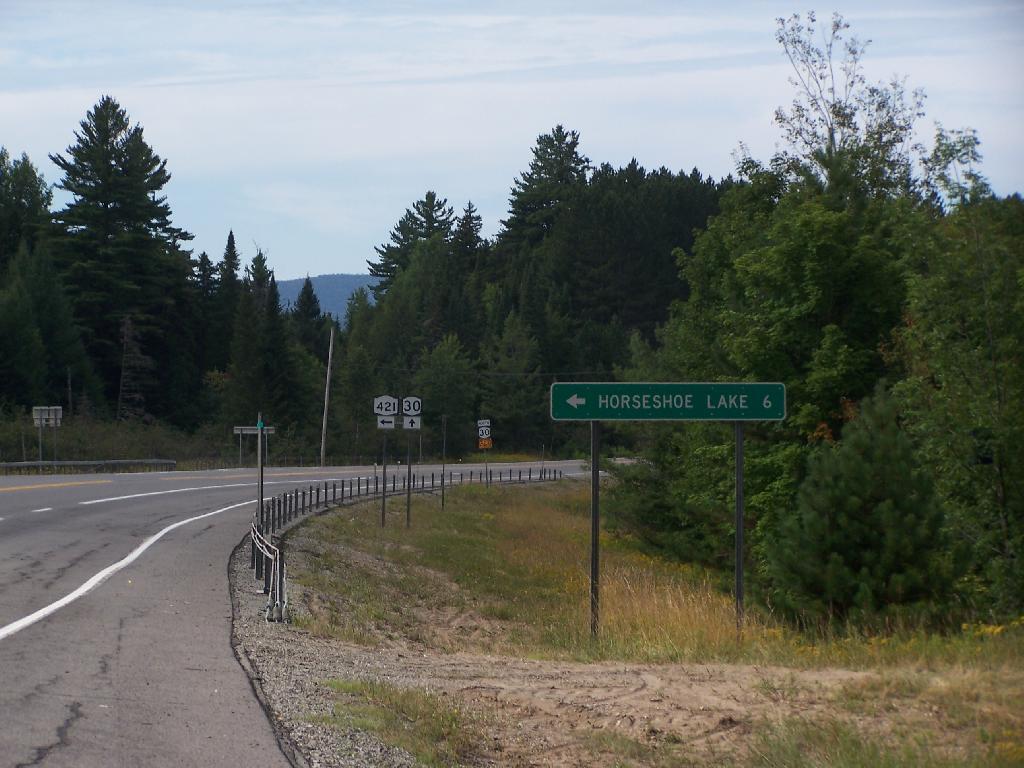
3) NY 421 at Horseshoe Lake
NY 421 is an asphalt road, and there are 4 campsites prior to the gates for Horseshoe Lake Road and Lows Lower Dam Road. These gates will be closed, but the sites along NY 421 before the asphalt runs out should be good as long the snow is off of NY 421..
4) Mountain Pond
Mountain Pond Campsites are on an old routing of NY 30. While now unplowed in the winter, the road is mostly hard asphalt, asphalt chips, and gravel. Many of the campsites are reinforced with gravel, but be careful with some of the sites.
5) First Campsite on Wolf Lake Road.
There is a campsite on Wolf Lake Road, right before the parking area and winter road gate for Wolf Lake Road Extension. This campsite is grass, however if it’s relatively dry, snow and mud free, this is possiblity.
6) Reeds Pond Campsite.
Before the black top runs out, there is a campsite along Reeds Pond, which is nice for it’s solitude, but nearness to a dirt road. The campsite may be muddy, depending on the conditions.
Horsehoe Lake has several campsites along, as does the dirt road beyond it for a ways.
The best roadside campsites go fast on the lake, but you can always camp on the less desirable campsites, then check out Bog River Flow, and tent camp up there.
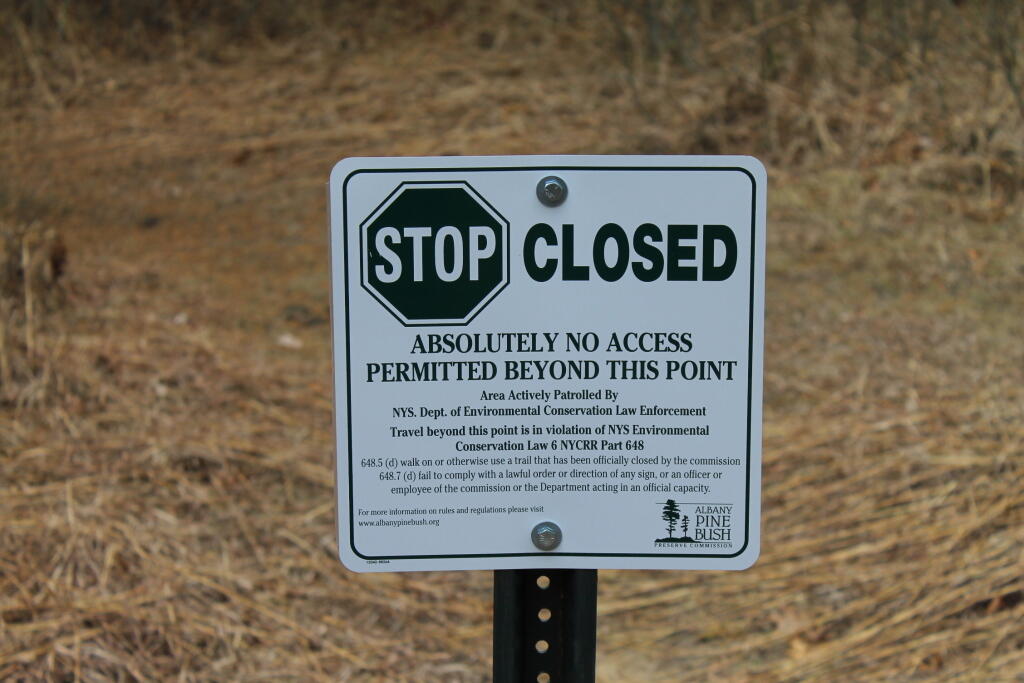
I have a Love-Hate Relationship with the Albany Pine Bush. It is an …
urban unique
wildlife preserve
The Albany Pine Bush’s strengths are are ..
It is conviently located near the city of Albany, you can take either take a bus and walk to get there, or drive a short distance from the city
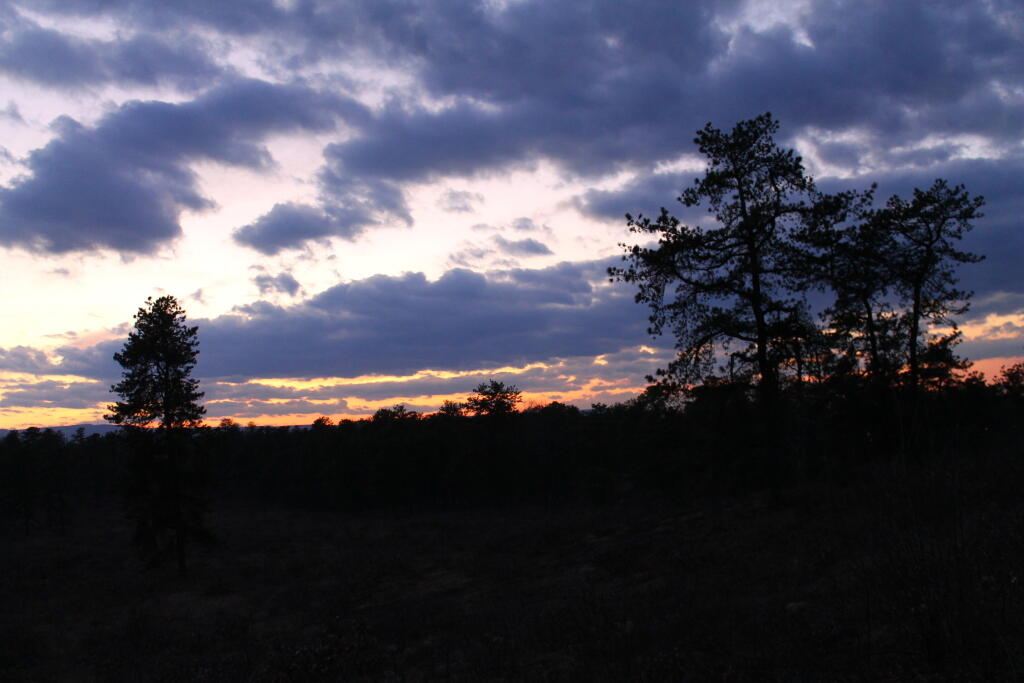
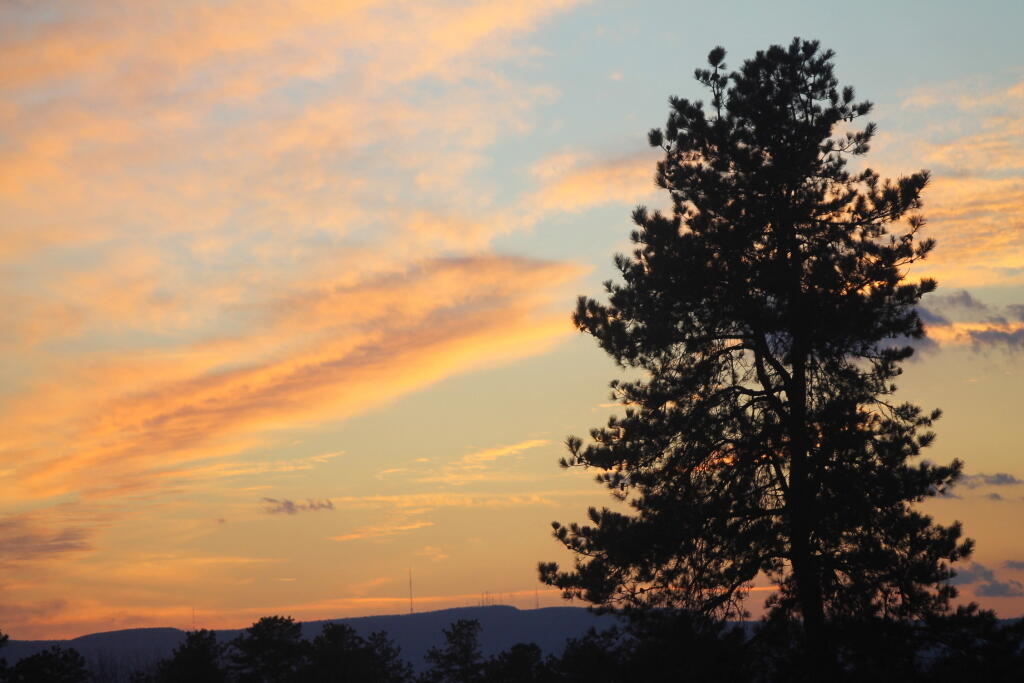
It is a fascinating Pine Bush/sand-dune ecosystem, with fantastic views of the Heldebergs and Catskills and wildlife close to the city.
At the same time those strengths are it’s greatest weakness …
In many ways the preserve is over-regulated and over-governed by the overbearing Albany Pine Bush Commission
The Madison Avenue and Karner East Barriens are overused, dominated by joggers and those walking dogs
There are too many restrictions on hunting, camping, and even hiking and nature observation — such as a ban on traveling off of trails except in the taking of wildlife.
The Adirondack Forest Preserve model might not work in Albany Pine Bush Preserve, but a hybrid model could work. The Commission should try to work more with the public’s desires and demands, and have friendly processes and policies that show that they are there to work with the public rather then restrict access.
Urban preserves are a tricky balancing act. It means easy access to yahoos and those who don’t know basic respect. There are far greater human demands compared to relatively unknown state forests, far off the beaten track.
There are Three Classes of Protected State Public Lands in the New York State Consitution:
Forest Preserve – Consitutionally Protected with No Land Bank
State Forests and Wildlife Management Areas – Consitutionally Protected with Land Bank
State Nature and Historic Preserve – No Consitutional Protection – Can Be Alienated By Legislature
State Forest Preserve.
The State Forest Preserve, inside of Catskill and Adirondack Parks is defined in Article XIV Section 1:
Article XIV Section 3
The lands of the state, now owned or hereafter acquired, constituting the forest preserve as now fixed by law, shall be forever kept as wild forest lands. They shall not be leased, sold or exchanged, or be taken by any corporation, public or private, nor shall the timber thereon be sold, removed or destroyed.
[exceptions not included]
This is the strictest classification of public land. No land swaps or non-forest preserve uses are permitted. Trees may not be logged except incidentially as part of maintence of these wild forest lands. This language is often seen as unflexible, and has required 10 admendments to the state consitution in the past 100 years, as no land bank is provided for in consitution.
Article XVI Section 1 Exception 3, passed in 1957, does provide for a limited “Land Bank” allowing for realignment of a limited number of miles of state highways for safety purposes, however it is very limited compared to compared the generous land bank previsions Article XIV Section 3 (State Forests).
… nor from relocating, reconstructing and maintaining a total of not more than fifty miles of existing state highways for the purpose of eliminating the hazards of dangerous curves and grades, provided a total of no more than four hundred acres of forest preserve land shall be used for such purpose and that no single relocated portion of any highway shall exceed one mile in length.
.
A lack of a land bank means even for minor non-forest preserve uses of current forest preserve lands, a consitutional admendment must be passed. This means a consitutional admendment must be drafted, passed by two successive legislatures (such as the 2011-2012 and 2013-2014 sessions) and signed into law twice, then approved by a majority of the state’s voters in a general election.A powerline cutting off 1/3rd of an acre of forest preserve, would require this expensive and lengthy procedure.
Wildlife Management Areas and State Reforestation Areas.
More flexible is the concept of Wildlife Management Areas (popularly known as “Public Hunting Grounds”), and State Reforestation Areas (popularly known as “State Forests”), as defined in Article XIV Section 3. These were added in the current form to the state consitution under the State Consitutional Convention of 1933.
Article XIV Section 3
1. Forest and wild life conservation are hereby declared to be policies of the state. For the purpose of carrying out such policies the legislature may appropriate moneys for the acquisition by the state of land, outside of the Adirondack and Catskill parks as now fixed by law, for the practice of forest or wild life conservation.
The prohibitions of section 1 of this article shall not apply to any lands heretofore or hereafter acquired or dedicated for such purposes within the forest preserve counties but outside of the Adirondack and Catskill parks as now fixed by law, except that such lands shall not be leased, sold or exchanged, or be taken by any corporation, public or private.
2. As to any other lands of the state, now owned or hereafter acquired, constituting the forest preserve referred to in section one of this article, but outside of the Adirondack and Catskill parks as now fixed by law, and consisting in any case of not more than one hundred contiguous acres entirely separated from any other portion of the forest preserve, the legislature may by appropriate legislation, notwithstanding the provisions of section one of this article, authorize:
(a) the dedication thereof for the practice of forest or wild life conservation; or
(b) the use thereof for public recreational or other state purposes or the sale, exchange or other disposition thereof; provided, however, that all moneys derived from the sale or other disposition of any of such lands shall be paid into a special fund of the treasury and be expended only for the acquisition of additional lands for such forest preserve within either such Adirondack or Catskill park.
All State Forests and Wildlife Management Areas are Consitutionally Protected but with a state-use land bank. Small portions of State Forests and Wildlife Management Areas (under 100 acres) may be traded for other areas of the land nearby. Alternatively, small areas of land may be sold for purchase of new Forest Preserve within the Adirondack or Catskill Parks. This allows the state the flexibility to re-route highways and build other needed state facilities, as long as the amount of public land is not reduced. The Consitution has never been admended for State Forests or Wildlife Management Areas.
While one could argue that the Adirondack and Catskill Forest Preserve should include similiar flexibility, not including a land bank for Forest Preserve means that large parcels are ensured never to be subdivided by roads, power lines, or other troublesome breaks of wilderness.
The important thing to note is that State Forests and Wildlife Management Areas can not be alienated in whole without a Consitutional Admendment. There will never be a net decrease in State Forest and Wildlife Management lands outside of the Forest Preserve, even if boundaries may change slightly due to public needs. To change State Forest and Wildlife Management Area boundaries, such as for re-routing of a state highway or constructing of a state facility, a bill of alienation with a home rule message must pass to successive legislatures, however no consitutional admendment is required as long as the bill of alienation involves less then 100 acres.
State Nature and Historic Preserve.
The State Nature and Historic Preserve came out of the New York State Consitutional Convention of 1967. It was approved by the People of New York State in the General Election of November 1969. It finally gave public parks limited consitutional protection, at least those parks maintained by the State of New York, and officially designated as “State Nature and Historic Preserve”.
Article XIV Section 4 (relevant sections)
… The legislature shall further provide for the acquisition of lands and waters, including improvements thereon and any interest therein, outside the forest preserve counties, and the dedication of properties so acquired or now owned, which because of their natural beauty, wilderness character, or geological, ecological or historical significance, shall be preserved and administered for the use and enjoyment of the people.
Properties so dedicated shall constitute the state nature and historical preserve and they shall not be taken or otherwise disposed of except by law enacted by two successive regular sessions of the legislature.
The State Nature and Historic Preserve was a good concept. Yet, before passage, it was well established in Case and Statutory Law under the Alienation Doctrine and clarified through 50 years of case law, most notably Williams v. Gallatin (229 N.Y. 248, 253). It didn’t make any real changes to the policy of state, and left land vunerable to alienation by two sucessive the state legislatures. Traditionally the State legislature has been resistant to abuse the Alienation Power, usually deferring to the opinion of local environmental groups, and acting consitent to statutory law. Most alienations exist as a land swaps and generally involve a de minis amount of land. Yet, that is no guarantee for the future.
Strengthen the State Nature and Historic Preserve.
The State Nature and Historic Preserve should be strenghtened to have the consitutional protections afforded to State Forests and Wildlife Mangement Areas. There should be a consitutional bar for all large alienations, e.g. those larger then 100 acres. Large scale alienations of all public lands should require a consitituional admendment, not just those designated Forest Preserve, State Forest, or Wildlife Management Area.
Moreover, the DEC and the Office of Parks and Historic Preserve, should be compelled to add all lands it owns and maintains to the State Nature and Historic Preserve. Right now, it is not viewed as priority for most state agencies, as the State Nature and Historic Preserve offers no additional protections over the traditional parks.

![Untitled [Expires August 14 2024]](https://andyarthur.org//data/photo_012117_large.jpg)