Urban freeways are so destructive when you look at their impacts to cities. But what are the alternatives in the automobile-era? For the movement of inter-city traffic, especially, there isn't really any other good alternative.
The only large state in the Continental United States without a 70 MPH speed limit on Expressways is now New York and Wisconsin. Wisconsin is expected to raise it's limit.
Recently, Pennsylvania started to allow the speed limit to be increased to 70 MPH on certain expressways with the passage of a new law. That leaves only a handful of states with a maximum speed limit of 65 MPH, mostly smaller New England States, along with Wisconsin. There is an active debate in that state to raise their limit. Oregon and Pennsylvania have no roads yet posted for 70 MPH, but both states have laws specifically allowing for speed limits to be posted up to 70 MPH.
Almost all of the western states have a maximum speed limit of 75 MPH or even 80 MPH in some cases. They tend to be spread out with wide lanes, few curves, and long viability. There is a strong case of having a faster speed limit out there, especially in light of newer cars having low gear ratios in top speeds, so they don’t burn quite as much fuel at those higher speeds.
There would likely be considerable controversy from the insurance lobby in New York, who pay more in high-speed loss claims. Truckers might also be oppose, as they would burn more fuel at higher speeds. The downstate dominated legislature (almost 70% of New Yorkers live in NYC Metropolitan counties), might not care much about speed limits on Upstate expressways.
But it’s unclear how long the opposition can hold out against higher speed limits, when every other state is adopting them. Most people already drive 70 MPH, and this law would only make enforcement fairer.
Most times when you look at maps, they contain a lot more information then just roads. Most maps have parks, water bodies, road names and numbers. Lots of data to make the map useful. Yet, that distracts from the main purpose of roads — a circulatory system for the state’s commerce, to allow goods and people to move freely across the state.
As you will see, Highway Systems could almost be maps of human veins and arteries. Terrain plays a role in highway systems, though modern highways can blast their way through almost any barrier, climb any hill, cross any water body, to be fully connected. Highways go where people have historically chosen to engage in commerce.
Expressways, Primary Arteries.
These are the most traveled and most important arteries of NY State, that allow commerce to flow across state. Not too surprising, but shows how cities across our state are connected.
Various NY State Cities.
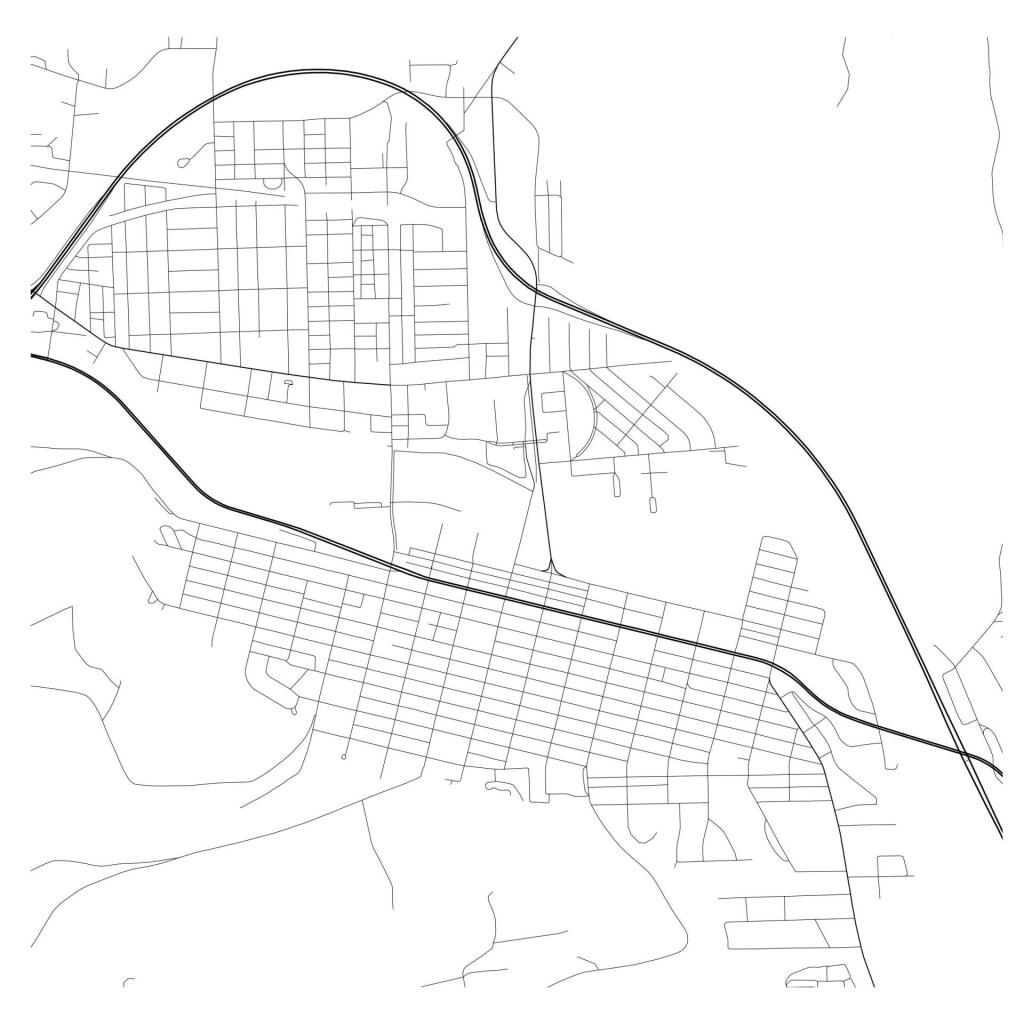
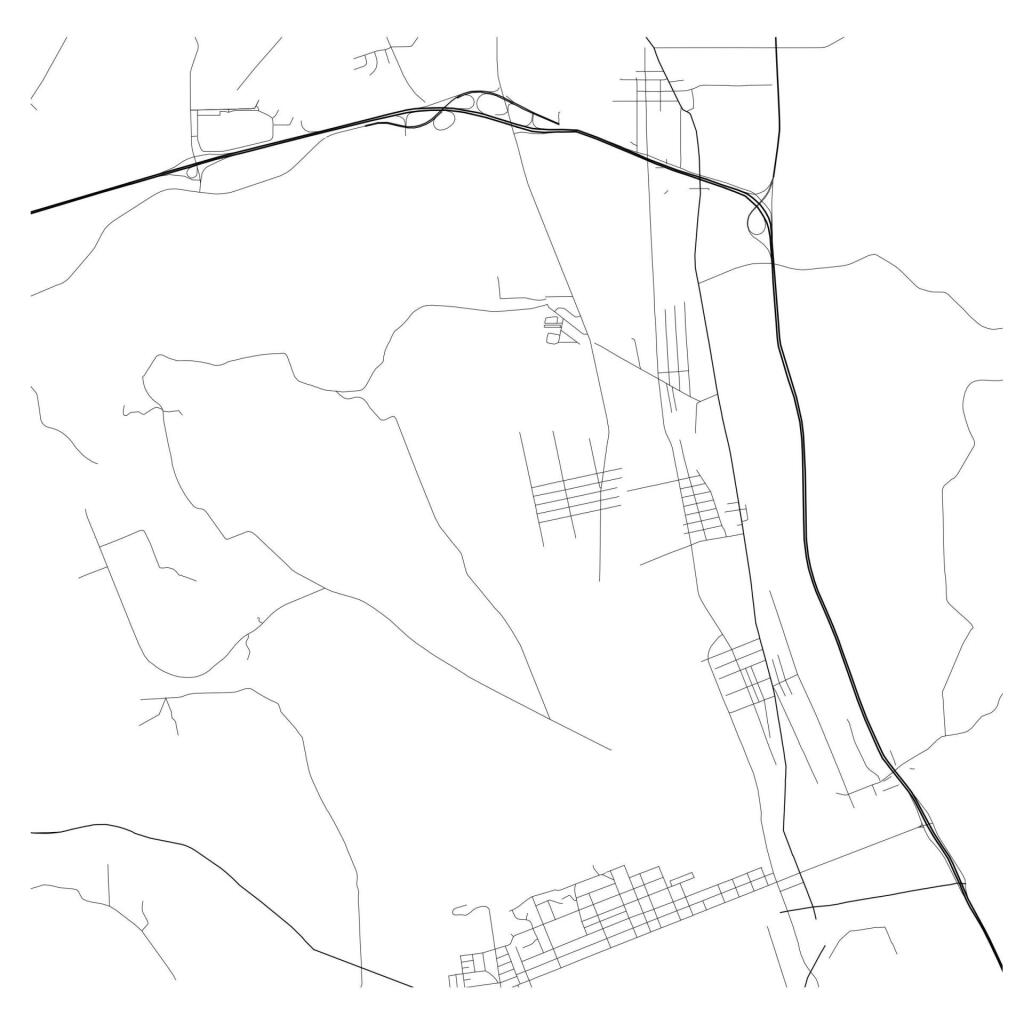
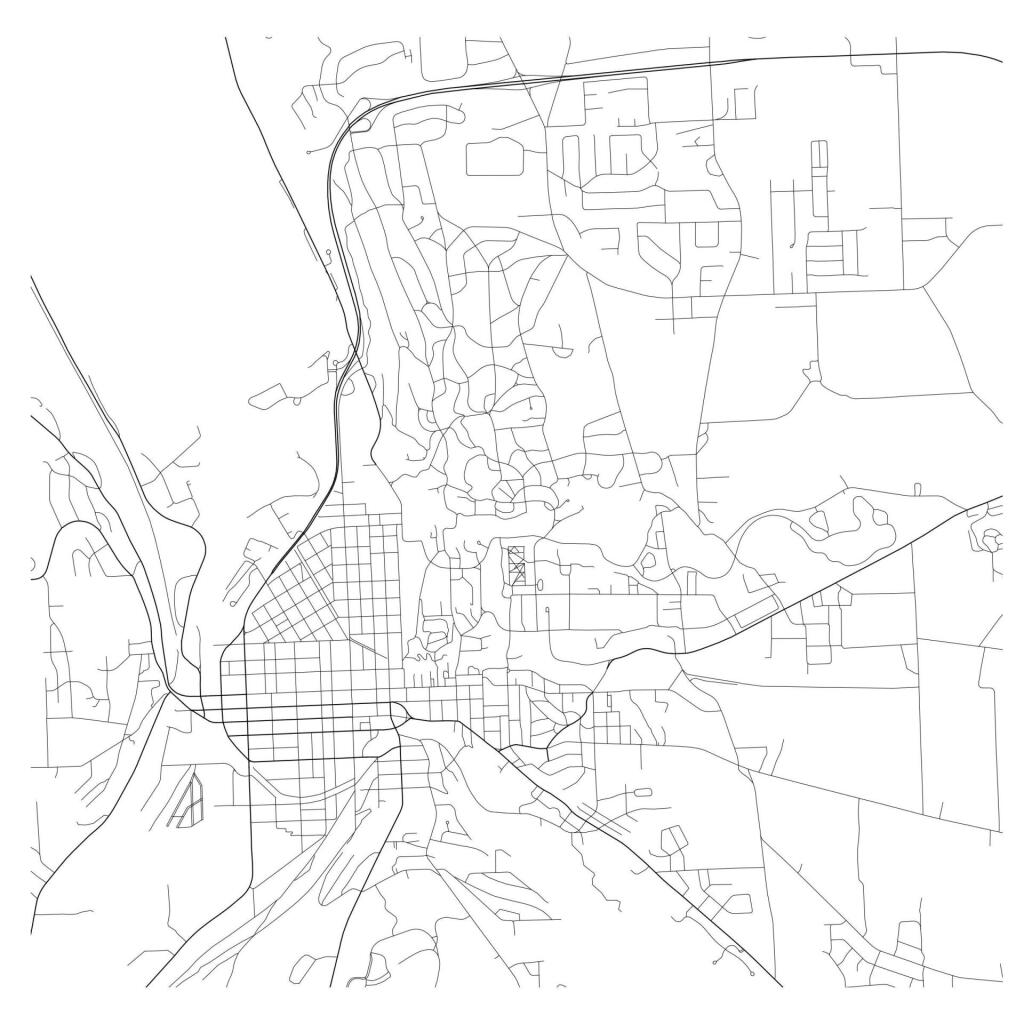
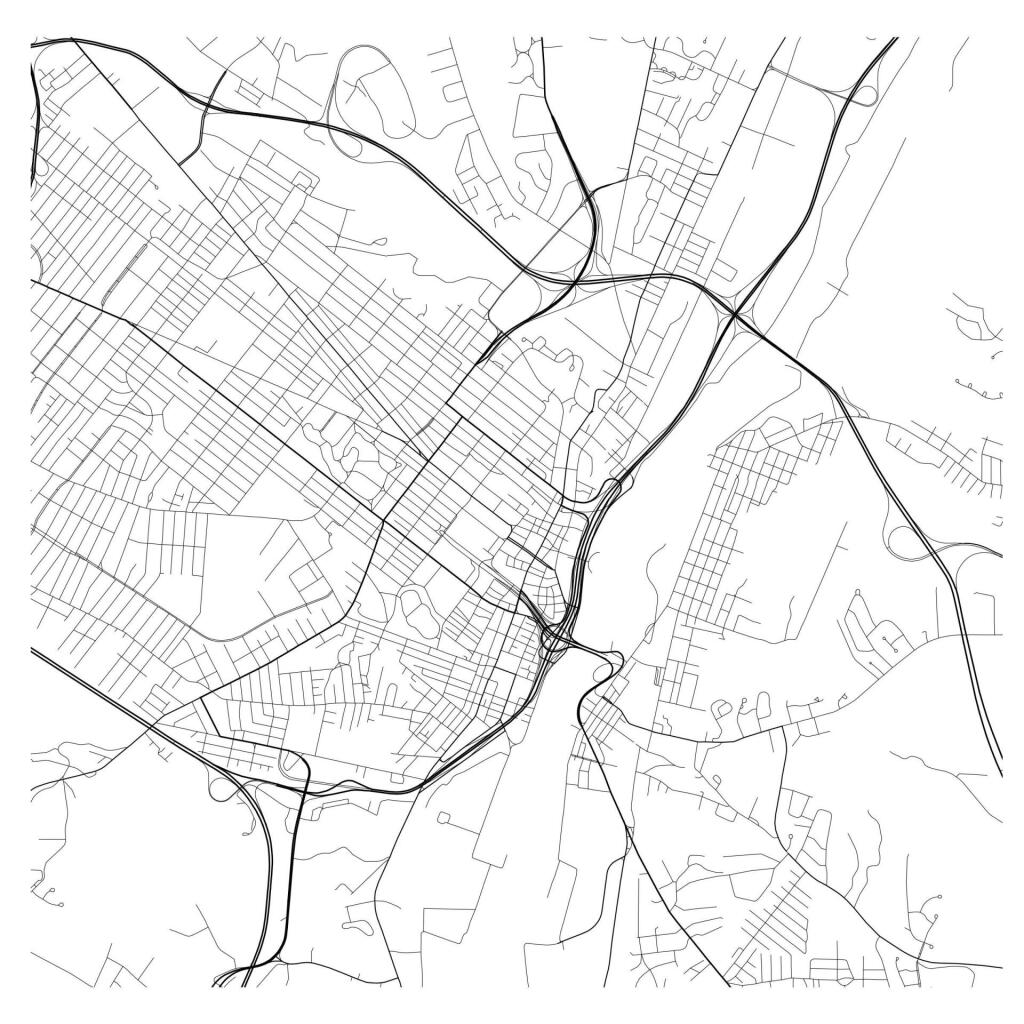
Many Upstate Regions have similar looking arterial systems. There is an urban street grid, then a twisty suburban street grid, with major arterial surrounding the cities, often only partially completed after 1973 when Nelson Rockefeller canceled most major urban highway projects due to the recession and increased concern about urban expressway impacts. The arterial system around Binghamton is particularly interesting, as a reflection of the deep alluvial valleys and rugged terrain that surrounds this relatively small city.
.. As a kid, I always loved those marble tracks, where you would drop a ball, and it would bounce all around, until it came to a stop at the end of the track.
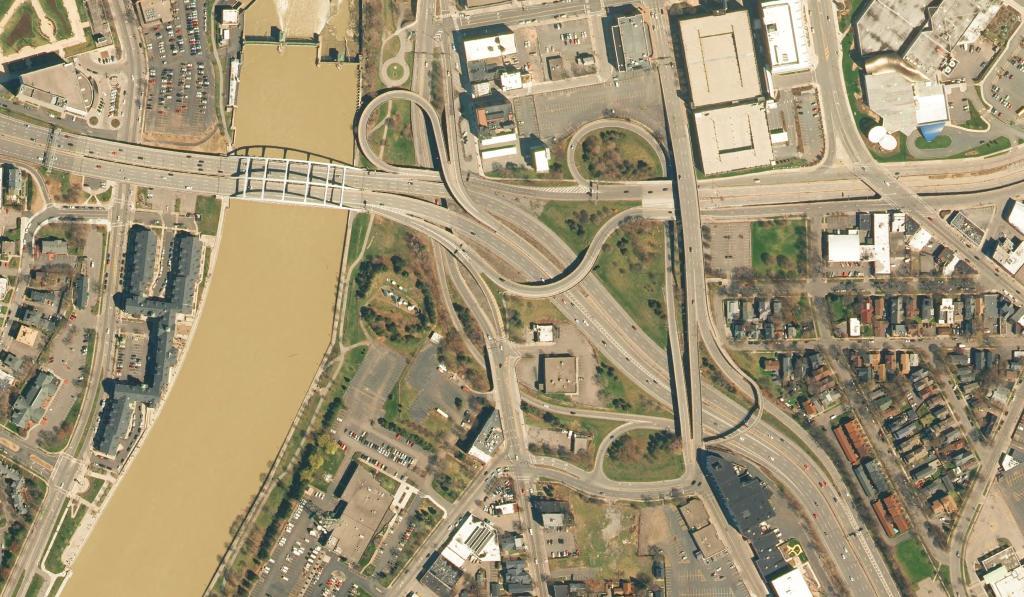
… I think it would be fun to drop a large boulder size marble on the top of the I-787 “Circle Stack” also known as a “Compact Urban Grade Seperated Interchange” in Downtown Albany, to find out where it would go.
As a child I dreamed the city of the future would look a lot like the State Office Campus, located Uptown, next to SUNY Albany. I envisioned a world where people could commute freely from home and to work and shopping without ever stopping at a traffic light.
Cities would consist of networks of one lane streets, where cars would freely merge in and our of the traffic pattern without ever stopping. Traffic would always be free flowing, there would never be any congestion. Fuel prices would inexpensive, cars would be quiet and non-polluting. Roads would be safe to drive and there would never be any car accidents. Its a world that really does not exist.
While in later years, sidewalks and crosswalks where installed across the the ring road, but literally anyone who tries to cross these three lanes in each direction arterials, is taking their lives in their own hands. There is the constant noise and pollution from circulating cars coming and leaving the state office campus. Those unfamiliar with the campus will find themselves driving around in circles, try to get where they want to go.
The reality is the state office campus is a pretty hideous place. My childhood dreams of a city without stoplights or traffic control besides merge lanes, is not a place where anyone really would want to live, much less visit or recreate in it. In a world where the automobile is so dominate is not a desirable place for humans to be. Its also not a particularly good place for a limited planet where we should be conserving and not wasting resources.
One can be pretty sure astronauts, god, and, the space aliens must think cities are for steel ants, when they look down at America from outer space. Certainly, the two-ton steel ants (cars) and their concrete and asphalt herd paths (streets and freeways), are the most prominent feature of any American city.
Every street must be wide enough to allow at least two of these two-ton steel ants to pass one another, along with having at least two more lanes for the temporary “disposal” of the steel ants along the curbs of the road.
In more suburban locations, the two-ton steel ants get their own little private herd paths to be temporarily be disposed, off the main road. This means reduced chances of the two-ton steel ants being hit by other two-ton steel ants and the ease of having personalized temporary “disposal” locations for the two-ton steel ants.
Where the two-ton steel ants congregate the concrete and asphalt herd paths grow larger, and they connect up with vast asphalt confined parking lagoons for their temporary “disposal”. The vast confined parking lagoons make the buildings that the keepers of two-ton steel ants live in and congregate around look tiny.
The keepers of the two-ton steel ants will not stop at any level to provide convenience of the two-ton steel ants. The keepers of two-ton steel ants will gut the hearts of their communities to make the two-ton steel ants happy. The two-ton steel ants, while powerless without their keepers pouring more fossilized dinosaur bones into their tanks, control their keepers through powerful ideologies and a desire to keep speeding along.
There are those, trapped by the ideology of the two-ton steel ants, that want the two-ton steel ants to continue to rule our cities, long after all the dinosaur bones are incinerated by two-ton steel ants. They say two-ton steel ants will survive by other means. They say that’s the only way their owners of two-ton steel ants can live their good life. Yet, is that the people speaking, or simply the voice of the two-ton steel ant?
I don’t know. I like my truck, but I am not sure if our cities need any more two-ton steel ants destroying the landscape. Imagine what our cities would be like if were not dominated by the two-ton steel ants. Imagine if cities where people-centric, where people could walk around, and take mass transit safely to their destination. Two-ton steel ants belong on the parkways and out in the country, but not in the city.
All of the above Google Maps are actual images from within the City of Albany, Capitol of NY State, and a popular gathering location for the two-ton steel ants. In America, there are 800 million parking spaces for 250 million steel ants, and 4 million miles of roads for them to drive on.