After the wake of many close elections, one has to wonder if we need more restrictions on voting, to ensure that dangerous people, who don’t fully understand the consequences of voting don’t vote. It’s quite possible that George Bush won in 2000, not because of his abilities to lead our country, but because voters were just plain stupid.
Some have proposed to give local police forces the unilateral authority to decide who gets to vote and not vote on election day. It could be a very simple and straightforward procedure — the chief of police in every town could sign a sheet of paper to make it unlawful for anyone to vote whose name appears on the list.
Why have tough evidence based standards to keep people from voting? Why bother to get a court order, showing a person is mentally unfit to vote? Or if we insist on requiring court involvement, shouldn’t courts be able to keep anyone they want to from voting?
Certainly requiring evidence, beyond a reasonable doubt of a crime committed or about too be committed is too high of a standard. That could allow a lot of people who are of questionable mind to vote in elections. Indeed, even one voter, throwing an election could lead to a totalitarian regime to take over our country. We certainly don’t need any more tragedies like George Bush getting elected.
People make similiar arguments about gun control, so why not voting? Doesn’t this sound very democratic and fair to give government lots of arbitrary control over who can vote?
It seemed like only a few weeks ago, it was just June. Now we are seriously looking at the end of summer as September is near. Labor Day Weekend is only a week away now, even though I swear it was just Memorial Day Weekend.
Yet, everything is saying summer is coming to a close. The days are definately growing shorter every day, and the temperatures are moderating. Sure there will be hotter days in days to come, but nobody can stop the descent into winter.
Summer seems like such a fleeting thing, with winter and cold weather being such a permanent part of living in NY State Lots of brown and cold weather, and not so much green. Summers greens will die out to fall’s brilliant colors, until we are left with the browns of winter.
There isn’t much we can do about it, but enjoy summer while it lasts. And remember in 9 months, it will come back around again, as all does.
Recently, I have been posting a whole lot less to my blog. Fewer essays, and I even broke the pratice of posting new content and/or reruns in recent weeks. I keep posting new photos as I go on trips, but I have been doing fewer and few maps. And due to issues with the blog software, some maps just keep disappearing.
I have been doing more reading, less writing. Twitter has filled in the gap, because most of the things I have to say, are best said conservations are really quite short. Often it’s best to just leave things up to the experts, and point to their words more, and mine less.
I continue to work on the next version of the blog software. I swore it would be ready in May or June, yet I still don’t have a functional version. It’s my fault, because the weather has been so nice, I’ve not really wanted to spend much time blogging or writing code. It will probably have to wait for winter now.
But also, I’ve just run out of good ideas for blog posts. I am tired of making up stuff, and the reality is some of my best ideas and posts have already been written, so why rewrite? I also don’t want to duplicate posts that are already done. Why waste my time or internet bandwidth, repeating what is already done.
At any rate, the blog is kind of in low-gear for now. Better stuff will come eventually though, or so I hope. I really hope to have things really back up to speed by Winter 2013.
Mondays seem to come much too frequently. Weekends are much too short. Weekends, something we all look forward to, seem to be just fleeting moments on that calender. Just another day.
One could look at it as being only 5 more days until the weekend. 5 days promising to go by just as quickly as the now memory of the weekend. But it still seems like a Monday.
Eight hours and it will be over. And it will be down to 4 more days, but still it seems like Monday comes much too often.
I really like Northwest Pennsylvania. It’s so wild and different then anything in New York State, without all of the restrictions applied on the land and people of a liberal state like New York. All things rugged and back country are vastly different then in Albany.
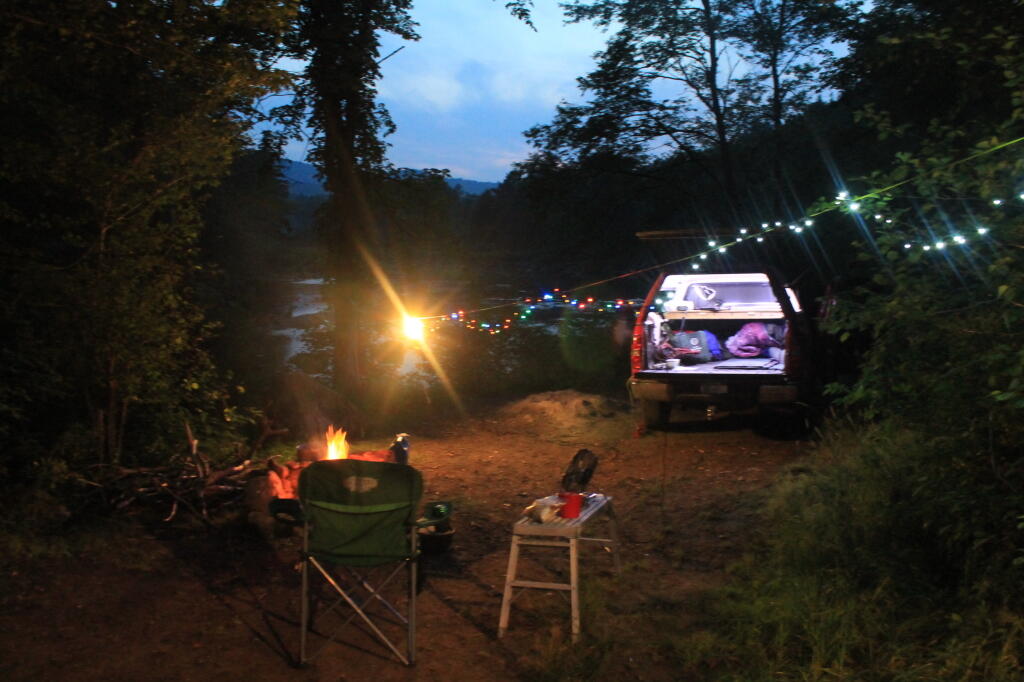
Time seemed unlimited on vacation. Eight days and nights sure seemed like a long time. Every morning lighting the cook stove, cooking up breakfast on styrofoam plates, packing up the gear, tearing down camp, and heading out for the day, exploring truck trails and wild landscapes. Set up campsite, turn on Christmas lights, build a campfire, and burn the day’s garbage, while listening to country music with my cowboy hat on.
In contrast, the land of work is vastly different. It’s setting an alarm clock, getting up, making breakfast on an electric stove, and catching the bus to work, and sitting in an office all day. Then come home, cook dinner, wash dishes, and sort the trash for recycling. Walk down to the park or the library. No opporunties to burn anything.
Man cities, and my urban reality in the state that best represents liberal statism, sucks.
In eight days, I managed to burn through 86.8 gallons, travel 1490 miles, and got 17.0 MPG. Those truck trails sure make Big Red burn a lot of gas. And I sure need the $310 to cover the cost of gas, plus the other $90 for beer, food, and supplies. Hell, even the styrofoam plates and paper towels aren’t free.
I also realize that I won’t be up for such an adventure for quite a while. It’s a mix of money and just getting the time off, but the reality is I probably won’t be back in Pennsylvania for a while. Somehow, trips to Adirondacks don’t seem so far or exciting, as Northwest Pennsylvania.
After looking forward to this trip, all that is left is some pictures, burn out tin cans for recycling, and the hang-over made up of memories.
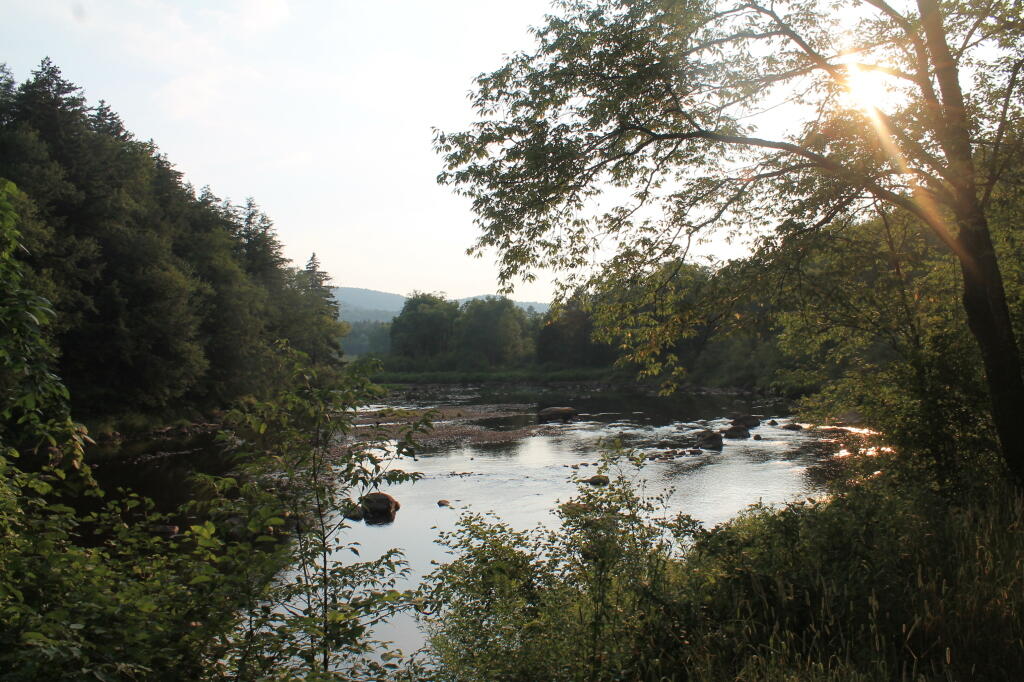
Tonight I write this words on my laptop, camping on West River Road, along the West Branch of the Sacanadaga River. This a beautiful site, soon to be gated off miles in the distance, to supposedly improve the “wilderness” character of this area.
Despite the fact that …
The lands of the state, now owned or hereafter acquired, constituting the forest preserve as now fixed by law, shall be forever kept as wild forest lands. They shall not be leased, sold or exchanged, or be taken by any corporation, public or private, nor shall the timber thereon be sold, removed or destroyed.
… the Department of Environmental Conservation and the Adirondack Park Agency feels it neccessary to close off West River Road to “enhance” the wilderness quality of the “Silver Lake Wilderness”. West River Road will never be expanded or extended, and it’s unlikely many campsites will ever be added to it because the lands are forever wild, and no tree over 3″ may ever cut.
I am not advocating for paving over the Adirondack Park for strip malls, or running high-speed expressways through virgin forest. I am advocating for keeping traditional, well maintained, roads open, and protecting our remaining roads and campsites in their traditional uses.
Yet, still the DEC finds it’s hands tied due to Adirondack Park State Land Master Plan that dicates the Adirondack Park’s state land must become increasingly restricted in public use, and that more restrictions must be placed on public use — less camping, less roads open to the public.
It’s sad, because people like myself liked camping on these lands. While in the future, people will be able to walk on this perfectly good road for vehicular traffic, and backpack into the limited number of campsites, roadside camping might forever be gone from this area. More and more Adirondack Park Roads are forever gone, and unless your willing to backpack in often many miles, these lands will forever be closed off for public use.
In almost every Upstate New York city, and small town that surround them, it’s a pretty sad story economically. There is little industry left, most of the jobs are at places that provide social services like healthcare and education. These “social service” businesses are largely subsidized by the state and federal governments, and provide money for consumers to go to Walmart, McDonalds, and other chain retail places, that provide affordable products that are almost entirely imported to the local area. The chain retail places in turn create more jobs, for limited wage.
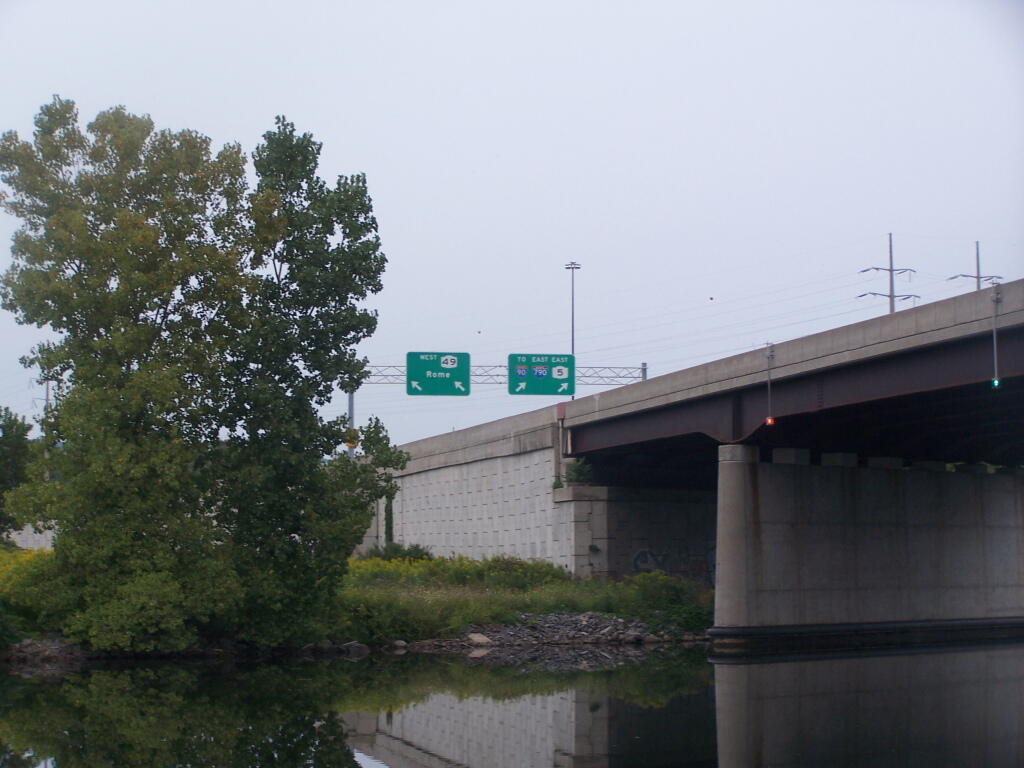
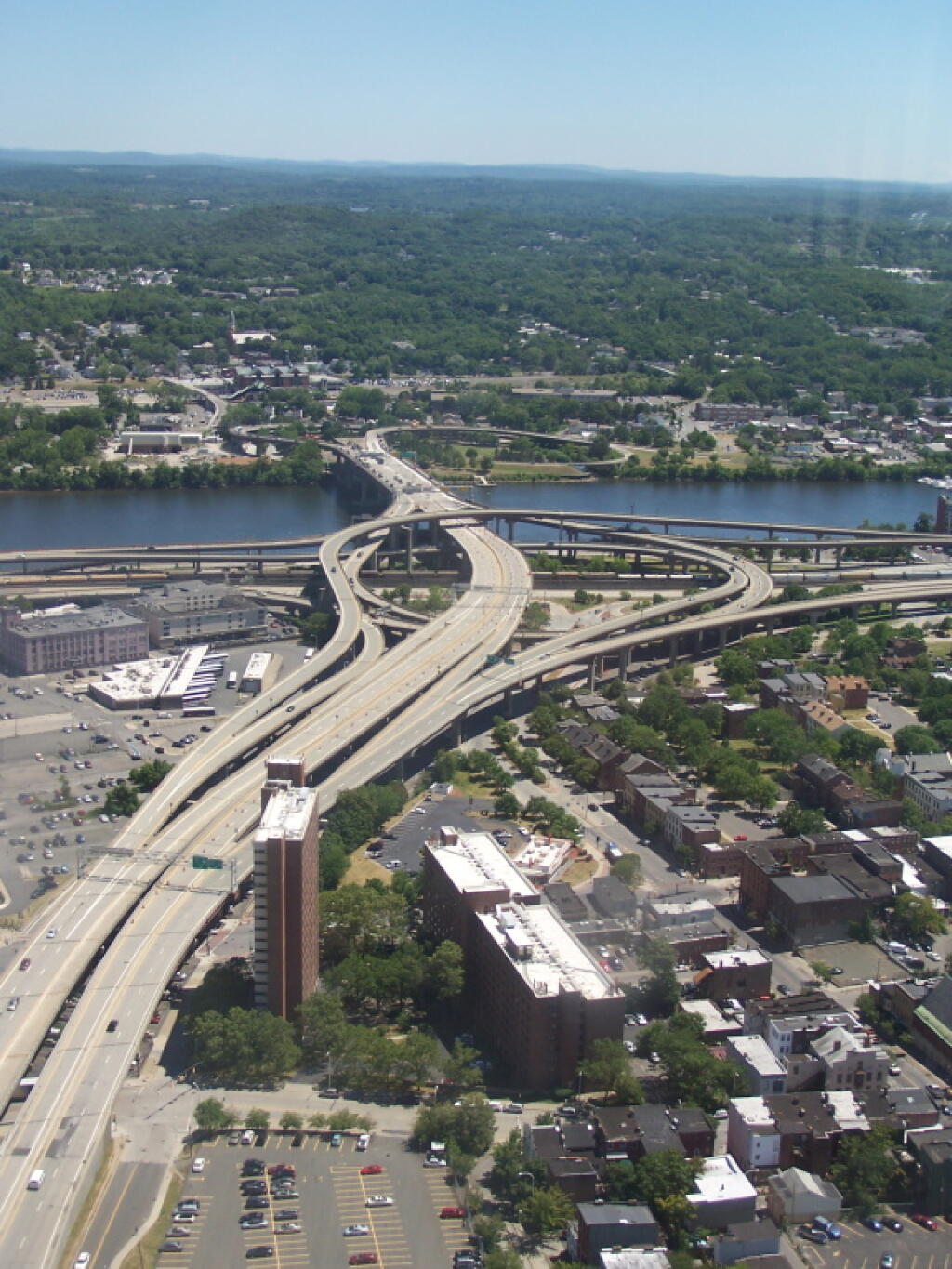
Downtowns are largely left in ruin, with small local businesses unable to compete for employee’s limited wages, being spent at the chain retails on the outskirts of the Upstate cities. Downtowns are not automotive friendly, suffering from congestion, noise, and limited parking. Where downtowns have been victims of government sponsored “urban renewal” of 1960s and 1970s, cities are often left with overbuilt expressways, that produce air pollution and noise. Many urban renewal projects were poorly designed, with ugly “modern” buildings and highway ramps, that don’t fit into communities but instead are standard designs drawn up in Albany and New York City.
Businesses left Upstate New York for many reasons…
One of the most important was the change in the economy — fueled by cheap fossil fuels — that encouraged centralization around large urban areas. Scaling up, in many cases, around large urban areas made it possible to make more product or economic activity in a large urban area, rather then smaller businesses spread out across more rural areas. Why have small plants spread out over large areas, when you could have a centralized facility that produced more product at less cost and with greater control of the final product?
The second major reason that is too often New York State policy is driven by urban liberals and ideologues, outside of the field of regulation, that imposes impossible conditions on businesses. While health, safety, and welfare is important of employees, and environmental pollution must be controlled, regulations and laws relating to businesses need to make sense and be relevant, and not just written in a state office building in Albany, without paying attention to the needs of specific industries.
The third reason is the state spends too much time courting large businesses to move into the state, without paying much time to local businesess, that meet local needs. There is an official policy to attract large employeers, and to hand out pork to them, while ignoring small but important businesses. Politicians are happy to hand out state dollars to businesses, but too often unwilling to get into the nitty-gritty of what is neccessary for businesses to succes in state. There is tons of money to hand out, but with little thought of consequences. Communities are ignored in favor of state-wide policies, handed down by Albany.
What are the solutions …
1) Home Rule.
The state needs to bring back greater home rule at all levels of government. Regions of state need to have more self-goverence, from the local government up to regional branches of state government, such as Department of Environmental Conservation Regional Offices. To the greatest extent possible, regulations and policies should be tailored to meet individual parts of state.
2) Better Downtowns and Less Sprawl.
The state needs to do better at helping small communities. They need to rebuild downtowns, but not just pour money into them. They need to do community scaled improvements, that slow traffic downtown, provide adaquate downtown parking, while creating bypasses around downtowns, so through traffic need not slow down or congest downtown streets. Building bypasses through downtowns, as seen in places like Amsterdam or Little Falls, is only a recipe for diaster.
The state should also eliminate subsidies to suburban sprawl on the edge of cities. The state in constructing bypasses should take steps to discourage big boxes stores to locate along the bypasses. Suburban sprawl businesses, if desired, should come without special tax breaks, as they are already profitable. People want Walmart to provide inexpensive products and provide jobs, but not at the taxpayer dollars.
3) Encourage Import-Replacing Businesses.
The state also needs to actively encourage import-replacing businesses. Upstate cities need not just businesses that manufacture needed products, but businesses that provide products that meet local needs. Farmers markets are a great example, but the state needs to find ways to get local farms to produce affordable products that are able to service local needs (and export in addition). Likewise, we need to be developing our energy resources like wind, water, solar, along with oil and gas reserves, not just for export, but also to service local needs. Manufacturing products that service local needs, besides export is important.
Too often the big businesses the state induces to upstate communities, do not sell any of their products locally. A business that exports only, or exports primarily does little service the community. Such a community spends it’s hard earned dollars by importing products, rather then making them at home. The multiplier effect, and much of the economic value, is lost when a product is solely exported. Often with export-only economies, both the people and land are exploited for distant, urban gain of the wealthy, rather then investing in local communities.
If a biomass power plant provides electricity, and steam for a local community, using waste wood or farm waste waste, then all of the benefit remains in the community. Chances are such production is sustainable, as local needs are less like to exceed the carrying capacity of the landscape. It also keeps all of the money locally. Projects like this should be encouraged by state — in contrast to wind farms that only export their product.
4) Encourage the Arts and Education.
New York does a good job at encoraging arts and education. Yet, the state needs to do it in ways that benefit the local community, and not well segregated state universities and distant people. Communities need flexibility to spend the money, to ensure that local arts and music are benefiting local people.