There are something like 965 towns, cities, and villages in NY State, along with 64 counties. All of them have elected officials, and civil servants providing mostly state and federally mandated services.
The question is why do we even have local government anymore?
Nobody questions that the services of counties and towns are important, but in many cases they duplicate what the state currently does. Few governing decisions are made locally anymore. Most local government decisions are made with significant state involvement or influence, in the form of state regulations, state permitting, or in many cases actual laws passed by the state.
Local governments have a lot less freedom to make decisions that many pretend. All are highly dependent on state to go along with them. Most so-called local decisions are essentially decided at the state level. Local governments like to pretend they have significant control and power, but the reality is as creatures of state, and due to economic competition by surrounding towns, they are essentially powerless to decide their futures.
Local government is an idiom of an earlier era before modern communication techology, and modern transportation. Local government is from an era of horse and buggies. Local government tends to be stocked with well-connected political families and patronage. Local government tends to be totally ineffective, in an era when regional and indeed nationwide planning is needed, when any local decision can have vast impacts far beyond it’s own borders.
In a modern technocratic era, local decision making makes little sense, and squanders important public resources.
I have always disliked political districts that leave constituencies with elected officials that do not represent their views. In many cases, political views can not be categorized as being partisan, but more representative of where a person lives, and the lifestyle choices of living in a certain area. A rural Democrat or suburban Democrat will have distinctively different views then a urban Democrat, especially if he or she wants to be reelected.
I remember writing to my State Senator years ago, and he expressed a viewpoint totally contrary to my own, and most of my neighbors,primarily because he represented an urban area, plus a fringe of other lands cut up in rural hinder lands. Ironically, the way his district was cut up, he had almost no suburban areas, so the only people with a voice or a vote, where the urban folk, with rural folks in his district having no vote.
The needs and wants of a rural resident are distinctively different then that of a suburban or rural resident. So I wondered how many other people in NY State are stuck either living in a city,but with a politician primarily representing rural areas, in a suburb with politician representing mostly city folk, or a city folk with a rural politician.
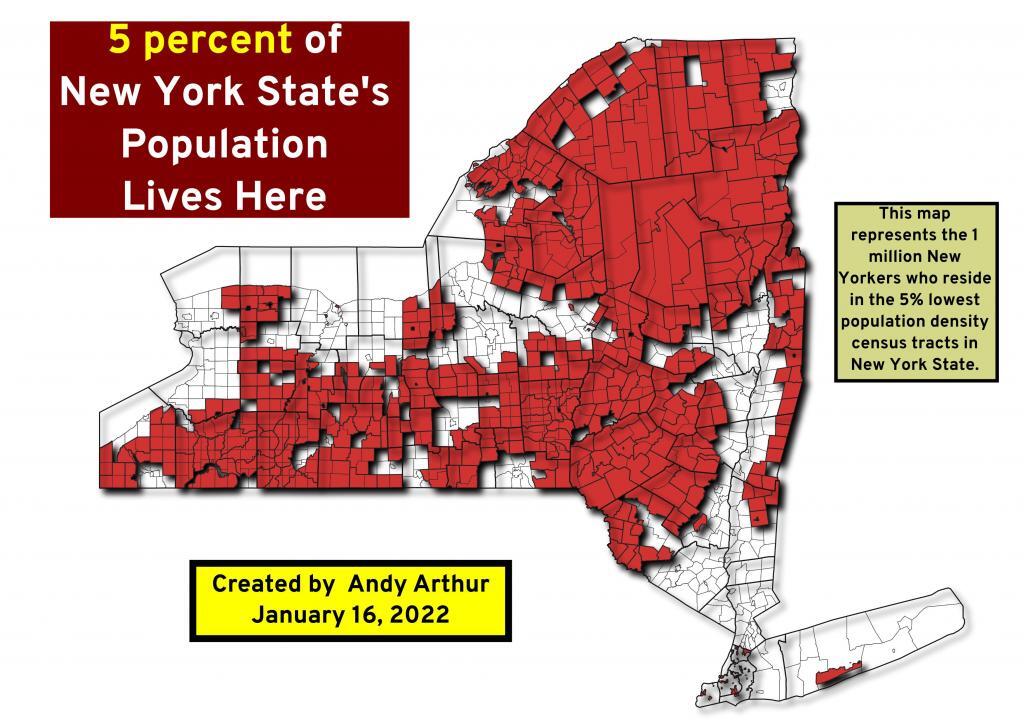
I the current 2010 Census town-wide population density data, and combined it with 2002 State Legislative districts…
Some districts are pretty consistent, and others are pretty wild,and gerrymandered to pick up Democratic or Republican seats, with no attempt to try to group similar constituencies, or keep rural,suburban, and urban areas together. Even worst are districts that merge slices Then again, when the game is maximize as many seats for your particular political party, it’s not surprising to see such games played, at the cost of representative government.
There are two categories of state governments as it relates to local governments:
Home Rule: States that give local governments wide latitude to decide which policies are appropriate for their communities
Dillon’s Rule: States that give limited powers to local government to make decide which policies are appropriate for their communities
No states fall clearly in on category or another as it’s more of a continuum then definite categories. Indeed, when states choose how much to empower local governments they must consider a variety of factors such as:
Impact of one town or city’s decisions on surrounding communities
Citizens that travel through one community or reside their temporarily for work, recreation, or other activities, but due to lack residency have no voice in that government
Involvement and awareness of a community’s citizens in governments
Fairness between wealthier and poorer communities
State-wide goals for various programs
Certainly some things really ought to be decided on a local level, under Home Rule, by an informed citizens and their representatives:
The rate of property taxation and structure of fees paid exclusively by local residents and businesses
The level of government services provided to local citizens and businesses
The design and management of local service roads and streets
The creation of local laws and policies, as long as much local laws and policies are made clear to visitors using signs or other documentation
On the other hand, there is a compelling case to reserve some powers to states under Dillion’s Rule to ensure fairness both to local residents and more importantly, largely voiceless visitors to a community.
A state bill of rights must exist to ensure that local governments both treat their citizens fairly, and most importantly visitors to the community fairly
Local laws need to consistent enough so that visitors know what to reasonably expect when visit a community and require
Inter-community highways need to be regulated by the state to promote the quick and convenient movement of goods and people.
Could 15 minutes a month make a big difference in how your government is run and allow you to make informed decisions about government policies? With New York’s Freedom of Information Law (FOIL), and a quick email off to your government officials, you can make a big difference.
Under Article 6 of the Public Officers Law, any person can request almost any government document using a quick email to the Records Access Officer that every state agency and subdivision such as counties, cities, towns, public authorities, public corporations, and school boards keep. You can request meeting agendas, meeting notes, email sent from government accounts, studies, maps, word documents, GIS Shapefiles, databases. While there are some exceptions to this law, the reality is most government documents are public property, and can be received through FOIL.
To send a FOIL request, you simply need to …
1) Figure out what your interested in. It helps to know what format the records are stored in, such as Word Processor Documents, Spreadsheets, Email, Database, GIS Shapefile, PDF. You also should try to make the best guess where the data is from, and describe it as possible. You have to accept records in whatever format stored by the agency as they are not required to convert or summarize the record, meaning you need to accurately request what they have or risk being denied access.
2) Go to agency’s website your are interested in, and try to find the Records Access Officer or FOIL request officer or other email. Typically emailing the highest level official in the agency is acceptable if no FOIL information is listed.
3) While not every agency accepts emails, but any that has a capacity to e-mail must accept requests in that format.
4) Write a very quick and simple email to the agency saying:
Dear Records Access Officer:
Under Article 6 of the Public Officers Law (NY Freedom of Information Law), I am requesting the following records:
Any and all emails sent from Commissioner John Smith jsmith@example.state.ny.us from April 1, 2011 through May 1, 2011 with the words “solid waste management” in the body of the email.
The Microsoft Excel spreadsheet, relating to revenue received through recycling programs. I am requesting the April 2011 numbers, as prepared by Solid Waste Specialist Deborah Smith.
Thank you. If you have any questions or need clarification, please email me at joe@example.com.
It’s that easy. You will get a receipt of your request within 5 days. Within 35 days, you will receive the requested documents or reasons for denial of such requests under the limited exceptions of NY Freedom of Information Act. You have the right to appeal such a denial to the records appeal officer, which you should be notified of whom it is when such information is denied. The Committee on Open Government offers advisory opinions to help you understand the law, and cite case law in your response.
I really encourage you to get into the practice of regularly writing FOIL requests. With e-mail it’s easy, and it keeps your elected officials and public servants on their toes. Receiving even one request for information perks up their ears, and more requests makes them realize that the public is keeping a watchful eye over them. Moreover, the records you will receive are both interesting and informative, and allow you to make better comment over public policies in the future.
You can be the hero that saves democracy and get lots of fun government documents for free to your email!
One of the concepts I have grown interested in lately is the use of density to draw districts for governing bodies. Rather then draw districts based on historical lines, partisan politics, or ethnicity, why not draw them based on a formula that considers density?
How it would work…
Take the entire population of a region, state, or country, and divide it by the number of districts one views as appropiate.
Neighborhooring census blocks with the closest average density would be grouped together until they had equal population.
Why this is a good idea…
Areas with similiar densities have the most similiar needs.
Connect farming areas with other farming areas, connect dense urban areas with other dense urban areas, suburbs with suburbs.
Representives are non-conflicted by different consituencies, they can be pure in what they advocate for in their elected bodies.
Rural, suburban, and urban infrastructure needs are best met when communities are grouped together and non-conflicting in their nature.
Politicians probably would not like this system as it would make it hard to game the system. There would be far fewer marginal districts, far fewer competitive non-primary races. Yet, fewer consituencies would be underr-epresented due to their minority status in their districts, and there would be more cohesive blocks of land.
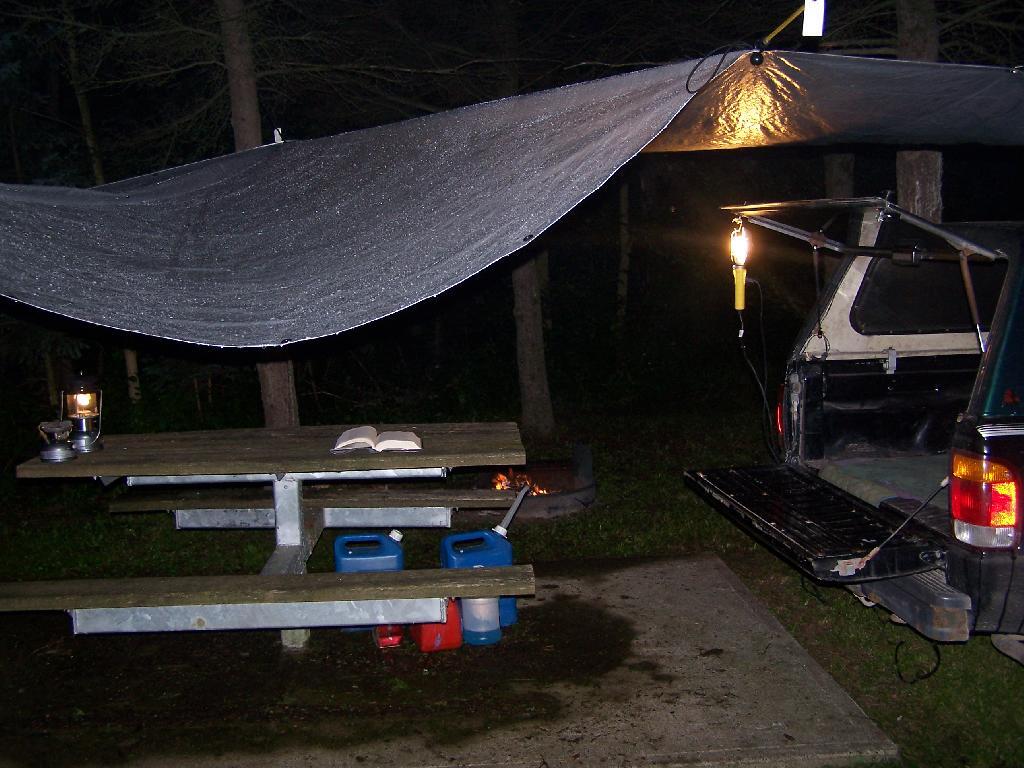
I always get a kick out of people who say that camping in state or national forests are free, or visiting the public library is free. Free camping or hiking or reading is a joke. Indeed, it’s not free at all. Somebody pays for it, most likely you and I do.
Most of us pay a weekly or bi-weekly “subscription” fee to use those services, in the form of payroll and other taxes.It’s very hard to measure whether or not one is using their fair share of services. Many government services benefit not one individual, but society as a whole. Many promote economic growth, which also benefits us all. Others promote society’s well being, even if we do not personally take advantage of the services.
… there is No Such Thing As Free to Use Government Services.
I rarely write essays on specific political events. I normally stick to broad topics or areas I have personal experiences about. I do not have the experience or knowledge to really judge what is happening out in afar away in the upper Midwest State, known primarily for its agriculture and for its various progressive leaders over the years. Yet, I feel particularly strongly about this issue and think its important to raise my voice about it.
Listening to the Rachel Maddow Podcast of Fridays show I learned many things. I learned about how Wisconsin is a state with eight towns named Union, with a proud tradition of being a state where average people band together to try to get a better bargain for themselves. Wisconsin is a place where farmers band together to negotiate a better price with big processors, a place where workers band together to get a fair wage.
Wisconsin, as I learned from Rachel Maddow, is the state that literally brought us the weekend. Workers banned together to form unions and demand a 40-hour work week, and to make not just Sunday a day of rest, but also Saturday too. The demands of organized workers lead not just to better conditions and more time off for the organized, but for all Americans. The idea that most people would work on Saturday and more then five days a week is unthinkable today.
We live in a society of laws and rules, designed to protect both individuals and institutions alike. While pursuant to the US Constitution, each state has the right to dedicate what terms public employees operate under, with most states allowing public employees to organize and join unions. The unions push for a fair bargain at the table for the workers they represent. Management and political leaders choose how much money they want to spend at each agency, and they negotiate with unions based on the money available. If managers can not get the cost savings they desire, managers can lay employees off to reach their spending targets. Fewer employees means less union dues and less clout for the union.
The Wisconsin governor has the right to lay off state employees after asking for concessions from the union. The established rules make it clear that this is the executives right to do. Certainly more workers at a discounted price to Wisconsin in this troubled economic times would be the preferred solution to layoffs. This should come from the established process, not by changing the rules mid-negotiations. Just like its not fair to change the rules in the middle of a game of Chess to benefit one side over another, its not fair for the Wisconsin governor to change the rules just so he can a better deal from public employees
Wisconsin State Employees should continue have the right to unionize, and the Wisconsin Governor should not change the rules just because hes not making his desired progress in negotiations. Thats only fair.