I decided it was a nice day out, and I wanted to be able to say I had gone up to the tallest peak in the Catskills, at 4,180 feet. According to Wikipedia, it may actually be somewhat taller then that (as much as 4,200 feet), but they’ve never done a bench mark on the top of it.
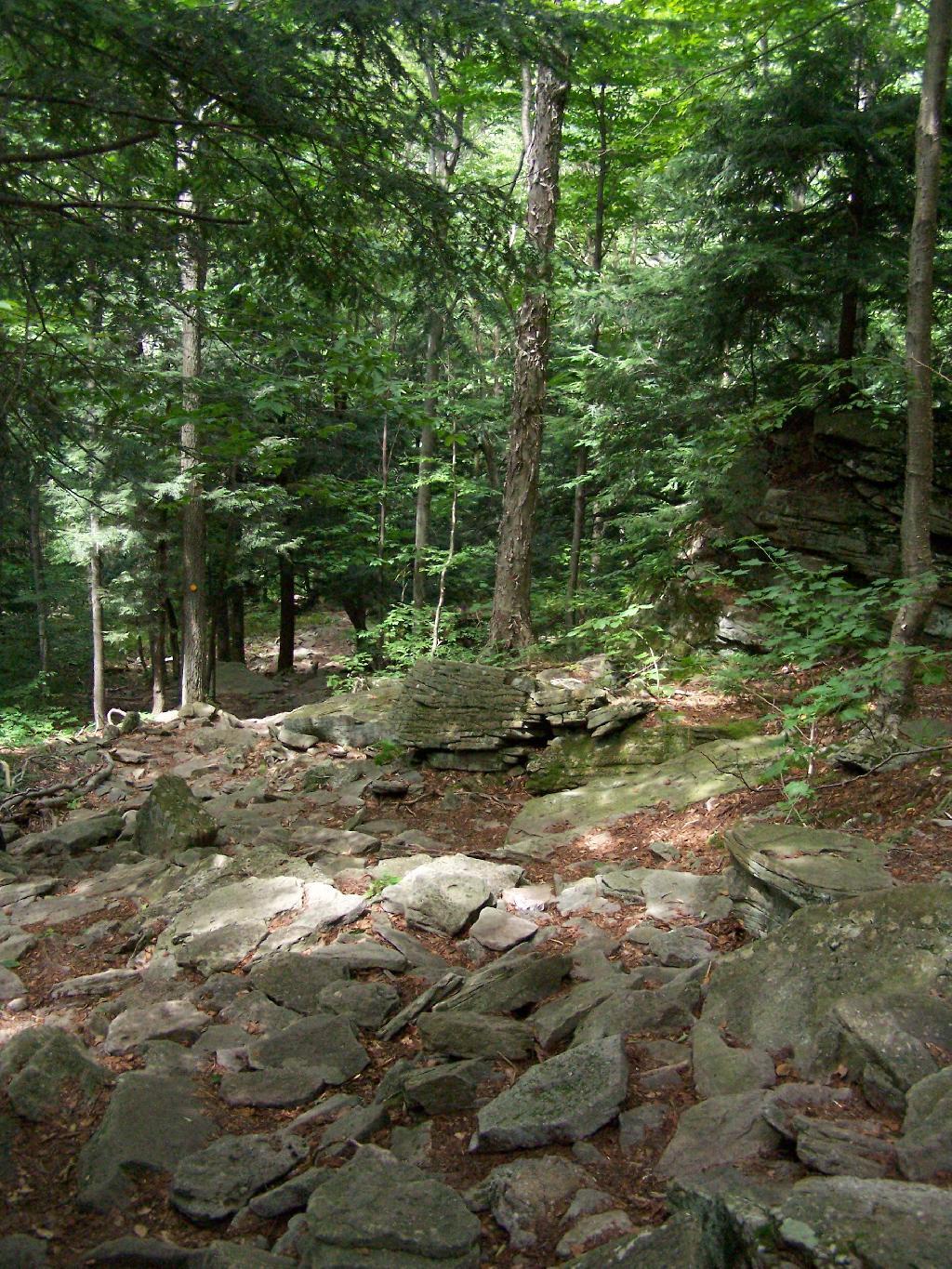
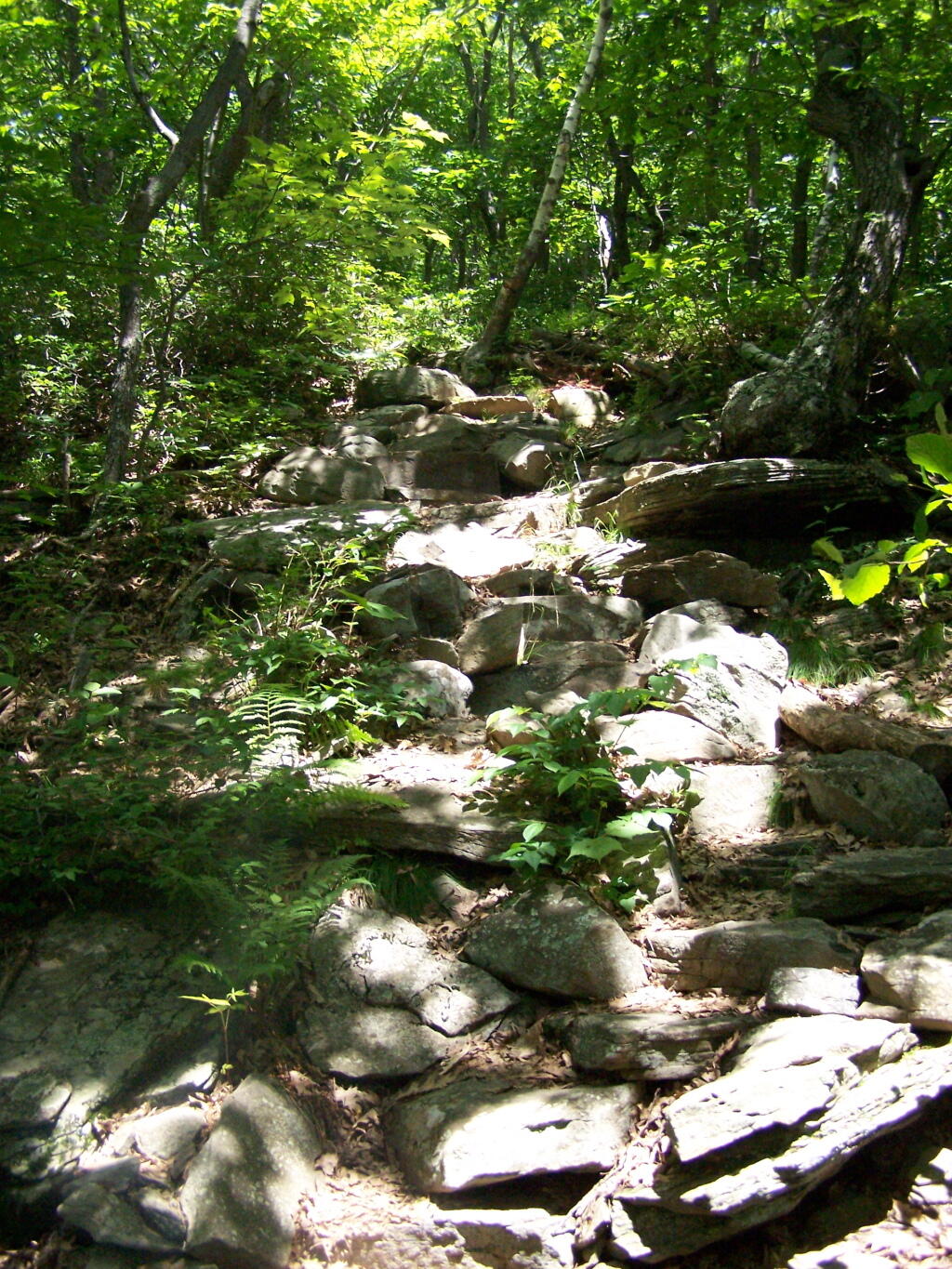
The first part of the trail is fairly steep.
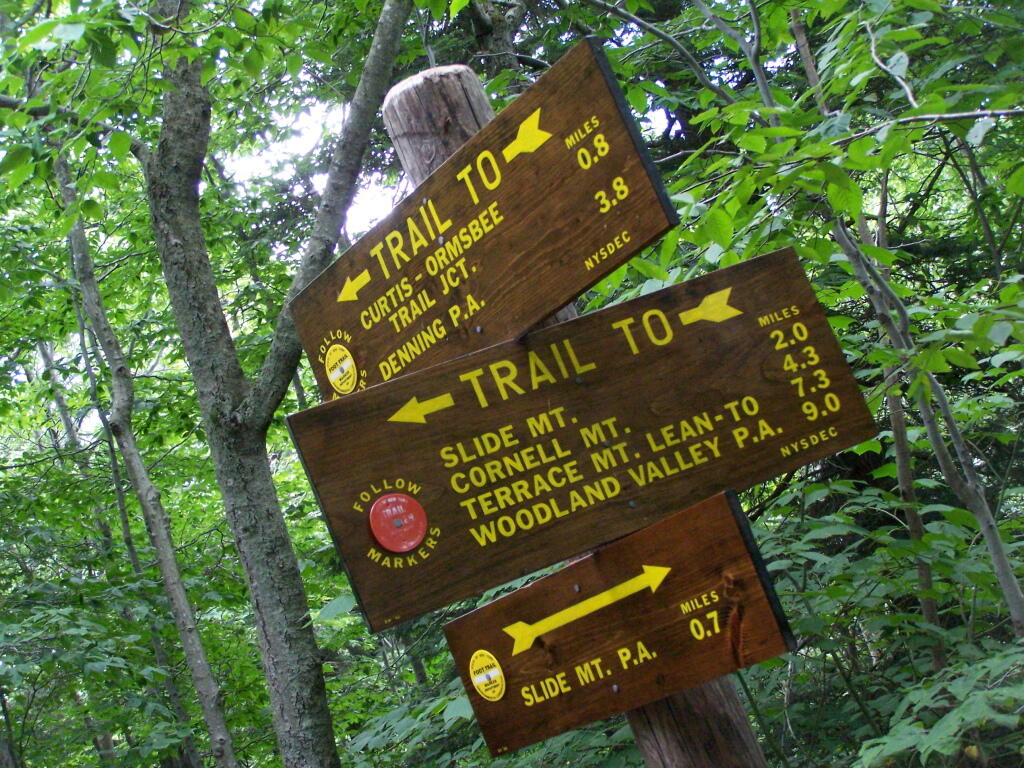
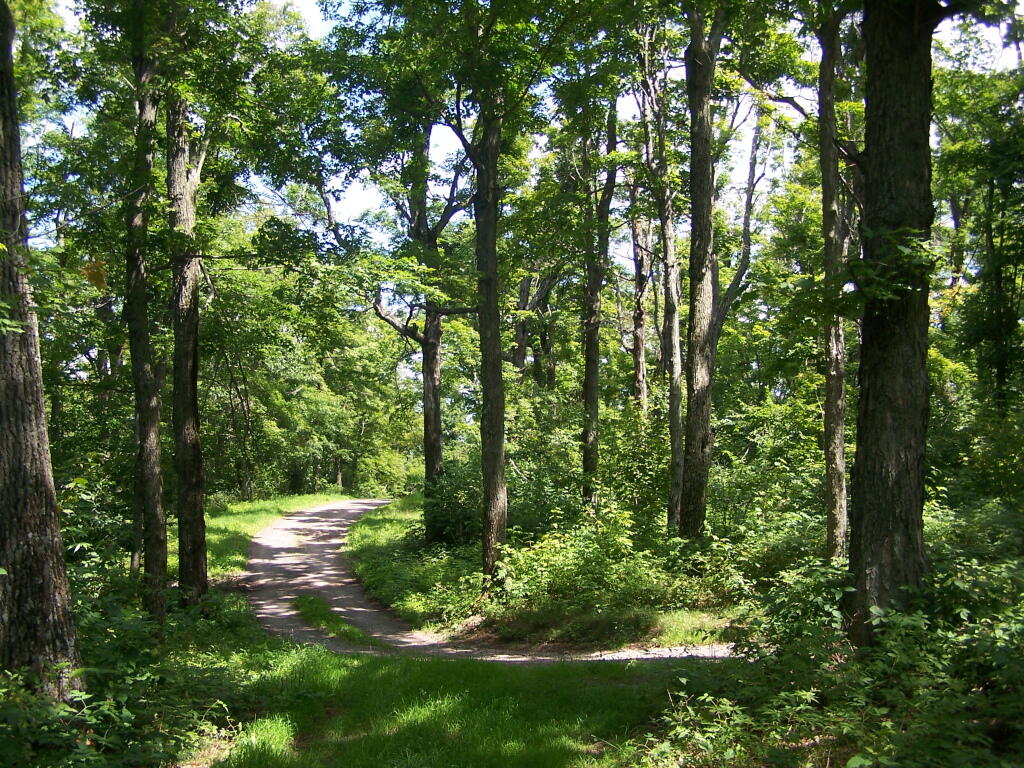
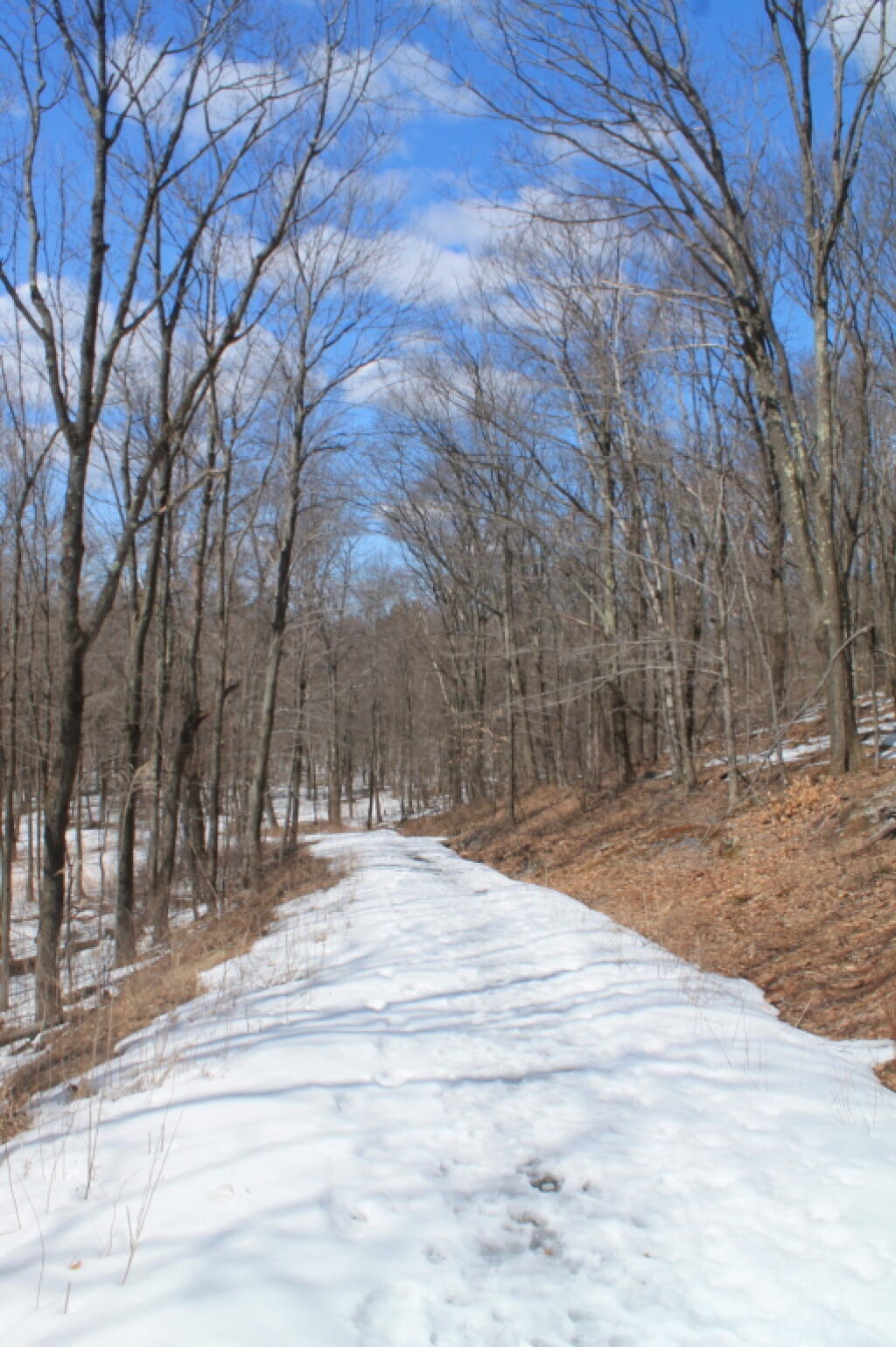
It climbs up to an old woods road, that is an easy walk and relatively flat, as it goes up to the Curtis-Olsbee Trail. You see the split between the old Jeep trail up Slide Mountain, and the the trail to Curstis-Olsmbee.
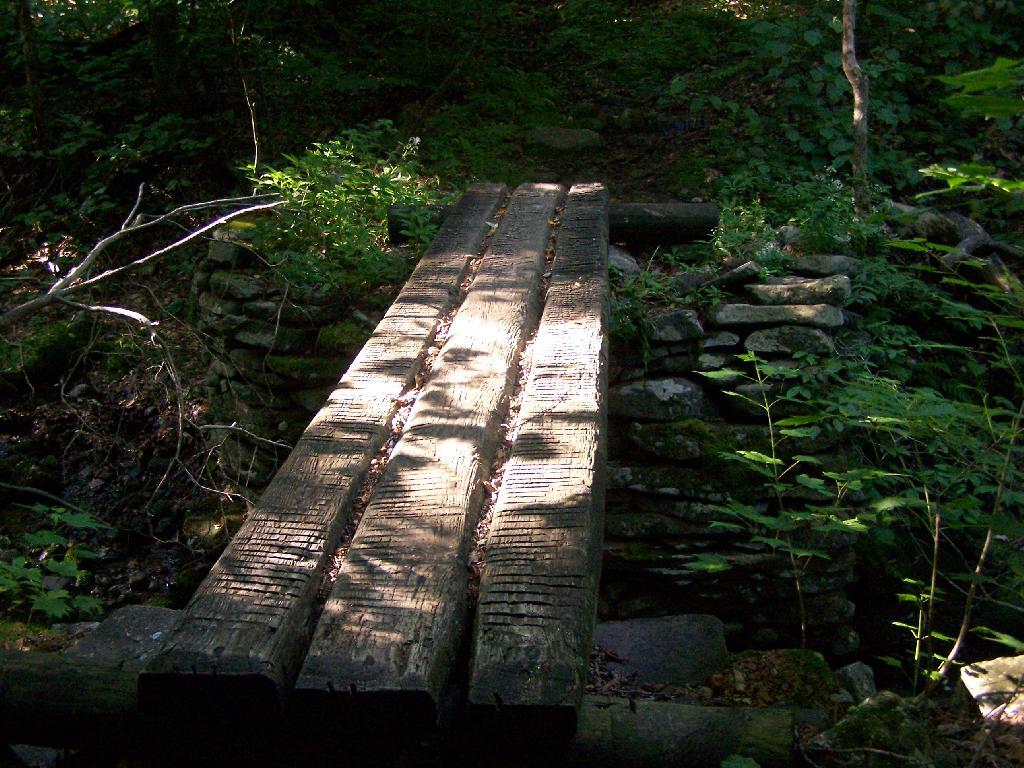
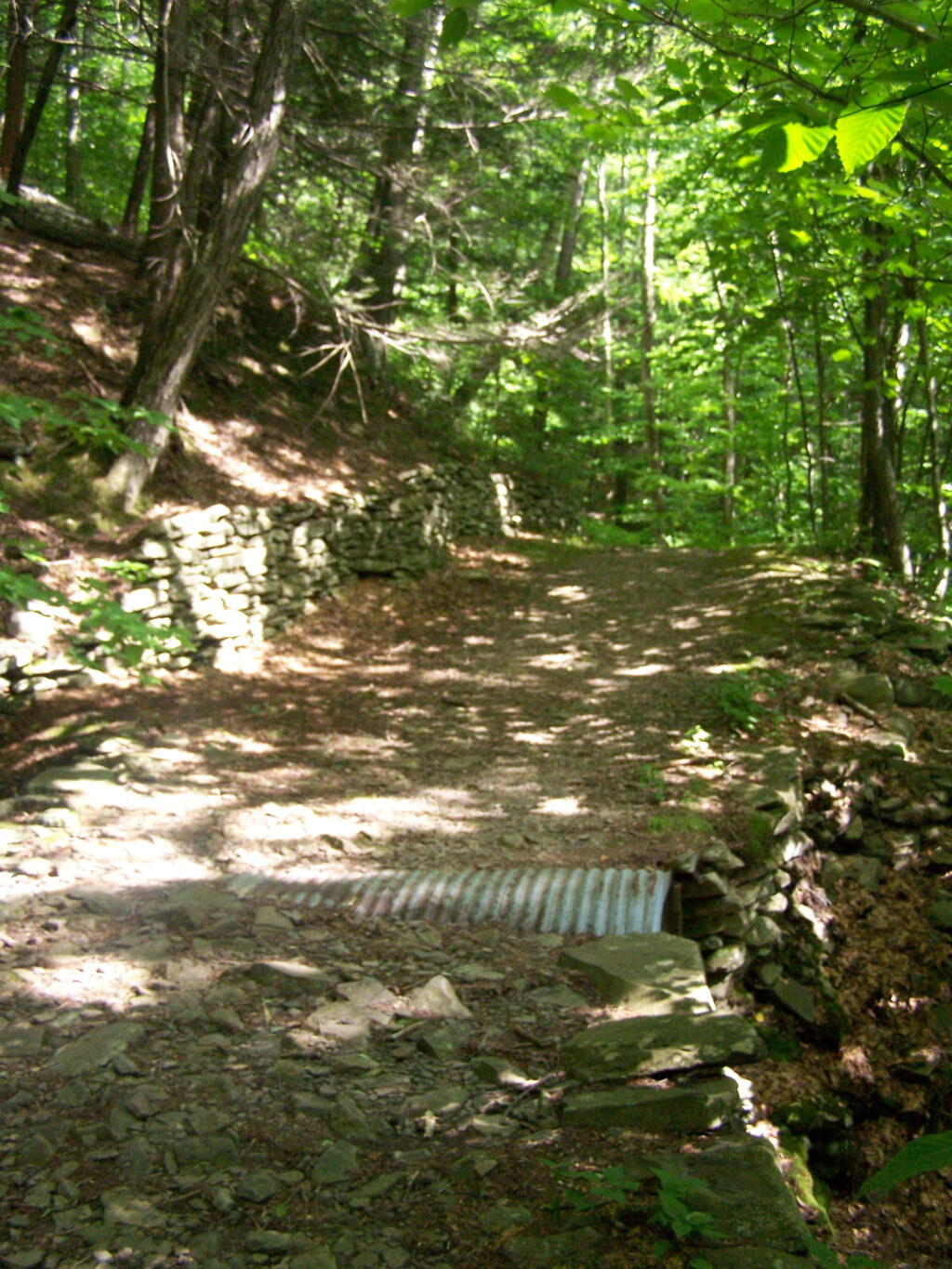
The trail crosses a high footbridge, without rails. It once was a full-size bridge for vechicles, but no more.
Reaching a historic marker of Curtis-Olmsbee Trail.
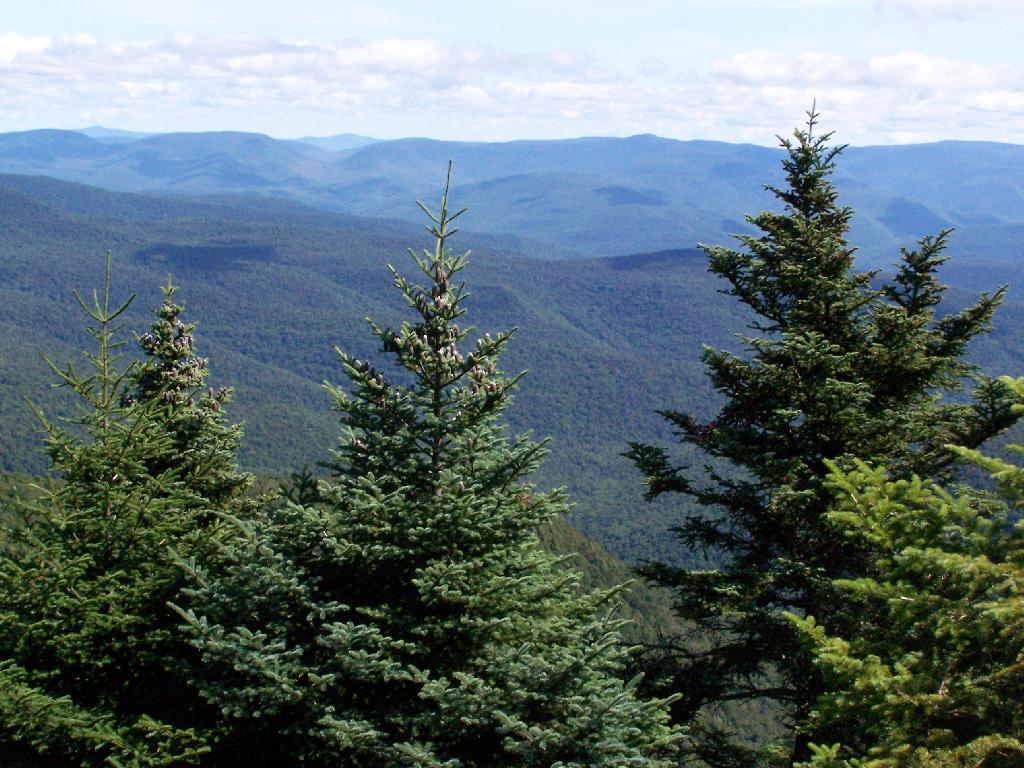
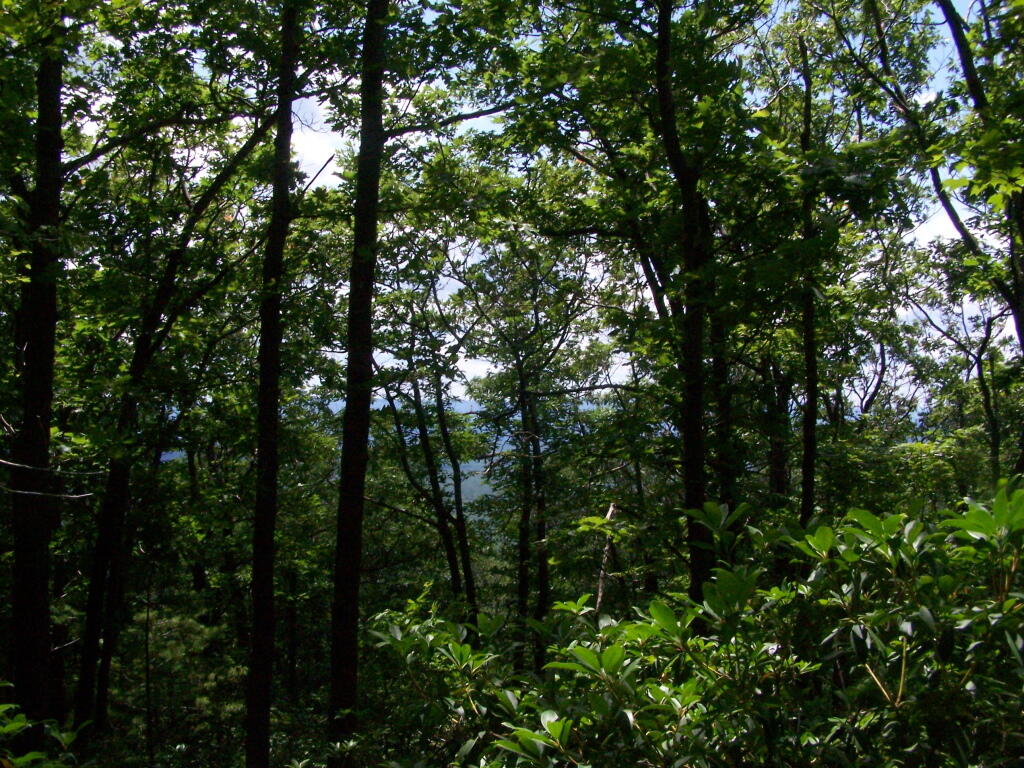
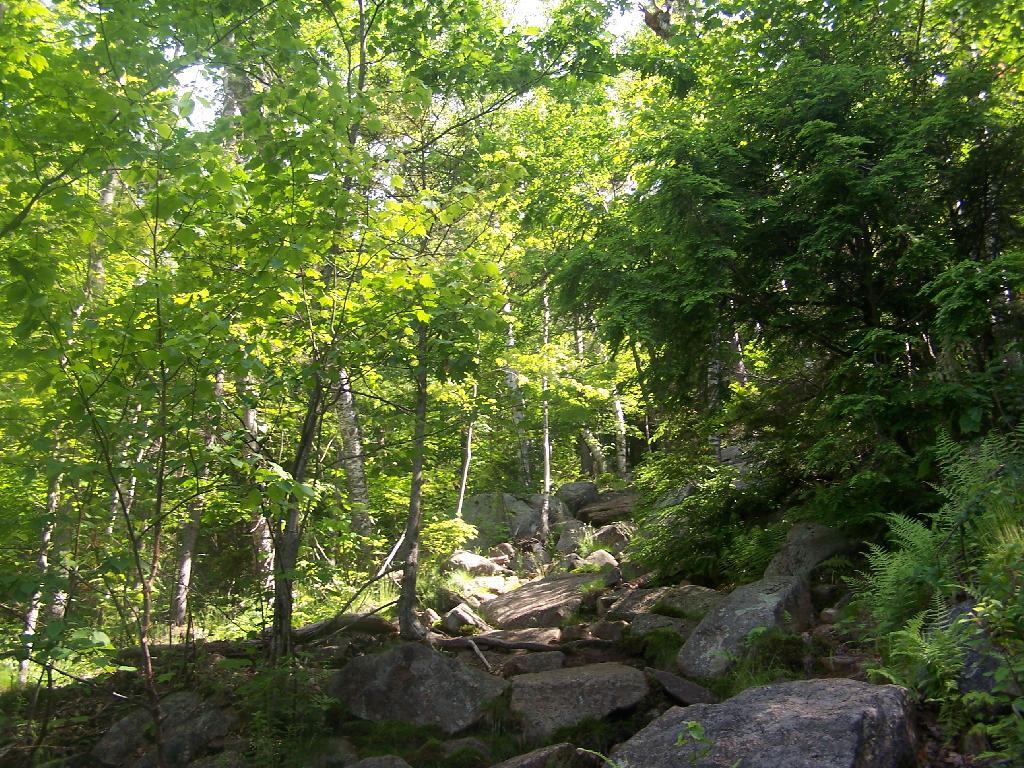
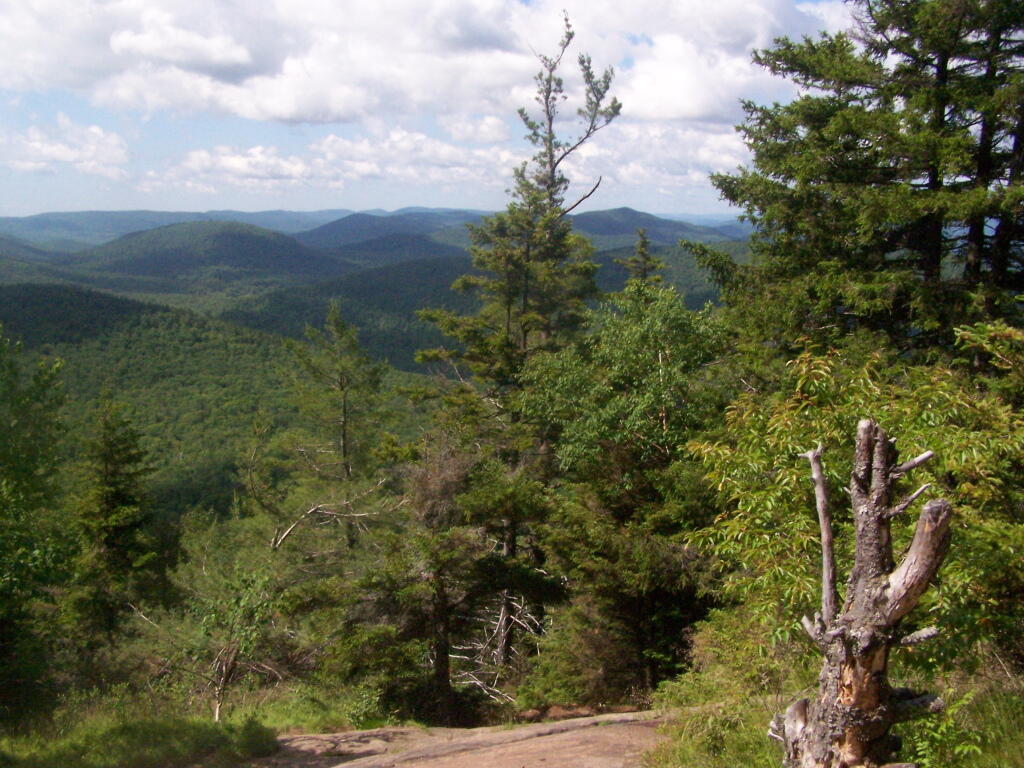
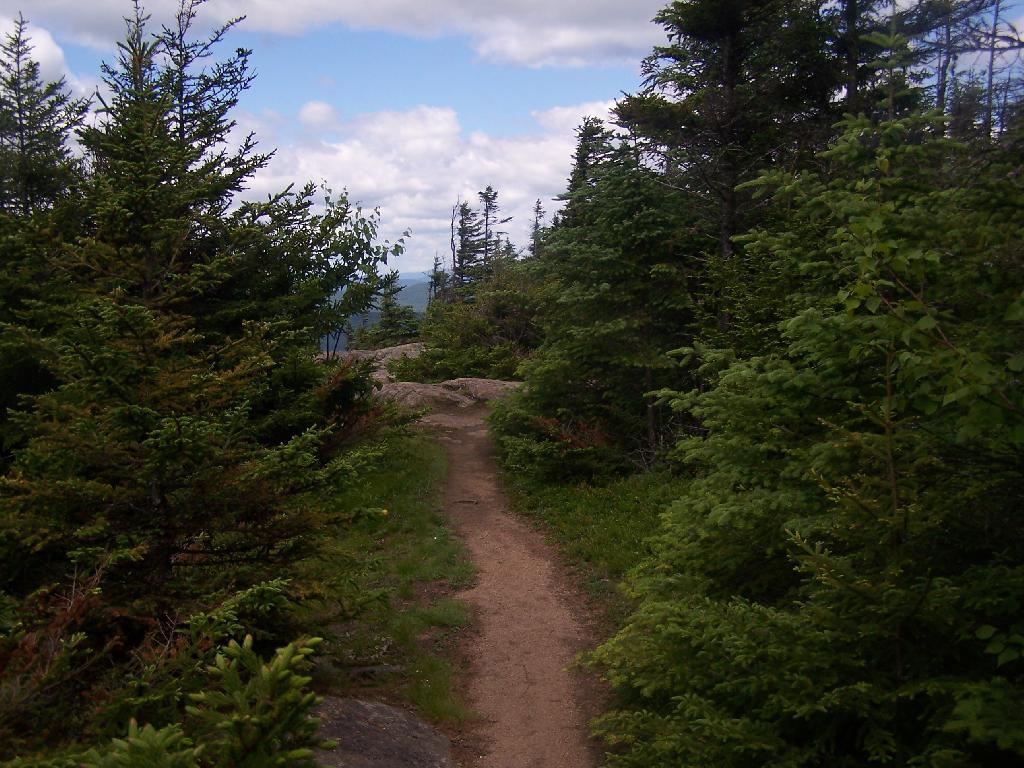
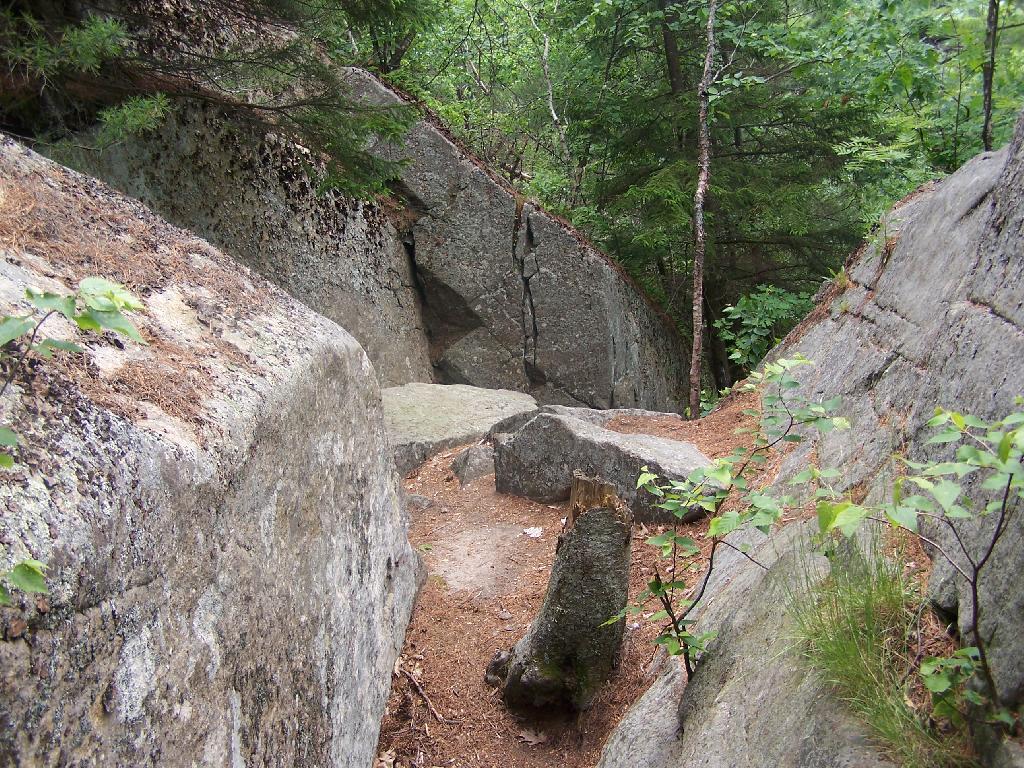
You climb, and then there are some places with views to South and West as you continue along. A few moderately steep places, but overall the trail is not super-steep.
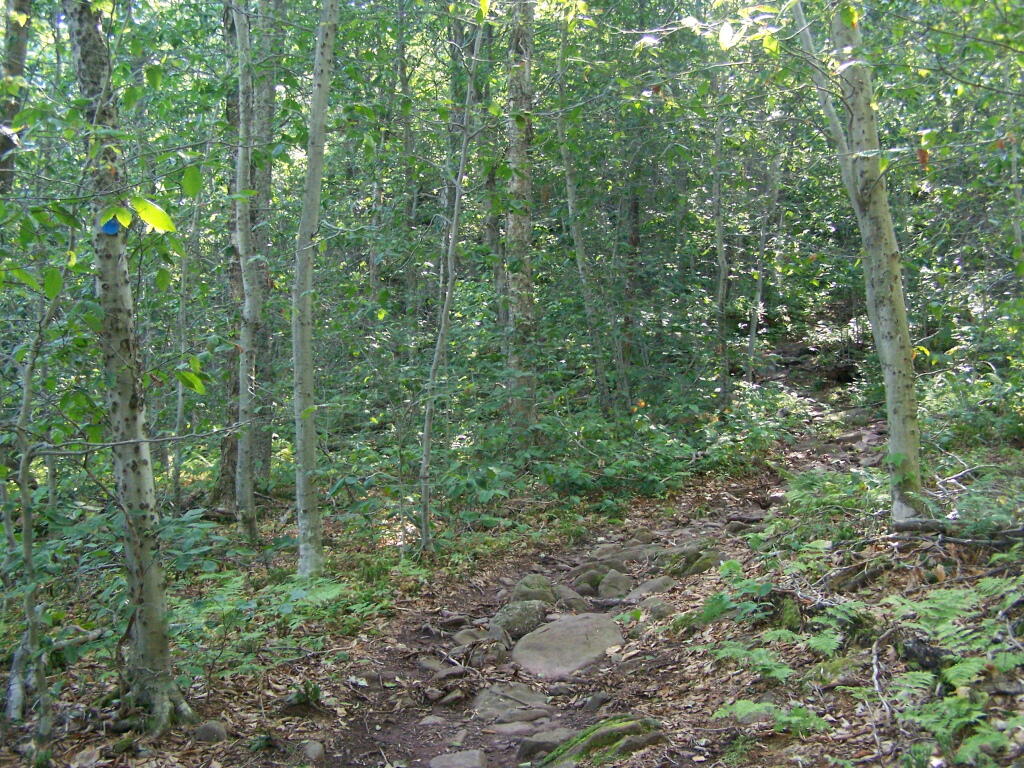
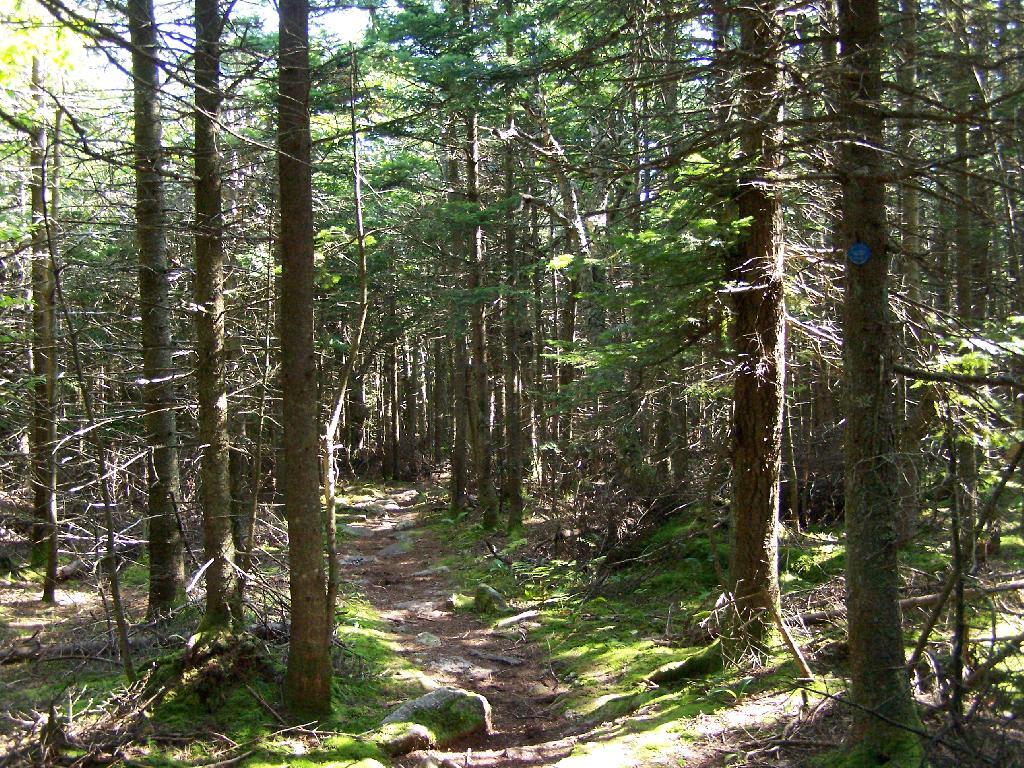
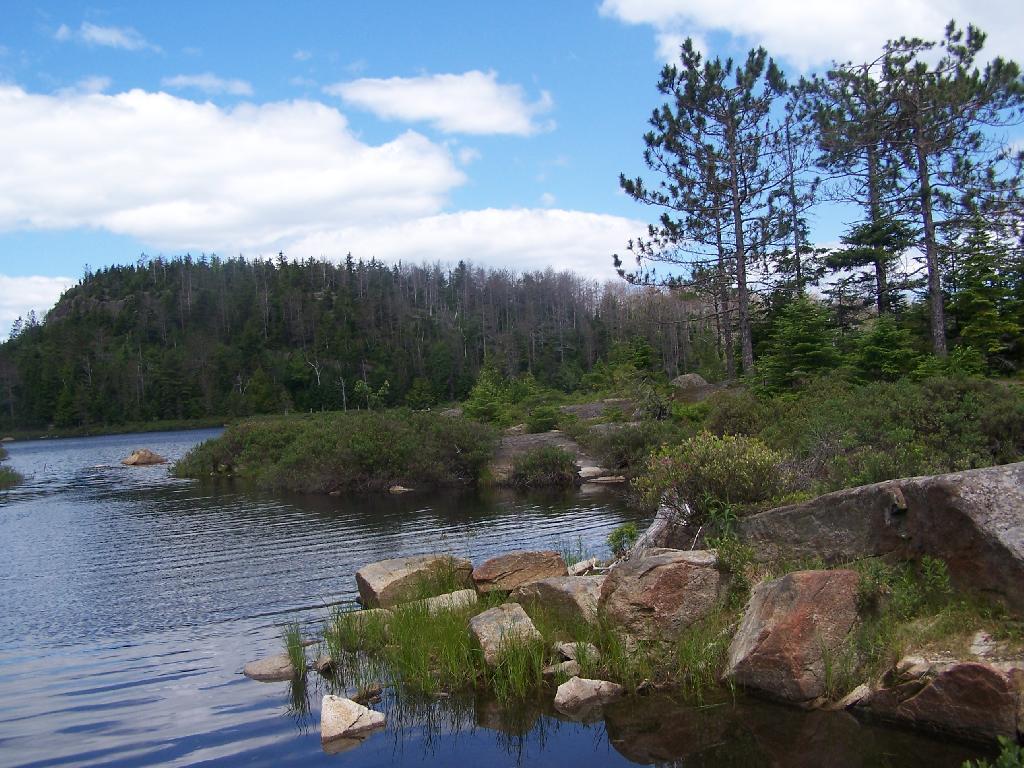
The trail once you reach the first couple of views, remains relatively flat as you wander past several swamps and borreal forests.
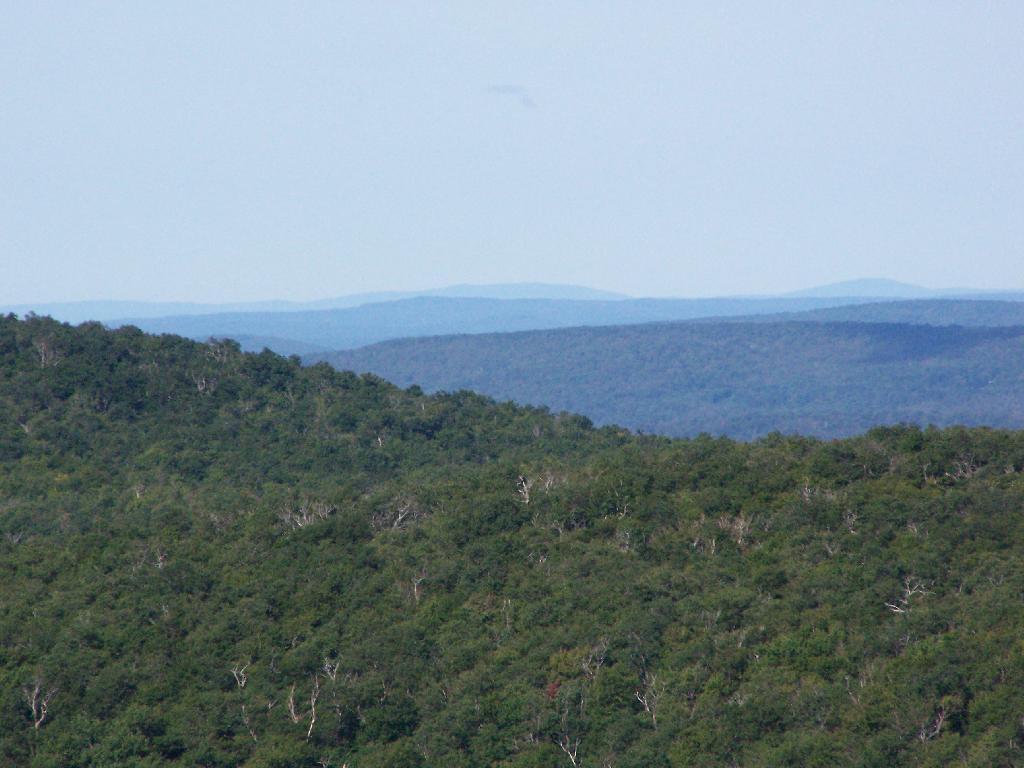
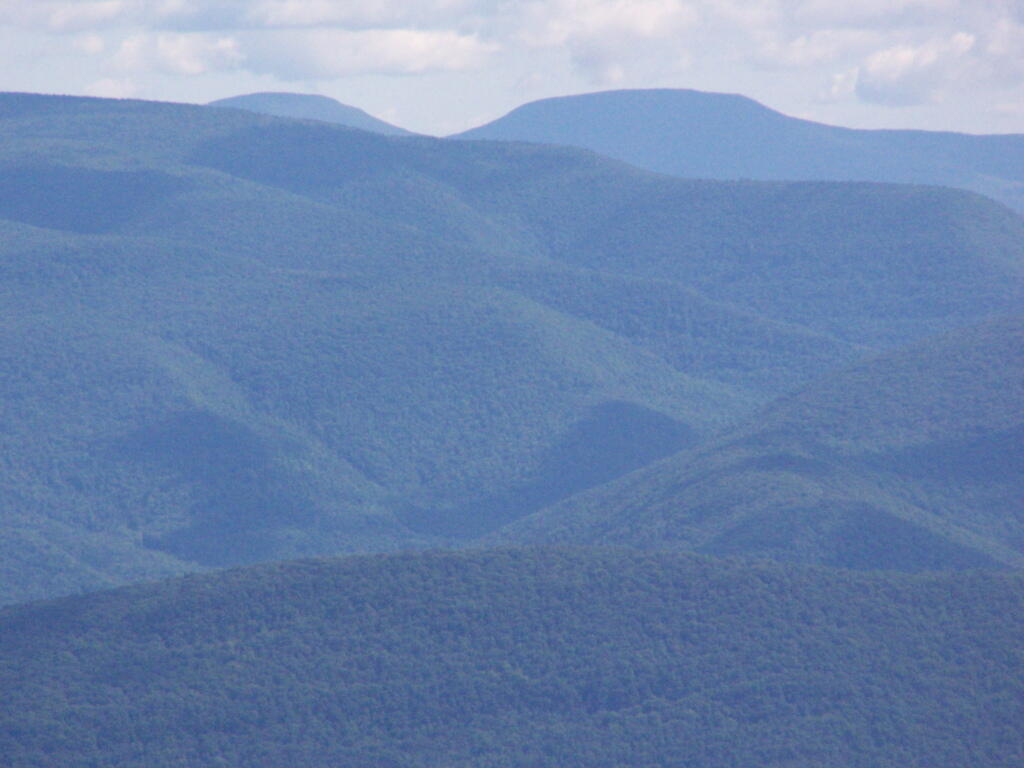
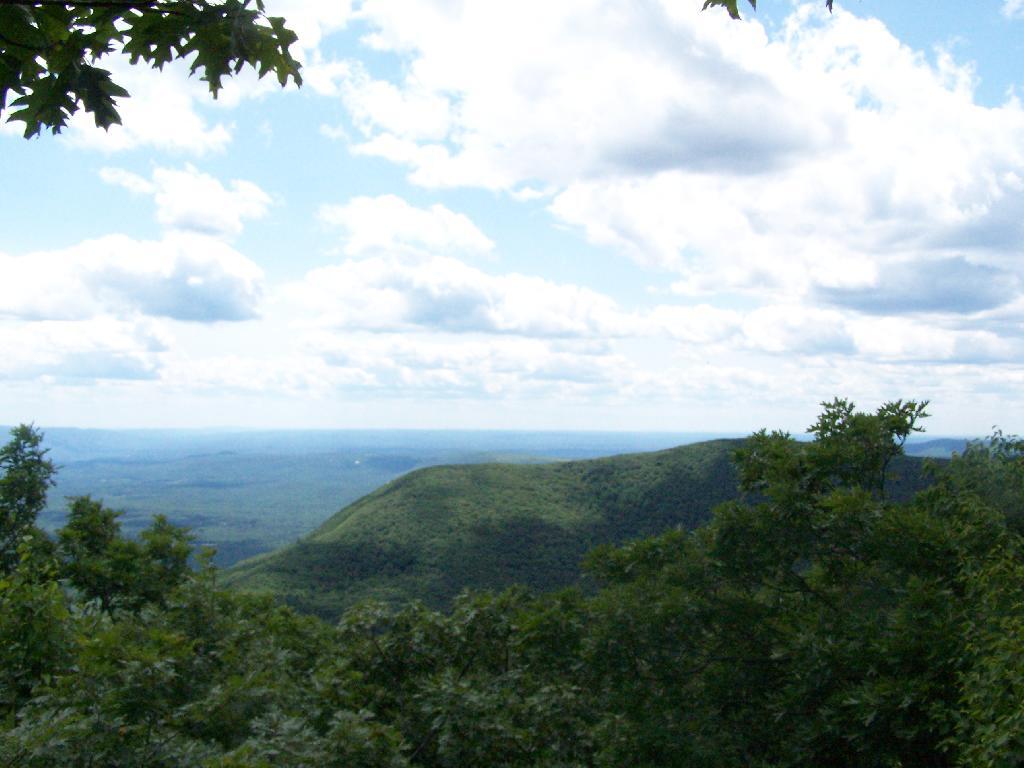
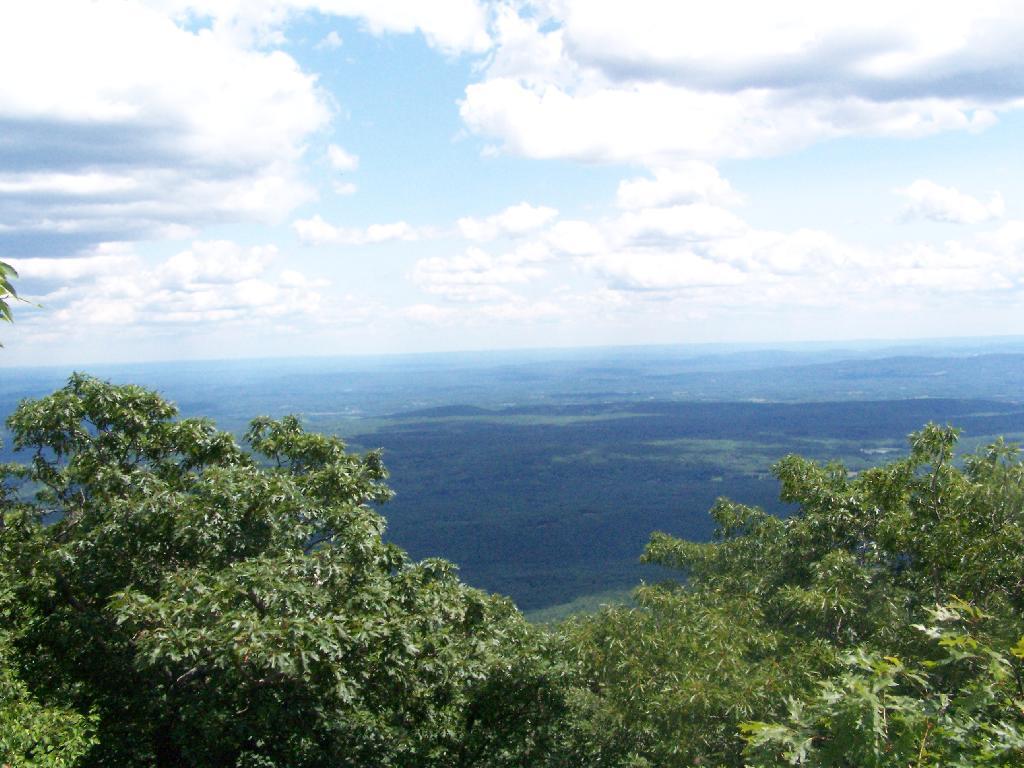
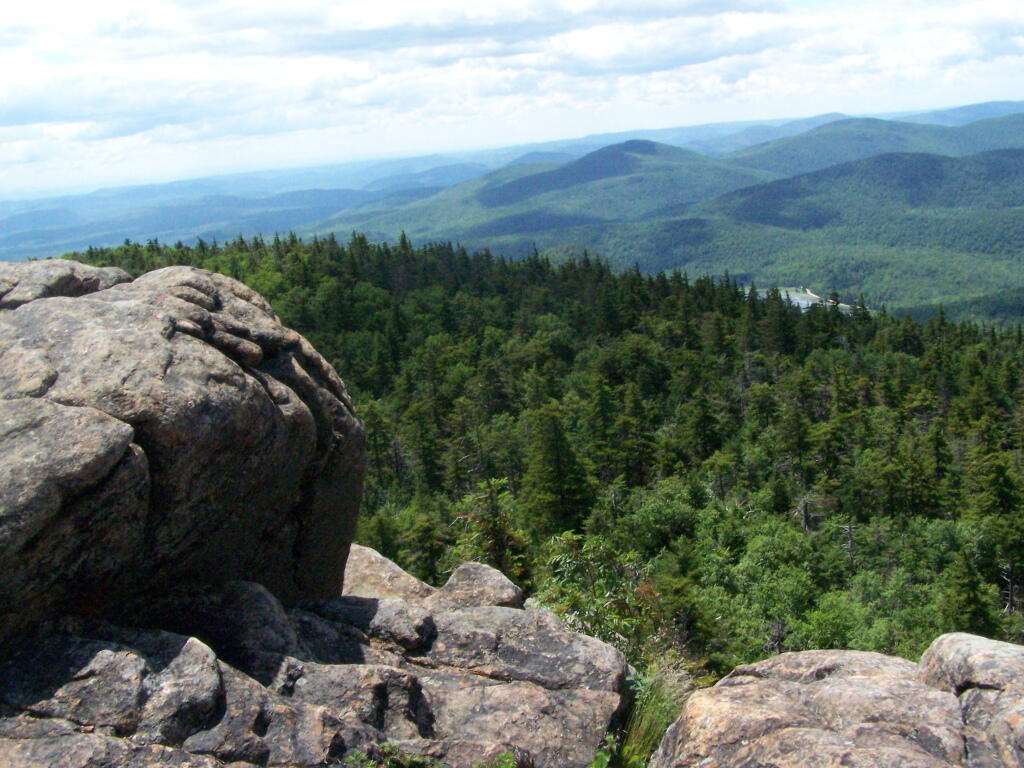
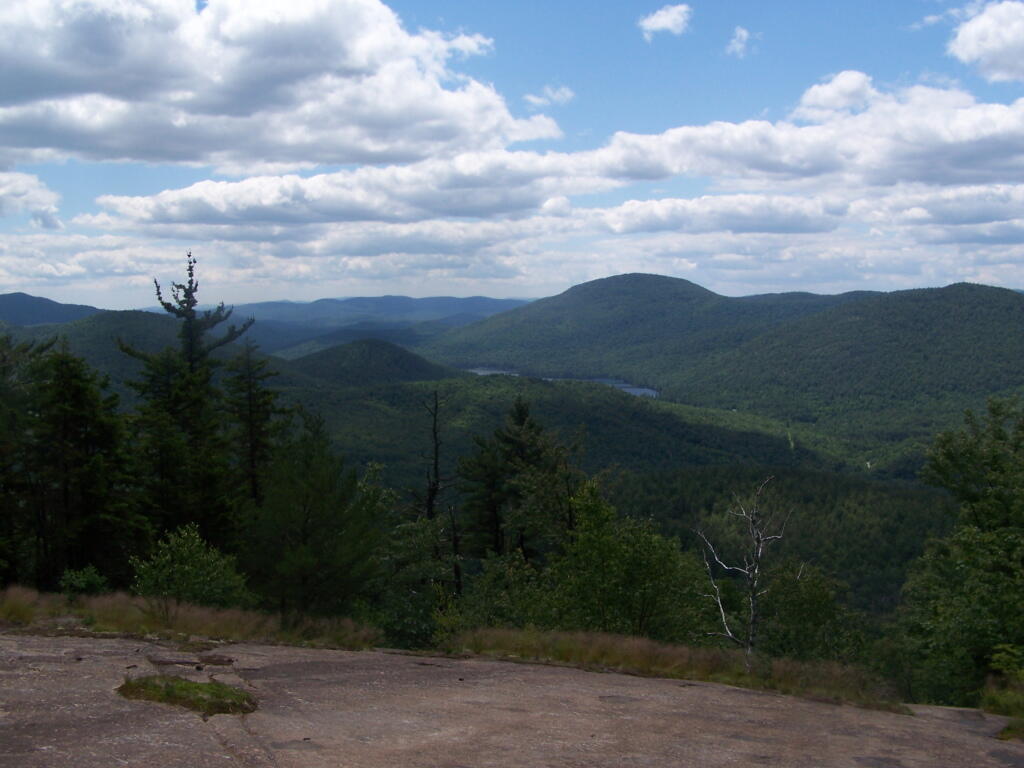
When you reach almost the top there is a point where you can see almost 70 named peaks.
Enjoying the mountains.
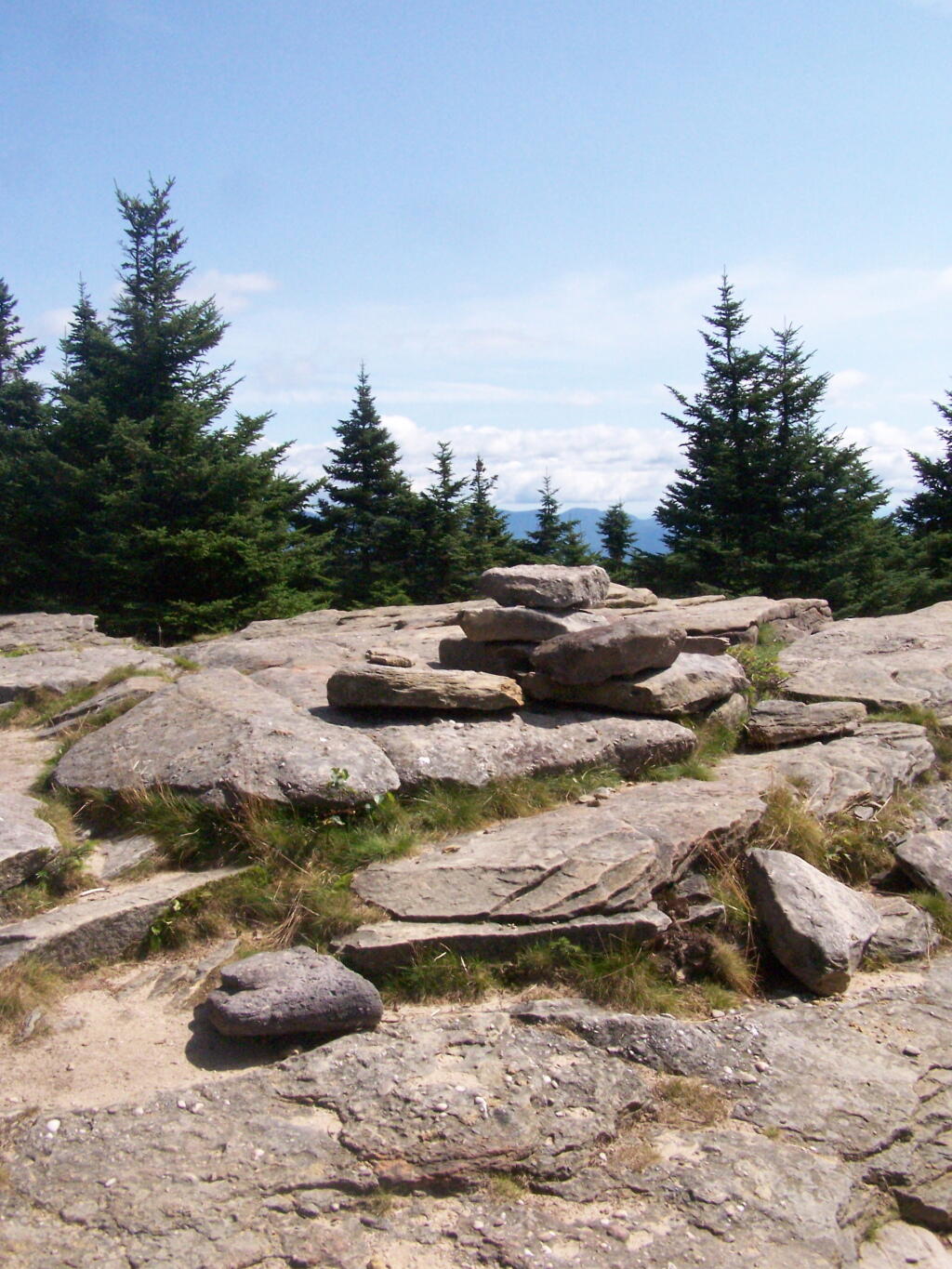
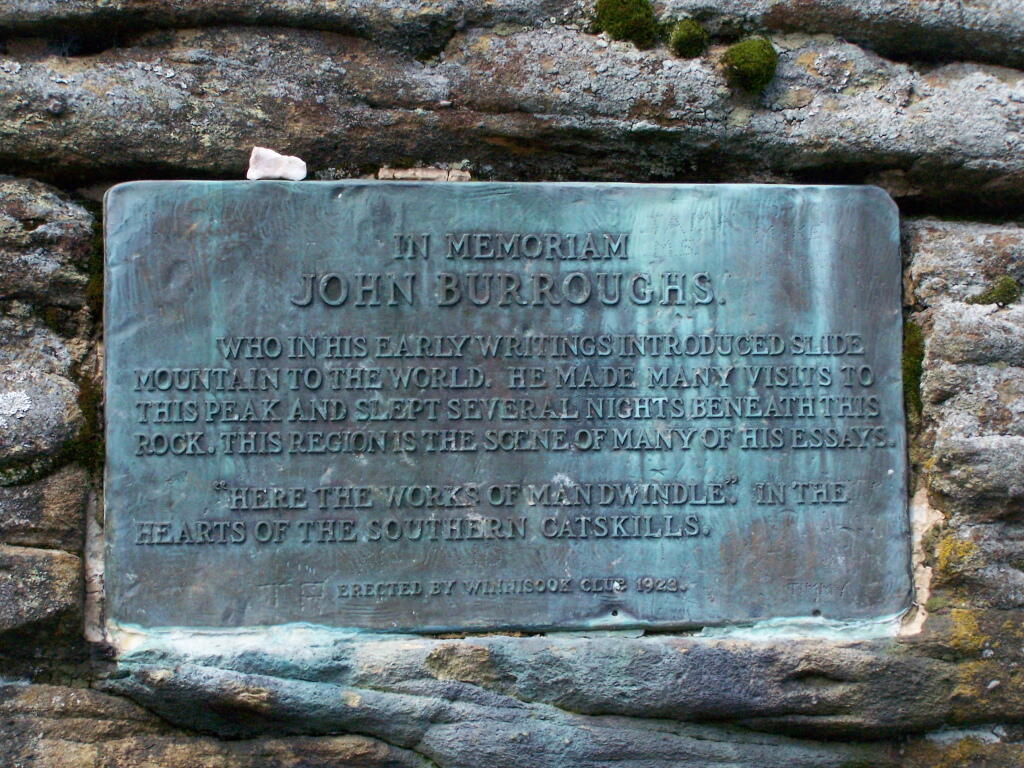
The top of the mountain is John Broughs Point. It has some interesting, partial views to the north and east.
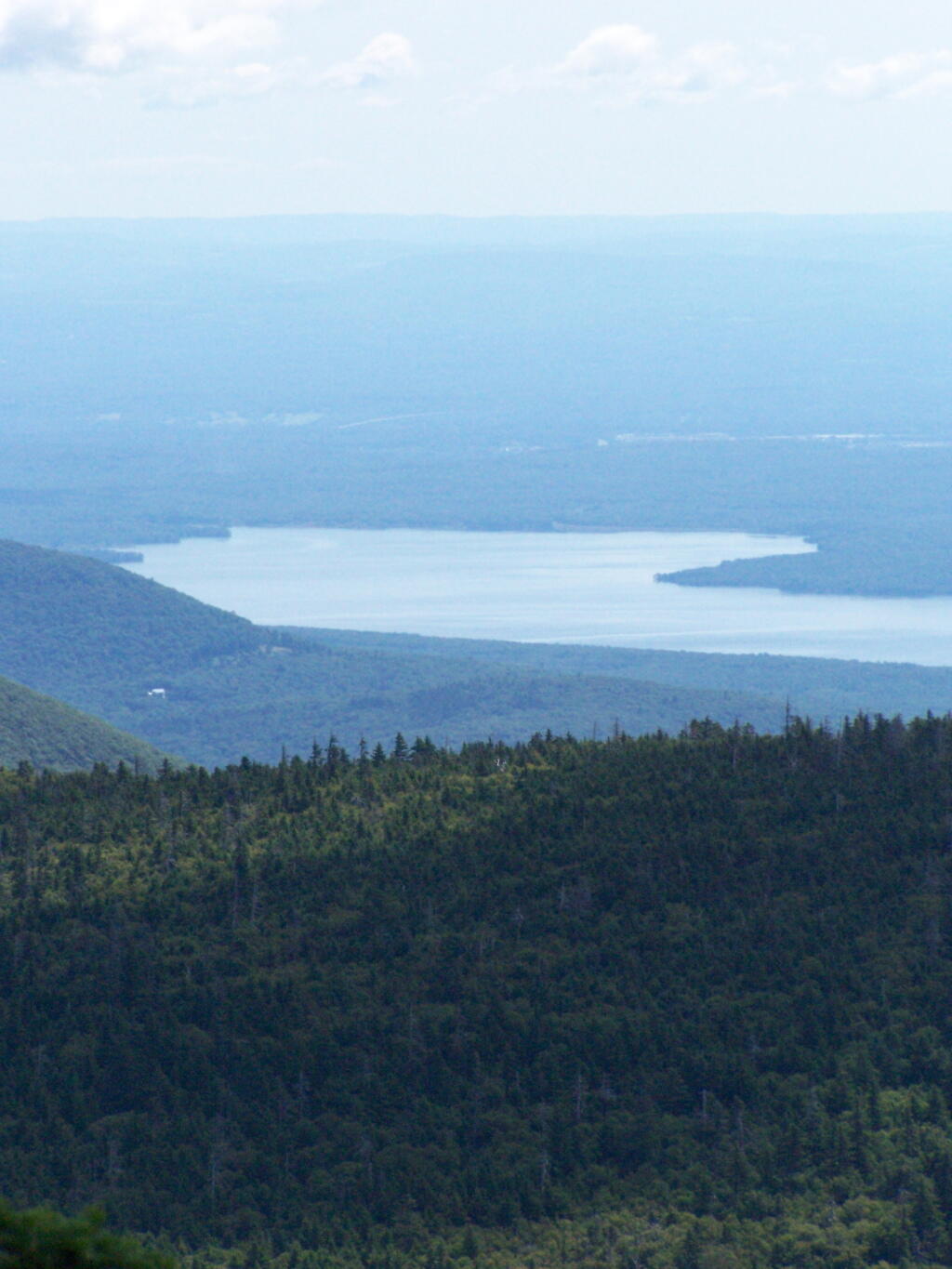
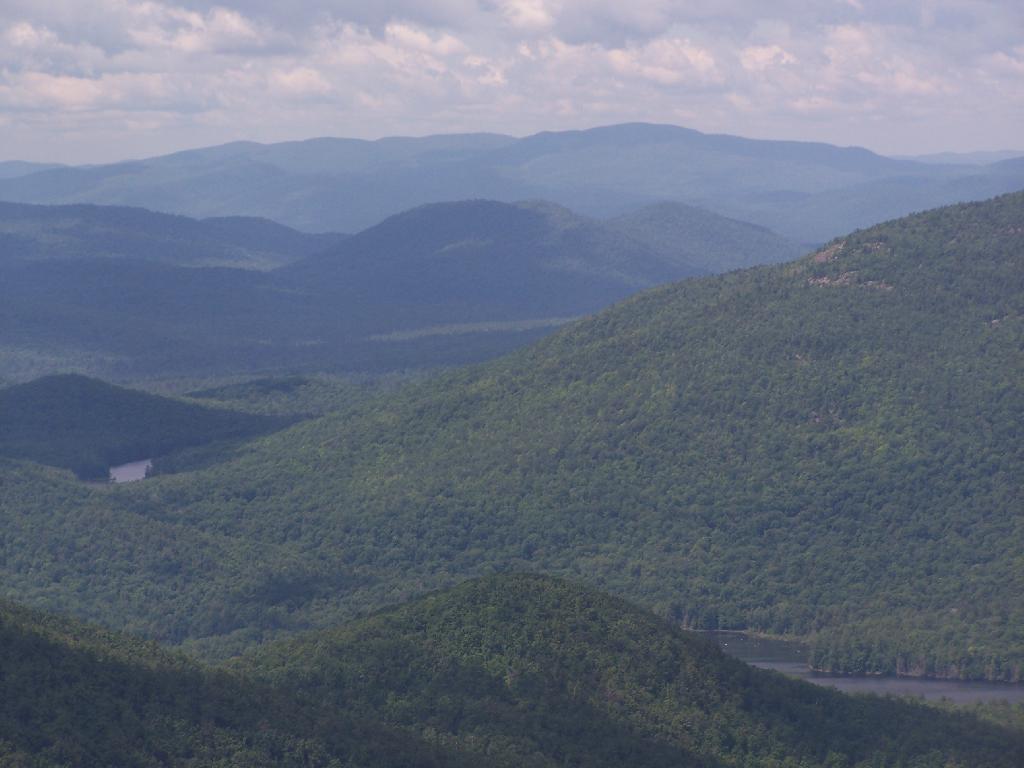
The Ashokan Reservior from Slide Mountain.
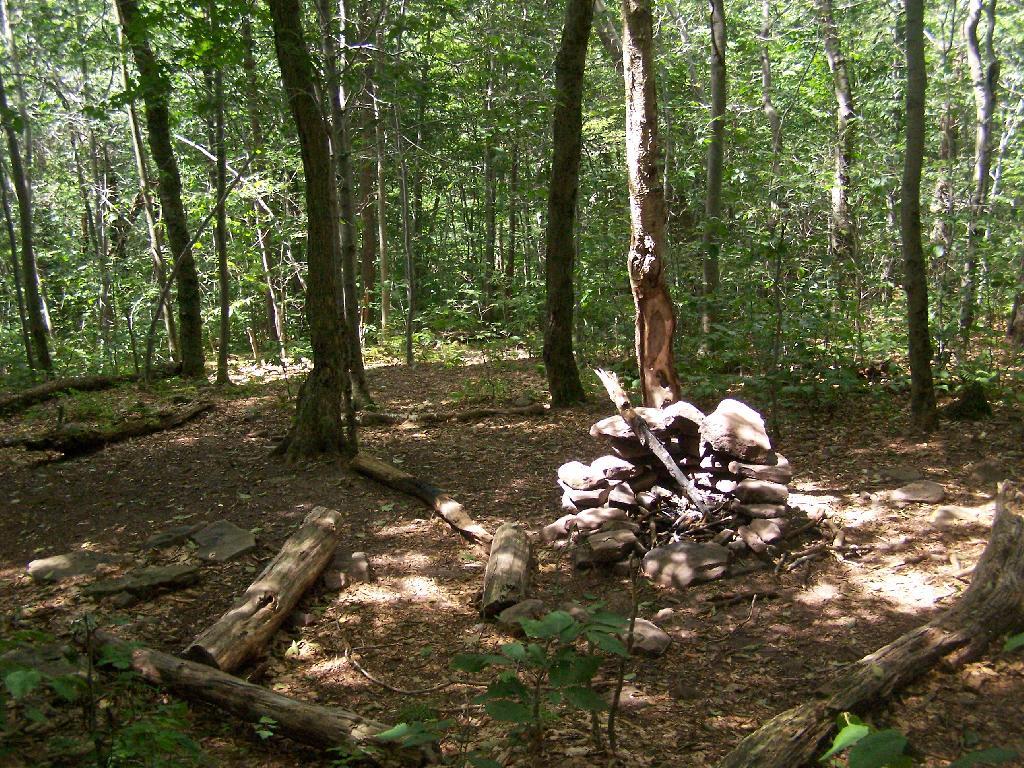
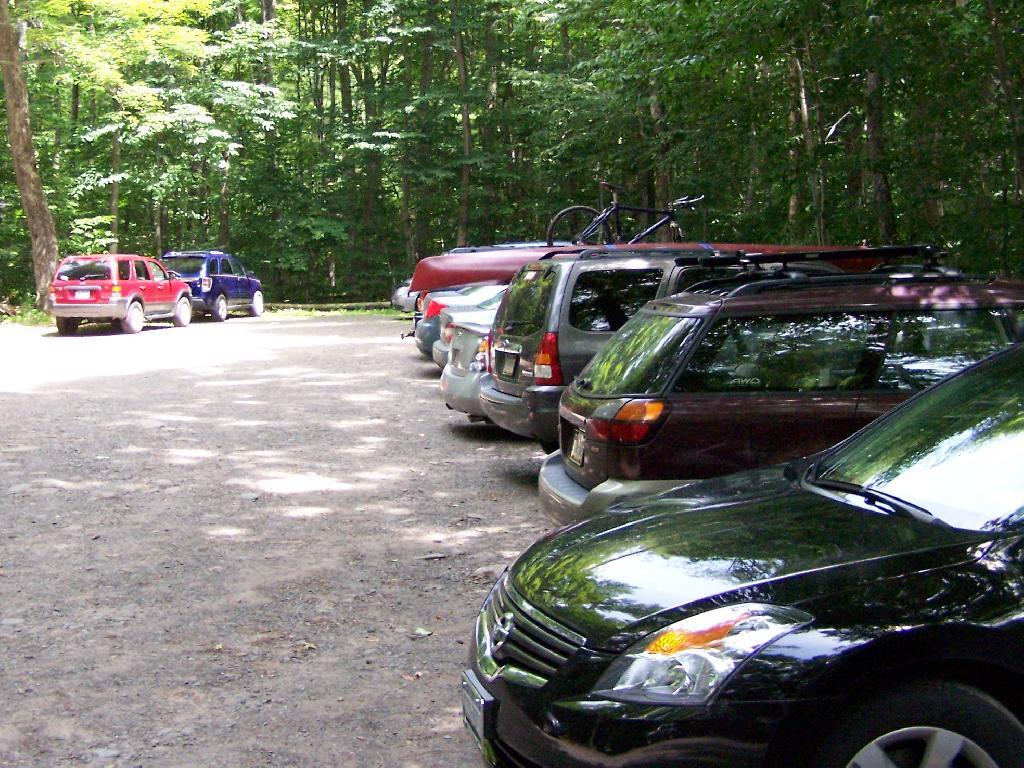
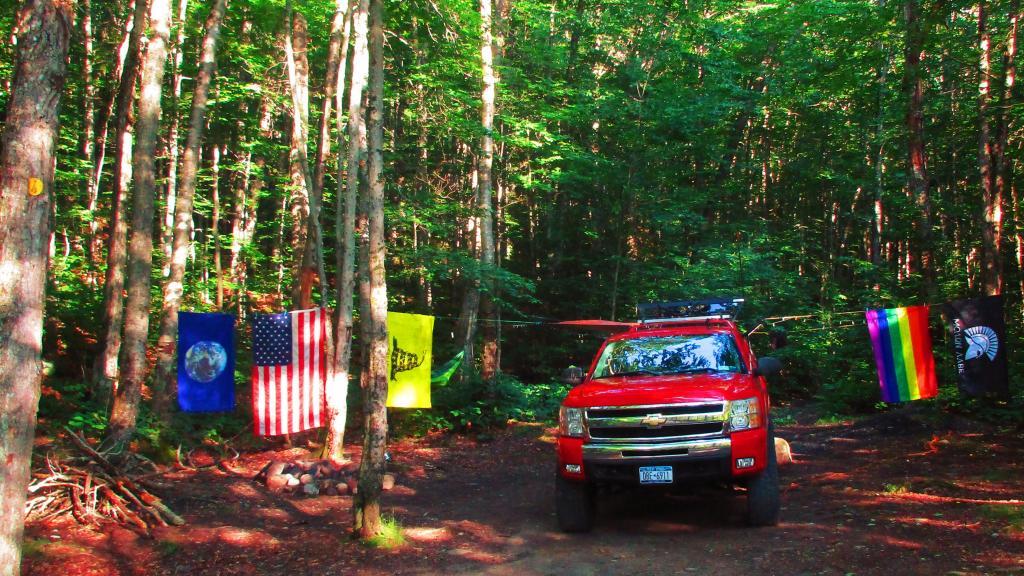
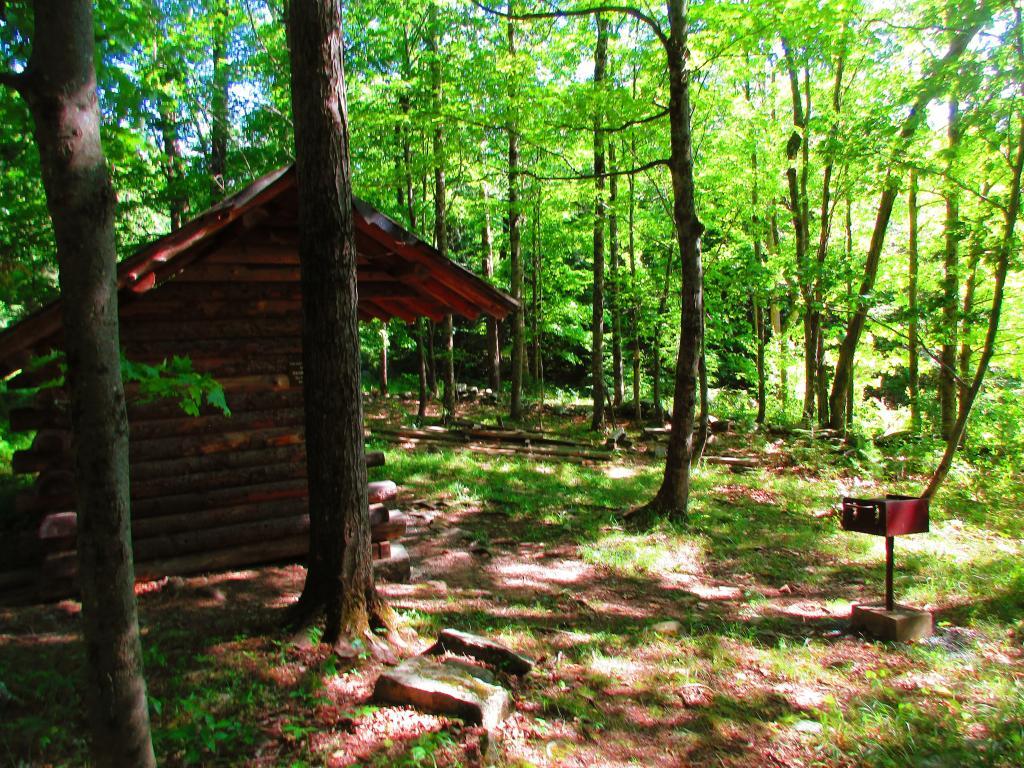
An established, primative campsite about 3/4 the way down the mountain or one mile from the Slide Mountain Parking Area.
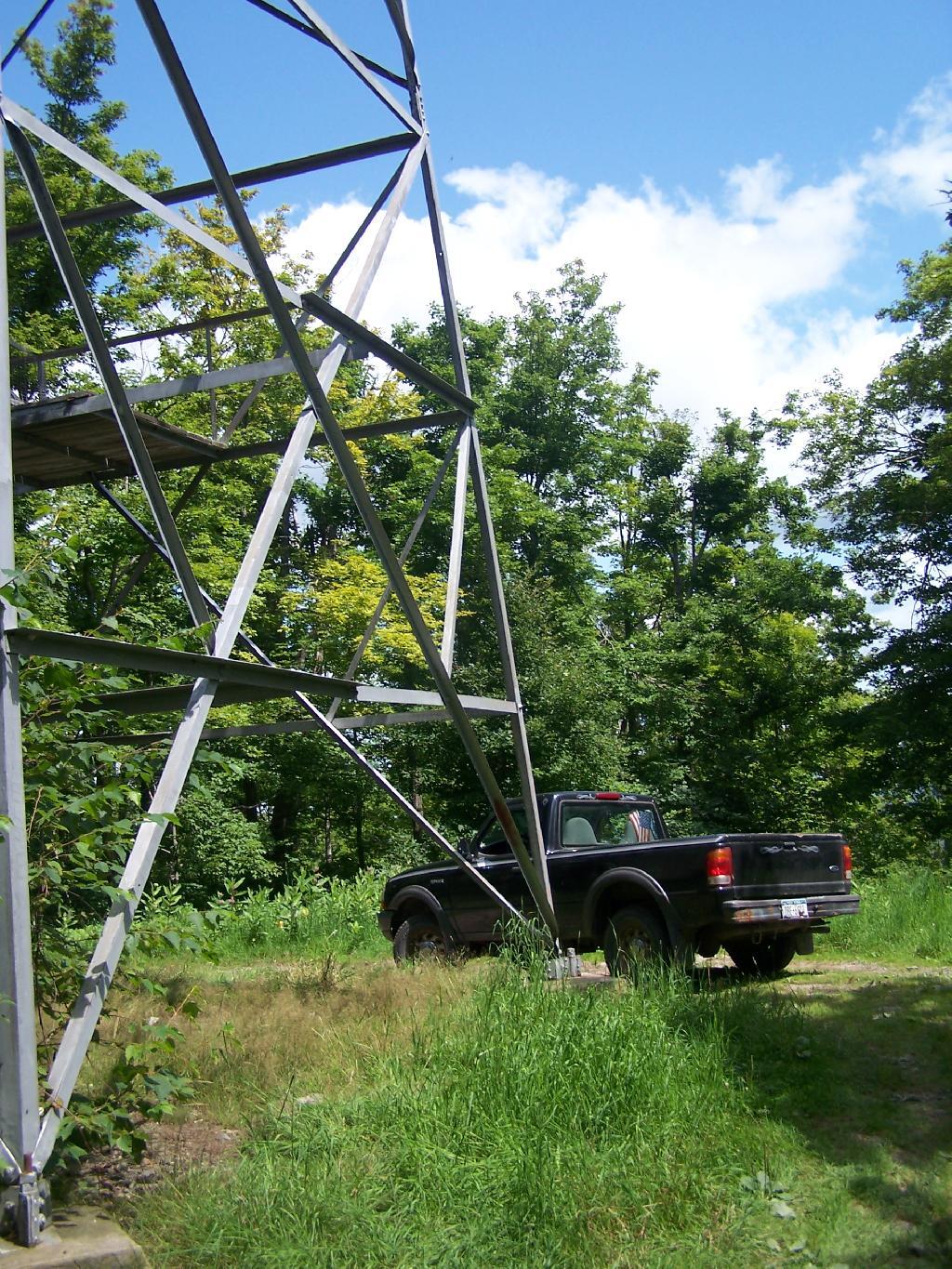
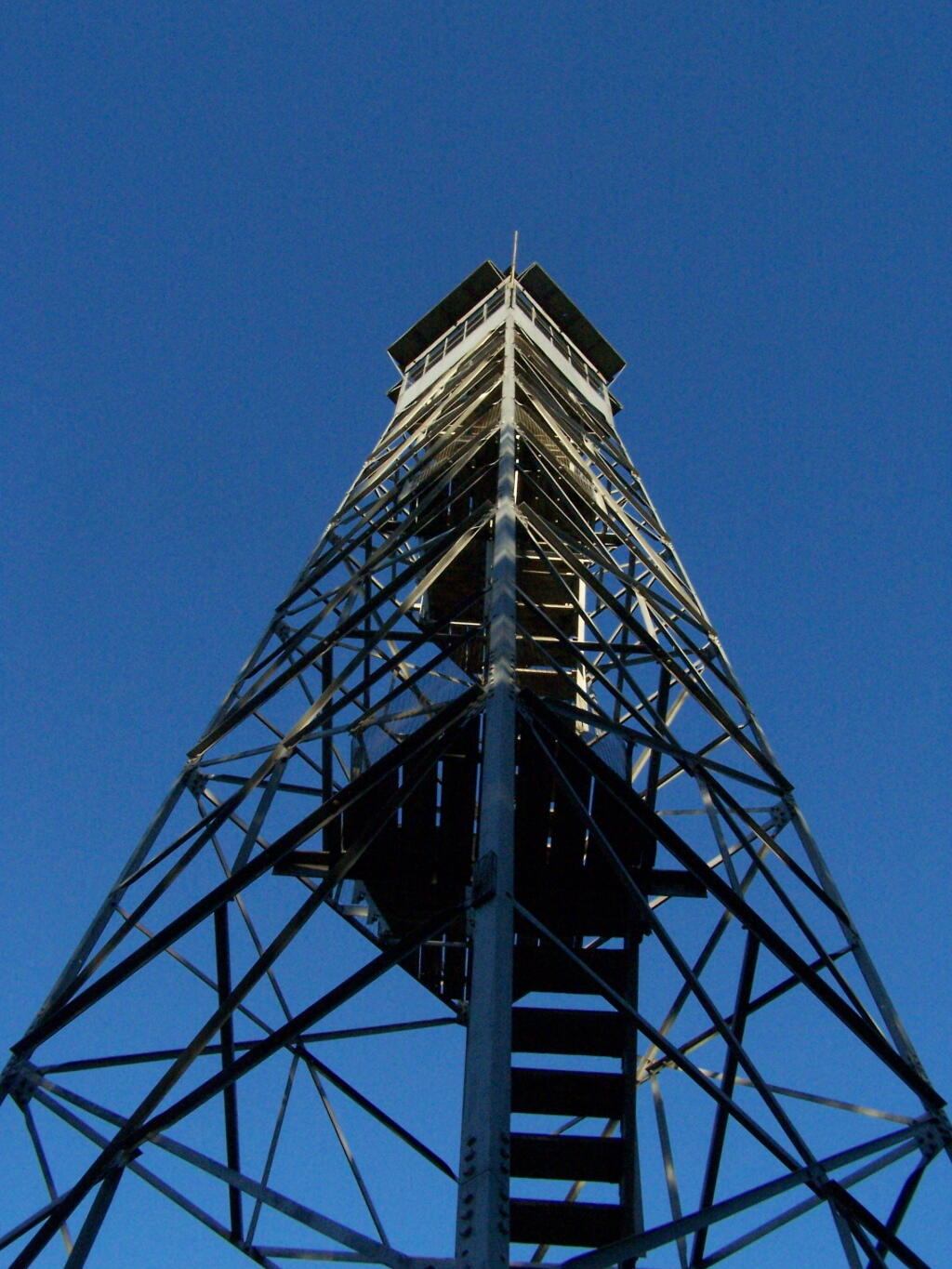
There is a currently closed, but slated for reconstruction, fire tower a top Leonard Hill in Schoharie County. You can drive up there with a car or truck as the road is well maintained.
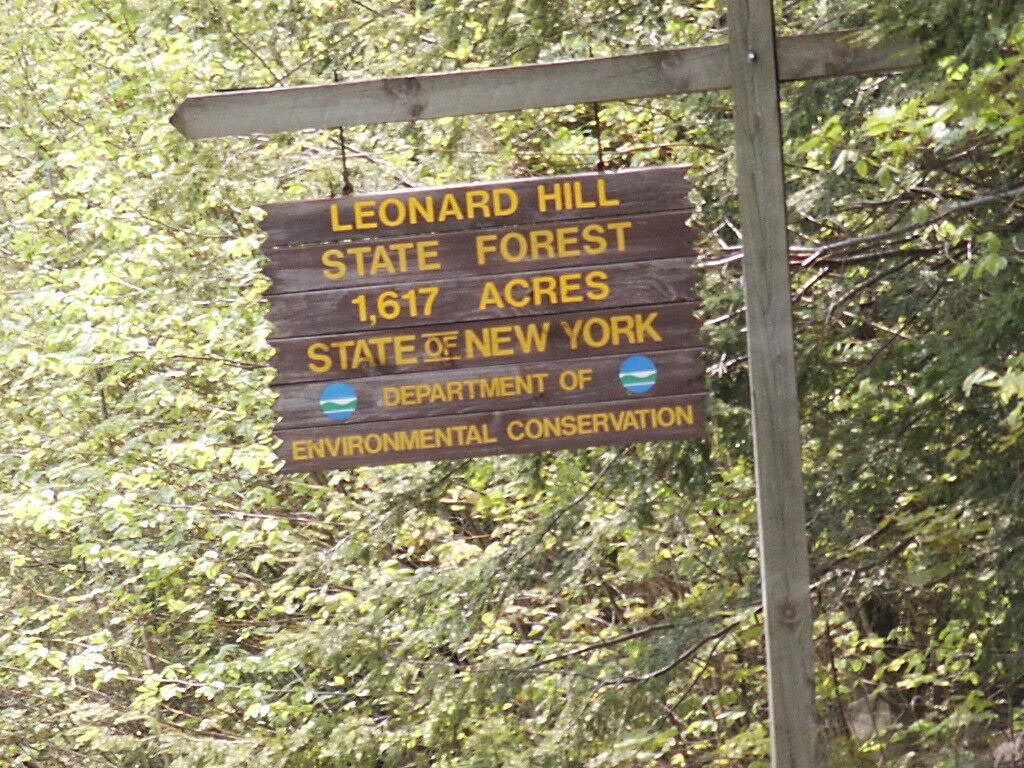
You get there by driving out Broome Center/Potter Hollow Mountain Road, then taking a left up Leonard Mountain Road, which is located right in the middle of Broome Center. You take Leonard Mountain Road about a mile until you see an truck trail marked solely by a “Leonard Hill State Forest”, and take a right on it.
After about a mile on this truck trail, you are on a ridge between Hubbard Hill and Leonard Hill, and can see Leonard Hill Fire Tower ahead. Continue on that truck trail by another mile, and you’ll arrive up to the tower, and you can drive right up to it’s base.
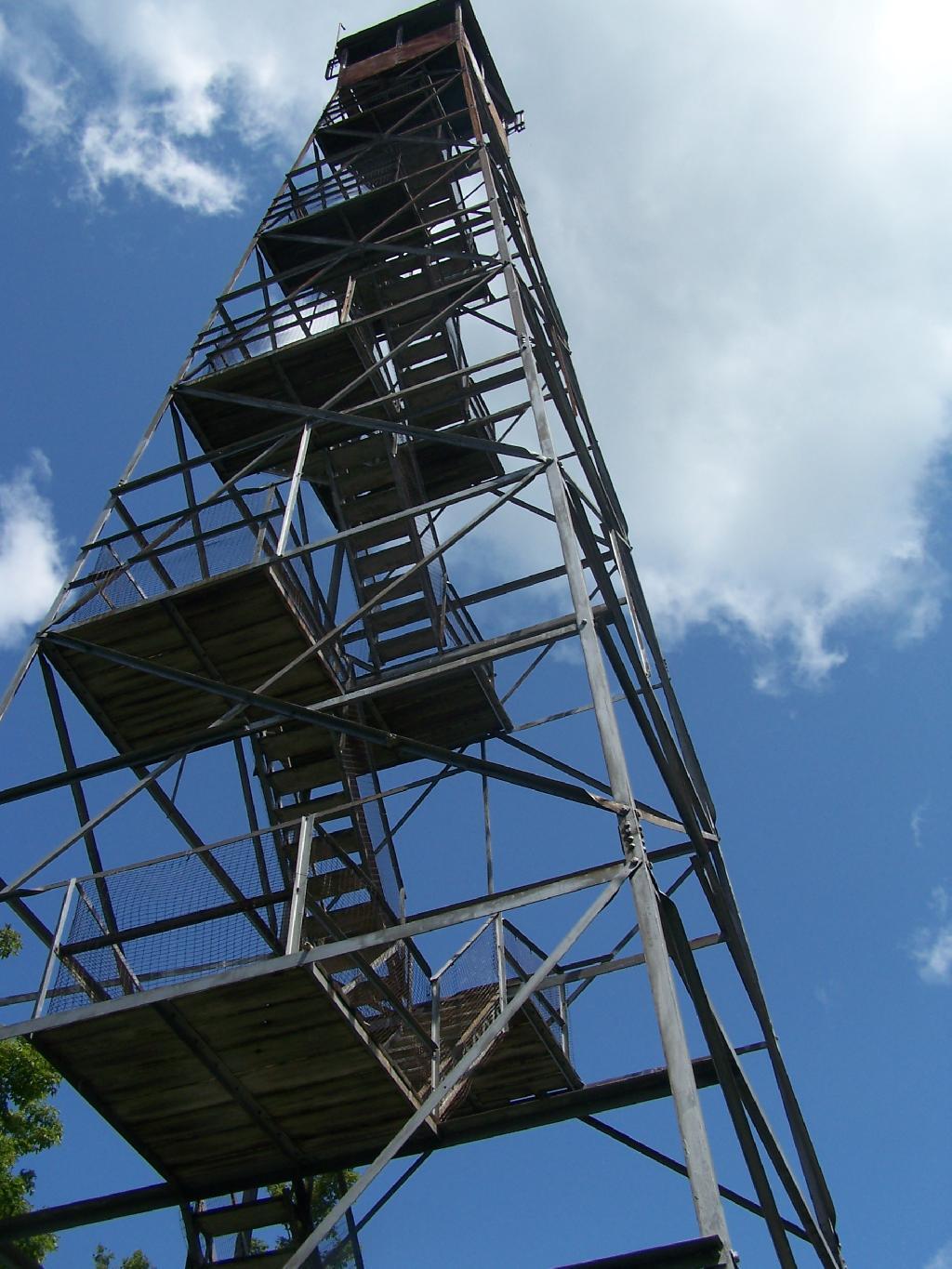
The tower looks a bit rusted in a places, but structurally good. It is awaiting a reconstruction project that the last time I had heard was delayed by concerns over the high cost of gasoline last summer.
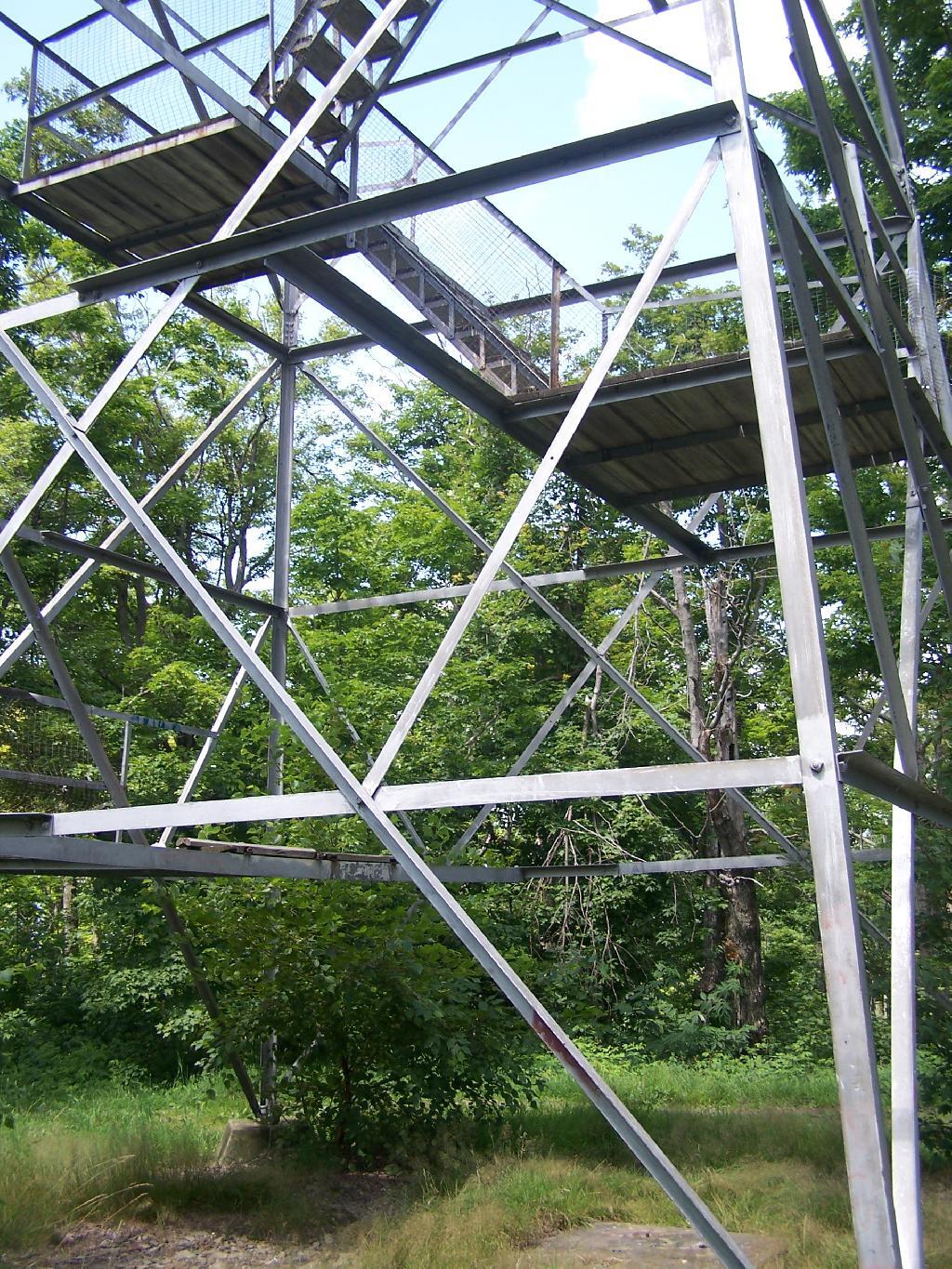
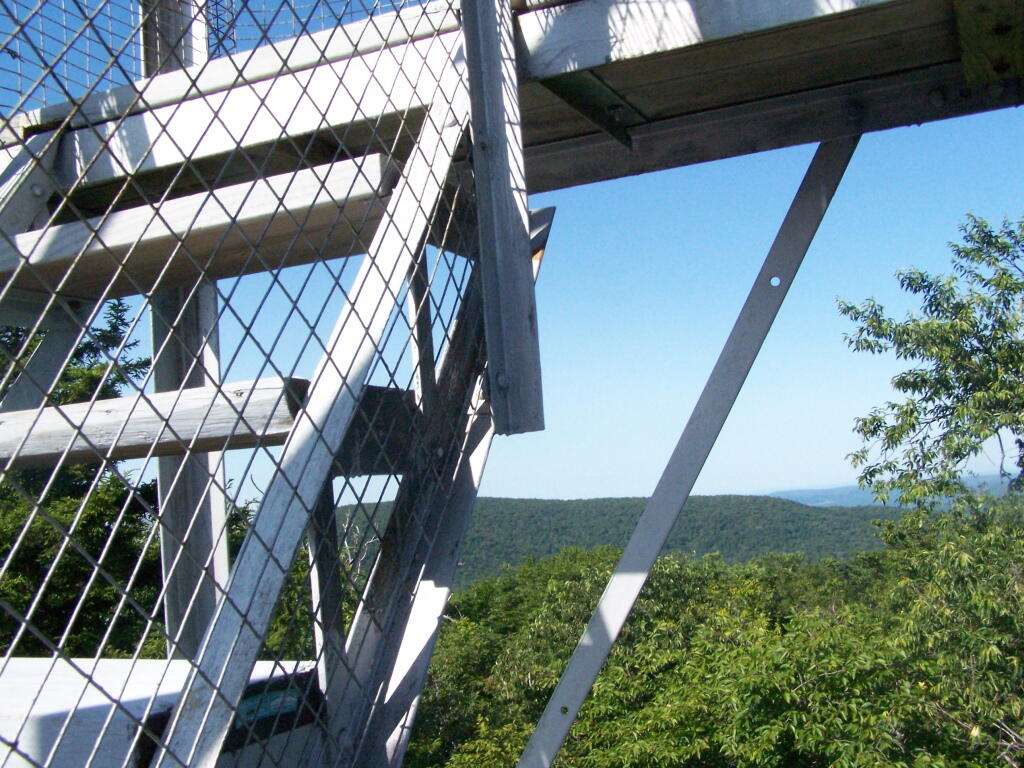
To discourage people from climbing a potentially unsafe tower, they have removed the first two flights of stairs.
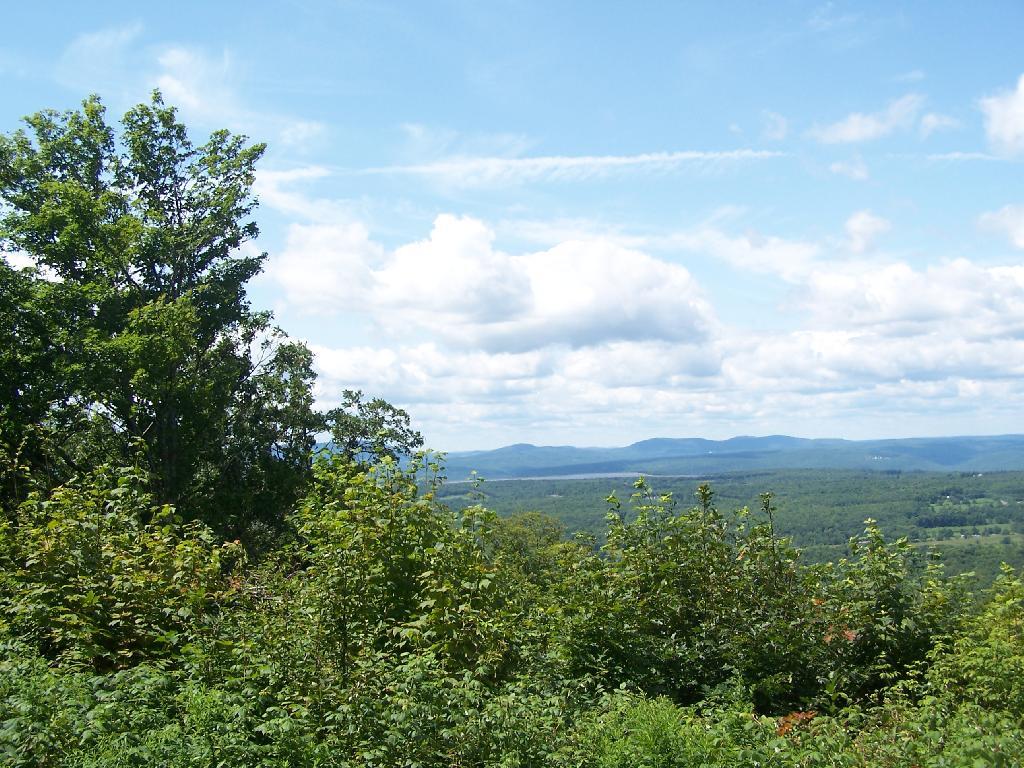
Just across from the tower is a beautiful campsite, with some fantastic views of the Catskills and the Schoharie Valley. I spent the following night down there, camping out. It was cloudy that night, however if the weather was beautiful, there could be a great sunset to watch from here.
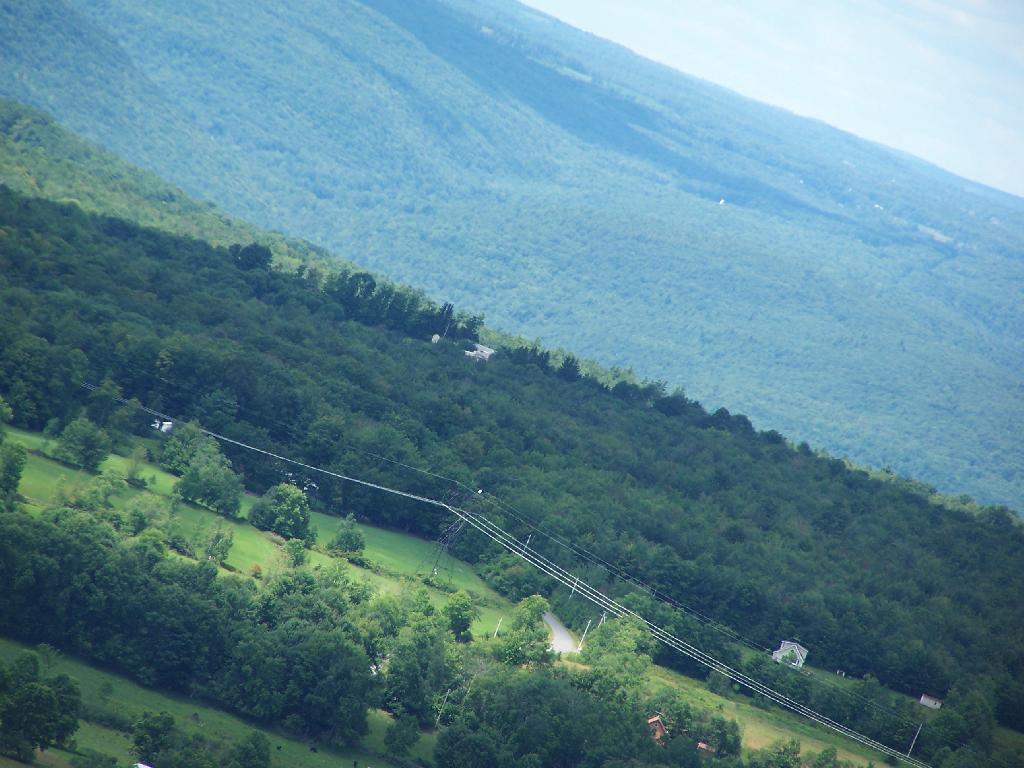
Here is the Schoharie Valley.
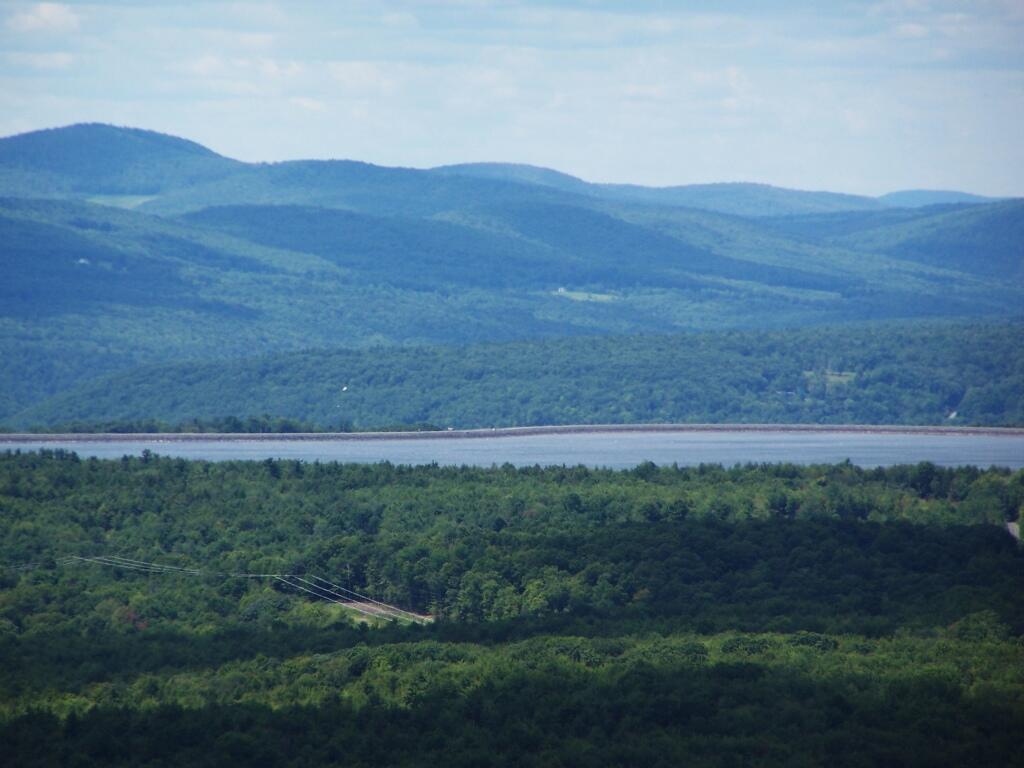
Blenhium Mountain and the NYPA Blenhium Power Reservior can be seen well from the campsite. The reservior is partially lit up at night from generating equipment and safety lights by NYPA.
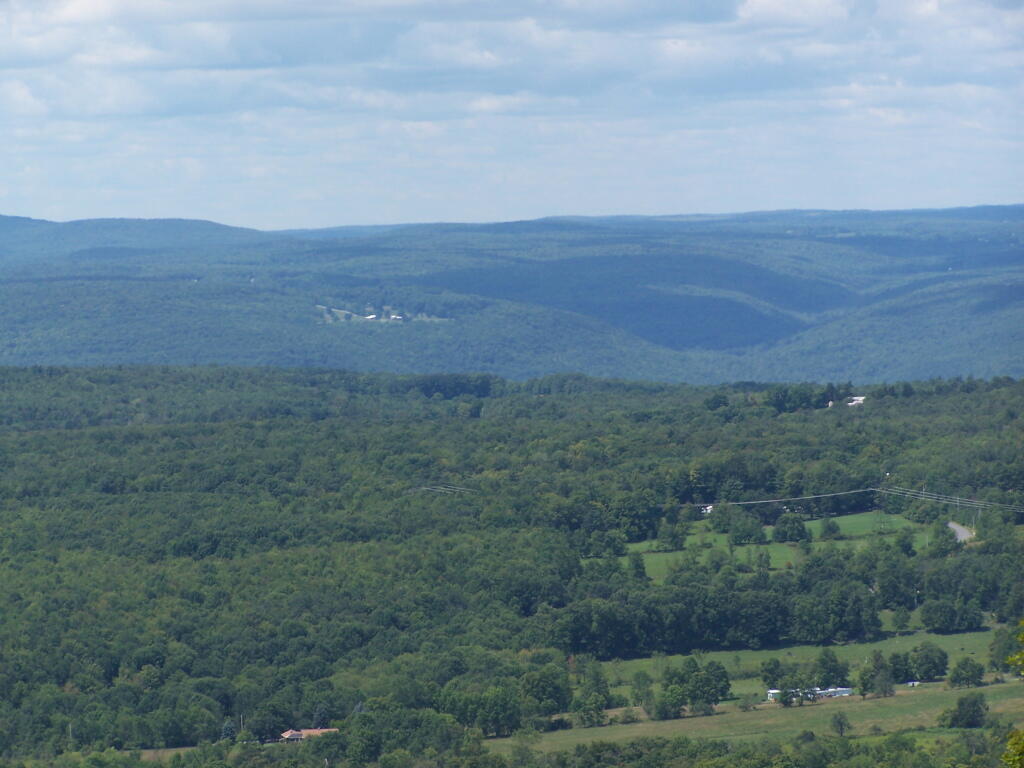
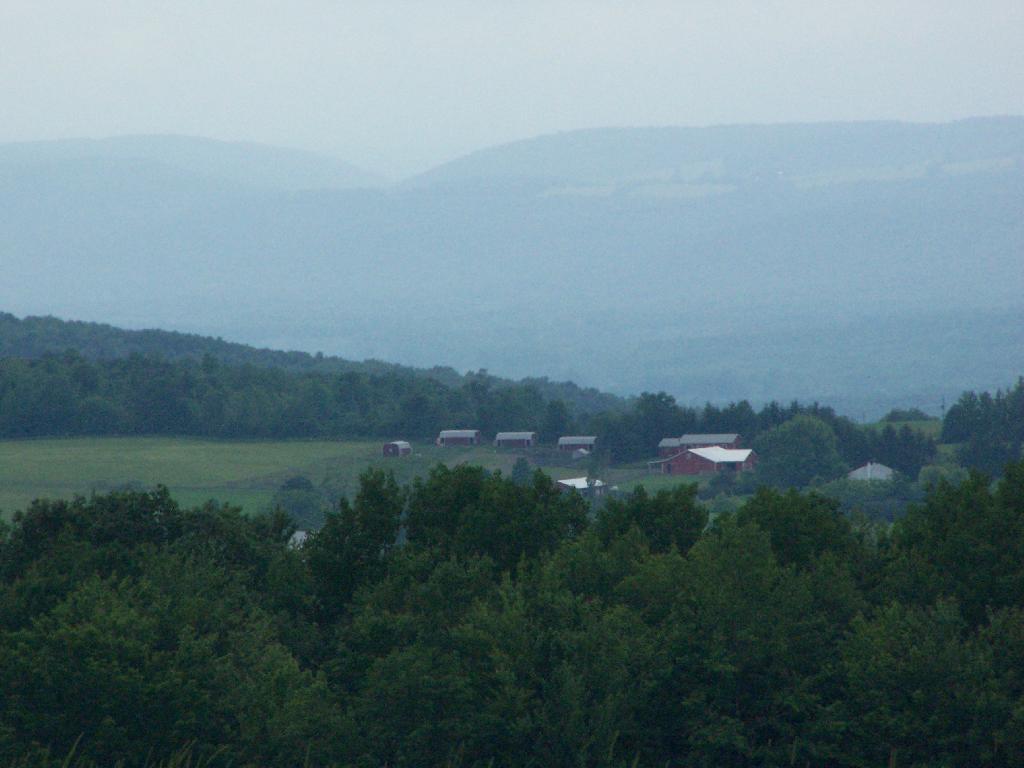
Here is the valley below, and the mountains beyond it, the Emminence State Forest.
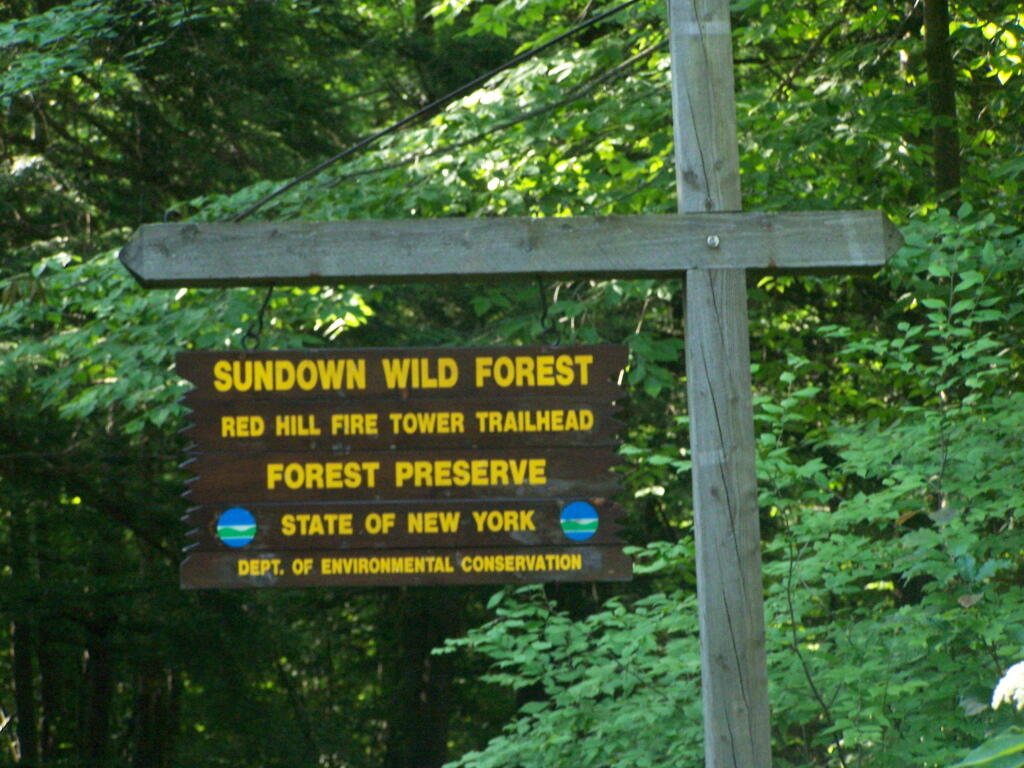
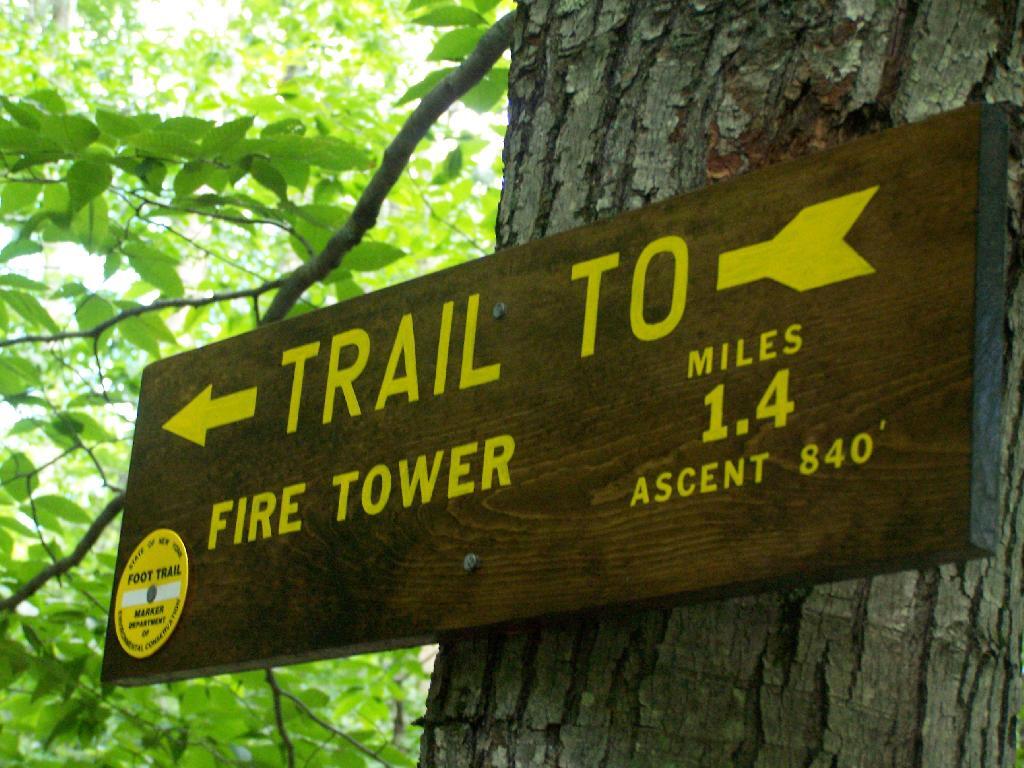
The Red Hill Firetower is on a relatively small in-holding of land by the state of New York that’s part of the larger Sundown Wild Forest. This was the forth Catskill firetower I have visited in recent weeks. I hiked on a beautiful Monday, which I had decided to take a vacation day on.
Red Hill is the easiest firetower to hike up to in the Catskills, even if it’s one of the most difficult to drive from the Albany-area. It is located outside of Grahamsville, about 10 miles North-West of Rondout Reservoir. There is only local dirt roads and windy county roads that run from NY Route 55, which itself is certainly not an expressway.
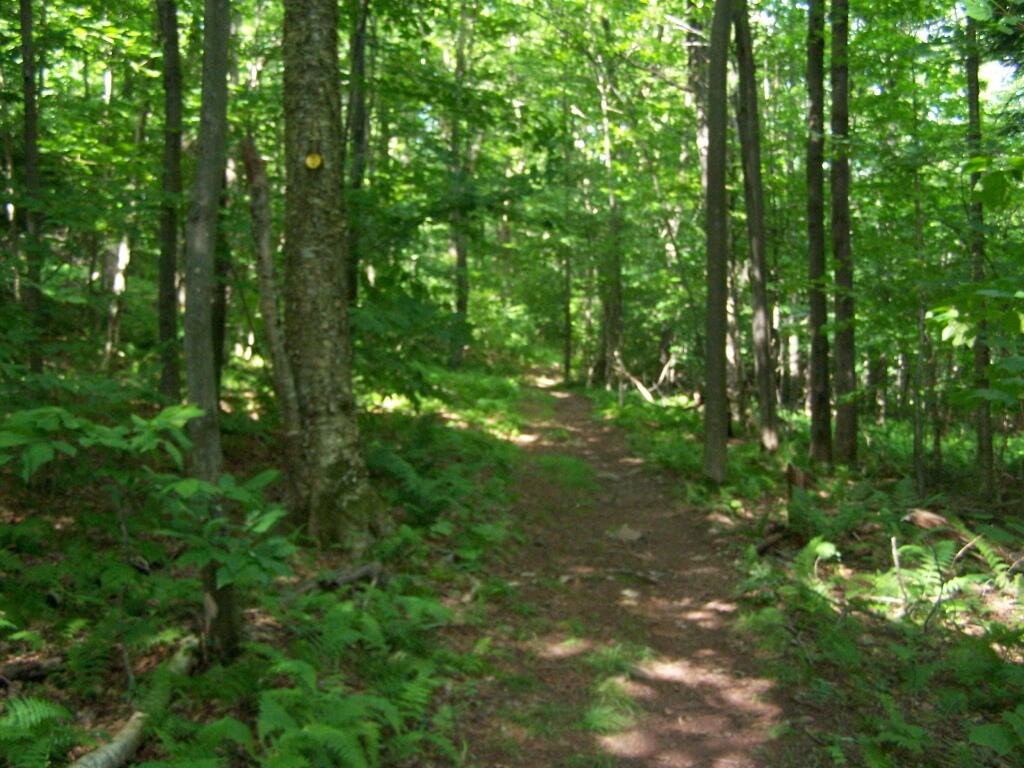
This is typical, relatively flat trail which you walk on for the first 9/10 of a mile.
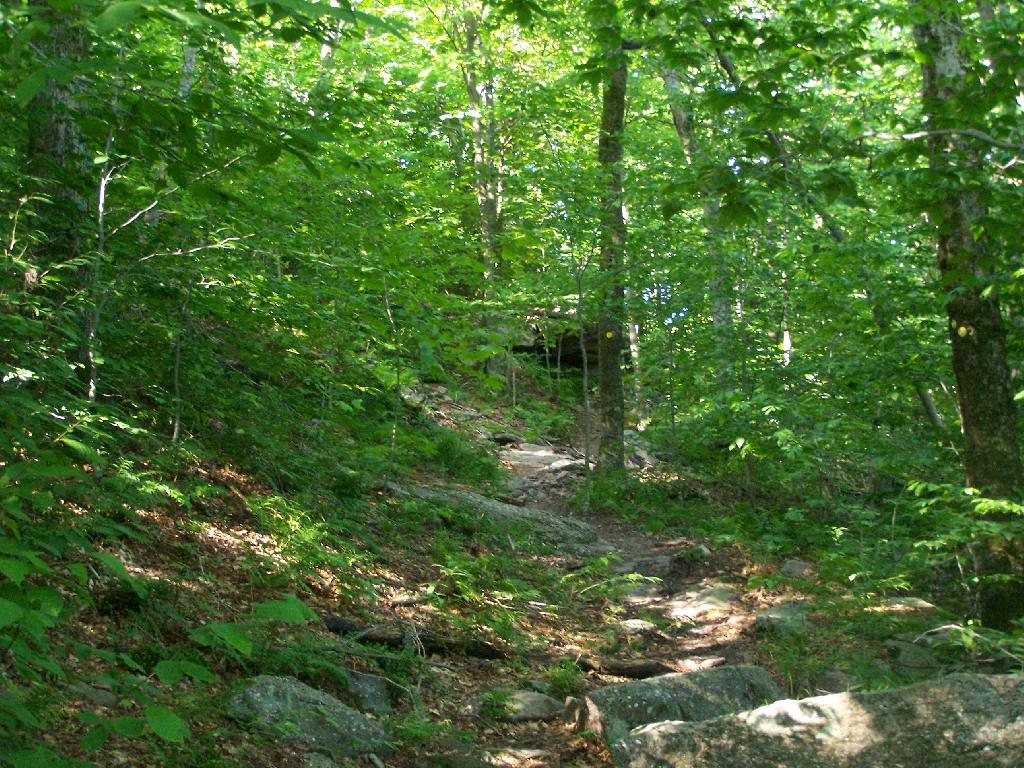
The last 1/2th of a mile is relatively steep compared to the first part, maybe gaining 400 feet in elevation, and you’ll have to stop and breath a few times as you go up towards there.
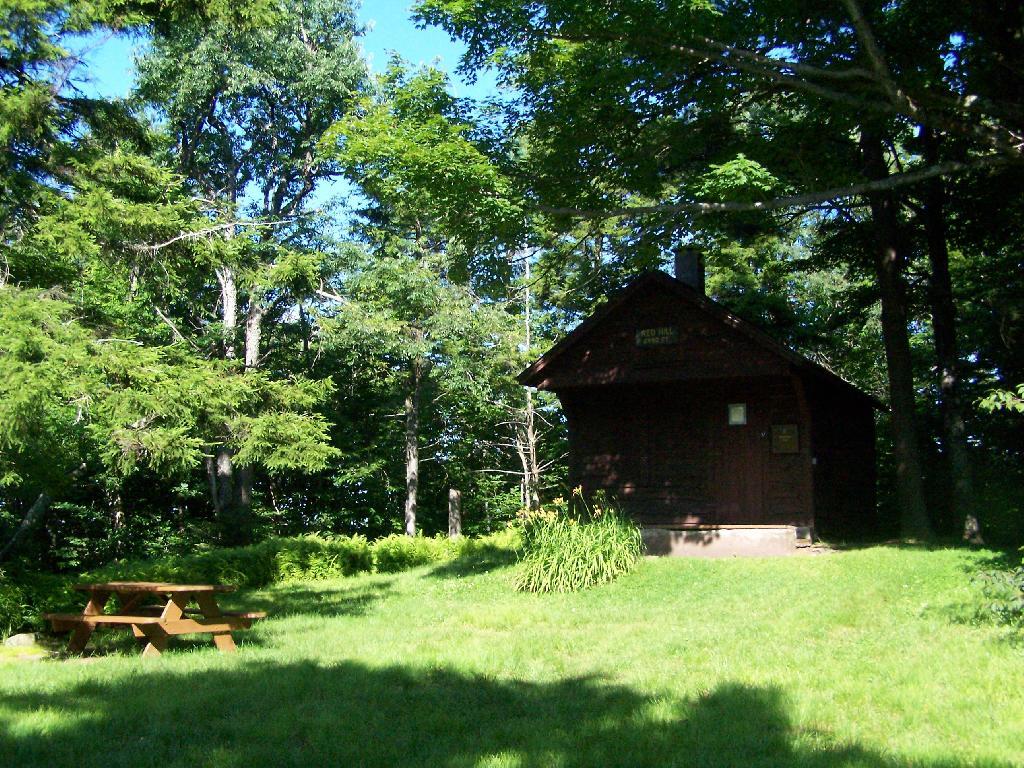
When you reach the top, there is an Ranger Station (open weekends) and several picnic tables. There are big signs saying fires are prohibited due to the fire danger, when the grass is dry. That should be a no brainier, but in the summer and winter, it seems a bit absurd. Must be a bad experience from years ago. There is no outhouse, you’ll have to walk off into the woods to find a place to squat and do your business.
This is the tower, directly across from the Ranger Station. It is staffed on the weekends.
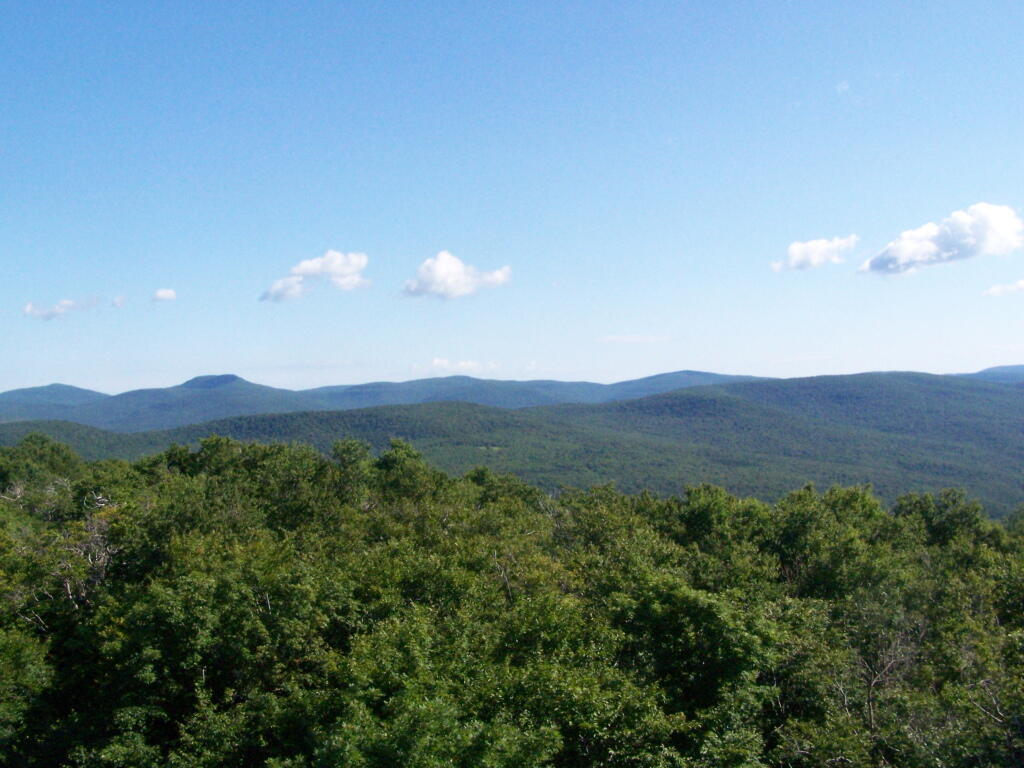
The views aren’t anything to write home about, unless you want to see mountains that are less then remarkable in the distance. This is to the north.
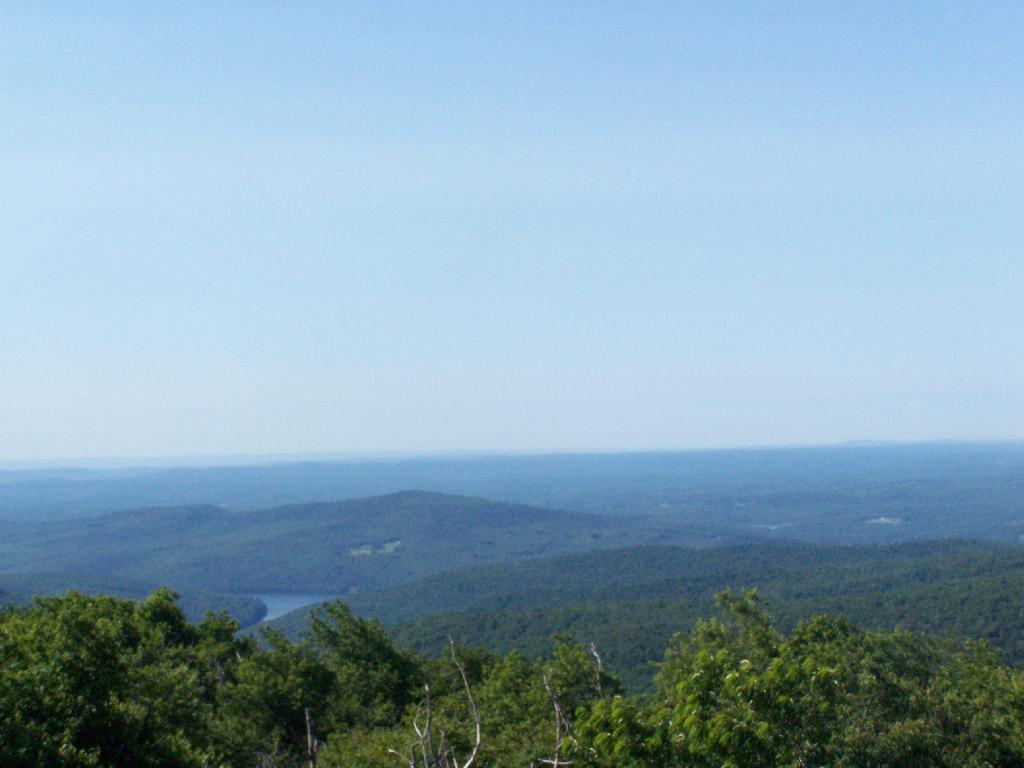
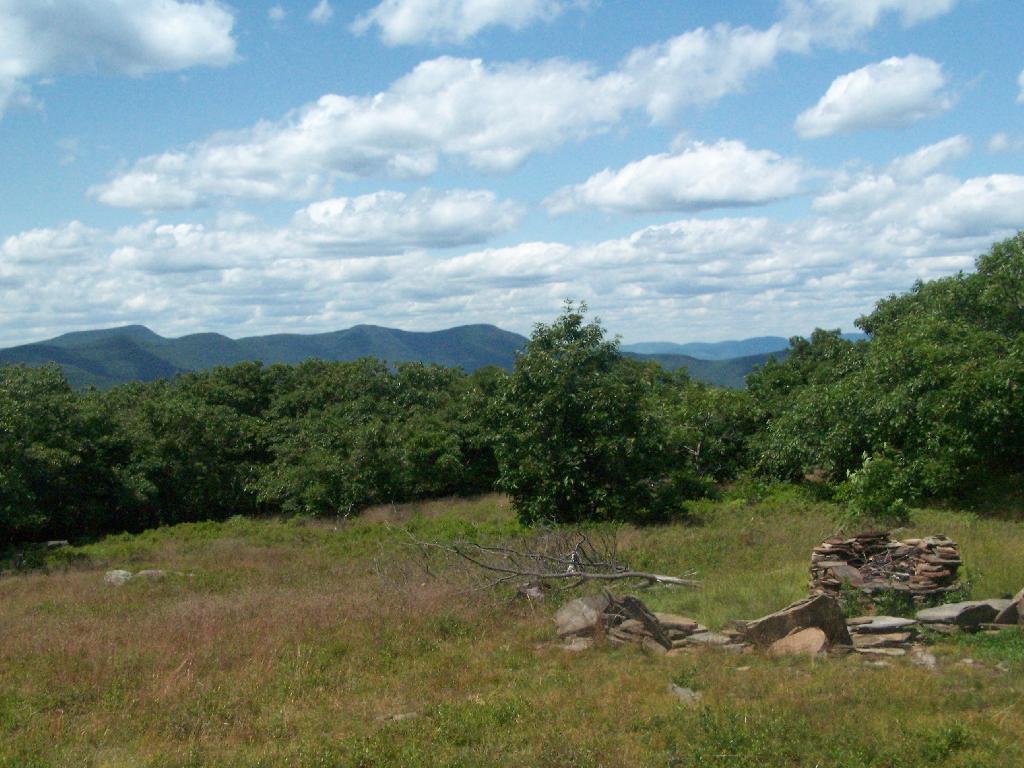
Red Hill is the southern edge of the Catskills, and as you can see looking to the south, the landscape is quite flat.
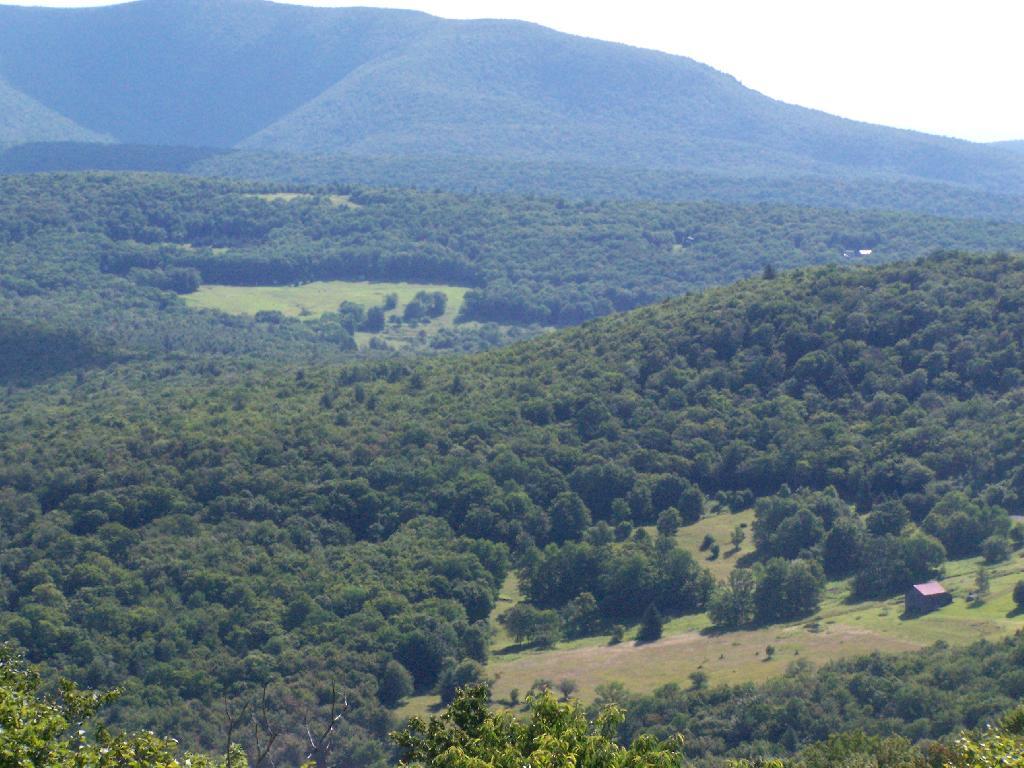
Most of the area around the tower is heavily wooded and owned by either the State or New York City DEP Water. There are a few farms around, especially looking west.
On the weekends, you can go into the tower’s cabin. Weekdays it is closed, supposedly because of vandalism. It’s bullshit if you ask me, because who drives 125 miles into the sticks and hikes 1.4 miles to vandalize an old tower? Mount Tremper is open.
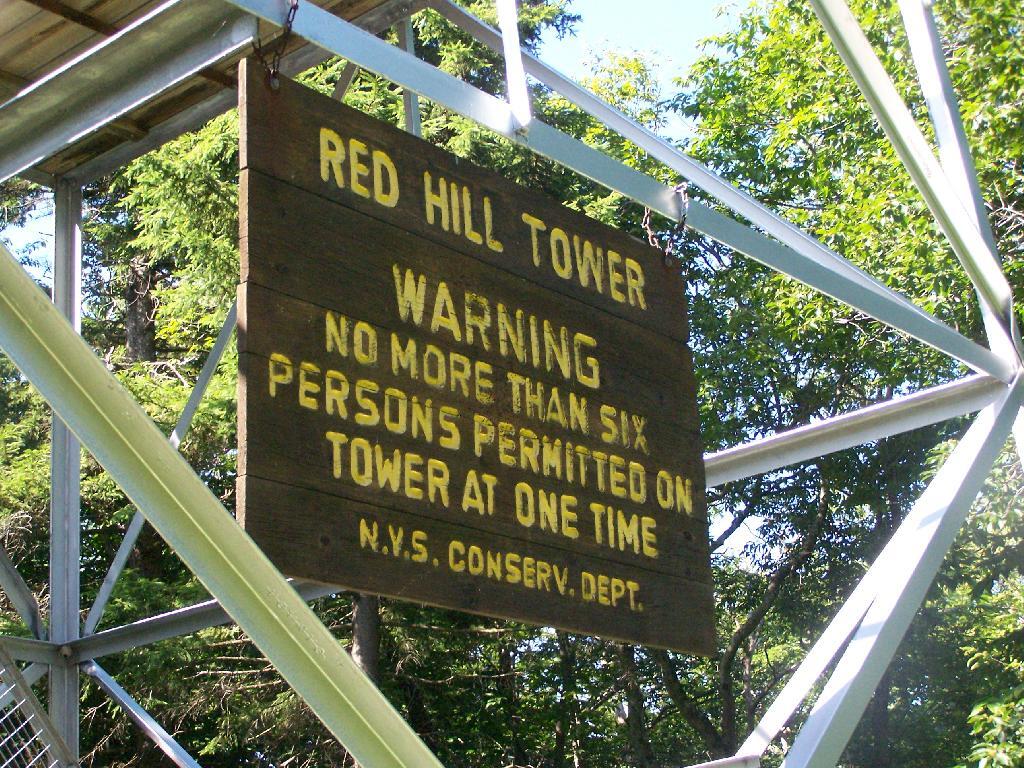
Despite the lousy views (it’s a relative term), the fire tower must be popular, or so the many signs that warn people the tower can only support six people.
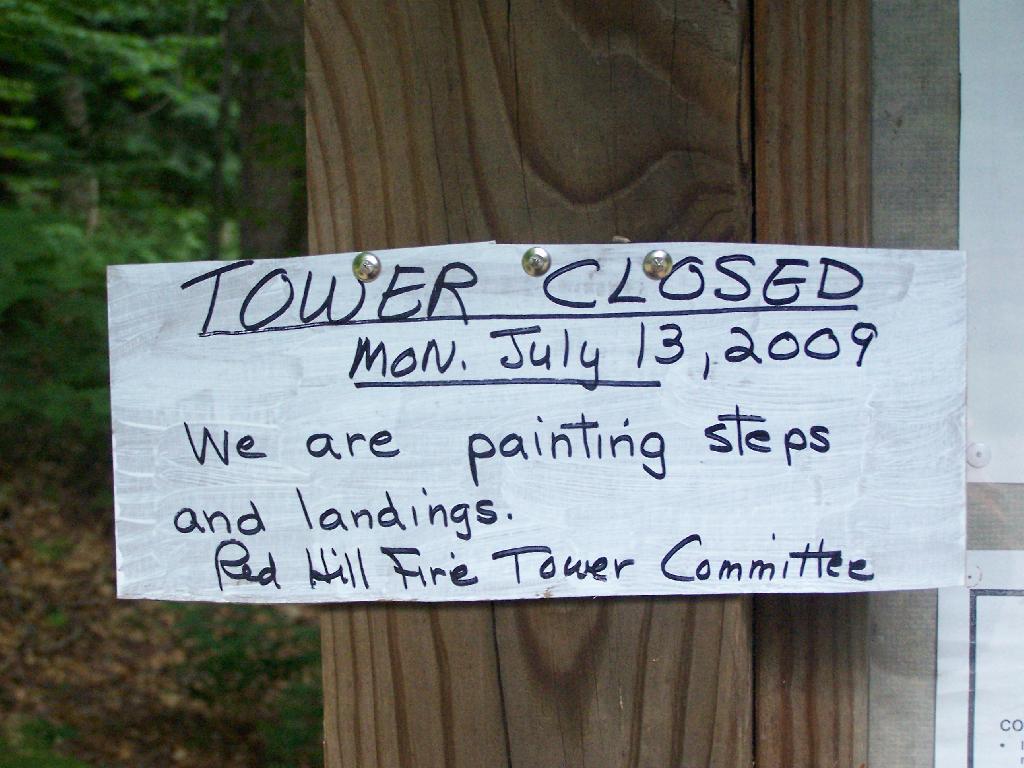
When I was leaving the fire tower I happened to hear an SUV coming up with the former Ranger (now a private individual). They where planning to paint the tower steps on Monday. He offered to unlock the tower, but I was inpatient, and he wouldn’t let me do it with the keys myself. I don’t know if I or him was being more of a dick.
After I left, he closed off the tower, because he was painting the steps.
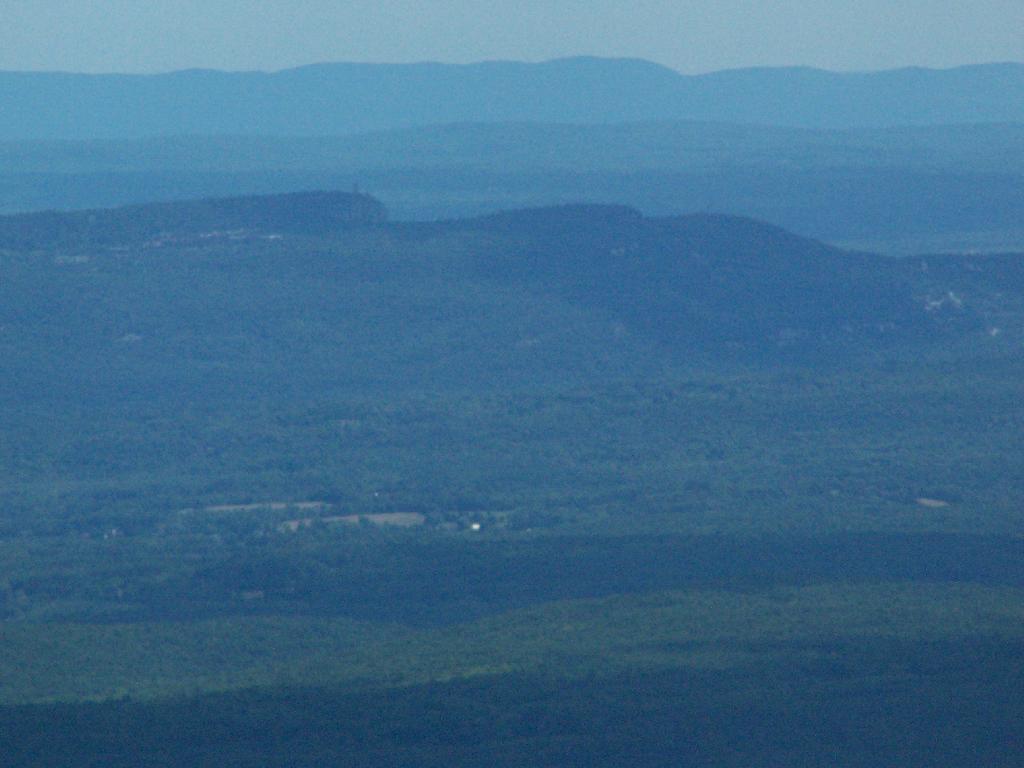
This gives you an idea of what you see from the tower. Most notably, Doubletop Mountain and Rondout Reservoir. Nothing really super impressive though, just mountains and very little civilization in this rural part of Sullivan County.
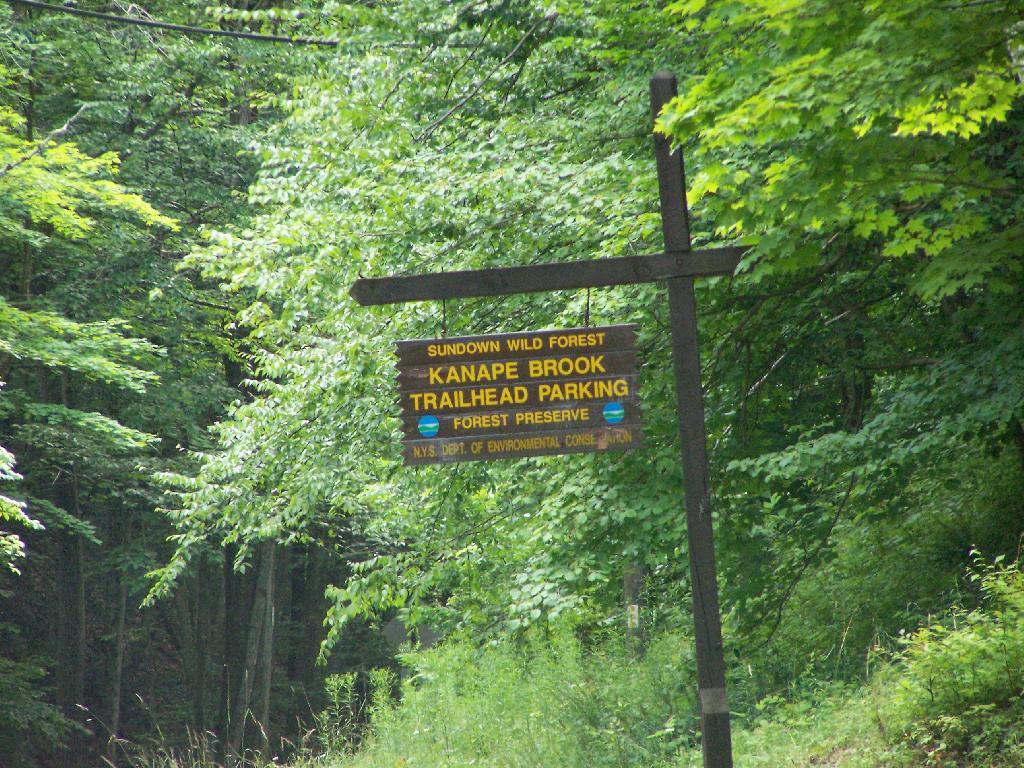
Ashokan High Point is a mountain overlooking West Shokan and the Ashokan Reservoir, however due to trees the views to the east are limited. It is reached from a parking lot off of Ulster County Route 42, a windy low-speed road that lacks guardrail protection.
I visited this after doing Red Hill Fire Tower in another section of the Sundown Wild Forest, some 15 miles to the west (30 miles via road).
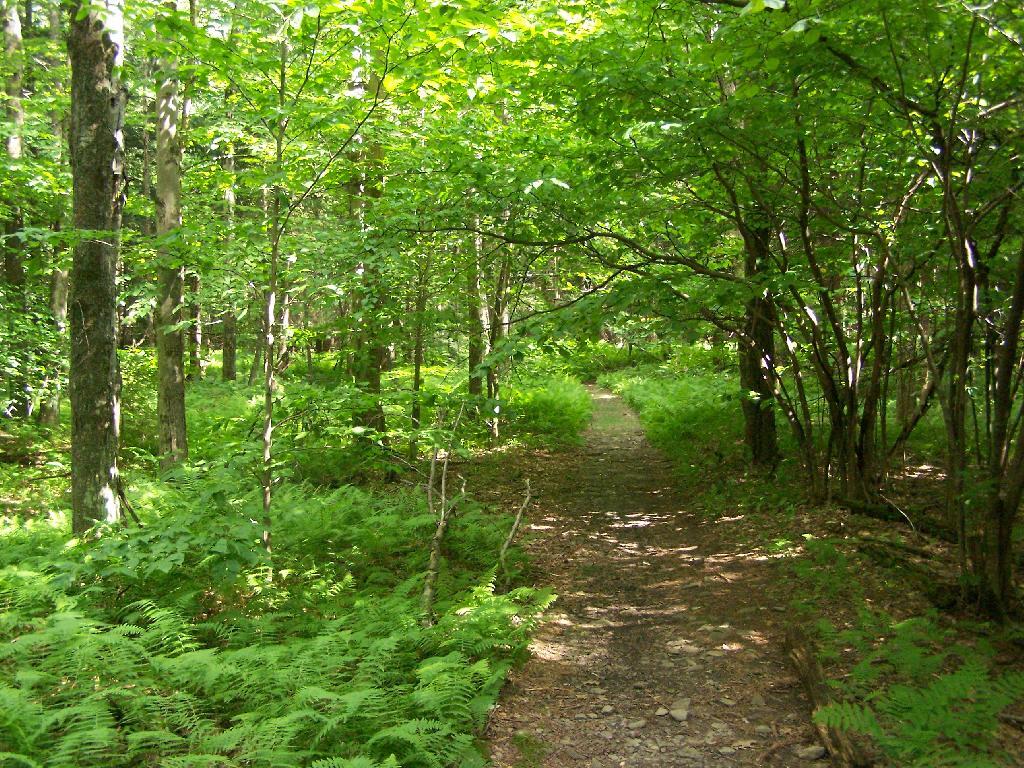
The first two miles up the trail is up an old woods road, that is relatively flat and a pleasurable walk along the Kanape Brook and in a deep clove between Ashokan High Point and Mombaccus Mountain.
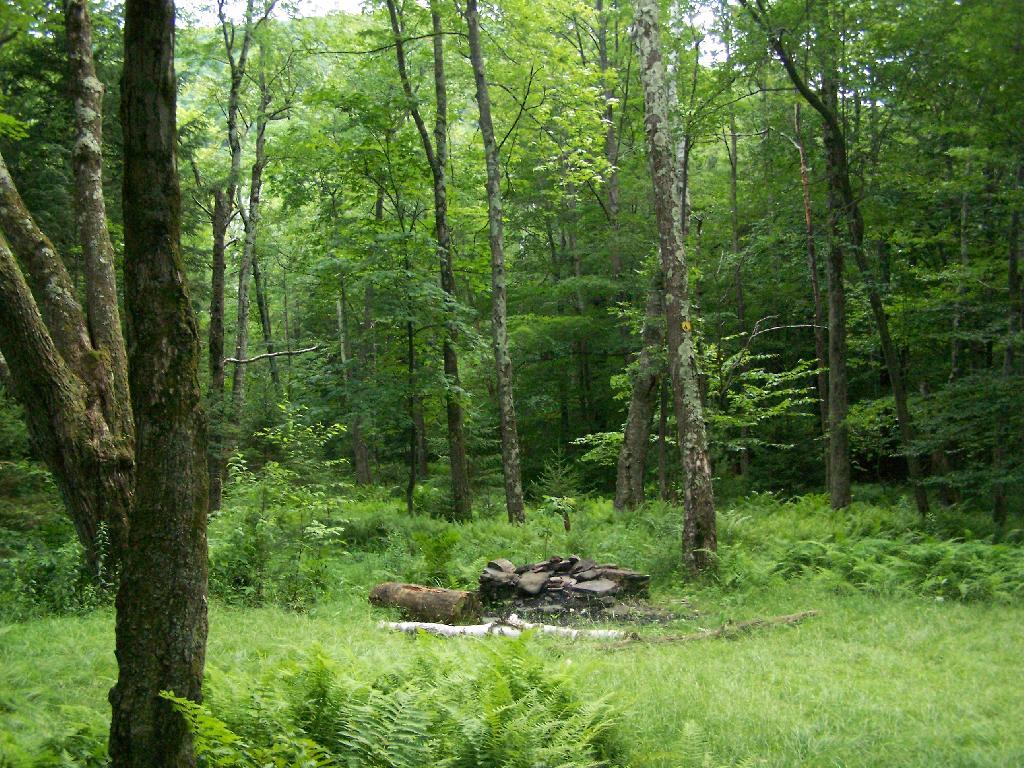
After you walk about a mile or maybe 45 minutes, you arrive at this nice little campsite right near the brook and the trail. It’s in a field, but has limited light for big portions of the day because the clove is so deep.
The trail seems a bit long at times, but this is the kind of delightful walking you experience. Markers are sparse along this section of trail, but if your following the old woods road it’s easier to follow.
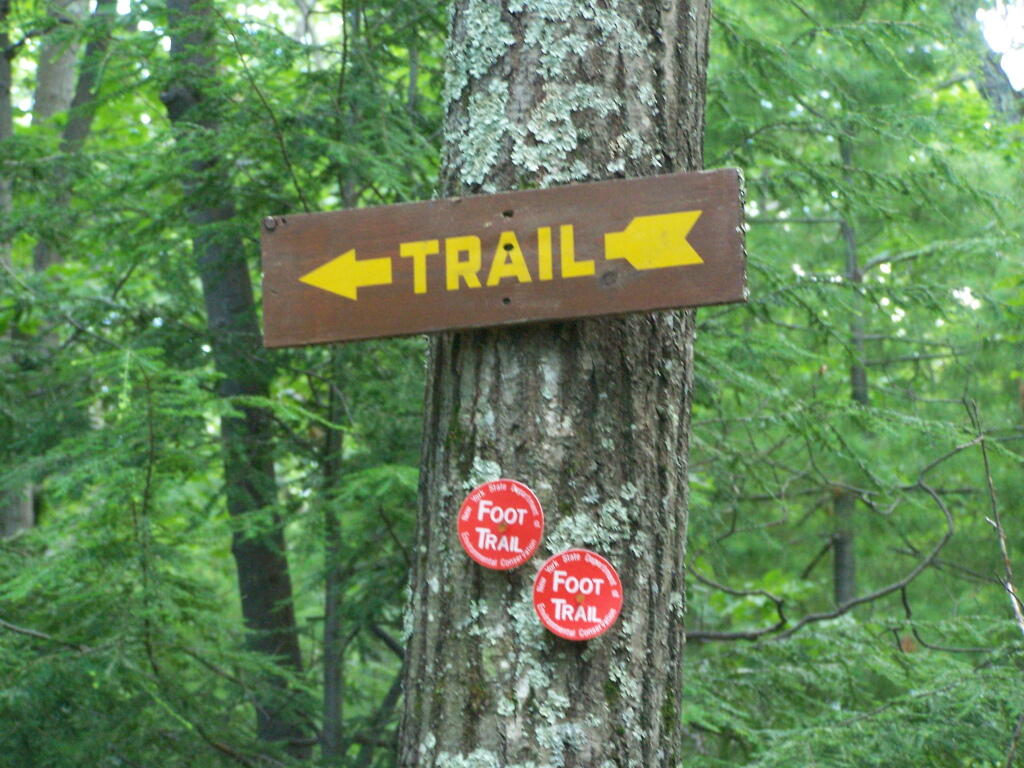
You then reach the sharp turn off the old woods road, to where the trail splits to the upper loop. As you can see, the turn is well marked.From here on out, you gain about 1,000 feet over the next one mile. It’s quite a bit steeper, but nothing is hands and knees hiking.
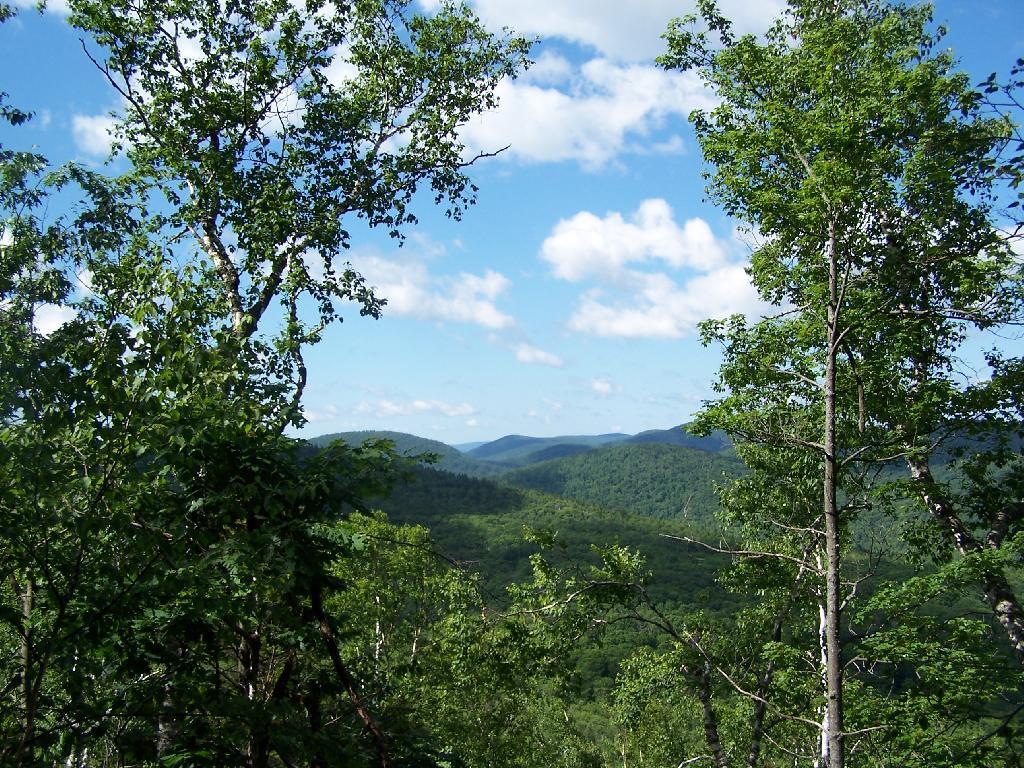
As you start to do some serious climbing, you get partial views to the west.
And the trail gets steeper for the next 1/2 mile. They have put in several rock steps to make the climb a little bit easier. Nothing that couldn’t be made by a child or a pet though, and no scary views/ladders.
Once you are within a 1/4th mile to the top, you stop doing much climbing. If your caught in a storm, this rock offers some protection.
You’ve basically reached the top when you get this nice westerly view of Moccabus Mountain through the trees. You can stop over here, or continue to the top for better southernly views.
From the top, you have limited views looking south towards the Shawangunks, surrounded by trees. There supposedly is an unmarked trail you can take down to the “ledge” for 180 views. Without a good map, I decided not to proceed down to the ledge.
The Shawangunks, shrowed in haze. They are small compared to the Catskills but an interesting profile in the sky.
Along the top there is a trail that runs through a 1/2 mile of Blueberry fields. I was foruntate to be there when they where in season.
On the other side of the mountain, there is an informal campsite with fantastic views of the High Peaks Region of the Catskills.
The trail down the backside of the mountain is without views, and is less steep but much longer, and winds up and down a few ridges. Nothing really worth visiting — go back the way you came.
You return back to where the loop splits, and return back the trail you took up. It’s a 7.5 mile hike total, but a relatively easy one that you can do in a few hours in an afternoon, and not be totally exhausted.
I went hiking at Crane Mountain in the Adirondacks on July 5, on a partly cloudy day. I didn’t get to the trail until around 10 AM, in part because of the Detour on the Adirondack Northway due to the bus crash. Regardless, it still wasn’t that crowded until later in the afternoon.
The drive up Ski Hi Road is quite rough, and minimally marked, except for a few signs that Crane Mountain. Ski Hi road may be inaccessible with a 2-wheel drive after some rain, so be aware. It’s a steep uphill drive, and very much so dirt. Only once it enters the preserve does it get rutted and rough, but very much passable by people who had cars up there.
The first part of the trail is quite steep, but you quickly get views of Granite Mountain and other mountains that surround the valley near Crane Mountain Road and Ski Hi Roads.
The trail up it quite steep, climbing over rocks for the first 1/2 of a mile. There isn’t a clear marked trail, you follow one of many routes through the rocks.
The trail is minimally marked, with a few old trail markers and arrows to help you follow. That said, it’s worn enough, and with enough bare rock faces, that it’s quite followable, even without too many markers.
The farther you get up, the better the views get.
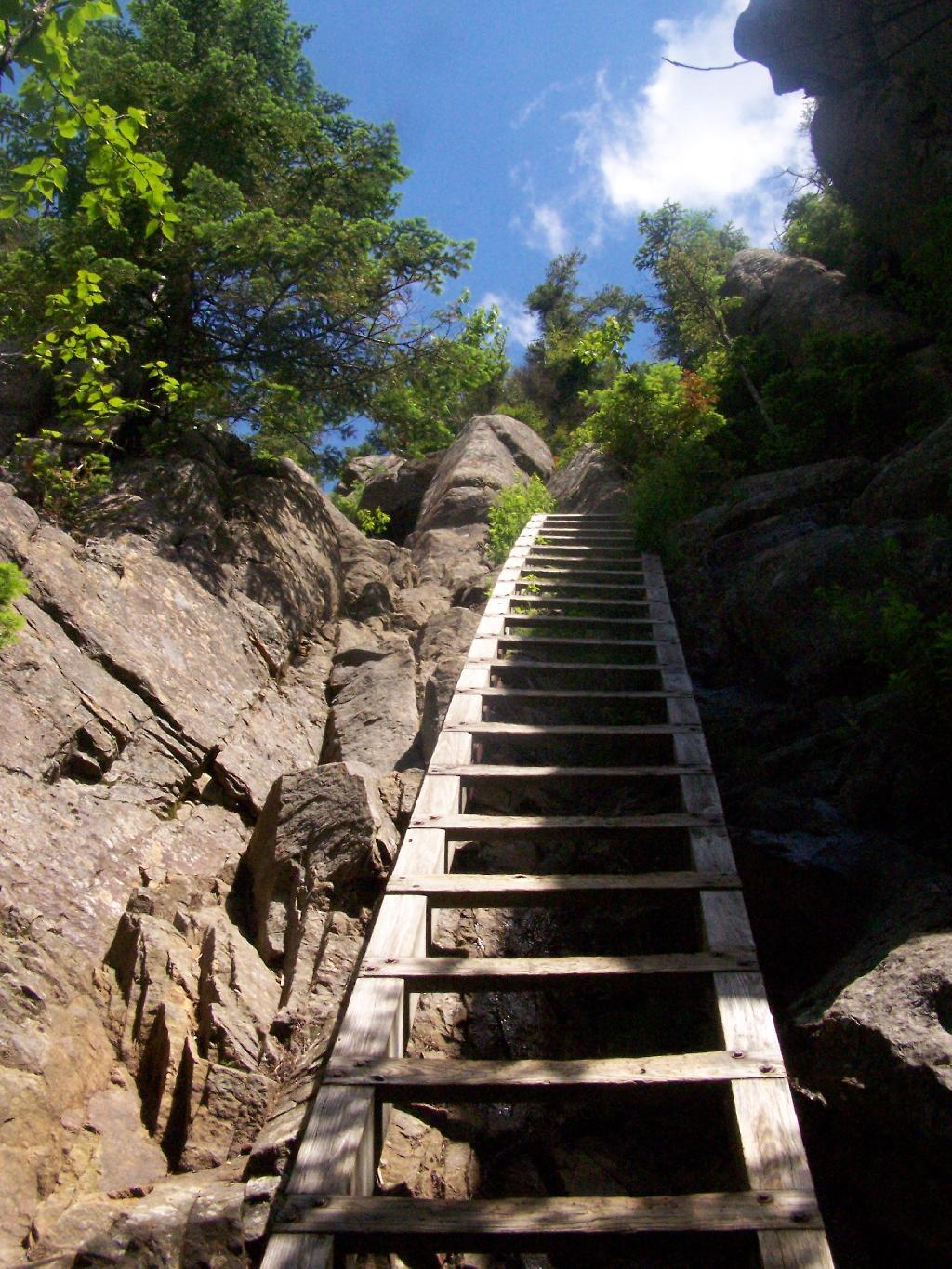
The trail splits between one trail to the pond and one to the Escarpment/Summit. The trail to the Escarpment is relatively flat, with a few up hill sections until you get to a 30′ ladder to get up to the top.
But once you get there up that ladder, the views quickly become quite amazing. The ladder may be 30 feet high, but it’s securely attached to the mountain, so it’s an easy climb. Also, the trees block the view outwards, so it’s not a bad climb.
Now I’m looking due to west to Granite Lake.
Looking North West, along the trail as it proceeds North along the Escarpment. I turned on the Mp3 player, and was listening to America’s Horse with No Name. Good music for the amazing views.
Continuing donw the trail. I must have spent an hour snapping photos, reading, and just enjoying the landscape.
Next the trail proceeds down steeply towards Crane Mountain Lake, with one viewpoint with good northerly views, including an overview of the popular fishing spot of Crane Mountain Lake. At least on this side there is no ladder to climb on down.
Down at Crane Mountain Lake. I sat down here, and spent some time reading. A few people where around fishing and exploring, more people where heading up the trail with polls later on.
The trail, while unmarked splits between going along the top of the ridge between the second and first latter up Crane Mountain, not that you would know it from the lack of signs. There is a lot of exposed rockface on this relatively steep trail, due to aggressive logging a century ago destroying the soil cover, along with steep slopes.
The trail descends quite steeply through rocks, and then further down. It’s a quite steep descent to say the least.
A rather pretty house from a converted barn on Crane Mountain Road, which is viewable from the descending trail.
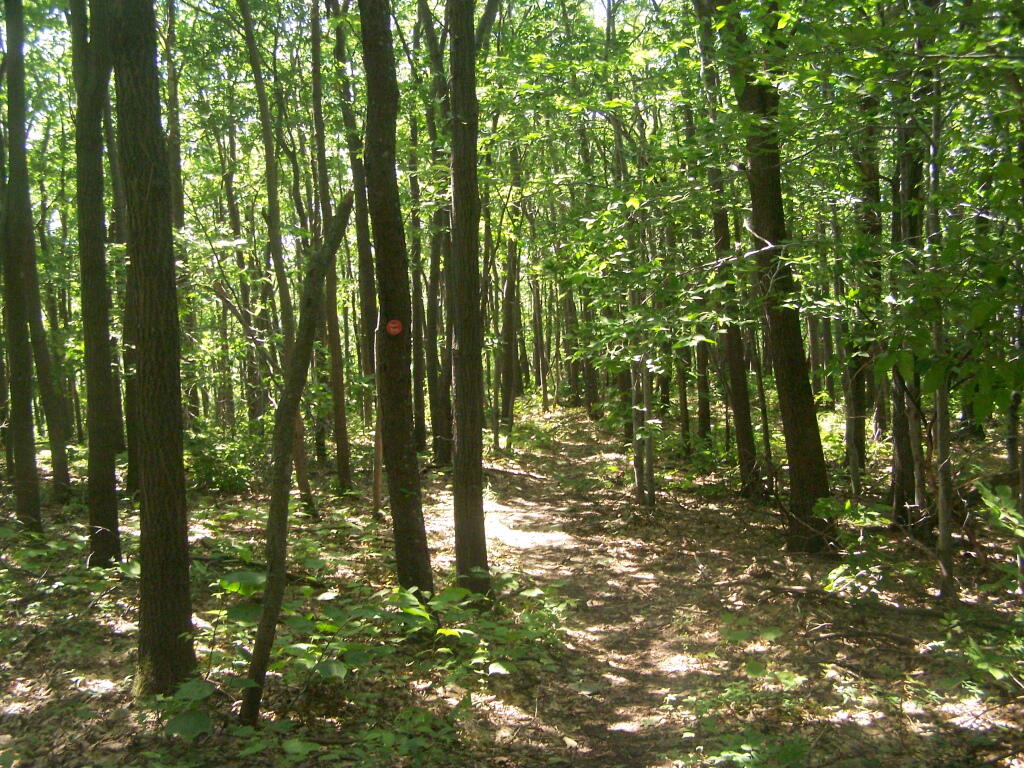
The last mile of the trail is along an old woods road.
On July 4th, I decided to go for a walk up to Thatcher Park/OSI parcel to check out the cliffs once again now that we are fully in the summer season with all of the grass out a bright green color.
High Point and Beyond.
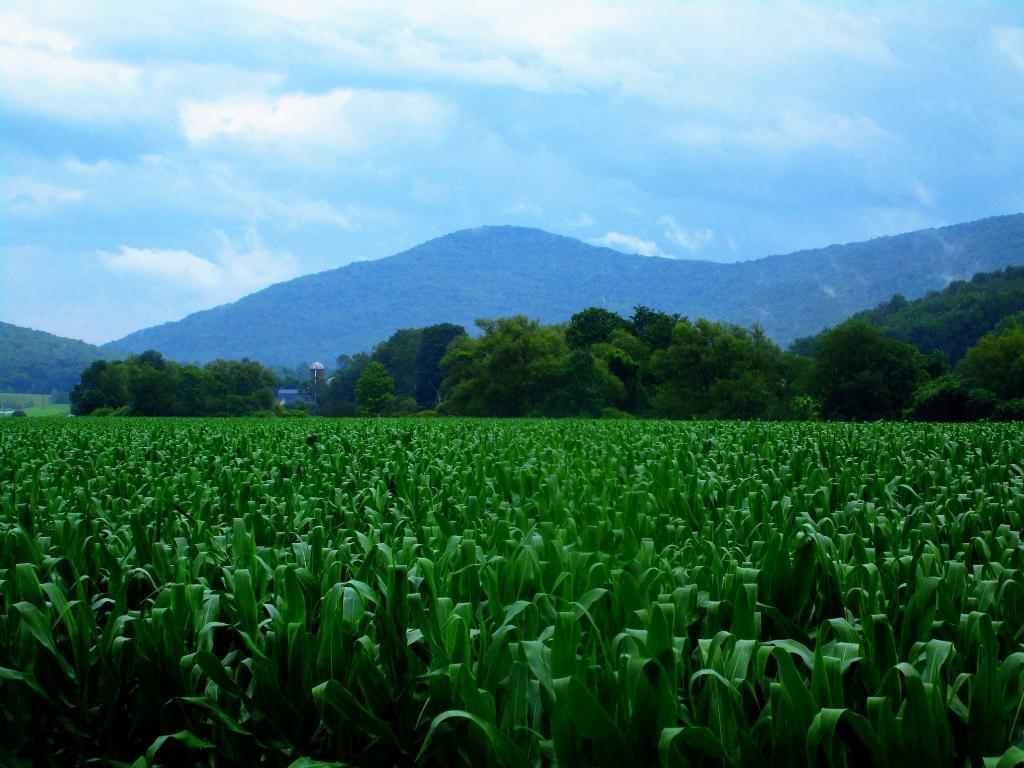
Corn growing along Gardner Road.
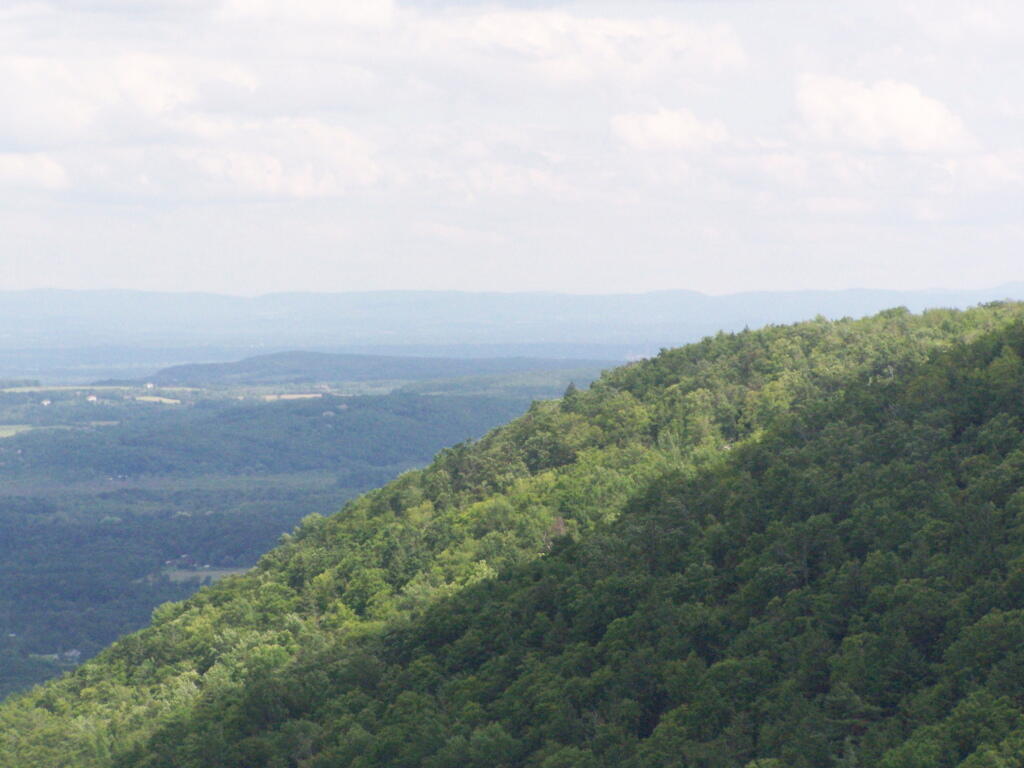
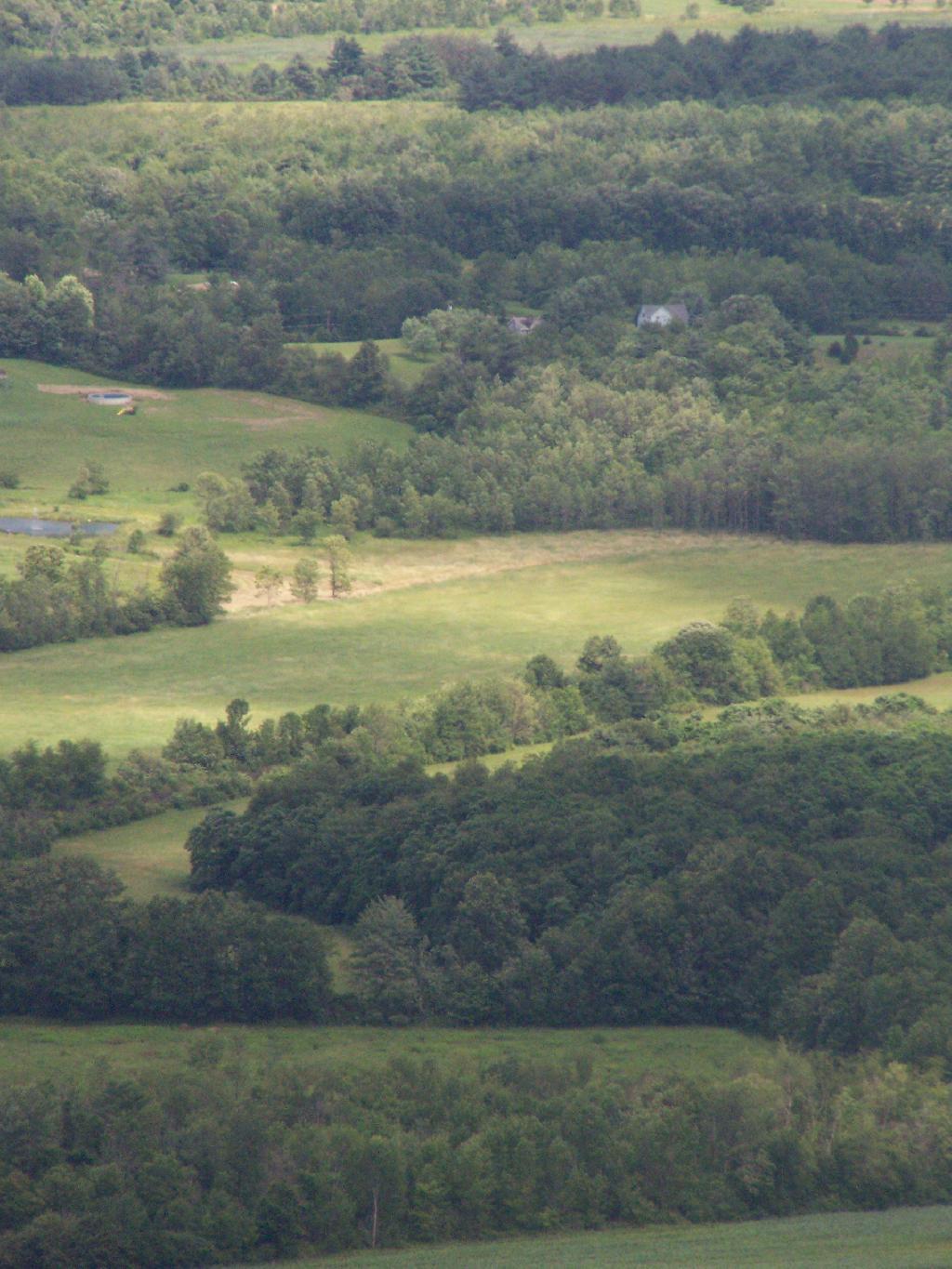
Light and dark landscapes off High Point.
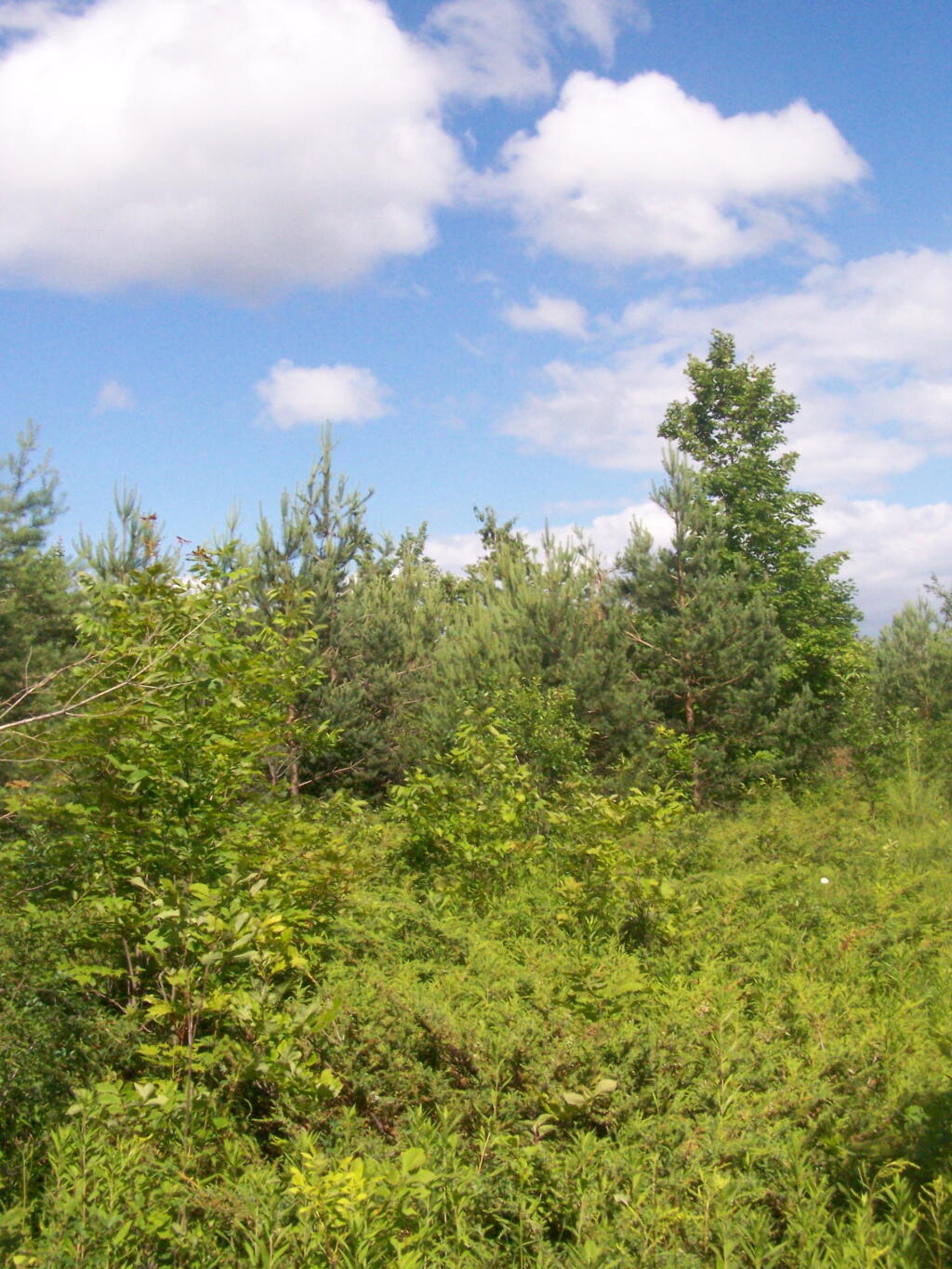
The trail passes several meadows and open areas.
The old query with some interesting rocks stacked up.
The trail when it follows hedgerows in farm fields.
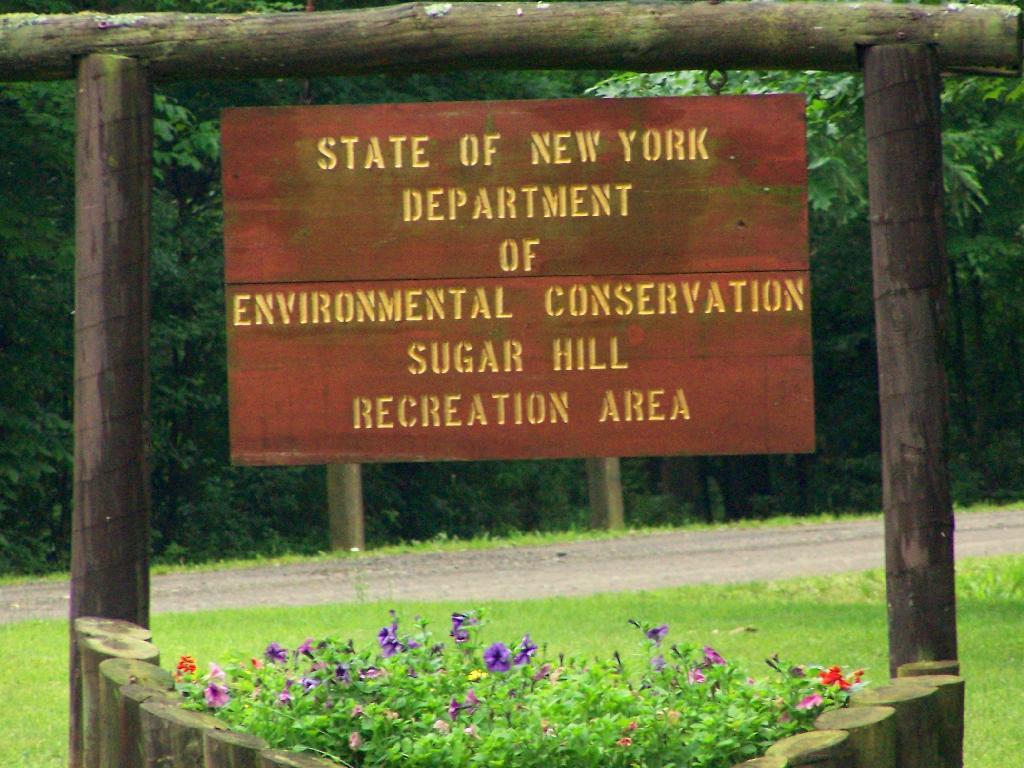
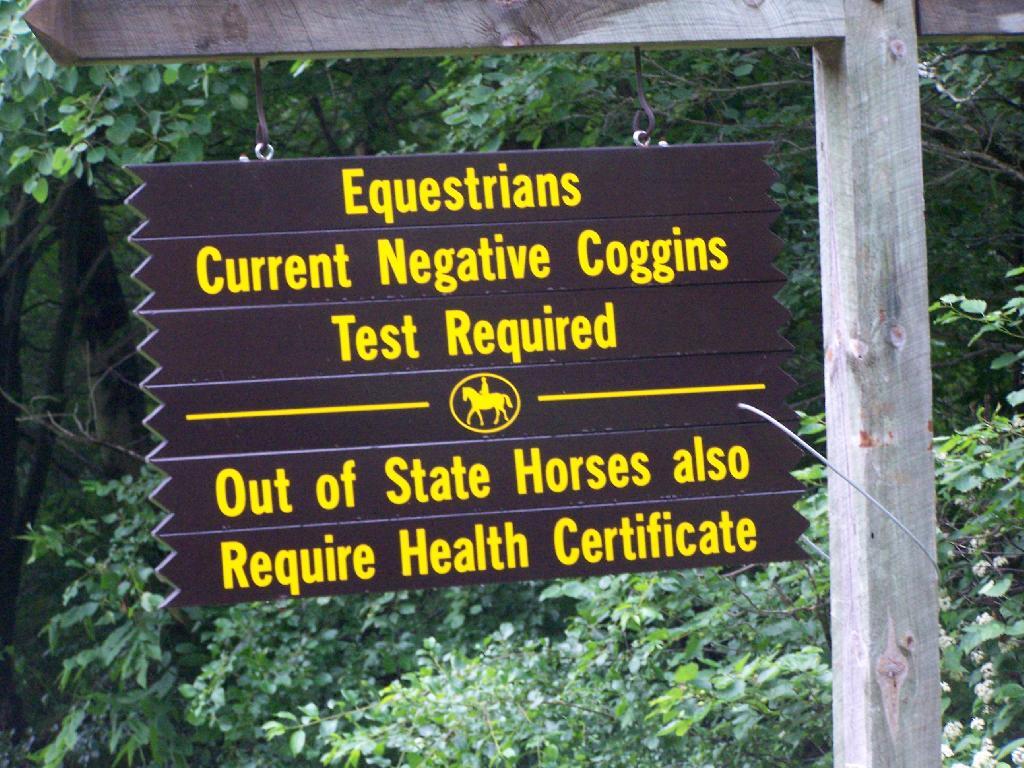
The final night of my Finger Lakes Trip I spent the night up at Sugar Hill State Forest, a series of 9,500 acres of state land, popular for horse owners. This parcel has two main camping areas, about 90 miles of horse trails, 3 lean-tos geared to equine users, and one nice new lean-to that is accessible solely by foot.
You don’t see signs like this located in downtown Albany.
This is all conveniently located about 15 miles from Watkins Glen, at the headwaters of Townsend and Glen Creeks that make up the water that flows through the Glen.
While I didn’t spend a lot of time going around and grabbing pictures of the Horse Camp, I did take some pictures and have some from when I visited this area during the previous summer. This was in part because the last day was rather gray, with heavy rain at times, and I was frankly quite tired.
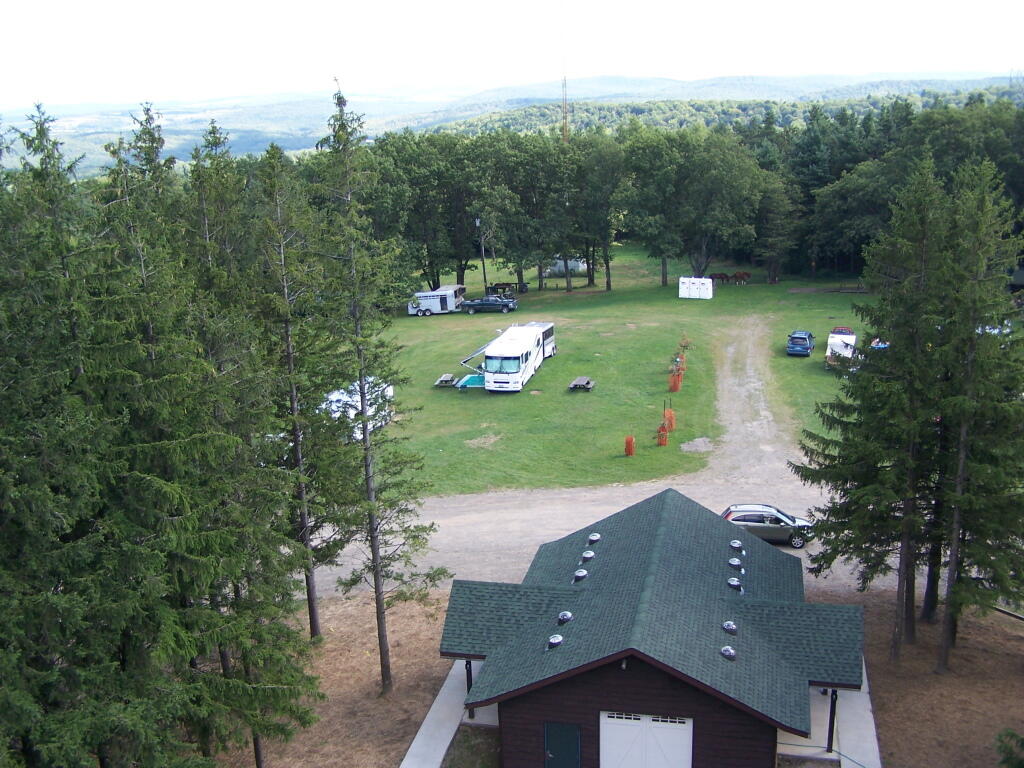
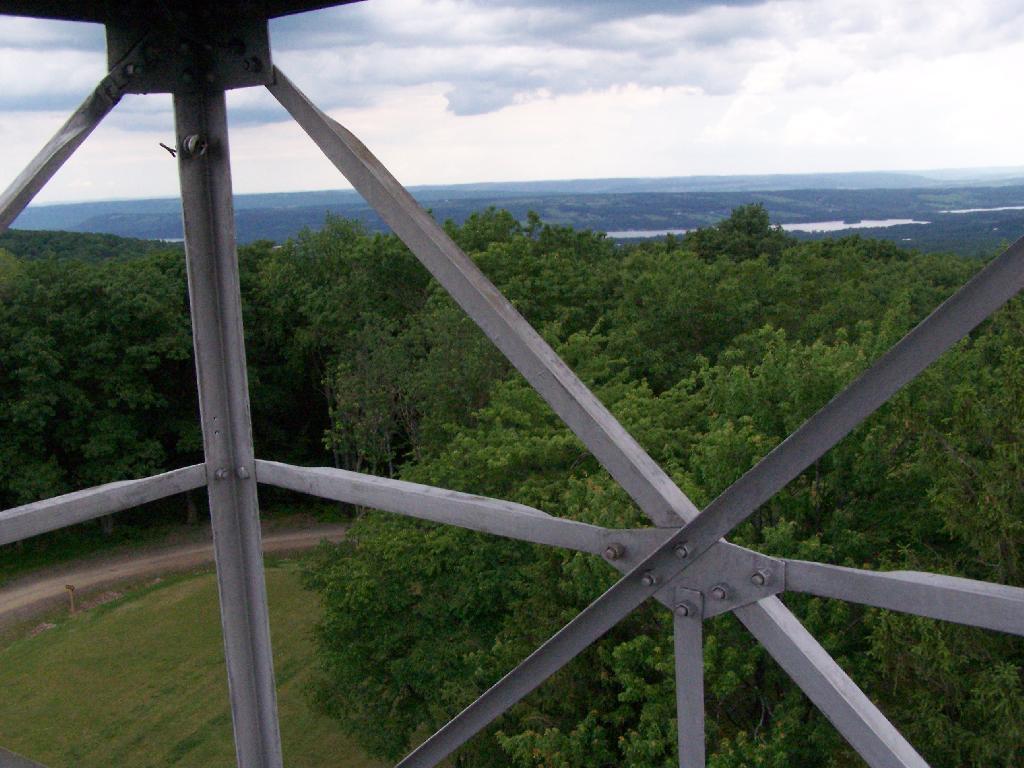
There also is a firetower at the main horse camp area, which is filled with RVs, horse trailers, and horses during the summer weekends. This is shown below:
Here is the main horse camp, with new bathroom facilities including flush toilets. This was installed two years ago due to the popularity of the horse camp and contamination concerns by the overuse of the conventional pit privy.
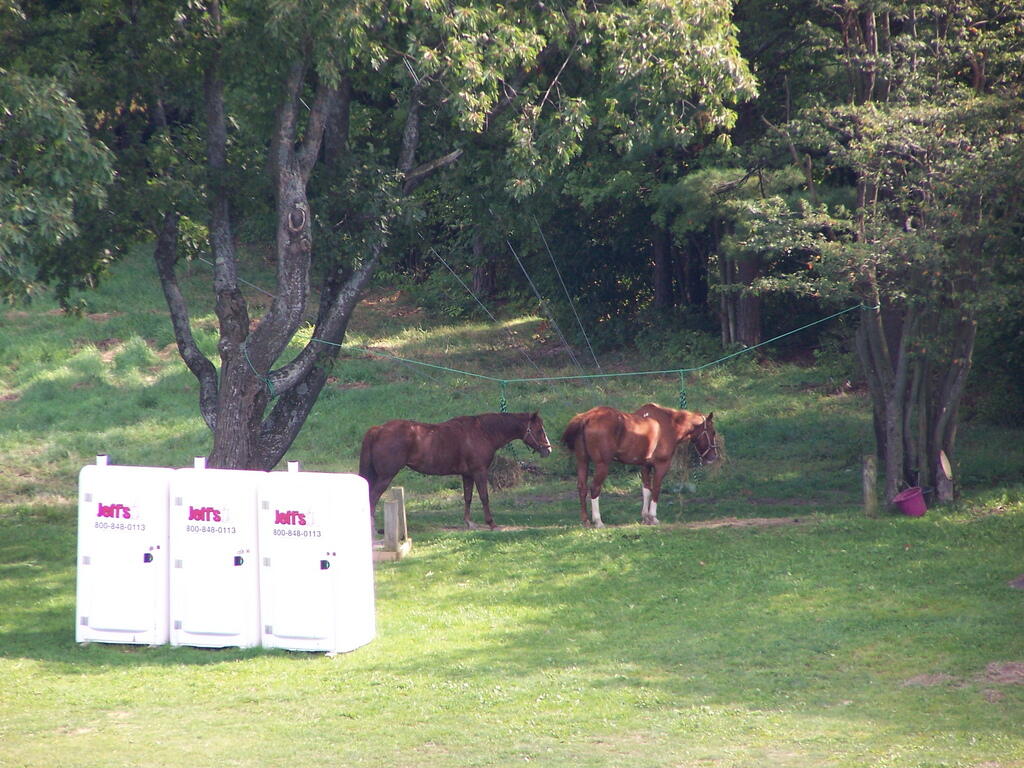
Horses tied up. I took this last year, when they where still building the replacement bathroom for the pit privy, and therefore the porta-potties.
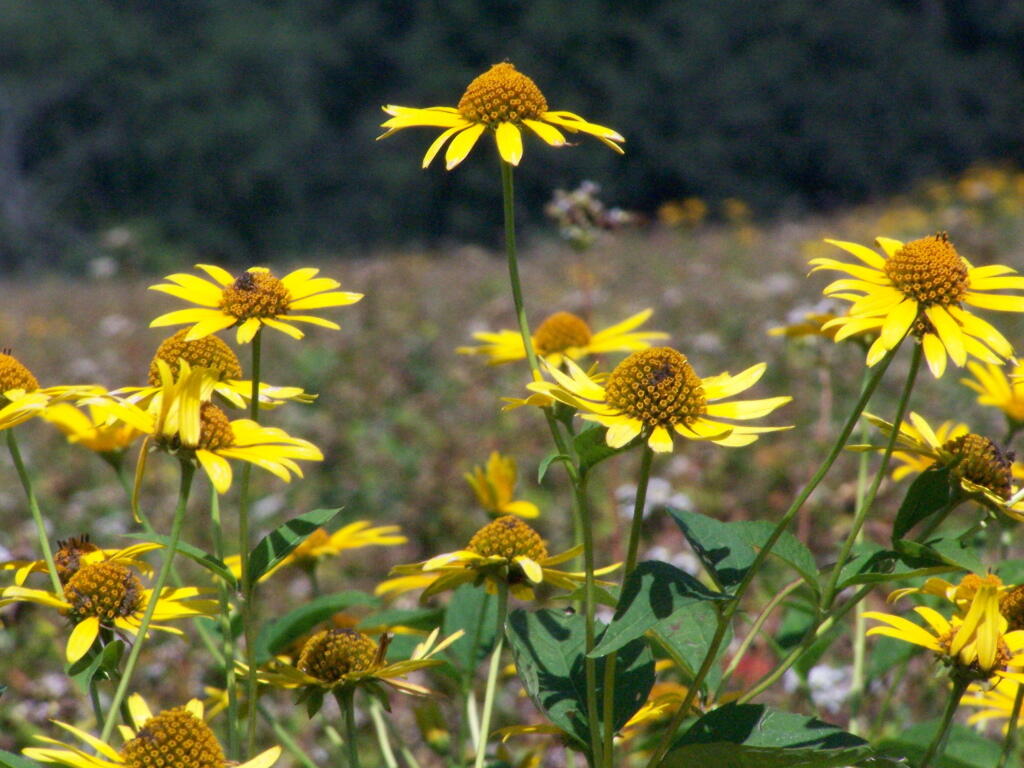
Some wildflowers noticed along a short walk…
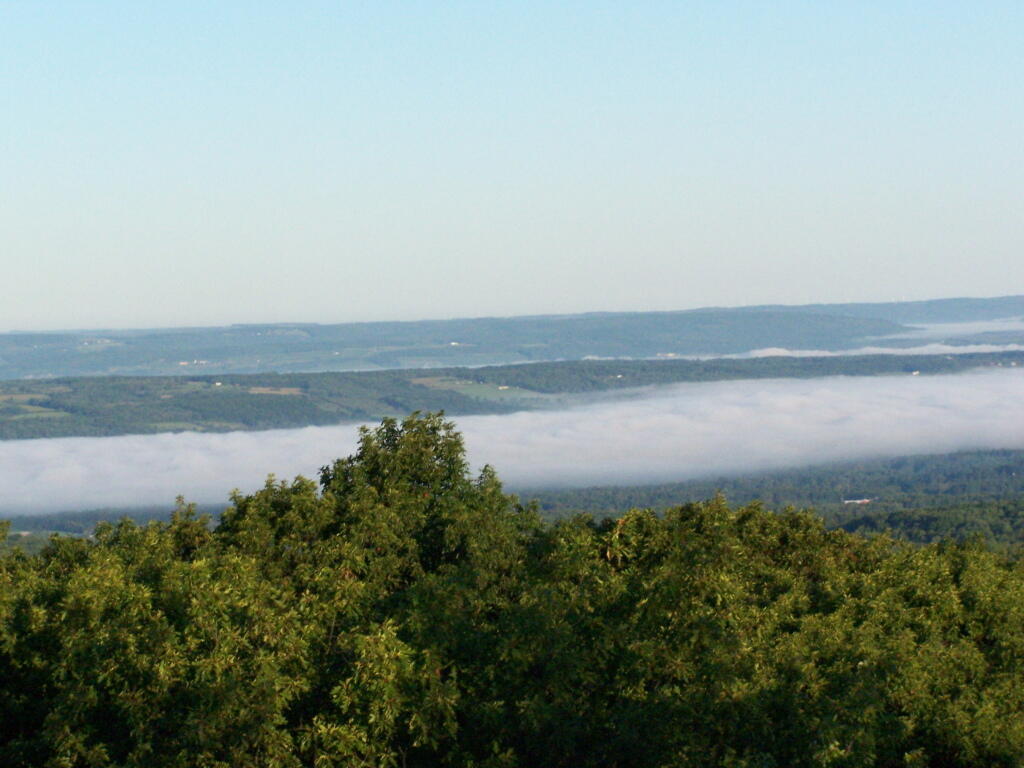
A bed of fog over Kueka Lake from the Firetower from last year.
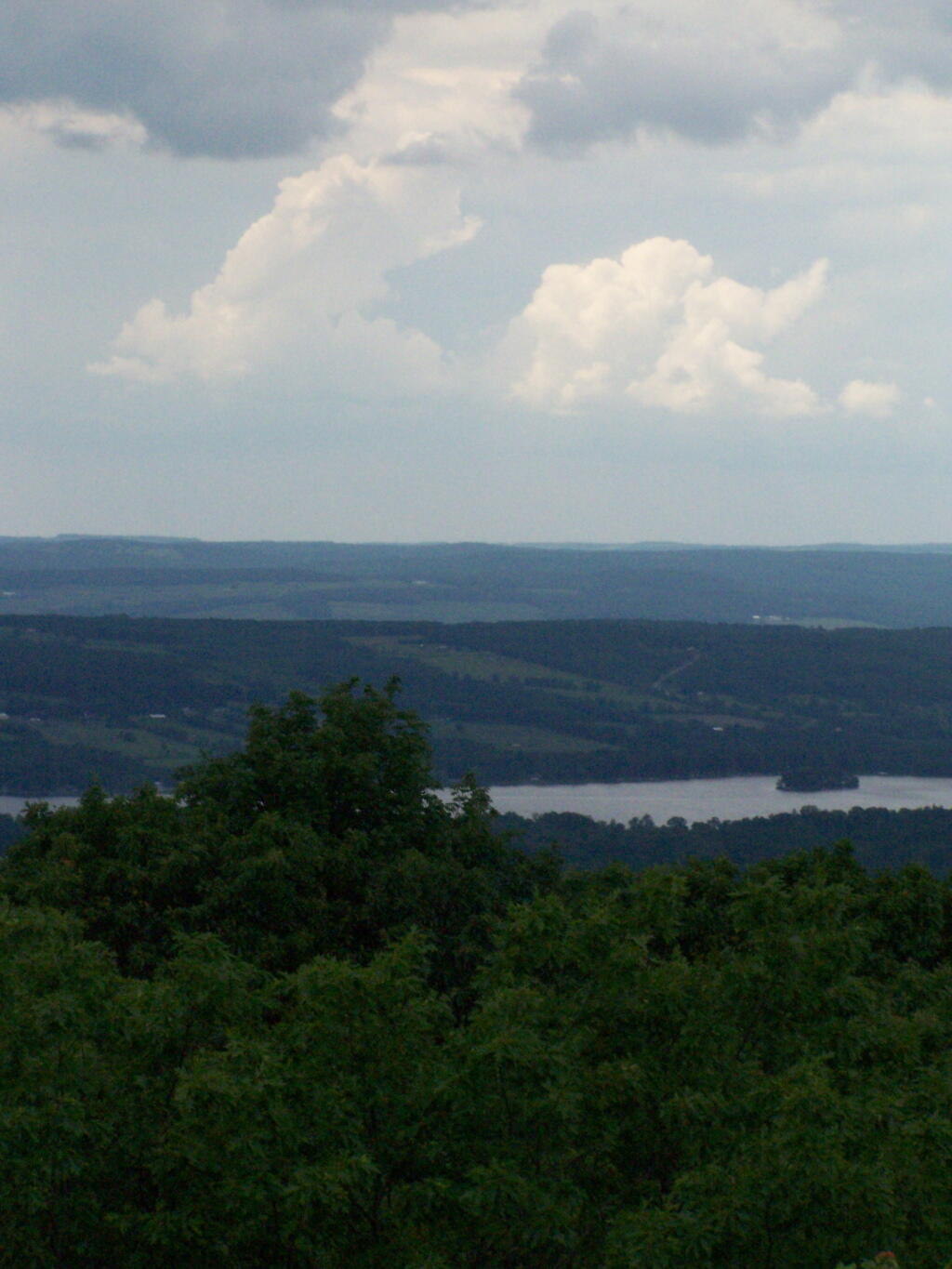
Thunder clouds approaching from the west from the Firetower. It was not of course thundering when I was on the tower. I’m not that stupid.
Descending the firetower, looking east towards Seneca Lake.
Rather then camping at the main horse camp, where there where several people set up with horses, I decided to camp at the lower area, which is much less popular, but as nice if not nicer.
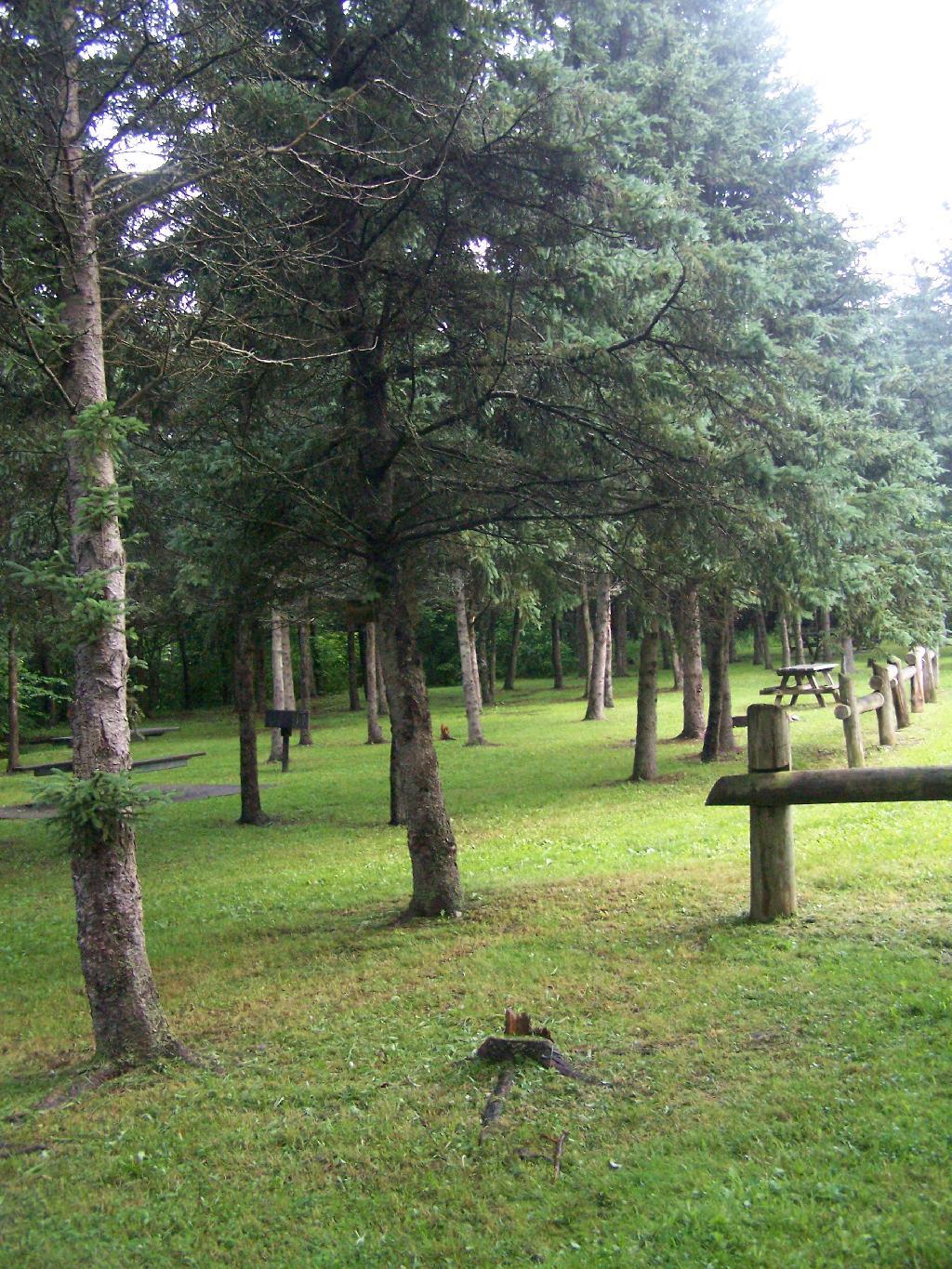
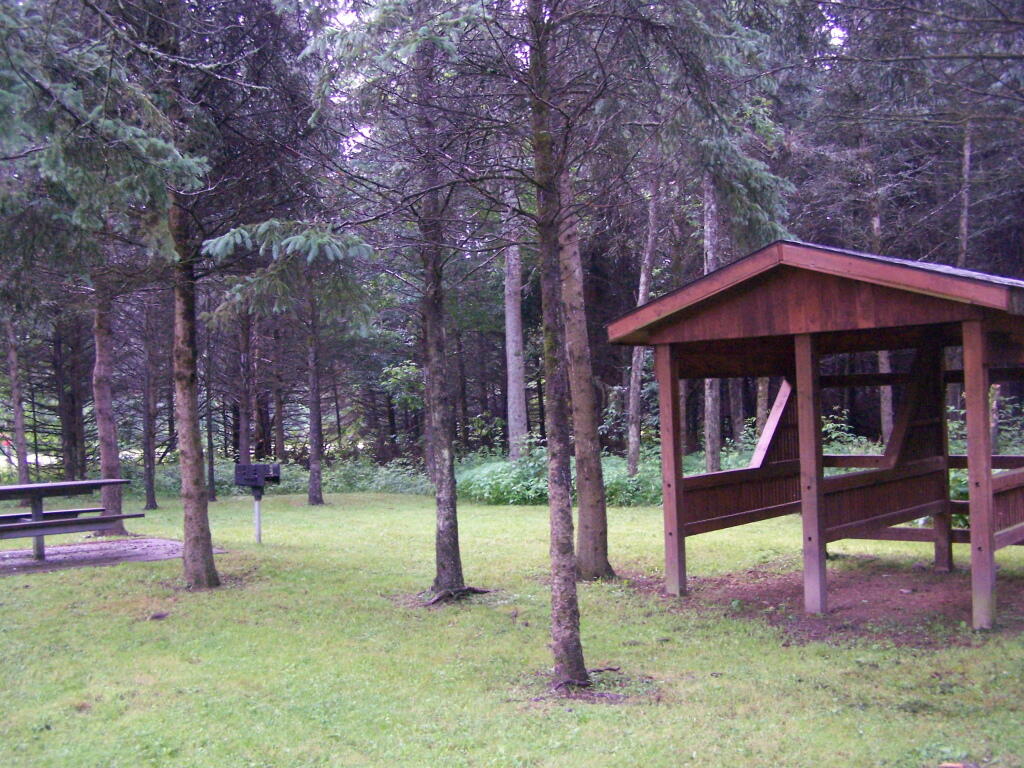
They still have lots of things for the horse owner to use.
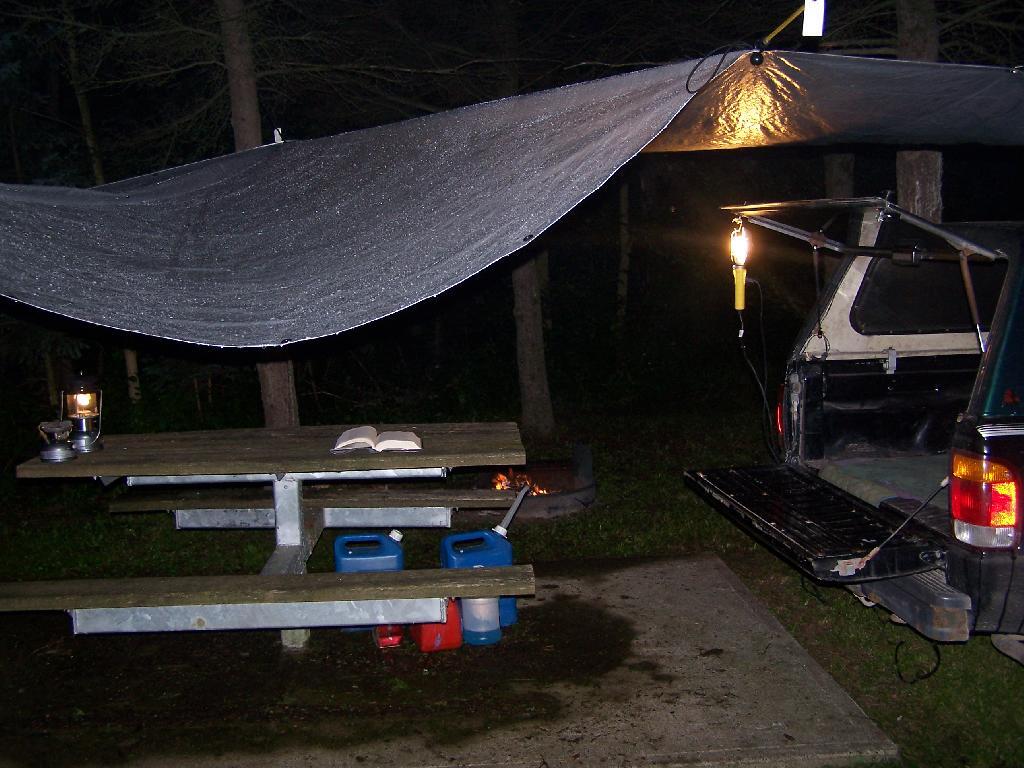
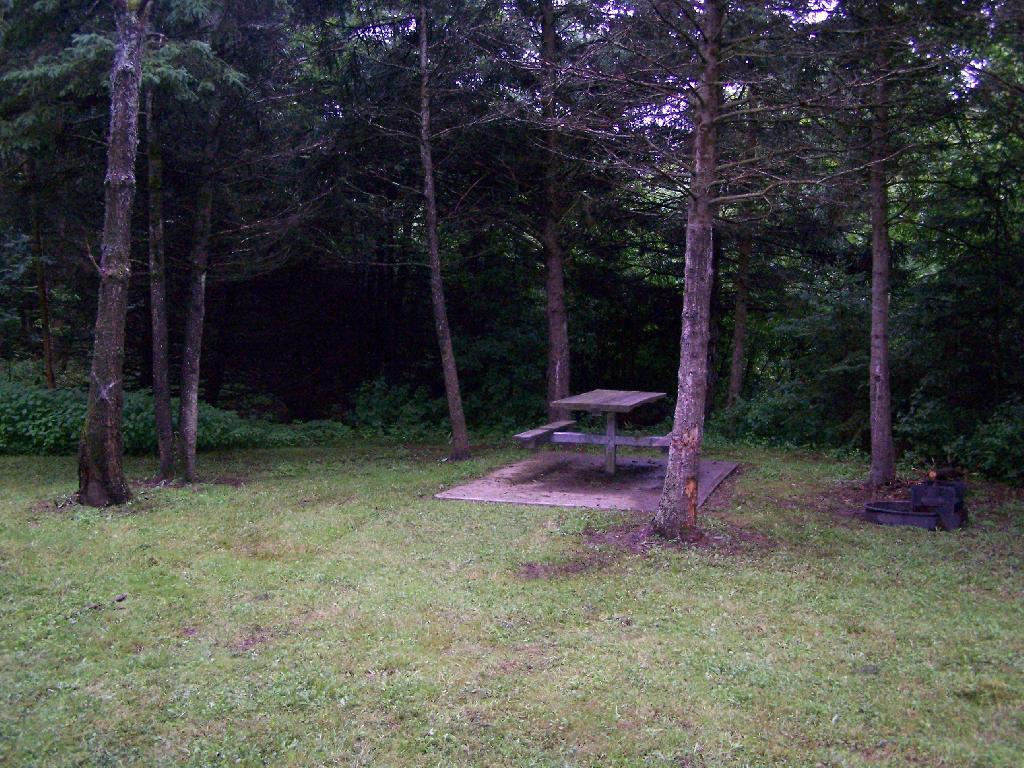
In the evening it started to rain. It didn’t bother me much, as I had the tarp over my truck and the picnic table, and thanks to the cement base under the table, there was no mud or muck to get kicked up.
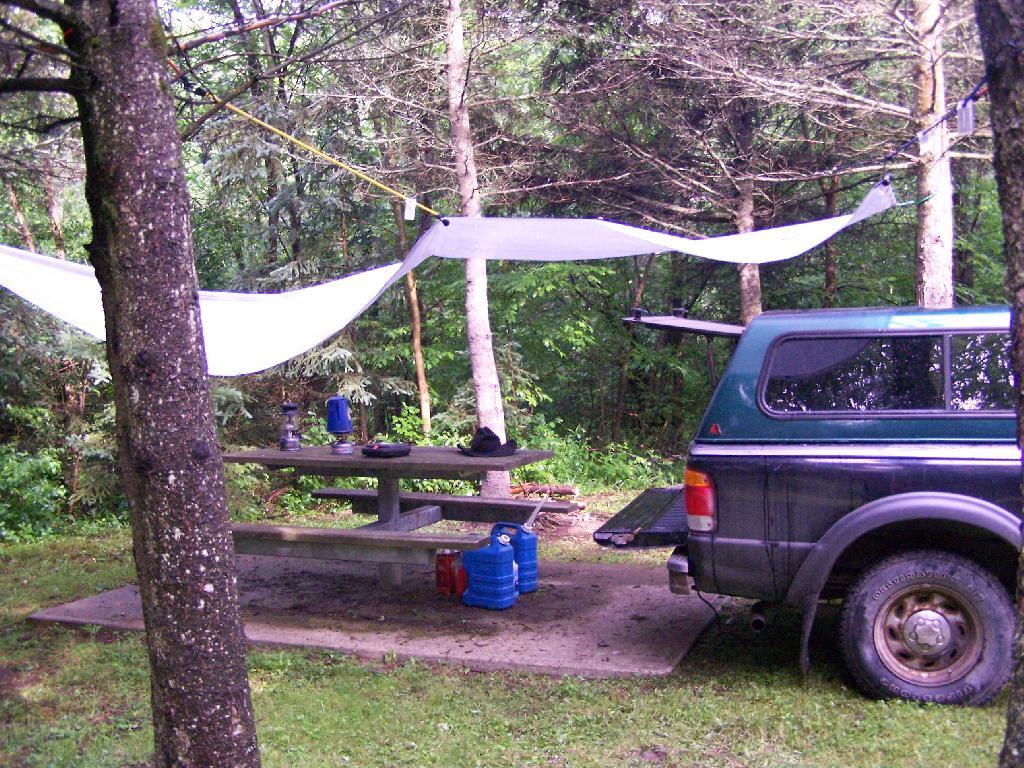
This was my camping arrangements, as seen in the morning. Not bad, especially for a free campsite.
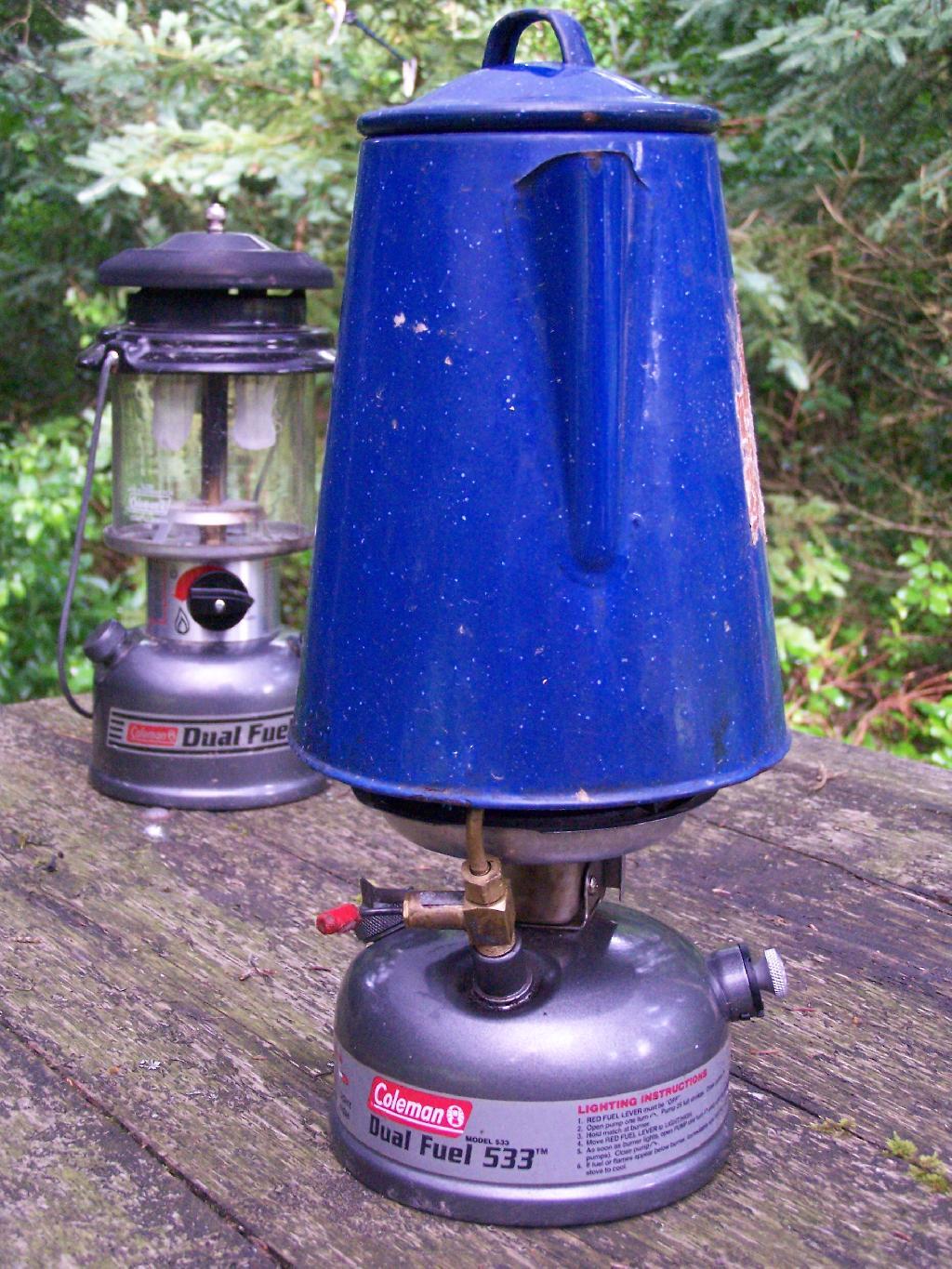
Making some coffee in the morning. I drank an incredible amount of coffee during this week.
Where I camped, after everything was all packed on up.
Farms from off Six Nations Hill in the rain, looking south.
Maps from the DEC of Six Nations Horse Camp:
I drove the following route on Day 3 of the Finger Lakes Trip, in yellow. The loop is where the firetower and main horse camp is. Following the green line due south, takes you to the southern horse camp where I spent the night camping.
Day 4 I visited Corning and checked out Big Flats, which is now unfortunately little more then suburbanite crap. Corning was kind of neat, except that it started to pour when was down there. I then drove down to Sayre, PA, and through northern Pennsylvania so I could pick up some fireworks for the forth of July. I probably could have come right back into the state, but I certainly didn’t want to be followed by undercover cops, with my fireworks (yes, I’m a little paranoid).
Rural Pennsylvania was quite pretty, except for the heavy rain and the fact that Route 706 was so damn narrow and twisty. When I got back to NY, I really appreciated how much better our state’s roads really are. I drove back via I-88, occasionally hopping back on Route 7 for some additional variety to my trip. I got home around 4 PM.