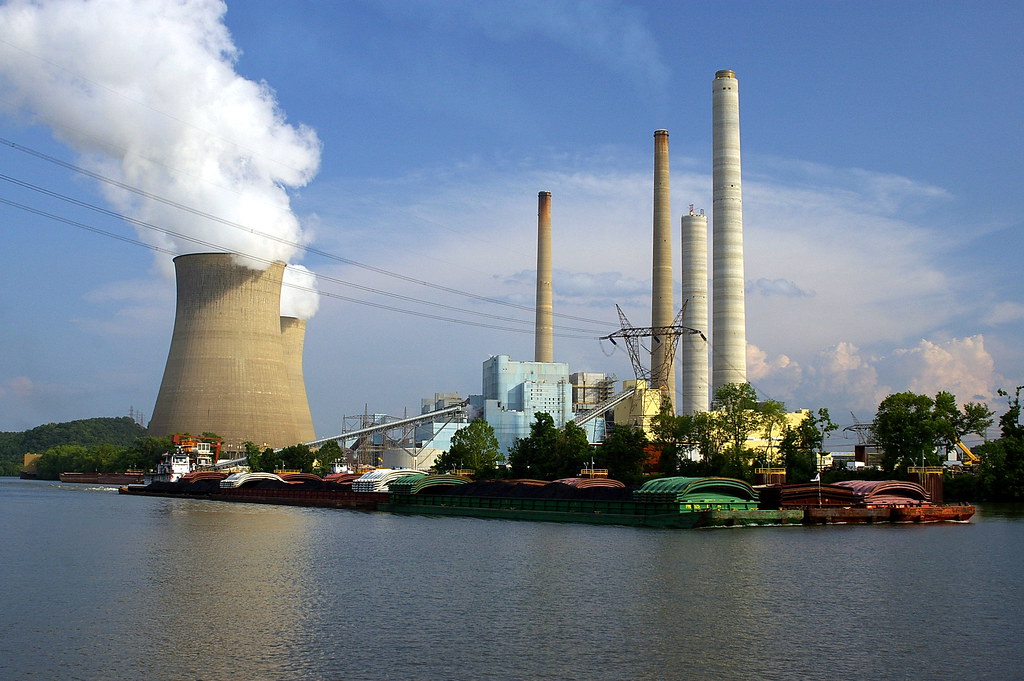
I was looking at the coal company advertisements that the “Quit Coal” project put up. Basically, those advertisements criticize “aggressive” regulations put forward by the government, and policies pursued by Congress to control air pollution. Not surprisingly, the folks that worked in corporations did not want to be told how to run their business, much less do something that would put uncertainty in their business.
Some will say that coal companies were actively spreading lies and falsehoods. Or did they actually believe in what they were advertising — a statement of belief of reality as it appeared to a coal power plant operator? Certainly many of the pollution control technologies of early 1970s were not to the point where well tested or even scaled up. A coal power plant operator, who always operated their plant one way, did not want to deal with the risk of changing operating methods and technologies.
Some will claim that coal-fired power plant operators were mostly motivated by greed. Yet, if you look at historically, did the clean air equipment on power plants actually cost that much — especially compared to existing revenue? Most upgrades to power plants were covered by small increases in electric rates, granted by public service commissions. If anything, more pollution controls meant more employees, and more opportunities for companies to profit because now operated more complex power plants in a regulated market that fixed their profit above cost.
In retrospect, the coal power industry is run by people who believe their mission — to provide inexpensive electricity, using proven technologies. These people who are resistant to change, because they don’t always understand what it will mean in the future.
The lessons of coal advertising is three fold:
Most people don’t actively lie due to moral conscience, nor do the corporations that represent the aggregation of people lie due to threat to litigation
People and corporations that make them up are highly resistant to change, because they fear the unknown and potential costs of unknown, even if the costs really don’t prove to be significant over the long run.
Government has an important role in setting emissions and efficiency standards, to force corporations, which represent large aggregations of people, to take calculated risks to improve their environmental preformance.
Often when people talk about “Climate Change Adaption”, they open discuss mega-projects that prevent theorical stresses that face our cities and urbanized areas. They often discuss large flood walls and other reduncency that would not exist if not for climate modeling.
Yet, there is a more sensible alternative. It’s the minor project and tweaks that can help societies adapt to climate change, that cost far less. Rather then looking at the worst case scenario, planners and engineers can consider likely threats using climate models, and when building new infrastrucuture make tweaks to make them more resilant to weather and flooding that might not have existed even a generation before.
A lot of climate change adaption will happen quietly without much public notice. Simply said, engineers are already that taking notice of recent events, and have to consider future models. Many of the changes, such as bridges designed for greater stream flow, are occuring quietly, without much public consideration.
As get we farther down the path of the changing climate, more infrastructure will fail. Settlement patterns will quietly change, as will land use. But there will be no press release or global stragety. People will adapt to what is right for them, just as infrastructure quietly adapts to a changing climate.
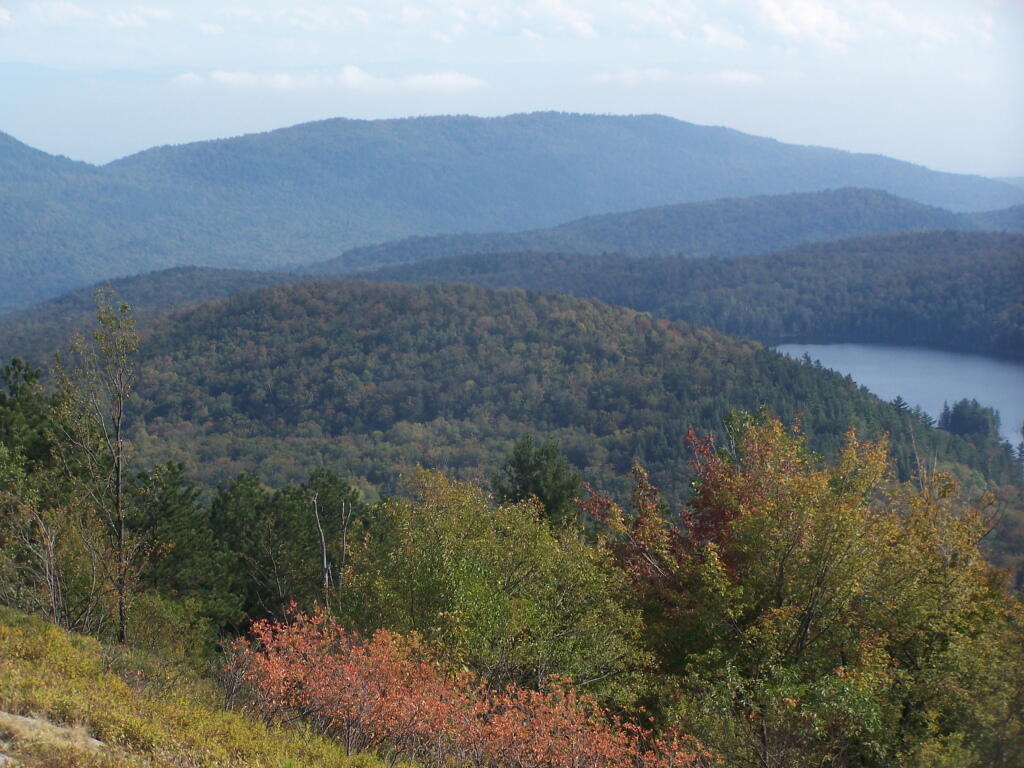
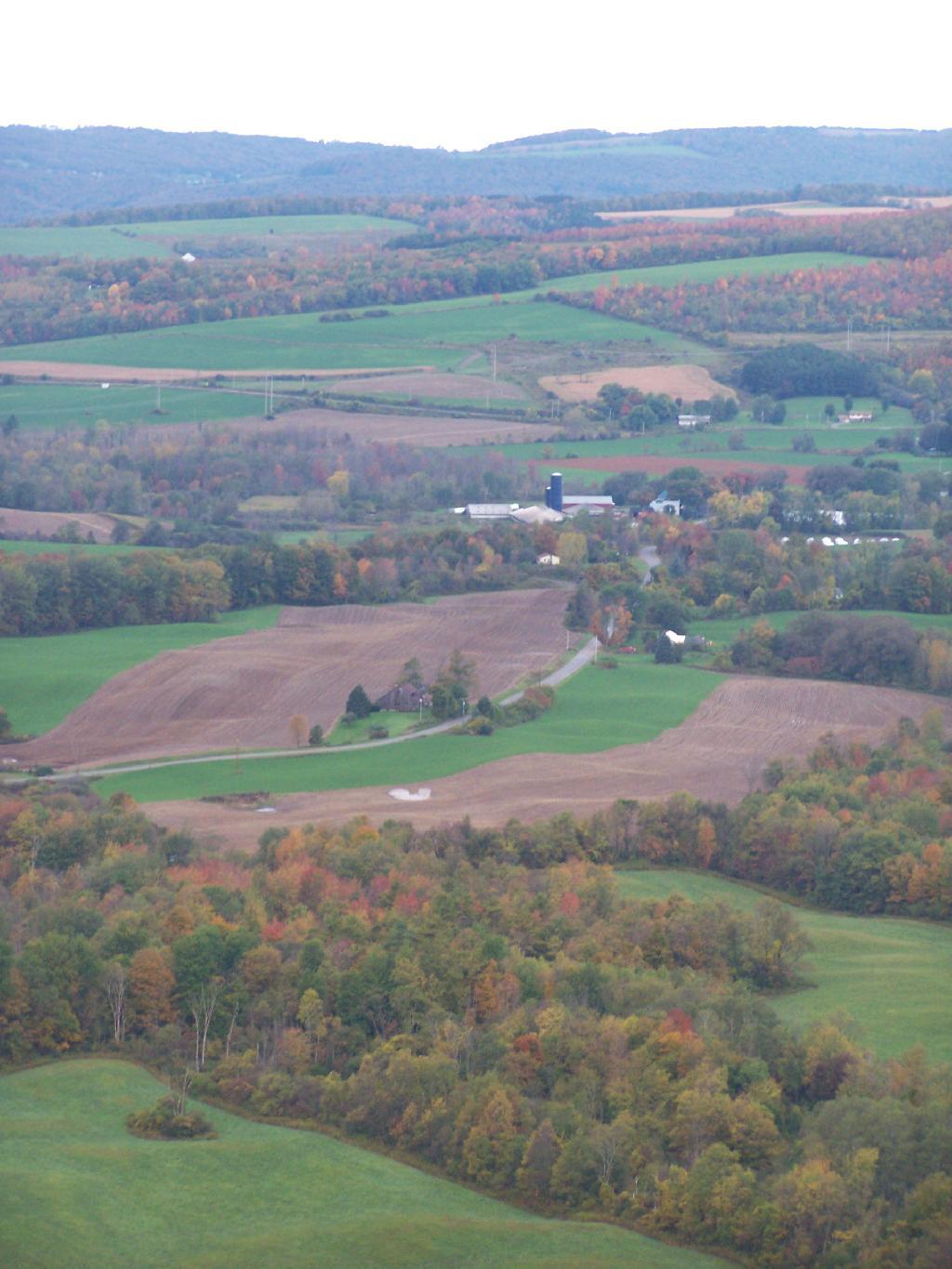
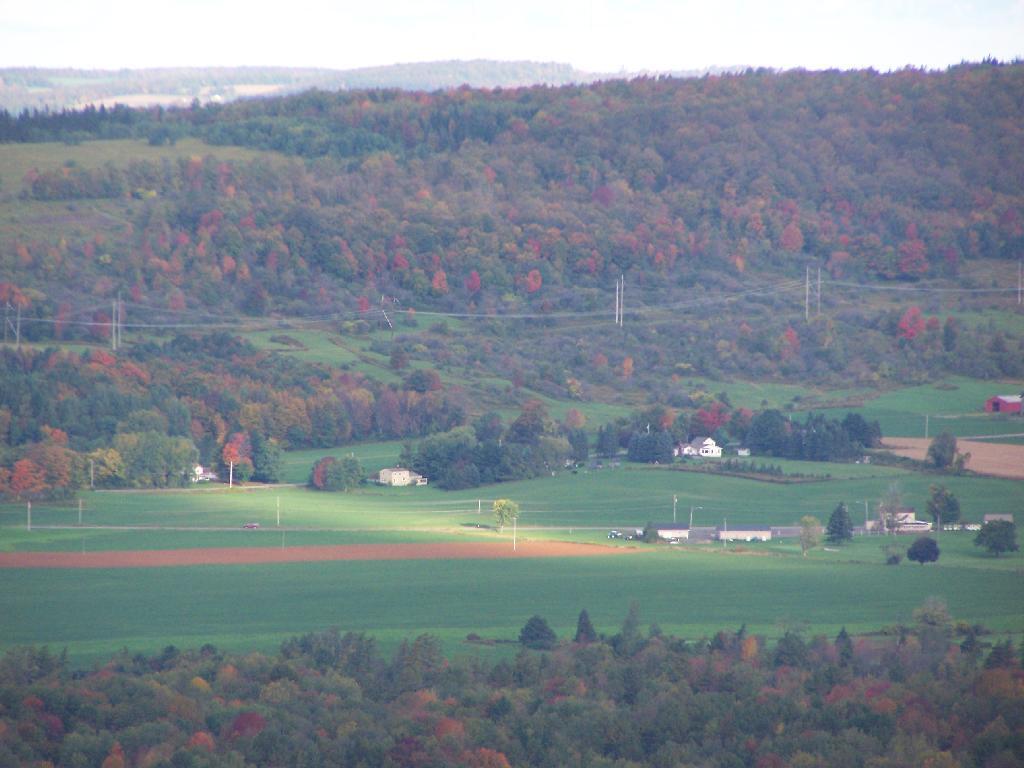
One of my favorite fall hikes when I am out in Syracuse is to hike Jones Hill, which is about 10 miles east of Tully. It’s a quick hop down I-81, as you climb into the mountains, and then take NY 80 through some farm land, and south past Labrador Hollow and Labrador Pond.
You should probably do the hike in the morning, for the best views of country east of here. The fall leaves up here turn earler then in Syracuse.
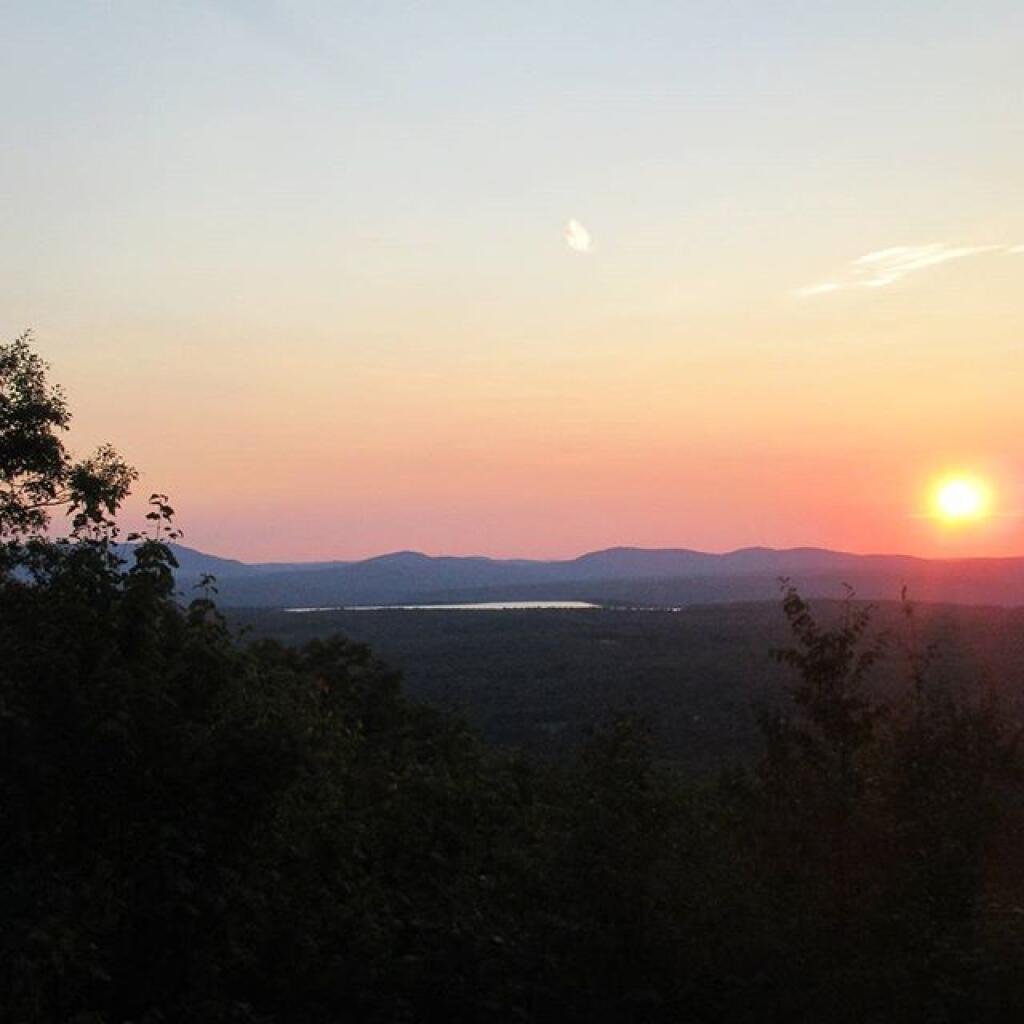
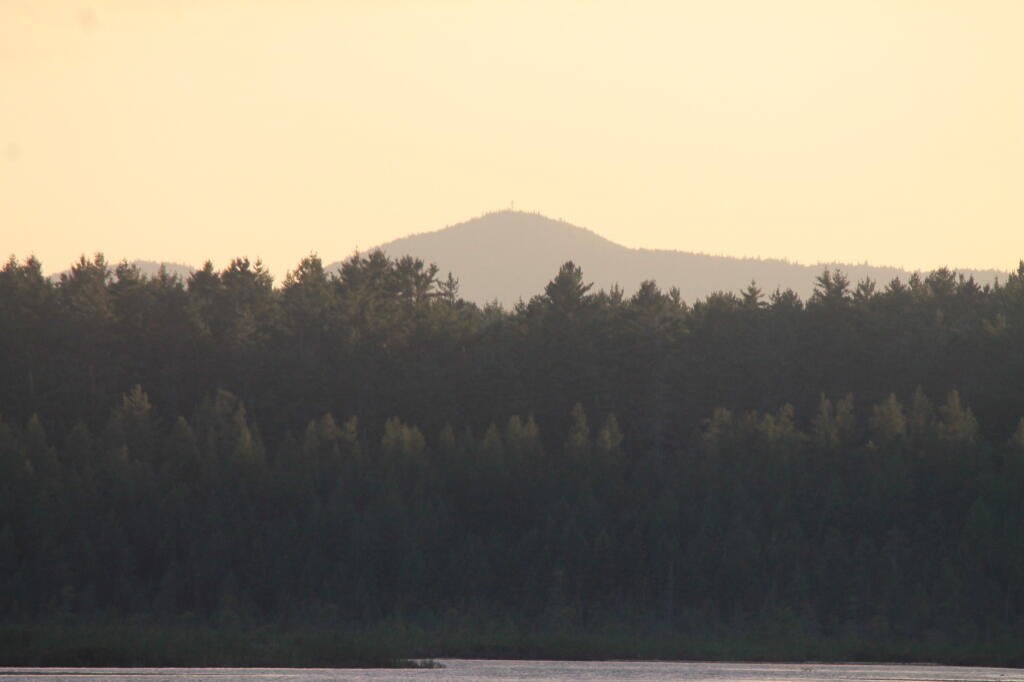
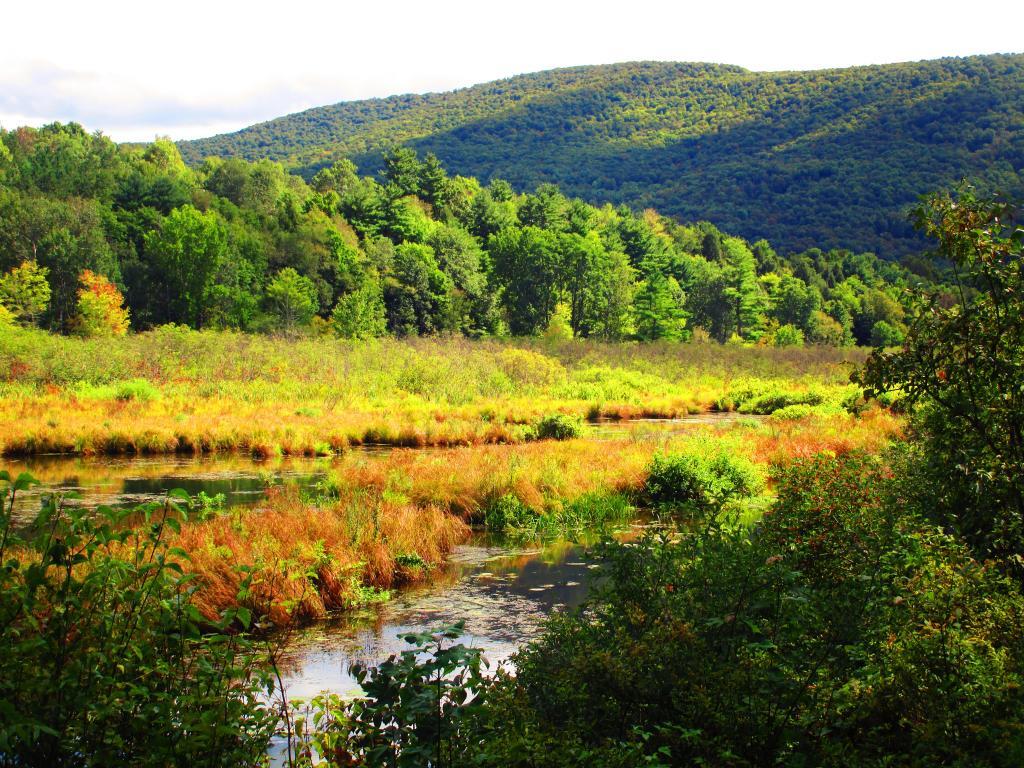
What makes Jones Hill so unique is what you see in the vista. Below you is Labrador Pond, a 101 acre lake with many unique and endangered species. Across the way is Labrador Hill, and to the north to the farm country around Tully.
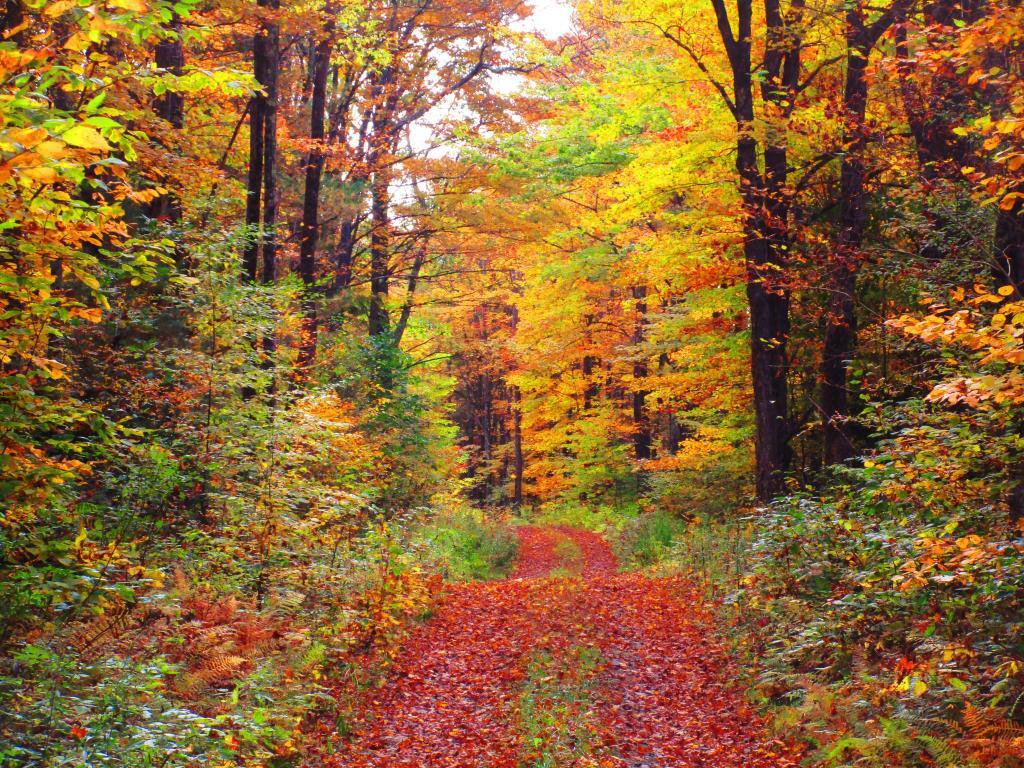
The leaves are always quite spectulator up here, especially if you catch them at peak, which is usually a week prior to Columbus Day Weekend. On Columbus Day Weekend, in contrast, you should go to Green Lake State Park — preferably at sunrise, before the crowds arrive.
Jones Pond has 5 drive-in campsites on Jones Pond, a small public-private lake a little ways from Paul Smiths. A popular area on weekends, on weeknights, it is little used, but right on this beautiful lake.
All of the campsites have “filtered” views of Jones Pond with tall white pines growing throughout the campground. The sun, year round sets on the lake, with views of Saint Regis Mountain te background. There is much beauty at all of campsites, with high sand dunes a little ways behind campsites, and sand dunes providing sound and light barriers between campsites.
Part of the generalized St Regis Canoe Area, it one of many nearby lakes. It provides a great place to make the night after a long day paddling, after watching the sunset, and the fire burn as the night progresses. Walk down to the shoreline, and look at the stars sparkle in the sky.
It’s not perfect. There is some road noise from Jones Pond Road, and certainly part of lake shore is privately owned, so there are some power boats occassionally on the lake. But still, it’s a wonderful experience.
Pennsylvania has some of the loosest restrictions on open burning in most of it’s rural communities in the Northeastern states. People can and do have fires, and burn brush, trash, and all matters of things on their rural acerage.
Most folks down there heat with wood or coal. They burn there trash daily — and all of it including plastics — and dump out the unburnable bottles and cans in woods. Life is a non-stop opporunity to play with fire.
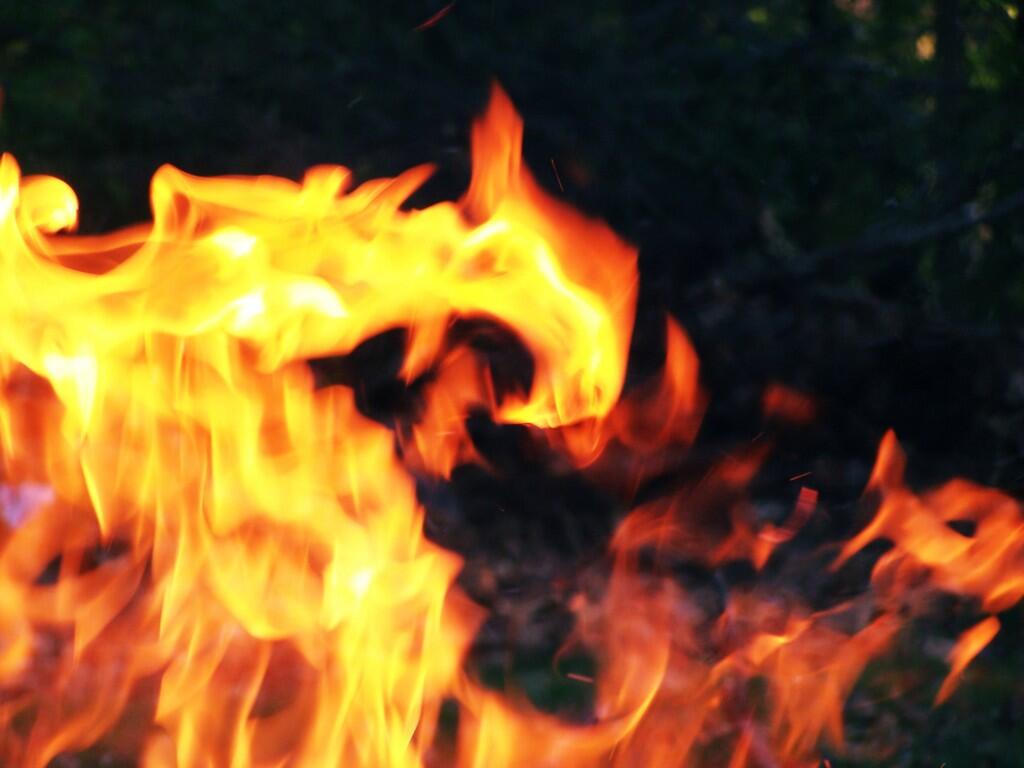
From the blackened trash burning barrels, to the black smoke rising behind the houses, to the flicker of flames, the smell of burnt plastic rising in air. Good ol’ fire.
I wish I could burn things like they do get to down in rural PA…
I got this book out of the library the other day titled, “The Best of Tent Camping: A guide for car campers who hate RVs, Concrete Slabs, and Loud Portable Stereos” and thought it was a perfect read until I actually opened the book and found out it was a book expounding the virtues of state campgrounds, rather then back country and roadside locations for camping.
I once stayed in a state campground. It had to be the most miserable day in my life. I really don’t need to be told by some jackbooted thug how to operate my campsite, when I must turn down the music or dim the camp lights, or otherwise restrict what I want to do. I want shoot guns at midnight, then that should be my right.
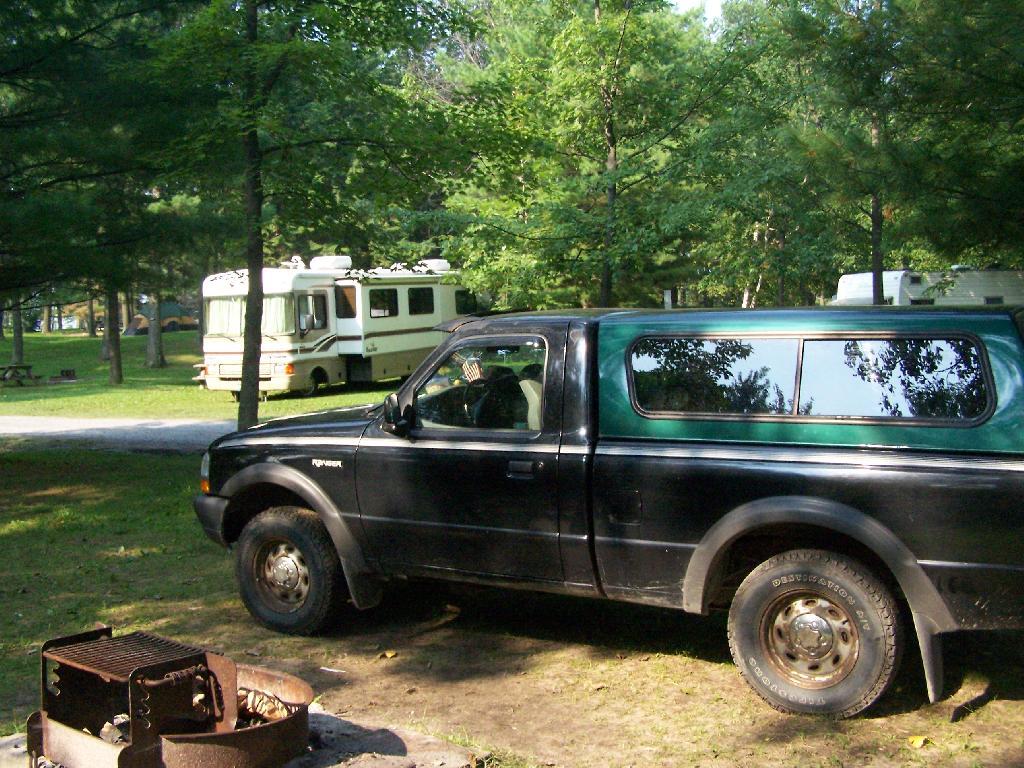
Campgrounds are tightly packed locations, versus the typical 1/4 mile plus spacing between most roadside and backcountry campsites, where you are out of eyeshot and earshot of other campers, so you are pretty much free to do what you want without restriction of the government or annoyance of others.
If you need the kind of services that campgrounds you probably shouldn’t go up to woods. Especially if your tent camping, a developed campground just seems kind of silly and wasteful. You can always burn and pack out your garbage, and there are creeks to swim in to clean yourself out.
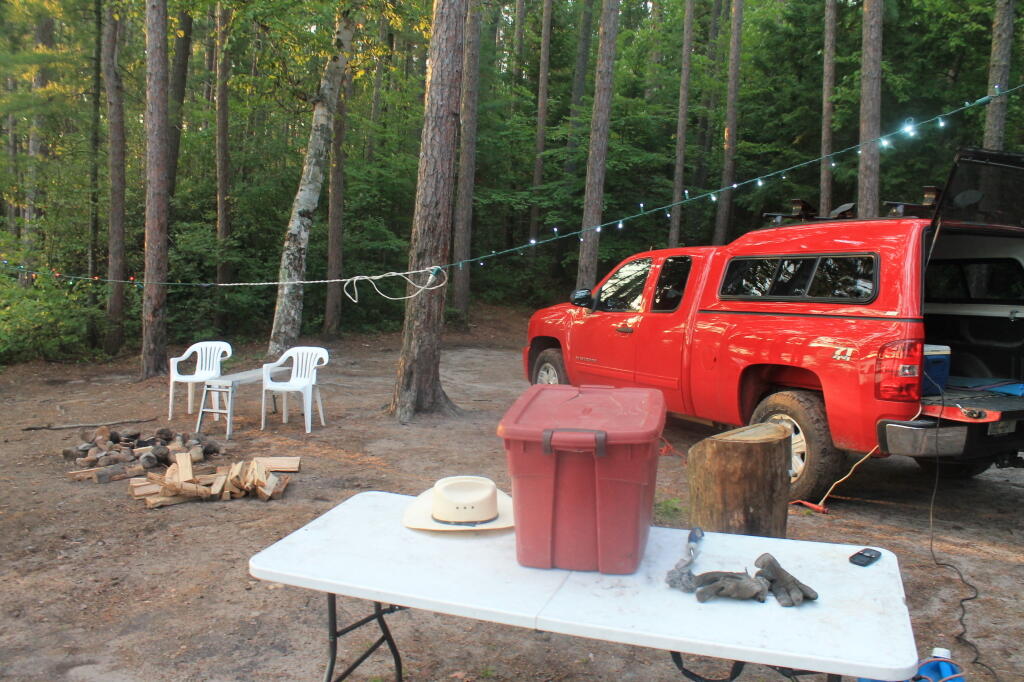
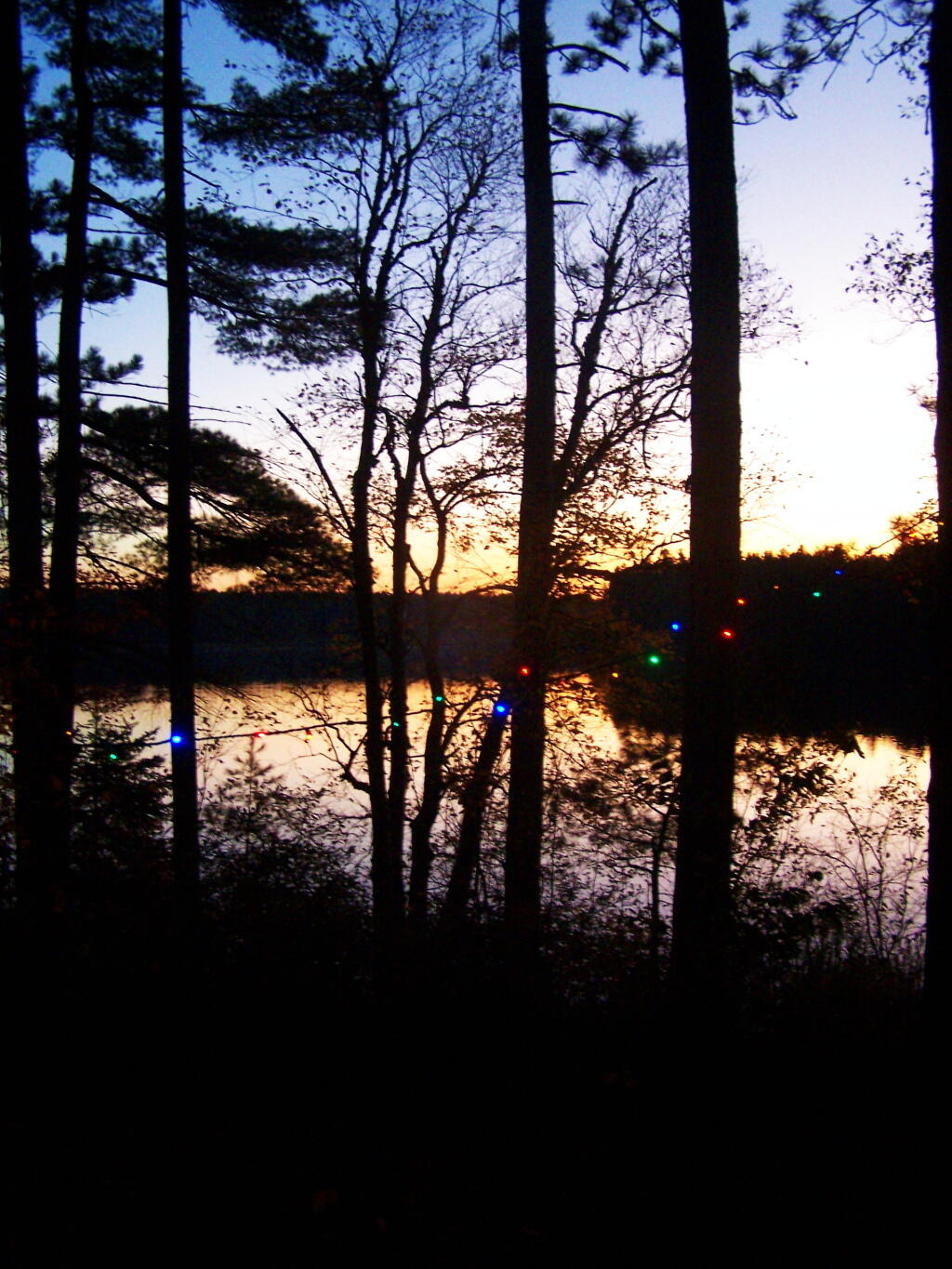
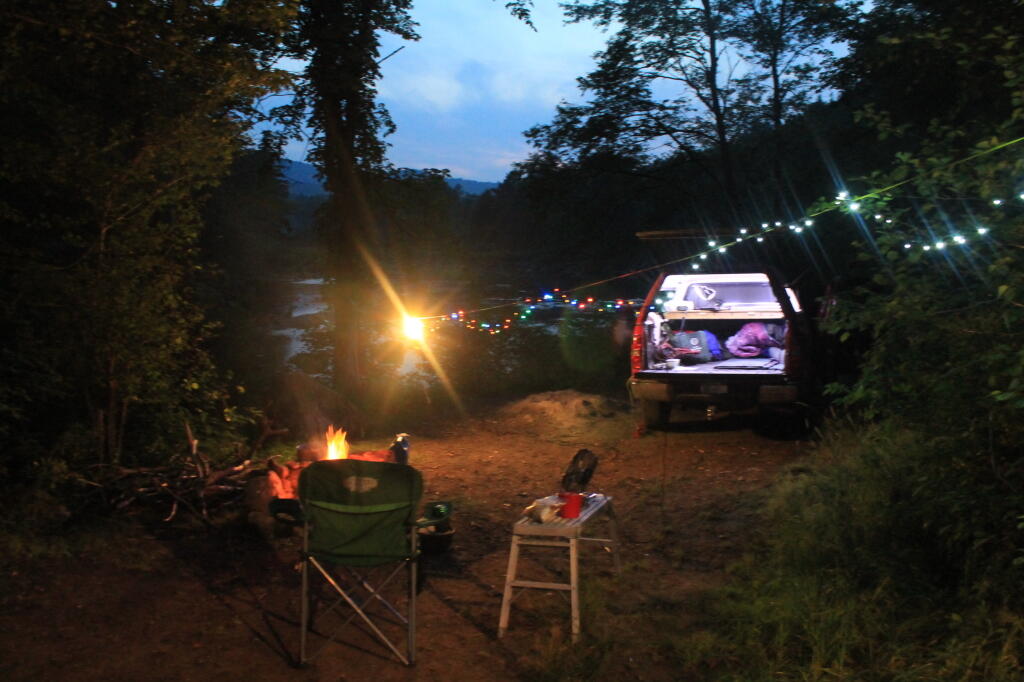
Several years ago, I got a set of LED Christmas lights that I bring almost every time I am roadside camping. I actually have several of the strings now, plus a LED rope light string that I bought this summer, that I don’t like as much although I still use it, because I paid for it, and does put out a bit of bright light.
LED Christmas light strings are great, because they put out a fair amount of direct light, yet consume minimal power. A typical string of LED Christmas lights consumes 4.5 watts, so you can pear together several strings, yet have minimal consumption of electricity — which is a big deal if your camping in woods, using a battery.
LED Christmas lights are just bright enough to keep one from tripping on various things in on the campsite, but not to take away from the campfire or darkness of woods. They give just the right light. One does not necessarily want their campsite lit up brighter then bright all evening long, while sitting next to campfire, enjoying a cold beer.