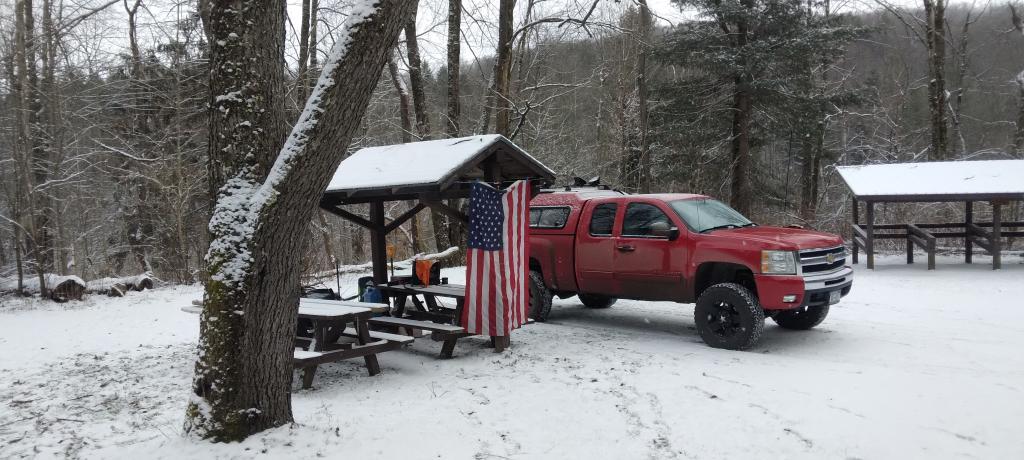
I normally am not a fan of rain when I am camping. I don’t like getting wet, and rain can put a damper in plans to go hiking. I worry about rain washing out the roads, or making the mud so deep and slippery the roads become impassable and I’m stuck on whatever truck trail I am currently on.
My truck cap leaks. By at least one of the windows, the fiber glass has shrunk around the window — probably from my use of Sterno to heat the cap — and allowed water to leak in whenever it rains. The wet isn’t bad, but it does make it damp.
The windows can’t be open when it rains — at least heavily — because of the slant to make the truck cap more aerodynamic. It gets humid under the cap, with no air flowing around to make up for the moist air I breathe out.
I worry about severe thunderstorms, as the I know laying in the steel truck bed, in a severe thunderstorm offers no protection from lightening, and the fiberglass would tear and shatter if a tree came down.
Yet, worst of all, it can be entrapping. There is relatively little room, especially with gear. I might have enough room to sleep in the truck cap, but it really isn’t big enough for doing any real living inside, with nowhere to stretch or move, without flipping down the tailgate.
Regardless, I kind of like the sound of rain on the truck cap. I can be loud, but it also is so soothing.
I have camped out plenty of times in the past in lean-tos and in tents in the wilderness. Yet, it’s not a regular thing, but more of an occasional thing. I much prefer camping out in my truck for the simple fact: I like having electricity.
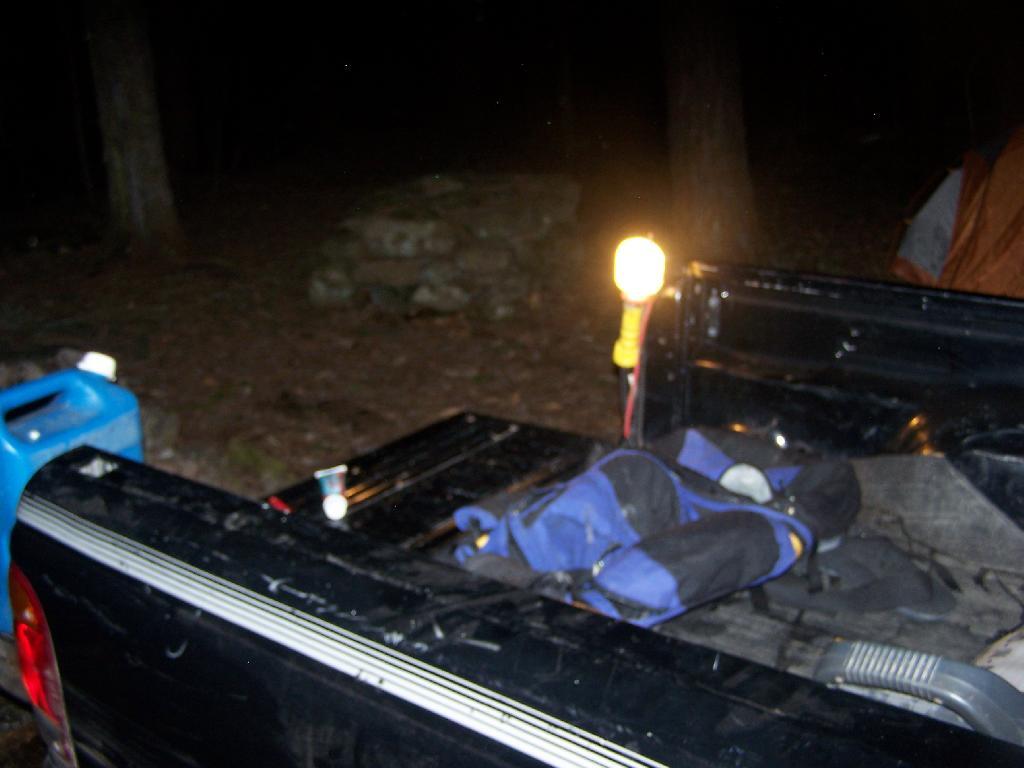
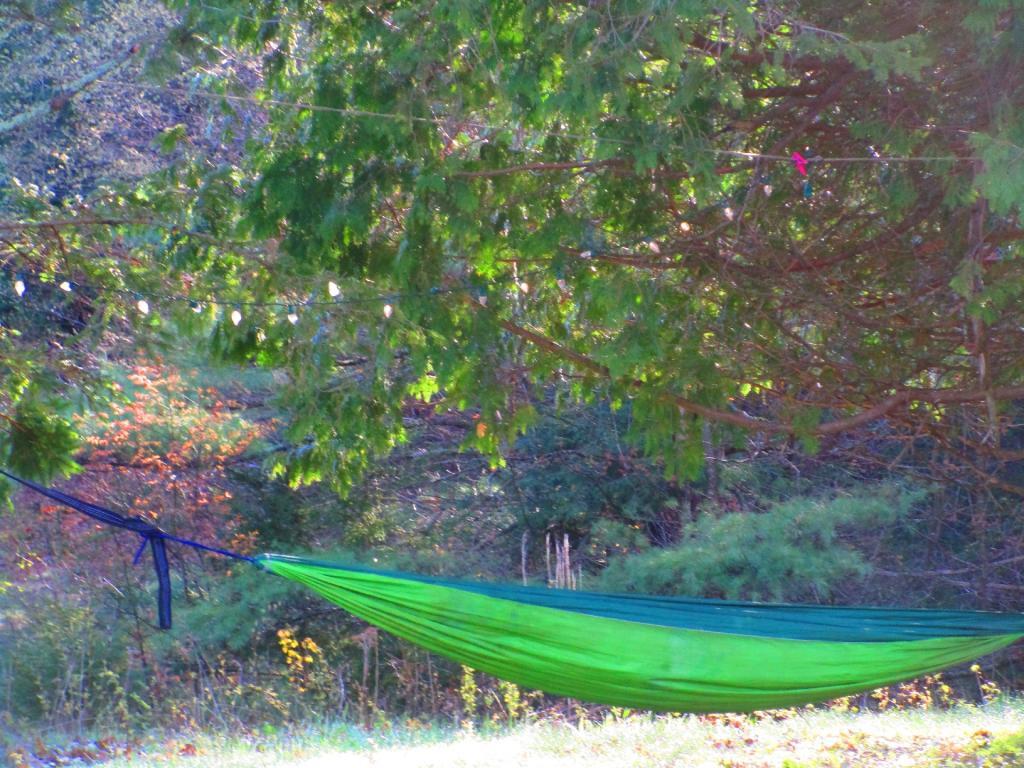
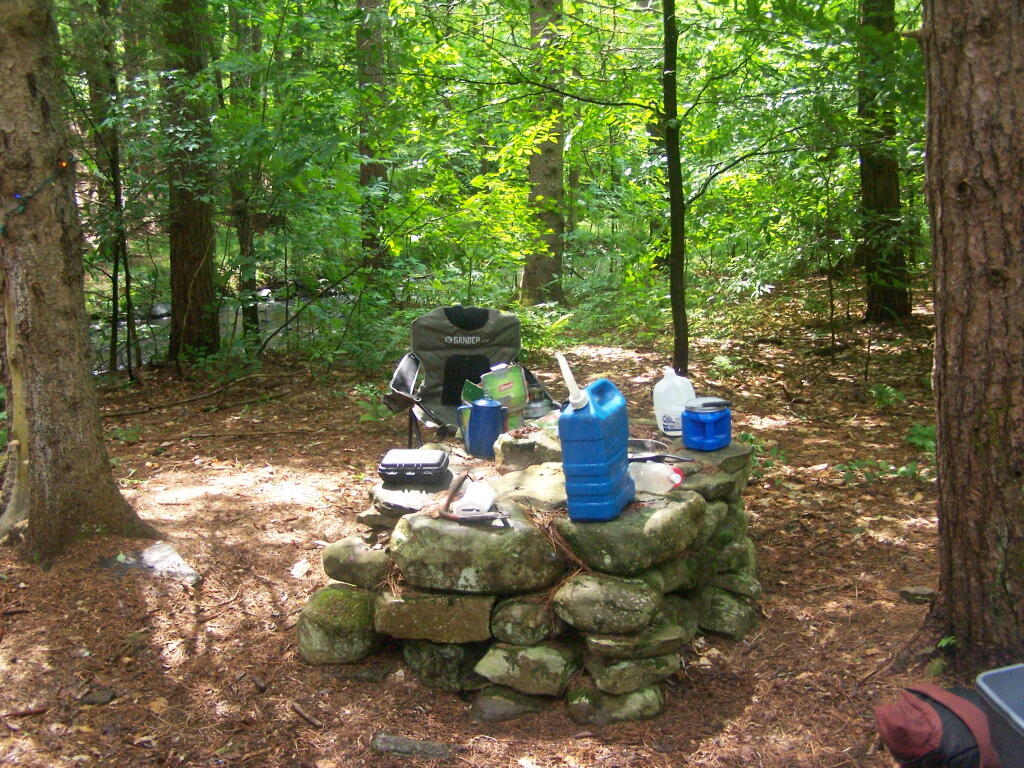
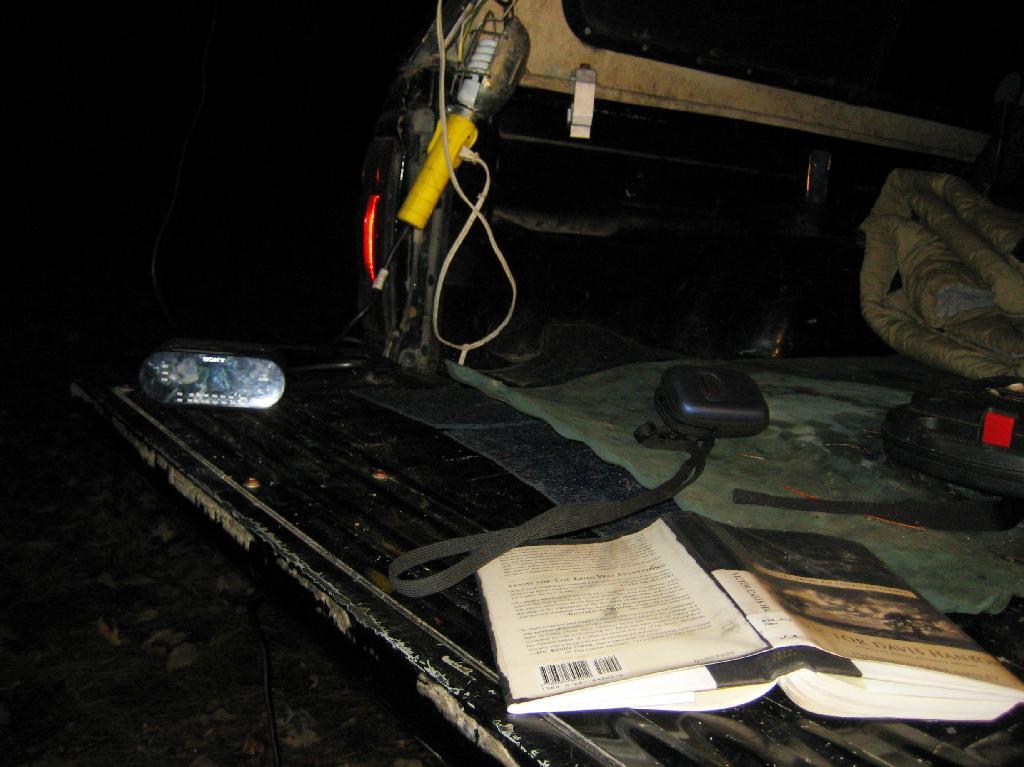
As I’ve noted in the past, my truck has a 800-watt inverter hooked up to the battery, which provides electricity for my clock radio and lighting. I usually bring a string of LED Christmas lights for charm, but then also have a desk lamp with a 9-watt florescent light (equivalent to a 40 watt incandescent), along with two other 26-watt florescent lamps (each equivalent to a 100 watt lights).
It turns out that those lamps put out a lot of light. When I hear a bump in the night, or just need to run outside, I can turn on the lamps, and instantly have a lot of light. While a florescent lamp the size of 100-watt incandescent bulb might not seem that bright, as in a large well-lit room, in a darkly lit woods, they are very bright.
I usually use just a well focused 40-watt equivalent florescent bulb in my desk lamp for reading in the woods. I find it hard to read with a flicker of my white gas lantern, which also tends to be dimmer then the electric light, especially after white gas lamp starts to run lower on fuel, and needs to be pumped up again.
Indeed, one my favorite things to do when camping is reading. It one of few places I can enjoy the quiet without the distractions that are normally around. I find to read at night for hours, I need a good source of light to do it without eye strain I get with a lantern.
Electricity also powers my truck’s radio, along with a clock radio, chargers, and even a portable fan. It’s nice having music at night, and a fan to cool you. I like listening to the radio throughout the night, as it proves to be a good companion. You can get some of the strangest radio programs — right-wing christian talk shows — when your up in the woods.
Some people will say camping in the back of a pickup truck, with half a dozen things plugged is not real camping. Yet, it provides enjoyment, and a chance to get away from it all, and still provide the light and power I need or at least want to have a night.
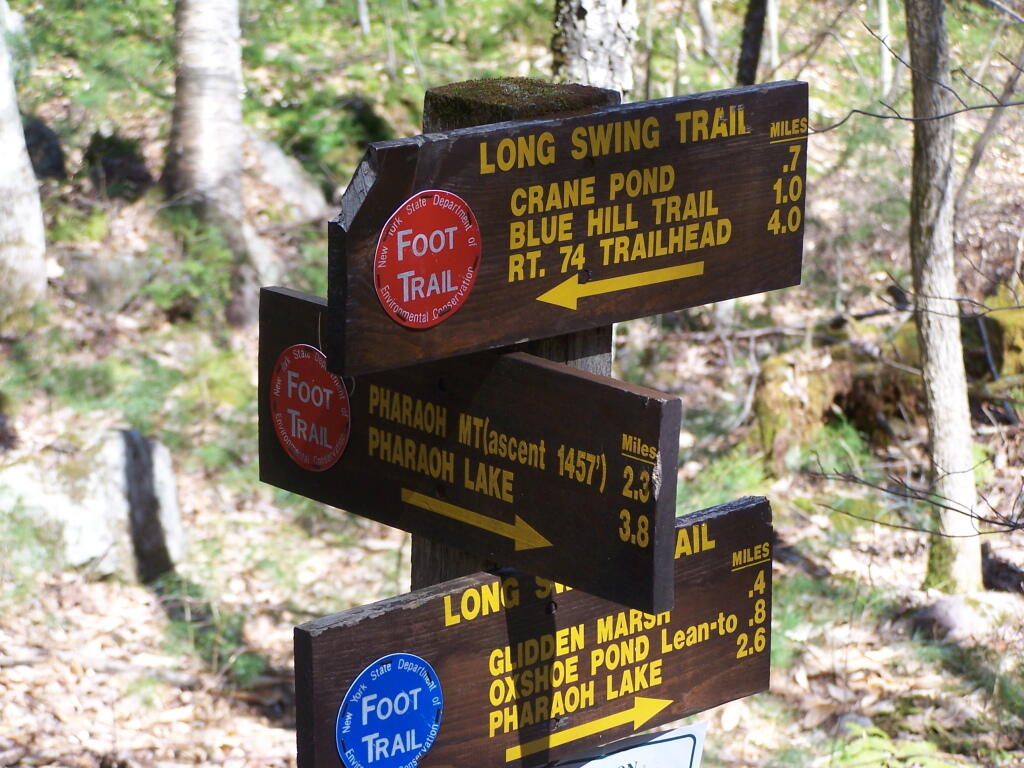
Crane Pond Road is a 2 mile historical truck trail in the Pharaoh Lake bureaucratically-defined “Wilderness”. This truck trail provides access Alder Pond and Crane Pond, along with access to hiking trails to Goose Pond, Glidden Marsh, Oxshoe Pond, Crab Pond, and Pharaoh Mountain.
This truck trail is popular and is frequently used hunters, fishermen, backpackers, and hikers visiting the vast lands of Pharoah Lake “Wilderness”. The wilderness distinction, is rather dubious as these lands are not historical wilderness but only designated as such on paper by the Department of Environmental Conservation and the Adirondack Porn Agency. There is few old growth forests or undeveloped land remaining in our state, and the wilderness designation is frequently abused by environmental extremists.
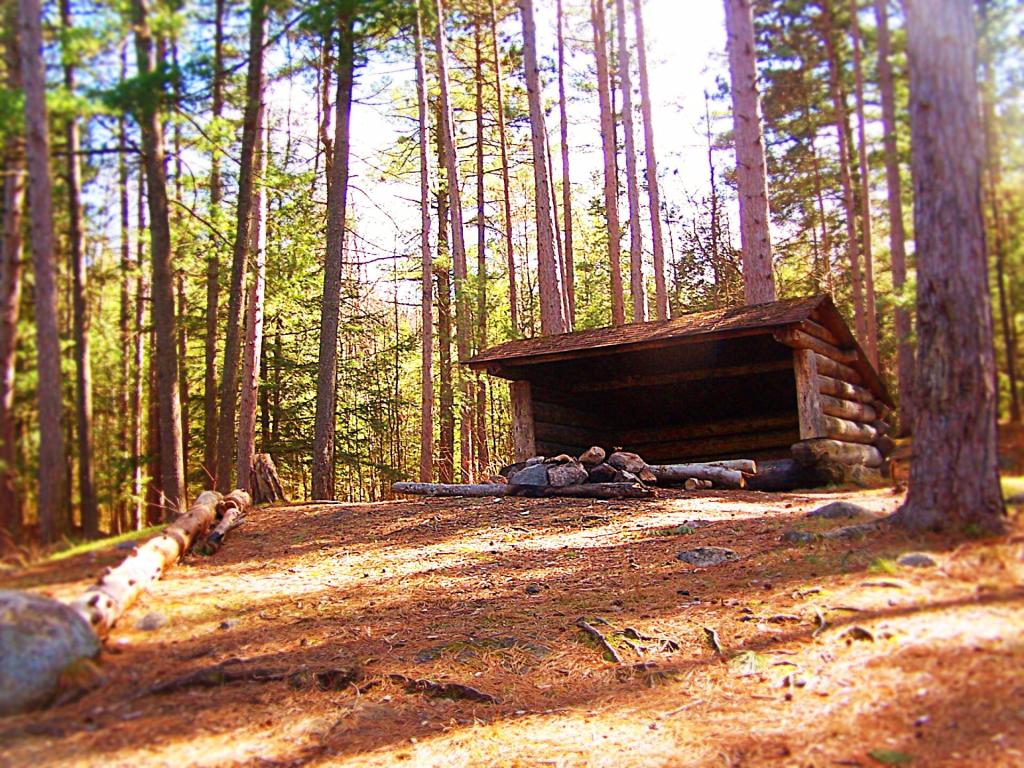
The entire Pharaoh Lake “Wilderness” is traversed by old logging roads, has old foundations, and other ruins of a once privately owned, farmed or logged land. Many of the hiking trails follow old logging roads. The state has developed foot bridges, hiking trails, and many lean-tos throughout the property, so man made structures are not uncommon to find in this so-called “Wilderness”.
A Rough Truck Trail.
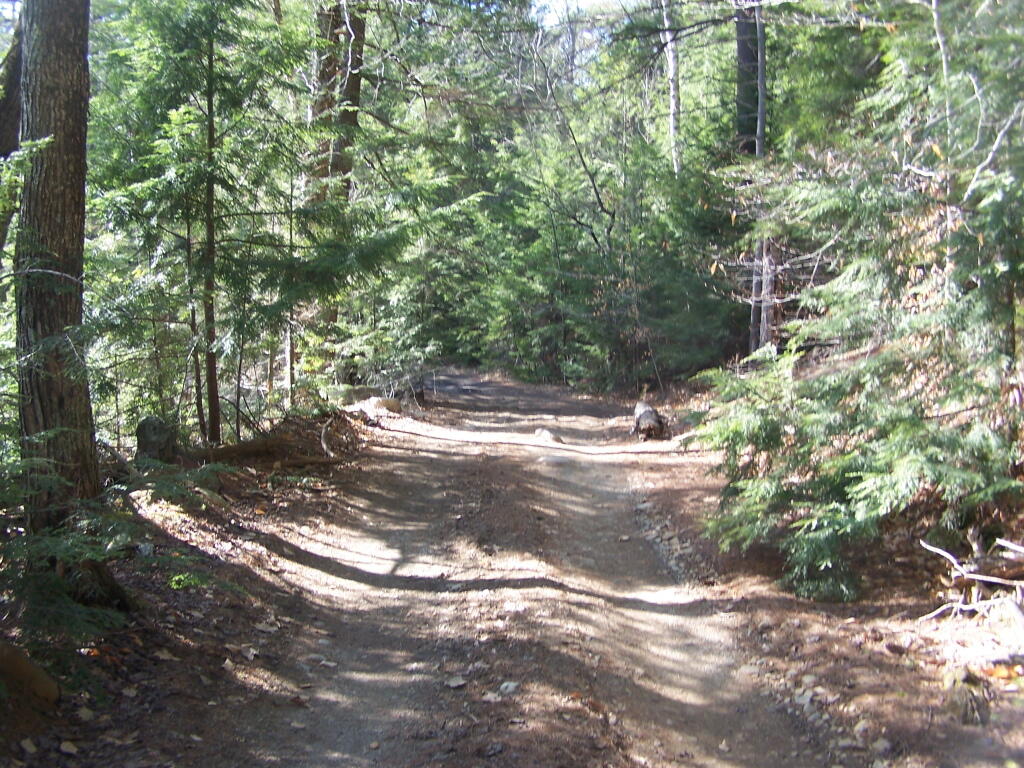
The entire Crane Pond Road is a rough truck trail. It’s has gotten minimal maintenance by the state of New York, ever since those with an certain extremist ideological agenda attempted to get this truck trail closed off.
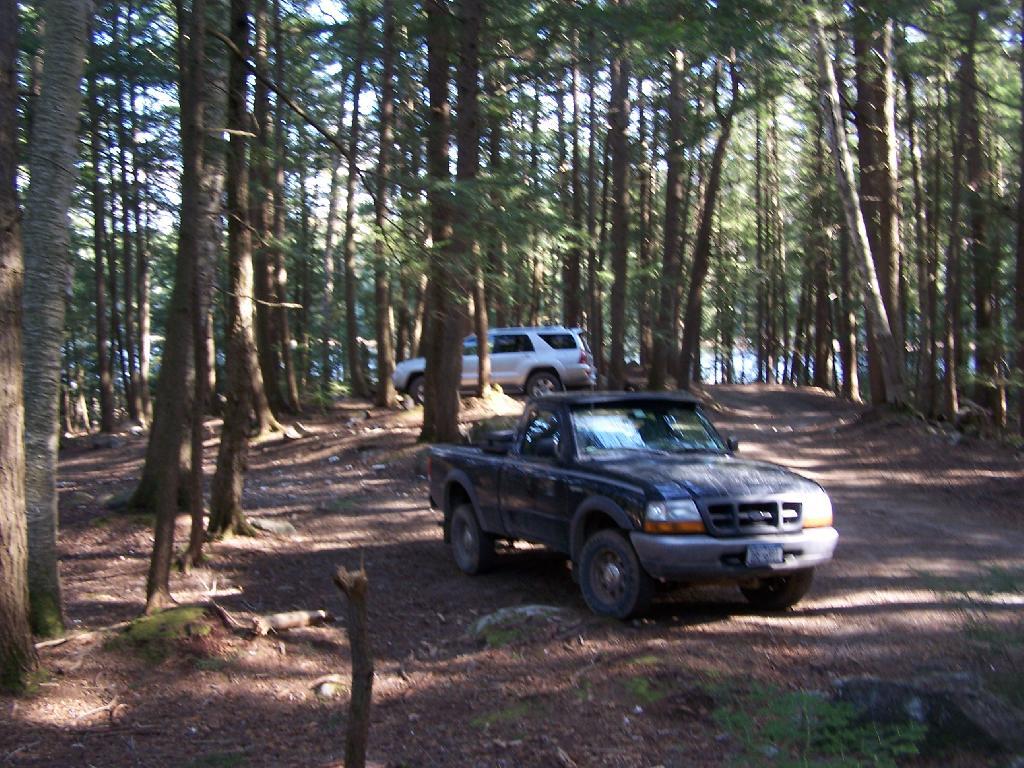
Some portions of the truck trail are deeply rutted, and at least this time of year, very muddy. A few places are washed out, and you have to travel past washed outs, or carefully climb over them. I bottomed out my Ford Ranger a couple of times and could feel the front-drive train pulling the back wheels along as they started to slip.
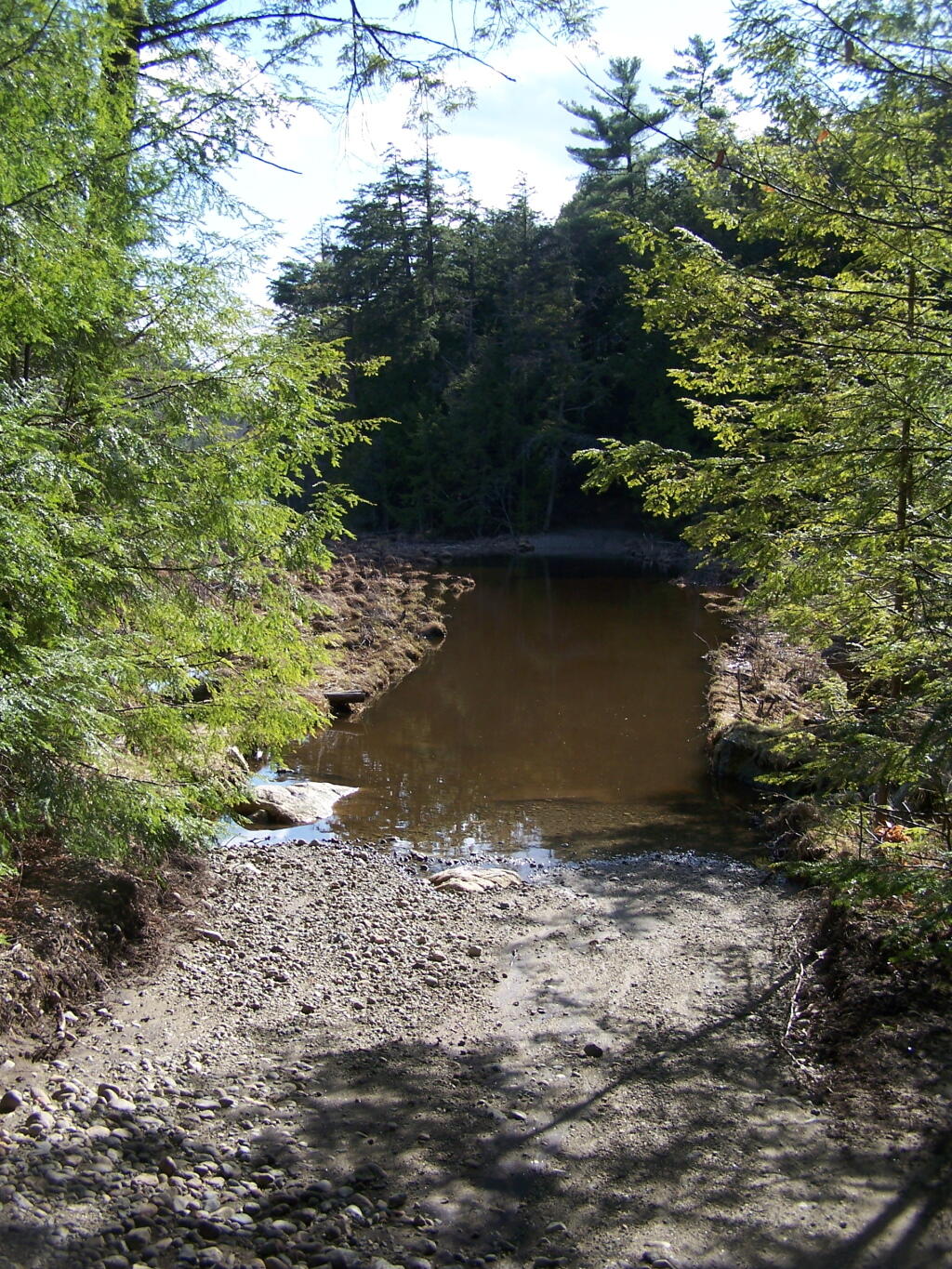
Towards the end of the truck trail, the truck trail actually crosses an inlet to Alder Pond. I didn’t try driving through this section during the high water of spring, but apparently at least one person with an old Chevy K1500 4×4 made it to the end without problems.
I drove to the pull-off right before the spot where the truck trail crosses Alder Pond. In low water, I wouldn’t mind driving through the inlet to the parking area at the end of Crane Mountain Road, but I wasn’t going to get my pickup stuck or flooded.
A Good Thing to Still Be Open.
All and all, I am happy that citizens fought to keep this existing truck trail open, against an extremist ideological agenda of some environmentalists. It shortens the hike up Pharaoh Mountain by 4 miles, and provides easy access to many important areas.
This would have been different issue if was proposed by the NYS DEC to build a new road through the Pharoah Lake “Wilderness”. If the DEC had shown up with bulldozers, and chainsaws, to cut a new road one could have made an argument against building a new road.
Yet, Paraoh Lake “Wilderness” is not that — it’s a land that has long been minimally developed with forest access roads, trails, lean-tos, with Crane Pond Road long being minimally maintained to provide access to this important public land. It’s not a Strip Mall or Housing division, and most of the area is very wild, even if it’s somewhat developed to provide for the public access and enjoyment.
New York State Should Maintain &
Keep Crane Pond Road
OPEN to Public Motor Vehicles !
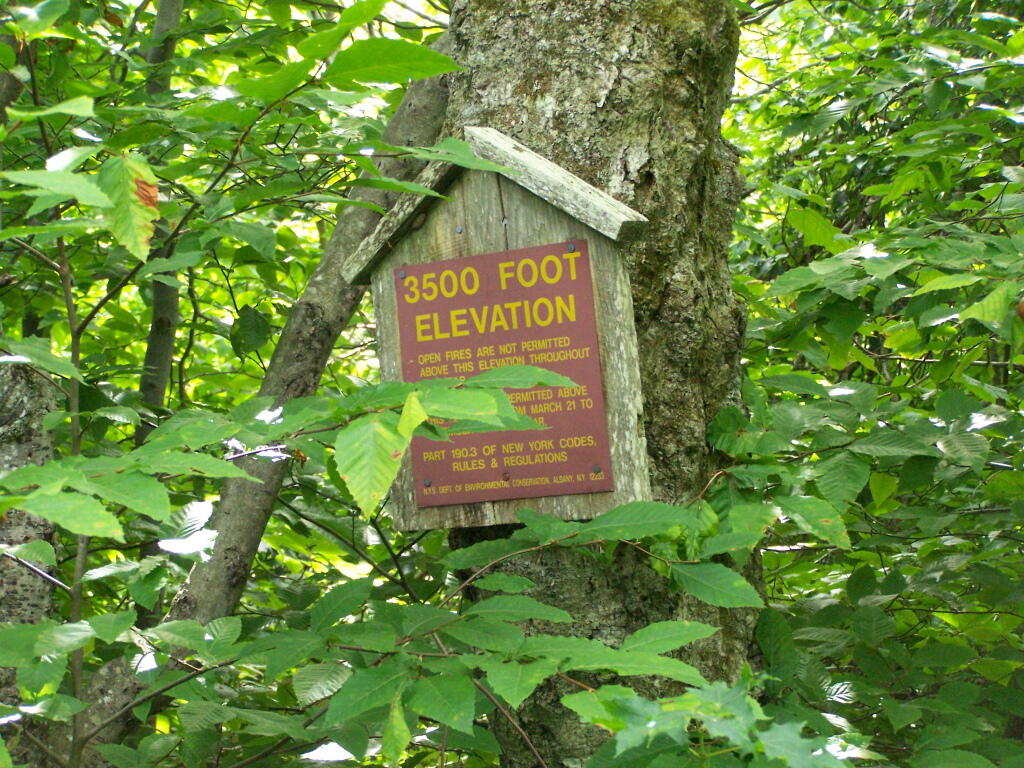
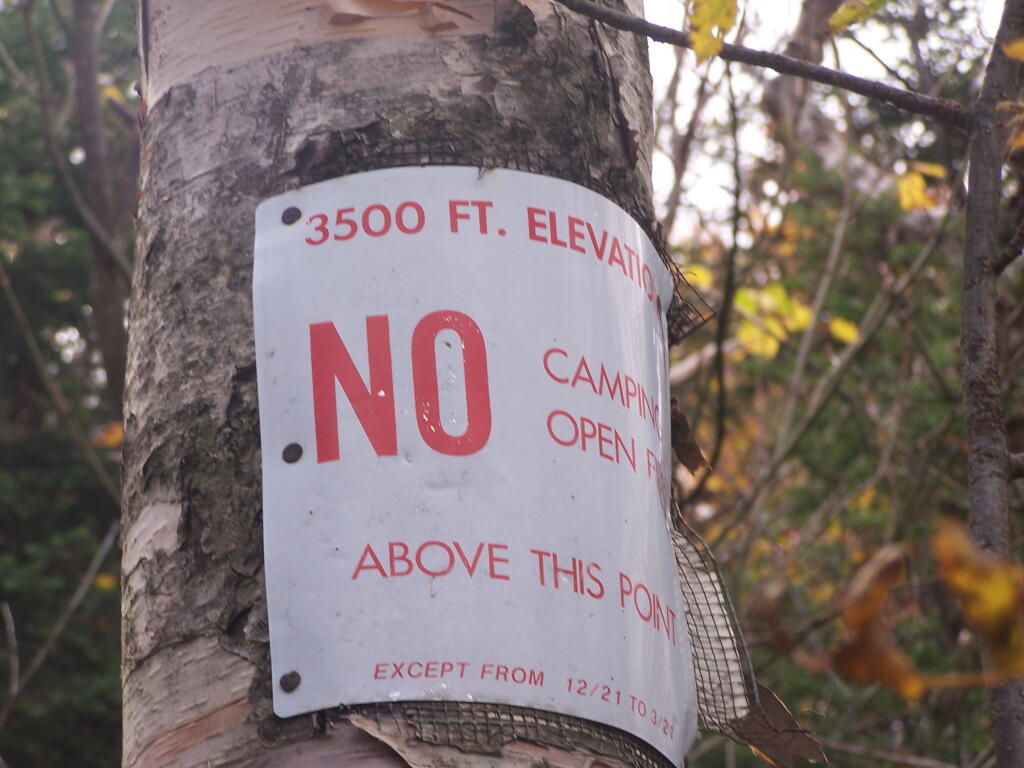
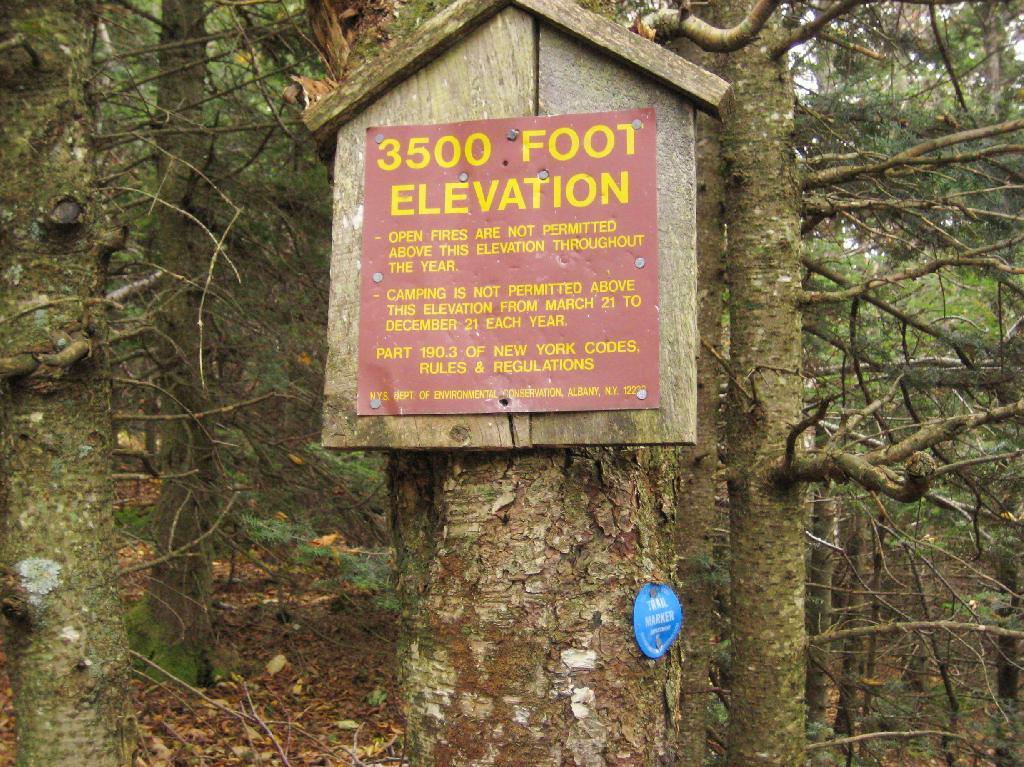
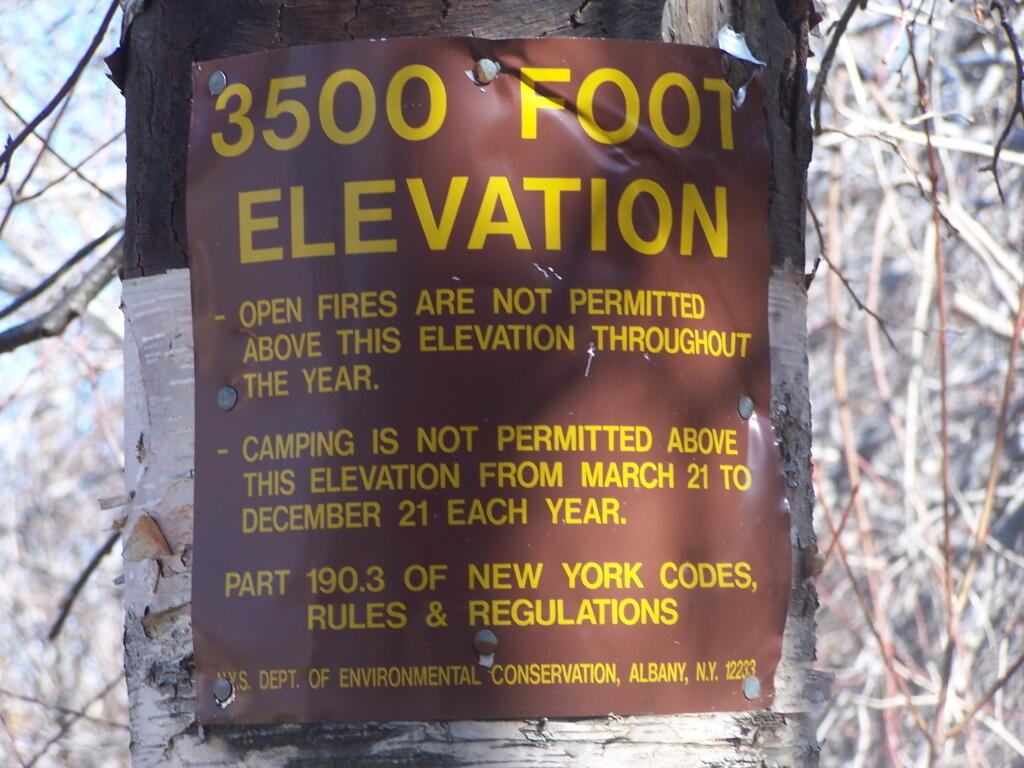
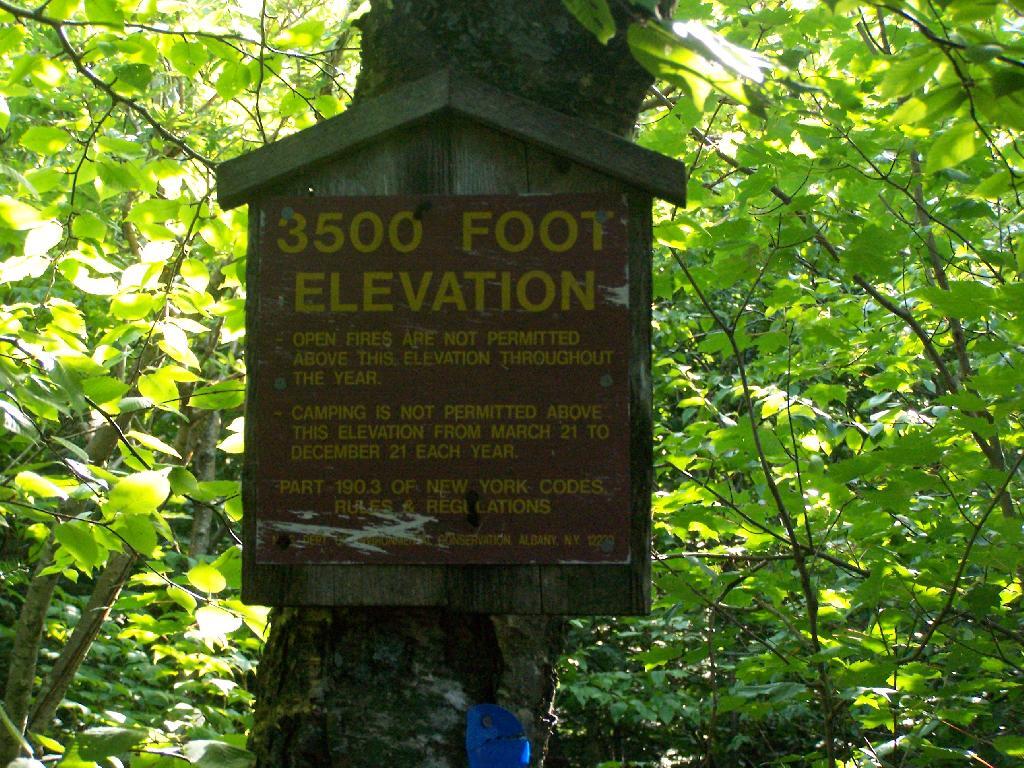
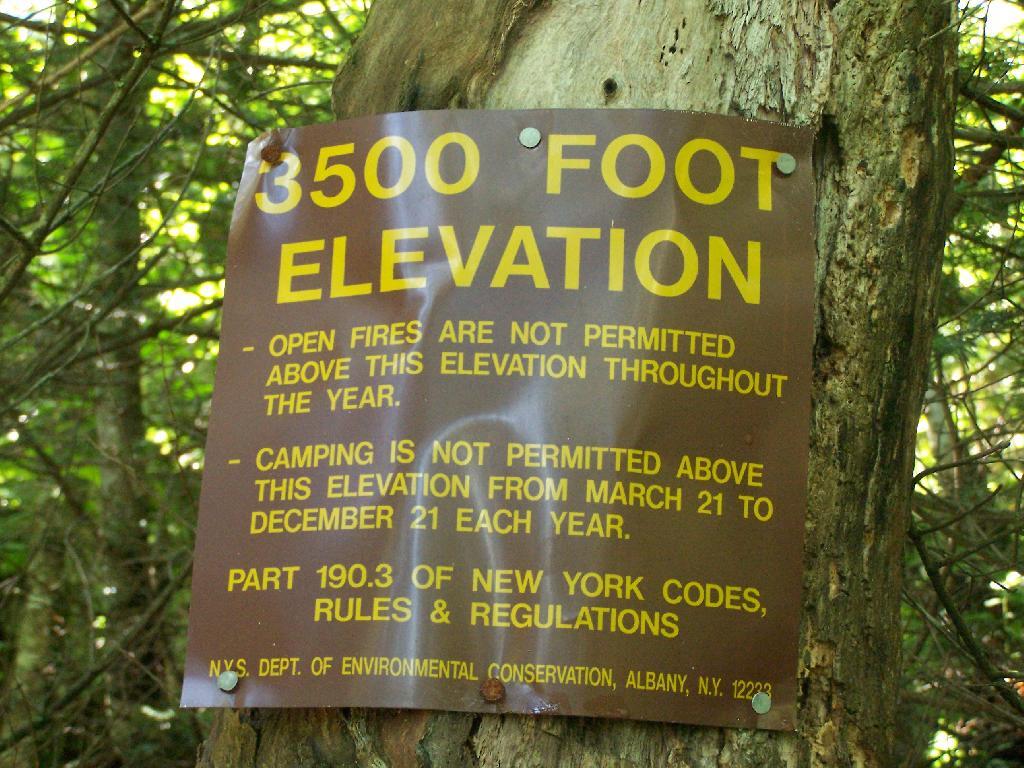
When you climb above 3,500 feet elevation in the Catskill High Peaks, a special set of regulations is in effect that prohibits camping except in the winter, and bans open fires throughout the year. This is because the eco-systems above this elevation on the 35-high peak mountains are viewed by the Environmental Conservation Department as ecologically sensitive.
I didn’t take the 3,500 feet signs on every mountain I climbed, most notably skipping over the sign on Hunter Mountain, Windham High Peak, and Black Dome.
Balsam Mountain.
Hiking up to the Balsam Fire Tower, about a 1/4 mile or maybe 200 feet below the tower.
Indian Head Mountain.
Climbing up the east face of the Indian Head Mountain, this sign is maybe 3/4 of the the westerly face of the mountain.
Panther Mountain.
You see Panther Mountain‘s 3500 feet sign about a 1/4 mile and 200 feet more of climbing before you reach the final ascent.
Plateau Mountain.
The sign on Plateau Mountain is about a half mile from the top, although the last portion is relatively flat.
Slide Mountain.
Slide Mountain, the tallest mountain in the Catskills at over 4,200 feet. The sign is probably a mile away from the final ascent.
Twin Mountain.
The sign is the second of two signs on the way up to the top of Twin Mountain on Devil’s Path.
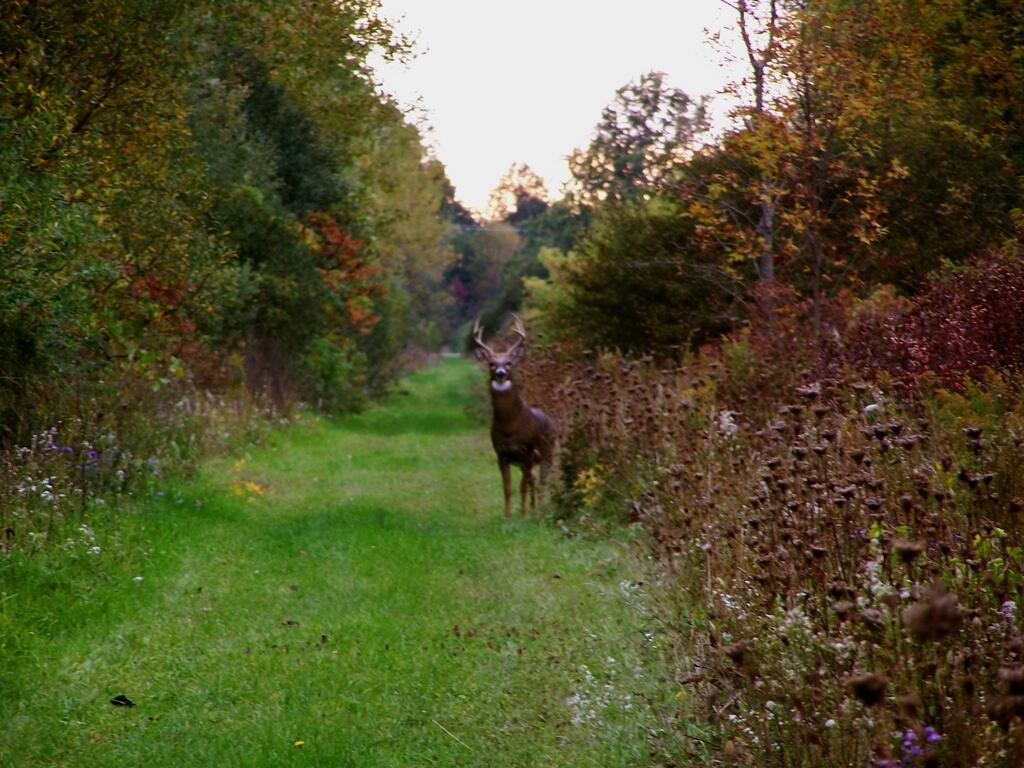
This morning at the crack of dawn started the sound of big game season across the southern zone of New York. Bang! Bang! Big game season has been under way for about a week in the the Northern Zone, but is finally getting under way down here south of the Adirondacks.
Culturally it is one of the most important times of the year for Rural America. It’s a time of pride for our rural heritage, and a time when people get out in the woods, and observe the natural patterns that make up our world. Most of hunting doesn’t involve shooting, dragging back, or processing the deer, most involves staking it out and waiting for deer to walk out in clear sight, so one get aim and take down the deer. Hunting is more about observing and waiting for deer, then it is about shooting guns.
(Joesph Davis State Park, Lewsiton, NY)
The gun season for big game (deer and bear) lasts for 3 weeks in late November, with bow season and junior archery running on both ends. Yet, gun season is so successful at reducing the buck population — especially in rural areas — that it’s largely over in just one day, with 55% of the gun season buck permits being filled within two days. Hunters who don’t get a successful take the first day will come back, with diminishing results.
New York State has a deer management problem. Hunting helps out, however many areas are becoming off limits for hunters. Farmers are less likely to allow people access to their land to hunt off it, because of problems with irresponsible individuals leaving gates open and littering. Suburban sprawl means there are increasing areas where hunters are too close to buildings or roads, to legally be able to hunt. Few areas of New York State are designated bow only, but for practical reasons, it’s impossible for people to hunt by gun, which means a much lower deer take.
(Five Rivers Education Center, Delmar, NY)
Deer hunting is good for our state and collective conscience. It teaches us where food comes from, it reminds us of our deep bond to nature. Driving around seeing a freshly harvested deer on a person’s car roof or in the bed of a pickup truck, reminds us of our deep connection to world. Seeing a deer being hung from a tree, allowed to drained out or being processed, and ultimatley eaten, is probably the closest that most people will ever come to nature.
Hunting is an important part of our society. Most hunters are very responsible people, who do it out of their passion. Venison tastes awesome. If your heading out hunting or doing other things in the woods be safe. Observe where you are in the woods. Notice where hunters are parked, spot them in the woods, make your presence known. Avoid them, don’t disturb the natural world around them; stay on roads and trails. And wear blaze orange — it could save your life!
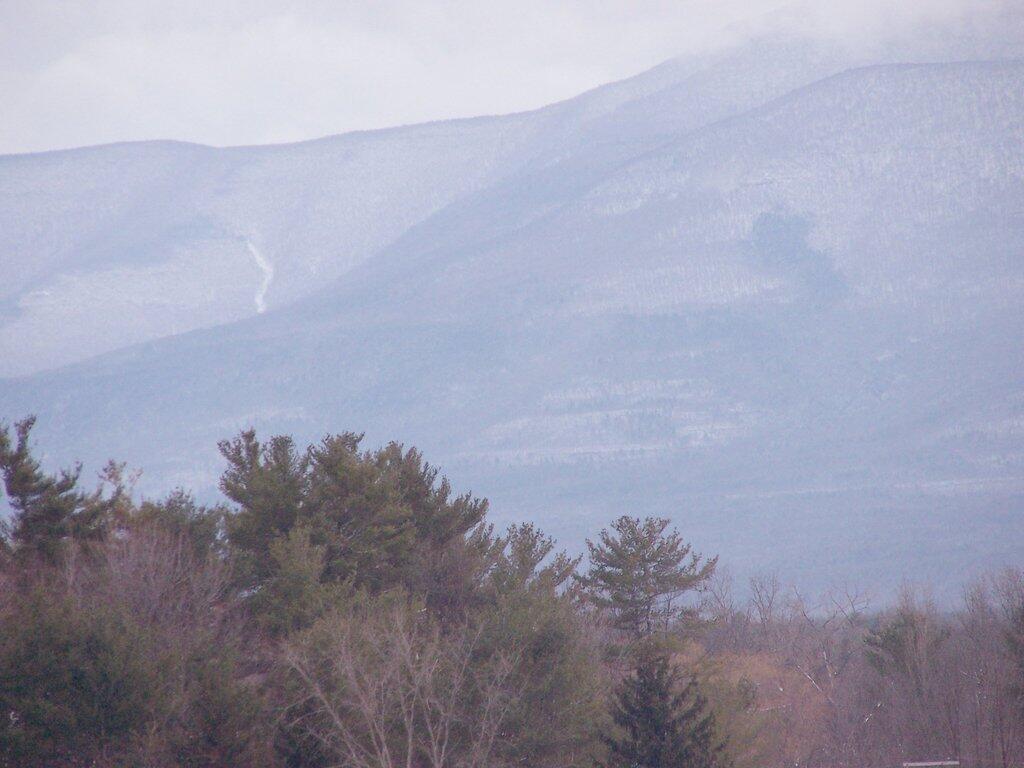
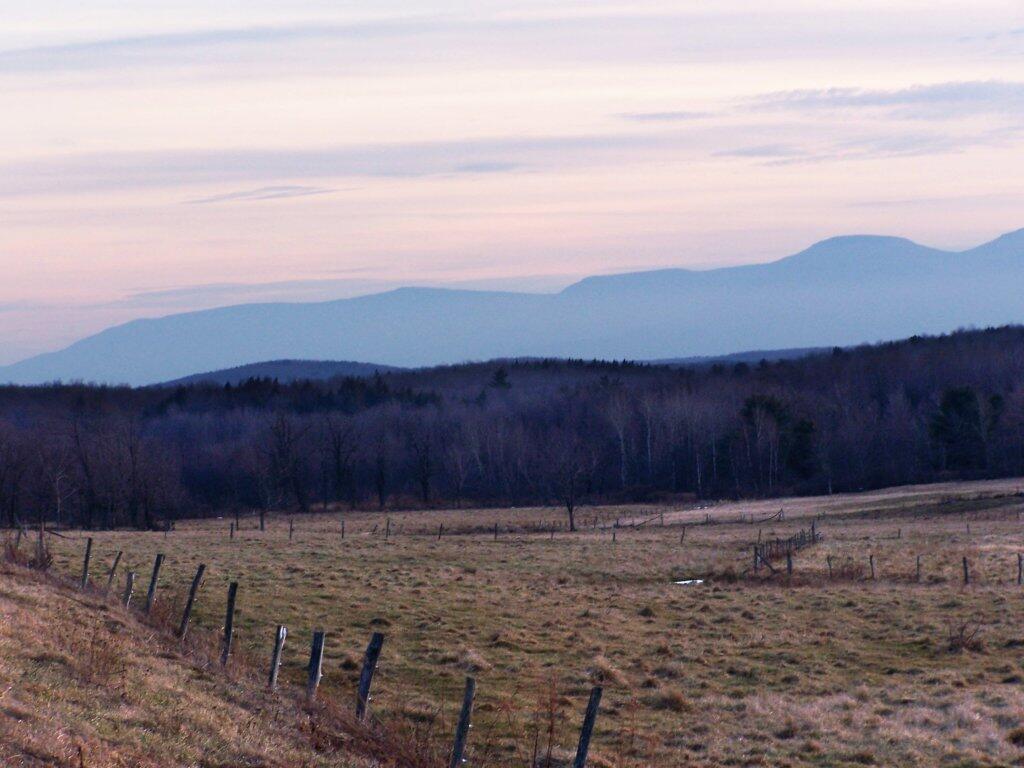
There are relatively few people who can say that they grew up in the shadow of the mountains. The mountains loomed large over the town I grew up, showing their large footprint as the rose out of the land just south of the town where I went to Elementary and High School.
While I lived most of my first 25-years of my life on my parents eight-acres, playing in the woods and in the creek, I went to school in Greenville, which is about 15 miles from the northern-most range of the Catskills. Those mountains loom large over the town as one proceeds south on the two-lane NY Route 32. At times, they look as though they must almost reach up to the sky, as high exists in the world.
They are an impressive feature. A routine feature to anybody who lives out by Greenville and sees them everyday, but still one that leaves a lasting impression on oneself. When I was younger I might have hiked the mountains a few times, but I never spent an extended period up there. I certainly could not have identified every peak from memory or been able to look up and know what it look likes on down. Today I can.
When I was younger I probably should have asked more questions and respected those mountains more. I should have paid more attention, and spent more time hiking them. Yet I didn’t. Regardless, those mountains, constantly hanging over the Greenville skyline had a persist ant impact on my life.
![Untitled [Expires August 8 2024]](https://andyarthur.org//data/photo_004387_large.jpg)