Balsam Swamp is a sprawling state forest that stretches almost 5.5 miles east-west across 4 towns. The area is very rural, and the landscape surrounding the State Forest is predominantly forested. Balsam Swamp State Forest is comprised of a mix of native hardwood forests, hemlock swamps, and conifer plantations. There are no designated recreational trails on the forest, but there is ample opportunity for self-guided day hikes to explore the diversity of habitats represented on this State Forest. Additionally, the western section of Balsam Swamp State Forest is adjacent to Five Streams State Forest to the south.
The main attraction of this forest is Balsam Pond. The impoundment is approximately 152 acres and is a popular destination for fishing and paddle boat sports. Balsam Pond is a warm water fishery that contains a mix of largemouth bass, smallmouth bass, chain pickerel, yellow perch, brown bullhead and sunfish. Tiger muskellunge have been stocked in the past with the last stocking occurring in 1995. However, there have been very few reports of anglers catching any of the adult tiger muskies. A shallow gravel boat launch is suitable for launching small fishing boats.
A small rustic camp ground is also located at Balsam Pond. Camping spaces are available at no cost on a first-come, first-serve basis and there is no running water or electricity. A fire ring, outhouse, and picnic table are provided for each camping space. A sign on Balsam-Tyler Road in Pharsalia designates the entrance to the boat launch and camping facility. This is a carry-in carry-out facility. Please do not litter.
I was listening to The World about a S-Market grocery store in Finland that discounts expiring foods at the grocery store 🍇by 60% at nine o’clock every day.💸
What a great idea! 💭 Less things thrown away and a great discount for cost sensitive customers. And stores are making money rather than spending money to dispose of expiring foods. 🍲
I saw a grocery store near the Mason Dixon Line that was called Scratch ‘N Dent Discount groceries, I thought about checking out. 🍑 Foods are a big part of working folks budget and the more savings people can get and the more food kept out of landfill the better. ♻
“And then they have cans of soup. And they throw the cans of soup. That’s better than a brick because you can’t throw a brick. It’s too heavy. But a can of soup, you can really put some power into that, right? And then when they get caught, they say, ‘No, this is soup for my family.’ They’re so innocent. This is soup for my family.”
“And you have people coming over with bags of soup — big bags of soup. And they lay it on the ground, and the anarchists take it and they start throwing it at our cops, at our police. And if it hits you, that’s worse than a brick because that’s got force…And then the media says, ‘This is just soup. These people are very, very innocent. They’re innocent people. These are just protesters. Isn’t it wonderful to allow protesting?’ No.”
Climate change action is important but let’s be cognizant of the environmental impacts of renewables
Burning fossil fuels has largely known and well documented impacts. From the much touted carbon emissions to air pollution and acid rain to acid mine discharge from coal mines and scarred landscapes from mountain top removal and strip mines to drilling cuttings, fracking chemicals and produced water to cracked casings and oil spills the impacts of fossil fuels are well documented and somewhat regulated and controlled but probably not to ideal levels as production and low cost is often emphasized over safety and environmental protection.
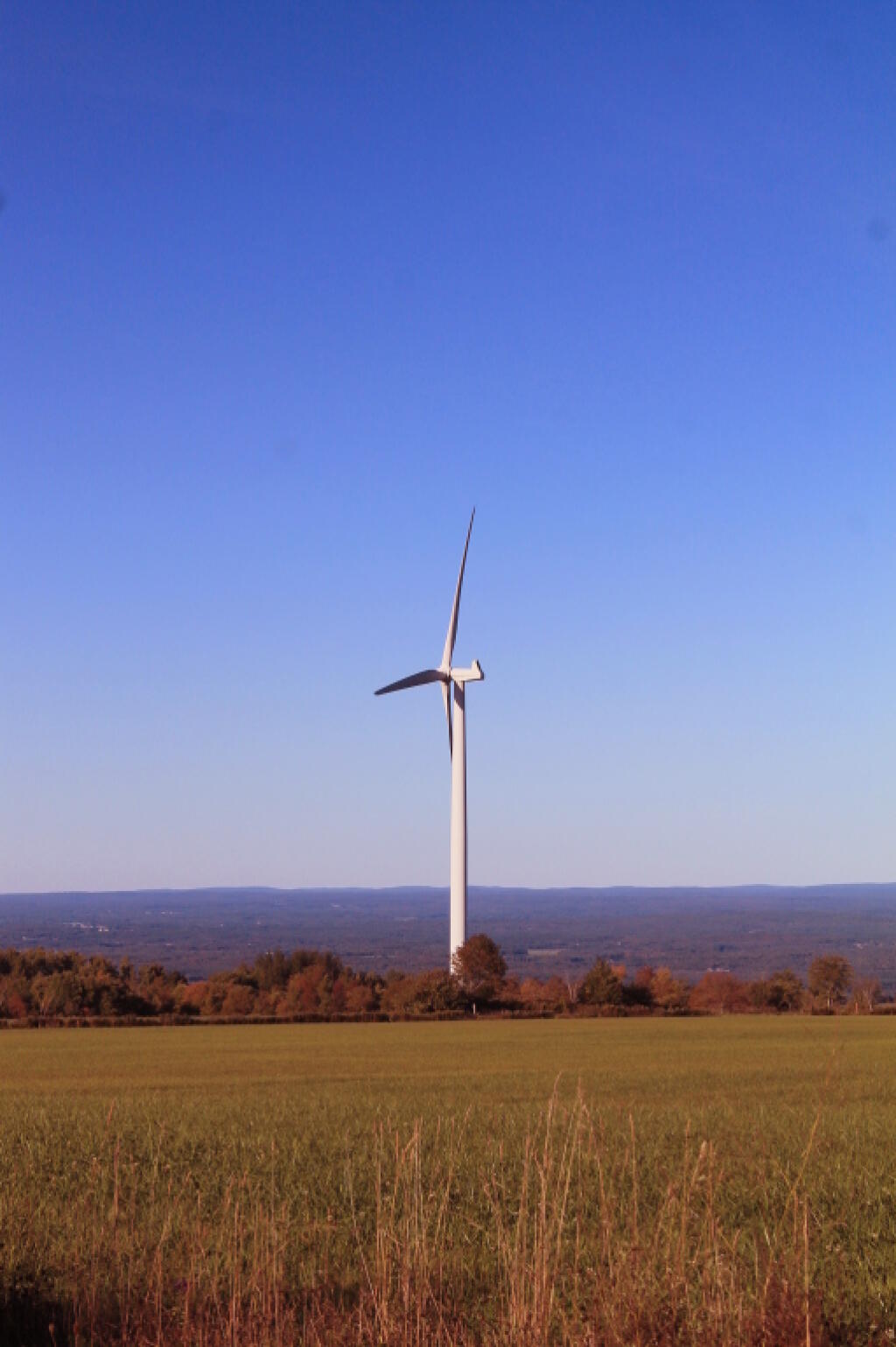
But what is much less discussed and documented is renewable energy impacts. It must be green so there is no environmental impacts or the impacts are de minimus. But that’s far from the truth. Renewable energy consumes enormous amounts of land, it in future years has a real possibility of urbanizing enormous parts of countryside, paving over farm land and forest, producing enormous amounts of toxic waste like wind turbine blades and discarded, broken solar panels to impacting watersheds and fisheries alike, reducing scenic beauty and take land out of other uses. Things that deserve serious consideration and environmental analysis.
To be sure we do need to build more renewable energy but we have to always thinking about the consequences of our choices, not blindly building it because renewables are good and climate change is really bad and scary. Being aware of the environmental impacts of renewables doesn’t mean you’re pro fossil fuels, it means that you are a thinking society, trying to avoid negative environmental problems down the road.
We need to take a serious look before we leap – is the solar plant or wind farm appropriate for the place we are sitting it
We need to mitigate like planting pollinators friendly or native grasses around solar farms
We need to look at building more renewables in cities – be it mandatory solar panels on buildings, over highways or in urban waste lands like old garbage dumps, highway medians, or contaminated industrial sites
Why build a solar farm over green farm fields or forests when you can build over Love Canal?
I am an American. I’ve always thought of it as a necessary evil but not something to really celebrate. It’s not a terrible thing, and there are definite pros and cons to the American system of government – a fair amount of individual liberty, especially outside of the cities, good gun rights and free speech but not so good when it comes to affordable health care, college education or helping those live in poverty.
While I was sure the events of September 11th were sad to those who had loved ones who died in the attacks, I saw them primarily as a way for greedy power brokers and often very well compensated government workers to expand their often abusive powers over the people. I saw September 11th a way to extract more wealth out of the poorest of Americans, put down and punish dissent, infringe on our gun rights, even if the right to keep and bear arms or speak your mind had nothing to do with September 11th.
It’s not like I ever had warm and fuzzy feelings about many of the people who died on September 11th. New York City of the 1990s exuded the attitude of greed is good, and while many of the people who died on September 11th may have been ordinary folk, many others were extremely wealthy while so many in Upstate NY toiled in the mud and muck literally. New York City had recently closed their landfill to ship trash Upstate and ended their recycling program, while Upstaters harvested a lot of their own food without packaging, had burn barrels and didn’t need the landfill like downstate. Then there was all the flash, marketing and unreality of urban life with its piles of trash every where.
Looking back, 20 years later maybe my analysis of New York City and the September 11th attacks wasn’t quite fair. Politicians did exploit the event for their own advancement and to consolidate power in the hands of government workers but eventually there was a lot of push back and processes were streamlined and worse of government abuses were reined. It had to be tragic to those affected by the attacks, even if they weren’t good people.
It’s hard to argue that the violence or destruction of September 11th was justified. It wasn’t. There are lawful ways to protest, be heard, run and hold office in America, if that’s your thing. Or you can just choose to be a non participant, focus on your own life, your family and land. Government workers rarely go after people who don’t paint targets on themselves. Certainly it would have been a lot better for Osma Bin Laden, the Taliban and the people of Afghanistan had they chosen to focus on making their own country a better rather than attack, kill and damage our America.
I was listening to the BBC News last night and they were discussing the pandemic and it’s impact on suicides across the globe. The conclusion that the depressive nature of pandemic actually caused a reduction of suicides globally, because depressed people lack the energy to kill themselves. And they had then offered the standard boilerplate language about how help is available for anybody with thoughts of self-injury.
However, after the September 11th attacks, I can’t remember a single news report suggesting that mental health services are available, before hijacking an airplane, blowing up a building or killing people. I also can’t think of a crime story, be a murder or shooting, where they suggest to anyone thinking of engaging in murder or terrorism think again — that there are alternatives and that there are people out there willing to listen.
Why don’t they suggest that murders and terrorists step back and think about their actions before committing crime? It is is denialism upon the news media that we are no different from the terrorists, murders and criminals? Is it a belief that suicidal people are like ourselves while criminals are different? I think it would be good if news media would remind perspective terrorists and murders that there is alternative for their lives — to step back from the ledge and look forward to how they could improve their own lives and the world too.
The putrid, toxic plastic smell of the rural burn barrel. The trash fire that consumes most of the waste of the rural household and the farm, allowing them to only haul their unburnable waste to the landfill, trash pit or recycling center once a year or so.
It’s become rare in New York except for the most outlying places due to the burn ban – most people now haul their trash to the transfer station, get a big old dumpster or get weekly service. Some trash gets recycled but in many cases recycling is fairly impractical in rural areas.
But I smelled some burning while I was driving up to camp and thought it might be my brakes dragging as they’ve been a bit noisy from the glaze I got on them the other day. But it was just another trash fire. Yuck.

 weeks
weeks


