It’s a strange feeling when you know your brand new truck has a discontinued engine already. Not because the engine was bad, but because it was seen duplicative in mind of the accountants. Hearing that Ford is pulling the plug on the 6.8L “Minizilla” in 2027 makes my 2026 Super Duty feel like a bit of a relic before its time, though I’d argue for many thrifty customers like myself, the Minizilla makes more sense.
The Minizilla was sold as the budget-friendly alternative to the 7.3L Godzilla for base trim trucks, but had many benefits beyond a $1,500 cheaper price. By simply shortening the stroke of its big brother, Ford created a snappier, higher-revving engine with fewer pumping losses. For those of us not trying to move a mountain every day, it was the “Goldilocks” option—fuel savings enough to keep the gas bill sane during these high-price spikes, but punchy enough to make a base-trim truck feel light on its feet.
I’m not losing sleep over maintenance; the fact that it shares a DNA pool with the Godzilla means parts will be sitting on shelves for decades. But from a perspective of many fleet operators who wanted something less expensive it feels like a missed step. In a world where every cent per mile counts, having a less thirsty, lighter-duty option for the everyday grind just makes sense.
I suppose I can’t blame Ford for wanting to streamline the assembly line—producing two engines that are nearly identical is a hard sell for the accountants. But sometimes, in my mind the “smaller” option is actually the better one.
The old man in the park is going from trash can to trash can, pulling out cans for their deposit. Making a few bucks and keeping some aluminum and plastic out of the landfill.
I’ve really gotten into watching this channel on Facebook about dumpster diving. There are so many good free things you can find in dumpsters and divert from landfills. The amount of various products discarded by businesses is shocking and there are free resources – considered by many to be waste.
If I only had land where I could store and sort materials – and use them there is so much I could do. Collecting various scrap metals for sale at scrap yards. Deposit cans and bottles. Discarded food waste from grocery stores and restaurants for feeding hogs and chickens. Shredded paper for livestock bedding. Pallets for livestock housing, fencing and bonfires. Amazing how a little bit of pallet wood can make other trash burn hot!
So many resources are out there if you are willing to dig through what others call garbage!
Every time I hear that song, I can’t help to think back to last summer floating down the East Canada Creek on my rubber truck tube after smoking some truly europhic grass and drinking much too much coffee. There’s just something about those Grateful Dead lyrics that are so hilarious when your high as fuck – your heart racing, laughing uncontrollably – the idea of playing cards with a Dire Wolf, begging him not to murder you.
Like so many things in this world, it’s often more fun to think about it then do it. Maybe because in your imagination you don’t have look to carefully at the downsides of it. As much as I like smoking pot, I actually enjoy more being sober and thinking about those good times high as one can be. That warm sun, the laugher, and cold water and singing along, “Don’t Murder Me!” I am sure there are those who find such behavior to be concerning, but in the wilderness, who really gives a damn?
There is a time to be serious and do work. But also good times, high times on vacation full of laughter and enjoyment. Often people are too staid and unwilling to have a little drug-induced fun to free them from their everyday problems and fears. Turn off the news, and just laugh a bit. And even when you aren’t high, spend some time looking back and remembering those high times.
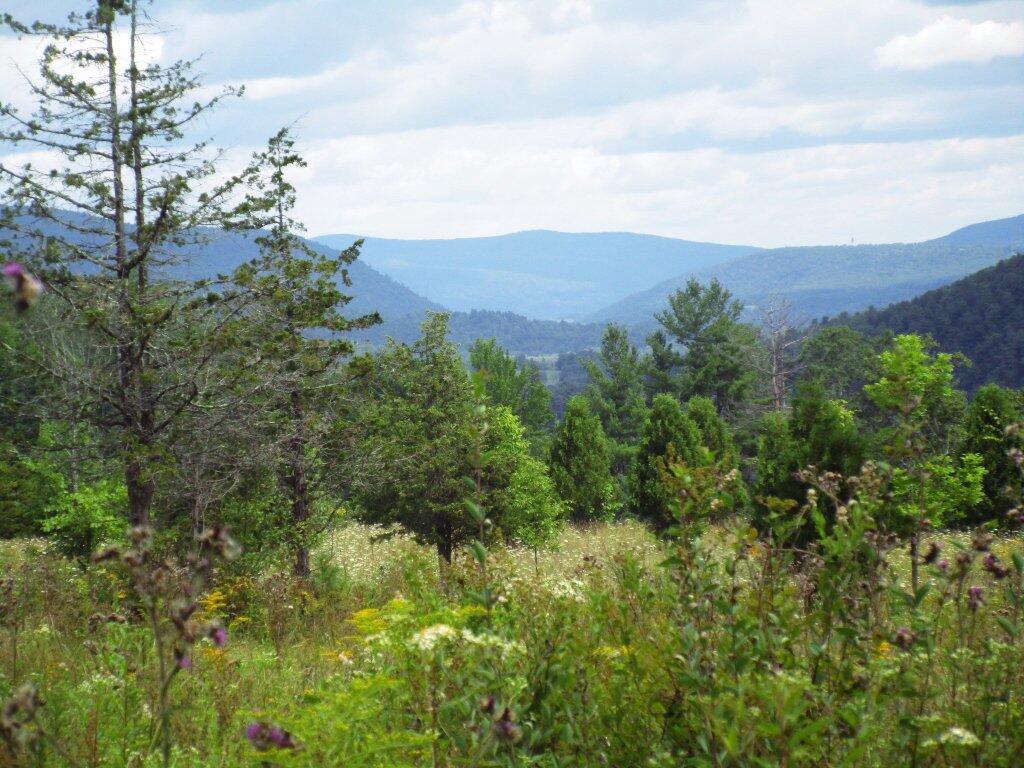
If you’ve ever driven along a highway or walked through an old, abandoned pasture, you’ve likely seen the Eastern Red Cedar (Juniperus virginiana). These resilient evergreens a pioneer species because they are among the first to move back into disturbed sites like mines or abandoned, worn-out farmland.
A Survivor Against All Odds
The Eastern Red Cedar is an anomaly in the natural world. Most pioneer species are short-lived, meant to pave the way for larger forests. However, this tree can live for over 900 years. It thrives where others struggle, surviving in everything from dry, rocky soil to rich riverbanks. Its secret? An extensive, fibrous root system and small leaves that make it incredibly drought-tolerant.
However, there’s a catch: Eastern Red Cedar can’t tolerate the shade. On rich soil where faster-growing hardwoods can tower over it, the red cedar is quickly out-competed and rarely becomes the dominant tree. But in worn-out pastures, mines, abandoned “waste lands” it can be a very aggressive species.
The “Double-Edged Sword”
While beautiful and durable, the Eastern Red Cedar has a complicated relationship with its environment:
Orchard Enemy: It acts as an alternate host for cedar–apple rust, a fungal disease that can devastate apple crops. Because of this, farmers often have to remove these trees if they are too close to their orchards.
The Fire Hazard: Red cedars are fire-intolerant. Their low-hanging branches act like “ladders,” allowing ground fires to climb and engulf the entire tree. In places like Oklahoma and Texas, dense populations have been blamed for the rapid spread of dangerous wildfires.
Ecosystem Invader: In the Great Plains, these trees are expanding so aggressively that they are transforming grasslands into cedar thickets. This “invasion” pushes out native birds and ruins grazing land for cattle, leading many conservationists to use prescribed burns and cutting to keep them in check.
A Winter Lifeline for Wildlife
While sometimes invasive and damaging to apple orcards, Eastern red cedar is considered a “workhorse” for local wildlife, providing essential food and shelter throughout the year. While it can be aggressive in some landscapes, its ecological value to dozens of species is undeniable. Female red cedars produce bluish, berry-like cones that are a critical high-energy food source, especially when other food is scarce in winter.
Birds: More than 50 bird species rely on these berries. The cedar waxwing is even named for its preference for this fruit. Other frequent visitors include Eastern bluebirds, American robins, Northern mockingbirds, and game birds like wild turkeys and bobwhite quail.
Mammals: A variety of mammals, from small white-footed mice to black bears, consume the cones. White-tailed deer also heavily browse the foliage and twigs, particularly during harsh winter months.
The tree’s dense, evergreen foliage provides year-round protection from predators and the elements.
Year-Round Cover: Its thick branches offer “thermal cover,” helping animals stay warm during cold winter nights.
Nesting Sites: Many songbirds, including chipping sparrows and song sparrows, choose the red cedar as a preferred nesting site due to its privacy and protection.
Building Materials: Squirrels and birds like the indigo bunting use the tree’s soft, peeling bark as a primary material for building their nests.
The Eastern Red Cedar is also host plant for more than 30 species of native moths and butterflies. Most notably, it serves as the exclusive host for the juniper hairstreak butterfly, which lays its eggs on the tree’s foliage.
A Legacy in the Landscape
The presence of Eastern Red Cedar is often a “clue” to the past—an echo of a time when the land was cleared for agriculture, pasture or mining decades ago. These hardy pioneers continue to march across the landscape, changing our ecosystems one seedling at a time. Next time you see one, remember: you’re looking at one of North America’s most ancient, tough, and debated residents.
In the bear populated Adirondack High Peaks, bear canisters a legal requirement. Enforced by ticket welding Forest Rangers and regularly now being undermined by the same bears they’re trying to protect. State government regulations mandate the use of hard-sided bear canisters for overnight stays to prevent wildlife from becoming dependent on human food.
For years, the industry leader was BearVault, a product engineered to be physically impossible for a bear to open. Its design relied on a fundamental assumption: that while a bear is strong, it lacks the cognitive ability to solve a multi-step mechanical lock.
Then came Yellow-Yellow who made a mockery of the state law.
A Law-Violating Genius in Fur 😆
Yellow-Yellow wasn’t the hulking beast you’d expect. She was a modest, 125-pound female black bear, named for the twin yellow tracking tags wildlife biologists clipped to her ears. Despite her size, she became a legend by becoming the first—and for a long time, the only—animal to systematically “crack” the vault.
Backcountry campers began reporting a bizarre phenomenon. They would wake up to find their canisters sitting upright, completely intact, but entirely empty. There were no signs of a struggle—no claw marks or punctures in the tough polycarbonate. It was as if a human had simply walked into camp and unscrewed the lid.
Decoding the Machine 🤟
When researchers finally caught her in the act, they realized Yellow-Yellow wasn’t trying to break the canister; she was operating it.
Her technique was clever to say the least:
The Grip: She would roll the canister against a rock or log to keep it steady.
The Key: Instead of thumbs, she used her canine teeth to press down on the locking tabs with surgical precision.
The Twist: Once the tabs were depressed, she used her paws to provide the torque needed to spin the lid open.
The Evolutionary Arms Race 🧑🔬
This sparked a years-long battle between Yellow-Yellow and the engineers at BearVault. When the company heard about her, they didn’t just ignore it; they redesigned the product. They made the tabs harder and changed the plastic, effectively “updating the software” to see if she could find a new exploit.
She did. Every time. Within a single season, Yellow-Yellow would adapt to the new design and find a way back into the hikers’ snacks. Eventually, the manufacturer had to include a disclaimer on their website warning that their product was approved for use everywhere in North America except for Yellow-Yellow’s territory.
A Legacy of Intelligence 🐻❄️ 🐻
Yellow-Yellow’s story, which came to an end in 2012, remains one of the most significant case studies in wildlife behavior. She proved that “instinct” is a limited word for an animal capable of mechanical reasoning, long-term memory, and problem-solving.
She didn’t just stumble onto food; she outthought some of the best outdoor engineers in the country. For those who trek through the Adirondacks High Peaks today, her story serves as a humbling reminder: we aren’t the only ones in the woods with a mind for puzzles. Nature always finds a way!

![Untitled [Expires July 16 2024]](https://andyarthur.org//data/photo_014376_large.jpg)
![Cedar Above the Clay Pits [Expires May 26 2026]](https://andyarthur.org//data/photo_022911_large.jpg)