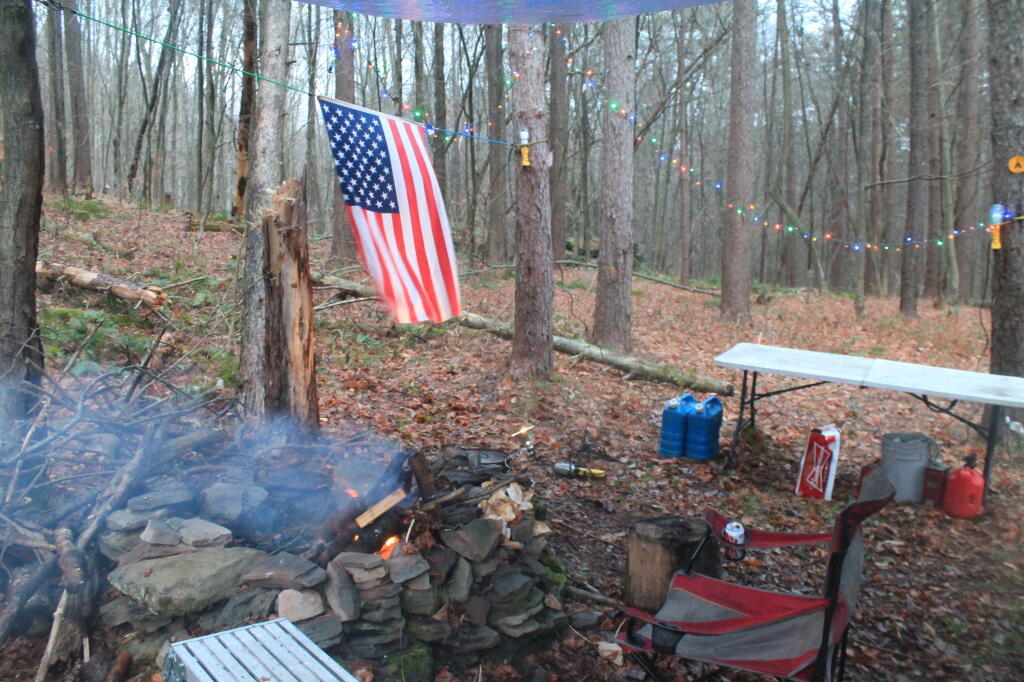
Balsam Swamp is a sprawling state forest that stretches almost 5.5 miles east-west across 4 towns. The area is very rural, and the landscape surrounding the State Forest is predominantly forested. Balsam Swamp State Forest is comprised of a mix of native hardwood forests, hemlock swamps, and conifer plantations. There are no designated recreational trails on the forest, but there is ample opportunity for self-guided day hikes to explore the diversity of habitats represented on this State Forest. Additionally, the western section of Balsam Swamp State Forest is adjacent to Five Streams State Forest to the south.
The main attraction of this forest is Balsam Pond. The impoundment is approximately 152 acres and is a popular destination for fishing and paddle boat sports. Balsam Pond is a warm water fishery that contains a mix of largemouth bass, smallmouth bass, chain pickerel, yellow perch, brown bullhead and sunfish. Tiger muskellunge have been stocked in the past with the last stocking occurring in 1995. However, there have been very few reports of anglers catching any of the adult tiger muskies. A shallow gravel boat launch is suitable for launching small fishing boats.
A small rustic camp ground is also located at Balsam Pond. Camping spaces are available at no cost on a first-come, first-serve basis and there is no running water or electricity. A fire ring, outhouse, and picnic table are provided for each camping space. A sign on Balsam-Tyler Road in Pharsalia designates the entrance to the boat launch and camping facility. This is a carry-in carry-out facility. Please do not litter.
Amidst the Catskill’s tranquil grace I stand,
Where emerald peaks in rugged beauty rise,
Their ancient whispers echo through the land,
Beneath the vast and cerulean skies.
With every step, the world below recedes,
As nature’s grandeur takes its rightful place,
A tapestry of green, where life succeeds,
In this secluded, untouched, sacred space.
The mountains stretch like giants to the clouds,
Their forested robes a haven for the wild,
Where streams cascade in laughter, unbound,
And serenity enfolds both man and child.
With reverence, I gaze upon this view,
A testament to nature’s wondrous art,
In the Catskill Mountains, where dreams come true,
And peace resides within each beating heart.
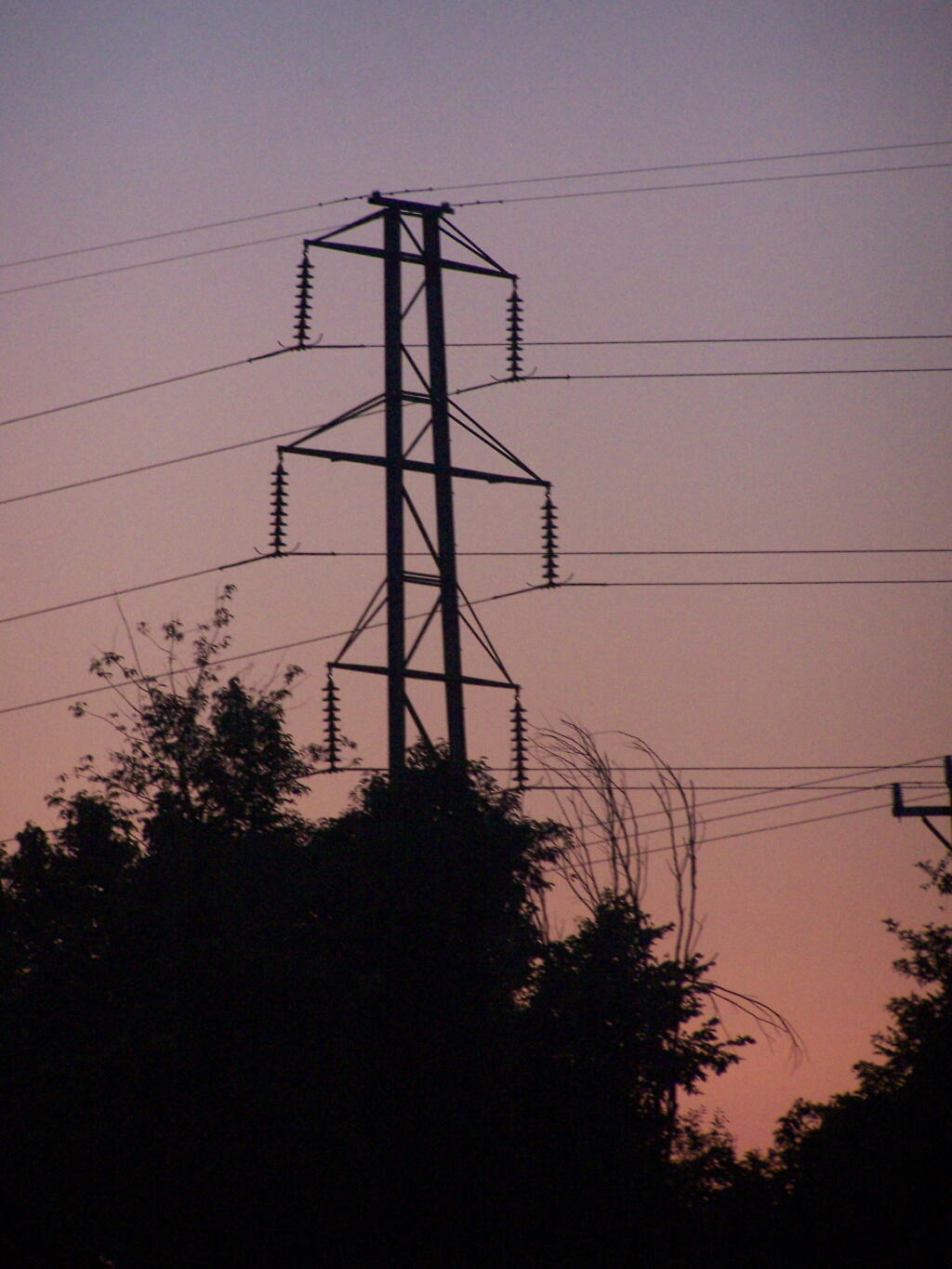
Samuel Insull brought the world Commonwealth Edison of the greater Chicago area and the concept that monopolies were acceptable as long as they were regulated for the public good.
Commonwealth Edison made its profits two ways – by constant growth and by expanding the size of the generating plants so they could produce more electricity at a lower price per unit. After all, many of the costs of a generating plant are fixed – a larger facility can often put out more energy more efficiently.
With Commonwealth Edison and most large utility monopolies, prices are regulated by the government regulating agency on a cost plus basis. Capital projects like new generating facilities or additional lines are approved by the government, with the costs of construction directly paid by rate payers. Insull embraced this as it guaranteed his business would be profitable with little risk to himself.
The problem with this model is it shuns market forces to keep efficiency up and prices down. Regulators work to protect consumers but there is little incentive to economize or innovative in the grid. Why should a power company take a risk when they know they will get paid building the preferred government technology of choice?
I believe competitive markets are always a better idea than government monopolies. While everybody agrees that there has to be one owner of the physical wires that deliver power, there can be multiple companies that sell power and multiple companies that sell services to consumers. Competition can help hold prices down and give consumers the option to switch providers that meet their needs.
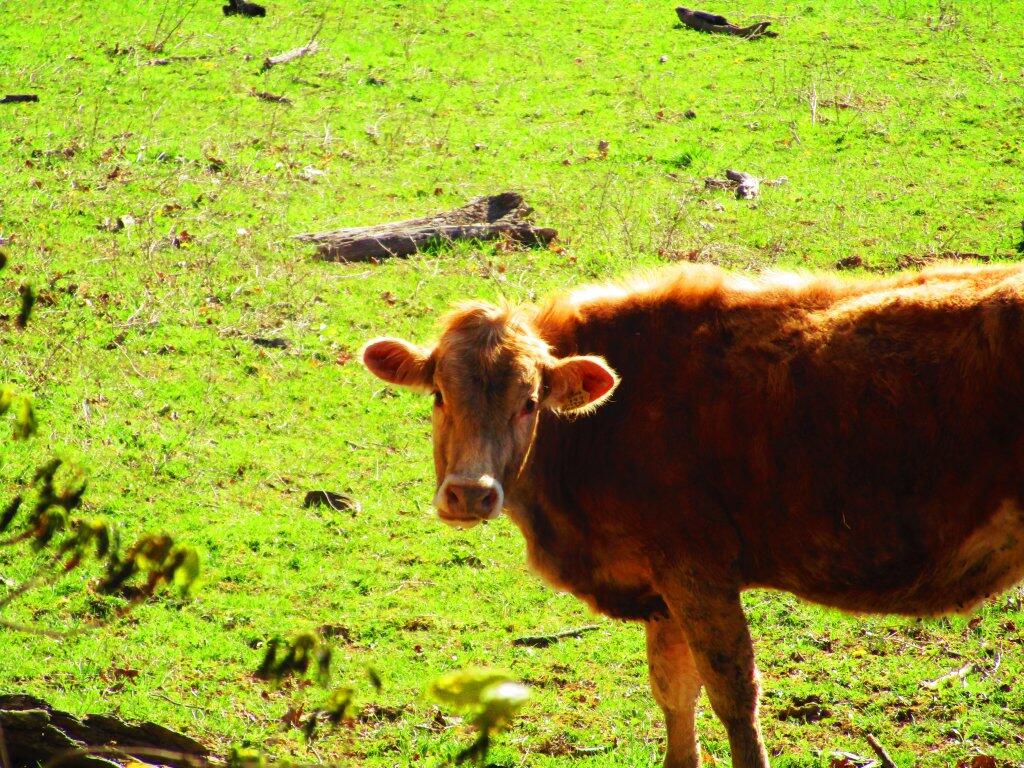
🐮 👣The other night I heard the tired old claim that beef is really bad for the environment as it has a high carbon footprint. How can that be? Cows don’t consume oil to stay alive although diesel is used in cattle trailers, tractors hauling feed, bailing hay and spreading manure.
But what the activist types are really saying is cows digest grass and dried grass in the form of hay and as part of the conversion of grass to energy they chew their cud and in part loose some of the material that escapes their mouths as methane. Some manure also breaks down as methane when in an oxygen deprived environment like a slurry tank.
Methane is a moderately powerful green house gas. It’s 28 times more potent than carbon dioxide although it lasts only about a decade in the atmosphere before hydroxyl radicals break it down into carbon dioxide. Far lower of an impact then much more powerful warming gases like common refrigerants such as the CFCs and their HFC replacements. At the same time new grass is being grown to feed cows, so they are absorbing the carbon dioxide at the same rate it’s being broke down by the methane. Ultimately, farming is a carbon neutral activity, bar fuel used in tractors or trucks.
The carbon footprint of beef and cattle more generally is grossly over estimated, because while methane is a much more powerful greenhouse gas then carbon dioxide, ultimately most farming activity is carbon neutral, as crops absorb in the carbon that livestock exhale and methane they burp up. Moreover, many cattle get a significant portion of their feed from grazing pastures that requires minimal diesel-fired equipment work to maintain. Grazing might have an initially higher greenhouse output, as grass produces more methane when burped up compared to other feeds, but because grass is absorbing carbon constantly, it’s ultimately carbon neutral.
Beef and dairy might be more of a climate concern where new land is being developed, forests converted into crop land. But with the increasing efficiency of crop and livestock production, it’s rare that forests are being converted to farm or grazing land at least in the first world. But in contrast, farms are being replaced with housing and commercial use, that bring in more vehicles, more buildings to heat, and more wildlife habitat forever displaced. Burped methane from grass isn’t warming the planet, burning fossil fuels like oil, natural gas and coal is.
Many people I know giggle or maybe take a gasp when I tell them I am a liberal Democrat, or something like that. I mean, I voted for both Barack Obama in 2008 and 2012, and for Jill Stein in 2016. I did consider voting for Donald Trump in 2016, but ultimately went with Stein as protest vote against both Trump and Clinton. I voted for Senator Sanders in the Democratic primary, but honestly I wasn’t thrilled about either candidate in the primary. I thought Donald Trump would be a change, much like Obama was a change, and a fresh voice in 2008. I was very impressed with Barack Obama’s work as president, even if many of his best ideas got held up by the Republican Congress. I’m mostly indifferent to all the candidates that run for office, not liking many of them.
I believe it’s important for government to regulate big corporations and big urban concerns, when we are talking about thousands or millions of people. As they used to say, individually people are really beautiful, but together there is a lot of collective ugliness. Most human impact is limited, but becomes more problematic when thousands or millions of humans act together – like driving automobiles in cities, generating solid waste, or using megawatts of electricity. Your 100 watt light bulb doesn’t impact shit, but burning coal to power millions of homes and oil to power millions of automobiles is producing such an incredible amount of carbon dioxide, it’s warming the planet.
I am not a believer in individual action or lifestyle statements, except for political lobbying. Replacing your incandescent bulbs with LED bulbs or buying a hybrid car is going to nothing to change the trajectory of our planet as it continues to warm. Neither will trading in your SUV for a hybrid or taking the bus is going to alone change a thing on the planet. But fuel economy standards can force manufacturers to make millions of more efficient cars, and investing in convenient transit options, can move millions in ways that reduce carbon emissions.
I am also not a believer in expanding social programs per se. I do see the need for universal healthcare, but it should be provided a mix of a public and private partnership. The government should be the insurer of expensive healthcare operations, while private insurers can cover ancillary needs like lost wages, premium parking, cable television or Internet at hospital rooms, or other non-essential benefits that will help to make health care pleasant. I also think college education should be highly subsidized, so students who work summer jobs and live conservatively, can afford it without going to debt.
I do not agree with welfare or providing certain individuals with special government subsidies just because they are poor – government shouldn’t be providing the poor with vochures to buy food or rental assistance. But government should work to ensure that there is an adequate supply of affordable healthy food for all regardless of income, and same with safe, decent housing for all.
At the same, I am a believer in the government creating good public places for all to use, without consideration of income. Every community should have good public spaces where people can get together and work on issues of common interest. Public libraries, free and open to all, are important in every community, so people can learn and access the Internet. Learning shouldn’t end just because you graduate from a publicly funded school. I also think parks that are free and open to all are important, as people need a chance to get some fresh air and enjoy healthy recreation. Public forest lands can provide numerous recreational opportunities from hunting to fishing to camping and hiking, and can also provide important products to industry like timber, oil, and coal – which in turn can fund their use for all.
I don’t think government has much of a role regulating individual lives. I don’t support gun control, instead I think government should be working to produce healthy communities that are largely free of violence, because people have other ways to work out problems. Strong communities have good jobs, good schools, good community centers, and a mix of people that always are keeping an eye on their street. Neighborhood watches, and local anti-crime citizen groups should always be the preference over more cops and government regulation.
In urbanized areas, there needs to more regulation of private property, to protect community character, but sometimes regulation gets a little out of hand. In rural areas, there can be more freedom, because there is less of a chance of conflict. But I think there should be more review of regulations, and repeal of outdated regulations, and implementing regular sunsets of laws. It seems like there too many laws, especially on the local level, that don’t always make sense to continue.
The other day I was out walking on a chilly early autumn afternoon outside of Manlius Center and I smelled wood smoke – that wonderful smell of cooler times to come in small-town America.
While wood is mostly just a supplemental source of heat in these more suburban areas it is a necessity for many farms and rural homes that rely on it as a primary source of heat. And it’s a wonderful thing.
It makes me dream about the days to come – not just when I make it to my long term goal of owning an off grid cabin – but also the more short term goal of my road trip and camping in mid November once this election cycle has come to an end as they always do.
Nice long November nights curled up by the fire are always nice, especially if the stars are out and I can also warm myself by the propane heater. Nice evenings to cook and relax. Something so relaxing about having a nice fire.
Indeed there is something nice about the warmth of a woodstove. Beyond November I may be cold in my apartment but the money saved today is money saved for a better tomorrow. I look forward to the days to come.
People say that Western Pennsylvania hasn’t changed much since the Deer Hunter first hit the silver screen forty years ago. Not true. The beat up Cadillacs people drive around have somewhat smaller tailfins.
The highest year round highway in New York State is Ulster County Route 47 past the Winnisook Lake Club near Slide Mountain in the Catskill Mountains at 2,640 elevation.
The highest year around open highway maintained by NYSDOT is NY 16 in Knapp Creek, Cattaraugus County just north of the Pennsylvania border 2,370 elevation.
![Untitled [Expires October 31 2025]](https://andyarthur.org//data/photo_021026_large.jpg)