Last night I was pondering how much I had invested in NY State, not in form of capital as much as knowledge and connections. You know, over 29 years of living in this state, I’ve learned much, and moving away from it, would seem I would loose a lot.
Things like (in no particular order):
Familiarity of the roads and places
How state government works (sorta)
The general topography of the land
General folkways of doing things
Community organizations
Personal connections
Maybe this is why a lot of people never leave the community they grew up in, and even fewer ever leave the state they were born in. It just seems like moving on is such a daunting task, especially when you’ve come so familiar with the status quo.
I’ve lived in other parts of Upstate New York, from time to time, but somehow any part of New York State your in is kind of structured the same way. Other states, not so much. But maybe I’m over playing the differences.
Then again, the world is always changing. The place I knew a few years back rarely stays the same due to forces of man and nature alike. Time changes everything.
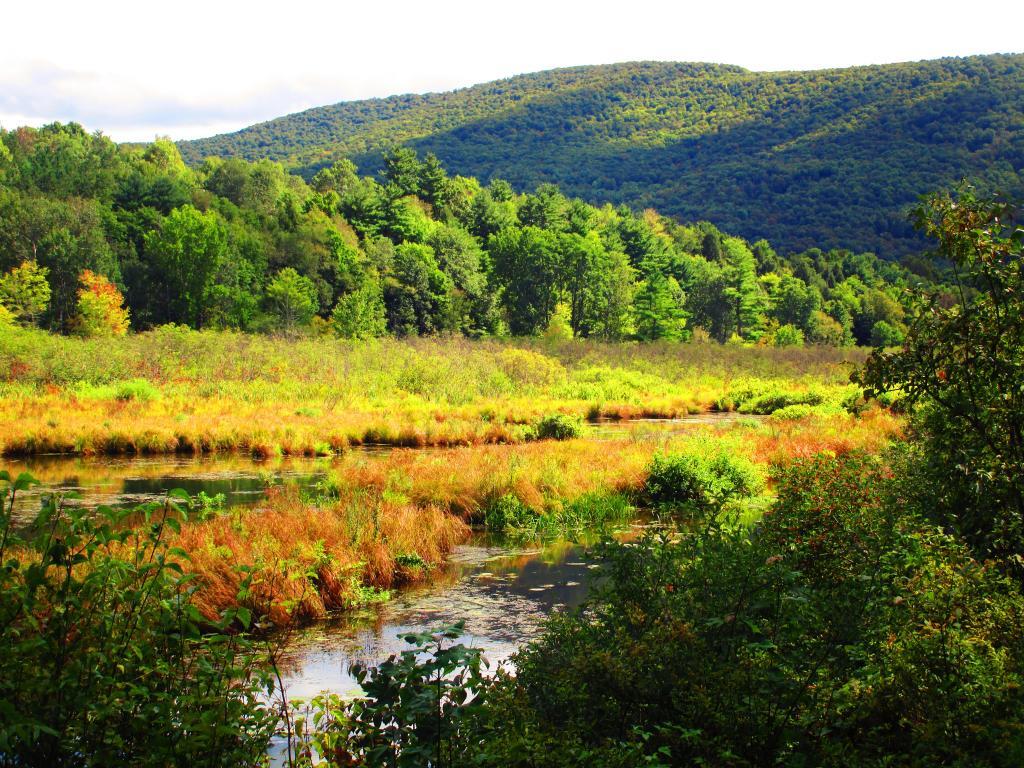
Last night, on my evening walk I was walking on the bike path past the Bethlehem High School, on the outskirts of the developed area of Delmar, looking across Sunnyside Farm and the rural hinderlands beyond it. I looked across the tall grass, and towards the Heldebergs. I saw the setting sun, with Bennett Hill predominately in the background. I felt like I really missed something.
It’s not an unfamiliar scene. Indeed, it’s a comforting one, I’ve seen for most of my life in the city, looking back through office windows towards the Heldebergs. They are just mountains, farm land, forest, and rural homesteads, something not really that uncommon in Upstate New York. Indeed, get a little ways out of any city in Upstate, and your in one of many vast rural areas of Upstate.
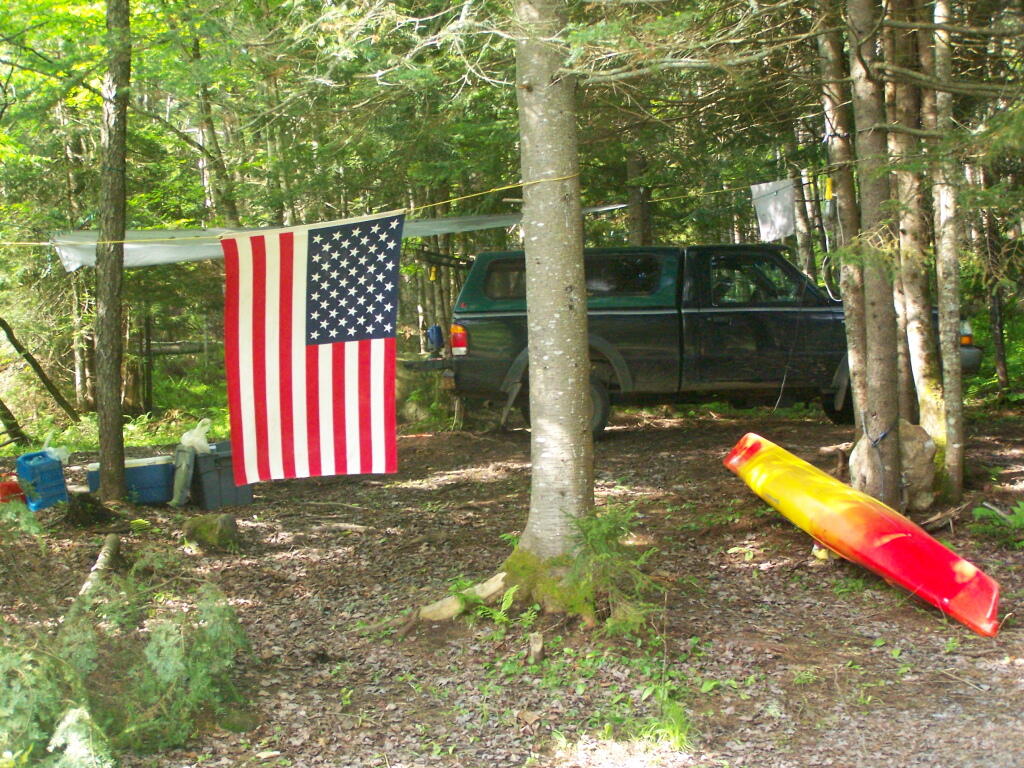
The town I live in is Delmar. I have lived here 5 years, taking the bus downtown every morning to work. I come home on the bus, have dinner, and in the summer months, head down to the park with a book. I walk to the library, the store, and go for delightful evening walks. I rarely use my truck at all on weekdays. It’s kind of nice not having to drive, or fill up the tank on weekdays. I can have a couple of beers after work, and not worry about getting pulled over. I can come home fatigued, and not fear an accident. On weekends I hop in my pickup, go up to woods, to camp, hike, explore.
Yet, I feel something is missing…
I don’t really like living in the city that much. I don’t like the constant noise of traffic, the constraints of city life. While I can always hop in my truck and go places, now that I am in city, I doesn’t happen that much. In city, every place I would want to go – in the hills and mountains always seems so far away.
I guess for now I am content with how things are going. The Adirondacks, the Green Mountains, and the hilltowns remain within a fairly short drive, that I can get to on weekends. I can spend my weekends in the city, and then spend the money where I enjoy it most. But still I am less then happy with current arrangements.
I am very skeptical about there ever being a very serious effort anywheres in the world to reduce the output of greenhouse gases. While many efforts are well meaning, and most people care deeply about Climate Change, the reality is it – at this point – largely a problem out of human hands.
Modern man is a carboniferous creator, in the words of Lewis Mumford. Not only do we burn a lot of food in our bodies to create energy to power ourselves, we have harnessed fire in many very domesticated ways to produce energy modern man needs to survive. Humans are primarily about burning carbon to power their lives. At the current human population, it basically unthinkable to sustain our species without enormous amounts of fossil fuels – and certainly not our large urban cities.
To limit greenhouse gases to a level recommended by scientists, we would have to basically eliminate all consumption of fossil fuels, reforest much of the planet, and probably drastically change our land use practices, such as how we grow food. Nothing would be untouched in ways humans interact, in a strict climate control regime – everything would have to be tightly controlled by governments to basically eliminate all emissions of carbon.
If that is not dramatic enough, the cuts in energy use that would have to exist in a strict climate change regime. Modern man, particularly in his urbanized form, as an aggregate, consumes enormous amounts of energy. Most cities are supplied their energy needs by distant power plants, vast coal mines, and massive amounts of oil and gas wells. Energy measured in our urban, aggregated use, is measured in megawatts and gigawatts, and millions and billions of barrels of oil.
Renewables are the great hope for man kind. We are generating more renewable power then ever in mankind’s history. This is a good thing, as renewables typically are the least polluting source of energy, one that is restored naturally by forces of natures, and is not used up. Yet, even the most aggressive program of adopting renewables can’t come to close – in the imaginable future – to meet all of modern man’s energy needs, in his urbanized, highly populated form. Some rural cliques might be able to become to energy-self sufficient with renewables, but it’s not going to ever work for our cities.
Conservation and energy efficiency are a valuable ideas. It’s good to save energy, because not only does it reduce air emissions, but reduces demand for fossil fuels, and provides more benefit for less money. This allows us to grow our economy. We need policies to prod our corporations to do more with energy efficiency. Yet, the choice to a sustainable future is not one between a 4-speed automatic transmission and a 8-speed transmission, or even a Chevy Silverado vs a Toyota Prisus. Both are much too polluting for a carbon-free future, if we seek a livable planet.
So what are we left with? Not much in the way of good options. A 350 ppm world – one with emissions in 2050, 80% below 1990 levels – would be a world that is almost 100% free of all fossil fuel uses, and almost entirely on renewables, with energy consumption probably only 10% of current levels. It’s an almost unimaginable world.
Humans could give up their cars, 9 out of 10 lights in their houses, hot showers, running water, and most of our heat in the winter. We might be able to power much of a society with renewables then. But probably not. That world would suck – because we all like having lights, being able to hop in our cars and go to Adirondacks, and hot showers in the morning.
So what’s the alternative? An “unlivable†planet, with increasing impacts from climate change. We need more energy efficient automobiles, appliances, lighting, and insulation, but we still need energy to power those devices, that will increase climate change gases. We are going to blow past sustainable levels of emissions, much too soon, and going to live with the consequences, because modern man has little good choices.
Modern man will adapt to a changing climate – he will have no choice. More places will be air conditioned, but with better insulation in the future. Many pieces of man-made infrastructure will fail with changing weather patterns, but man will replace and re-engineer to avoid future failures.
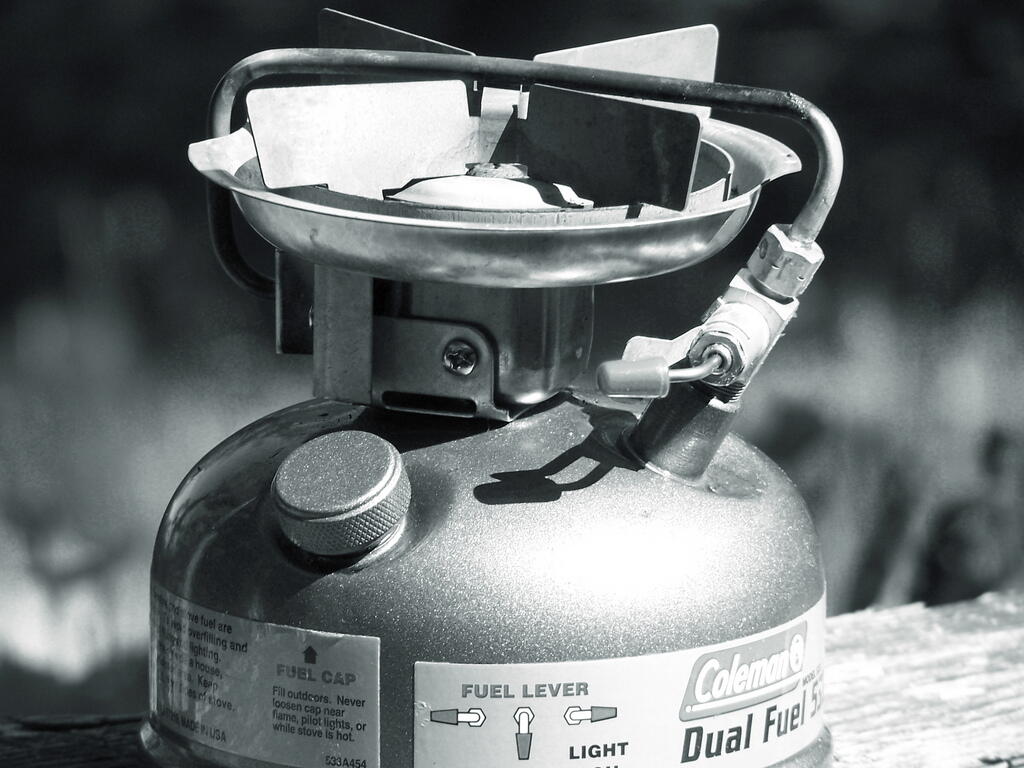
I spent a little extra when I bought my Coleman lantern and Coleman stove, and went for the dual fuel models over the propane models. Dual fuel appliances can burn either automobile gasoline or Coleman fuel.
I like using liquid fuels, primarily gasoline, for a couple of reasons…
First off it’s cheap.Second, there are no containers to discard or recycle. Propane containers are often difficult to recycle. Gasoline, in contrast, you purchase and put in a reusable gasoline container. You buy gasoline at any gas station, put it in a portable gasoline container, and you can reuse the gasoline container for a long period of time.
Third, having extra gasoline is handy in an emergency. You never know when you run your tank a little low, and the extra gallon or two of gasoline can get you to the gas station.
There is a slight inconvience of having to pump liquid fuel stoves and lanterns, but compared to all of the benefits of using automobile gasoline, nothing beats them.