You often hear commericals on radio that “Subrarus are made in zero landfill factories.” Basically, what they are talking about is their automobile assembly factory, where manufactured components are shipped in reusable containers (to save money), bolted or welded together, and finished up.
They do not include manufacturing of components, or the mining of raw materials to build the cars. Even at zero-landfill assembly factories, some waste is generated, but valuable metal scraps are sent to scrap dealers, and plastic garbage and other wastes are shipped off to municipal trash incinerators, and burned for energy. Zero-landfill Assembly factories typically also have recycling programs in lunch rooms for aluminum cans and recycling for paper in offices, which is fairly common in most industries.
When you read into the claim, you have to be kind of skeptical. Indeed, zero-landfill is much different then zero-waste, or near zero-waste as many environmentalists are persuing. Indeed, much of it’s just certification, rather then any real change in process — as it’s stupid not to reuse shipping containers, scrap waste metals, and do other things that save businesses money.
Zero Landfill Camping.
I don’t generate any trash when I camping that I haul home, and then take to the transfer station for disposal in a landfill. I seperate out the burnable trash from the non-burnable trash, the later which I take home for recycling either for remedemption of the deposit or regular municipal recycling at transfer station. I don’t leave any waste behind, and indeed, I often pick up litter from other persons, including small scraps of paper or plastic people overlook.
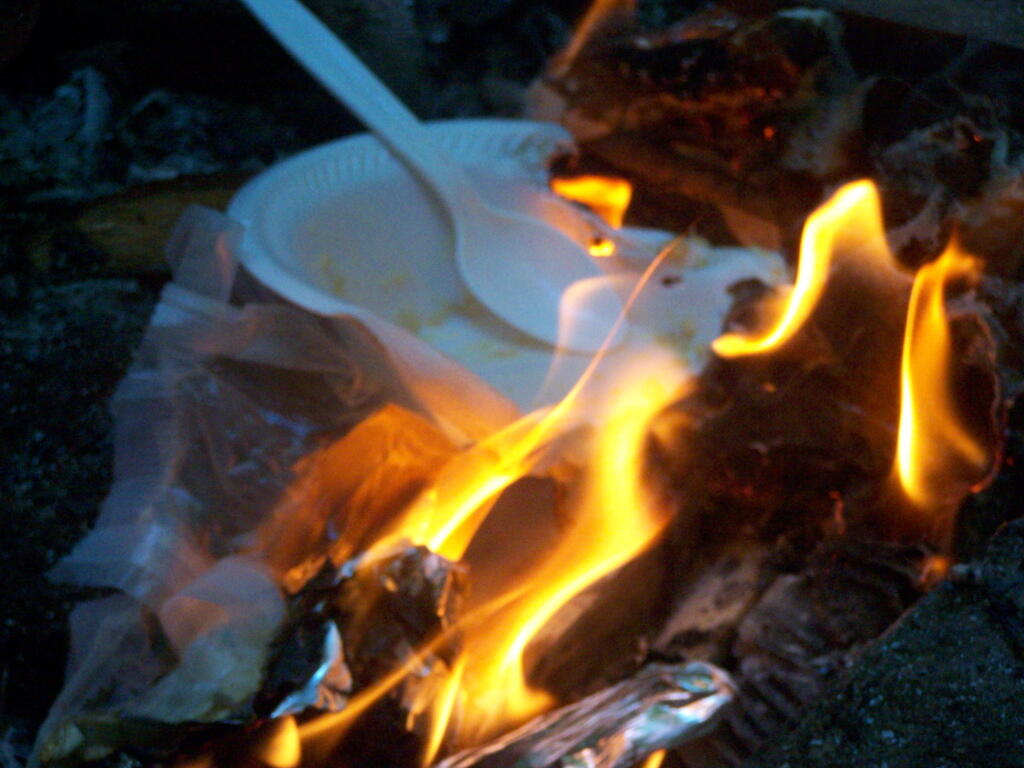
I do use styrofoam plates and plastic forks, paper towels, wet whipes, and often camp food comes in more packaging then stuff you get a home, as more stuff is canned or in dry packaging. I don’t use reusable bags when buying camp food, because having lots of plastic bags is handy for camping. It’s a lot easier to burn your trash, then have to wash up a lot of dishes. Food waste is also burned in a hot fire, because one doesn’t want attract bears.
I generate a lot more trash at camp then I do at home. Yet, I don’t want to haul a lot of smelly trash around, so the garbage gets burned at the end of the evening in the campfire. The day’s plastic bag full of burnables gets burned in the hot campfire at the end of day — and is almost instantly incinerated. I like watching trash burn, and I’m not that worried about it compared to what a lot of farmers and rural folks in more rural states burn regularly in their burn barrels and pits.
Tin cans are burned out, to rid of food residue, and tossed in the bin with the aluminim beer and beverage cans. Glass bottles are washed out. Anything that doesn’t burn is hauled home for recycling. I make sure to pick out any aluminum foil or partially burnt trash out of the fire pit. I don’t litter, and there is no trash generated that ever sees a landfill.
Mocking Zero-landfill Concept.
To a certain extent I am mocking the concept of zero-landfill manufacturing, that some manufacturers like to brag about it. Are farmers and rural residents who burn their garbage, recycle tin cans and glass, compost, zero-landfill folk? They are keeping their waste out of landfills after all.
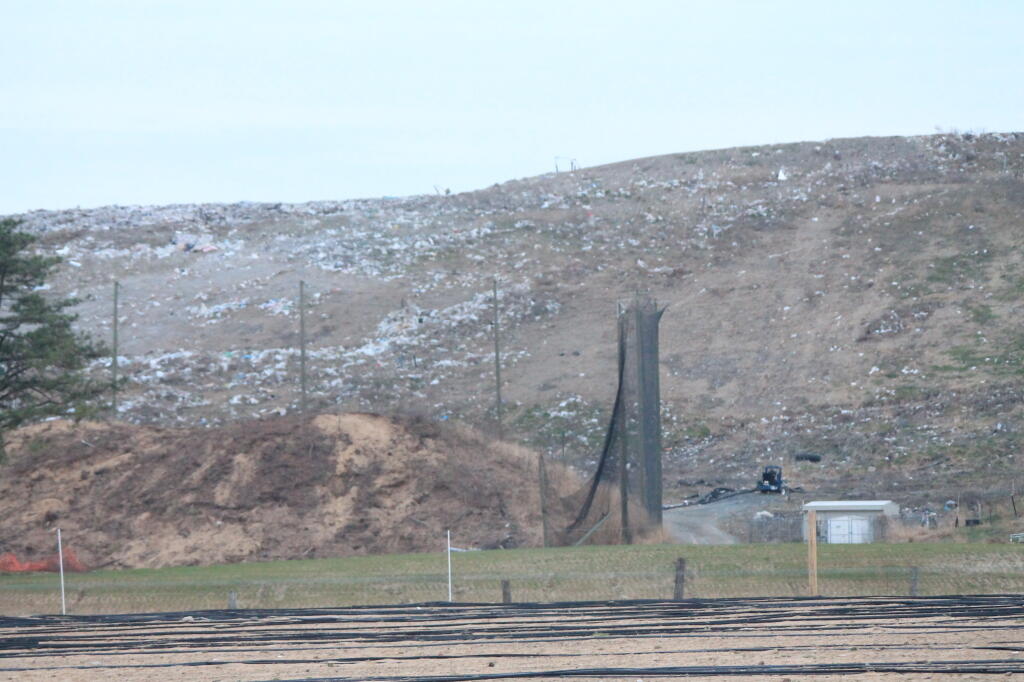
But more seriously, it’s not zero-landfill but zero-waste we should be getting to as a society. It’s one things for a country boy out in the boonies to burning his garbage in a fire, it’s another thing for an urban society to be taking steps to reduce it’s waste. All of the country boys, farmers, and rural residents of the world, generate relatively little trash compared to what our big cities generate.
Cities need to find steps to recycle more of their waste, and recover their organics through source-seperated organics composting, biogas, or source-seperate organic biomass energy production. Cities need to find ways to keep their organic waste seperate from toxic technical materials — we got to stop dumping massive quanities of plastics and metals mixed with organics like food waste and brush into massive garbage incinerators and landfills.
One of the problems I have with the individual mandate, is those who do not get healthcare insurance have to pay a tax, yet get nothing in return. That tax should go directly for paying for healthcare for those persons, by either using that revenue to add them to Medicaid or an assigned risk pool.
Option 1: Automatic Enrollment to Medicaid for Those Without Insurance.
Those who pay the individual mandate tax could automatically be enrolled in the government’s Medicaid program. The individual mandate tax could pay for the costs of enrolling these persons into medicaid. Medicaid would ensure these persons have access to basic healthcare, and because such an expansion would be paid directly out this tax, there would be no cost to government.
Option 2 Assigned Risk Pool for Those Without Insurance.
Alternatively, those who do not enroll in a private market insurance plan could be placed in the assigned risk pool, similiar to those who can’t buy insurance on the private market due to DWI or bad driving records. The individual mandate tax could pay for those individuals who don’t have insurance to be automatically assigned to an insurer, for it’s most basic plan.
Insurers would be forced to accept persons assigned to them, at random, by the government, who don’t currently have insurance. These individuals paying the individual mandate tax, would have their tax revenue handed over to the private company they are assigned to. Insurers would cover their healthcare costs, with very basic plans.
People Still Would Want to Get Insurance.
Being enrolled in Medicaid or a an Assigned Risk Pool insurance is far from an ideal solution for most people. People would be actively encouraged to buy insurance on the exchange, rather then taking whatever the government has randomly assigned to them, or government sponsored Medicaid.
Yet, the assigned risk pool is better then nothing.If for some reason a person didn’t sign up for insurance, they should be covered with basic healthcare insurance. Assigned risk is very market friendly, and is less government involved then expanding Medicaid, so it seems likely that would be the reform chosen for healthcare coverage for all.
25. Primitive Tent Site–a designated tent site of an undeveloped character providing space for not more than three tents, which may have an associated pit privy and fire ring, designed to accommodate a maximum of eight people on a temporary or transient basis, and located so as to accommodate the need for shelter in a manner least intrusive on the surrounding environment. (page)
The Adirondack State Land Master Plan uses the definition of a “primitive tent site” in a wilderness area to explain campsites in wild forest.
1. All structures and improvements permitted under the guidelines covering wilderness areas will be allowed in wild forest areas. […]
Here is the wilderness “primitive tent site” regulations per the APSLMP:
1. The structures and improvements listed below will be considered as conforming to wilderness standards and their maintenance,rehabilitation and construction permitted:
— primitive tent sites below 3,500feet in elevation that are out of sight andsound and generally one-quarter mile from any other primitive tent site or lean-to:
(i) where physical and biological conditions are favorable, individual unit management plans may permit th establishment, on a site-specific basis, of primitive tent sites between 3,500 and 4,000feet in elevation, and,
(ii) where severe terrain constraints prevent the attainment of the guideline for a separation distance of generally one-quarter mile between primitive tent sites, individual unit management plans may provide, on a site-specific basis, for lesser separation distances, provided such sites remain out of sight and sound from each other, be consistent with the carrying capacity of the affected area and are generally not less than500 feet from any other primitive tent site;
Also, in wild forest, so-called groups of primitive campsites are allowed:
Small groupings of primitive tent sites designed to accommodate a maximum of 20people per grouping under group camping conditions may be provided at carefully selected locations in wild forest areas, even though each individual site may be within sight or sound and less than approximately one-quarter mile from any other site within such grouping, subject to the following criteria:
— such groupings will only be established or maintained on a site specific basis in conformity with a duly adopted unit management plan for the wild forest area in question;
— such groupings will be widely dispersed (generally a mile apart) and located in a manner that will blend with the surrounding environment and have a minimum impact on the wild forestcharacter and natural resource quality of thearea;
— all new, reconstructed or relocated tent sites in such groupings will beset back a minimum of 100 feet from themean high water mark of lakes, ponds,rivers and major streams and will be located so as to be reasonably screened from the water body to avoid intruding on the natural character of the shoreline and the public enjoyment and use thereof.
Despite threats from PROTECT! and Residents Committee to Protect the Adirondacks, the Adirondack State Land Master Plan has never been litigated in court, so there is no legal interpretations of the ASLMP outside what has been decided by the DEC and Adirondack Park Agency.
Many different wild forests have taken that definition to different meanings…
Generally Open to All Campers…
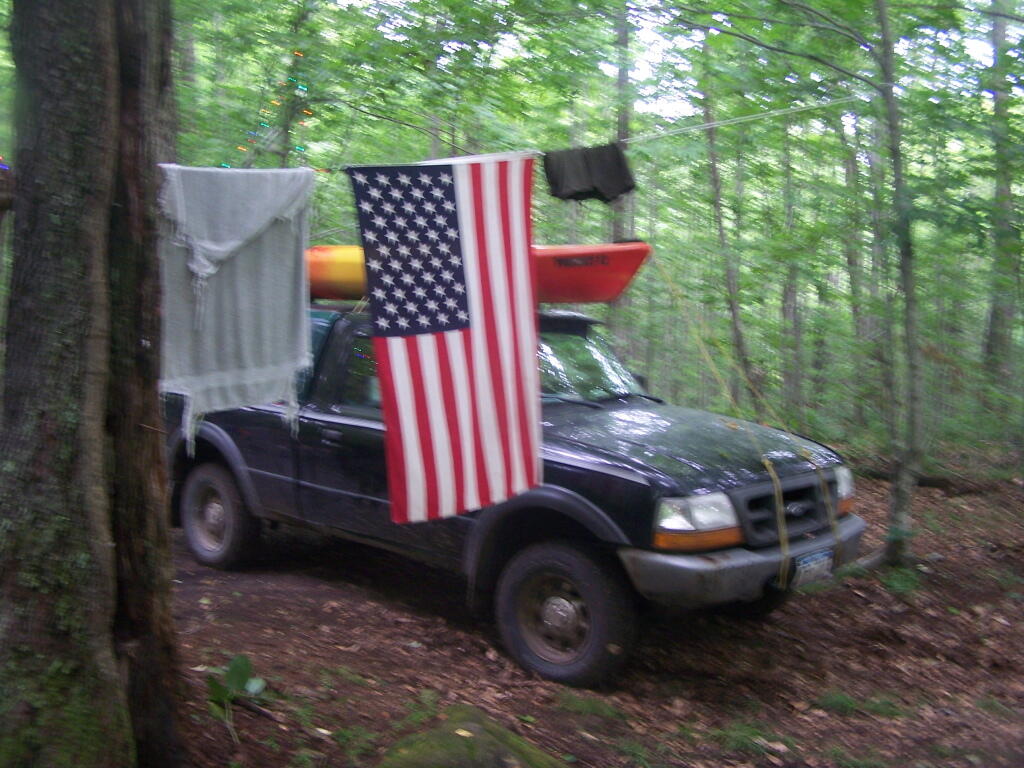
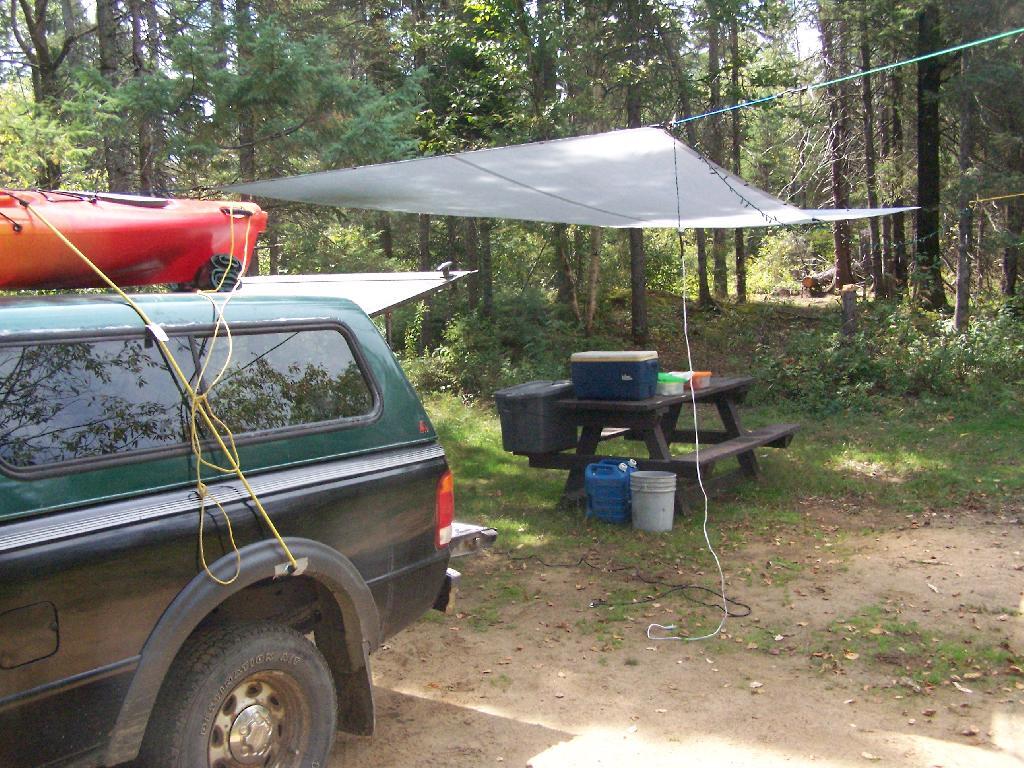
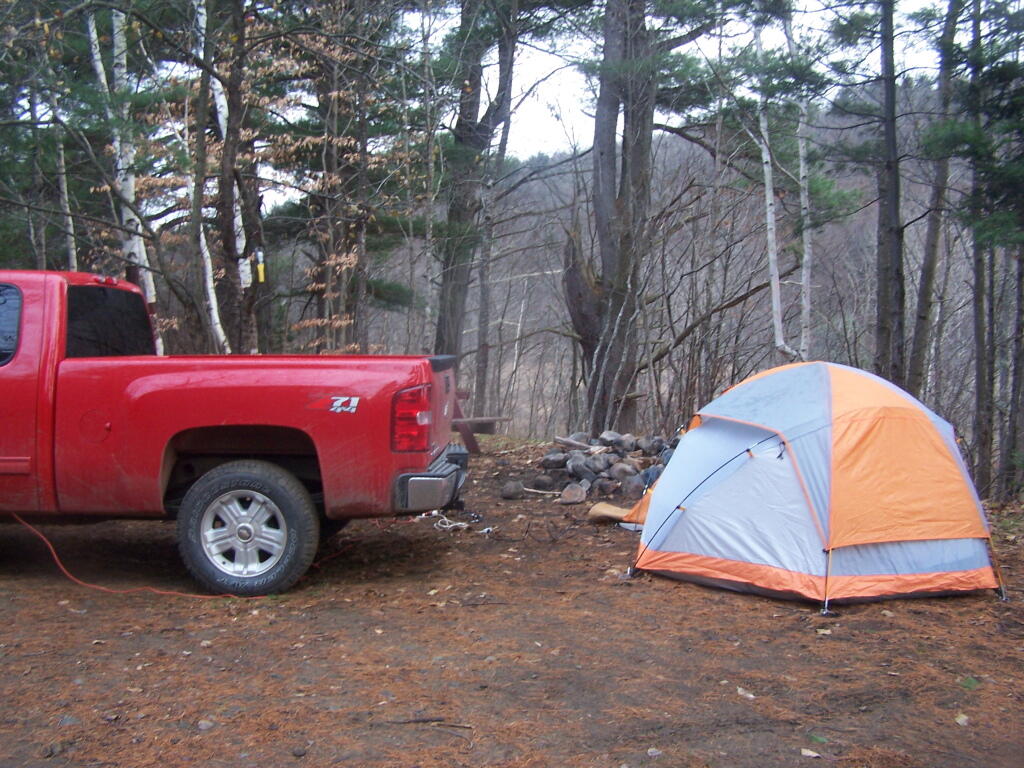
At Ferris Lake Wild Forest, particularly on Piseco-Powley Road, it has been taken to mean roadside campsites, where vehicles can access, and people are free to bring in a pickup camper or recreational vehicle if they so choose. Indeed, the draft UMP and the Adirondack State Land Master Plan both mention roadside camping. The Ferris Lake UMP goes as far as to describe various sites, and how big of a vehicle can fit in individual campsites. The sites have fire rings and outhouses, which is consistent with that definition. A minority of sites also have picnic tables.
This is common in most wild forests with roadside campsites, including Black River Wild Forest (North Lake, Woodhull Lake), Debar Mountain (Mountain Pond, Jones Pond, etc.), Ferris Lake Wild Forest (Powley Road, G-Lake Road, Edick Road, Mountain Road, etc.), Moose River Plains, and Vanderwhacker Wild Forest (Moose Club Way, Northwoods Club Road, NY 28N, Cheney Pond, Blue Ridge Road), Wilcox Lake Wild Forest (NY 8, Pumpkin Hollow, Hope Falls, etc.).
Tent Site Use Only…
On the polar opposite would be Lake George Wild Forest, particularly along Darcy Clearing Road and Hogstown Road, where all of the campsites have been relocated and blocked off to prevent any vehicle use or non-tent use. The argument here is that primitive tent site must be taken literally in the dictionary sense, and that any use of vehicles, such as truck campers or recreational vehicles are inconsistent with the Adirondack Park State Land Master Plan.
Similar policies on restricting use of motor vehicles in roadside campsites exist in a minority of other wild forest campsites (like the lower portion of Harrietstown Road and Garnet Lake in Wilcox Lake Wild Forest), however the majority of forests allow some roadside campsites, with vehicle access.
History Looms Large.
But let’s be honest, most wild forests allow unrestricted roadside campsites for a variety of vehicles, including pickup campers and recreational facilities. This has been going on for over 100 years, basically as long as their has been motor vehicles in the Adirondacks, and certainly as long as recreational vehicles and truck campers have existed. Most public lands, outside of NY State also do not have much in restrictions on roadside camping.
It’s tough to take away from people what they are already granted, and enjoy, especially if the rational is limited. People enjoy roadside camping in a variety of vehicles, and in many locations. For many people, they have been coming to the backcountry for decades, parking their truck or RV, and enjoying all of the solitude and pleasure that roadside camping.
When I go camping, I rarely stay at a campsite more then 2 or 3 nights. After a while, staying at a single campsite tends to become boring, and uninteresting, after you’ve explored all of the land around the campsite. Camping should be a break from the routine, not a repetition of the same experience over and over again.
You need a camping permit if you plan to stay at the same site more then 3 nights in a row in NY State. Which is fine, especially because I never really reach that level. I am always traveling and going to new places, because frankly staying in the same campsite more then a couple of nights is real boring.
I would much rather travel and go place to place, rather then spend all night in same old campsite, night after night. New vistas and new experiences are more important, then the temporary inconvience of breaking camp, the reassembling camp, in the next state forest or wild forest I am camping in.
Maybe I’m just young and like to ramble. But I also get tired of same repetition, and are always seeking new vistas and places to explore, and not the same old boring experience.
The conventional wisdom has it that when people move out of an area for ideological reasons, they become the polar opposite of what they where when they lived in their previous area. People move out to suburbs, from the city, are usually some of the most hard core conservatives, as are those people who move from the rustbelt to the sunbelt.
Maybe.
But if anything, when I was a college student at Plattsburgh, like five years ago, I felt the most active and included in the Upstate and Rural Democrats that dominated that area. The Clinton County Democrats where not dominated by a bunch of liberal extremists out to remake our state in their vision. For the most part, they were just happy to grab whatever little coat tails of power they could grab.
I have never viewed myself as a right-winger, but I do cringe at many of the things liberals advocate for in our state. More regulations and taxes on working folks, just do not seem the right direction for our country. We certainly don’t need any more gun control or people telling us how to live our lives. At the same time, we need a government that stands up for working folks against big corporations.
I feel if I lived in a place where my own political party was not the enemy, then I could be much more involved and active in politics. It’s always more fun being in the minority, and fighting the good fight for the reforms you want to see, against the opposition, rather then being disappointed with your own people for not living up to their own ideals.



![Untitled [Expires August 14 2024]](https://andyarthur.org//data/photo_012117_large.jpg)