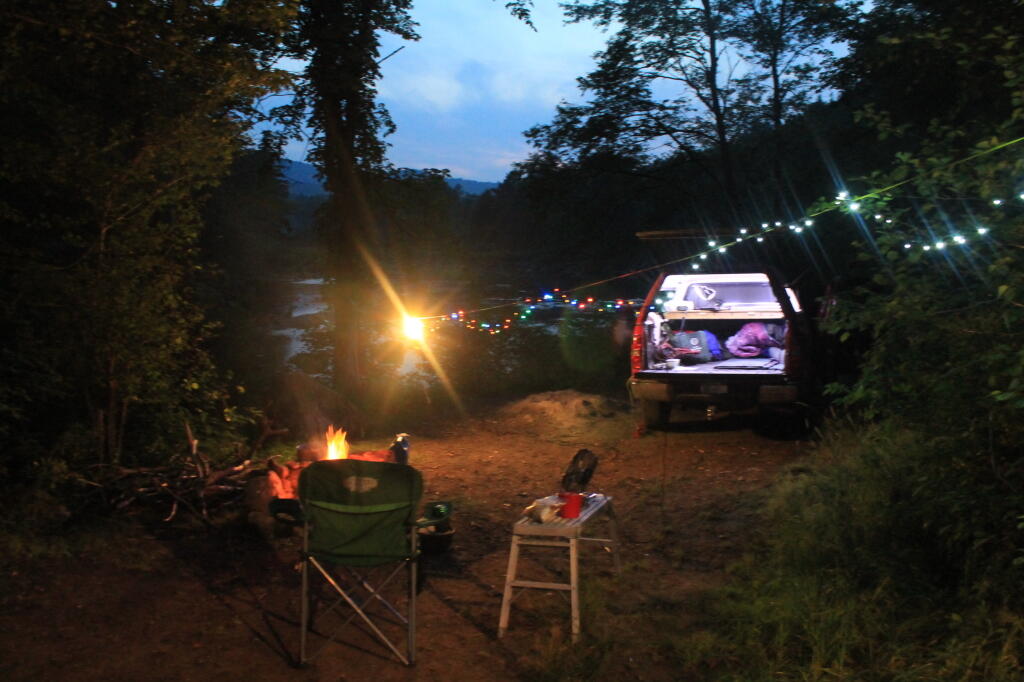
My dual battery setup works decently on my Silverado pickup truck for producing camp power for use under the truck cap. For the first night at camp, it provides more then enough power at night, including lots of lights, alarm clock, and moderate use of a portable fan, and 90 watt laptop charger.
After the first night, the deep cycle battery starts to wear down. The inverter will show lower and lower voltage, until it starts beeping every 15 seconds, and eventually shuts off at around 11 volts, to protect the battery. Yet, it can be continued to be run, all you have to do is turn on the engine, and let the truck run at idle speed for like 10 minutes, every 1-4 hours, depending on how heavy your electrical load is. I used an average of 1/3 gallon of fuel for every night after the first night parked, without driving.
As the battery is isolated from the starting battery, running the deep cycle down to the point where the inverter shuts it off is not a big deal. Your starting battery is still fully charged, and the deep cycle will after all get recharged as soon as truck restarts, and the inverter prevents you from going below 10.9-11 volts, a point where damage can occur, even with a good deep cycle.
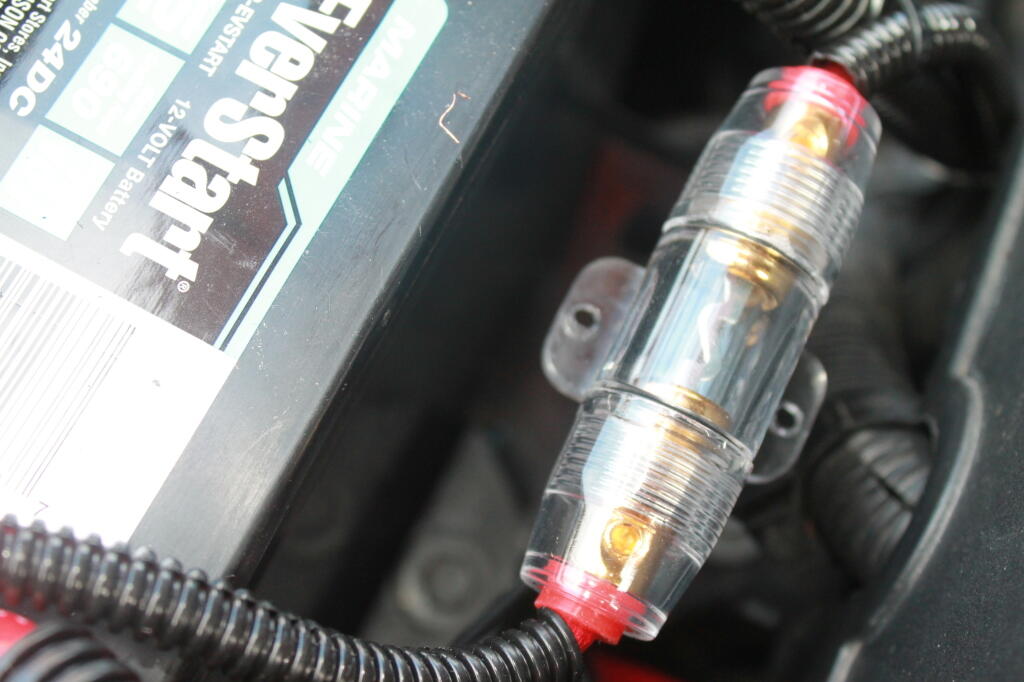
For most moderate lighting demands — let’s say 75-100 watts — enough to run a couple 26 watt florecents, your pretty close to the 4 hours. But when you start adding a laptop charger or fan, and after the third day without the truck moving, you start to drop things down closer to once an hour. Reducing the load when charging, also helps the truck charge faster, as does swapping out the 60 amp fuse between the batteries with a 100 amp fuse, to send any excess amperage to the deep cycle as fast as possible.
The system originally came with a 80 amp fuse, but I cracked that fuse, when I was re-tightening the connections on fuse holders. Apparently, the fuse holder between the deep cycle battery and the starting battery was loose, and on the bumps of dirt roads would become disconnected. While ultimately, I fixed it by retightening the connections, I ended up breaking the 80 amp fuse, and could only get a 60 amp fuse locally. I plan to buy a 100 amp fuse over the internet at some point.
I rarely stay in the same campsite more then one night, at least without driving somewheres in the truck. Even relatively short periods of charging the battery at above idle speed, e.g. driving rapidly increases the rate of charge. It does however use much more fuel to drive the truck then staying idled.
There are probably not two different public lands in the Northeastern United States that are more different then the Adirondack Park and the Allegheny National Forest.
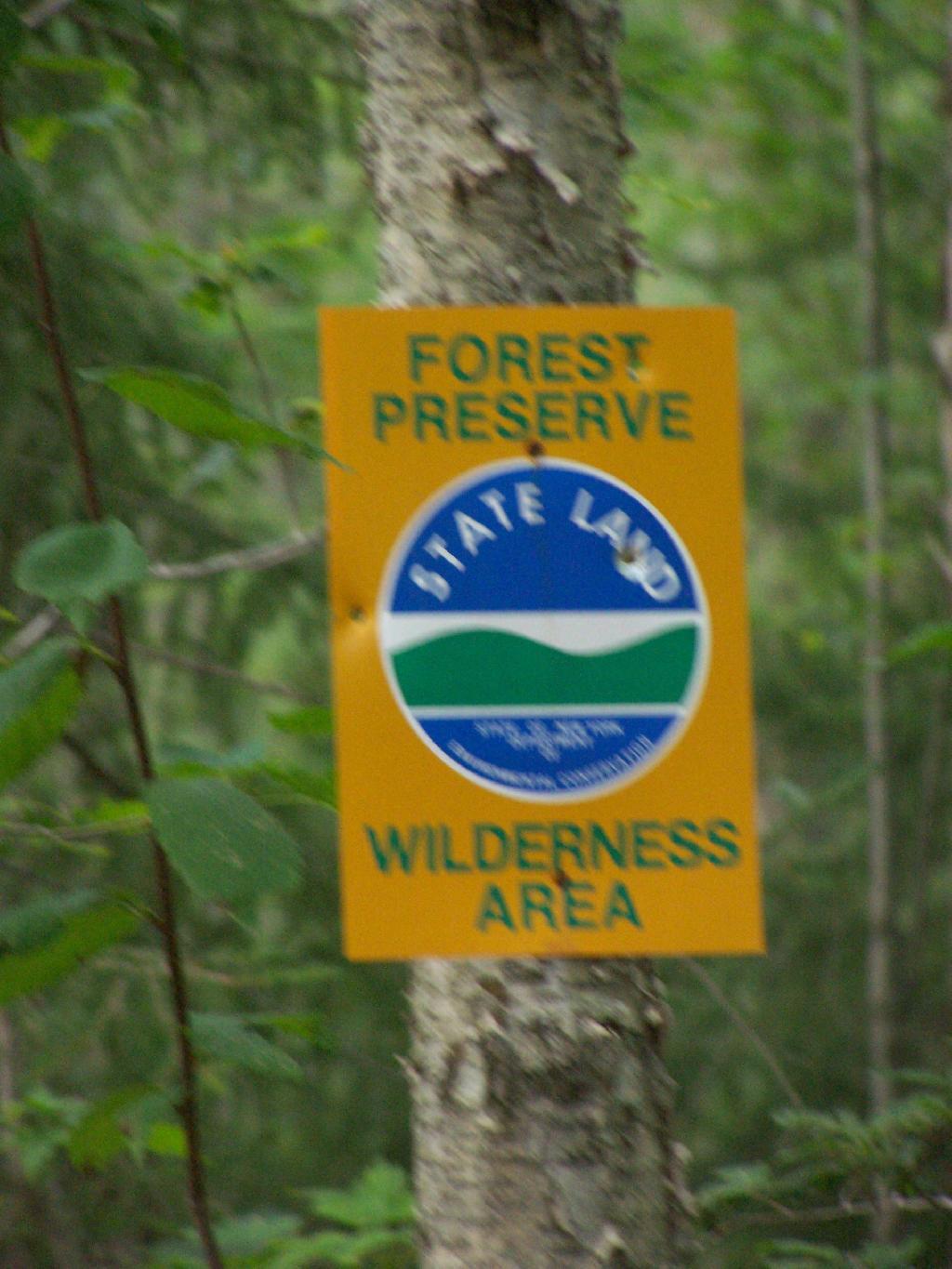
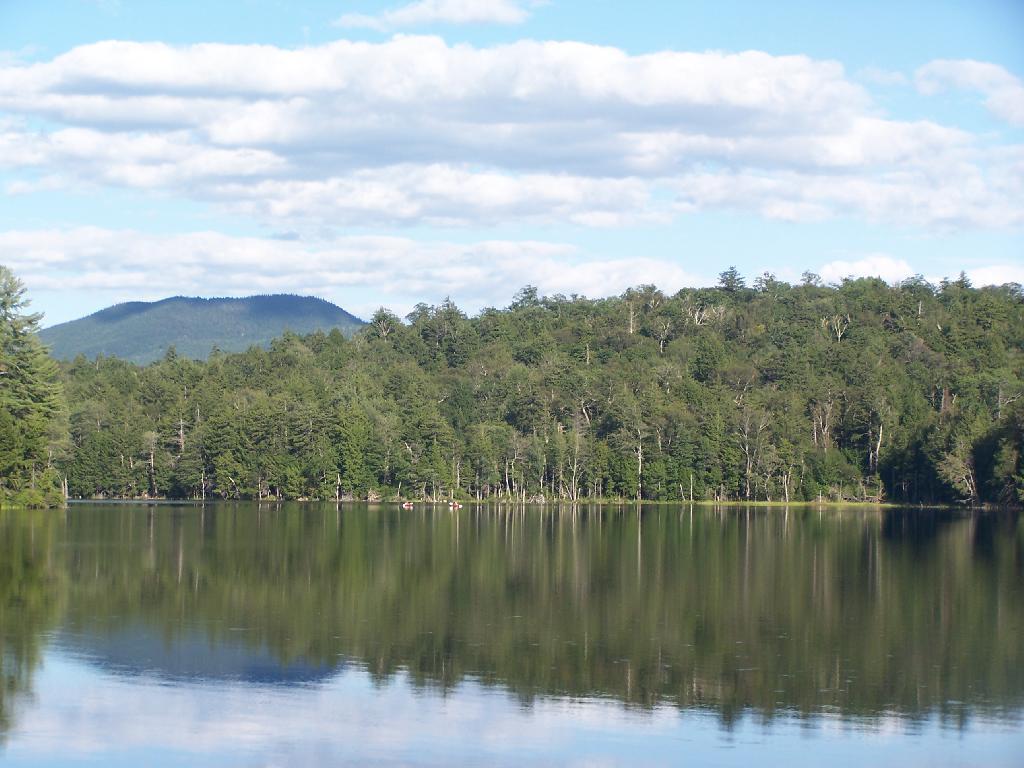
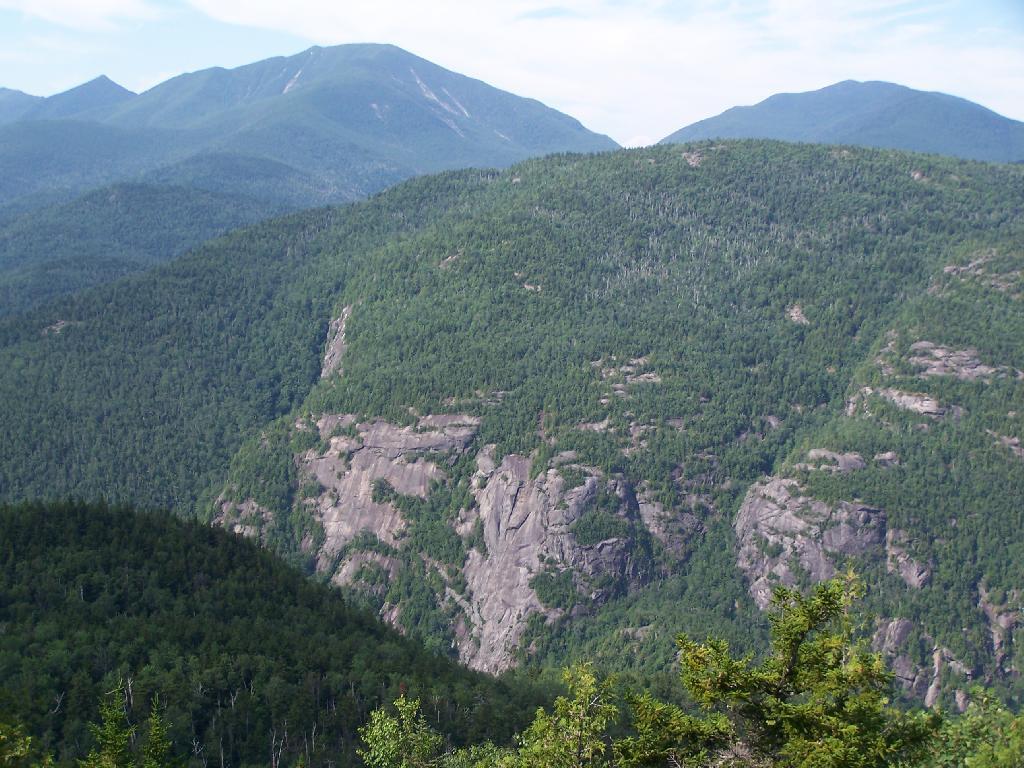
The Adirondack Park’s Forest Preserve is one of the country’s largest wild forests, which basically is a wilderness area with very limited roads and motorized recreation or activity. Over half of the forest is totally free of motors of all sorts, from cars, trucks, boats, ATVs, and snowmobiles, to even generators used up at camp. No trees can ever be cut in Adirondack Forest Preserve, most uses and recreation are limited to current uses, and only are to become more restictive in the future. All use is strictly controlled by detailed regulations created by the State Department of Environmental Conservation and AdirondacK Park Agency, and public use is very restricted.
The Allegheny National Forest has extensive road system, is extensive logged, and used for oil and natural gas production. It offers extensive developed recreation, including dozens of campgrounds, several ATV trails, hundreds of miles of truck trails and other roads, boat launches, and basically any other use one can imagination for a public lands. It literally has more oil and gas wells then all other USDA-administer National Forests across the nation, combined. The land is largely on a grid, and where it’s not, the land has many roads following natural contours. Wilderness areas are a relatively small portion of the area.
Which philsopohy of land management is better?
Environmental purists would prefer the park, because the landscape is more prestine, and vastly less trambled by man. Man-made uses, such as roads and roadside-campsites are limited largely to near roads, and wilderness areas have limited trails, with only a few lean-tos and backcountry campsites.
Conservationists in many cases would prefer the Allegheny National Forest. They would note the diversity of land uses, and that while it’s a largely wild landscape, with people primarily coming to visit, it also provides our economy with valuable products, such as timber, oil and gas. Recreational activities like all-terrian vehicles, scenic driving, and camping are offered, far more extensively then in New York Forest Preserve.
I sometimes cringe when I look at the aerial photographs of Allegheny National Forest, or study the road maps. It looks like the entire ecosystem and forest is engineered. You can see the impacts of oil and gas drilling, and timber production — both which require a lot of roads, that don’t exist in Adirondack Park.
However, due to lack of roads, and lack of facilities in most of Adirondack Park, use of land is largely limited to areas within 5-10 miles of existing public roads. A lot of true backcountry is too far back to pratically expect most people to ever go. Some activities — like ATV riding on public lands is non-existent. Camping activities are fairly restricted to designated spots along roadsides, at state campgrounds, and certain back country locations.
While there is a lot to like about having some wilderness areas — like the Adirondack Park, when you review the regulations and policies the state has created for the goverence of the park, you have to wonder if they have gone too far. Some true wilderness areas are wonderful, but are there too much wilderness? Do restrictions on development of public lands leave too much restricted?
I don’t know. The Adirondack Park is a delight, a great wild space, but it does seem sometimes that are state goes too far in restricting public use, and walling off all the lands from ever having any timber cut, or any new facilities developed under public demand.
People sometimes ask me why I am so opposed to urbanization, and turning forests and farm fields into strip malls, office parks, and housing developments. Or at the same time, why I am opposed to closing off more public lands to wilderness, or what some call “neccessary reforms” and laws that will benefit the public as a whole.
My answer is simple: we are losing our freedoms, bit by bit. For every claim that every development is neccessary, that every new law is needed to reflect changing times or real needs, there is a counter point of lost freedoms, lost wilderness.
Wilderness is not a place that is baricaded off from motor vehicles, or is highly remote. It is a a place where man can live his life relatively untrammeled by other men.
Where not every part of his life is decided by strict regulations and policies that seek to control and force him or her to act in a specific way. Where a person can be free to make his or her choices, without government dicating everything her or she must do in her life.
The policy of the state shall be to conserve and protect its natural resources and scenic beauty and encourage the development and improvement of its agricultural lands for the production of food and other agricultural products.
The legislature, in implementing this policy, shall include adequate provision for the abatement of air and water pollution and of excessive and unnecessary noise, the protection of agricultural lands, wetlands and shorelines, and the development and regulation of water resources.
While Article XIV Section 5 provides:
A violation of any of the provisions of this article may be restrained at the suit of the people or, with the consent of the supreme court in appellate division, on notice to the attorney-general at the suit of any citizen.
This would state affirmatively that the any citizen may sue the state for failing to “conserve and protect its natural resources and scenic beauty” and “encourage the development and improvement of its agricultural lands for the production of food and other agricultural products.”.
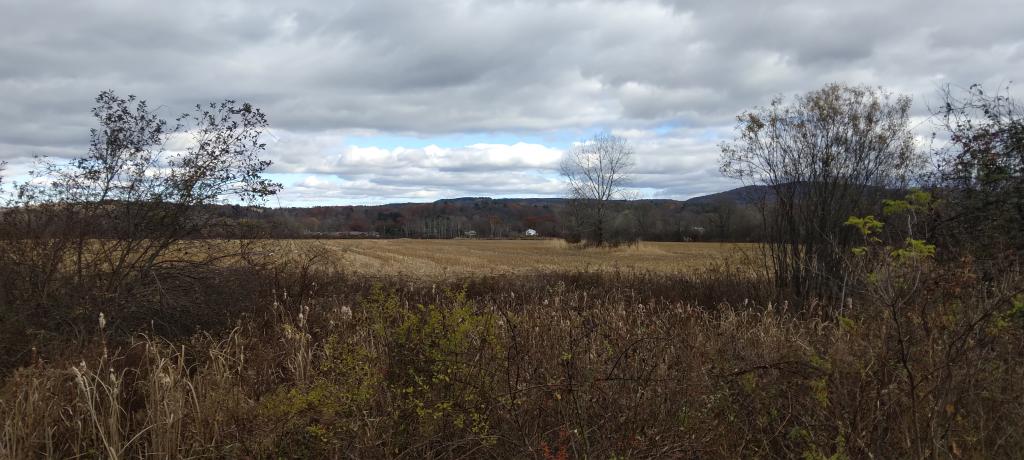
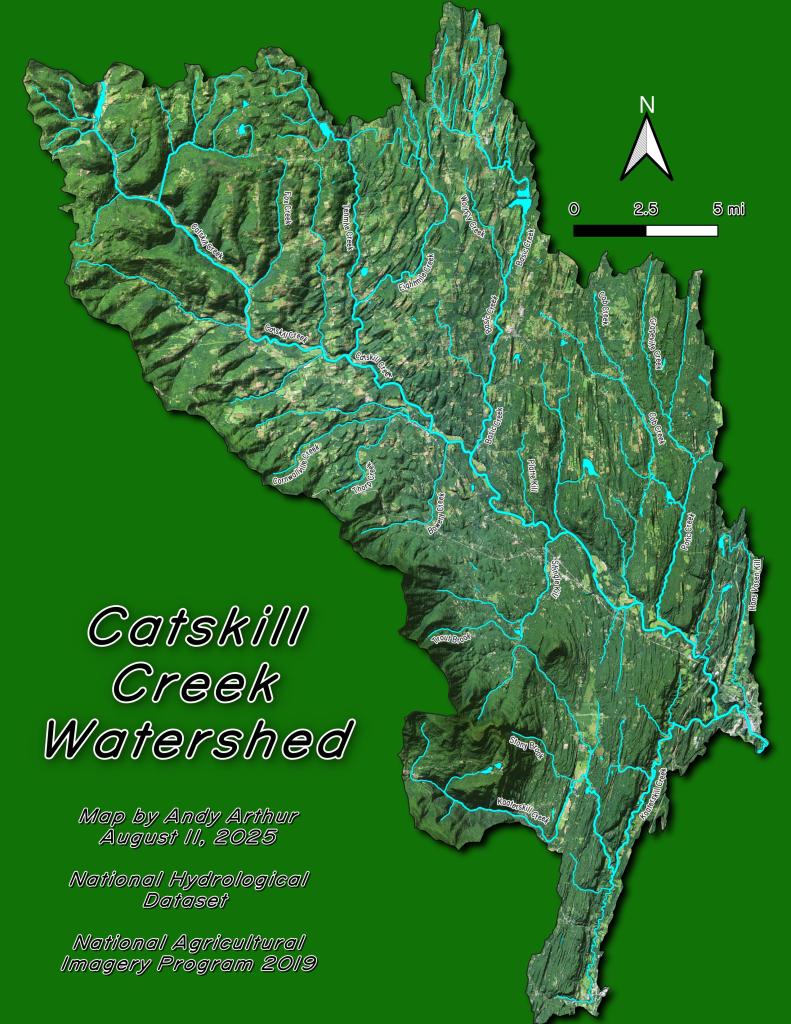
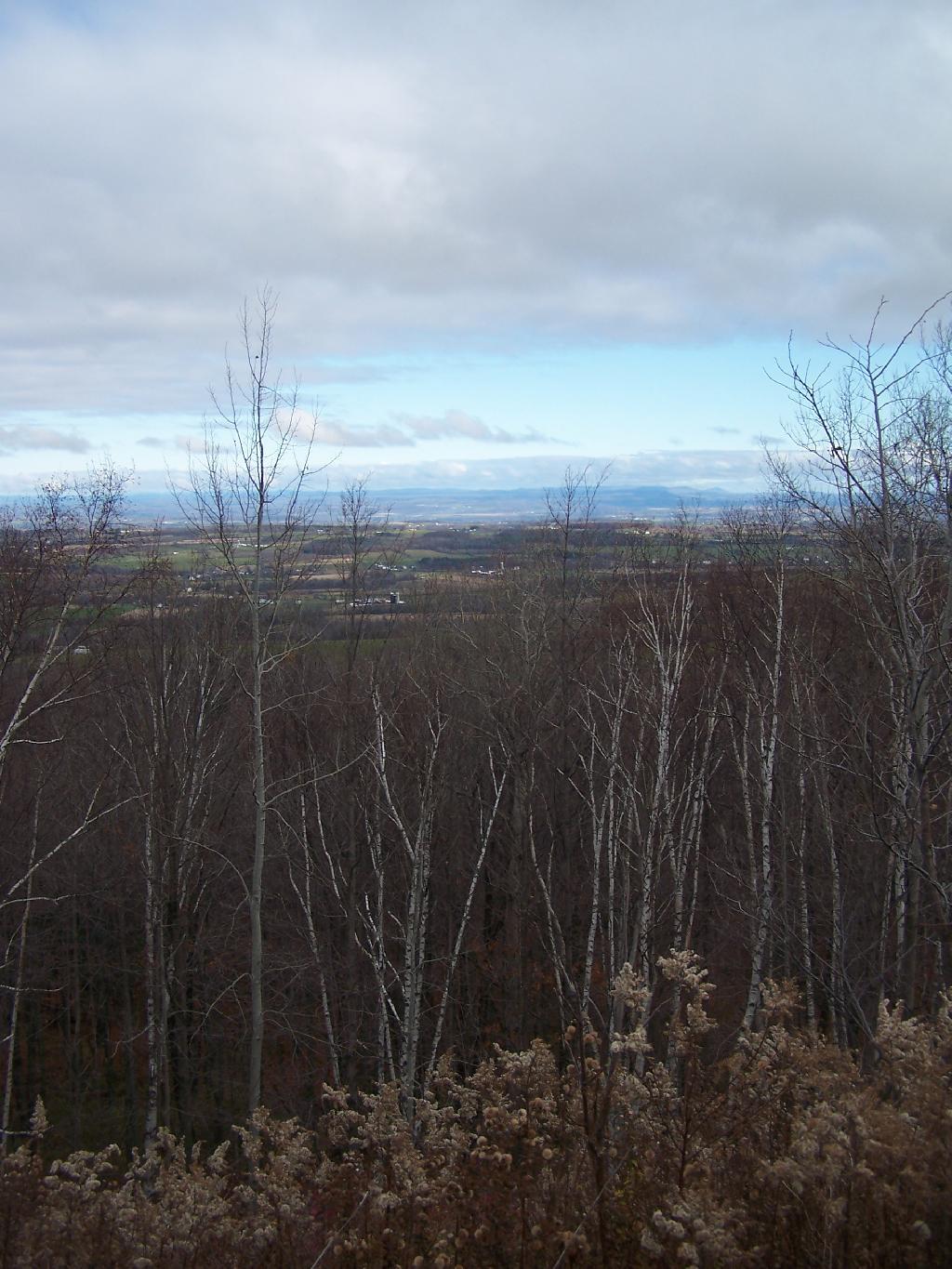
Both sides of the Mohawk Valley, for about ten miles north and south of the river have extensive dairy farming going on. Not large confined animal feeding operations, but instead relatively small dairies that overlook the river, and leave mostly a pastorial landscape of pastures and corn fields, sloped along the hills that overlook the river.
There are certainly other farming locations in state, but there is something specifically quite pictorial of this area, all overlooking the river, with the relatively high hills that surround the Mohawk River. Few areas of state are as open, or is farming concentrated around a single valley. Most farming areas in state are single valleys — like the Black River Valley — and not hills surrounding a major river.
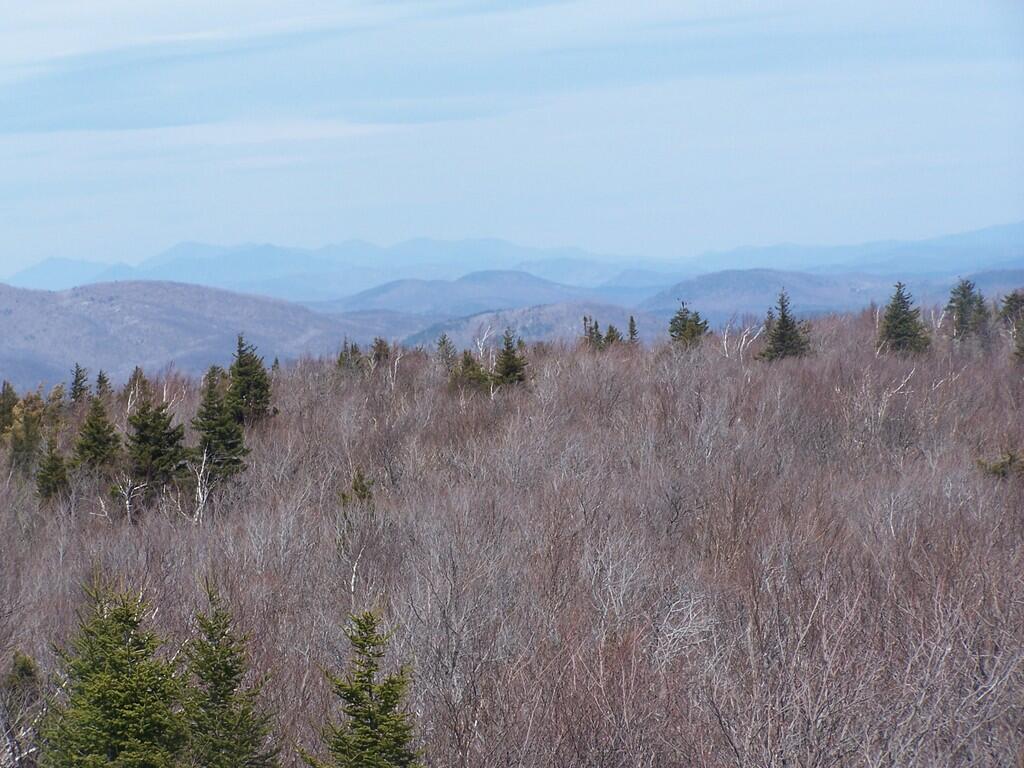
The Mohawk Valley Farm belt tends to petter out, as you climb out of the Mohawk Valley. Head to far north or south, and the farms are replaced with a lot of scrub land, where less productive farms, with poorer soils and shorter growing seasons have been abandoned. These lands nowadays are primarily owned by rural residents, and used mostly for hunting in the fall and the production of firewood. The worst parcels of all, as it comes to farming, are largely owned by the state, for timber and public recreation.
The belt is pretty clearly defined. Where farms begin and end in scrub land are as visible by the view of the window in your truck, as they are in view from the aerial photos looking down onto the earth. Farming, while an important part of the economy, really is limited to where can occur, and beyond that, most of the land is wasted.
Biomass companies, and alternative crops some day promise to recover this scrubland, that is all but abandoned for anything but deer hunting. It would be nice, but we will see the impacts to the environment once it happens. Scrublands, and recently abandoned, to the human mind look so disorderly, at least until they revert back to full forest.
A secret of the Adirondack State Land Master Plan is that well over 90% of the lands officially dedicated as Wild Forest are actually forever: wilderness, even though it’s not called that.
4. Public use of motor vehicles will not be encouraged and there will not be anymaterial increase in the mileage of roads and snowmobile trails open to motorized use bythe public in wild forest areas that conformed to the master plan at the time ofits original adoption in 1972.
That language basically makes it clear that no new roads or truck trails will be created in Adirondack Forest Preserve. Therefore, except for a handful existing roads, the vast majority of lands of Adirondack Forest Preserve will forever remain free of motor vehicles and snowmobiles (in winter). The milage of snowmobile trails and truck trails will only decline in coming years, strictly fitting into defination of “wild forest”.
The lands of the state, now owned or hereafter acquired, constituting the forest preserve as now fixed by law, shall be forever kept as wild forest lands. They shall not be leased, sold or exchanged, or be taken by any corporation, public or private, nor shall the timber thereon be sold, removed or destroyed.
Therefore per the consitution, no timber may be removed or destroyed in the forest preserve, which means the consitution explicitly prohibits any new road from being constructed in the forest preserve, except where an existing road exists. You can’t build a new road through the forest without cutting timber.
The only constraint from designating all of Adirondack Wild Forest as wilderness, is some of the parcels are smaller, and there a minimal roads going to campsites, lakes, destinations, and private lands throughout the park, mostly low-speed forest preserve roads, with minimal use.
One thing that concerns me is the lack of transparency for all not-for-profit organizations that are involved in influencing government polic or representing themselves in front of government agencies.
While all not-for-profit organizations must disclose how they spend their money, at least on an yearly bases on publically avaliable IRS Form 901, they do not have to disclose individual donors, or the amount each donor gives. In many cases, through the advocacy and other works of not-for-profits, substantial government lobbying and political influence is given by the organization, yet few actually know who is funding the organization, or what the true rational for the organization’s actions.
If persons are afraid to give to not-for-profit organizations, for fear of disclosure, then they should not give. Not all not-for-profit organizations serve the public interest, as many spend a substantial amount of their funds advocate for policies that are highly detrimental to the public interest. Likewise, there should be public pressure on not-for-profit organizations avoid taking donations from corrupting sources of funds.
A great deal of advocacy on behalf of major corporations takes on behalf of citizens groups. Many cases, grass roots efforts are amplified by large corporate donations, but nobody really knows where the money comes from, except that they report large donations as being a key to sustaining their organization. For sake of openess, all not-for-profit organizations should have to disclose all donations and where they came from.