
Display Full Screen - Control + Mouse to Pan, SHIFT and +/- to zoom, arrow keys pan around MapLibre GL map.

Second day of vacation 🩴 🏖️ 😎
At least weather wise, the second day of summer vacation might be the best though only time will tell. Sunny, cool, light breeze morning slowly but surely drying up the mud from yesterday.
I got to camp around 1:30 pm just as the final rain shower of the day was pushing away. 🌧️ Certainly they didn’t get as much rain in the Finger Lakes as Albany got yesterday, but it still was wet and indeed much of the drive out to the Finger Lakes was through drizzle and clouds, though ultimately it wasn’t a bad drive but not totally exciting either.
I got a later start then I would have hoped but it was pouring all Wednesday night, and I didn’t get to the bank 💵 on Wednesday and needed to go to a video lottery, I mean video ATM 🏧 machine to get small denomination bills for farm stands, tag sales 🏷️, ice cream 🍦 and anything else I might need that couldn’t be put on a card during vacation. I wasn’t sure if the VTM was located outside, it was when I got to SEFCU State Office Campus but my truck with the mirrors couldn’t fit but I walked up to the ATM and got it done, despite the signs saying such things are prohibted. Discrimination I tell you. It’s a disability, you know my penis is broken. Too much time jacking off dreaming of watching garbage burn up in wilderness. 🐺 Or Pennsylvania.
The brakes on the SuperDuty are absolutely amazing. You get to the bottom of a long hill, and they have zero fade. 🛑 In the default drive mode the engine gently downshifts as you go down a long grade but it’s not aggressive and you have a ton of manifold vaccum on the big block, maybe not diesel level but it’s impressive compared to the small blocks I’ve always driven. Really enjoying not fearing the brakes or having to shift at all while I’m in Finger Lakes. You just put the SuperDuty in drive, and off you go, super easy.
I got up to camp and sat in the truck at first as it was rather wet, and around 2 PM got into earnest setting this up, erecting the tarp and tent, table, propane and lights, hammock, and so forth. Smoked some dope and drunk some beer. 🥴 Fried up zucchuni and bathed it with cornmeal, bacon and salsa. Ended up popping down $28 for a steering wheel cover, as the SuperDuty work truck steering wheel has such hard nasty plastic, and I wanted to have some creature comfort on my long road trip without sore hands. 🫶 What can you say, I’m a girly man who works with computers 🖥️ all day and spends too much time jacking off. And camps up in wilderness.
Seems like there is more cows 🐮 up in the National Forest, especially calves this year but maybe it just was dumb luck where they were grazing, due to clouds and drizzle. Often when it’s hot out they tend to head to the more shaded, remote parts of their pastures. I’m sure if it’s as wet as they say come Sunday there will be even more mud and smell like wet cow farm. But you know I dream of someday having cattle to graze out back past the burn barrel. 🛢️ I am thinking Tuesday looks like the best day to head down to Pennsylvania to do the Blackwell Triple Crown, 🫅 though I’ll be driving between the peaks, along with driving up Lamb’s Vista, riding a bit of the Pine Creek Rail Trail, checked out the blackened you know what and rundown farms and homesteads, maybe get a few more smokes before driving back in darkness to camp. Want to leave very early that day, maybe set my alarm for 4 or 5 AM so I full day for PA day.
Today heading down to Watkins Glen around 9:30 AM, then swinging by the library to do some work and finish up some loose ends, 🧑💻 hope to hit the Montour Falls Rail Trail around 11 AM, 🚲 then a little bit of hiking at Watkins Glen Park, a swim in the late afternoon at the pool, then Glen Dairy Bar 🍨. I thought about kayaking Seneca Lake but I don’t think today I want to do. I’ll bring the tube, I could go for a float on the lake in the evening, but instead I’ll probably ride Rock Dam Road, watch the sun set over Seneca Lake, swing by Wally World for stevia, maple syrup and a few other supplies 🛒 before heading back to camp this evening.
Tomorrow looks cloudier, 🌥️ but I might head down to Taughannock State Park 🏞️ maybe with the kayak 🛶 and do some paddling on Cayuga Lake if it’s not too turbulent. I don’t want to necessarily head into Ithaca with a traffic on the commercial strip or even worse the insane farmers market traffic 🧑🏻🌾, but I might park at Allen Treman and launch from there. Sunday looks to be the wettest day of summer vacation, I’ll stay up in the National Forest, I have my fishing pole, maybe see what I can catch at Foster Pond, and just wander around in the woods, and do some reading and hanging out in camp. Hopefully it won’t be a washout but I have the propane heater in case it’s truly cold and miserable in wilderness. If the accessory battery gets low, what’s nice withe SuperDuty is I can just hit the remote start button, and it will idle for 15 minutes to charge everything up. Dug out a trench to hopefully keep the water from ponding up at camp on Sunday.
I need to get my 10 Hoopla borrows done by this evening as it’s July 31st today, believe it or not. How fast time comes and goes, by the time summer vacation is over, autumn will be rapidly approaching. That said, I feel like it was just yesterday I was up here, Labor Day 2025 back with Big Red on his last summer vacation. It was kind of boring 💤 driving out here, the same scenery, and the SuperDuty with its’ good brakes and excessive amounts of power, made the drive even more boring. I was thinking 🤔 I could have been going out to Michigan the whole time out here, for a totally different experience. But I changed my mind, and honestly, I just have too many office responsibility to take care of currently with work, so yeah, I need to get down to the Watkins Glen library 🧑💻 and get on my way before this day is done too. Happy end of July and Happy Beautiful Summer Vacation Day to me too. ☺️
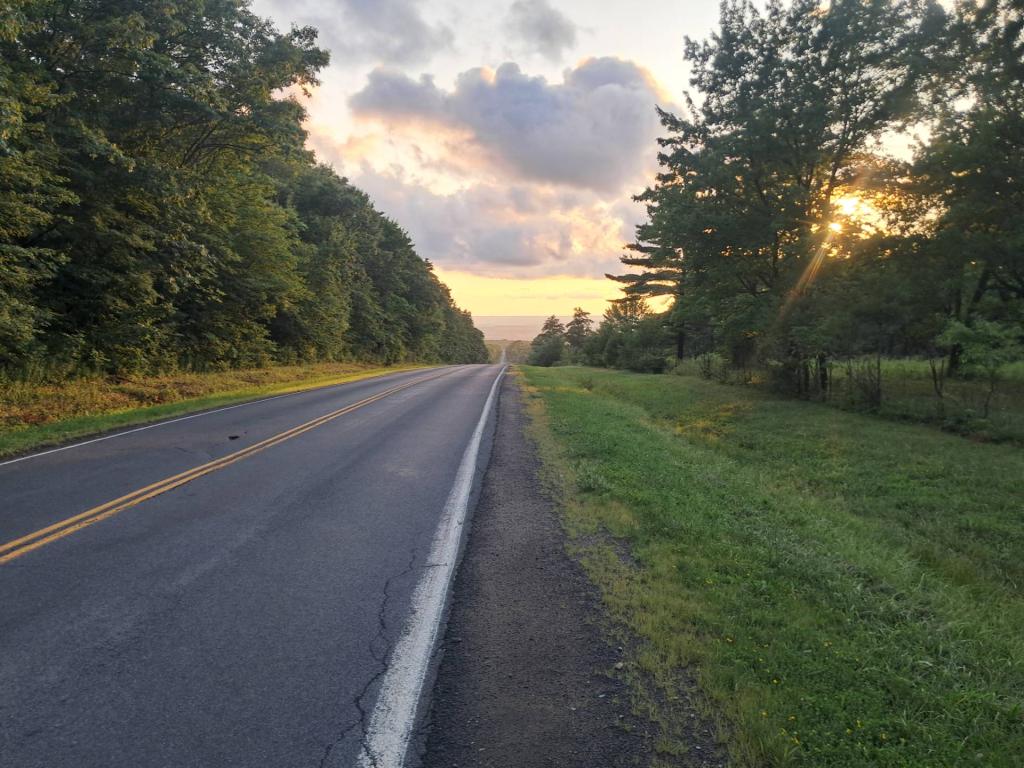
County Route 1

Riding
Warders Corners Road

