Kristi Noem-Tied Firm Secretly Got Piece of $220 Million DHS Campaign — ProPublica
Rainy day feeling ☔
Well maybe, no slogging it through the snow to get to work on the mountain bike, taking the bus in today. I don’t know when the rain is going to start or if it’s going to turn to ICE but honestly I don’t care that much as bus will slog through it all.
Cornmeal and onion pancakes this morning, 🥞 really sweet skipped the carrots 🥕 in the mix for now. More things broke in the office last night, 🏢 I reported it to the appropriate people who know how to fix it, and we’ll see what happens when it gets done. Computers are great when they actually work properly 🖥️ which is less frequently then you might think.
It was a complete slog of a ride back home last night, 🚴 the packed snow and ice trail while not rough to ride, was soft and slippery in parts, and at times I had to push it through the snow. Between leaving the office late and the snow and ice on the bike trail, it was close to 6:45 PM by the time I got home. Heated up some onions and shrimp, hopped in bed and was asleep 🛏️ before 8 PM. I think I was just so amped up over the battle over the test drive yesterday that was kind of a nothing burger 🍔, drove the truck, looked at it, noting all it’s defects, and then left within a half hour. Popped the hood for good measure, just because I saw on the internet people who aren’t buying usually want one last look under the hood.
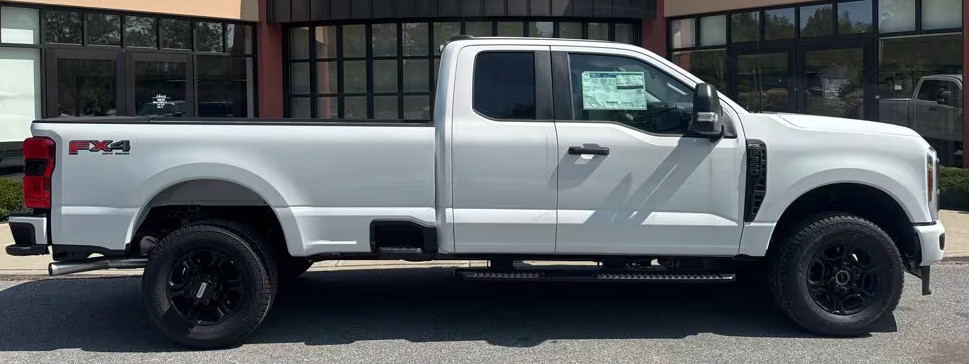
I am undecided. 🤷♂️ On paper it would be an excellent truck based on the features list for my needs, though I watch what is happening in the Middle East and gas prices, ⛽ and noting the 7.3L or 455 cubic inch engine with absolutely no fuel economizing features beyond the plastic valance up front which I am sure won’t survive many a snow bank, and the somewhat problematic variable oil pressure pump, that supposedly has been reprogrammed not to starve the lifters when excessively idling. 🛠️ The truck shows signs of having sit on the lot since last August, the rear hubs have rust on them, the brakes are a bit grabby from rust on the rotators, and I’m sure the dual batteries are not at their factory capacity at this point, and it has 80 miles on it, 16 miles from factory testing – and then I assume the rest for test drives. I also forgot how the base model Fords drive, much stiffer steering and brakes, and a rock hard plastic steering wheel compared to my old Silverado. It reminded me a bit too much like my parents Honda, minus all of the technology. So much plastic, sticky, hard steeling wheel. Definately work truck.
And yeah, a $63,500 OTD which is not what I’m willing to pay for essentially a gasser work truck, 🚧 that has no safety or convenience features, like braking assistance, blind spot monitoring or adaptive cruise control. Things that might save on insurance for the next 15 years. Tiny little screens, mechanical controls for everything. Heated nothing. Stuff that I think is more an annoyance then useful, but I shouldn’t pay for features the truck lacks. I am going to sit on my decision for a few days, see if the dealer follows up with a reduced OTD and then decide if I should put in my own OTD bid or just move on to another truck. If the truck sells, oh well. Lots others like it on dealer lots. Or maybe I’ll become a greenie and buy an electric car. 🔌 Maybe with the climate crisis, 🌎 and the Middle East blowing up, 🇮🇷 it’s silly to think about at big-assed truck with a big block engine and a diesel-transmission that shifts gears like well a commercial truck automatic transmission from the early 1970s. It is kind of fun. But not $63.5k kind of fun. And I don’t love the fleet white color, even with the nicer wheels and LED headlights that come with the STX package.


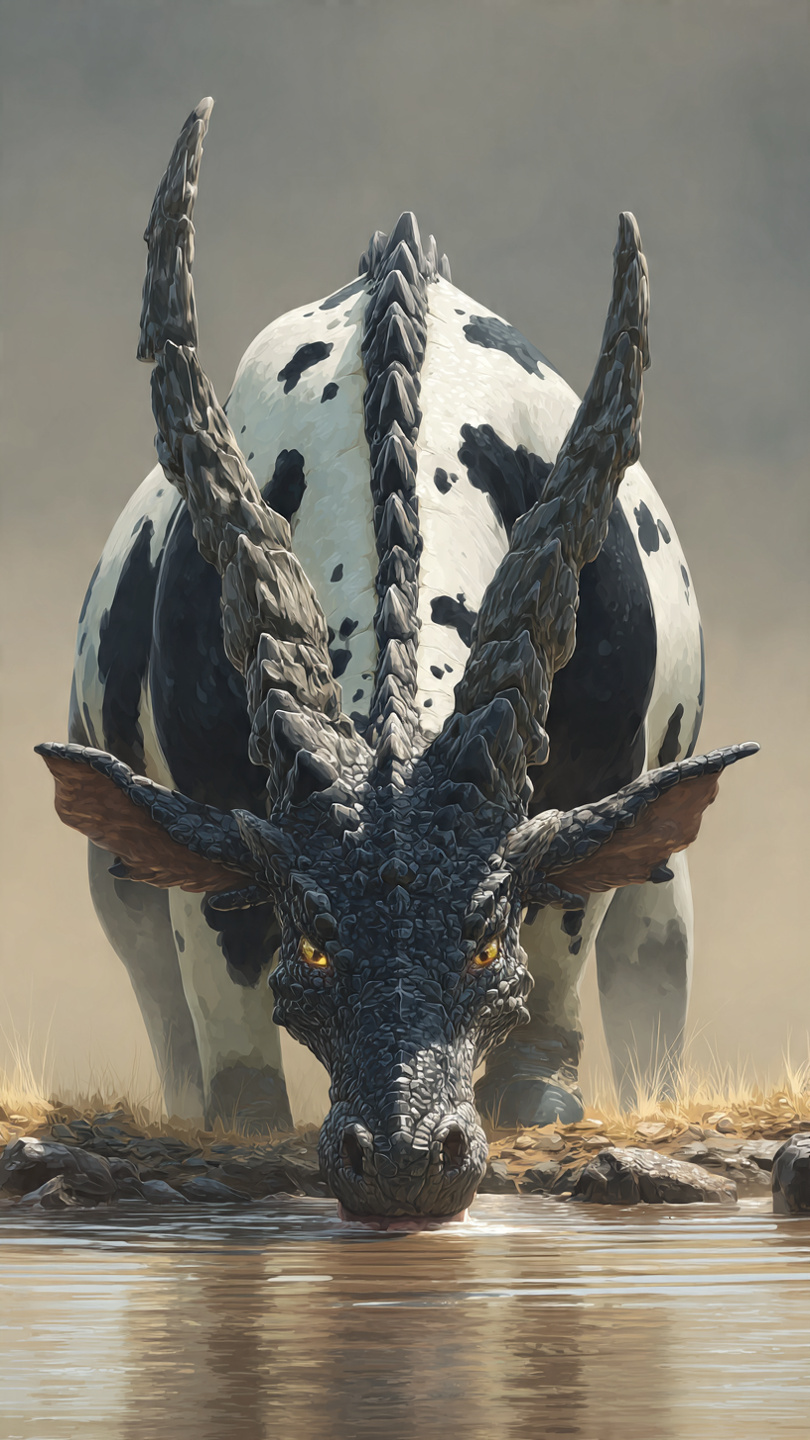
I test drove the Godzilla Holstein as the Iran crisis worsens 🐄
It’s a nice truck, though not as big or difficult as I might have thought it might be to drive, but I’m coming down from a half ton. I do really like the long bed – it would be awesome once I had a camper shell on it. The package it comes with while basic, has everything I want. On the other hand, it too much felt like driving my parents’ Honda minus all the cool technology. But the out-the-door price needs to comes down a bit, there was some cosmetic rust on the rear hubs, and while I love the big powerful engine, with the whole Iran situation, gas prices and availability are not guaranteed. I am going to chew over it for a ffew days.
Truck Shopping Day 🛻
Just visiting one dealership today, looking at a nice but quite overpriced, aged SuperDuty. But it will be interesting to see how this goes, even if I’m pretty certain not to buy today. At any rate, it will determine whether or not I want to keep looking at Ford or if I should consider other options.
I feel like I’ve studied the markets carefully, have a fair price to negotiate from,  and are ready to take a look and potentially buy a truck, but not today. I am a bit concerned about buying a truck that has been rotting for so long, but like anything if the price is right and the dealership and truck is right.
I told them I would be at work by 11 AM,  as today is a session day, and I don’t want to get bogged down or waste time making a deal today. Today is just for looking at defects on the truck, going for a test drive, developing a productive relationship with the salesman. Then if I decide to move forward, I will put in a bid for the truck, what I think it’s worth based on condition, market numbers and ultimately what it’s worth to me. Truck doesn’t have the slide-in camper certification, but it will have plenty of payload capacity, so I can add a sway bar later, but I’m leaning against a slide in camper.
Then I’ll ride to work.  We will see from there what my impression of the truck is and if I want to go with the SuperDuty or if I should test drive some other trucks. The way I look at it is it just a start to figure out what direction to go. Then I’ll work, head home, and get some sleep.
  I am so high strung about this all that I didn’t sleep well last night. Maybe I fear I’ll love the truck a bit to much.
Happy Tuesday 🌕
With maybe one of the last minor snow storms of the winter on the way, hopefully, the blood moon was not visible this morning, but the carrot pancakes were good though runny at first as I put too much water in the solution.
So glad with the snow 🌨️ melt I could ride the Rail Trail both ways to work yesterday. It beat some of the stress of dealing with car dealerships yesterday. Truth is that I hate driving 🚘 and Second Avenue was pretty stressful at times to ride with the traffic and parked cars. Bike trail is icy but well packed and not too rough to ride. Hopefully the mild temperatures and rain will thin out the remaining of the ice. 🚲
I did not sleep well last night, 🛏️ as the various dealerships I talked to yesterday where for the most part not pleasant to deal with. Keep listening to the news 📰 and reporting about the Iran war. 🇮🇷 And my SuperDoubts continue about the big truck with the whole Iran situation. I’ve started to look more seriously at Toyota Tacomas with the six foot bed, but they’re not that much cheaper and I’m not convinced the reliability is much better. You do get a lot more technology with the Toyota though, for good or bad, unlike the base HD work trucks. Like adaptive cruise control. And also electric cars, especially used electric cars, 🔋 they are so cheap for what you get. But I don’t want a commuter vehicle, but the price of fuel for SuperDuty gives me a lot of pause. Maybe I should look more at 6.8L Minizilla trucks. 😳 I also don’t love the look of me being in a big truck to my landlord, my friends, especially the more greenie and liberal persuasion. 🌎
And honestly, I kind of like not having a car, riding my bike everywhere. 🚲 Trash pickup isn’t an excuse to get a truck, nor the freedom of having fires in the woods. 🔥 March 16th is coming up, and all social media accounts are warning ⚠️ about coming fire restrictions and risk with spring brown season ahead. And don’t you even think of burning anything plastic, unless of course you are in frugal living group in a rural part of a free state where plenty of people live without trash pickup. 🤜 I keep thinking how much money I would save this summer if I skipped traveling, stayed close to home, and rather then doing a summer vacation just taking days off from work and going to bike rides around town, 🚲 maybe riding out to a State Forest like Cole Hill with just a hammock, some food, matches, and flashlight and doing nights up in the woods. 🏕️ I just worry a lot about gas prices sky rocketing, 🚀 ⛽ and all the costs of unreliable big Ford truck.
I got back both very large state and federal refunds this year, 💰 as I really over-estimated my withholding based on the previous year’s dividends and interest rates, but both of them fell last year. I was sure my tax forms would be rejected for mistakes as the refunds seemed to large, but my withholding needs to be adjusted. I was bit the previous year by not withholding enough, so I bumped things up way too much last year. 🤷♂️ I’m just glad my tax returns were approved, as while they were honest and accurate, I thought 💭 by the size of the refund. Plenty for the truck cap or a sizable down-payment on the truck. I know I made the government rich this past year but I didn’t want to get fined.
Truth is though I’m my toughest critic, 💢 and of course the dealerships want as much leverage as possible over me and accuse me of being difficult. But I’m also quite undecided and not very confident despite my months of study. Guess what, I have my position to defend, and if you don’t like it too bad. 🖕 I’m going to the Guilderland Town Board to argue for more land preservation tonight with the Save the Pine Bush, 🦋 much to disapproval of the some of leaders and developers. But you got to fight for what is right these days. 🇮🇷 I thought about going to some of the Iran War protests but it’s difficult to find time in my schedule.


Even More SuperDoubts
Some how I was disappointed when the first place I reached out would only give me a out-the-door price verbally on the phone, and all that wanted to do was get me in the shop. It’s fine, the verbal estimate was exactly what I expected, it’s a reasonable starting point and I do want to look at the truck up close before I do a deep dive into other trucks. I knew that would be their response – almost accusatory that I dare ask for a price in writing. I do want to get in the dealership, just to see the truck, though honestly I don’t care about the test drive as much as I want to look up and close and decide if it’s really worth my $60,000 or maybe more depending how much the dealers scam me on it. I knew the first few dealer interactions would be tough, but it will get easier as I go along.
I have my doubts. I like big trucks, and I find it to be such a step down to go Toyota Tacoma and I don’t know how I would fit all my crap in it. Maybe there is a lot of stuff I don’t need. And I’m watching gas prices climb, the climate warm, and just the shame associated with owning an enormous SuperDuty truck. I have my doubts about the reliability of such trucks, while I previously thought lifter and transmission issues were more rare, since joining several Godzilla groups my mind has changed, as has my mind about fuel economy – even if most people are towing far heavier loads then I ever would. Maybe I should look at an electric car. And getting rid of some of my camping gear, going more lightweight in the woods.
Increasingly though, I just don’t want a vehicle at all. I like riding my bike everywhere, and when it rains taking the bus. I like my world being a little smaller, getting to know my community better and not traveling so much. I feel like too often my life has become one of escape, spending weekends in the wilderness and not enough time locally, exploring what is close to home. I’ve learned how to survive this winter on the bicycle, overcoming some of hurtles, mental and else-wise.