The problem with “peak” theories is they ignore the law of supply and demand. As one learns in Economics 101, everything has a demand curve, which shows that as price rises, demand for a product declines. People look for alternatives when prices increase.
This curve is known as the price-elasticity coefficient, and is calculated by the “percentage change in quanity demanded of product x” divided by “percentage change in price of product x”. Some products are considered fairly elastic and other more inelastic, depending on how subsitutable one product is with another one.
Higher prices change both consumer choice and behavior. People will for and foremost look for alternatives. If no alternatives are avaliable, people will alter their use of a product, such as adopting more efficent techniques of use of a product, and then ultimately reducing consumption by choosing alternative methods of living that use less of a product.
For example, gasoline.
If gasoline prices go up, and people believe that gasoline prices will remain high, they will look at alternatives to gasoline, like E85 ethanol or gasoline made from sythentic petroleum. If that doesn’t work, they will over time purchase more fuel efficent cars, canceling car trips, taking public transit, and moving closer to where they work.
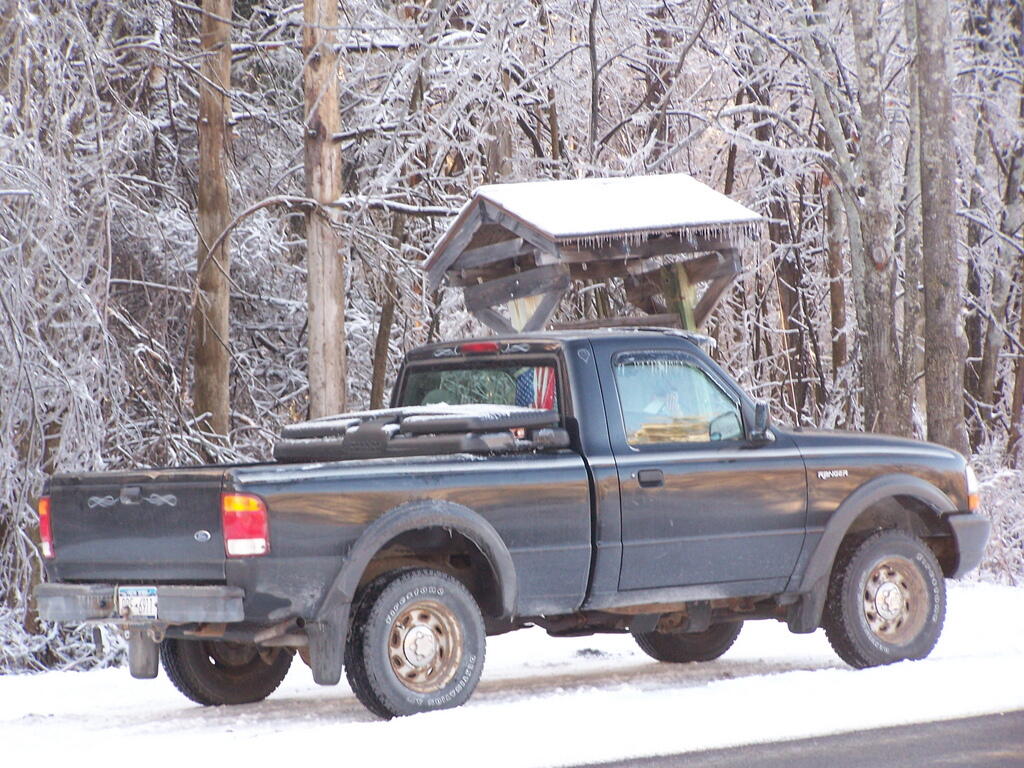
This may shock you but I do not care if gas prices are $2 a gallon or $10 a gallon tomorrow. While like most drivers I would prefer to pay less for gasoline, I am largely insulated from the high cost of gasoline. My truck gets around 20 miles per gallon of fuel and costs about 20 cents to drive a mile in fuel. Yet, I don’t really care much one way or another. My next truck might even consume more fuel then my existing one. I’m thinking of getting either a full-size extended-cab truck like a F-150 or Chevy Silverado — although many now have similar fuel rankings.
Higher fuel prices might even help me buy a bigger truck at a lower price. There will be less of a demand for full size truck should gas prices continue to go up. That’s all fine with me as I am all for saving more money when it comes to buying a new truck. Did I mention my 20 mile per gallon pickup truck uses less fuel then most Toyota Prisus on the road today? It gets fantastic gasoline mileage sitting in first gear with the engine turned off — for days at a time.
… I don’t really drive that much.
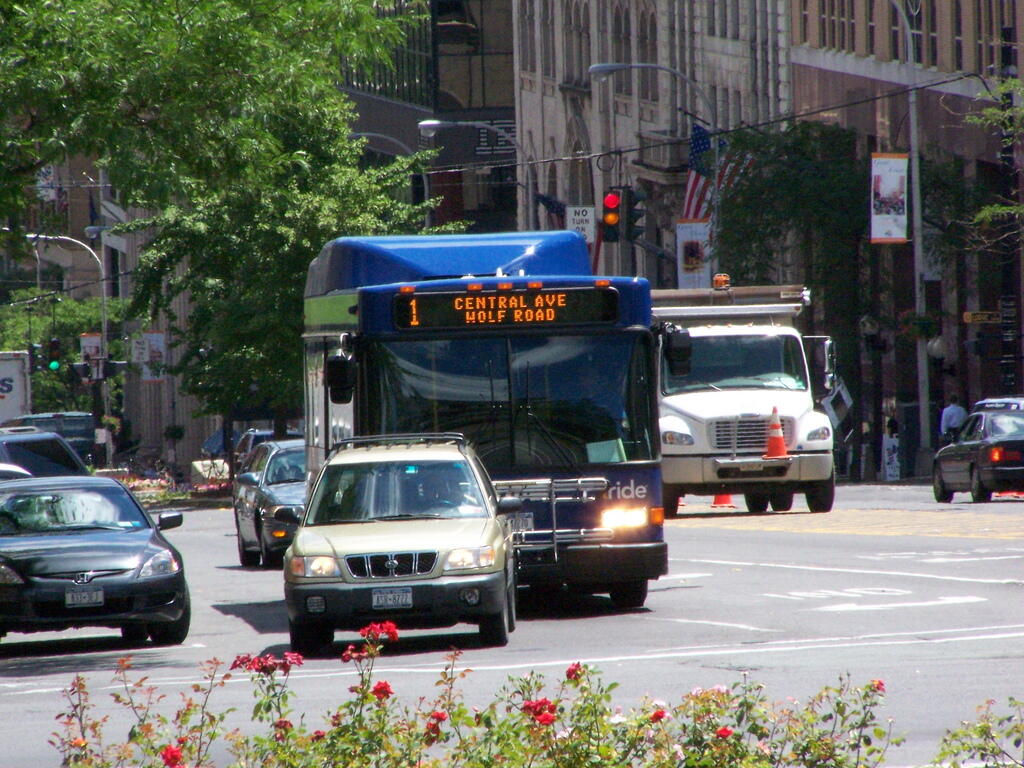
I take mass transit or my bike to get around town. I live within 3 miles of the city and can get around it faster on my bicycle then I can by car. I have yet to get a parking ticket for illegally parking my bike—all it takes is a tree or a lamp post to tie it up and find parking. No searching for parking spots! I do drive sometimes on the weekends. Yet, I drive sparingly and my average weekly mileage is about 75 miles (basically 150 miles for bimonthly camping trips). That means that even at 20 cents a mile, it only costs me about $15 a week in fuel (or at $10/gallon that equals an affordable $38 week in fuel). I haven’t changed my motor oil since January. Best of all driving is fun when I get behind my truck after a week of idling it, the truck feels so powerful.
Mass transit is not perfect in Albany. Yet it is doable by understanding it and knowing when and where the buses run. Throwing a bike on the bus makes it even easier, as there is greater flexibility at finding and catching a bus. There might be sometimes
Many people in our country are ignorant about electricity and the consumption of energy, even though they spend a significant amount of money purchasing electricity. Today I hope to shed a bit of light on this important issue.
Measuring Energy Consumed.
A watt is a precise measure of energy consumed to do a task. It is similar to horsepower and kilowatts, which are used to calculate larger amounts of energy consumed. There are:
Approximately 750 watts per each horsepower
Exactly 1,000 watts per kilowatt
Every appliance tells you how much electricity, under peak use, is consumed to make it work. A light bulb might consume 100 watts, an electric hair drier might consume 1100 watts of energy. This information can be used to compare the efficiency of similar devices, and how much it will cost you to use the device.
The Kilowatt Hour.
Many of us who carefully read our electricity bill will notice that the rate we pay is based on a connection charge around $17 a month plus the number of kilowatt hours consumed. A kilowatt hour (Kw/h) is:
An average of 1,000 watts consumed over an hour
If you had only one appliance in your house, a 100 watt light bulb left on constantly, then your electric bill would state you have consumed 73 Kw/h of electricity over the month. There are on average, 730 hours of time per month.
Convert 100 watts to kilowatts equals 0.1 kilowatts
0.1 kilowatts times 730 hours equals 73 Kw/h of electricity.
Few people leave 100 watt light bulbs turned on 24 hours a day, 7 days a week in a month. Most of us turn lights and appliances on and off, and unplug them from the wall when they are not being used. Therefore, to understand how much electricity you really are using you must calculate the time an appliance is being used over a month.
A clothing iron might use 1,100 watts of power when the heating element is on, as indicated by the red light on the iron. An iron might have it’s heating element on about half the time it is plugged in. If you iron your shirts and pants 7 days a week, 5 minutes a day, that is 35 minutes a week. As the iron is only on half of that time, it’s consuming power 15 minutes a week.
Therefore, your electric use for ironing your clothes would equal:
0.833333 hour a day times 30.4 days times 1.1 kilowatt equals 2.8Kw/h
Few of us are are that crazy about ironing, but that gives you an idea of the electricity consumed by your iron if you where to use it that much. Being concerned about energy use, you purchased a 26 watt compact florescent light bulb that is on 4 hours a day. Believe it or not, in a month a compact florescent light will consume more energy, because it’s used far more in a day, despite it’s much lower wattage.
4 hours a day times 30.4 days times 0.026 kilowatt equals 3.16 Kw/h
Therefore, despite the fact the 26 watt compact florescent bulb is used much less, because it on much longer, it’s energy consumption is much higher then that of the far greater wattage clothing iron. Replace it with a regular 100 watt light bulb and it would be four times higher.
4 hours a day times 30.4 days times 0.1 kilowatt equals 12.6 Kw/h
Heating appliances consume the most electricity, followed by cooling appliances, large motors, then small loads like electronics and lighting. Your light bulbs and clothes iron are probably one of the smallest consumers of electricity in your house, especially if not left on for long hours. Other sources add up to much more quickly.
What You Pay.
Everybody is charged about $17 a month for the privilege of being connected to the electrical grid. On top that you are charged per kilowatt hour for a variety of fees, that add up to about 15.5 cents per kilowatt/hour consumed. Depending on how many kilowatt hours you consume, it can add up be a significant amount of money.
The cost of the clothing iron’s electricity would be about 44 cents a month. The compact florescent will cost you 49 cents a month versus the regular light bulb at $1.95 a month. Indeed, as this shows in New York, a 26 watt compact florescent bulb can easily pay itself back in a month and a half. Remember, however your biggest electricity consumers are those devices that are high wattage and used a long time.
It is most worthwhile to consider upgrading older appliances in your house, such as electric hot water heaters and refrigerators. It’s possible with New York State’s electricity cost, that your pay back in energy savings would be less then a years’ time.
What The Environment Pays.
It takes close to pound of coal to produce a kilowatt hour of electricity. That coal had to be removed from the earth by blasting off mountain tops, or sending miners into dangerous mines subject to collapse. For every megawatt or 1,000 kilowatts of energy produced it takes 1/2 ton of coal to be mined, causes 6 pounds of sulfur dioxide to be released into the environment, and over one ton of carbon dioxide to be released.
That’s a lot of resources and pollution just to make your light come on. While many of our New York power sources are cleaner then coal, all of them have significant environmental impacts. Dirtier sources of power can be utilized less with less demand. Power plants can usually reduce their output and consumption of resources when there is less of a demand for their services. Breathe easier by using less electricity.
Think About Energy.
Think about energy. It matters. Energy production is one of the greatest polluters in our country, and if we all choose to find ways to consume less electricity, we will have less pollution. Energy is also one of our biggest expenses, so if you find ways to conserve, you can save real money these days.
Politicans and many environmental adovates are always discussing the need for more efficent cars. They note that a 20 MPG car uses 1/3 more fuel then a 30 MPG car if driven the same amount of miles.
But why do we have to drive so far? As a nation we are always traveling further and further. Indeed, while are cars are much more efficient then decades ago, we end up using more gasoline as we drive further. Nobody wants to give up their travel or going on vacations. Nobody wants to be prevented from going to the woods or being able to drive where-ever and whenever they want to go. It’s nice to be able to hop in our cars and go to the stores on the weekend or whenever it’s convenient.
Yet, there is a type of driving that nobody enjoys, yet so many are stuck with doing. This type of driving is commuting. There is not much freedom or enjoyment in driving back and forth to work—the same way—fighting traffic. There are times I like to take my truck to work, such as when I need to leave early to stop and get things on the way to or from work. But I also enjoy mass transit. Not only does it save money it also saves time and allows you to relax as your transported to work.
It is enjoyable to use mass transit—when the system works. The new CDTA buses are relaxing, a perfect place to relax and listen to your headphones or work on your laptop while you are transported to work. Yet, for many of us good mass transit is hard to come by, with buses running infrequently to major destinations. If your not using your car or truck all the time for commuting, then you are skipping all of those carbon dioxide and toxic emissions. Your fuel economy of your truck doesn’t really matter one way or another for occassional use.