Energy πŸ“

πŸ—ΊοΈ Maps πŸ–ΌοΈ Photos πŸ“½οΈ Videos

Why is NYSERDA in the Pine Bush?

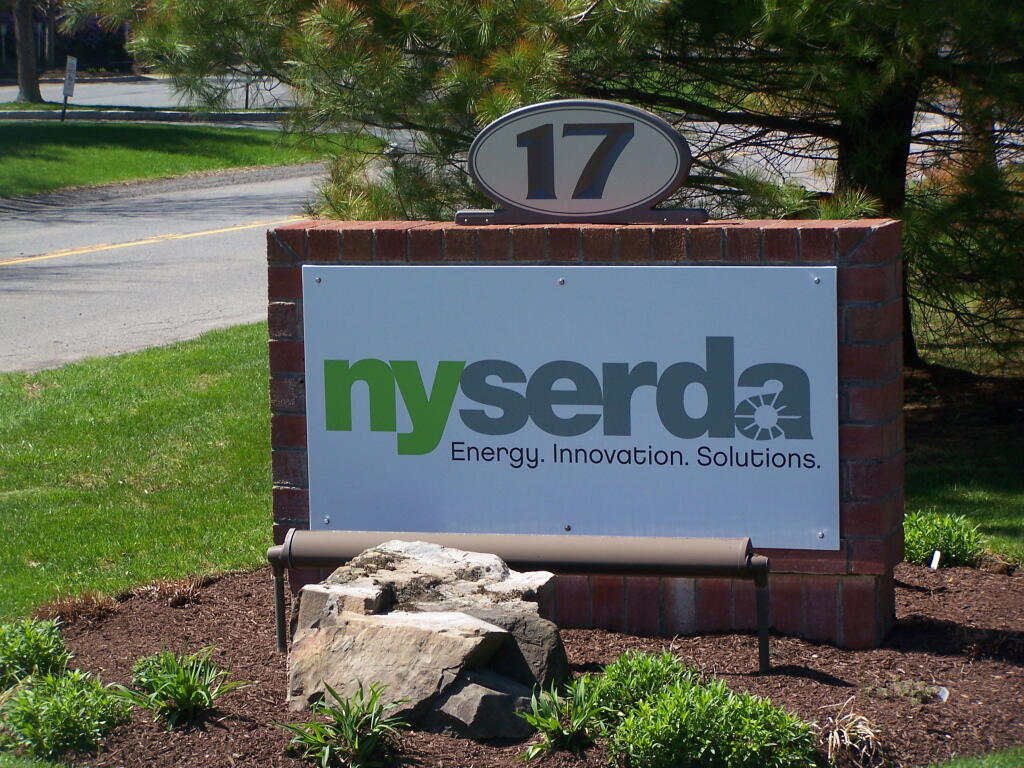
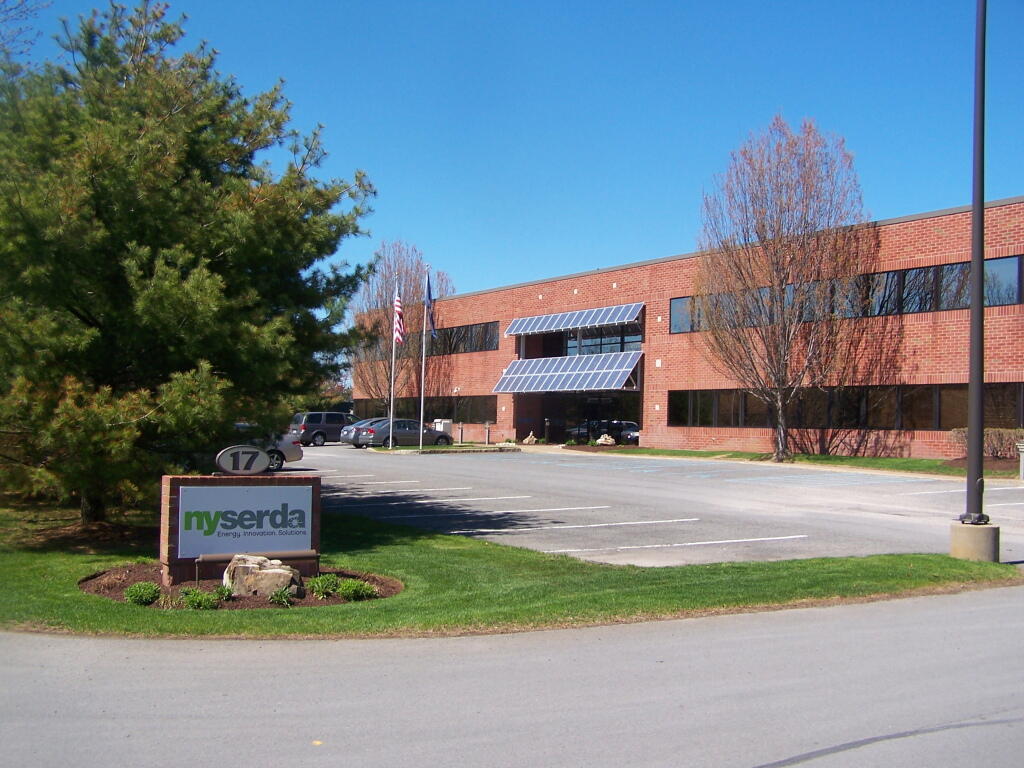
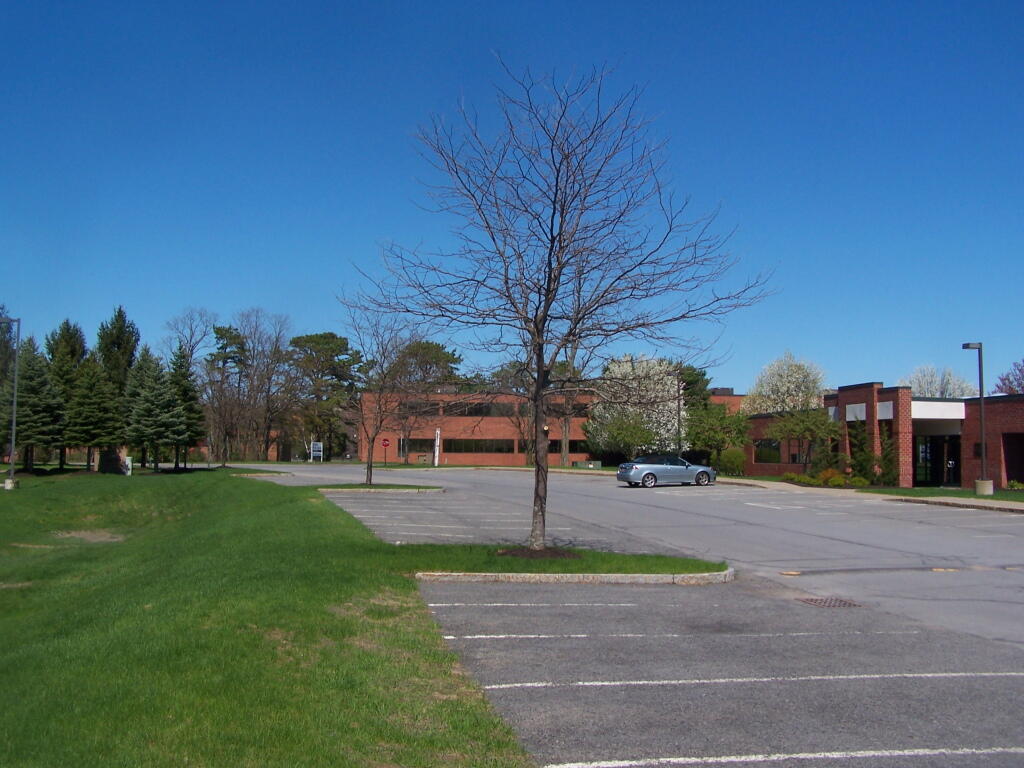
One of the things that bothers me is that NYSERDA, the New Yor State Energy Research and Development Corporation is located in the Albany Pine Bush in Corporate Circle, in a location primarily serviced by automobiles with minimal if any bus service through the CDTA ShuttleBee. Based on NYSERDA’s location, it is highly unlikely that any employees or visitors ever come to it using mass-transit. Most employees use gas guzzling private automobiles.

NYSERDA in the Pine Bush

Plenty of Real Estate Downtown,
Much Free to Use…

At the same time, there is a large amount of vacant office space downtown, that should be put into use. It’s quite possible that there would be sufficient room to move all of NYSERDA’s operations to a portion of 625 Broadway, home to the Department of Environmental Conservation and Environmental Facilities Corporation. With recent layoffs and the hiring freeze, there probably is ample space in there.

If not, as New York Times recently documented, the 12 floors of the Corning Tower that are currently sitting vacant would be an ideal place for NYSERDA. Quite a bit of scientific research and bureaucratic work gets done in the Corning Tower by the Health Department and Health Services Corporation, and it seems only natural for a public corporation like NYSERDA to consider locating to this location.

Alternatively, NYSERDA could consider renting a private building downtown like the Arcade Building. Many of these buildings have been vacant for a long time, and it’s possible that the rent they could get is far below what they paid for the sprawl rent in the Albany Pine Bush. While they wouldn’t get the parking spaces next to their offices downtown, what they would trade that in for would be less air pollution and lower energy consumption.

NYSERDA's Green Building

NYSERDA Should Be Setting an Example …

Rather then focusing on super-cars that only wealthy state bureaucracies can afford, they should be focusing on promoting compact communities serviced by mass-transit. While NYSERDA can’t force it’s employees to live in Albany, nor should it necessarily do as such, it can promote the benefit of having a workforce that works downtown in a highly energy efficient fashion.

The agency can promote the ease and convenience of working downtown, along with the energy and time savings. By not including significant parking in their relocation, they encourage employees and visitors to come using mass transit. NYSERDA could go farther and educate all existing and new employees about the many Park and Ride sites and bus service in the Capital Region, along with providing discount or free bus passes to all employees and visitors.

We need to think seriously about investing more into mass-transit . Transit is the future for our urban-areas, and all large employers of the future need to be located near transit lines that are regularly serviced, and reduce employee’s commuting distances.

… NYSERDA: It’s About Making Smart Energy Choices.

Gazing at Beautiful Columbia Circle

Open Pine Bush

Home Savings Bank Buildings

Map: Goldmine Stream Falls
Map: Coulumbe Creek Trail

New Power Plants Economics Compared

A local environmentalist put together a spreadsheet with the data from the November 2010 Updated Capital Cost Estimates for Electricity Generation Plants. It shows why most new power plants constructed in recent years use either natural gas or wind, as by far they are the most cost-effective fuels. Evens with even a modest carbon regulations, new coal plants will become the exception and not a rule. It seems with the current economics, coal plants already seem like a waste of money and non-economic.

Note: Power Plants come in all different sizes. This analysis normalizes plant costs down to lifespan cost per kW during the plant’s lifespan, typically around 75 years. Therefore, a 500 MW Natural Gas: Advanced Combustion Turbine (CT) Plant based on the table, operating at full capacity would cost = $671.70 x 500,000 = $335 million over it’s lifespan.

Turbine

Less Expensive Types of New Plants.

Fuel – Plant Type Capital Cost
(per kW/lifespan)
Fixed Operating &
Maintenance Cost
(per kW/lifespan)
Total Costs
(per kW/lifespan)
Versus Average
New Plant Types
Natural Gas: Advanced CT $665 $6.70 $671.70 -84.13%
Natural Gas: Conventional CT $974 $6.98 $980.98 -76.82%
Natural Gas: Conventional NGCC $978 $14.39 $992.39 -76.55%
Natural Gas: Advanced NGCC $1,003 $14.62 $1,017.62 -75.96%
Natural Gas: Advanced NGCC with CCS $2,060 $30.25 $2,090.25 -50.62%
Onshore Wind $2,438 $28.07 $2,466.07 -41.74%
Coal: Dual Unit Advanced PC $2,844 $29.67 $2,873.67 -32.11%
Hydro-electric $3,076 $13.44 $3,089.44 -27.01%
Coal: Single Unit Advanced PC $3,167 $35.97 $3,202.97 -24.33%
Coal: Dual Unit IGCC $3,221 $48.90 $3,269.90 -22.75%
Coal: Single Unit IGCC $3,565 $59.23 $3,624.23 -14.38%
Biomass BFB $3,860 $100.50 $3,960.50 -6.43%
Geothermal: Binary $4,141 $84.27 $4,225.27 -0.18%

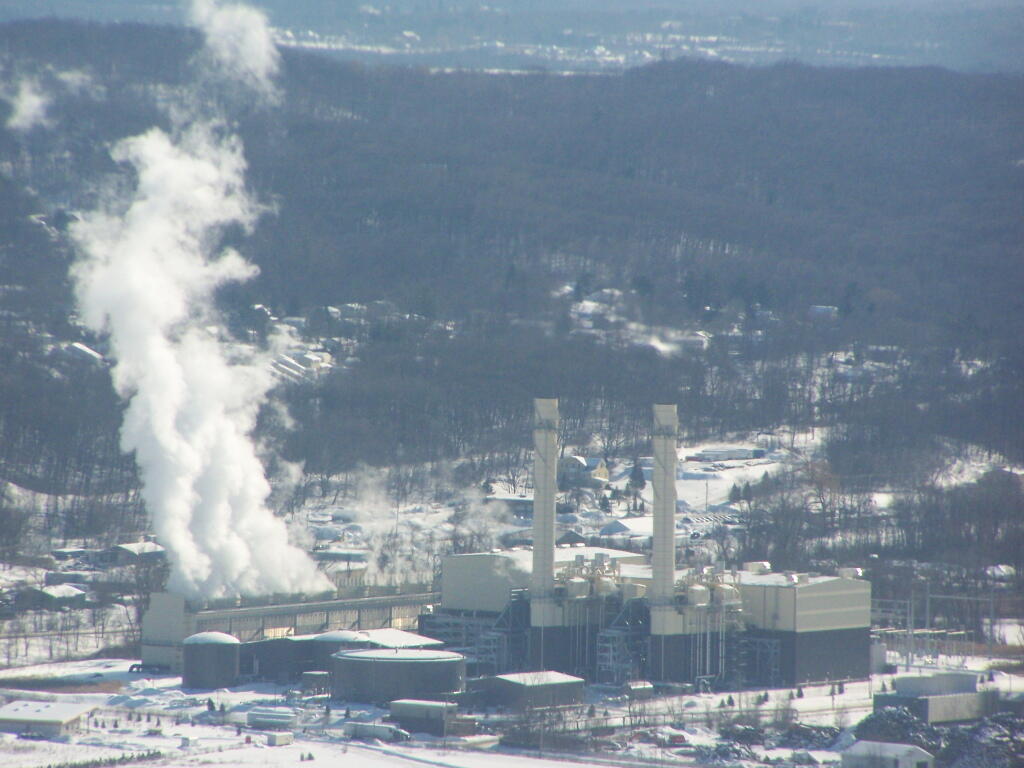
Rensselaer Besicorp Power Plant

More Expensive Types of New Plants.

Fuel – Plant Type Capital Cost
(per kW/lifespan)
Fixed Operating &
Maintenance Cost
(per kW/lifespan)
Total Costs
(per kW/lifespan)
Versus Average
New Plant Types
Coal: Dual Unit Advanced PC with CCS $4,579 $63.21 $4,642.21 9.68%
Solar: Thermal $4,692 $64.00 $4,756.00 12.36%
Solar: Large Photovoltaic $4,755 $16.70 $4,771.70 12.73%
Coal: Single Unit Advanced PC with CCS $5,099 $76.62 $5,175.62 22.28%
Nuclear: Dual Unit $5,335 $88.75 $5,423.75 28.14%
Coal: Single Unit IGCC with CCS $5,348 $69.30 $5,417.30 27.99%
Geothermal: Dual Flash $5,578 $84.27 $5,662.27 33.77%
Hydro-electric: Pumped Storage $5,595 $13.03 $5,608.03 32.49%
Offshore Wind $5,975 $53.33 $6,028.33 42.42%
Solar: Small Photovoltaic $6,050 $26.04 $6,076.04 43.55%
Natural Gas: Fuel Cells $6,835 $350 $7,185.00 69.75%
Biomass CC $7,894 $338.79 $8,232.79 94.51%
MSW Incineration $8,232 $373.76 $8,605.76 103.32%

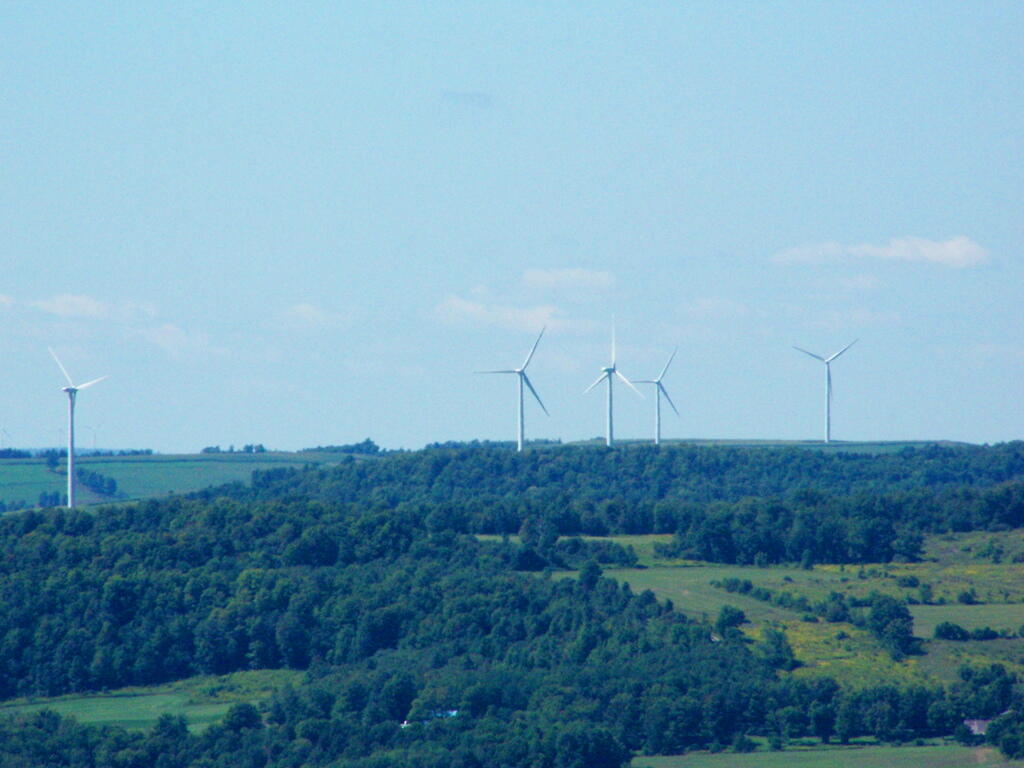
Wind on Mountain

Map: Battery Diagram
United Steaks of America map: If each state could have only one meat, what would it be?

Japan’s Rebirth May Save the Planet

Japan’s partial meltdown and destruction of three or more nuclear reactors at the Fukushima I Power Plant may finally force the world to rethink it’s energy policies. Japan’s future relating to these destroyed nuclear plants looks grim, with a great possibility of that at least some nuclear plant operators will die, and other residents around the plant will die slow and horrific deaths from cancer. Crops will be contaminated and animals will get sick and die. Nuclear radiation is nasty stuff.

Much of Japan’s recent history is surrounded by tragic consequences of Hiroshima and Nagasaki bombings, that not only killed thousands upon their initial explosion, but killed thousands more in the following years as the doses of radiation stimulated cancers and caused miscarriages. While the dropping of the atomic bomb and the lives it took is a distance memory, and evil potentially just as great if not greater has been unleashed over Japan. There ought to be a realization that the nuclear age must end.

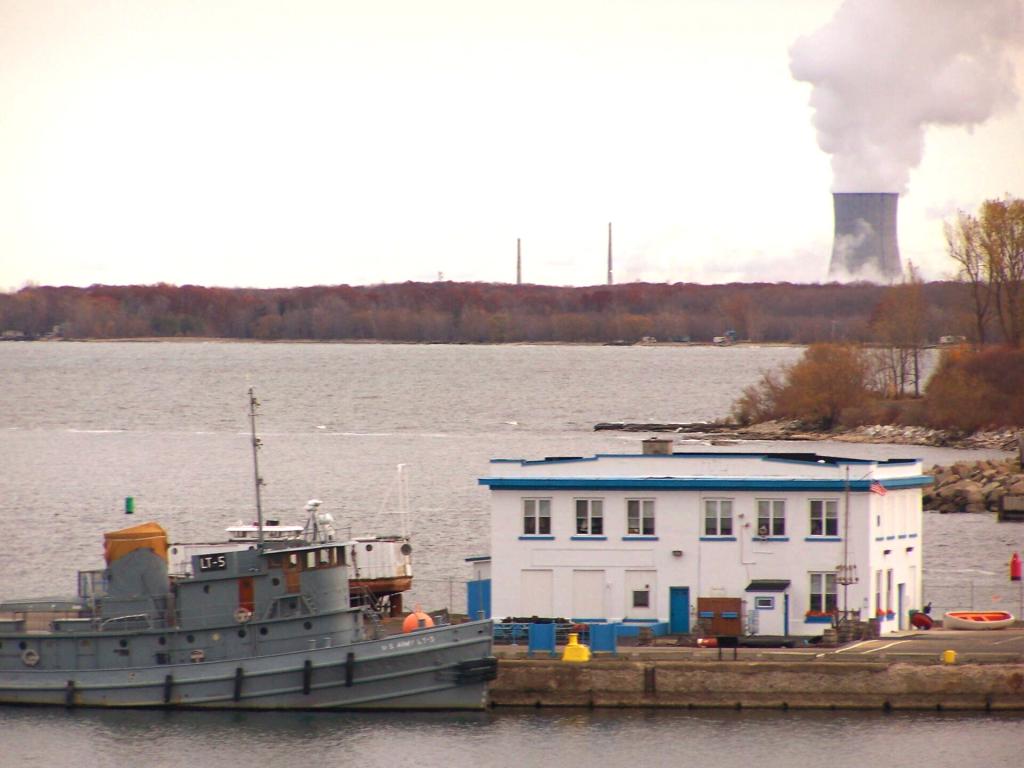
Tugg Boat and Nuclear Plant

The Japanese are certain to search for new energy sources to replace these existing nuclear plants. While Japanese are ready adopters of high technology, they are certainly are now aware of dangers of nuclear power and are going to want to shy away from it. Being an island nation, and being so aware of the dangers of climate change, they probably are not going to welcome in a large coal or natural gas plant that produces large carbon emissions to replace the now destroyed and forever unusable nuclear plants. Likewise, Japan has to import almost all of it’s fossil energy, so becoming more dependent on fossil fuels is a recipe for economic stagnation.

What can Japan do to replace these destroyed power plants? It’s not clear, although the unconventional alternatives to new fossil and nuclear generation seem likely. Japan can go on a massive campaign to reduce electricity consumption and build out renewables. They can build a smarter grid, where appliances reduce their electrical load automatically to ensure a need for less surplus capacity. They can make massive investments in renewable energies like off-shore wind and wave turbines. They can require buildings to have solar cells. They can make saving electricity a national priority.

Power

Japan may have the chance to build the energy infrastructure only dreamed and theorized by Climate Activists in other countries. Yet, if Japan can do it, other countries will not be far behind in copying their successes. Whatever Japan does to rebuild will be an indication for energy industry of the future.

Being Uneconomical for an Uncertain Future

.There is a common line of thought that argues that we should undertake a massive restructuring of the economy, even if it has no current clear benefit, in preparation for some dramatic future change like climate change or peak oil. Folks like Bill McKibbean have the logic, unless we make drastic changes now, the future will be bleak.

Their logic reminds one a lot of the logic of a High School Guidance Counselor, pushing over-priced college educations at so-called “select institutions” that are very over pricd. They argue unless one gets an expensive college education, the future will be bleak. They say, unless you go seriously in debt, you will have no future and be without a good job.

Trees Lines

Nobody today can tell us for sure about when or if climate change will occur, or for that matter what the impacts of peak oil will be. We have projections and models that extrapolate data based on today’s conditions and projected changes, but they probably are not accurate as effects rarely are linear. It�s quite possible that effect our growing use of fossil fuels may be far different then anything yet predicted.

Yet, it�s also hard to object to efficiency standards and pollution controls on power plants that benefit society now. More energy while burning less fuel will benefit the economy by lowering costs over the long-run. More fuel efficient cars, while possibly more expensive up front, will provide drivers with lower fuel bills over the car�s life. Good standards that improve efficiency, conserve resources, and reduce pollution, help us now.

Medusa

I disagree with folk like Bill McKibbean who argue for a radical transformation of the economy based on a projection of climate change or peak oil. We should work to conserve resources and clean up our generating plants, but not because of a future projection, but to improve economic efficiency and the quality of our lives today. If with incidentally also help change the projection for bad things to happen tomorrow, then all the better.

My Comments on State Climate Action Plan

Climate Action Plan
NYSERDA
17 Columbia Circle
Albany, NY 12203-6399

Re: Climate Action Plan Interim Report

I am deeply concerned about the Climate Action Plan put forth by NYSERDA and other interested parties. Rather then advocating for sustainable, local communities, it advocates for large centralized facilities such as massive waste incinerators, massive power plants, and massive private automobile infrastructure.

Our over-reliance on such large centralized facilities, is largely responsible for environmental crisis we face. Climate Change Emissions are a symptom of our societys unsustainable nature. Its mother natures Engine Malfunction Light. The shocking changes, already underway in our ecosystem, demonstrate a multitude of problems that can not simply be fixed by sticking a better scrubber on our smoke stacks. Instead, we need a state that emphasizes sustainability, encourages sustainable acts, and builds infrastructure that gets us towards sustainability.

Here are several proposals in your report that create grave concerns and there more sustainable, lower cost solutions. Most sustainable solutions are not high-tech or even expensive, but require changing both governmental policies and infrastructure in minor ways to promote more climate-friendly actions. Lets not follow the insane policies of the past, that have brought on this Climate Crisis!
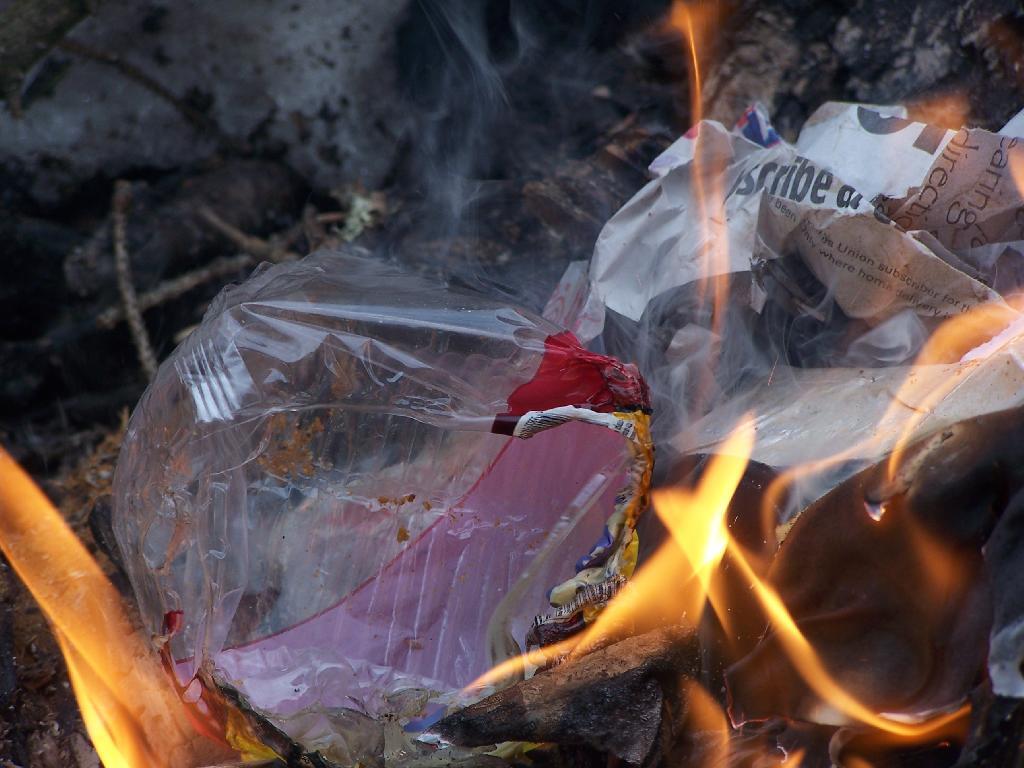
Cookies Box Go Up in Smoke

Zero-Waste vs Garbage Incineration.

The Climate Action Plan is right to be concerned about fugitive methane emissions from landfills. The Plan suggests the construction of various forms of trash incinerators such as mass-burn or gasification or plasma-arc to eliminate organic waste from going into landfills. Yet, this is a very bad idea. Trash incinerators destroy valuable materials and recover minimal amounts of energy. Their smokestacks belch toxic materials into air, many compounds not yet fully understood. Waste materials that could be feedstock for industrial or agricultural purposes are destroyed in incinerators.

All forms of trash incinerators (be it refuse-derived fuel, mass-burn, gasification, or plasma-arc), take the carbon in garbage, combine it with oxygen, and release it directly in the air through a smoke stack as carbon dioxide. An average ton of garbage incinerated equals a ton of carbon dioxide in the air. It also represents many more tons of carbon dioxide in materials destroyed in the incinerator. Organic waste that could fertilize the ground are destroyed in incinerators, man-made materials like plastics burned in incinerators could be an industrial feedstock using a fraction of energy of new products.

Garbage Incinerators are expensive, the must always burn a full load to pay off their costs, always maximizing carbon emissions. The goal of any Climate Action Plan should NOT be to maximize carbon emissions! Garbage incineration is very expensive, it literally burns the publics cash, that could be used to improve recycling of technical materials and organics recovery through composting. Choose the sensible, cheaper alternative.

Rather then promote waste-incineration, the report should support a ban on organics disposal in landfills and incinerators, along with supporting Zero-Waste goals. The state should look towards minimizing waste, and recovering waste through recycling and source-separated organics processing such as anaerobic digestion or in-vessel composting. Reuse through secondary sales of used products should also be promoted. The Plan should call for garbage incinerators to be phased out, along with large landfills. Small, stable residual waste landfills are acceptable, only after all organic and usable technical materials are recovered first.
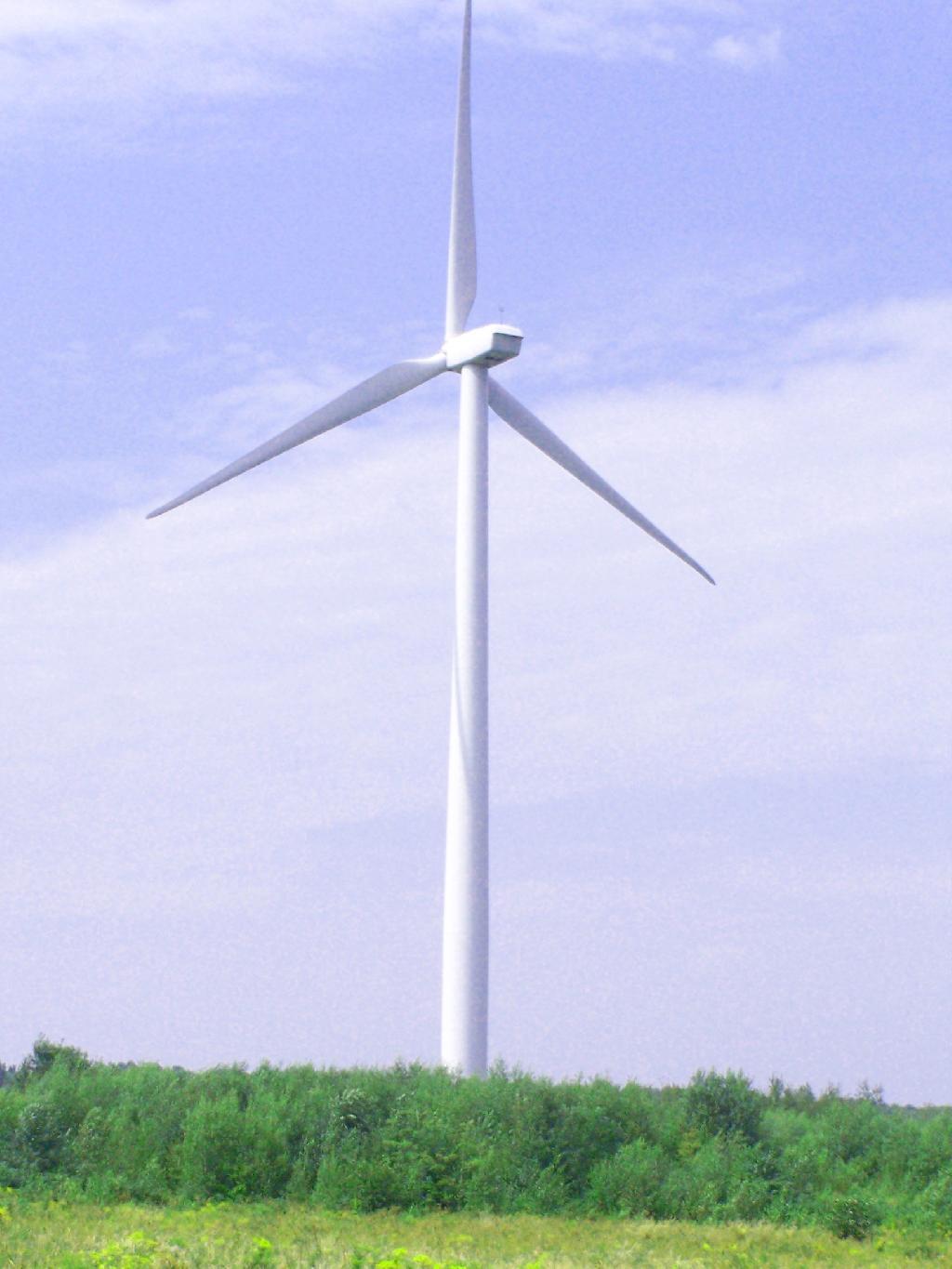
Turbine

Cleaner Energy vs Nuclear Power.

The Climate Action Plan trumpets Nuclear Power as the solution for large amounts of carbon-free base-load power. As the report correctly notes, at all times the electrical grid must be supplied with sufficient sources of energy to keep the lights on. Nuclear Power is a problematic proposition, as it requires large amounts of heat-trapping HFC gases to process the fuel, is very expensive, creates dangerous waste byproducts, and puts millions of New Yorkers at risk of serious injury or death. A terrorist strike or serious mistake at a nuclear plant such as Indian Point could kill millions of New Yorkers and destroy vast acreage of land forever. There is no repository nuclear waste, all of it must be stored on site of nuclear plants for the foreseeable future.

Nuclear Power is very expensive. It literally burns the publics cash, that could be used to promote energy conservation, and bring new renewable sources of electricity online. A single nuclear plant is estimated to cost $5-10 billion dollars, money that could instead go to subsidize the purchase of solar cells on residential houses, wind turbines in rural areas, micro-hydro and anaerobic-digestion on farms, and small-hydro on rivers and streams. Money spent on nuclear plants could also help people better insulate their houses. Choose the sensible, cheaper alternative.

Conventional fossil-fuels and clean biomass systems, have an important role in filling in the gap between renewable sources of energy and the needs of electric grid. Fossil fuel plants should increasingly serve to meet peak load, and balance the fluctuation of renewable sources of energy, and not provide base load power. Natural gas plants are particularly good at generating power to meet peak demand as necessary. In addition, consider new pump storage plants like Gilboa Power Project, in an environmentally sensitive context. Consolidated Edisions Storm King Pump Storage was a terrible idea.

The Climate Action Plan should emphasize conservation of energy, renewable energy, and especially small-scale sources of renewable energy like solar and micro-hydro. Continue the Regional Greenhouse Gas Initiative, tighten limits to force electricity companies to build more renewable sources. Further develop the smart-grid, and call for the aggressive promotion of Net Metering. The plan should call small scale electricity generation, being as common as heating systems in houses. Call for phasing out of all nuclear power, starting by closing Indian Point in 2012.
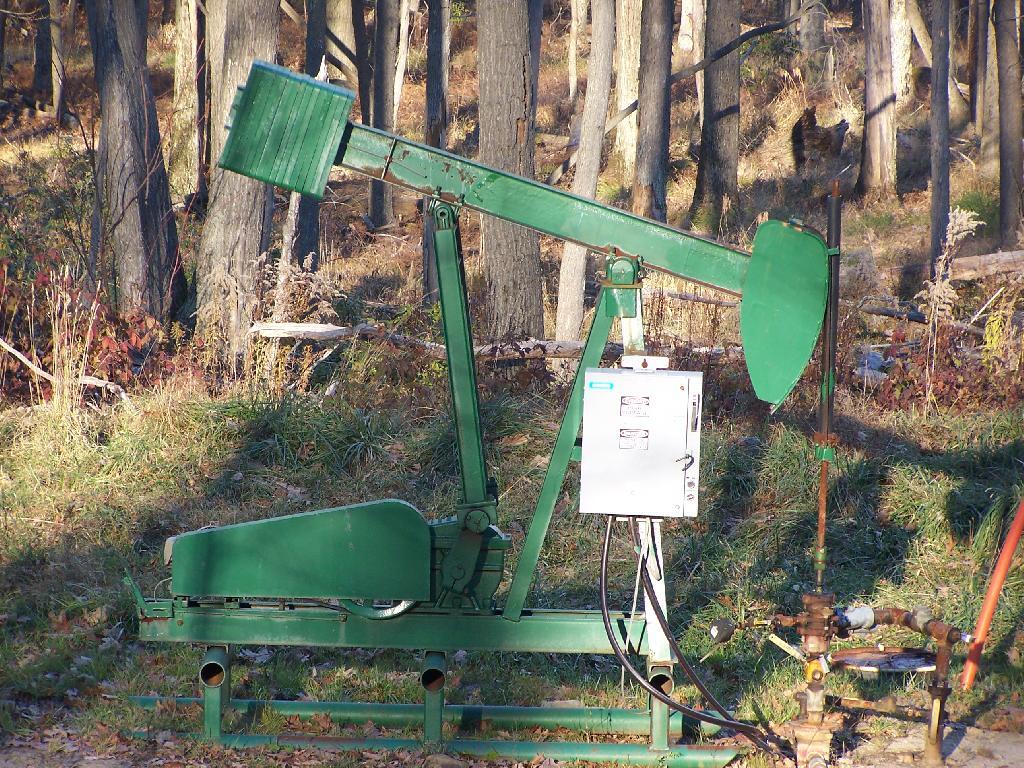
Oil Well

Burn Less Fossil Fuels vs Carbon Sequestration.

The Climate Action Plan promotes Carbon Sequestration as a solution to carbon emissions from Power Plants. Carbon Sequestration is an unproven technology, in regions where it has been tested, there is growing evidence that carbon dioxide is peculating back up through the ground, damaging water supplies and being released back into the atmosphere. While this is seriously troubling, even more troubling is the amount of energy required to sequester carbon from power plants.

Current estimates suggest that 40% of a power plants energy is required to sequester carbon. That means 40% more coal must be mined, 40% more oil or gas must be removed from the earth. Carbon sequestration would mean 40% more landscapes would be defiled, 40% more water wells would be poisoned by hydrofracking, 40% more toxic non-carbon dioxide emissions would enter the air. From an broader environmental perspective, carbon sequestration will devastate habitats and accelerate the global decline of our plant. We should not burning more fossil-fuels just to sequester carbon.

With carbon sequestration, 40% more fossil fuel burned means 40% higher energy prices, not including the cost of actually sequestering the carbon. Money spent on mining all this extra coal or drilling for all this extra oil, could be better spent on conservation or renewable sources of power. Choose the sensible, cheaper alternative.

Instead the solution is make fossil fuels the energy source of last resort. Use lower-carbon fossil fuels like natural gas or oil rather then coal. Develop more renewable sources of power, use renewable sources to make up the majority of the base load. Use fossil fuel plants whenever necessary to make up the difference in electricity generation. Phase out fossil fuel plants, dont waste the public’s money on carbon sequestration.
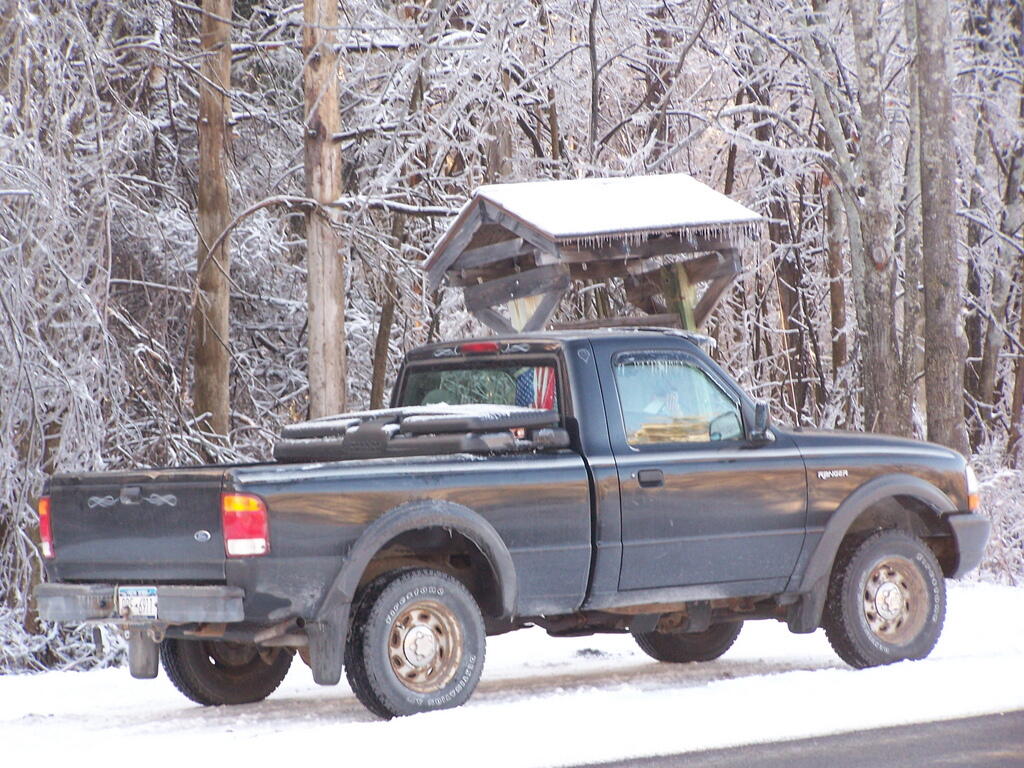
Pickup with Ice

Public Transit and Walkable Communities vs Electric Cars.

The Climate Action Plan triumphs Electric Cars as the preferred solution for transportation. The plan incorrectly argues that private automobiles must forever be the most common way people get around cities. Electric cars are a new technology, while promising, probably have benefits much over stated by the report. It is very energy intensive to move 1-2 tons of steel down the road, and electrical energy is very technically challenging to store in large quantities.

It is possible that in the future, batteries will be developed to allow private automobiles to make short-trips around town, like the Chevy Volt. Someday it may be possible to even power large pickup trucks like the Chevy Silverado electrically for a short distance around town. Yet, due to the difficulties of storing large amounts of electricity, and the length of time required to chemically store large amounts electric power in batteries, it should not be assumed that we will see an all-electric fleet of vehicles in the foreseeable future. Towing the power-boat to Adirondacks behind your Chevy Silverado, probably wont be powered all by electricity, even 50 years from now. Such technology seems unrealistic. The Climate Action Plan should realize cars will continue to get at least a significant portion of their energy from fossil fuels.

Moreover, electrical cars get their energy from some source. While we hope that source is renewable, like from solar cells on peoples houses, the reality is the vast amount of electricity to power an urban fleet of cars is likely to come from fossil-fuels for the foreseeable future. Electricity does not come from god. The Climate Plan should also reflect that many if not most electricity powering cars will come from fossil-fuels that generate carbon emissions, for decades to come. Private automobiles even electrically powered cars discriminate against the young and elderly, and the disabled. Rather then focus on this high tech proposal, the Plan should: Choose the sensible, cheaper alternative.

While electric cars are futuristic, the lowest cost and largest reductions in carbon emissions will come from building walkable communities and expanding and improving mass-transit. Make it so people can leave the Chevy Silverado parked in their driveway for day to day routines. As the Capital Region Transit Authority showed in Schenectady, simply modernizing bus timetables, based on current needs, can increase ridership by 20% while not increasing service. Adding new transit services is very cheap compared to building new superhighways. Building sidewalks can reduce the number of trips to the store in private cars. Giving tax incentives for retail to locate in cities, serviced by transit, can further reduce carbon emissions. Done right, building walkable communities, serviced by quality public transit, can reduce carbon emissions by private automobiles by 80% or more, with the existing fleet of cars and trucks. Parked cars release NO climate change gases nor do they require new freeways cut through animal habitats.
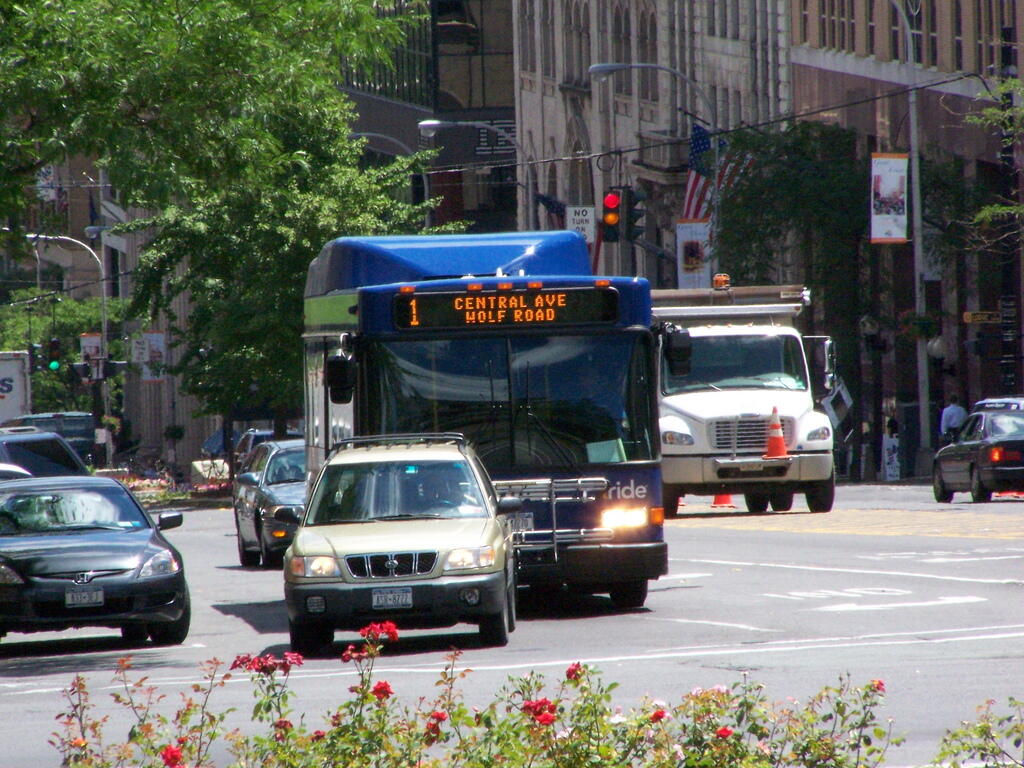
Hybrid Bus

Good Transit vs High Speed Rail.

The Climate Action Plan calls for High Speed Rail. While a nice goal, one possibly to consider in the distant future, its more of a toy then a realistic plan. Save the high-speed rail models for your kids to play with on the living room floor. Most New Yorkers will probably never ride on a High Speed Rail line, even if it is built. Its a very expensive option, when simpler lower-cost options make much more sense. Choose the sensible, cheaper alternative.

Passenger rail service needs to be reliable and on-time. The state should consider the cost-effectiveness of creating a moderate-speed rail service, that uses dedicated track. Trains running consistently at 50-100 MPH may be fast enough, as long as stops are limited, and the service is reliable. The biggest problem with Amtrak currently is trains are often late or delayed due to freight trains on the tracks. Its also important to connect trains and airplanes with transit. Should railroads go right up to airports? Airports, especially Upstate, have almost no public transit service to and from them. Railroads have more access to transit, but in many cases its limited or indirect. Consider bundling train boarding passes with bus passes, for the last mile. Improving inter-model transportation should be vastly more important then high-speed rail.

Most people will still not use the passenger railroad, except on rare occasion. Most travel is intra-city, best serviced by streetcars or buses. Streetcars or trolleys that are electrically powered, preferably by renewable energy, are a very smart climate change solution. Most cities had them prior to 1950. Consider making streetcars fare-free to minimize boarding delays and maximizing their use. Buses in the short-run may be the most cost-effective service, but in the long-term, electric trolleys are quieter, faster, and dont burn foul smelling diesel.
Two Power Line

Impacts of Fugitive Emissions and Non-Climate Impacts of Natural Gas vs Cleaner Fossil Fuels.

Natural gas has a great potential to be a lower-carbon source of fossil fuels to fill in the gap when renewable energy cant meet all of the needs of electric grid. It burns very cleanly and efficiently, with minimal toxic emissions, and less carbon dioxide per unit of energy generated compared to other fossil fuels. Yet not only does burning natural gas release climate change gases, the natural gas (methane) is a potent greenhouse gas. The Climate Action Plan should account for fugitive emissions and emissions associated with drilling for natural gas.

High-volume hydrofracking is particularly worrisome when it comes to potential fugitive gases and those emissions relating to the drilling of wells. In addition, serious concerns have been raised about the regulation of gas drilling, in recent years, by state and federal governments. A slightly cooler climate is not an acceptable trade-off for polluted ground water or seriously defiled landscapes.

The Plan needs to carefully balance natural gas, and fully quantity its dangers to the climate. While it seems like Natural Gas is the most climate sensitive fuel compared to carbon-intensive coal (with its own methane emissions problems), its use needs to be constrained like all fossil-fuels to simply meet the needs that can not otherwise be met by renewable energy. All sources of energy have their problems, and all have some carbon footprint, and its important that they be carefully measured in the plan.

Big Tree

Local Solutions vs Global Solutions.

To often, the Climate Action Plan advocates for the wrong kind of solutions to reduce Climate Change Gas Emissions in our state. Our state faces an unprecedented fiscal crisis, and insisting on the most expensive solutions to reduce Climate Change Emissions ensures failure. Smaller, human scale solutions to Climate Change Emissions like better public transit service and sidewalks might be hard to measure, but they not only reduce emissions, but also make our communities more desirable.

Here are a few other small ideas the report should consider:

Agriculture: More on farm generation of electric power — dairies in particular are very energy intensive. More farmers markets in every neighborhood. Less regulation of farm operations to promote more farming. More slaughterhouses and processors. Many farmers have to truck cattle hundreds of miles, lots of GHG associated with that, discourages local food. More processors that buy local food.

Industrial: Increase recycling from residential and commercial sources to provide relatively clean feedstocks to plants. Develop more local recycling plants. Require industries to maximize their energy efficiency.

Residential: More education on benefits of off-the-grid living, net-metering, and other sources of electricity generated on site. More education, promotion, tax breaks for increasing insulation and energy efficiency. Tighten building standards further. Offer more convenient recycling options for a wider variety of wastes.

Commercial: Have tough efficiency standards for new buildings. Give tax breaks to businesses located on trunk lines of bus services. Mandate commercial recycling of waste.

Transportation: More trains and bus services, consider bringing back Streetcars and Trolleys. Mandating inter-connected streets and sidewalks

Thank you for consideration of my comments. If you need further clarifications on my ideas for improving the Climate Action Plan, feel free to contact me at andy -a-t- andyarthur.org or by phone at 518-281-9873.

Sincerely,

Andy Arthur
15A Elm Ave
Delmar, NY 12054

Map: Chautauqua Lake Fish and Wildlife Mangement Areas
Map: Alder Bottom WMA

Math of Toughening MPG Standards

With the recent government mandated fuel economy standards, there has been a lot of confusion on what is cost-effective, and how much money will be saved with various standards will across the fleet of vehicles. Here is some tables that will help you understand what various improvements on fuel economy really mean.

MPG Improvements.

MPG 10% 20% 30% 40% 50%
10 11 12 13 14 15
15 16.5 18 19.5 21 22.5
20 22 24 26 28 30
25 27.5 30 32.5 35 37.5
30 33 36 39 42 45
35 38.5 42 45.5 49 52.5
40 44 48 52 56 60
50 55 60 65 70 75

Fuel Savings, gallons per 100k mile.

MPG 10% 20% 30% 40% 50%
10 909 1,667 2,308 2,857 3,333
15 606 1,111 1,538 1,905 2,222
20 455 833 1,154 1,429 1,667
25 364 667 923 1,143 1,333
30 303 556 769 952 1,111
35 260 476 659 816 952
40 227 417 577 714 833
50 182 333 462 571 667

Money Saved, per 100k mile @ $3.50/gallon fuel.

MPG 10% 20% 30% 40% 50%
10 $3,182 $5,833 $8,077 $10,000 $11,667
15 $2,121 $3,889 $5,385 $6,667 $7,778
20 $1,591 $2,917 $4,038 $5,000 $5,833
25 $1,273 $2,333 $3,231 $4,000 $4,667
30 $1,061 $1,944 $2,692 $3,333 $3,889
35 $909 $1,667 $2,308 $2,857 $3,333
40 $795 $1,458 $2,019 $2,500 $2,917
50 $636 $1,167 $1,615 $2,000 $2,333

Maximum Cost for 2:1 Payback.

MPG 10% 20% 30% 40% 50%
10 $1,591 $2,917 $4,038 $5,000 $5,833
15 $1,061 $1,944 $2,692 $3,333 $3,889
20 $795 $1,458 $2,019 $2,500 $2,917
25 $636 $1,167 $1,615 $2,000 $2,333
30 $530 $972 $1,346 $1,667 $1,944
35 $455 $833 $1,154 $1,429 $1,667
40 $398 $729 $1,010 $1,250 $1,458
50 $318 $583 $808 $1,000 $1,167
Map: Bog River and Winding Falls Trails
Map: Tooley Mountain Trail and Tooley Pond

Legitimate $$ Free MONEY $$ (Not a Scam)

Ever wonder how you can make significantly more money, with minimal effort? There is a great “Work from Home Opportunity” that can save you a lot of money, if you only choose to:

  1. Do some pretty simple math (optional).
  2. Flip some switches.
  3. Unplug some appliances.

How do you get this free money? Very simple. It’s lying around in your home, in almost invisible locations. It takes almost no effort. It’s what people have been telling you for years, but you’ve not been listening.

It’s called conserving energy!

Wow. Now for the math part, to calculate how much you can save in electricity by taking some really simple steps.

Step 1: Realize There Are 8,760 hours in a Year.

That is a pretty big number. While most of us think of their being 24 hours in a day and 365 days in a year, we rarely multiply both numbers together. Yet, we should when talking about energy, because we use energy like electricity even when we sleep or at out of the house.

Step 2: Realize Electricity Is Sold in Very Small Bundles.

That is compared to typical household electrical consumption. Power companies bill you on kilowatt hours. So if you use on average 1,000 watts per hour, you use 8,760 kw/h of electricity per year.

The way electricity is priced is similiar to a grocery stores selling food “by the teaspoon”. Shelve prices at such a “by the teaspoon” grocery store might look cheap, but when you get to the register, you would be shelling out some real cash.

Step 3: Realize Electricity Only Looks Cheap.

Electricity where I live costs about 15 1/2 cents per kilowatt hour. Seems pretty cheap. You could use 9,600 watts for an hour, for the same price of a $1.50 bus pass. That’s more energy then your electric clothes drier would use in an hour.

The problem comes in that most people don’t use electricity for an hour. They use it for multiple hours, indeed throughout the year, all 8,760 hours of the year. While people turn appliances on and off, the reality is a lot of electricity is being used year round.

Step 4: Calculate Your Savings.

Once you realize how expensive energy is, the trick is to calculate your savings and figure out where you can spare a couple of watts here and there. Maybe unplugging the television when your not using it rather then putting it in sleep mode, could save you $5 or $10 a year, making sure the computer is turned off when your not using it, could be another free $50-$75 in cash that otherwise would have just gone to power company.

This table looks a that math, based on the typical 15.5¢ an Albany resident would typically pay for electricity. Evidentially, even that little amount adds up. Do you really need that extra alarm clock? Unplug it! That’s another free $8.15 per year in Albany. Replace that 100-watt incadescent bulb you use on average 6-hours per day with a 26 watt florescent equalivent bulb, and get a free $16.75 for each bulb you change per year.

Typical Monthly Energy Costs in Albany-area.

Can you turn some of the below appliances off? How often do they stay on, wasting energy? This is how much you’ll save in energy in Albany.

Appliance Energy Rating in watts 1 hour per day 2 hours per day 4 hours per day 6 hours per day 12 hours per day 24 hours per day
LED Night Light 0.5 $0.00 $0.00 $0.01 $0.01 $0.03 $0.06
LED Christmas Lights 4 $0.02 $0.04 $0.08 $0.11 $0.23 $0.45
Regular Night Light 5 $0.02 $0.05 $0.09 $0.14 $0.28 $0.57
Clock Radio/Alarm Clock 6 $0.03 $0.06 $0.11 $0.17 $0.34 $0.68
60 Watt Equivalent CFL 13 $0.06 $0.12 $0.25 $0.37 $0.74 $1.47
Desktop Computer (Sleep Mode) 15 $0.07 $0.14 $0.28 $0.42 $0.85 $1.70
100 watt Equivalent CFL 26 $0.12 $0.25 $0.49 $0.74 $1.47 $2.94
36 in Ceiling Fan (High) 55 $0.26 $0.52 $1.04 $1.56 $3.11 $6.22
60 Watt Incadecent 60 $0.28 $0.57 $1.13 $1.70 $3.39 $6.79
Laptop Computer 80 $0.38 $0.75 $1.51 $2.26 $4.53 $9.05
100 watt Incadescent Bulb 100 $0.47 $0.94 $1.89 $2.83 $5.66 $11.32
Refrigerator (Average) 100 $0.47 $0.94 $1.89 $2.83 $5.66 $11.32
Desktop Computer 150 $0.71 $1.41 $2.83 $4.24 $8.49 $16.97
Xbox 360 185 $0.87 $1.74 $3.49 $5.23 $10.47 $20.93
PS3 194 $0.91 $1.83 $3.66 $5.49 $10.98 $21.95
50 in LCD Television 250 $1.18 $2.36 $4.71 $7.07 $14.14 $28.29
50 in Plasma Televison 300 $1.41 $2.83 $5.66 $8.49 $16.97 $33.95
Medium Electric Space Heater 900 $4.24 $8.49 $16.97 $25.46 $50.92 $101.84
Window AC Unit 900 $4.24 $8.49 $16.97 $25.46 $50.92 $101.84
Coffee Maker 900 $4.24 $8.49 $16.97 $25.46 $50.92 $101.84
Electric Oven 2000 $9.43 $18.86 $37.72 $56.58 $113.15 $226.30
Washing Machine 3800 $17.92 $35.83 $71.66 $107.49 $214.99 $429.97
Electric Clothes Drier 9000 $42.43 $84.86 $169.73 $254.59 $509.18 $1,018.35

Typical Yearly Energy Costs in Albany-area.

Now if you think you can’t make some real savings in a month, consider the power consumption for these common items over a year.

Appliance Energy Rating in watts 1 hour per day 2 hours per day 4 hours per day 6 hours per day 12 hours per day 24 hours per day
LED Night Light 0.5 $0.03 $0.06 $0.11 $0.17 $0.34 $0.68
LED Christmas Lights 4 $0.23 $0.45 $0.91 $1.36 $2.72 $5.43
Regular Night Light 5 $0.28 $0.57 $1.13 $1.70 $3.39 $6.79
Clock Radio/Alarm Clock 6 $0.34 $0.68 $1.36 $2.04 $4.07 $8.15
60 Watt Equivalent CFL 13 $0.74 $1.47 $2.94 $4.41 $8.83 $17.65
Desktop Computer (Sleep Mode) 15 $0.85 $1.70 $3.39 $5.09 $10.18 $20.37
100 watt Equivalent CFL 26 $1.47 $2.94 $5.88 $8.83 $17.65 $35.30
36 in Ceiling Fan (High) 55 $3.11 $6.22 $12.45 $18.67 $37.34 $74.68
60 Watt Incadecent 60 $3.39 $6.79 $13.58 $20.37 $40.73 $81.47
Laptop Computer 80 $4.53 $9.05 $18.10 $27.16 $54.31 $108.62
100 watt Incadescent Bulb 100 $5.66 $11.32 $22.63 $33.95 $67.89 $135.78
Refrigerator (Average) 100 $5.66 $11.32 $22.63 $33.95 $67.89 $135.78
Desktop Compuer 150 $8.49 $16.97 $33.95 $50.92 $101.84 $203.67
Xbox 360 185 $10.47 $20.93 $41.87 $62.80 $125.60 $251.19
PS3 194 $10.98 $21.95 $43.90 $65.85 $131.71 $263.41
50 in LCD Television 250 $14.14 $28.29 $56.58 $84.86 $169.73 $339.45
50 in Plasma Televison 300 $16.97 $33.95 $67.89 $101.84 $203.67 $407.34
Medium Electric Space Heater 900 $50.92 $101.84 $203.67 $305.51 $611.01 $1,222.02
Window AC Unit 900 $50.92 $101.84 $203.67 $305.51 $611.01 $1,222.02
Coffee Maker 900 $50.92 $101.84 $203.67 $305.51 $611.01 $1,222.02
Electric Oven 2000 $113.15 $226.30 $452.60 $678.90 $1,357.80 $2,715.60
Washing Machine 3800 $214.99 $429.97 $859.94 $1,289.91 $2,579.82 $5,159.64
Electric Clothes Drier 9000 $509.18 $1,018.35 $2,036.70 $3,055.05 $6,110.10 $12,220.20
Map: Green Mountain National Forest North
Map: Green Mountain National Forest South