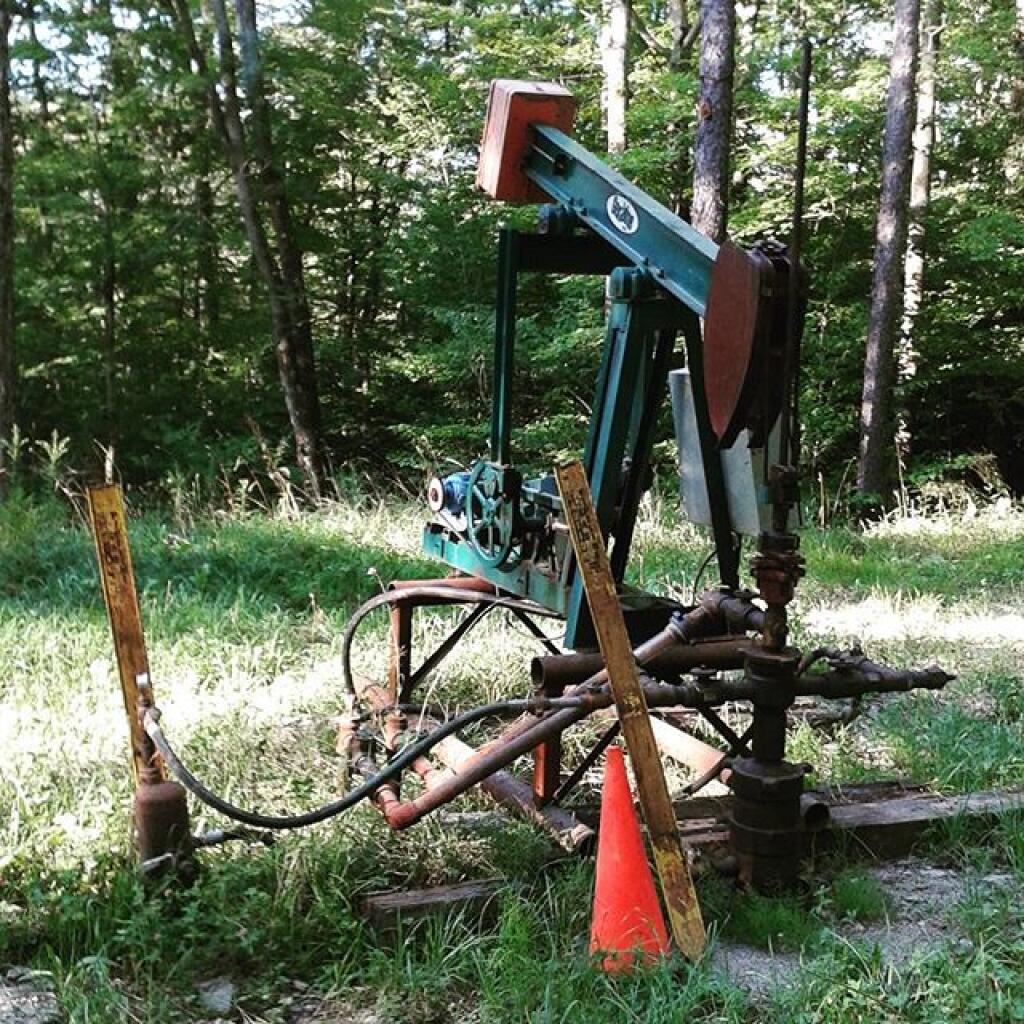
Balsam Swamp is a sprawling state forest that stretches almost 5.5 miles east-west across 4 towns. The area is very rural, and the landscape surrounding the State Forest is predominantly forested. Balsam Swamp State Forest is comprised of a mix of native hardwood forests, hemlock swamps, and conifer plantations. There are no designated recreational trails on the forest, but there is ample opportunity for self-guided day hikes to explore the diversity of habitats represented on this State Forest. Additionally, the western section of Balsam Swamp State Forest is adjacent to Five Streams State Forest to the south.
The main attraction of this forest is Balsam Pond. The impoundment is approximately 152 acres and is a popular destination for fishing and paddle boat sports. Balsam Pond is a warm water fishery that contains a mix of largemouth bass, smallmouth bass, chain pickerel, yellow perch, brown bullhead and sunfish. Tiger muskellunge have been stocked in the past with the last stocking occurring in 1995. However, there have been very few reports of anglers catching any of the adult tiger muskies. A shallow gravel boat launch is suitable for launching small fishing boats.
A small rustic camp ground is also located at Balsam Pond. Camping spaces are available at no cost on a first-come, first-serve basis and there is no running water or electricity. A fire ring, outhouse, and picnic table are provided for each camping space. A sign on Balsam-Tyler Road in Pharsalia designates the entrance to the boat launch and camping facility. This is a carry-in carry-out facility. Please do not litter.
There is the assumption in the popular culture that the good times will go on forever — low unemployment, cheap gasoline — and that our parks and highways will remain crowded. But that assumption is dangerously foolish.
Everybody knows that the next recession is around the corner, and that only one big upset in the Middle East could put world oil markets into a tailspin. We could have gas lines or prices over $5 a gallon in six months.
We really don’t know. The economy is white hot right now, and gasoline is super cheap, but just because things are really good now, doesn’t mean things won’t change.
I often like to compare fossil fuel addiction to heroin addiction …
To which I often get response that fossil fuels aren’t chemically addicting, they don’t change the brain’s chemistry, re-wiring it to crave more and more of them. But is that true? There is a lot of evidence that humans become as addicted to fossil fuels as opioids and that the behavior around fossil fuels is very similar to a person who is addicted to heroin, although fossil fuel addiction is much more socially acceptable.
Speed, warmth, light tickle and change our brains
Humans crave speed, warmth, and light — especially colorful lights. Our fossil fuel society makes such things very possible and easy to access. How to make people happier? Go faster, make it more comfortable, make it more bright and colorful.
Spending enormous amounts of money on the habit
Fossil fuel production and consumption is an enormous part of our economy. The average household spends $1,977 a year on gasoline alone. Is that amount of money spent to incinerate refined dinosaur bones, a largely non-sensible activity, is a classic sign of an addiction.
Denial of an addiction
Most people are in denial that they have a problem with fossil fuels and energy consumption more generally. They often dismiss how much energy they consume, they make excuses that it is necessary for modern living. People often react strongly when their utility rates or gas prices go up, or efforts are made to restrict motoring by reducing the number of lanes on roads or parking spaces.
Bizarre behaviors as a result of addiction
Addicts often engage in bizarre behavior when they high. Not only are people likely to defend oil and gas development in terrible places, they’re much too willing to accept climate change, as the price of fossil-fuel freedom. Wasting energy is totally acceptable, if it makes us happy.
Seeking alternative ways to get high
How do people plan to address the climate crisis? Usually it involves building industrial wind turbines and large solar farms, and switching to electric cars. Conservation is often pushed to margins of debate. And lifestyle change is dismissed as being impractical. People — at least on paper — want to address climate change by driving to Walmart in electric car.
Driving up to Piseco Powley Road the other weekend weekend I decided to go via US 20 to Duanesville Churches Road past the Mariaville pig farm, down to Fort Hunter and then up to Gloversville via Stoners Trail.
It’s really nice farm country in the Mohawk Valley that produces the raw materials that go into a lot of foods, but most notably dairy, the nutrient rich food that goes into everything from milk for drinking to cheeses and ice cream to many other products.
Farm families have a significant legacy on their land. Many farm houses and barns are historic – they’ve housed families and livestock for generations. It’s beautiful, open country, a land that works and produces food while also providing wildlife habitats and a rural lifestyle for those who farm it or live the life in the country.
Every time I drive through Fort Hunter I tell myself I need to stop and visit the historic site and walk some of the Canalway trail, but I’m always in a hurry to get to the Adirondacks or head home. Those little villages are so cute and historic, even if in many ways they’ve been forgotten by time.
I was reading Walden, by Henry David Thoreau and this passage, written in 1854 — 166 years ago — seem capture the world we live in overflowing with crap churned out by the factories, at least in redneck land where you can still burn things. I tell you, when I own my own land, purges will be fiery ….
My furniture, part of which I made myself, and the rest cost me nothing of which I have not rendered an account, consisted of a bed, a table, a desk, three chairs, a looking-glass three inches in diameter, a pair of tongs and andirons, a kettle, a skillet, and a frying-pan, a dipper, a wash-bowl, two knives and forks, three plates, one cup, one spoon, a jug for oil, a jug for molasses, and a japanned lamp. None is so poor that he need sit on a pumpkin. That is shiftlessness. There is a plenty of such chairs as I like best in the village garrets to be had for taking them away. Furniture! Thank God, I can sit and I can stand without the aid of a furniture warehouse. What man but a philosopher would not be ashamed to see his furniture packed in a cart and going up country exposed to the light of heaven and the eyes of men, a beggarly account of empty boxes? That is Spaulding’s furniture. I could never tell from inspecting such a load whether it belonged to a so called rich man or a poor one; the owner always seemed poverty-stricken. Indeed, the more you have of such things the poorer you are. Each load looks as if it contained the contents of a dozen shanties; and if one shanty is poor, this is a dozen times as poor. Pray, for what do we move ever but to get rid of our furniture, our exuvi?; at last to go from this world to another newly furnished, and leave this to be burned? It is the same as if all these traps were buckled to a man’s belt, and he could not move over the rough country where our lines are cast without dragging them,—dragging his trap. He was a lucky fox that left his tail in the trap. The muskrat will gnaw his third leg off to be free. No wonder man has lost his elasticity. How often he is at a dead set! “Sir, if I may be so bold, what do you mean by a dead set?” If you are a seer, whenever you meet a man you will see all that he owns, ay, and much that he pretends to disown, behind him, even to his kitchen furniture and all the trumpery which he saves and will not burn, and he will appear to be harnessed to it and making what headway he can. I think that the man is at a dead set who has got through a knot hole or gateway where his sledge load of furniture cannot follow him. I cannot but feel compassion when I hear some trig, compact-looking man, seemingly free, all girded and ready, speak of his “furniture,” as whether it is insured or not. “But what shall I do with my furniture?” My gay butterfly is entangled in a spider’s web then. Even those who seem for a long while not to have any, if you inquire more narrowly you will find have some stored in somebody’s barn. I look upon England to-day as an old gentleman who is travelling with a great deal of baggage, trumpery which has accumulated from long housekeeping, which he has not the courage to burn; great trunk, little trunk, bandbox and bundle. Throw away the first three at least. It would surpass the powers of a well man nowadays to take up his bed and walk, and I should certainly advise a sick one to lay down his bed and run. When I have met an immigrant tottering under a bundle which contained his all—looking like an enormous wen which had grown out of the nape of his neck—I have pitied him, not because that was his all, but because he had all that to carry. If I have got to drag my trap, I will take care that it be a light one and do not nip me in a vital part. But perchance it would be wisest never to put one’s paw into it.
I would observe, by the way, that it costs me nothing for curtains, for I have no gazers to shut out but the sun and moon, and I am willing that they should look in. The moon will not sour milk nor taint meat of mine, nor will the sun injure my furniture or fade my carpet, and if he is sometimes too warm a friend, I find it still better economy to retreat behind some curtain which nature has provided, than to add a single item to the details of housekeeping. A lady once offered me a mat, but as I had no room to spare within the house, nor time to spare within or without to shake it, I declined it, preferring to wipe my feet on the sod before my door. It is best to avoid the beginnings of evil.
Not long since I was present at the auction of a deacon’s effects, for his life had not been ineffectual:—
“The evil that men do lives after them.”
As usual, a great proportion was trumpery which had begun to accumulate in his father’s day. Among the rest was a dried tapeworm. And now, after lying half a century in his garret and other dust holes, these things were not burned; instead of a bonfire, or purifying destruction of them, there was an auction, or increasing of them. The neighbors eagerly collected to view them, bought them all, and carefully transported them to their garrets and dust holes, to lie there till their estates are settled, when they will start again. When a man dies he kicks the dust.
The customs of some savage nations might, perchance, be profitably imitated by us, for they at least go through the semblance of casting their slough annually; they have the idea of the thing, whether they have the reality or not. Would it not be well if we were to celebrate such a “busk,” or “feast of first fruits,” as Bartram describes to have been the custom of the Mucclasse Indians? “When a town celebrates the busk,” says he, “having previously provided themselves with new clothes, new pots, pans, and other household utensils and furniture, they collect all their worn out clothes and other despicable things, sweep and cleanse their houses, squares, and the whole town of their filth, which with all the remaining grain and other old provisions they cast together into one common heap, and consume it with fire. After having taken medicine, and fasted for three days, all the fire in the town is extinguished. During this fast they abstain from the gratification of every appetite and passion whatever. A general amnesty is proclaimed; all malefactors may return to their town.—”
“On the fourth morning, the high priest, by rubbing dry wood together, produces new fire in the public square, from whence every habitation in the town is supplied with the new and pure flame.”
They then feast on the new corn and fruits, and dance and sing for three days, “and the four following days they receive visits and rejoice with their friends from neighboring towns who have in like manner purified and prepared themselves.”
The Mexicans also practised a similar purification at the end of every fifty-two years, in the belief that it was time for the world to come to an end.
I have scarcely heard of a truer sacrament, that is, as the dictionary defines it, “outward and visible sign of an inward and spiritual grace,” than this, and I have no doubt that they were originally inspired directly from Heaven to do thus, though they have no biblical record of the revelation.
As I continue to look at properties that is a question that remains top of mind.
I have a really two things that remain top priority – wood heat and land that is largely unrestricted for ordinary rural things like homesteading and bonfires. If I’m not going to be traveling and spending time in the wilderness, I want to be able to have fires all the time and not be cold in the winter. I’m tired of freezing my ass off all winter in my apartment but I’m also not interested in making the fossil fuel companies and richer. I don’t want neighbors nearby bitching me out or calling the jack booted thugs because I’m making a little bit of smoke, I’m butchering an animal for meat, livestock smells like livestock or something in my yard isn’t there idea of pretty. I’d love to produce more of my own food and get away from all this packaging and put as much of the fertility from food scraps and manure back into my own land.
I really hate fancy yuppie looking shit, I’d much rather have things that are practical and serve my needs. Ideally the house I own would be as small and simple as possible so I don’t accumulate stuff. A single room with a stove, utility sink, small table, rocking chair, and a bed. Maybe a small bathroom and shower, mostly for compliance with health department regulations, as I’m more than fine with an outhouse and an heated outdoor shower even in the winter for a sauna like experience. Cold is fine if the shower is hot and you can retreat to warm cabin. I’d like to be fully off grid with small solar too but that adds another layer of complexity to finding the right property and getting all relevant government approvals.
And obviously I have to be with 30 miles or 45 minutes of where I work in Menands. That alone is a big constraint, but I need my good paying job to pay for life, especially now that I’m the director and my team depends on me. While a lot can change in the coming weeks and even years, I believe my position is likely to be my final position in the company but if I work hard and deliver results to my clients, the company will continue to provide for my needs.
The thing is so many of the houses and properties that I’ve looked at have involved compromises, many too far from where I work. I am continuing to evaluate both what’s on the market and might be abandoned or the owner would be willing to sell and obtainable – along with land and having a small and emphasize simple cabin built to my specifications. Yet I have a lot of reservations about developing previously wild lands, even if I rip out invasive species and emphasize native species and livestock that work with the land rather than against it. That’s why I would much prefer to restore an existing property, especially one that has been damaged through dumping, abandonment, invasive species or excessive grazing and tillage.
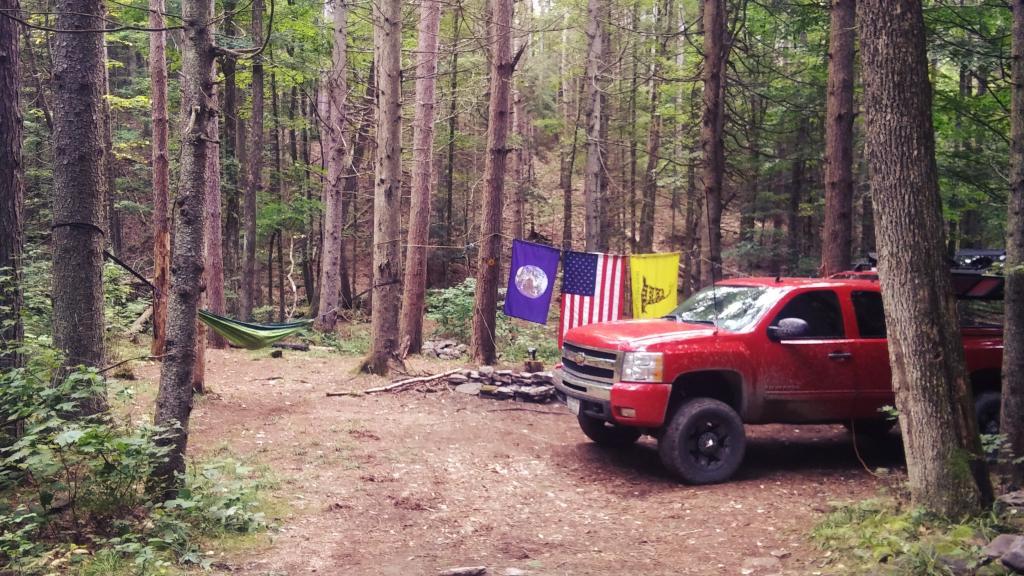
Exploring the lesser-traveled back roads and backcountry of Schoharie County reveals a host of hidden camping gems, perfect for those seeking a tranquil woods experience. This guide assists in pinpointing these sites, most of which are accessible by vehicle, suitable for tents or smaller camper units. While some roads can be rugged and seasonally accessible, a pre-trip exploration is recommended to ensure a smooth and enjoyable extended stay amidst the natural surroundings.
One of the challenges is to find places where the Long Path leaves the public roads. Using OpenStreetMap data I created a line intersection of the Long Path against public roads, then with some hand editing made sure only to include off-road trail sections when they meet public roads. Then I ran it against the state’s reverse geocoding service to add street addresses so you can use it with your phone or car GPS.