Balsam Swamp is a sprawling state forest that stretches almost 5.5 miles east-west across 4 towns. The area is very rural, and the landscape surrounding the State Forest is predominantly forested. Balsam Swamp State Forest is comprised of a mix of native hardwood forests, hemlock swamps, and conifer plantations. There are no designated recreational trails on the forest, but there is ample opportunity for self-guided day hikes to explore the diversity of habitats represented on this State Forest. Additionally, the western section of Balsam Swamp State Forest is adjacent to Five Streams State Forest to the south.
The main attraction of this forest is Balsam Pond. The impoundment is approximately 152 acres and is a popular destination for fishing and paddle boat sports. Balsam Pond is a warm water fishery that contains a mix of largemouth bass, smallmouth bass, chain pickerel, yellow perch, brown bullhead and sunfish. Tiger muskellunge have been stocked in the past with the last stocking occurring in 1995. However, there have been very few reports of anglers catching any of the adult tiger muskies. A shallow gravel boat launch is suitable for launching small fishing boats.
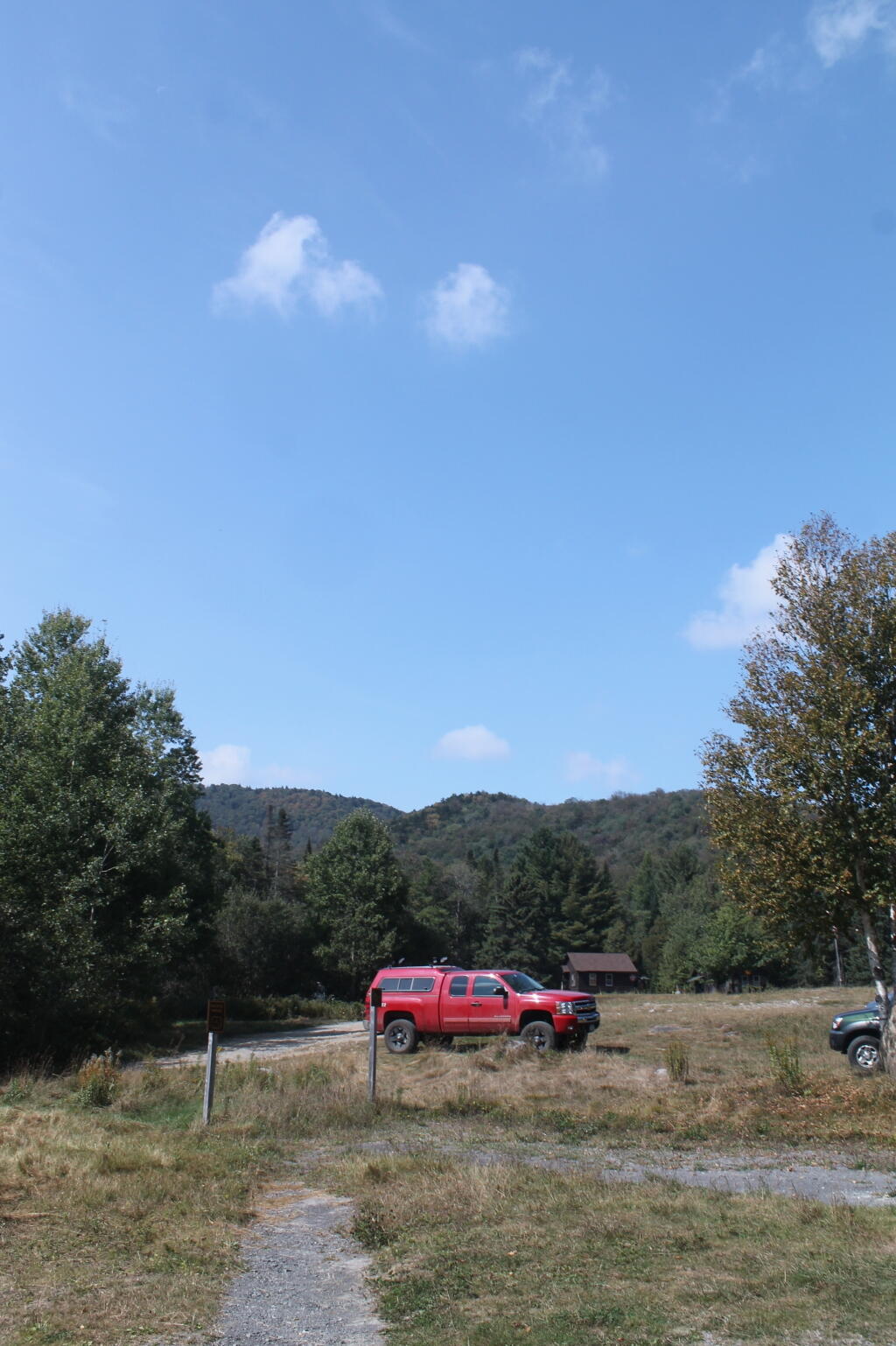
A small rustic camp ground is also located at Balsam Pond. Camping spaces are available at no cost on a first-come, first-serve basis and there is no running water or electricity. A fire ring, outhouse, and picnic table are provided for each camping space. A sign on Balsam-Tyler Road in Pharsalia designates the entrance to the boat launch and camping facility. This is a carry-in carry-out facility. Please do not litter.
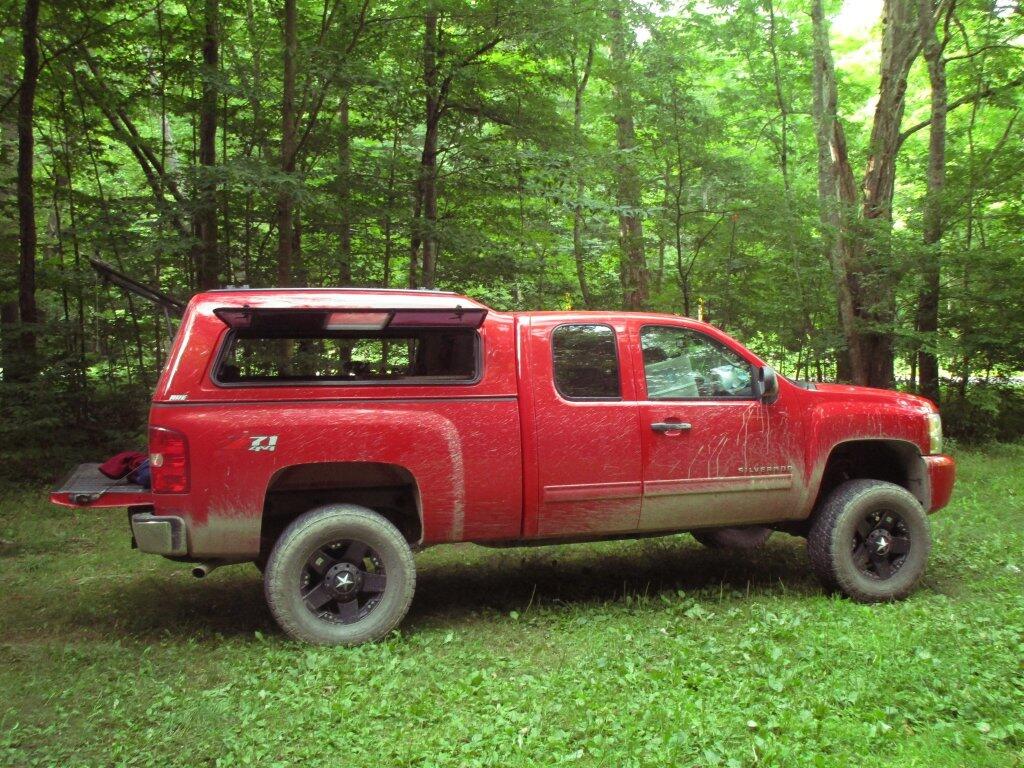
Truck cap camping is perfect for the type of camping I prefer to do on the back roads where I like to travel and camp.
I like to camp in quiet isolated areas where I can listen to music, shoot guns and fireworks, have a big fire without bothering others. Yet such sites are not always accessible with anything bigger then a pickup truck.
Maybe when I get older I’ll want something more like an truck camper but I have my doubts as I’m not big into fancy soft things. I also don’t like the higher clearance or extra weight in the bed. I prefer things that are easier to clean off the mud on and spending my time actually outdoors in the elements.
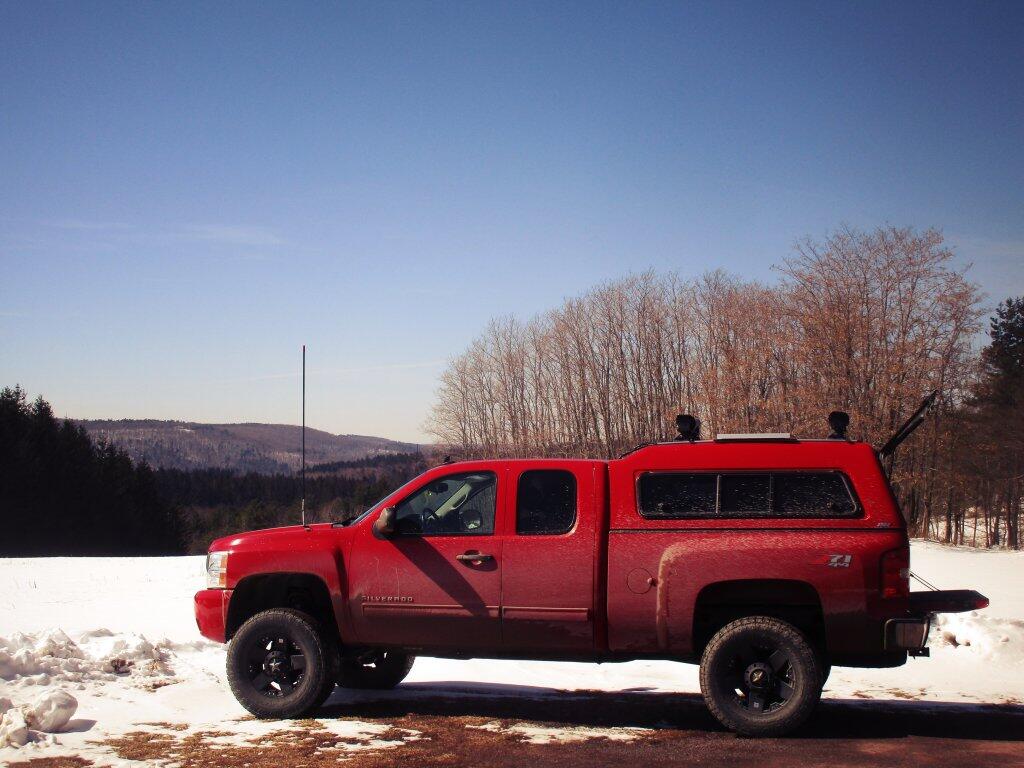
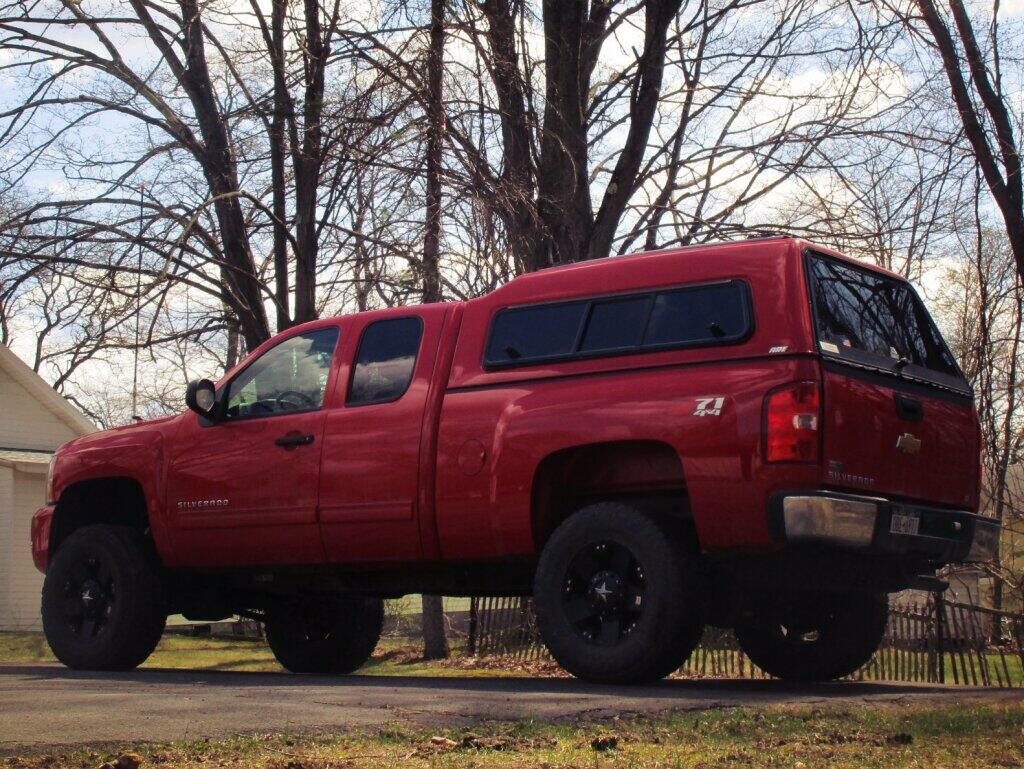
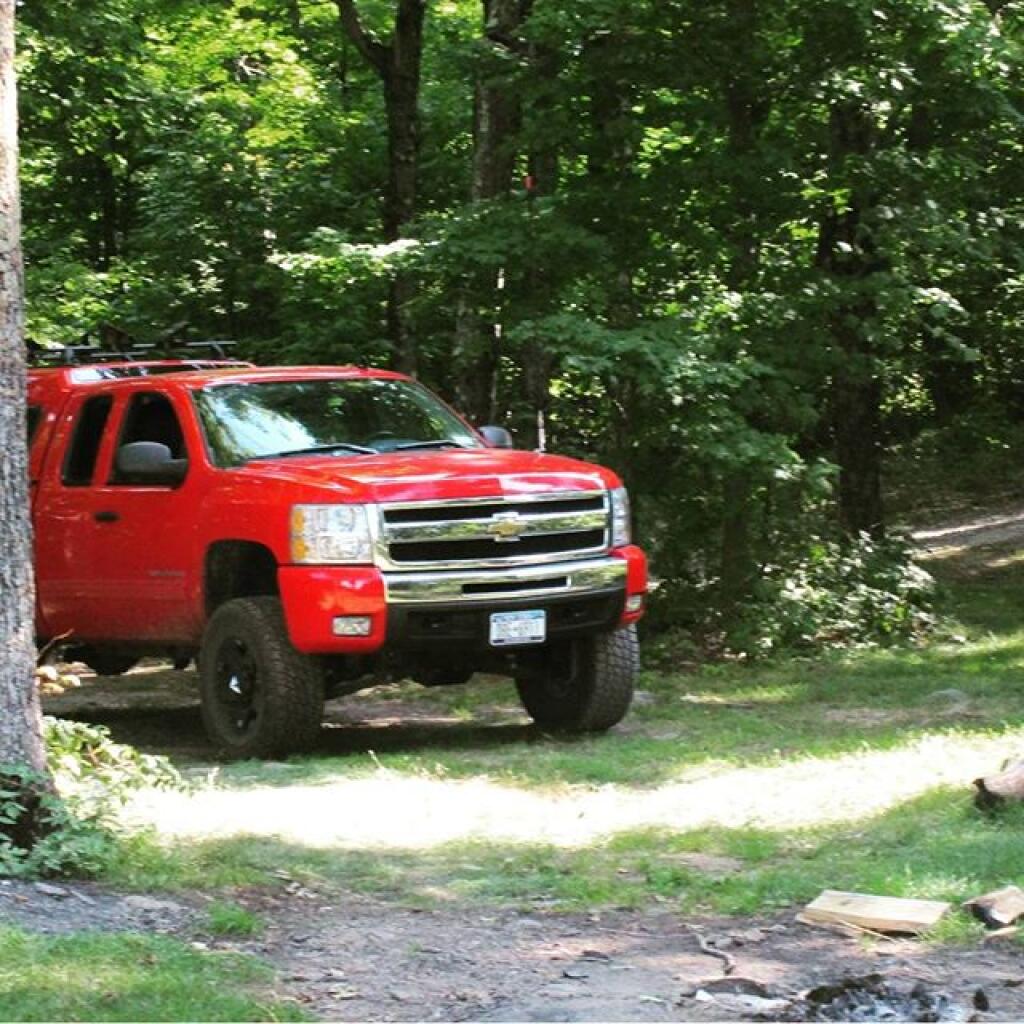
For 13 1/2 years I’ve been using Big Red as my primary vehicle — that is for camping and traveling, though in the city I use buses or walk to get most places except maybe for the weekly or these days every-two weeks grocery shop. I like Big Red, but I realize even if I do keep it in good repair, it has a limited useful life.
Having a Big Jacked-Up nice truck is fun when one is young. You should do it once, if you have the money. But I am no longer in my late 20s or 30s. Priorities change. I don’t want to spend $50,000 on a new truck, nor do I want to spend money on big tires or a lift kit. It’s not that I don’t have the money, but I’d rather allocate the money to other things in life.
The big truck is fun, but it’s costly. Repairs are more with a lift kit, as are the tires. Bigger tires, bigger engine, heavy uses more fuel, which became an issue in the past year when gas prices pushed past $5. But even when you don’t worry that much about fuel — as I drive recreationally — a big truck kind of sucks.
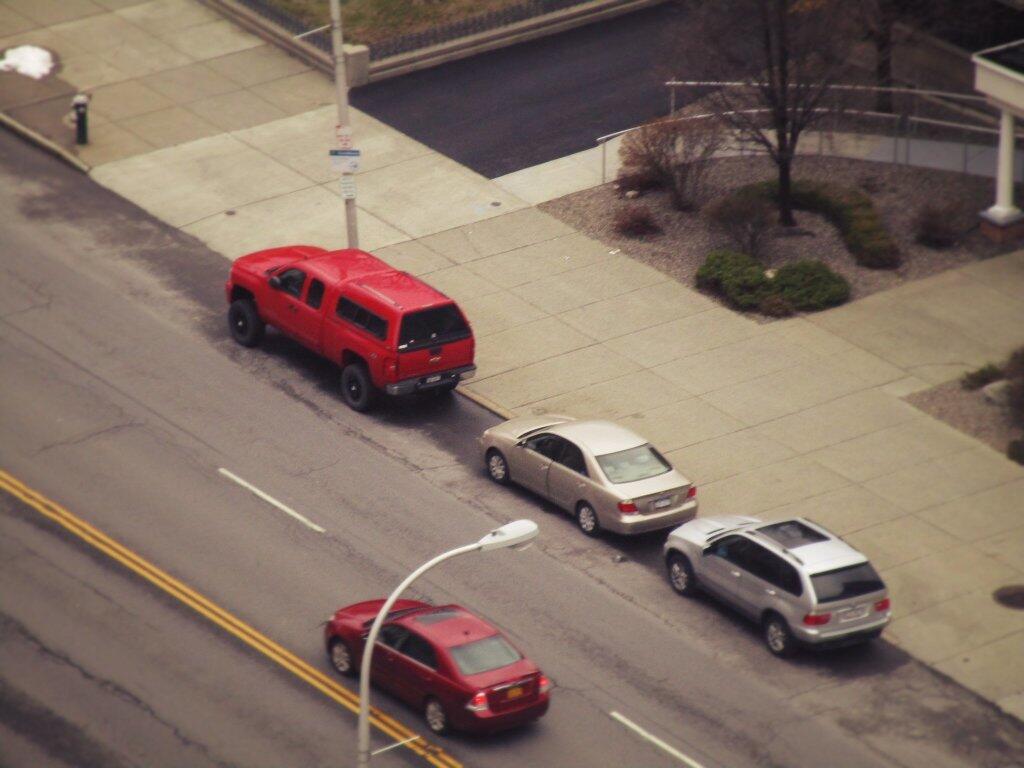
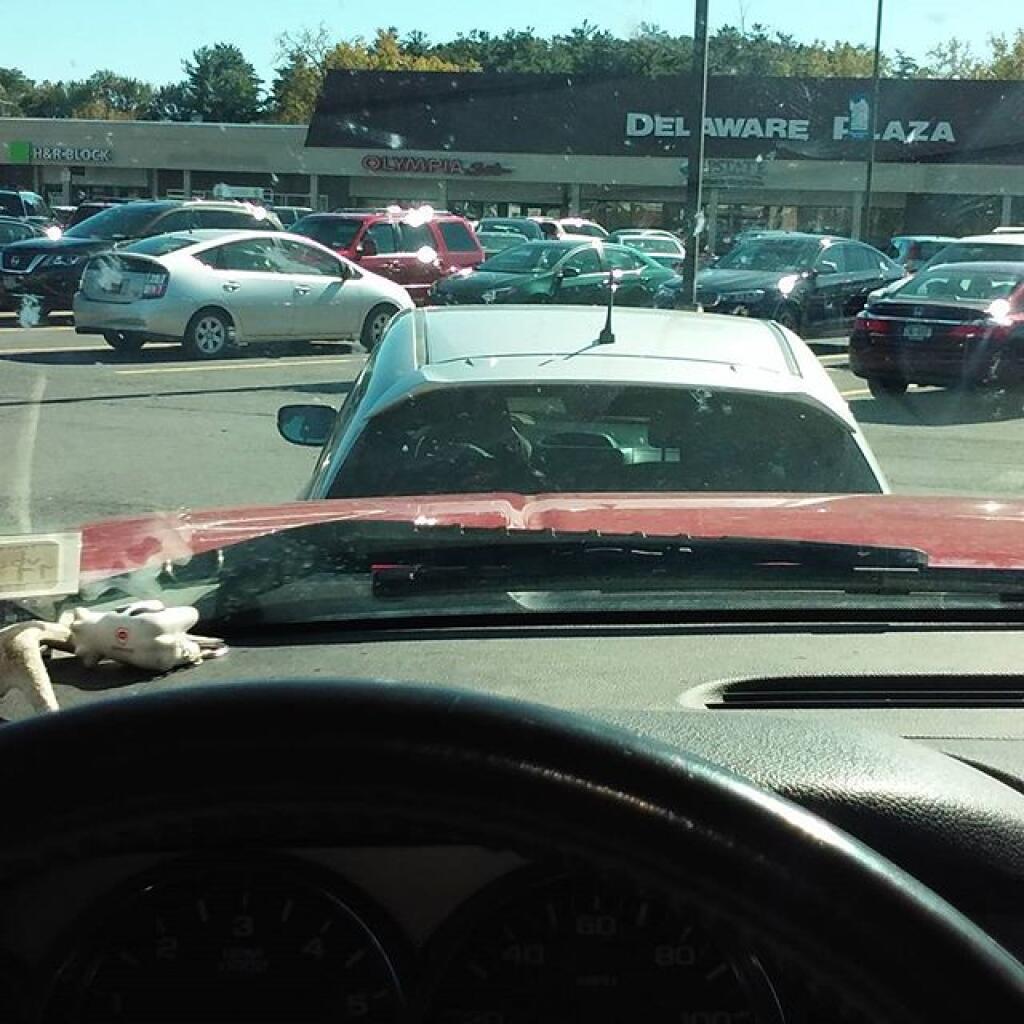
Big Red is a bitch to drive around parking lots, through narrow city streets, and anywhere there are a lot of other automobiles, like at repair shops or even the dealership. Big Red keeps me away from crowded trailheads in back country, as he’s too difficult to park. Even many smaller campsites are tricky to park in at Red.
Nowadays, my priority is more towards owning my own land and early retirement. A big truck is fine, but I would rather have land where I can shoot guns, have fires and livestock. Out in the woods, where I’m free to do what I want without people bossing me around. I’m trying to grow my wealth, not spend it all. As I want to have more options on where and how I live my life, especially as I head into my 50s, which likely whatever vehicle I get next will go with me into.
I haven’t decided for sure if I am going to get a truck next. I’ve thought about electric vehicles or even a sedan, to save money. But if I want to do more camping in a truck cap, then I’ll need a truck. And probably 4×4 to get on the rough, snowy roads I like to traverse. I really don’t want to spend a lot of money, as inflation has made everything so much more expensive, and money spent now is money that can’t grow in the markets.
One should never confuse the Town of Highlands in Orange County (containing West Point, Bear Mountain, and Bear Mountain Bridge on the Hudson River) with the Town of Highland in Sullivan County (containing Barryville, Eldred, Highland Lake, Minisink Ford and Yulan on Delaware River), with the Hamlet of Highland in the Town of Lloyd in Ulster County (which also borders the Hudson River, and contains the Mid-Hudson Bridge to Poughkeespie).
The hamlet of Highland is pronounced as two seperate words — “high land”, stressing the syllables. In contrast, the Town of Highland in Sullivan County and Highlands in Orange County rhymes with “island”.
You can also drive from Ulster County to Orange County to Sullivan County, without ever crossing any other counties.
My mom insisted that I should get the pre-cored pineapple for two to three times the price as cutting a pineapple is difficult. She of advanced age has trouble cutting fruit, an issue with sharp knifes I don’t have. And I’m glad I didn’t take her advice.
For one, full pineapples aren’t packaged in plastic that either gets burnt or heads to the landfill. With me, likely the prior but plastic is still toxic and nasty to burn so I’ve been trying to cut back on packaging. In contrast food scraps are just compost to feed the land or fine to burn in a hot fire. I no longer believe in the myth of industrial recycling.
But also a full pineapple offers a superior option for a lower cost. For one, a pineapple unopened need not be refrigerated and will not mold up quickly until openned. The high cost of pre cut pineapple is probably most due to large amount cut and landfilled at the grocery store. Moreover it’s much more fruity when fresh, and you can leave the core and skin on while cooking so it doesn’t fall apart while cooking – or even cook the full pineapple directly on the coals. It’s just a much more flexible option – and with a sharp knife cutting up a pineapple ain’t too difficult either.
Lately we’ve been learning how much of a scam recycling really is especially with low value, often contaminated scrap like plastic often is. We are learning how most plastic quickly becomes trash shortly after it’s use with no destination but an incinerator, a landfill or a burn barrel.
Honestly, I don’t think it’s all that big of deal because if anything there is a glut of landfill space out there, and if your going to burn natural gas to heat and light the cities and make oil to power the cars, your also going to make plastic. Garbage is well compacted down a landfill, a few hundred acres of dumping grounds can serve a large community for decades. Plastic in a landfill is no less biodegradable than a discarded Salisbury Steak or head of lettuce or a paper bag – it generally isn’t going to rot much – landfills are permanent resting places for waste. The compaction of the waste means there is no aerobic digestion breaking down the waste in landfills and anaerobic digestion is extremely retarded too even if it does produce some methane which is problematic if not captured properly.
Even burning plastic isn’t as bad as it once was. Municipal incinerators break down plastics down to carbon dioxide and water vapor almost entirely, especially the plastics commonly used in food packaging. With the phase out of polyvinyl chloride number 3 plastics in disposable packaging, which one used chlorine as a low cost building block, the toxicity of common plastics incinerated in a low temperature fire like a trash burn barrel on a farm or rural homestead has greatly been reduced. Sure there are plasticizers that soften the plastics and dyes but they’re a small part of the waste stream and worse of them are being phased out. Not much residue or ash is produced from incinerated plastic and if anything common discarded packaging helps the waste burn better. Plastic isn’t destroying the ozone, it contains no CFCs – even Styrofoam hasn’t blown with ozone depleting chemicals in a decade.
Plastics aren’t perfect and litter both accidental and intentional is a big issue. Animals do get sick from eating plastics, especially sea creatures. It is so easy for a plastic bag to blow out a car window and get trapped in the bushes or the trees above. It’s happened to me. Plastic bags caught in trees is a big problem in cities and areas near landfills where most of the discarded ones are ultimately buried but sometimes get caught in the wind are carried by the wind. Plastic, unless it is burned, doesn’t break down in nature – unlike paper or food waste or manure which will rot when exposed to moisture and air.
There are those who want to swap out disposable plastic for metal or glass packaging, claiming the possibility of more industrial recycling of the scrap bottles and cans. But not only are metal and glass heavier and in the case of glass prone to breakage and waste, they’re less recyclable and closed loop as people want to think. Metal and glass they becomes litter or dumped in the woods is much more harmful than common plastic packaging.
Recycling isn’t closed loop. Bimetal cans, which are relatively valued as scrap metal contain coatings and multiple metals which are only partially recovered when melted down at scrap metal facilities – a portion goes up in smoke or is landfilled as draugh. Glass can be melted down and reshaped into new glass unlimited but often its not, because it’s costly to properly separate glass into seperate colors – and again some of that still becomes waste that is skimmed off and landfilled. Because of the cost of sorting glass and contamination a lot is just crushed and used instead of gravel at landfills for roads and other areas needing back fill.
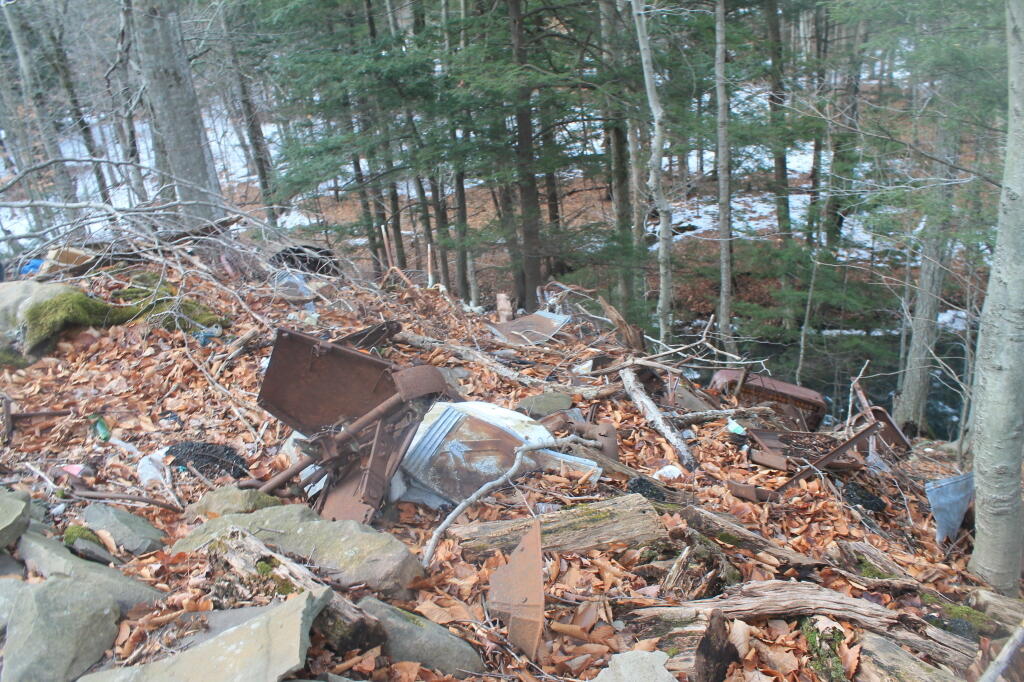
But a bigger problem with glass and metal is unlike paper and plastic it tends to accumulate in the environment more. Paper or plastic often gets burned, metal and glass just breaks up and sticks around forever. Whether it’s a farm dump, a rural homestead, a back country camp or other facility, glass and metal don’t burn so they tend to get dumped in the woods. People may be more responsible today then yesterday, hauling more to the recycling center or municipal landfill but still the vast majority of waste found in the woods dumped is metal or glass. Metal and glass leads to cuts and injury to humans, livestock and other animals. Hardware disease – a cow eats hay that has discarded metal or glass in it – is so deadly that many farmers feed magnets to cows to keep them from cutting their guts open from hunks of metal.
I am not arguing for more plastic, littering or burning of waste. I think urban recycling is important as it provides a good source of raw materials for industry, especially when collected and sorted using dual stream recycling. It also encourages rural residents to keep their ditches free of cans and glass by providing a low cost method of disposal compared to municipal landfill dumping. I think there should be more subsidy for reused milk bottles and reusable packaging but it I’m also not that concerned about it either. But regardless, post consumer recycling has a pretty minimal impact on landfill dumping, it’s oversold as a feel good measure but hardly a way to eliminate the nuisance grounds, as the Canadians call them.
Plastics have been in the news a lot lately, with the relatively low oil prices and the boom in plastics manufacturing brought on fracking. 🛢️ A lot of the articles lately note that not only is plastic a non-renewable material, coming from the co-products of oil and gas production, it’s long chains of carbon atoms are often difficult to break down by bacteria and sunlight. Plastic is only easily broken down by heat and combustion, when the carbon molecules bond to oxygen to produce carbon dioxide and other byproducts.
In many ways, I would argue that plastic is environmentally superior to metals and glass for packaging. 🥫 Metal and glass does not break down in fire, there is no “natural” process to break it down in the environment, it must either be landfilled, buried, or brought back to industrial recycling. In many remote areas, metals and glass become litter that never leaves the land. Glass in particular is notorious, as it can break, leaving dangerous materials that can cut people’s feet, damage tires and produce a long-term nuisance. Metal — especially cans made out of iron rust — but it often lasts a long time in the woods.
The toxicity of some plastics is a concern, more then plastic becoming litter in the environment. Chances are in the back country, on the farm dump, in the woods, plastic is not piling up. It’s getting burnt.🔥 It may not biodegrade by bacteria, but there is a natural process that breaks it down, namely fire, which leaves waste metals and glass untouched. Glass is just so much nastier in the sense it breaks, and doesn’t ever leave the woods unless somebody hauls it away to the landfill.
More needs to be done to reduce the toxicity of common wastes. Replacing PVC with HDPE is a big step forward. ♻I am glad to see things like soap bottles and charcoal lighter packing is no longer coming in vinyl, but instead safer plastics that produce fewer noxious chemicals when leached out to environment or burned. In urban areas, more needs to be done to recycle plastic — something that will get a boost when oil prices inevitably go back up.
Come 50 years from now, I doubt your going to find much in the way of plastics dumped in the woods. You might find metal (although less with the high value of scrap metal), glass, and certainly other things like discarded masonry and plumbing, but not plastic. ⛰ Plastic is lightweight packaging, and while it doesn’t biodegrade, it does combust and is unlikely to have the long-term pollution problems that alternative packaging is likely to have.
I can tell you as a Democratic Party operative at times I wish the media was more of a lap dog of the party, handling our clients in the direction of spin we’d like rather than taking their own spin on the matter.
During times of national crisis, the press, including both local and traditional mainstream outlets, often tends to report events without sufficient scrutiny. This is because the press aims to demonstrate loyalty to the nation rather than appear antagonistic, and they strive to uphold the country’s positive aspects. However, the media frequently lacks independent experts who can challenge the official government narrative, and they are hesitant to involve individuals without established credentials.
I recently listened to a podcast by James Howard Kunstler, where he pointed out that this phenomenon is not new and has been observed during events like COVID-19 and conflicts such as Ukraine. I can’t help but recall the media’s consistent support during the post-9/11 period and the Iraq invasion. Similar tendencies were seen during the early stages of the Vietnam War and the Red Scare in the 1950s. Although the mainstream media eventually began to question the Vietnam War, it was only in 1968, with Walter Cronkite’s influential editorial, that a significant shift occurred. Prior to that, mainstream media rarely challenged the prevailing viewpoints, and those opposing the war were often marginalized.
Comparing today’s media behavior to the past, it’s not necessarily worse, but the internet has made it much easier to access alternative perspectives. This is undoubtedly a positive development. My suggestion is to first engage with mainstream media to understand the presented facts, and then explore alternative media sources for different viewpoints. By comparing and contrasting different perspectives, we can gain a more comprehensive understanding of the situation.