Balsam Swamp is a sprawling state forest that stretches almost 5.5 miles east-west across 4 towns. The area is very rural, and the landscape surrounding the State Forest is predominantly forested. Balsam Swamp State Forest is comprised of a mix of native hardwood forests, hemlock swamps, and conifer plantations. There are no designated recreational trails on the forest, but there is ample opportunity for self-guided day hikes to explore the diversity of habitats represented on this State Forest. Additionally, the western section of Balsam Swamp State Forest is adjacent to Five Streams State Forest to the south.
The main attraction of this forest is Balsam Pond. The impoundment is approximately 152 acres and is a popular destination for fishing and paddle boat sports. Balsam Pond is a warm water fishery that contains a mix of largemouth bass, smallmouth bass, chain pickerel, yellow perch, brown bullhead and sunfish. Tiger muskellunge have been stocked in the past with the last stocking occurring in 1995. However, there have been very few reports of anglers catching any of the adult tiger muskies. A shallow gravel boat launch is suitable for launching small fishing boats.
A small rustic camp ground is also located at Balsam Pond. Camping spaces are available at no cost on a first-come, first-serve basis and there is no running water or electricity. A fire ring, outhouse, and picnic table are provided for each camping space. A sign on Balsam-Tyler Road in Pharsalia designates the entrance to the boat launch and camping facility. This is a carry-in carry-out facility. Please do not litter.
One of the things I don’t like about America is how it’s democracy is vaulted and talked about in lofty terms, but in reality exists far less then what people suggest with the language they use. In America, we talk about our government doing “the people’s business”, government workers being “public service” and our police and firefighters “serving a noble cause” and our military, “serving a cause greater then themselves”. Criminal cases brought by the government are said to be brought by “the people”, that police are “law enforcement” rather then “state enforcers”.
Most parliamentary systems such as those in Canada and Great Britain use a very different, and I would argue more accurate words to describe the state. Laws in parliamentary countries are “enforced by the crown”, properties owned by the government are “owned by the crown”, all power goes through the “crown”. Parks and national forests in parliamentary countries are called “crown lands”. The crown is the king or queen that rules the country, their power limited by the people which at one point in their country’s history got together, revolted, and limited the power of the crown.
Words matter a lot. They help determine how the people view the state and those who are employed by the state. Government power should be viewed skeptically, people should believe that most who are involved in the governing process are primarily there for a paycheck, to help their family, their friends, and maybe the people who are closest to them in their community. Government workers – be it the police, the firefighters, the military, the legislature, or even the health inspectors – are primary there to get paid their salary, succeed in their chosen careers and collect a retirement check in their later years for leisure.
To be sure, every country needs a crown, they need laws and the enforcement of such laws. Democracy plays an important role in creation of the laws, but just because a country has a democratic process and a set of courts with extensive procedure and precedence, does not mean those laws are fair or just. It doesn’t mean your voice or even your community’s voice is heard in the legislative process. There are many ways elections are manipulated in America – from the laws that govern them to favor one party over another – to gerrymandering – to institutional hurdles that make even popular changes by the masses impossible.
A more skeptical view of the state in America, and those who are employed by the state would be better for our country. People should not assume that any particular law is the will of the people, or that laws are a result of a well-reasoned debate, representing popular or even a long-standing opinion of an intellectual elite. Instead, most law making and elections are a messy process, and most enforcement action on behalf of state enforcement agents, is not based on law, but are justified by law.
Committed activists do often succeed in making changes. Democracy can be made fairer, laws can be adjusted to be more representative of the people. Many government workers do a good job. These are all true points. But the worshiping of our democracy through our choice of language to describe the actions of government is really serving no one’s interest.
There is a semi-developed pay campground that consists of many of the islands on Lake George. These campsites are popular with power boats and larger boats that aren’t allowed on smaller wilderness lakes of the Adirondacks. Here is a list of the coordinates and a map of sites below.
I’m tired of people telling me that as soon as you leave the borders of New York State that you literally fall off the edge of the earth – descending into a deep, darkish hell of religious cults, perfectly flat and boring land where you can see curvature of the earth, dark and dingy cities under clouds of black smoke from outdated factories where everybody lives short and brutish lives.
Somehow I just don’t think that’s true from the various trips I’ve taken in Central and Western Pennsylvania, Maryland and West Virginia. Places where you tell about and you get a blank expression on people’s faces. There are likely many fascinating and delightful places in America that aren’t the tourist books, that are charming and unique. Maybe the reason it’s a blank space on the map is not because there is nothing of value there but because the map maker left it off the map intentionally or otherwise.
I should explore some of these places. I feel like my world is too small and the Midwest and Rockies offers a lot too see. I’m tired of everything being just one big suburban subdivision, always hearing just one right view on everything, with everything else being dangerous and wrong. Upstate New York really is very crowded, and while you can get some rural deep country it’s often still tied back into the urban zeitgeist of New York City Metro Area that represents 70% of the state.
Maybe it’s time to board a plane, head for one of the big cities along the Missouri River, rent a car and drive west to the Rockies, heading through Nebraska and South Dakota, taking two lane highways except to bypass the cities. Drive as much as possible each day with a careful eye on the landscape. Visit some parks and national forests, but not make that the sole part of the trip but as an aside. Maybe occasionally stay in motels but also hammock camp or get some shut eye along the road. Maybe find a city of 20,000 to 40,000 that I like the countryside around that is affordable and has low unemployment that I like the vibe. Not for next week but to keep in the back pocket for my future.
I think a lot about eventually settling in a place like Missouri that is cheap with taxes low, few government regulations out in the country, less harsh winters but lots of public lands, forests and natural resources to explore. I’ve always been fascinated by that state and people’s love of the land and conservation out there – from the farmers and grazers to the hunters and trappers.
Missouri seems to be a mecha for outdoorsman and homesteaders off griders and those who just be left alone and not have neighbors nearby or pay a lot of taxes on your land. For people who will never apologize for being country boys or having a love of the land.
I don’t like the idea of riding an air plane or renting a car. But I probably could camp there as an alternative to motels. I would really want to see what the back country is like, the dirt roads, the mountains, and the rough, raggy run down farms and homesteads rather than any city or tourist destination. Sure I might stop at a famous vista or park but I can’t imagine spending more than five minutes in any populated area except to get gas or groceries. I like being in the rough country and I wouldn’t go to Missouri to see anything touristy but to see if it’s all its cracked up to be on the YouTube.
One of my formally favorite writers, James Howard Kunstler has just gotten weirder and weirder in recent years since the end of the Trump presidency and COVID-19. I used to enjoy his tough analysis of things like suburban sprawl, our tacky inorganic, motoring is everything communities.
He made some good points about peak oil, although once the fracking boom left the world flush with oil he had to search for excuses to explain why oil became so cheap at least temporarily. But since the rise of Donald Trump, he’s gotten all weird, embracing a series of right wing cranks on his blog and podcast show. I can’t imagine a peace or sustainability group inviting him to talk today, compared to even a decade ago when he was a hot commodity.
People change over time, the grow and learn new things. Kunstler ain’t the guy I knew 25 years ago but neither am I. He made his decision on what to focus on but it seems like most of the claims of election fraud or COVID conspiracy is just the world of cranks not a serious or legitimate criticism of problems we all face today.
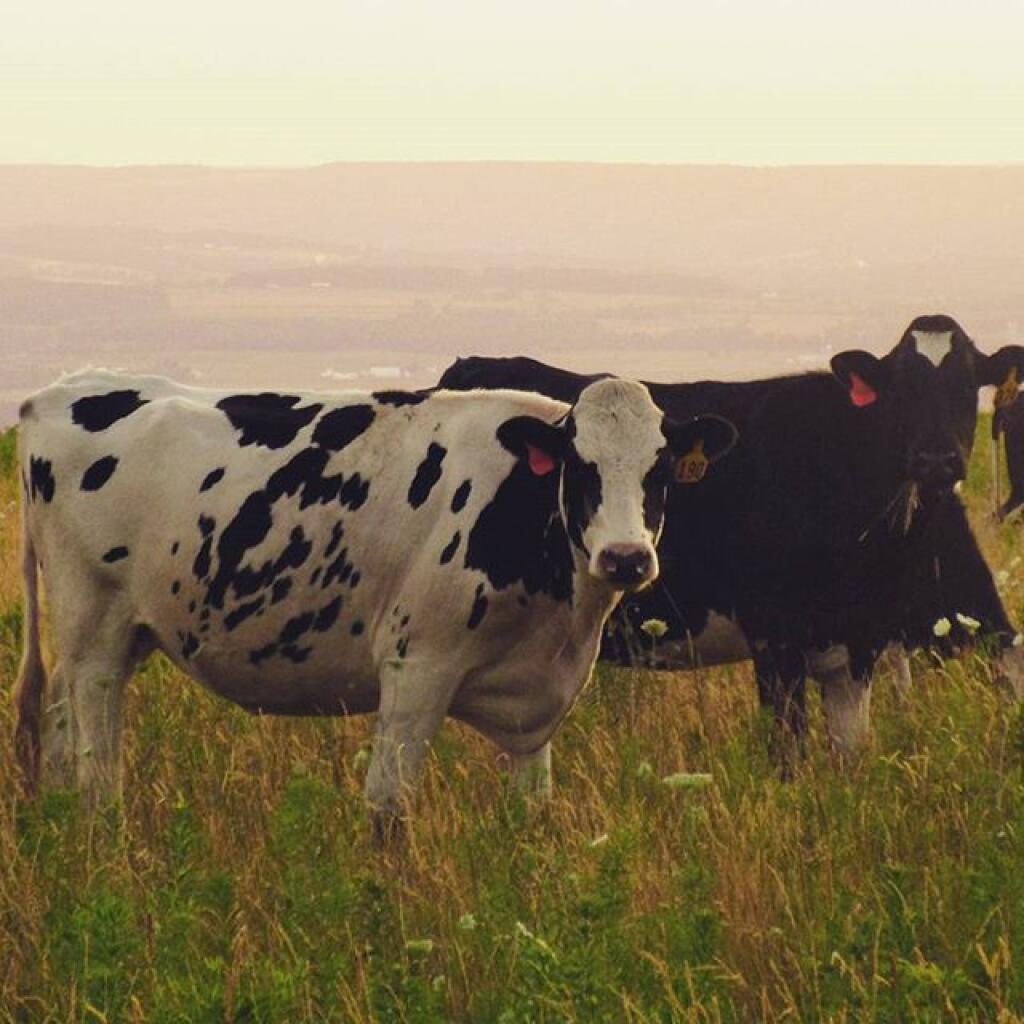
I’ve been re-reading Storey’s Guide to Raising Beef Cattle, the book by Heather Smith that is famous for teaching people the basics of the cattle industry.
They say roughly one million households raise cattle in America, it’s hard to go to small town outside of the most rugged mountain country and not see cattle or their distinctive barnyard smell.
Cattle grow in nearly every rural part of America, they need little more than grass or hay, water and salt and some careful care and supervision of their pastures and hay and shelter during the winter months.
Some of the oldest, long rooted families in our country farm, beef and dairy and the crops that support them fill our valleys. One out of four acres are field crops in New York, a number only second to the vast forests that cover our mountains and hill tops.
Cows are living, breathing animals, they can have a wide variety of health problems and conditions. They require a lot of feed and water but fortunately they’re not particularly picky about grass, as long as it’s free of manure and a handful of noxious weeds. They can break down grasses to produce energy to feed their growth.
Cattle have a larger than life impacts on the land and have a defining impact on communities and their identity. It’s always interesting to understand more about the lives of these large animals.
Reactance in electricity is like free returns to stores. Yes, some electricity returned to grid with current and voltage out of phase is resold to other customers but a lot of it is just wasted.