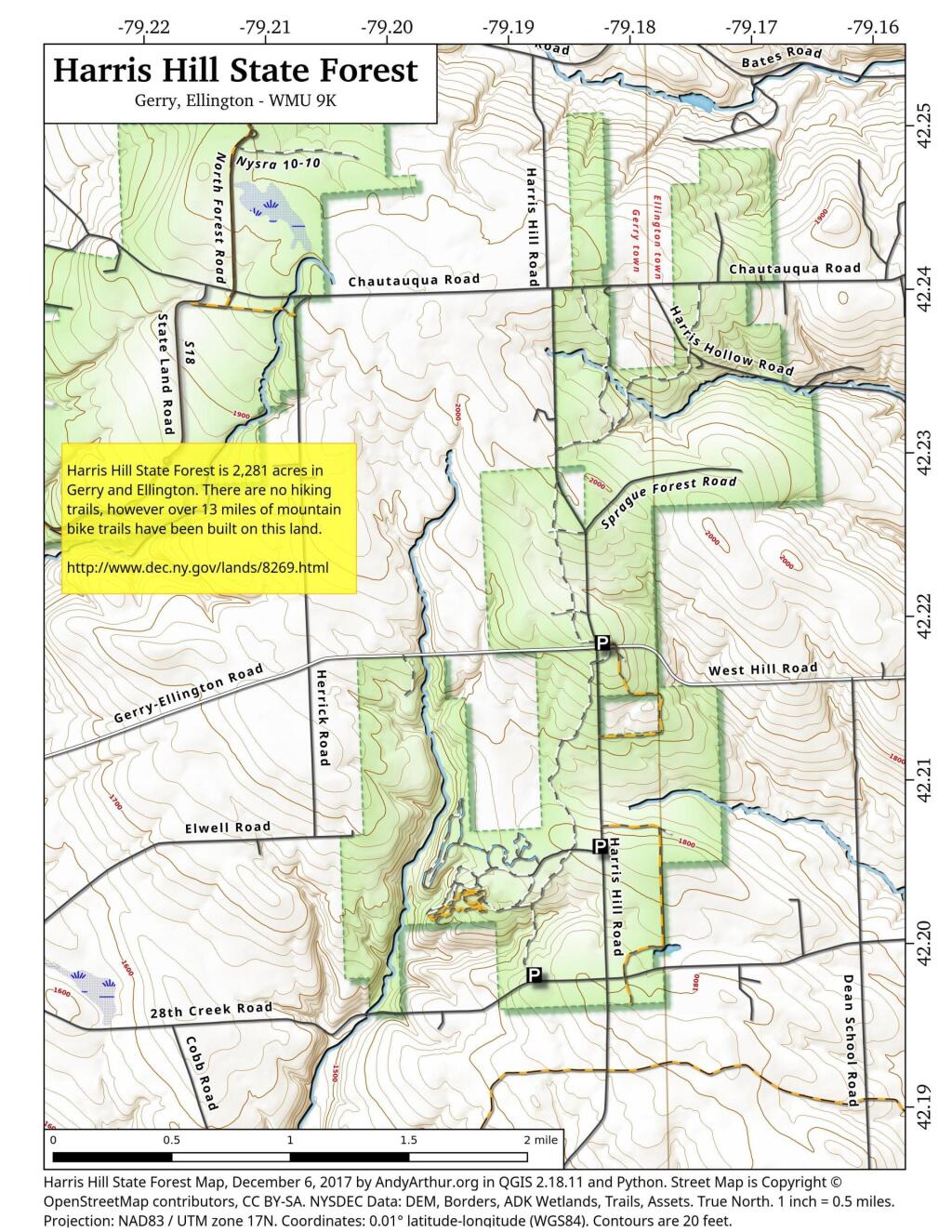
Brasilia turns 66 years old today. It was said that Brasilia was in part that inspiration of Nelson Rockefeller's Brasilia on the Hudson, aka the South Maul or the Empire State Plaza.
People were asking how I was extracting the digital terrain model (tree/building elevation) from the NYS GIS LiDAR point clouds (LAS) files. While the digital surface models (bare earth) models are widely available in raster digital elevation model GeoTIFF, these files are bare earth and don’t include vegetation or buildings. But you can easily create raster digital elevation model GeoTIFF from the LIDAR point clouds with the PDAL – Point Data Abstraction Library.
Install PDAL
It’s easy if you are running Ubuntu Linux — it’s in standard distribution with 20.04 LTS or later. Most modern distributions of Linux include it in their repositories.
sudo apt install pdal
Download LiDAR Point Clouds
You can download the individual cloud files from NYS GIS FTP site. You can use the LiDAR Shapefile indexes on that website to figure out which file you need. Be aware you may have to download and store a significant amount of data — each roughly 556 acre tile (less then a square mile) is between 500 and 1,000 MB. So you will want to do this somewhere you have a lot of free unlimited data service and storage on your hard drive. And patience while it downloads.
Extract the Digital Terrain Model
You should create a text file called pdal_dtm.json or something similar. The text file should contain:
This creates the pdal “pipeline” configuration file for the conversion. An explanation of important lines you will need to change:
“18TWN220520.las” – Input point cloud LAS file “type”: “filters.range” – Tells PDAL to filter points based on request “limits”: “Classification[1:1]” – Layer to extract * “filename”:”dsm.tif” – Export file name “gdaldriver”:”GTiff” – Use GeoTIFF export (same as standard DEM files) “resolution”: 0.5 – Resolution in meters for export, typically 0.5m or 1m depending on survey “output_type”: “max” – Highest point reflected back within that point, to get digital surface elevation. You can also use min/max/mean/count/stdev/idw. “type”:”writers.gdal” – Use the GDAL library for create GeoTIFF
* Layers in NYS GIS Point Clouds – “These point clouds will have at a minimum 2 classifications; Class 1 Unclassified, and Class 2 Bare Earth.” Layer 1 is the digital surface model, it contains building heights and tree/crop cover. Layer 2 “Bare Earth” is the same as what you get from the LiDAR Digital Elevation GeoTIFFs that are widely available on NYSGIS website. Be aware that the Class 2 points may have no-data areas, where no ground elevation was detected due to tree cover or other things blocking ground. The DEM files you download from NYSGIS have these areas filled in with interpolation from surrounding areas.
Once your configuration file is done, run the command:
pdal pipeline pdal_dtm.json
As the Point Cloud files are internally indexed, the export should take only a matter of seconds on a modern desktop computer. The exported DEM/GeoTIFF file will be between 15 to 25 MB, which is much smaller then the point cloud. Then you can load in Quantum GIS or your favorite non-free software GIS client like any other Raster DEM file.
To calculate the building or tree height, just subtract the Class 1 raster from Class 2 raster, using the Raster Calculator in QGIS or your favorite GIS program. Or better yet, subtract Class 1 points from the already processed DEM files on NYSGIS website, as they have the missing bare earth data filled in.
New York’s 2020 discovery reform law was designed to make the criminal legal system fairer by ensuring prosecutors disclose evidence to the defense in a timely manner. Critics of the law argue that it leads to case dismissals over minor technicalities or that defense attorneys exploit it to get cases thrown out. But what do judges actually say when they dismiss cases under this law?
The answer is largely hidden from the public. The vast majority—94% to 99.5%—of written judicial decisions in New York State remain unpublished. Without access to these decisions, public debate is too often shaped by selective narratives rather than the reality documented in court rulings.
Heading up to the sixties, things are starting to green a bit though I think the snow last week kind of slowed that up a bit.
Rode in this morning, it was pleasant though the bike trail was a bit congested in parts with hikers. I am sure there will be more congestion for the evening commute, though where it gets bad is past the Elsmere Bridge but I usually get off the bike path by the VFW and take town roads the rest of the way home. More clouds expected later.
Stopped and got bananas and apples this morning at Hannaford. My pantry is getting a bit depleted but with the fruit and other things I have around, I can wait now until Tuesday evening to go shopping. I might just stock up on a few things are Hannaford on Tuesday after work if it’s not raining, and then Thursday if I drive in to work if I decide to head out of town.
If I were responsible I’d probably go shopping tonight, but it’s going to be a nice evening, so I’d rather ride down to the park or maybe Five Rivers until around dark and read. Or if I go to Five Rivers, sit and listen to the Spring Peepers.
Not sure what the weekend looks like, but then again it’s doesn’t matter as I have the anniversary party on Saturday. I’m thinking about potentially going down to the Coeymans WMA to explore that, maybe after the anniversary party. The party is in Coeymans, so rather then drive, I figure I can ride and maybe stop and explore the WMA thereafter.


 I am sure there will be more congestion for the evening commute, though where it gets bad is past the Elsmere Bridge but I usually get off the bike path by the VFW and take town roads the rest of the way home.
  More clouds expected later.
 My pantry is getting a bit depleted but with the fruit and other things I have around, I can wait now until Tuesday evening to go shopping. I might just stock up on a few things are Hannaford on Tuesday after work if it’s not raining, and then Thursday if I drive in to work if I decide to head out of town.
 but it’s going to be a nice evening, so I’d rather ride down to the park or maybe Five Rivers until around dark and read.
  Or if I go to Five Rivers, sit and listen to the Spring Peepers.
 but then again it’s doesn’t matter as I have the anniversary party on Saturday. I’m thinking about potentially going down to the Coeymans WMA to explore that, maybe after the anniversary party. The party is in Coeymans, so rather then drive, I figure I can ride