As a child I dreamed the city of the future would look a lot like the State Office Campus, located Uptown, next to SUNY Albany. I envisioned a world where people could commute freely from home and to work and shopping without ever stopping at a traffic light.
Cities would consist of networks of one lane streets, where cars would freely merge in and our of the traffic pattern without ever stopping. Traffic would always be free flowing, there would never be any congestion. Fuel prices would inexpensive, cars would be quiet and non-polluting. Roads would be safe to drive and there would never be any car accidents. Its a world that really does not exist.
While in later years, sidewalks and crosswalks where installed across the the ring road, but literally anyone who tries to cross these three lanes in each direction arterials, is taking their lives in their own hands. There is the constant noise and pollution from circulating cars coming and leaving the state office campus. Those unfamiliar with the campus will find themselves driving around in circles, try to get where they want to go.
The reality is the state office campus is a pretty hideous place. My childhood dreams of a city without stoplights or traffic control besides merge lanes, is not a place where anyone really would want to live, much less visit or recreate in it. In a world where the automobile is so dominate is not a desirable place for humans to be. Its also not a particularly good place for a limited planet where we should be conserving and not wasting resources.
Those are some big beautiful beasts. And they sure are smoky and dirty with all that soot: the diesels of today are so much cleaner. I hope you enjoyed today’s video break for this Friday …
Most people do not realize how much time they actually spending in cars, driving around or visiting various places. Most people don’t care to calculate the math, so I did it for you. If these average speeds seem slow to you, remember that when driving you have to stop or slow for stop signs, stop lights, and traffic congestion.
Time Driving
hours per 100 miles
hours per 200 miles
hours per 15,000 miles
hours per 150,000 miles
Average City Miles Per Hour
20
5
10
750
7500
Average Highway Miles Per Hour
45
2.22
4.44
333.33
3333.33
Average Expressway Miles Per Hour
70
1.43
2.86
214.29
2142.86
50% City + Highway Speed
32.5
3.08
6.15
461.54
4615.38
They say the Average American drives something like 15,000 miles per year. If your average speed is 32.5 miles per hour, including delays at stoplights and traffic, that means your spending on average 19 days per year, non-stop driving.
Time Driving
hours per 15,000 miles
days per 15,000 miles
weeks per 15,000 miles
Average City Miles Per Hour
20
750
31
4
Average Highway Miles Per Hour
45
333.33
14
2
Average Expressway Miles Per Hour
70
214.29
9
1
50% City + Highway Speed
32.5
461.54
19
3
In the lifetime of the vehicle, assuming you get 150,000 miles out of it, you will have driven the equalivent of 192 days or 27 weeks straight.
One can be pretty sure astronauts, god, and, the space aliens must think cities are for steel ants, when they look down at America from outer space. Certainly, the two-ton steel ants (cars) and their concrete and asphalt herd paths (streets and freeways), are the most prominent feature of any American city.
Every street must be wide enough to allow at least two of these two-ton steel ants to pass one another, along with having at least two more lanes for the temporary “disposal” of the steel ants along the curbs of the road.
In more suburban locations, the two-ton steel ants get their own little private herd paths to be temporarily be disposed, off the main road. This means reduced chances of the two-ton steel ants being hit by other two-ton steel ants and the ease of having personalized temporary “disposal” locations for the two-ton steel ants.
Where the two-ton steel ants congregate the concrete and asphalt herd paths grow larger, and they connect up with vast asphalt confined parking lagoons for their temporary “disposal”. The vast confined parking lagoons make the buildings that the keepers of two-ton steel ants live in and congregate around look tiny.
The keepers of the two-ton steel ants will not stop at any level to provide convenience of the two-ton steel ants. The keepers of two-ton steel ants will gut the hearts of their communities to make the two-ton steel ants happy. The two-ton steel ants, while powerless without their keepers pouring more fossilized dinosaur bones into their tanks, control their keepers through powerful ideologies and a desire to keep speeding along.
There are those, trapped by the ideology of the two-ton steel ants, that want the two-ton steel ants to continue to rule our cities, long after all the dinosaur bones are incinerated by two-ton steel ants. They say two-ton steel ants will survive by other means. They say that’s the only way their owners of two-ton steel ants can live their good life. Yet, is that the people speaking, or simply the voice of the two-ton steel ant?
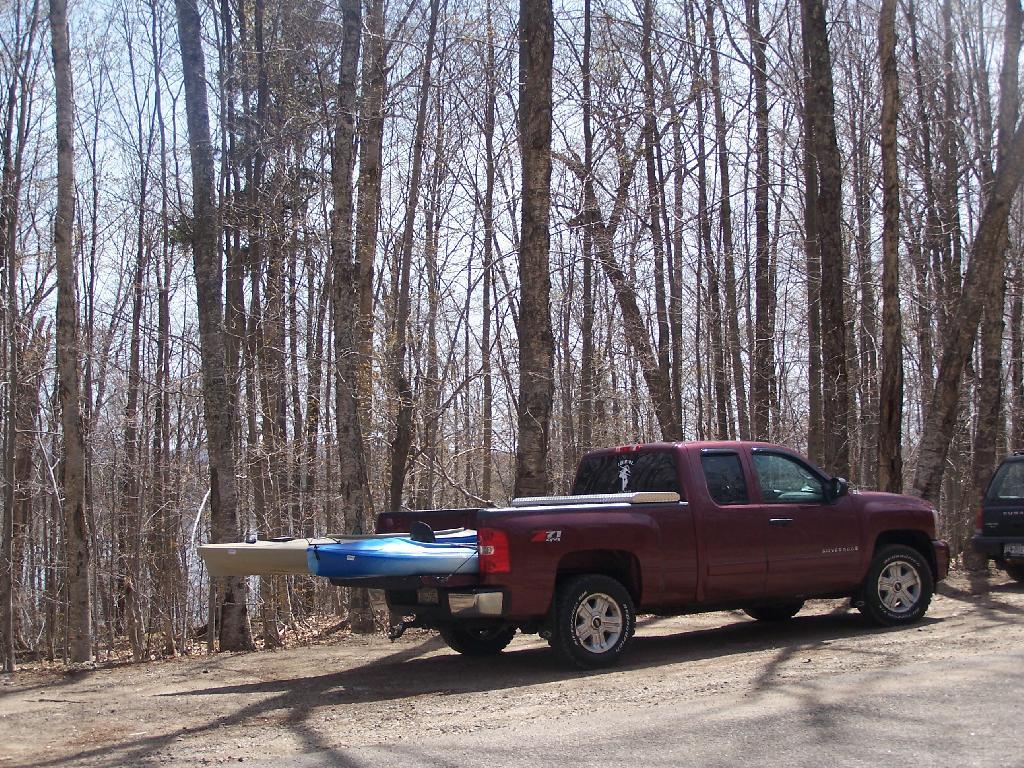
I don’t know. I like my truck, but I am not sure if our cities need any more two-ton steel ants destroying the landscape. Imagine what our cities would be like if were not dominated by the two-ton steel ants. Imagine if cities where people-centric, where people could walk around, and take mass transit safely to their destination. Two-ton steel ants belong on the parkways and out in the country, but not in the city.
All of the above Google Maps are actual images from within the City of Albany, Capitol of NY State, and a popular gathering location for the two-ton steel ants. In America, there are 800 million parking spaces for 250 million steel ants, and 4 million miles of roads for them to drive on.
While I’ve only owned two different cars in my life, my parents 1994 Plymouth Sundance and my current 1998 Ford Ranger, I do not see myself buying a foreign made car or truck in the foreseeable future. Six years ago when I bought the Ranger I had considered foreign cars, but now I’ve learned why I will not buy an foriegn car.
Simply said, a car or truck is a big purchase. While quality of the vehicle is always important, so is the quality it represents to the community as a whole. Most American manufacturers are union-based, from the Assembly plant to the part manufacturers. Most American cars consist of parts and labor constructed in the United States, such as the typical Chevrolet Silverado or Ford F-150 pickup trucks, which average betwen 75-85% American-made.
When you buy an American-made and Union-made car (even a used one), you are buying a vehicle:
Made in a place where workers enjoy a clear voice on important work place issues.
Unions advocate for fair pay and benefits for workers, good healthcare, good public services for working people.
Union work places are safe work places, workers advocate for a good working environment.
American-made cars are overwhelminly made in America, where there are some of the best standards in the world for clean air and clean water.
Your investing in your neighbors — there is often a lot more automotive manufacturing locally then you realize
That American-car you buy, more likely then not has parts made in Cortland, Ithaca, North Syracuse, Tonawanda, Massena, and Buffalo.
While many foreign-brand cars are made in the United States, most are made in the South, in plants that pay less and offer less benefits to their workers. Foreign car assembly plants and part suppliers are typically non-unionized. Without unions, nobody is advocating for good working conditions or protections for those who live in the communities where cars are made.
Nowadays, American-made cars are often as good if not better then Foreign-made cars. People do not realize that. Voting for foriegn cars by buying them new or used, means your taking jobs from your community, shipping them down to sweatshops down south or across the globe. These are your neighbors, the folks who hunt, fish, camp, farm, and help conserve the wild spaces. These are the same people who are involved in your community.
As far as I can see, there is only one clear choice — Buy American, Buy Union!
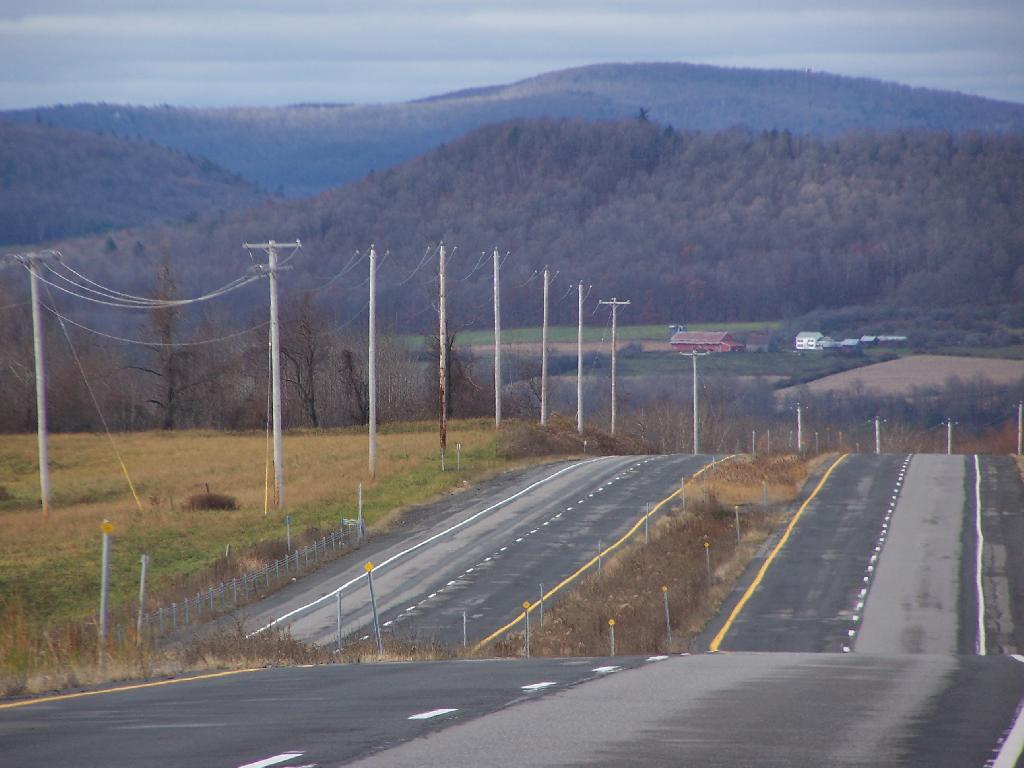
As a simple rule, there should be no highways built with more then four lanes, anywhere. One of the biggest mistakes made by traffic engineers is that more lanes are always more desirable, and that roads must be “super-sized” to meet any future demand for traffic growth.
I’ve driven on many roads wider then 4-lanes. There has never been a six-lane or eight lane road I have driven on that is a pleasurable experience, even at light traffic conditions. When roads expand beyond two lanes in each direction, they naturally become uncomfortable for drivers, as they force them focus on multiple in directions, and always keep an eye on cars coming at them in unexpected ways.
There is a case for building four lane arterials. Having two lanes in each direction makes for safe passing by automboiles. Drivers wishing to go a little faster then other drivers, simply move over into the passing lane and pass the other automobile. Cars heading in the opposite direction are segregated by means of a median. They are safer.
Roads need not be built more then four lanes wide. If traffic patterns suggest wider arterials are needed, then a rethinking of transportation policy in that area should be undertaken. Why are so many people regularly taking private cars? Could we build a transit line for people, or a railroad line for freight?
The other day I was stuck behind one of my neighbor’s 1958 Ford Fairlane, on a hot sunny day. A beautiful classic car, it really stunk of partially burnt hydrocarbons, as was the case of most cars from the pre-automobile pollution control era.
I was curious how much progress we’ve made an automobiles in 2010, versus the pre-control era of model years 1968 and earlier. In 40 years, we’ve taken some serious steps to reduce the tailpipe emissions of our automobile fleet.
The four major pollutants from automobiles are nitrous oxides (NOx) that create smog, carbon monoxide (CO) which is a deadly human posion that replaces oxygen in human blood and causes heart attacks, particulate matter (PM) or soot that coats human lungs and creates smog, and carbon dioxide (CO2) that is acidifying our oceans and inducing climate change.
* Estimates based on the following, previously used to test emissions.
Miles Per Gallon – 27.5 miles per gallon
Lead – Gasoline is 100% lead free now due to catalytic converters being poisoned by leaded gasoline. Lead has been replaced by ethanol and synthetic anti-knock oxygent agents such as MTBE and ETBE.
A Significant Improvement.
Here is the improvement in pollution control in the past 40 years for automobiles in times.
Nitrous Oxides – You can drive a 2010 model year car 100 miles and create the same amount of nitrous oxides as a 1968 model year car puts out per mile.
Carbon Monoxide – You can drive a 2010 model year car 18.5 miles and create the same amount of carbon monoxide as a 1968 model year car puts out per mile.
Particulate Matter – You can drive a 2010 model year car 1287 miles and create the same amount of particulate matter as a 1968 model year car puts out per mile.
Carbon Dioxide – You can drive a 2010 model year car 2.1 miles and create the same amount of carbon dioxide as a 1968 model year car puts out per mile.
Hope for Even Cleaner Cars.
The fact is we’ve done a lot to clean up the automobile fleet. Today’s cars are nothing like the polluting cars of yesteryear, although on one key pollutant — carbon dioxide, we have a long ways to go. Carbon dioxide, while a very dilute pollutant, is produced in massive quantities by automobiles. Modern cars still produce over 320 grams per mile of carbon dioxide, and reducing that will require advanced technologies, many yet to be invented.
Yet, back in 1968, few would have believed that we would reduce nitrous oxides, carbon monoxide, or particulate mater to such a great extent as we have today.