Sounds strange but tonight was the first time after hiking with the clouds that it was dark enough to use the high beams.
I knew the headlights were auto on and off from the auto headlight indicator light, and I love how they come on automatically with the wipers on but I didn’t know that they dim automatically when cars approach. I thought that was more of a high end feature for LED headlights not the old fashioned halogen lights my truck has. Nice feature for night driving, especially how the brights come back on as soon as you pass the car in the other direction.
Part of the reason I did not know about it is it’s not listed on the window sticker explicitly for my truck, as it’s considered part of the XL Driver Assistance Package my truck has, which also includes Emergency Braking Assistance and Collision Detection. Fortunately haven’t had to use that feature yet, but it’s good to have as I’m sure a deer or a car will pull out in front of me some time in the future. I don’t have adaptive cruise control, just regular cruise control on my truck.
In Ford vehicles like the Super Duty, Automatic High-Beam Headlamps (often called automatic dimming) use a windshield-mounted camera to scan the road for lights from other vehicles.
How It Works
The system is designed to provide maximum visibility at night by keeping your high beams on as much as possible. It automatically switches to low beams (dims) when it detects:
Oncoming traffic: Headlights from an approaching vehicle up to 2,000 feet away.
Traffic ahead: The red tail lamps of a vehicle you are following.
Ambient light: Sufficient street lighting or enough daylight to make high beams unnecessary.
Activation Requirements
To use this feature, specific conditions must be met:
Autolamps Mode: Your lighting control knob must be set to the Autolamps (A) position.
Vehicle Speed: The system typically only activates high beams when your speed is above approximately 32 mph (52 km/h). It will dim them again if your speed drops below roughly 27 mph.
Enabled in Settings: The feature must be toggled “On” in your vehicle’s SYNC touchscreen or instrument cluster settings.
Manual Override
You can override the automatic system at any time by using the lighting stalk:
To force high beams: Push the stalk away from you.
To force low beams: Pull the stalk toward you or move the lighting knob out of the “Autolamps” position.
Limitations
The system may not dim correctly if the sensor is obstructed or in severe weather like heavy rain, fog, or snow. It can also be confused by highly reflective road signs, which might cause the lights to dim prematurely.
Every morning, I sit down with the Wall Street Journal and the New York Times. I am well aware of the economic storm clouds that the analysts claim are hanging overhead. But lately, it feels like the boy who cried wolf; we are warned of “uncertain times” so often that the phrase has lost its teeth. To me, a dip isn’t a disaster—it’s an opportunity for the risk-takers to buy.
The Great Recession of 2008 is nearly two decades behind us now. Since then, despite the occasional wobble, the trend has been one of steady growth. For years, I’ve found it easy to buy broad-based index funds, ride the wave, and watch the numbers climb. I know the value-based investors scoff at us “strap-hangers,” assuming we are blindly following irrational valuations. But the reality is that large-cap stocks dominate for a reason, and the beauty of an index is its ruthlessness: it automatically discards the losers and buys the winners for you.
Of course, the system has its quirks. You see a company like SpaceX seemingly cutting the line, leveraging its position to soak up index fund cash. You wonder how many true value investors are even left in a market where most people are passive participants. But I don’t try to guess or pick winners. I don’t time the market. Every two weeks, as soon as my paycheck hits, the same fixed amount goes into my accounts. It’s cost-averaging at its most basic—buy when it’s up, buy when it’s down, and don’t overthink it.
As my retirement date ticks closer, I find my strategy shifting. I am increasingly buying bond funds to provide the stability I’ll need. Stocks are a bet on valuation and shrinking dividends; bonds are a contract to pay out, provided the business doesn’t default. At forty-three, and with many years already invested in the state pension system, I’m looking for a floor I can stand on.
I’ve also learned the mental discipline of “not looking.” When the market drops, I stay away from the login screen. Why bother with the anguish? The losses aren’t real until you sell, just as the gains aren’t real until you cash them out. If you aren’t selling today, the daily flux is just noise.
Inflation is the risk that actually keeps me thinking. If you bought stock in 1968 and sat on your hands until 1982, you were a poorer person in real terms—though you were still better off than the man who kept his money in a 1970s savings account. America was a poorer place in 1982 than it was in 1968, but those who continued to buy through the “stagnant” decade ended up ahead of the pack.
I know there are no guarantees. Job loss, injury, or some unforeseen reputational hit are always possibilities. But state work is secure, and I’ve spent my career developing data skills that are useful regardless of who is in office.
At the end of the day, all of this—the index funds, the bonds, the biweekly contributions—is fuel for a very specific fire. I am investing toward a finish line that doesn’t involve a corner office. I’m looking for that off-grid cabin in the woods, the freedom to own my guns, tend to my livestock, and burn what needs burning without a neighborhood association breathing down my neck.
I want to produce real food and generate my own power. I want to move away from the landfills, the factories, and the relentless commercialism of city life. I’ve spent enough evenings studying nature at local preserves; I’m ready to live in it. The market can do what it wants; I’m just waiting for the day I can finally trade my computer screen for the deep, quiet reality of the woods.
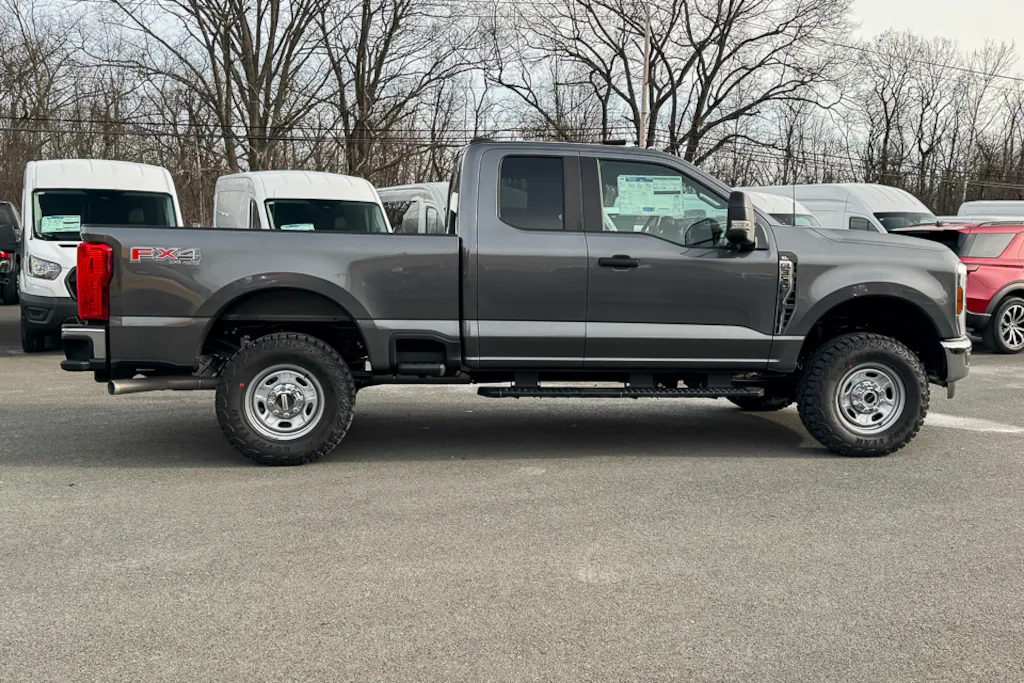
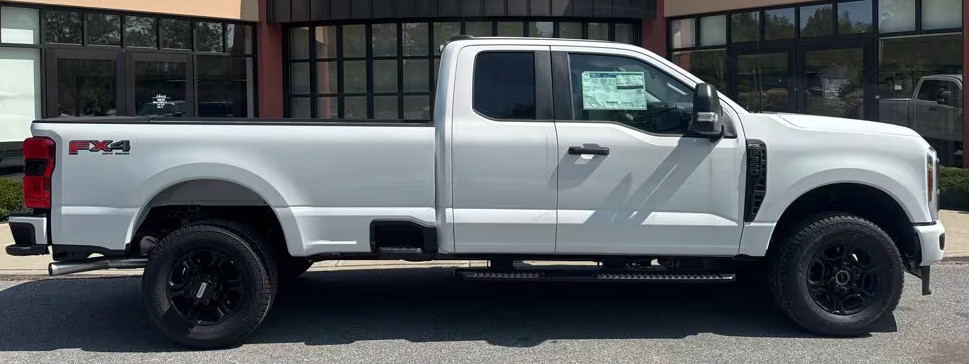
People say that about my SuperDuty with the 6 3/4 foot bed. It doesn’t have the bigger 8 foot bed.
People seem awful concerned about having a shortbed on my SuperDuty. I think that’s most people’s complaints when they see that truck. Not that it’s any of their business on the truck I chose to buy.
But I was looking at the State Fire truck with the quad cab and the long bed, and thinking that must truly be a bitch to park. Really much too long for my purposes. 6 3/4 foot is plenty long for my purposes for camping in, but with the shorter frame and bumper-to-bumper means a shorter turning radius, fits in smaller campsites, is less likely to get hung up on ditches or rocks sticking up on the forest trail.
Increasingly I am using AI as a force-multiplier to assist in writing text and developing concepts for blogging content. Not replacing myself or just putting endless, mindless content on the internet but using AI to explain core concepts after my own review, and then adding my own insights to the content before pulling it together as a blog post.
AI is a wonderful source of summarization of news articles and concepts in the news. It also can summarize the internet consensus on an issue, which then you can use as a basis to start out a blog post. Some parts of a blog post are just boiler text, many things I don’t have much to add to beyond what the internet already says or is widely known context. In the past, I would have just linked to a news article, but bringing the news here, by using AI generated summaries, then adding my own context, maps, and photos, makes a more satistifying presentation then linking off the blog.
Moreover, the more content that resides locally on my blog rather then linking off becomes potential ad revenue from the blog, to be picked up by search engines and bringing traffic here. It’s great that I am supporting other people’s websites, but I’d sure rather have the revenue here. Not that I make a lot of money on the blog, but it’s nice to cover the blog bills and get rewarded for making quality content, and keep people from having to click off the blog.
To break and reassemble a bike chain effectively, you must ensure the chain is securely seated in the tool’s cradle before applying pressure. Modern chains are generally not meant to be reassembled by reusing the old pin, as the chamfered edges that hold the link together are destroyed during removal.
Breaking the Chain
Position the Link: Place the chain into the guide slots of the chain breaker. High-end tools like the Park Tool CT-3.3 feature adjustable shelves to ensure the pin is perfectly centered.
Align the Pin: Turn the tool handle until the driving pin makes contact with the center of the chain rivet.
Drive the Pin Out: Turn the handle steadily. You will feel resistance as the pin begins to move, followed by a “pop” as it clears the outer plate.
Reassembling the Chain
Use a Master Link: Most modern mechanics recommend using a master link (or “Quick Link”) like the KMC MissingLink for reassembly. These are safer and easier to install than standard pins.
Replacement Pins: If your chain requires a pin, use a new Shimano Replacement Pin. These have a tapered “leader” section that helps guide the pin through the links.
Fixing Stiff Links: If the chain feels stiff at the new joint, use the “loosening shelf” found on tools like the Park Tool CT-5 to gently flex the plates back into alignment.