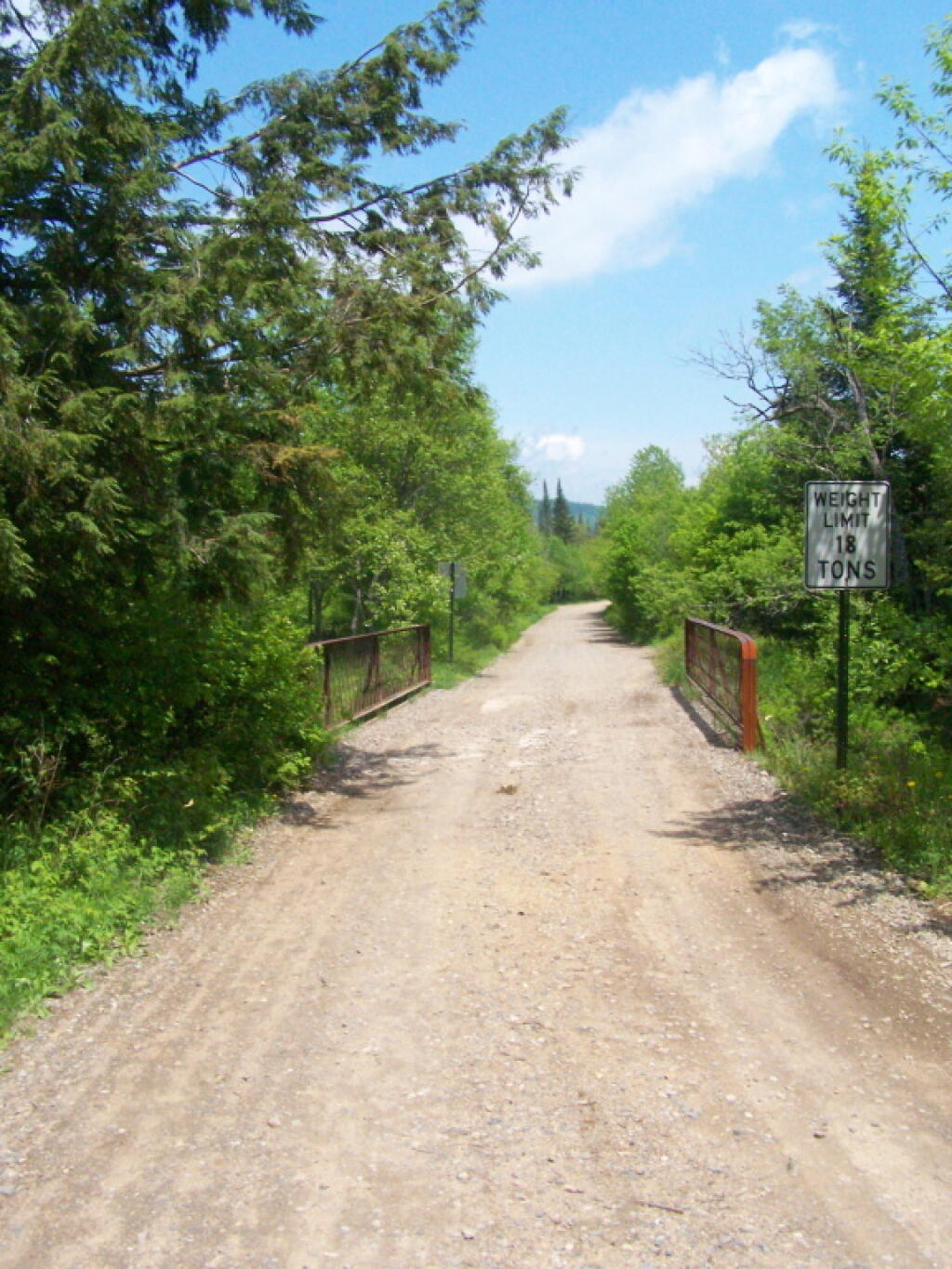
Located deep within the remote wilderness of the southern Adirondacks in the town of Arietta, Powley Place—often historically spelled “Pauley Place”—stands as a significant site in the environmental and social history of New York. Its story mirrors the broader transition of the Adirondack region from a landscape of early agricultural homesteads to a premier destination for wilderness sports and, eventually, a strictly protected forest preserve.
Early Settlement and Farming
The area first appeared in official records in the 1870 Agricultural census for Arietta, listed as the farm of John Powley. Valued at three hundred dollars, the homestead included 35 acres of improved land and 100 acres of woodlot. John lived there with his wife Rosetta and their children, supporting the family through modest livestock holdings including milk cows and oxen. At that time, the site was a functional island of agriculture in a sea of forest, producing grass and hay to sustain the family and their few laborers.
The Lodge and Sporting Era
By the late 19th century, the property began its transformation into a renowned sportsman’s lodge and hotel. As interest in hunting and fishing in the Adirondacks grew, the buildings at Powley Place became a hub for outdoor enthusiasts.
Management Transitions: Ownership and management shifted through several hands, including Albert Dunning and his wife Cora, who were renting the lodge by 1898.
State Acquisition: When New York State began aggressively purchasing land for the Forest Preserve, the property was sold to the state by 1900.
Squatter Tenure: Interestingly, despite the state taking title, former residents were often allowed to remain as “squatters” to provide essential lodging and services for the influx of sportsmen. In fact, Albert Dunning was even appointed by the state as a game warden to prevent timber theft while continuing to run the lodge.
Fire and Final Removal
The physical history of Powley Place was punctuated by fire and rebuilding. In the early 1900s, while under the management of Frank Fournia, a fire destroyed the main lodge. It was eventually rebuilt and operated by brothers Fred and Harry Fish as a lodging place for hunters until the mid-1910s.
The end of the permanent structures at Powley Place came in the autumn of 1917. As part of the state’s “Forever Wild” mandate, which sought to remove commercial structures and return the wilderness to its natural state, the hotel and lodge were torn down. This marked the conclusion of its era as a settled homestead and commercial outpost.
Modern Legacy
Today, Powley Place is a popular landmark on the Powley-Piseco Road, an unpaved, 17-mile seasonal road that cuts through the Ferris Lake Wild Forest. The site remains a favorite for:
Natural Beauty: It is home to “the Potholers,” a series of rapids and cascades on East Canada Creek where loose stones have carved deep holes in the flat bedrock over centuries.
Recreation: It serves as a starting point for hiking, camping, and fishing, preserved as a wilderness area for public use.
Though the buildings are long gone, the name Powley Place endures as a testament to the resilient pioneers and the early sporting culture that defined the southern Adirondacks.
President Donald Trump on Saturday appeared to complain that federal officials are “slow-walking” following through on an executive order he issued to complete the process of federally rescheduling marijuana.
“You’re going to get the rescheduling done, right, please? Will you get the rescheduling done, please?” Trump said, seeming to speak to a Department of Justice or White House official during an event in the Oval Office on Saturday. “You know, they’re slow-walking me on rescheduling. You’re going to get it done, right?”
The president did not specifically mention cannabis, and it’s not immediately clear who the official he was speaking to is, but it has been four months since he directed the attorney general to complete the process of moving marijuana from Schedule I of the Controlled Substances Act (CSA) to Schedule III “in the most expeditious manner.” That hasn’t yet occurred, however.
While my phone is warning of snow showers this morning and mercury was 31 degrees and I turned on the heated blanket this morning, it could be worse, I can remember a few weeks back. Still after several 70 and 80 degree days, and things rapidly greening up all around, it’s a painful reminder that summer is not here yet. The warm coffee and blueberry pancakes help a lot with that tangy ginger warming up in my mouth.
Another work week ahead, 😀 on Friday Old Smokey gets his bed liner installed. Then just waiting for the truck cap. The first half of the week is expected to be fairly cold but then seasonable by the second half with rain coming for the weekend. ☔ It’s fine, this past weekend was pretty nice especially on Saturday but also Sunday evening was decent but chilly once the rain pulled off. No vacation for me, got to work all week so I have more money to dump into the SuperDuty as a poor desprate individual, while all you drive back and forth in your 25-year old Honda Civic to your plastic house with a recycling bin in suburbs. Listening to Karen Dalton’s Are You Leaving for the Country, remembering those very wet, cold and rainy days riding trail at Horseshoe Lake stoned out of my brain, taking in all those autumn colors last autumn. 🍁 Fun times on that final big trip with Big Red.
Riding in today and tomorrow most likely, 🥕 need to get Cider Vingar and carrots this evening, as I hate plain water and pancakes without carrots in the mix. 🥞 When you get used to having every meal with a lot of fiber that makes things crispy and filling, it just tastes so empty and plain without them. Those pancakes were good this morning but without the carrots, really felt not super filling. 🎂 Wednesday is not only Earth Day 🌎 but also Administrative Professionals Day, 🖥️ so I’ll have to get some cupcakes or other treat for the team in the office and have a meeting. Also there is a planning board on Wednesday, so I’ll have that to go to. Friday I have to drive early up to Adirondack Off-Road outside of Schenectady with my mountain bike, 🚲 drop the truck off to get the big spray-in bedliner done, then hop on an express bus 🚍 downtown and from there ride over to the office. 🏢
Went out and visited Mom and Dad last night, 👨👨👦 it was good and cleared out so I did a quick jog up Bennett Hill before dark. Came back over Plank Road, I was happy to see the bridge has a posted weight limit of 12 tons so I can take Old Smokey over it legally. I’ve discovered more then a few roads are off limits in town where I live due to signs either saying “Weight Limt 3 Tons” or “No Commercial Trucks”. Old Smokey is registered at 3 1/2 tons, and has commercial plates. That said, most of the roads also have “Except Local Delivery” and I doubt the cops would follow you along the road to see if you’re just passing through, especially on just a 1-ton pickup. Still I try to follow the law when I think cops 👮 might be looking. It’s stupid, it’s a gasser pickup, and only 1 1/2 inches longer then my lifted Silverado. There was a surprising amount of color on Bennett Hill, and it wasn’t pungent with the stink of cow 🐮 then I expected for spring time, but it looks they’ve already disced the cow shit into the fields. 🚜 Planting season is probably only a month away.
The mirror has begun to tell a story I didn’t authorize. At forty-three, the gray hair isn’t just a change in pigment; it’s a physical clock, a silent metronome ticking away the seconds of my “freedom years.” As I look at the map, tracing the long ribbon of asphalt from Albany toward the Upper Peninsula of Michigan, I realize this isn’t just a road trip. It is a pilgrimage into the great northern forests, a search for something solid before the complexities of midlife claim my schedule entirely.
In my professional life as a Data Services Director, everything is abstract—election cycles, spreadsheets, and the digital hum of a world that feels increasingly disconnected from the soil. The Midwest, by contrast, feels tactile. Popular culture paints it as reserved and conservative, but I see it as a place of manufacturing and forestry, where people still make things from the earth. I need to stand in those woods for a week, maybe longer, to remember what it feels like to be anchored to the land.
The drive alone is a meditation. Two long days behind the wheel of my F-350 SuperDuty, stopping to sleep in the state forests of Chautauqua or the Allegheny National Forest, crossing through the rolling miles of Ohio until the air turns crisp with Michigan’s lakeland chill. But as I plan the rig and check the gear, a shadow hangs over the excitement: the knowledge that this may be one of the last times I can simply go.
Time is tightening its grip. Every dinner with my parents includes a subtle, or not-so-subtle, reminder that they are aging. They speak of a future where I am the one holding the keys to the homestead, the one responsible for the goats, the hogs, and the dog. My mother measures time in political cycles, hoping to see the end of an era, but I measure it in the deepening lines on their faces. I see a future where “getting away” is no longer an option because animals need feeding and parents need care.
The homestead is a complicated inheritance. It’s five acres, grid-tied, and nestled among “good ol’ boy” neighbors—not exactly the off-grid wilderness I dream of. In New York, even on agricultural land, you’re hemmed in by burn bans, gun restrictions, and a cultural bias against the very things—hunting, trapping, fishing—that make rural life meaningful. I think of my truck; it’s a beast in city traffic, but it would be perfectly at home towing cattle trailers on those five acres. Yet, even that future is uncertain. A nursing home could drain the estate, or family dynamics could shift the ground beneath my feet.
This trip to Michigan, then, is a reconnaissance mission for the soul. I want to see how they live in the North, to learn the layout of the land so that when retirement finally comes, I know where to plant my roots—somewhere the restrictions of the East Coast can’t reach.
Summer is coming, but I can feel it slipping away even as it arrives. I am building my rig not just to travel, but to outrun the clock for a little while. I need to see the Great Lakes and the deep timber of the UP while I still have the strength to wander, before the duties of the homestead and the weight of my own years turn me into a permanent fixture of the land I’m currently trying to escape. Time is ticking, and the road is calling.