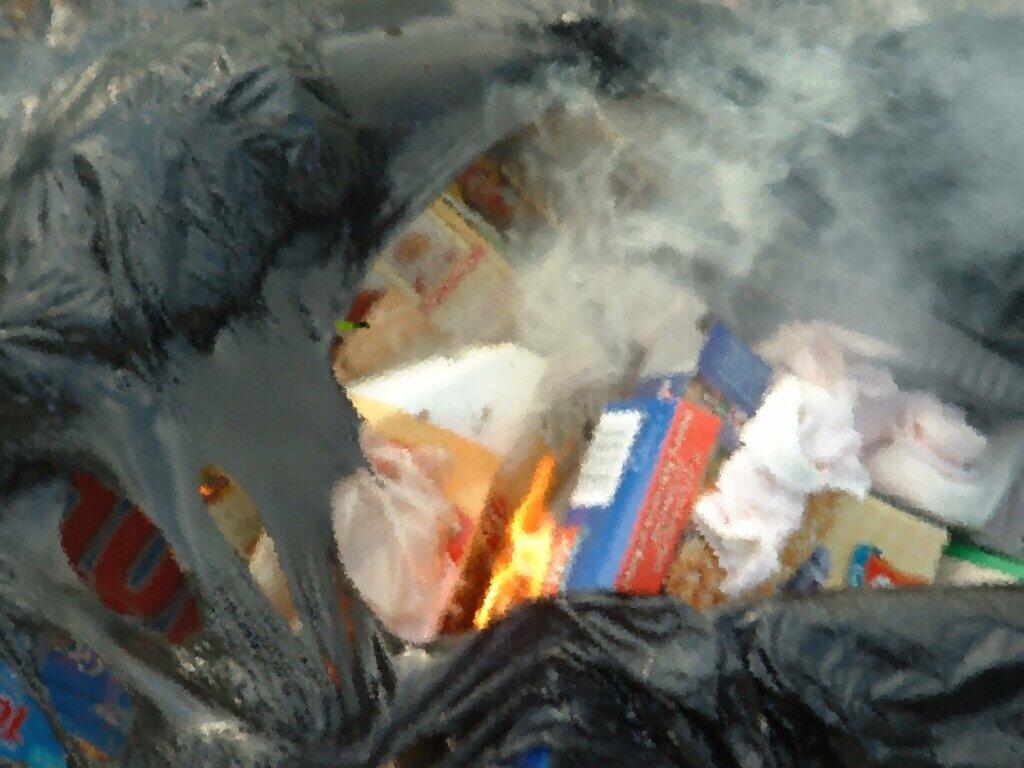
I concede maybe that’s a good thing, in he sense that too many people back in the day had burn barrels, tossed all their burnable trash in it, lit it with a match and walked away, allowing plastics and other chemicals in their trash to smolder away for half the day ruining many a nice country night for people who lived downwind.
There’s a reason why they call the smoke from smoldering burn barrels hillbilly incense, as you drive those back roads in Pennsylvania with those windows rolled down – or a million other back roads in Red States. It can be kind of nasty – as they say burning toxic trash is a national past time out in the country. Probably is, people like fire and not hauling all their burnable garbage to the transfer station and spending a bunch of money to get rid of it. It’s fun to watch things burn.
I always told myself for years when I moved back to the country, built my off-grid homestead I’d move to a free state where there wasn’t all those restrictions on open burning. But alas it seems like I’m settling in New York State with my good paying professional career. I’ll have land where I can have campfires and bonfires, and I’m thinking about becoming a volunteer firefighter.
The truth is I don’t want to burn toxic waste. I want to burn things that I can use the ash on my garden and to enhance my land and restore soil fertility. It’s not like I generate that much trash, especially now that I’m into healthy eating. A lot more of my trash now is compost, it belongs in a compost pile with manure, leaves and waste paper. I also am more concerned about fire risk, soon to be the owner of a homestead that I designed, built and put much of my hard earned money into. I don’t want my neighbors smoldering trash fire to become my wildfire.
It’s not to say I won’t burn things or have lots of fires. But it won’t be in a burning barrel or involve burning excessive amounts of toxic plastics, especially things like PVC lead coated wire or ABS plastics used in electronics and structural plastics. Somethings, unfortunately if you can’t reuse them are best for the landfill. And a lot of things don’t burn well at any rate, despite us rednecks of the world trying to burn everything we can.
I do think I’ll save most paper and cardboard to burn, along with film plastics, wrappers and feed bags. They’re excellent starters for campfires and bonfires and if you’re regularly having fires your unlikely to accumulate much. Burn it hot with minimal smell or smoke. Sit back and enjoy a cold beer while enjoying the fire. I figure if I’m building on raw land, going to have a lot of brush and leftover wood scrap to burn, providing many a nice summer night out in the country. Plus some junk mail is good for starting woodstove fires.
A combination of composting, eating healthy, producing my own food, burning non-toxic trash and compressing recyclables such a hard plastics and cans for taking to the transfer station, my hope is to get it down to the point where I can visit the transfer station maybe twice a year – to participate in urban recycling, get rid of broken appliances that can’t be repaired and other toxic trash. I don’t plan to produce a lot of trash nor do I plan to burn much – just papers and wrappers for starting fires.
Stationary Elevated Idle Control (SEIC) is a factory-programmed powertrain control strategy used in Ford SuperDuty Trucks to increase engine RPM while the vehicle is parked.
It is primarily used to drive auxiliary equipment via a Power Take-Off (PTO) system or to protect the battery and engine during extended idling.
PTO Power: Provides the necessary engine speed to run hydraulic pumps, air compressors, or generators.
Battery Charge Protection (BCP): Automatically increases idle to maintain voltage under heavy electrical loads.
Climate Control: Improves HVAC performance in extreme hot or cold weather by increasing refrigerant and coolant flow.
Engine Protection: Prevents “wet stacking” in diesel engines by maintaining higher combustion temperatures during long idles. Also raises the oil pressure which can reduce lifter wear, especially on older 7.3 Godzill engines.
For the system to engage, the vehicle’s computer (PCM) verifies these conditions:
Parking Brake: Must be firmly applied.
Transmission: Must be in Park (or Neutral for some manual setups).
Pedals: Foot must be off the brake and accelerator.
Speed: Vehicle speed must be 0 mph.
Engine Status: Engine must be at a stable base idle; for some models, oil/coolant must be above 20°F (-6°C).
While the logic is built into the truck’s computer, you typically have to “hook it up” manually or use aftermarket kits:
Access Wires: Ford provides “blunt-cut” wires under the dashboard (near the parking brake or OBDII port) for upfitters to tap into.
Upfitter Switches: Many owners wire the SEIC request to a factory Aux switch to turn it on/off from the driver’s seat.
Resistors: By adding a specific resistor to the circuit, you can set the exact RPM target (typically between 900 and 3,000 RPM, depending on the engine).
Kits: Companies like BD Power offer plug-and-play modules that include a dial to adjust RPM on the fly.
If SEIC won’t engage or randomly kicks off, check for:
Brake Lights: A burnt-out brake light or faulty brake switch can trick the computer into thinking the pedal is pressed.
Unstable Idle: If the engine is searching for idle (due to a dirty sensor), SEIC may refuse to take over.
Transmission Temp: On newer trucks, the system won’t activate if the fluid is too cold to protect internal components.
To wire Stationary Elevated Idle Control (SEIC) on a 2026 Super Duty F-350 with a gas engine, you will need to bridge the “SEIC Request” wire to an Upfitter Switch while installing a resistor between the “Reference” and “Signal” wires.
Wire Locations
On 2023–2026 models, the required wires are split between two locations:
SEIC/PTO Bundle: Located behind the passenger-side kick panel (outboard of the fuse box). You may need to pull back the carpet and unwrap a taped bundle to find a 26-pin connector or a set of blunt-cut wires labeled “PTO”.
Upfitter (AUX) Wires: Found in the engine compartment, typically behind the battery on the passenger side, taped to the main harness near the relay box.
Wire Color Guide (Gas Engine)
The following colors are standard for the 7.3L or 6.8L gas powertrains:
Function
Wire Color
Purpose
PTO Request
Yellow / Green
Triggers the high idle when it receives 12V power.
PTO Reference
Yellow / Orange
Provides 5V output for the resistor circuit.
PTO Signal
Green
Receives the resisted voltage to set the RPM.
Pass-Thru Wires
Varies (often Brown/White)
Use these to jump power from the engine bay to the cabin.
Step-By-Step Wiring Instructions
1. Set the Fixed RPM (The Resistor)
To achieve a specific RPM, you must solder a resistor between the PTO Reference (Yellow/Orange) and PTO Signal (Green) wires in the passenger footwell.
900 RPM: ~36k Ohm
1200 RPM: ~10k Ohm (Highly recommended for cooling/charging)
1500 RPM: ~5.1k Ohm
2. Connect to the Upfitter Switch
Since your AUX switch wires are under the hood and your SEIC wires are inside the cab, you must use the Pass-Thru wires.
Under Hood: Connect your chosen Upfitter wire (e.g., AUX 1 – Green/White) to one of the blunt-cut Pass-Thru wires (e.g., Brown/White).
Inside Cab: Locate that same Brown/White wire behind the passenger kick panel.
The Trigger: Connect that Brown/White wire to the PTO Request (Yellow/Green) wire.
3. Test the System
Ensure all safety “enablers” are met: Park, Parking Brake set, and feet off all pedals. Flip your Upfitter switch; the RPM should ramp up to your preset speed within 2–3 seconds.
Pro-Tips for 2026 Models
Dual GN/WH Wires: Be careful; there are often two Green/White wires in the bundle. Ensure you are using the one designated for the Upfitter switch (check your owner’s manual for the specific AUX switch map).
Resistor Wattage: Use at least a 1/2-watt resistor to ensure it doesn’t overheat over long periods of use.
Grounding: Unlike some older diesel models, the gas SEIC circuit usually does not require a manual ground connection to the chassis, as it uses the PCM’s internal return.
Resistor Chart for Gas Engines (6.8L/7.3L)
For the 2023–2026 models, Ford’s logic follows a specific resistance-to-RPM curve. These values assume a standard 1/2-watt or 1-watt resistor.
Target RPM
Resistance (Ohms)
Common Resistor to Use
900 RPM
35,200 Ω
36k Ω
1000 RPM
21,900 Ω
22k Ω
1100 RPM
15,400 Ω
15k Ω
1200 RPM (recommended)
11,200 Ω
10k or 11k Ω
1300 RPM
8,580 Ω
8.2k Ω
1400 RPM
6,670 Ω
6.8k Ω
1500 RPM
5,240 Ω
5.1k Ω
1600 RPM
4,170 Ω
3.9k Ω
1700 RPM
3,260 Ω
3.3k Ω
2000 RPM
1,424 Ω
1.5k Ω
2400 RPM
255 Ω
270 Ω
The “Sweet Spot”: Most upfitters recommend 1200 RPM (using a 10k or 11k Ohm resistor). This provides enough speed to maximize alternator output and A/C cooling without excessive noise or fuel consumption.
Minimum Resistance: Do not use a resistor lower than 250 Ohms, as this may trigger a circuit fault in the PCM.
Resistor Quality: Use Metal Film resistors if possible; they handle the temperature swings of a vehicle cabin better than carbon-composition types.
If you don’t want a fixed speed, you can wire a 20k or 50k Ohm Potentiometer (a dial) instead of a fixed resistor.
Connect the center leg of the dial to the PTO Signal (Green).
Connect one side leg to the PTO Reference (Yellow/Orange).
Turning the dial will now allow you to sweep through the RPM range in real-time.