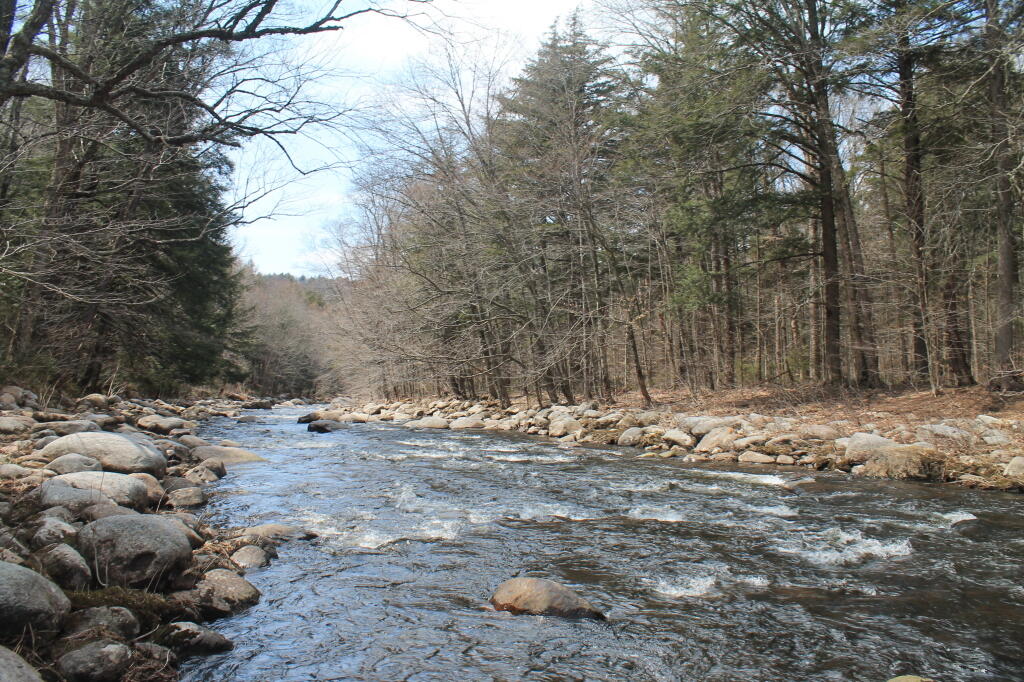
Gilboa is a town in Schoharie County, New York, United States. The population was 1,215 at the 2000 census. The Town of Gilboa is in the south part of the county and is southwest of Albany.
ccording to the United States Census Bureau, the town has a total area of 59.3 square miles (154 km2), of which, 57.8 square miles (150 km2) of it is land and 1.6 square miles (4.1 km2) of it (2.63%) is water.
The south town line forms a border with Delaware County and Greene County. The Schoharie Creek flows northward through the town. New York State Route 30 is a north-south highway in Gilboa. New York State Route 23 cuts through the southwest corner of the town. New York State Route 990V is a highway running eastward from NY-30 in the southeast part of Gilboa.
Most of the winter, I keep the main gas heat in my apartment set at 50 degrees, only turning it up to 55 or 60 degrees during periods of exceptional cold to ensure pipes don’t freeze. I don’t like wasting heat, because it’s expensive and a waste of fossil fuels that are non-renewable.
I am glad that the winter heating season is almost over. Sometimes I’m cold, but I’ve never seriously thought about leaving the heat much hotter. I could have it warmer if I turned on the electric heat upstairs, but I avoid doing that as it’s the most expensive form of heating, and I don’t need it. I’ve also considered a small space heater for my desk, but I’ve never gotten one, in fear that it will increase my electric bill.
I enjoy the fresh air, even if it means more noise, followed hot and humid nights. But the breeze is nice, as is getting out and spending nights down at the park or breathing in the fresh air. I don’t do the air conditioning thing, preferring to save money by using less energy, and spending more time outdoors, enjoying cold beverages.
One observation I have about President Donald Trump, is the need for more High Schools to teach basic economics. I didn’t learn much about economics, until I studied them in college. There should be a mandatory course on both macro and micro economics. It’s obvious that many in our country have a poor understanding of how the global economy works, why some communities and occupations struggle, and the pros and cons of each policy choice our society makes.
NY 990V, Bear Kill Road in Conesville is one of the few state reference routes that is signed as a touring route.
All reference routes start with 9, followed by the DOT Region (9). Undivided reference routes are then given a suffix of 0-5 and a letter. 990V was given a “V” because it looks like a “V” on the map, where it goes around the Schoharie Reservoir.
What you probably didn’t know is that NY 990V is exactly 9.90 km in length.
Lately there has been a lot of talk about the successes of Mothers Against Drunk Driving or MADD. Why is MADD not a potent political factor any more?
Besides, their successes at eliminating drunk driving making their organization obsolete, their failures at preserving the National Maximum Speed Limit have been under reported.
Well, a lot their failure as an organization was their disastrous campaign to preserve the National 55 MPH speed limit. Their Save the National 55 Speed Limit campaign became their focus of the organization and it was a focus that may have felt noble to its members but it was one that was not popular with the public.
Motorists like driving fast on the expressways. MADD for years pushed for tougher penalties against speeders, they were outright rebuffed in conservative states and in liberal states, the tougher penalties still were widely ignored. Motorists ignored the law and judges for the most part rarely gave tickets beyond the mandatory minimum. Radar detectors and CB radios allowed people to rat out the bears.
So no, MADD wasn’t a success at their second campaign that went up strongly against motorists desires for faster driving, even if they’re first campaign was quite sucessful.
Many people think that the climate is warming generally in Albany or maybe that summer days are getting warmer in Albany. The opposite is actually true – in the past twenty years summers are colder then in the 1950s and 1960s. In contrast winters and especially springs are warmer than years past.
Usually when the media reports about computer viruses, they are this dark and threatening thing, that will seize and lock up your computer, demand ransom payments, or otherwise delete and destroy your files. Some news reports also suggest that after you get a virus, your computer hardware will be forever destroyed, although that’s pretty uncommon. In most cases, a damaged boot-sector can be re-written using a boot disk. Spyware is often lumped in with computer viruses — some of it is spread in a viral fashion, but more commonly installed by somebody allowing remote access to their computer to an untrusted party.
The truth is that computer viruses aren’t that scary if you use commonsense — something I’ve always believed and have been confirmed based on my research. Many computer viruses are just nuisances rather then harmful. Few viruses go after Linux desktop computers, as virus makers prefer more popular platforms like Windows or Mac OS X. Despite the advertising, hackers most likely aren’t trying to take over your computer — but do keep your software up to date to ensure you aren’t running buggy software that can make you a target.
Linux developers tend to patch up security bugs and holes after they are discovered, which makes it more difficult to hack and propagate viruses in. The permissions model in Linux is stronger then Windows, and it’s more obvious when your elevating something to root in Linux then Windows. Plus, Linux is fast and easy to update with apt-get and there are large software repositories from official sources, so you are rarely downloading programs or files from insecure servers on the Internet. But mostly Linux’s security comes from less then 2% of desktop computers.
Windows is more of a wild card, but even on the operating system, you are unlikely to get spyware or a virus installed on it if you use commonsense and keep your system up-to-date. The built-in Windows Defender is pretty good, especially for a very light Windows user like myself. They’ve fixed the Excel Macro Virus issue in recent years with better permissions, but I know I’m still very careful on what I download and use on Windows. And I would never let anybody remote access my computer, although I do have TeamViewer installed for work — but only with trusted connections of IT department do I run that app. I also keep an eye on the process viewer, logs, and try to be an informed user of Windows, although I don’t like how hidden so much of settings in Windows.
One thing I didn’t know much about was how secure Android is on my phone. Android seems to hide the guts of how operating system works. I really don’t like the Android operating system, but I often think that’s my only real choice as Linux for phones is under-developed and not well suited right now for phones. Fortunately, it seems based on my research that there are relatively few cellphone viruses at this point, although they are certainly possible to be written and some exist that get around Android permissions. Most of them come from outside of the Google Play store, and they aren’t widespread in United States. But that’s something to watch out for in the future.