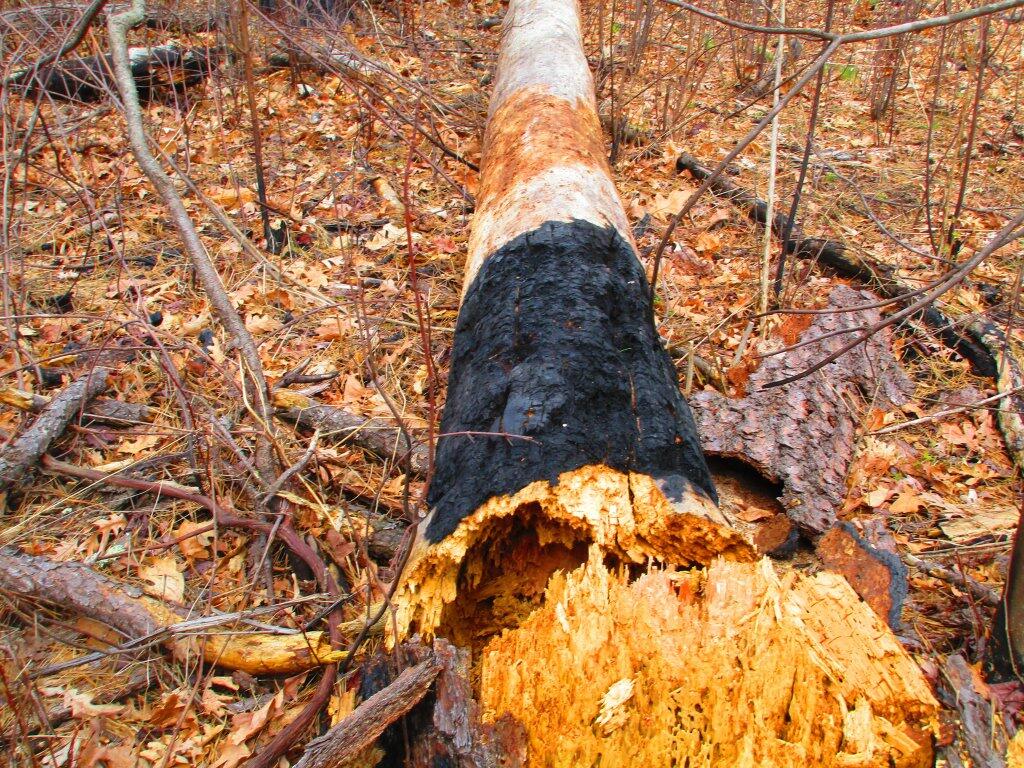
Balsam Swamp is a sprawling state forest that stretches almost 5.5 miles east-west across 4 towns. The area is very rural, and the landscape surrounding the State Forest is predominantly forested. Balsam Swamp State Forest is comprised of a mix of native hardwood forests, hemlock swamps, and conifer plantations. There are no designated recreational trails on the forest, but there is ample opportunity for self-guided day hikes to explore the diversity of habitats represented on this State Forest. Additionally, the western section of Balsam Swamp State Forest is adjacent to Five Streams State Forest to the south.
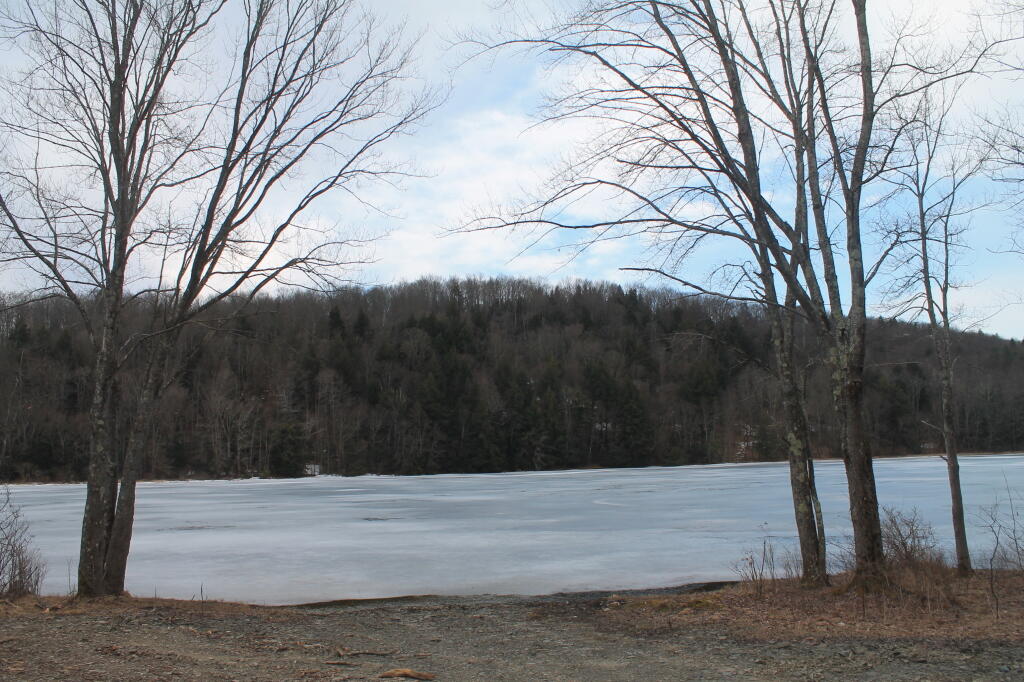
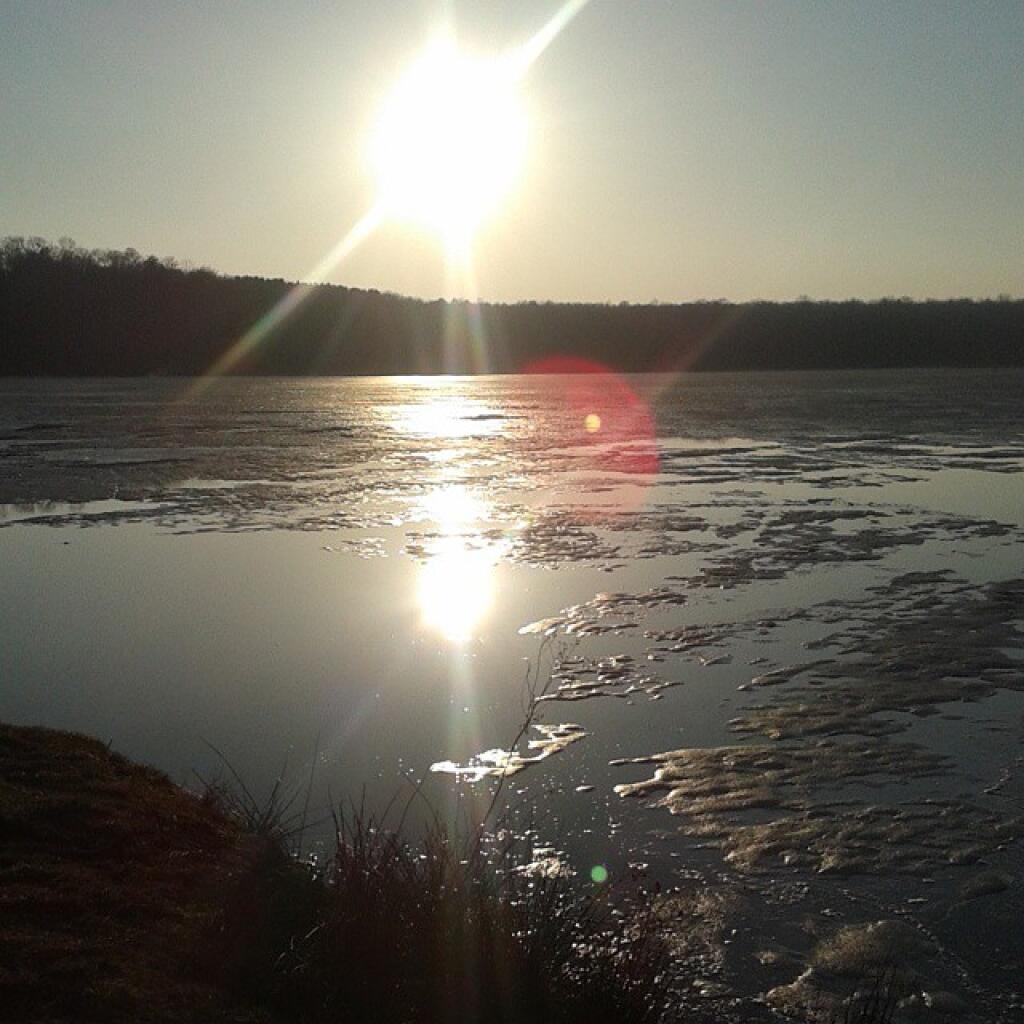
The main attraction of this forest is Balsam Pond. The impoundment is approximately 152 acres and is a popular destination for fishing and paddle boat sports. Balsam Pond is a warm water fishery that contains a mix of largemouth bass, smallmouth bass, chain pickerel, yellow perch, brown bullhead and sunfish. Tiger muskellunge have been stocked in the past with the last stocking occurring in 1995. However, there have been very few reports of anglers catching any of the adult tiger muskies. A shallow gravel boat launch is suitable for launching small fishing boats.
A small rustic camp ground is also located at Balsam Pond. Camping spaces are available at no cost on a first-come, first-serve basis and there is no running water or electricity. A fire ring, outhouse, and picnic table are provided for each camping space. A sign on Balsam-Tyler Road in Pharsalia designates the entrance to the boat launch and camping facility. This is a carry-in carry-out facility. Please do not litter.
People often forget how important recreational boating was to passage of the Pure Waters Act in 1965 and the federal Clean Water Act in 1970. In the early 1960s recreational power boats became popular thanks to advances in engineering and mass production, along with a strong economy that put power boats in the range of affordability for middle class families. The millions of new boaters were disgusted to find the water they were boating in appeared dirty, smelled bad, and the fish they caught tasted oily and like petrochemicals.
New York State like many other states and federal government had passed laws trying to clean up the rivers. In the 1920s, NY banned untreated discharges in the Hudson River with a goal of zero untreated discharges by 1939. The Great Depression and enormous cost of piping and building sewage plants lead to this goal to be unattainable. The second World War lead the Conservation Department to largely set aside this effort. That said, the zero discharge law forced municipalities to segregate out storm water from sewage for developments built after mid 1930s, and to treat sewage from these new developments. But few new developments were built in the 1930s and 1940s. Most developments were older, especially in the cities.
The 1950s came and went. New developments had their sewage treated but not the old cities, mainly because of enormous cost to treat sewage especially with combined sewers. The fifties weren’t kind to cities, with suburban development drying up their taxes. They could hardly afford a major public works projects, especially at the scale of millions.
Many Americans would have agreed with the conclusion that an important part of urban rivers were sewage and waste disposal in the 1950s and early 1960s. Rivers typically weren’t that polluted after you got a dozen or so miles away from urban areas, as sewage got diluted and attacked by bacteria.
But everything changed in the 1960s with recreational boaters. It would take decades to fully fix the problem – and it’s still bad in urban areas after heavy rains but it has gotten a lot better, especially in the past twenty years.
I guess I won’t be heading in early this morning to walk laps on the Concourse though I should still be in on time to work which ultimately is what’s important. Kind of a dreary day but it’s nice that it’s warm enough to have my windows open.
Good morning! Happy Thursday. Rain and 50 degrees in Delmar, NY. ☔ There is a southeast breeze at 7 mph. 🍃. The skies will clear tomorrow around 4 pm.
I really wanted to get an earlier start but it was not to be. 🤷♂️ My stomach was grumbling this morning and then I ended up going back to bed for some extra 💤 sleep and then it just seemed like everything took longer than expected this morning. 😦 Blueberry pancakes this morning. 🥞
Today will have showers likely, mainly before 11am. Cloudy 🌦, with a high of 62 degrees at 4pm. Five degrees above normal, which is similar to a typical day around April 20th. Maximum dew point of 54 at 1pm. South wind 7 to 13 mph. Chance of precipitation is 70%. New precipitation amounts between a tenth and quarter of an inch possible. A year ago, we had mostly sunny skies in the morning with a few breaks of sun the afternoon. The high last year was 74 degrees. The record high of 87 was set in 2017. 1.7 inches of snow fell back in 1942.❄
Solar noon 🌞 is at 12:57 pm with sun having an altitude of 55.9° from the due south horizon (-14.9° vs. 6/21). A six foot person will cast a 4.1 foot shadow today compared to 2.2 feet on the first day of summer. The golden hour 🏅 starts at 6:56 pm with the sun in the west (276°). 📸 The sunset is in the west-northwest (283°) with the sun dropping below the horizon at 7:33 pm after setting for 2 minutes and 58 seconds with dusk around 8:02 pm, which is one minute and 8 seconds later than yesterday. 🌇 At dusk you’ll see the Waxing Crescent 🌒 Moon in the west (273°) at an altitude of 35° from the horizon, 234,584 miles away. 🚀 The best time to look at the stars is after 8:37 pm. At sunset, look for rain 🌧 and temperatures around 61 degrees. The dew point will be 55 degrees. There will be a south-southeast breeze at 14 mph. Today will have 13 hours and 16 minutes of daytime, an increase of 2 minutes and 48 seconds over yesterday.
Last night with the rain I came home on the bus 🚍 and read for several hours. Similar to what’s going to happen today. Sucks that I won’t get a chance to get out walking but so be it.
Tonight will have showers, mainly after 8pm. 🌧 Low of 59 degrees at 4am. 22 degrees above normal, which is similar to a typical night around June 16th. Maximum dew point of 58 at 5am. 🏖️ Breezy, with a southeast wind 15 to 20 mph, with gusts as high as 30 mph. Chance of precipitation is 100%. New precipitation amounts between a quarter and half of an inch possible. In 2023, we had mostly clear skies in the evening, which became mostly clear by the early hours of the morning. It got down to 56 degrees. The record low of 13 occurred back in 1874.
Stilllooking cold and wet for the weekend. ☔ Might be best for just doing more reading 📖. Saturday, a chance of showers. Mostly cloudy, with a high near 49. Breezy, with a west wind 16 to 24 mph, with gusts as high as 37 mph. Chance of precipitation is 50%. New precipitation amounts of less than a tenth of an inch possible. Sunday, partly sunny, with a high near 59. Typical average high for the weekend is 58 degrees.
Looking ahead, there are 12 weeks until Independence Day 🇺🇸 when the sun will be setting at 8:37 pm with dusk at 9:10 pm. On that day in 2023, we had mostly sunny and temperatures between 84 and 54 degrees. Typically, the high temperature is 83 degrees. We hit a record high of 104 back in 1911.
Back when I was in Boy Scouts when we did backpacking, we did often did with about fifty pounds on our backs, and honestly it wasn’t a lot of fun. When I start doing some wilderness camping myself this summer, I want to pack as little as possible, but have the supplies to camp in relative comfort.
Camping hammock – A camping hammock provides a comfortable place to sleep, without having to bring a sleeping pad or tent.
Bug Net and bug spray – I need to get a bug net to use over my camping hammock. This is especially critical during black fly season but throughout the year, mosquito could be obnoxious while sleeping in the wilderness, especially near a lake.
Two or three cigarette lighters – Lighters are important for starting fires, which will provide light, warmth, and a way to cook without bringing a camp-stove back in wilderness.
Trowel – For burying poop, digging out a fire pit,
Rope – For hanging the bear bag, hanging up the tarp.
Water – Sufficent water for hiking, plus at night at camp.
Small pot and frying pan – For boiling water if necessary, cooking on the fire.
Old cloth bag – For storing food in a bear bag.
Map and compass – For navigating. I rarely use a compass, but if I were to get off a trail, I could use it to navigate back onto the trail.
Two or three flashlights – Flashlights break. Batteries go dead. I want to make sure I have light at night in the wilderness.
Camera – For making videos and taking photos of what I’ve seen.
Cellphone – For entertainment, journaling, listening to music and podcast. Might be handy in emergencies, and it’s fun to check out my exact location on the GPS, when I can find a land mark to orient myself on the trail
Additional Battery Pack – To charge my phone at night, so I can have all night entertainment, music, podcasts, journal.
Extra socks, pair of underwear and t-shirt. Wet clothes can be miserable. While I doubt I would need a full change of clothes, I think having a pair of socks, underwear, t-shirt is a good thing.
Toilet paper – Self explanatory, it cleans up better than leaves. I’d burn it, rather then let it become litter, even if it’s burried.
Small first aid kit – Just some bandages, wet wipers in small plastic bag.
Multi-function Knife – For anything I’d need to cut at camp. Maybe also a bigger knife, especially during hunting season
Candles – To provide additional light at camp.
Flags – American flag and Don’t Tread on Me flag for decoration.
Food and meals … I want to keep things as light and simple as possible, not requiring much cooking.
Water – Few things are as critical as having sufficient clean water to drink. I would probably add a shot of cider vinegar to get rid of that nasty off-taste that water sometimes has locally from the minerals.
Frozen Hot Dogs, Beans/Canned Veggies or Soup – Something lightweight that wouldn’t require a lot of wait. Ideally, I’d avoid canned goods, that require the can to be carried out at the end of the trip.
Cookies – Calories for energy, that are tasty for a dessert.
Oatmeal – For breakfast, that is quick and easy. I could boil water for that. I probably would skip coffee for breakfast.
A few other things I might want to think about bringing …
Small Tarp – While I probably wouldn’t back country in rain, it might be handy for a pop up thunderstorm.
Beer – I might bring a can or two of beer to enjoy by the fire at night.
Fishing pole/night crawlers/few bobbers/hooks – For fishing during the summer months to pass time, additional source of food. Not going to bring my full fishing kit. Place in small plastic bags.
.22 rifle – During small game season for harvesting squirrel or rabbit. I would put it on a sling and care over the shoulder.
My goal is simple: have things that can be carried in a small, lightweight backpack that would make exploring the wilderness fun, not too bogged down.
The fastest growing form of suburban sprawl over the next ten years is not likely to be shopping mauls, tract housing, or apartment complexes. Instead it’s likely to be the acres and acres of industrial solar facilities that are popping up everywhere. Some of it will be forest land chopped down and some of it will be farm land – although most will be either low quality brushy abandoned farmlands or low quality pasture and hay grounds – as they are the most affordable to develop.
Now the greenies may want you to believe that industrial solar facilities have zero impact on the land or that they may be a net improvement. I don’t know, they certainly impact the scenic characteristics of the land by developing it. Wildlife habits will be altered as will land cover. But on the flip side, solar farm development has a limited impact on compaction and damage to the soil – compared to most housing, commercial or industrial development. A solar farm ripped up, grounds tilled, fertilized and seeded after a few years probably could be largely restored as the marginal ag land or forest land they once were. Solar farms keep the land in the hands of relatively few owners which makes it easier to return to farm land or forest lands when the time comes.
I think there is a lot of wishful thinking about solar panel recycling. Yes, there are some interesting research going on but anybody who is serious knows what is going to happen to most solar panels when they are discarded – useful parts will be sold on the second hand market to other more marginalelectric companies, off-gridders and the third world. Copper wire and transformers are valuable at scrap yards. Even smaller parts like blocking diodes are likely in some cases to be resold. The I beams and racks have value on the scrap yard. Most broken or worn out panels are likely to be smashed and landfilled at construction and debris landfills, but with their aluminum frames salvaged as scrap metal. Probably there is a lot less glass and debris in the panels once they are crushed. Concrete pads and footings might be landfilled or pulverized and used as beneficial fill depending on low conditions.
I was reading that a lot of farmers actually like these mega-solar facilities despite consumption of land that produces feed. If anything, removing marginal land off the market might increase commodity prices. In many cases the solar companies aren’t buying the land but leasing it as tenants, usually with an agreement to remove the panels and frames once they are no longer useful. If the solar companies abandon the facilities, there is still a lot of scrap metal from the panels, mounting platforms, and wire that can be sold, and panels can provide power on farm or be sold. And solar facilities don’t care about the smell of manure or smoke, the noise of tractors or cattle, they don’t run their ATVs in farmers fields. And they aren’t necessarily permanent. They can be removed, scrapped and hauled to landfills and land largely restored.
My criticism over the industrial solar facilities is I’m not sure how really valuable they are as a climate solution or improving the environment. I think they are oversold compared to the amount of energy they put into the grid, they’re impacts on scenic beauty, open space and the environment downplayed. They are taking tens of thousands of acres – maybe soon hundreds of thousands of acres and turning it into industrial electricity generating facilities while having a fairly minor impact on the grid and carbon emissions. For something that is largely duplicate of the fossil plants that generate energy with far lower environmental footprint.
I am hoping the rain holds off for a while so I can ride to work. That said, who knows if I’ll get wet on the way in, and I concede I’ll probably be quite wet come the afternoon for the ride back to the express. I don’t expect to ride all that the way back to Delmar. It’s fine, I think we’ve made it to the mild part of the year, and I can’t imagine the green up is far away.
Good morning! Clouds and a bit damp with the breeze picking up, around 55 degrees in Delmar, NY. ☁️ There is a south-southeast breeze at 14 mph. 🍃 with gusts up to 24 mph 💨💨💨. The dew point is 43 degrees. The skies will clear Friday around 3 pm.
At five o’clock this morning ⏰ I got the bread and spaghetti squash a cooking, along with a pot of cranberry beans. 🫘🍞 Two types of bread baked, one is carrot 🥕 bread and the other one is onion bread. 🧅 Dinner tonight, which I’m sure I’ll be enjoying after getting soaked on the ride home ☔ will be chicken 🐔 soup. Eggs 🥚 for breakfast.
Riding in this morning 🚲 but I concede it will likely be the last time this week. 😔 Just going to rain most of the second half of the week. ☔ Probably get wet riding from Menands to the old train 🚉 station in the evening waiting for the bus 🚍 but in the evening I don’t care and can get changed when I get back home 🏡.
Today will have showers likely, mainly after 2pm. Cloudy 🌦, with a high of 61 degrees at 3pm. Four degrees above normal, which is similar to a typical day around April 18th. Maximum dew point of 49 at 5pm. South wind around 14 mph, with gusts as high as 24 mph. Chance of precipitation is 60%. New precipitation amounts of less than a tenth of an inch possible. A year ago, we had mostly sunny skies. The high last year was 67 degrees. The record high of 86 was set in 1922. 5.7 inches of snow fell back in 1961.❄
Not going to be the nicest day ever ☔ but not so cold and I have to work. Plus I appreciate how mild it’s been and I’ve had my windows open helping to ensure lots of fresh air at night for good sleeping. 🛏 I feel well rested after last night with the windows open. 🪟 I’m glad the nicer weather is back again. Yesterday felt so nice with the temperature reaching the mid seventies by afternoon with lots of sun ☀.
Solar noon 🌞 is at 12:57 pm with sun having an altitude of 55.5° from the due south horizon (-15.3° vs. 6/21). A six foot person will cast a 4.1 foot shadow today compared to 2.2 feet on the first day of summer. The golden hour 🏅 starts at 6:55 pm with the sun in the west (276°). 📸 The sunset is in the west-northwest (282°) with the sun dropping below the horizon at 7:32 pm after setting for 2 minutes and 57 seconds with dusk around 8:01 pm, which is one minute and 9 seconds later than yesterday. 🌇 At dusk you’ll see the Waxing Crescent 🌒 Moon in the west (277°) at an altitude of 23° from the horizon, 231,965 miles away. 🚀 The best time to look at the stars is after 8:36 pm. At sunset, look for rain 🌧 and temperatures around 57 degrees. The dew point will be 50 degrees. There will be a south-southeast breeze at 6 mph. Today will have 13 hours and 14 minutes of daytime, an increase of 2 minutes and 49 seconds over yesterday.
Last night went to the park 🏞 and read for a while before coming home to knead bread. Dinner was sweet potatoes 🥔 and onions and other good stuff. I didn’t carry a physical book, 📙 just more reading with that Libby App. It’s pretty awesome. 📱
Tonight will have a chance of showers, mainly after 4am. Mostly cloudy 🌧, with a low of 50 degrees at 5am. 15 degrees above normal, which is similar to a typical night around May 20th. South wind around 6 mph. Chance of precipitation is 30%. New precipitation amounts of less than a tenth of an inch possible. In 2023, we had clear skies in the evening, which became mostly clear by the early hours of the morning. It got down to 37 degrees. The record low of 20 occurred back in 1874.
Weekendlooks kind of suck again. 😕 Saturday, a chance of showers before 2pm. Mostly cloudy, with a high near 51. Breezy. Chance of precipitation is 40%. Sunday, a chance of showers after 2pm. Partly sunny, with a high near 62. Chance of precipitation is 30%. Maximum dew point of 46 at 7pm. At least it will be wet until the green up reducing the fire risk. 🔥 Typical average high for the weekend is 58 degrees.
Believe it or not there are 3 weeks until May 🕊 when the sun will be setting at 7:57 pm with dusk at 8:26 pm. On that day in 2023, we had rain and temperatures between 59 and 45 degrees. Typically, the high temperature is 66 degrees. We hit a record high of 86 back in 2001. By then things should be greening up nicely at least outside of the high country and the Adirondacks. 🌸
So their county codes go from Albany (1) through Yates (62). It’s a very memory efficient way of storing the data, especially back in the 1960s.
Which is all fine, except there is no consistency between state agencies. The NYS Board of Elections uses “St. Lawrence” county rather then “Saint Lawrence” county in the sort. So Saint Lawrence County is number 50 rather then number 45 if you were going to spell it out. Though they’re not that concerned about memory, as they store towns and cities as strings, rather then numeric codes.
In contrast, the NYS Health Department for Medicaid and other purposes does it the traditional spelled-out way, Saint Lawrence is county number 45.
Then the NYS DOT uses their own system, that involves two alphabetic characters (16-bits), such as AL for Albany, ER for Erie, SV for Sullivan, SL for Saint Lawrence, etc. Heck of it is, if the DOT used just ordinary FIPS codes, they could store the information in only 7-bits at least in NYS (0-127, as Yates County is FIPS code 123).