Thinner wires can help save you on your electric bills, especially with LED lighting. I accidentally cut my power consumption from 27 watts to 11 watts just by using too thin of wires in a temporary design for the led driver I built. Things though are a bit dimmer now.
This is NOT recommended though for high amperage loads or high voltage as the wires may get hot. But for low voltage lighting purposes, thinner wires or any resistor for that matter will reduce the current flowing through the fixtures.
I got the power supply in the mail today, for powering the light over my bed. At $16 it wasn’t cheap, but it was UL-certified and seems like it has a good cord and is hefty from it’s weight. I expect it will last a long time, and pose little fire or electrocution risk, despite sitting next to my bed to power the light over my bed. While I didn’t measure the voltage, I assume it’s output is somewhat above 12 volts even with a 2 amp load, as it seems like the LED strip driven by it is a little brighter then with my other knock-off $9 power supply that powers the colored LED stips in my apartment.
The next step is to wire up a board with a MOSFET transistor, Arduino, and bluetooth module. Not super big deal. The code should be quite simple, as it’s just one channel to control via pulse with modulation, and of talking to Bluetooth module, which is actually just a very basic serial module that converts whatever you send it with the phone into plain text. At 27 watts, it’s a bit too bright and energy hungry for my liking, but that will be good for waking up in the morning, and maybe for reading. The rest of the time, I will use pulse width modulation to appropriately dim the light to more reasonable level. All and all, with the LEDs in the lumiere, I am a bit disappointed at the level of illumination per watts inputted, but I guess a home made LED smart light is never going to be efficient as a commercial LED bulb. I think the output is probably close to 80-100 incandescent bulb, although the light is spread out over a meter, so it’s a bit hard to judge.
The plan is eventually to upgrade the main colored LED strip that gives soothing reds and a “virtual” sunset and sunrise each weekdays into something driven by an ESP32 microprocessor, instead of the Arduino Uno that is currently controlling it. This will eliminate the flicker on the blue channel, which has never worked right because the infrared remote module screws up one of the PWM channel timers, and there is only 3 separate timers on the ATmega 328 microprocessor used on Ardunio. The ESP32 with it’s greater ram and speed not only will be able to handle the many colors betters, it will have Bluetooth to communicate with the warm white strip over my bed, turn it on automatically in the morning. I don’t plan to include a clock module with the warm white strip — all the timing will come from the DS-3231 timer clock on the ESP32 and be sent over Bluetooth as a slave, I mean follower.
This is a work in process, but the things I learn about microproccessors and lighting will help me be smarter about electricity, increase my ability to build low-cost devices, and use energy responsibly, which will be an even bigger deal when I own my own land.
Good morning! Happy Small Business Saturday 🛍️! Next Saturday is December 🎄. Yeap, getting Big Red governmentinspected on Wednesday, Trump will be proud. Partly cloudy and 24 degrees in Delmar. ⛅ There is a south-southeast breeze at 5 mph. 🍃. With the sun, things feel quite mild. There is a inch of snow on the ground. ☃ ️Things will start to thaw out at around 11 am. 🌡️ Snow won’t last long locally once the rain comes.
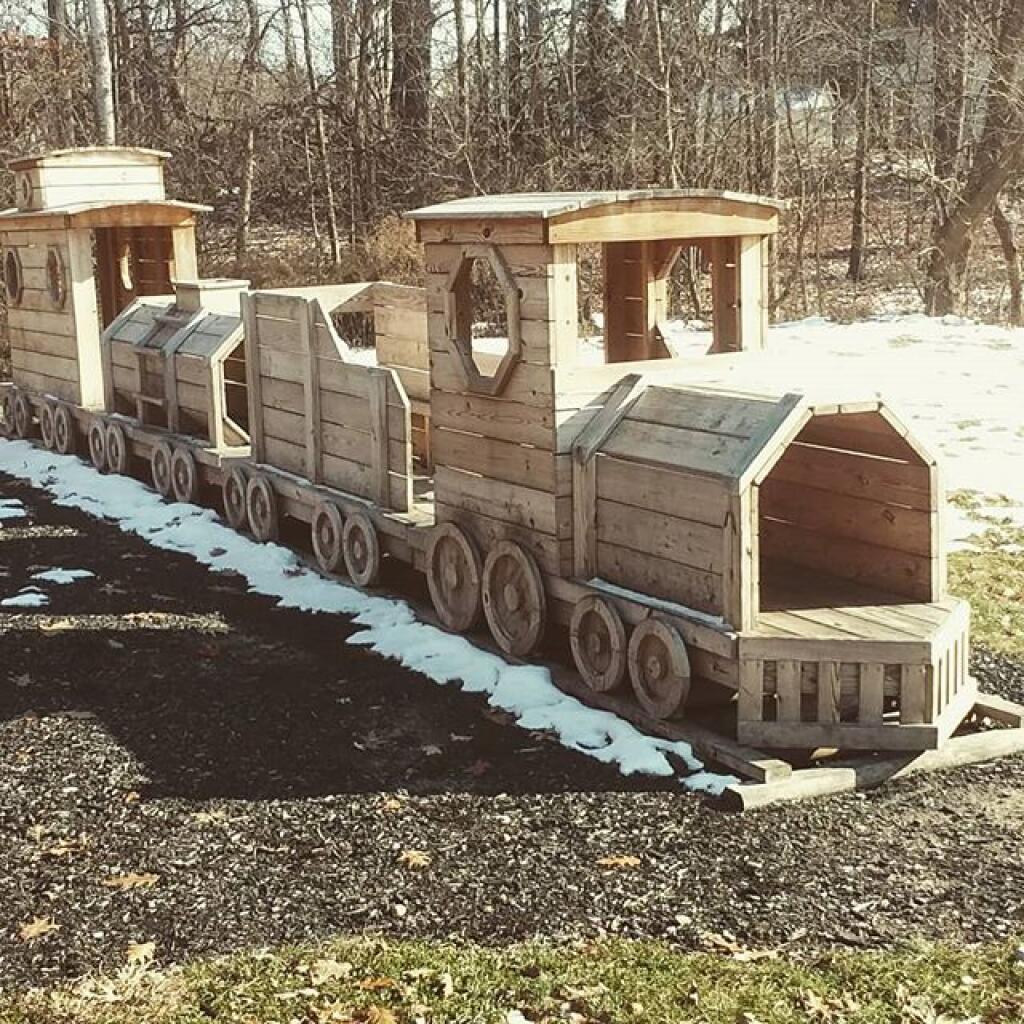
It’s a pleasant morning, so I am going to go for a walk out to Voorheesville along the rail trail, 🚂then come home for lunch then down to the library. 📚I will do my internet thing – the internet works fairly well now – at least in certain parts of the library then come home and work on some electronics projects,🔬 then read more of The Unsettlers, a book by Mark Sunden about off griders and back to landers. 🚜
Today will have a chance of rain, mainly after 4pm. Increasing clouds 🌞, with a high of 38 degrees at 2pm. Six degrees below normal, which is similiar to a typical day around December 8th. South wind 5 to 8 mph. Chance of precipitation is 50%. New precipitation amounts of less than a tenth of an inch possible. A year ago, we had mostly sunny skies. The high last year was 48 degrees. That year I was hiking Moxham Mountain and camping on the East Branch, it was nice. ⛺The record high of 70 was set in 2014. 8.8 inches of snow fell back in 1898.❄
The sun will set at 4:25 pm with dusk around 4:56 pm, which is 34 seconds earlier than yesterday. Not becoming much earlier at this point. 🌇 At sunset, look for rain showers pushing in 🌧 and temperatures around 37 degrees. There will be a south-southeast breeze at 6 mph. Today will have 9 hours and 27 minutes of daytime, a decrease of one minute and 44 seconds over yesterday.
Tonight will rain. Patchy fog after 10pm. 🌧 Low of 37 degrees at 6pm. Eight degrees above normal, which is similiar to a typical night around October 26th. Light and variable wind becoming northeast around 6 mph in the evening. Chance of precipitation is 90%. New precipitation amounts between three quarters and one inch possible. In 2017, we had clear skies. It got down to 39 degrees. The record low of 2 occurred back in 1938.
I am watching the forecast, but I’m thinking I may get out of town next weekend as long as the forecast remains true 🌲and we have nice weather Saturday and Sunday doesn’t turn out to be icy. Probably head up north, as at this point it will be mostly muzzleloaders and a handful of riffle and small game people in the woods as all the action now is the Southern Zone. 🔫
As previously noted, next Saturday is December 🎄 when the sun will be setting at 4:22 pm with dusk at 4:54 pm. On that day in 2017, we had rain, mostly cloudy skies and temperatures between 45 and 31 degrees. Typically, the high temperature is 41 degrees. We hit a record high of 67 back in 1934.

![Untitled [Expires June 27 2024]](https://andyarthur.org//data/photo_014177_large.jpg)