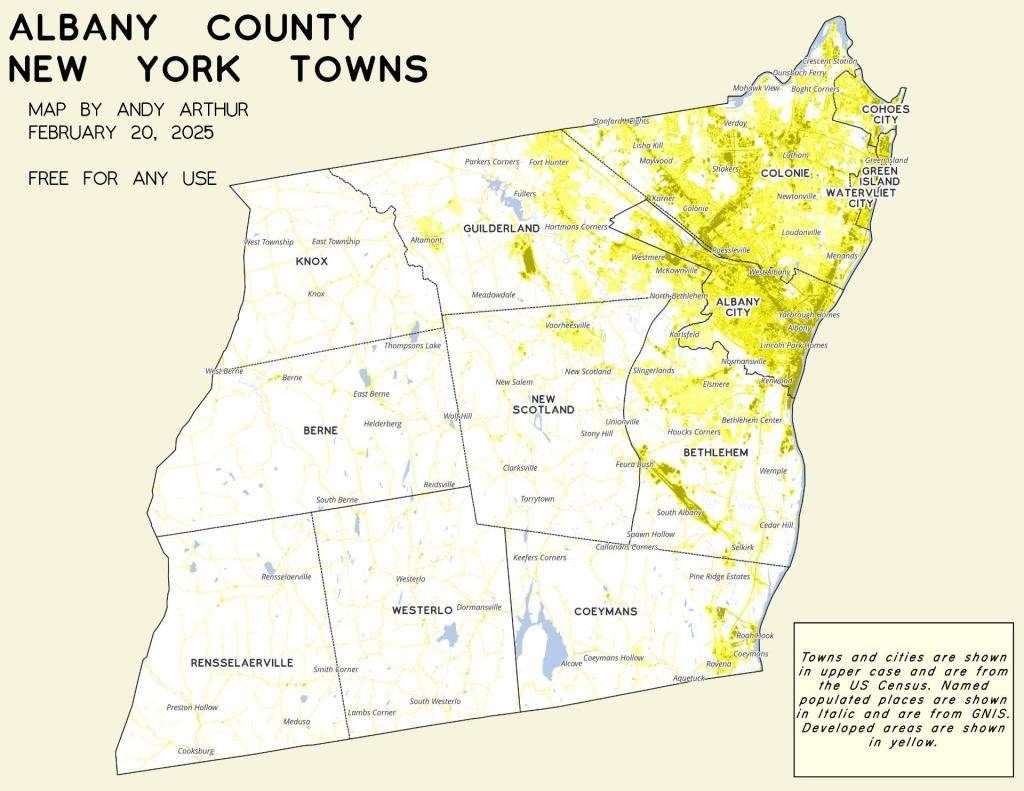
Been continuing to look at continuing education opportunities and certifications I could get in the GIS geographic information systems field. I am really not excited about going back to college, I am so beyond that in my life but I do see some value in having some formal training for more structured thinking around map making – and as something I can list on my resume.
I am hoping at this point to keep my current job for the remaining years of the decade so I can get 20 years in and that extra bump that you get with Tier 4 retirement. But additional skills wouldn’t be back to fall back on should things not go to plan. Plus I will have a gap I need to fill between when I own my off-grid homestead and full retirement. The GIS field is in high demand and I have a lot of hands on experience from my blog and community groups and others I’ve helped out with map projects.
Still something to research further. So far I’ve not found a GIS study program that fits well with my hands on experience, my learn it non professionally way of doing things with a hobby. Something that is actually worthwhile to list on a resume. I should read up more and network with the folks in the state GIS Association. I am also a bit hesitant to learn commercial software and the formal ways of doing maps, as I like the anything goes, if its pretty and works well for my purposes as a hobby. The professional GIS industry just seems so stuffy and set in its ways, resistant to the hobbyist who likes to play with maps. Plus I’m no fan of expensive commercial software and proprietary datasets when I’m such a big user of free government data and open source QGIS.
Certainly there is a lot of things that can be done with GIS professionally. But I can’t imagine ever working for a planning commission or even worse a developer when I’ve used my learned by doing skills over the years to critique and challenge developers and planners. I get there is a lot of money working to be made developing farmland and forest into commercial developments but it’s not an industry I’m particularly interested in supporting. But maybe if it is a good income for that time between my reduced income work when I have my off grid homestead until I can collect all my well earned retirement benefits.
It looks like the upcoming week with be unstable and fairly cool but the dampness and humidity is going to be around through the week. The main reason why the dew point is going to be so high, is it’s going to be wet. The weekend though looks pretty nice, although a bit cool especially if I am planning to go to the Adirondacks. Starting to loose a bit of time in the evening as the month progresses.
We had one, once. The Food and Drug Administration approved LYMErix, manufactured by SmithKline Beecham (now GlaxoSmithKline), for use in 1998. LYMErix worked by inducing antibodies into human blood, which would then go into any ticks that attached to your body. There, they would neutralize the bacteria that cause Lyme, Borrelia burgdorferi, before the bacteria could go from the tick into you. In clinical trials, the shot showed about 78 percent effectiveness after the required three doses (hey, I’d take it). But some patients who got the shot after it went on the market testified that they developed arthritis after vaccination. The FDA investigated, but decided the evidence that the vaccine was linked to patients’ arthritis wasn’t strong enough to withdraw its approval for LYMErix. Sales fell nonetheless, and the company pulled the vaccine in 2002.
The story of LYMErix’s downfall has become a case study in the history of vaccines, in part because of its complexity. In his book on the Cutter Incident—a disastrous episode in the mass distribution of the Salk polio vaccine—and its impact on vaccine production, vaccine historian Paul Offit described what happened with LYMErix as a story about liability. The Lyme vaccine was an optional shot, so it wasn’t covered by the National Vaccine Injury Compensation Program. (The program was set up in the 1980s to encourage pharmaceutical companies to continue production of vaccines by reducing the fear of liability.) Because of that exemption from the federal program, writes Offit, there was no cushion between the manufacturers of LYMErix and anyone who might claim it caused their arthritis. The vaccine “was left to survive the abuses of personal injury lawyers and the inaccurate media reports that inevitably follow.” Advertisement The perception was that people got Lyme disease from their beautiful lawns in Connecticut.
This is how I have seen it explained, in shorthand form: We don’t have a Lyme vaccine because of anti-vaxxers. Retelling the LYMErix story in 2018, Vox’s Brian Resnick described it as “a stark reminder of how anti-vaccine mania of the past few decades is leaving us all more susceptible to disease.” Brittany Flaherty pointed out in a 2019 STAT piece about the Lyme vaccine that LYMErix hit the market at a bad time for vaccine hesitancy and anti-vax activism. The infamous Lancet report claiming that the MMR shot was linked to autism was published in 1998 (it does not; the paper has been widely debunked and retracted), and the rotavirus vaccination RotaShield was withdrawn from the market in 1999, after a number of infants who received it suffered intussusception, or bowel obstruction. There was an unease in the public climate around any new shot, especially an optional one.
But there’s another reason LYMErix had trouble: It had what I think of as a “New England problem.” The perception was that people got Lyme disease from their beautiful lawns in Connecticut. “For many individuals in Lyme-endemic areas, it is precisely the environmental privilege of being able to live in or close to ‘nature’ that makes possible the environmental risk of Lyme disease,” wrote Abigail Dumes, an anthropologist who has published a book about Lyme. Lyme does not stand to affect everyone; it is dependent on the range of the deer tick and cannot be transmitted between people, so it has a unique status among infectious diseases. The LYMErix shot was not like the MMR vaccine, a key tool of public health that would be recommended for all children so that transmissible diseases would stop spreading; it was seen as a choice, one made by privileged adults who wanted to live freer of fear. Chinh Le, a member of the Centers for Disease Control and Prevention’s Advisory Committee on Immunization Practices, called the shot a “yuppie vaccine” for people who “will pay a lot of money for their Nikes and their Esprit and shop at L.L.Bean’s” and who “will have no consideration for cost-effectiveness when they want a vaccine because they’re going to travel to Cape Cod.” (I’m in this picture, and I don’t like it!) Historian Robert Aronowitz cites Le’s testimony in a retrospective of LYMErix as evidence that regulators were lukewarm about the shot. Aronowitz notes that the lack of enthusiasm showed up in their recommendations for who should get it: The government issued a “should consider” recommendation for people at high risk for tick bites in areas where Lyme was present, and a “may consider” for people sometimes exposed to tick habitats. Some experts Aronowitz interviewed thought these designations may have made it hard to encourage uptake.
I wonder if the state will eventually replace the fairly unique bridge dams on the Mohawk River with traditional dams with tainter gates.
Tainter gates would be better if unpredictable heavy rains become more common during the navigation season and it’s necessary to adjust river levels on an emergency basis but bridge dams are better historically because they cause less problems with ice jams in the winter months as they typically have fewer piers. Tainter gates are generally more reliable. Bridge dams can’t be raised in an flooding emergency, causing flood waters to back up until the panels fail, although the design of bridge dams usually means during extreme flooding only the panels and maybe the panel frames are sacrificial.
I think it's worthwhile to at least review some of the meetings and materials of the Climate Action Council to get a better idea of the future of the state. While certainly these materials -- largely generated by idealists with no real power -- are just brainstorming sessions, the state may have dropped hints on how they plan to use political power to change the face of the state. After all, the works of the Temporary Commission on the Future of Albany, along with planning document "Albany - A Plan for the Capital City 1963" has proven to be a powerful roadmap in understanding on what has happened to Albany in the coming years.