
A Guide to Not Losing Your Mind Over $5 Gas ⛽
We’ve all seen it. Gas prices tick up by a buck fifty, and suddenly the local news acts like we’re entering a Mad Max wasteland. People start “hypermiling” (which is just a fancy word for driving like your grandma) and frantic big truck owners start eyeing the bicyclists they once mocked with genuine envy.
But here’s a secret: If you want to keep your sanity, you need to think in decades not days with your big assed truck.
Why You Shouldn’t Trade Your Truck for a Toaster 🫓
Over the 10 or 15 years you own a vehicle, you’ll see seasons of “Feels Almost Like Free Gas” and seasons of “It’s Painful to Look at That Number”.
If the average price over those ten years fits your budget, you’re fine. The media loves to yell about the benefits of electric cars the second gas hits a record high, but buying a $50,000 Tesla to save $40 a week at the pump is like burning down your house to stay warm for an hour. It’s a panic move. Buy your car for the long haul, not for this week’s headlines.
Don’t Cancel the Road Trip Over a Hundred Bucks 
The “Vacation Cancellation” is the weirdest psychological trap of all. People will literally call off a 1,000-mile family road trip because gas jumped sixty cents.
Let’s do the math: In a big old pickup getting 15 mpg, that price hike costs you an extra… $100.
You’re going to rob a great week long adventure over $100 bucks? If you have the money, just suck it up. Pay the fucking “Adventure Tax.” Life is short, and gas prices are a roller-coaster—you don’t jump off the ride just because it’s on an incline.
Choose Your Truck Wisely 🛻
Be strategic before the crisis hits:
- The Commuter: If your daily drive is a three-hour odyssey through stop-and-go traffic, yes, buy the hybrid. You’re auto-dependent; make the math work for you.
- The Weekend Warrior: If you live in the city and only drive to the hardware store or the lake, who cares if you get 14 miles per gallon? You aren’t driving enough for the efficiency to matter. Buy the car you love, fill it up once a month, and ignore the sign on the corner.
The Zen of the Pump 🎢
When gas is cheap, don’t do a victory lap—just realize you’re “banking” those savings for the next inevitable spike. And when it gets expensive? Just realize it’ll probably be back down in a few months.
Stop letting a plastic number on a pole dictate your happiness. It is what it is, gas is expensive. If you’ve got a good car and a destination in mind, just pay the goddamn man at gas station and keep driving.


Discover Charles Baker State Forest
Looking for a premier outdoor escape in Central New York just 30 miles south of Utica and 40 miles south-east of Syracuse? Charles Baker State Forest offers over 9,000 acres of rugged beauty, multi-use trails, and diverse camping options. Whether you explore on foot, horseback, bike, or kayak, this hidden gem has something for every season.
Many things to do 


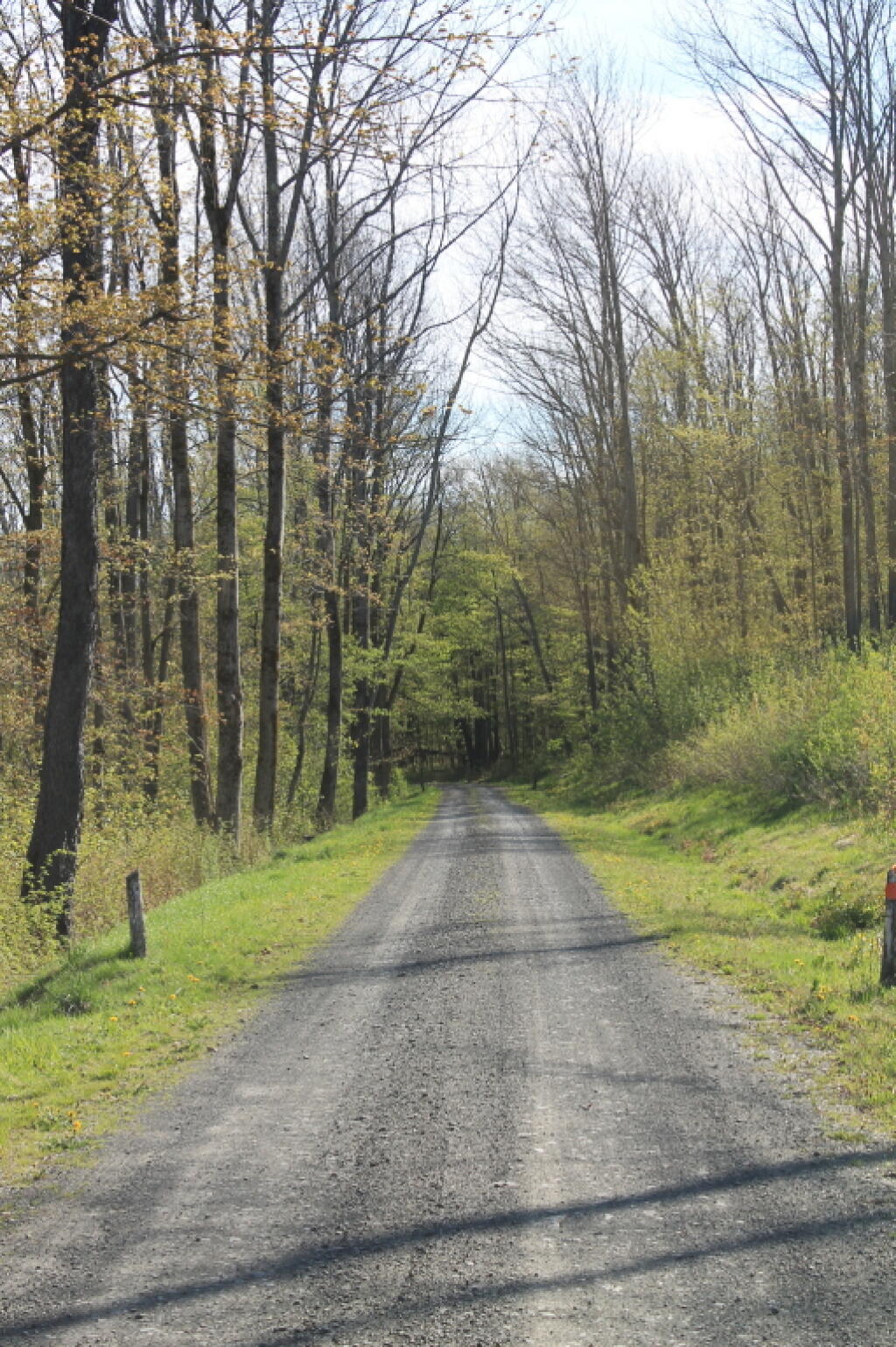
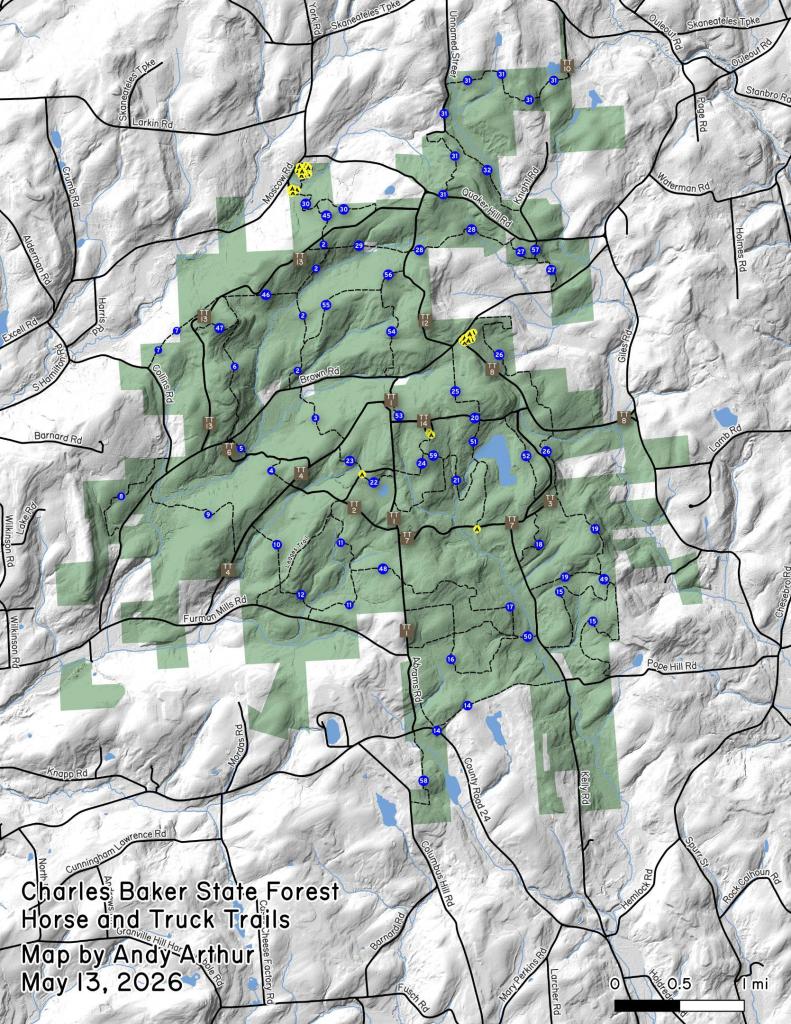
The forest features an intricate network of pathways, including extensive gravel truck trails and dedicated horseback riding paths.
- Horseback Riding: A premier destination for equestrians. Note that some shared paths can become muddy from horse hooves.
- Hiking & Mountain Biking: Explore miles of varied terrain.
- Seasonal Trail Restrictions: To protect trail integrity, off-road use of mountain bikes and horses is not allowed from November to May. They remain allowed on gravel roads.
- Auto Touring: Cruise the gravel truck trails for scenic forest views.
- Hunting, Trapping & Fishing: Popular seasonal wilderness sports throughout the acreage.
Primative Campgrounds 
- Moscow Hill Horse Camp: Rustic camping equipped with horse stalls for equestrian campers. N 42.79369 W 75.40622
- Cherry Ridge Camping Area: A dedicated, peaceful zone strictly for campers without horses. N 42.77502 W 75.38041
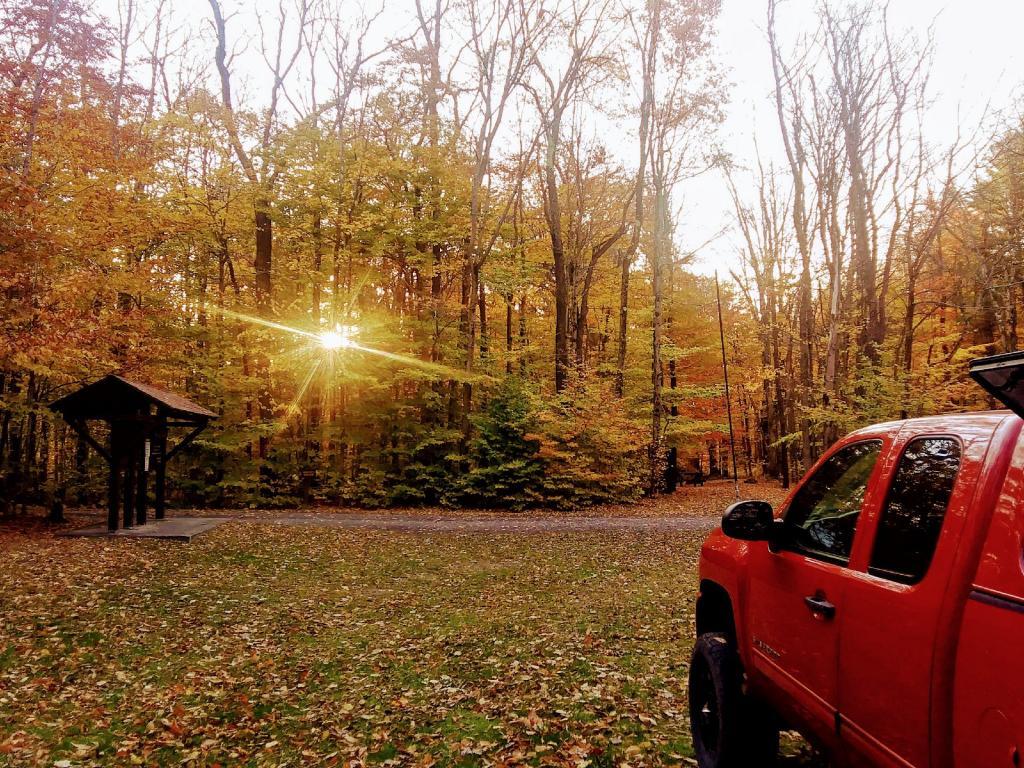
Quiet Dispersed Camping 
- Old Fire Tower Site: Historical landmark featuring quiet, primitive campsite. N 42.76405 W 75.38652
- Lost Pond: Quiet campsite a short distance form the pond. N 42.75983 W 75.39652
- Woodland Pond Lean-To and Campsite: Hike-in-only shelter and campsite on Wooodland Pond. N 42.76231 W 75.37983
![Untitled [Expires November 4 2025]](https://andyarthur.org//data/photo_018882_large.jpg)
Scenic Vistas
- The Ledges Trail: Follow an abandoned old woods road along a rock ledge and outcropping. N 42.75664 W 75.39993
- Elmer Place: Old homestead site and clearing along an abandoned woods road. N 42.78514 W 75.39601
- Lost Pond: A marshy, smaller pond with scenic views. N 42.75887 W 75.39622
- Woodland Pond: Larger pond with a lean-to and campsite farther away from roads for more of a wilderness experience. N 42.76169 W 75.38002
![Untitled [Expires November 4 2025]](https://andyarthur.org//data/photo_018828_large.jpg)
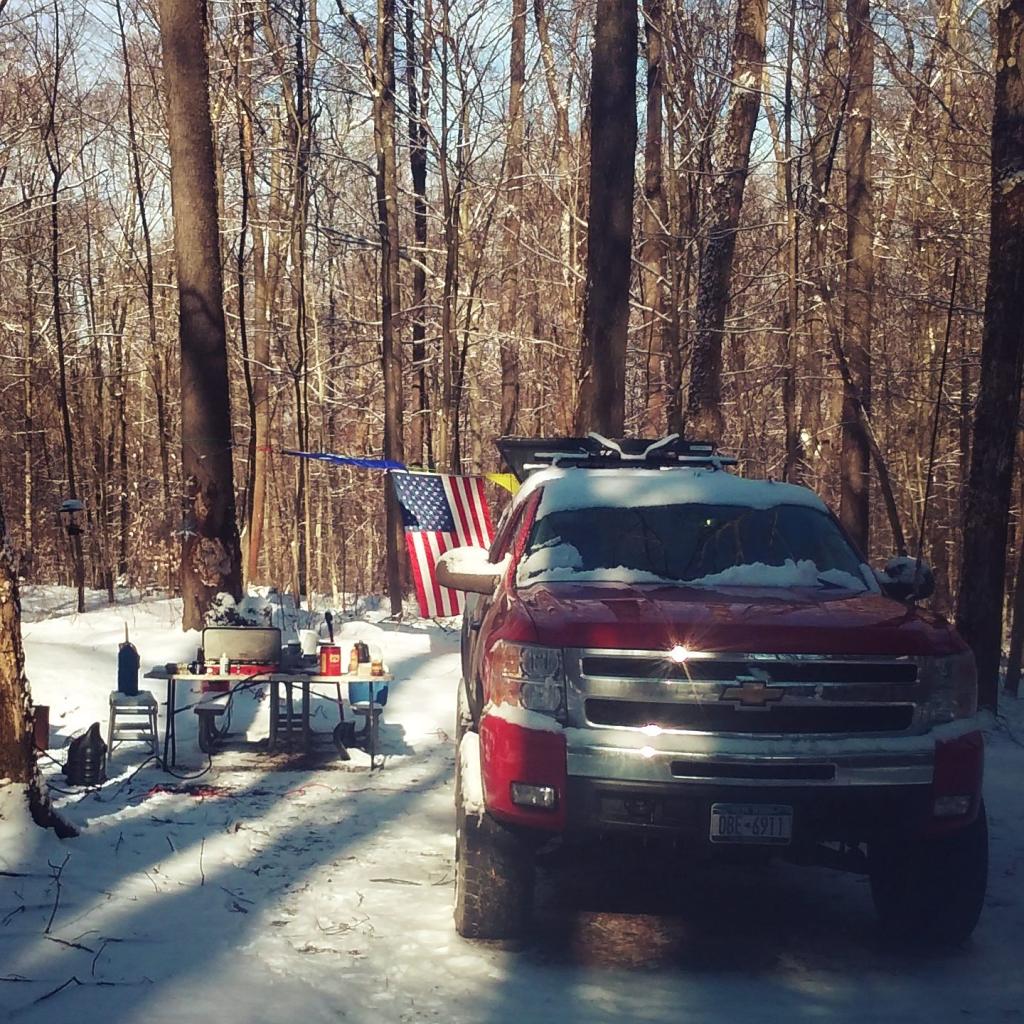
When the snow falls, Charles Baker State Forest transforms into a winter wonderland. 
- Activities: Excellent terrain for cross-country skiing and snowmobiling.
- Important Winter Notice: The gravel truck trails are not plowed during winter. Plan vehicles and routes accordingly.
- Brown Road is plowed but not sanded. Cherry Rige Campground is not plowed. Depending on snow depth it may be possible to access Cherry Ridge Campground in winter.
- Moscow Hill Assembly Area is on a plowed and sanded county highway, however the Assembly Area roads are not plowed.
Expand your itinerary with these nearby outdoor destinations:
1. Beaver Creek State Forest (Just North)
- Paddling: Park along Fairground Road at Horse Trail 66.
- Launch: Hand-carry your kayak to Beaver Creek for a scenic half-mile paddle.
2. Albert J. Woodford Memorial State Forest (North of US-20)
- Chitting Pond: Perfect waters for fishing and paddling.
- Biking: Experience several miles of dedicated single-track mountain bike trails.
- Tassel Hill: Hike to the highest point in Oneida County for sweeping views of the Mohawk Valley.
3. Nine Mile Swamp & Rogers Environmental Education Center
- Nine Mile Swamp: Exceptional flatwater paddling and fishing.
- Rogers Environmental Education Center: Top-tier location for wildlife viewing and vistas of the Chenango Valley.
Where to stock up when you need something 
Charles Baker is in a fairly rural part of the state. Nearest Walmart is North Utica. However, nearby towns have some small grocery and convience shops which maybe of use if you forgot to pack something.
- Hamilton: Stop here for a Price Chopper grocery store, Big Lots, and multiple gas stations.
- Sangerfield: Features a large convenience market for quick road-trip snacks.
- Sherburne: Grab regional favorites at Stewart’s Shops or stock up at Dollar General.


Thoughts on New Blog Logo 🛢️ 🐐 🛻
You know, I have to grin a little bit every time I see the new blog logo I designed with a lot of help of Google Gemini AI. The symbolism of the big truck – the SuperDuty going through the mountains, past the cabin with the goat and burn barrel out front – both reminds me of the trips out on the back roads in the wild country and the life I some day want to lead.
Earlier versions of the logo had more livestock – cattle, hogs, besides the goat, but it made it too busy so was simplified. But I so like looking at and thinking about all a goat symbolizes – poverty and rural freedom in the hollow – a powerful but stinky buck goat standing around the smelly burn barrel. Hogs are cool too, and part of rural life, but I couldn’t get AI to do what I was looking for here.
The slogan SuperDuty Dreams and Off-Grid Schemes is sort of backwards, as I have the SuperDuty now and the Off-Grid Cabin is more of a dream of the future. But alas, I have many trips I dream of in the SuperDuty, and I’m also scheming to have the resources and build that off-grid homestead in the near future. And I still kind of like how it rhythms in that order. Like the logo itself, it was inspired by AI after a lot of back and forth.
Something about that graphic makes me smile each time I look at it. That’s why I put it so prominently on my blog, and have a big version of it sitting in my office. AI does some pretty cool stuff.

Next Time – Wednesday May 13
Today’s sunrise was at 5:34 am. The next time the sun will rise later then today 🌄 is in 68 days on Monday, July 20.
The average high for today is 71 degrees. 🌡 The next time it will be on average cooler then today is in 136 days on Saturday, September 26 when the average temperature will be 70 degrees.
The highest point for the sun today will be 65.8° from the horizon at 12:53 pm. 🌞 The next time the sun will be lower in the sky mid-day is in 79 days on Friday, July 31.
Today has 14 hours and 45 minutes of daylight. ⏳ The next time the day will be shorter then today is in 78 days on Thursday, July 30.
Today’s sunset will be at 8:08 pm. The next time the sun will set earlier then today 🌆 is in 87 days on Saturday, August 8.
The average low for today is 47 degrees. 🌡 The next night it will be on average cooler then tonight is in 141 days on Thursday, October 1 when the average temperature will be 46 degrees.

Riding the bus on this Hump Day 🚍
I think I’ll be able to walk from downtown Ghetto Chopper to the plaza to avoid the crazies on the Plaza and get some steps. I didn’t think I’d be able to catch the earlier yokel bus downtown but somehow I did.
Maybe if it didn’t look like the rain 🌧️ would pick up later, I could have ridden in but the bus even with the traffic beats taking the SuperDuty to work. Still waiting to hear about the truck cap. But looking forward to getting out of town.
Last night I went out to Five Rivers 🐸 after dinner and packing my air pump. The rear tire seems lumpy and out of true but the spokes seem tight but maybe I need to adjust that. 🛠️ The chain 🔗 seems good no slipping though some of the shifts could be better but I think I have the derailuer mostly back in alignment. It’s not some fine french bikes that the lesbians ride but it gets me from Point A to Point B most of the time.
Spouting off on the Interwebs 🕸️
People who spout off on the internet about what a piece of legislation does should first read the actual text of legislation, not a press release put out by the Republicans who seek merely to score political points.
Also take in consideration what the constitution says, along with all legal prescendence and laws relating to the proposed law. When you do that, you will see the measure is both completely reasonable, prudent and consistent with existing public policy.
I am not saying the Democrat who sponsors the measure is not guilty in playing into the Republican fears, the press release implies the measure is a lot more extensive then it is in reality. In many ways, if the sponsor had chosen a different title for the bill, not put out a press release, and it had remainined a simple departmental bill put out by a state agency, few people would have ever taken notice, as the measure is consistent with existing public policy, but probably still necessary due to existing constraints in the law.
But yeah, the politicians had to ruin it for the rest of us.
I won’t say which measure I am referring to, but I think I’ve seen a lot of alarming posts about it lately on social media, most of which claim things that are far from true.