If only because it gives me a chance to do some analysis on the blog, crunch some numbers in R studio, make maps and other interesting content to fill space on the blog. People get all political about these kinds of things, but I enjoy just teasing out the data, without taking sides or even dulging into the politics behind all of it. Simple math and analysis.
Eliminating county and local government a lot of sense…
I am no fan of local government. While I get the desire of communities to have a degree of local control, in modern times where the automobile prevails and development choices impact whole regions, the time is now for more regional government and cutting out of often duplicative local governments. Both municipal and county governments serve no real purpose in the modern age.
It seems like local government agencies have a lot of free time on their hands and taxpayers dollars to waste. Too much taxes, too many elected officials. So much of what they do these days is pass resolutions and meaningless local laws that make political statements about national issues. The few useful things they do are mostly symbolic, allow them to pound their fists in pride, piss off constituents but have no real impact.
There are too many elections, it’s confusing for voters. Rather than electing sixty odd representatives over a period of each four years, if we had only a federal government and maybe a state government then elections could be reduced to ten or less races – and it would make choices much more straightforward and allow people to really understand who they are voting for as their leader.
Getting rid of municipal and county government is not a popular proposition but it’s something that should be considered to save taxpayers money and in the sense of justice and fairness. Each state should have one set of laws and regulations not millions of local laws. Courts and law enforcement should be consistent. Regional variation in justice should not exist.
I get why local government exists, mainly because it’s always existed. But it’s no longer 1800 and it’s really is time for a change.
Most versions of my plans for my October Road – Camping trip involve at least some “dispersed camping” in National Forests and visiting National Forest sites. While I am not planning leaving until October 14th, I know spiteful a Democratic president can be over the temporary lapse of appropriations, forcing closures of many developed recreation sites, including in some cases gating back-country roads, not because they cost the government much money, but to put political pressure on Republicans to adopt a budget they don’t agree with.
Not sure if this is going to be an issue this year, but I could see both sides dragging out their appropriation fight well into October and it might require me to reconsider my plans. One option would be to visit more state forests in the Southern Tier of New York State along with doing the Pennsylvania Pine Creek Rail Trail, another would be to head north, and do a trip to the Tug Hill Plateau and North Country / Massena.
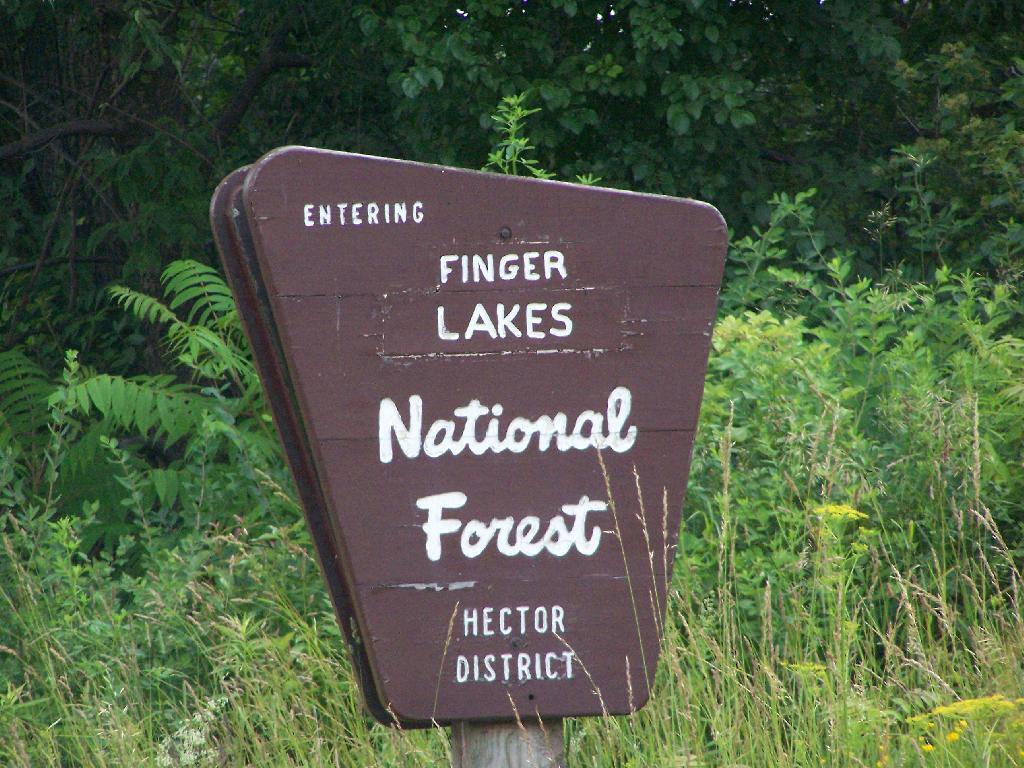
I did camp in back country in the Finger Lakes National Forest during the shutdown in 2013, but it’s not clear if that was explicitly permitted or prohibited. The recreation sites were gated at the National Forest, but it’s rather hard to close off back-country roads that aren’t maintained by the forest service. State parks remained fully open, and while during the week I saw a Schuyler County Deputy and the NYSDEC Officer patrolling the roads to make up for the lack of working forest service rangers, they never stopped or said anything about camping during the government shutdown.
It’s not certain what will happen this year, but I should consider my alternatives.
Would a special master be appointed should the Congress not raise the debt ceiling?
It’s a thought I’ve had.
If the politicians don’t want to come to an agreement, US debt holders could sue the federal government to ensure timely debt payment. They could have a judge a mandate the federal government make make bond and note-holders whole. If the federal government doesn’t have the funding, then a judge could instill a special master, like from academia to decide which programs should be cut and how to ensure all debt holders are made whole in a timely fashion.
I am convinced that politicians don’t want to make any tough decisions anymore, and are more likely to just punt the hard things like actual governing to the courts. While some legislators, especially liberals, might loathe giving up power to conservative-minded courts, it seems like most politicians are more focused on their re-election, and would rather punt the hard questions to the courts, so they can go back to passing message bills about abortion, trans-persons and guns so they have lots of red meat to bring back to the base back home. Maintaining a solid credit rating or even running the country takes a backseat to the latest ideological battle put forward by the politicians.
Maybe I’ve spent too much time around Albany or maybe I’m too much of a fan of James Howard Kunstler and Phil Ochs but I’m more and more convinced every day…
That much of modern American society is racket with most people trying to steal whatever is not tied down.