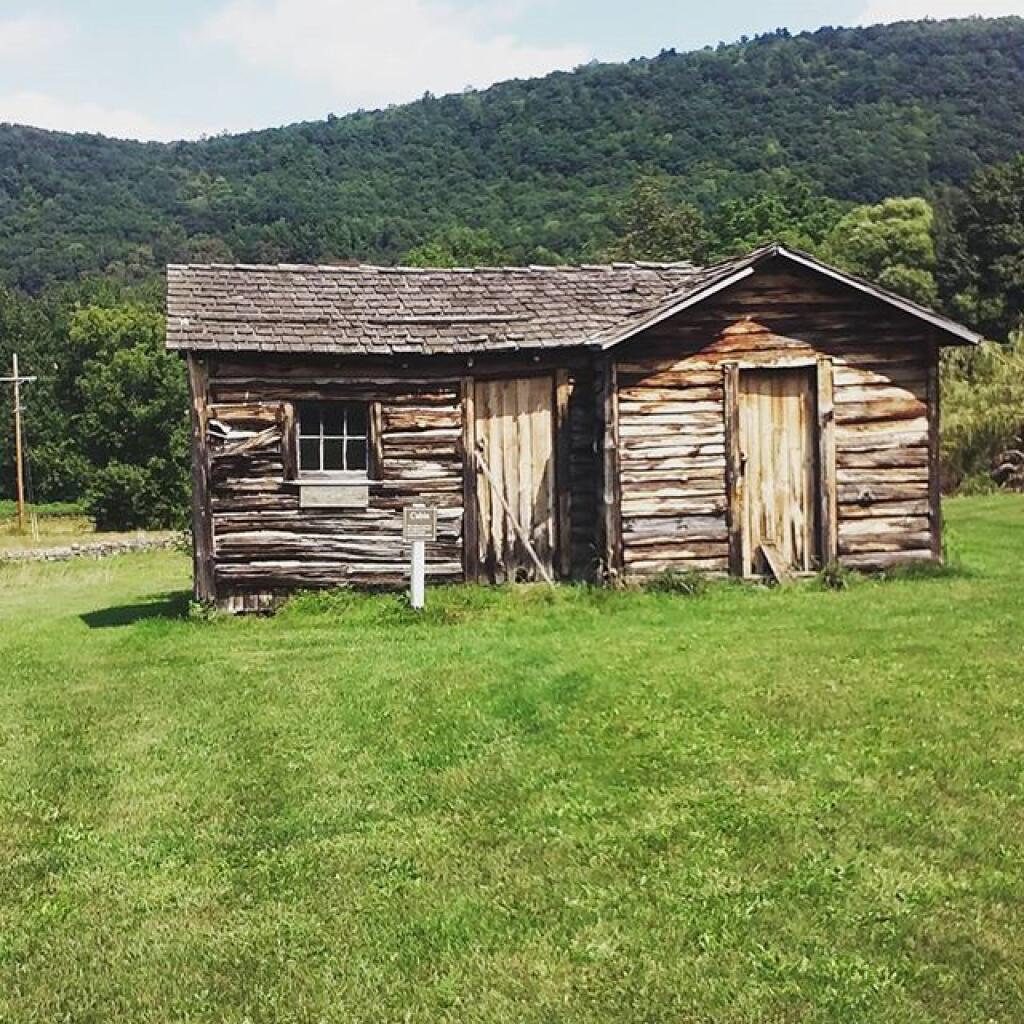
Balsam Swamp is a sprawling state forest that stretches almost 5.5 miles east-west across 4 towns. The area is very rural, and the landscape surrounding the State Forest is predominantly forested. Balsam Swamp State Forest is comprised of a mix of native hardwood forests, hemlock swamps, and conifer plantations. There are no designated recreational trails on the forest, but there is ample opportunity for self-guided day hikes to explore the diversity of habitats represented on this State Forest. Additionally, the western section of Balsam Swamp State Forest is adjacent to Five Streams State Forest to the south.
The main attraction of this forest is Balsam Pond. The impoundment is approximately 152 acres and is a popular destination for fishing and paddle boat sports. Balsam Pond is a warm water fishery that contains a mix of largemouth bass, smallmouth bass, chain pickerel, yellow perch, brown bullhead and sunfish. Tiger muskellunge have been stocked in the past with the last stocking occurring in 1995. However, there have been very few reports of anglers catching any of the adult tiger muskies. A shallow gravel boat launch is suitable for launching small fishing boats.
A small rustic camp ground is also located at Balsam Pond. Camping spaces are available at no cost on a first-come, first-serve basis and there is no running water or electricity. A fire ring, outhouse, and picnic table are provided for each camping space. A sign on Balsam-Tyler Road in Pharsalia designates the entrance to the boat launch and camping facility. This is a carry-in carry-out facility. Please do not litter.
They all come in plastic these days. Increasingly thin plastic too as material science evolves. When they get used up, what is left is just a sticky residue that is difficult to remove before tossing in the recycling bin, requiring and wasting a lot of soap and water. They are just so much easier to chuck in a hot fire, let them turn into carbon dioxide that will become plant food. Especially when you know so much of urban recycling is a feel good scam. I can’t wait to own my own land out in the country.
One of the latest fad diets is intermittent fasting. I would argue it’s a lot like the popular keto diet that says you can eat unlimited bacon as long as you cut down on the carbs. In other words, don’t really try, have your cake and eat it too. Ignoring all that saturated fats clogging your arteries and larding up your arteries.
Muslims during Ramadan often doing fasting part of the day. They usually though break their fast with a calorie dense meal. The thing is I’m not sure if there is an actual net reduction of calories or that health and weight actually improved. Delayed calorie intake doesn’t guarantee you won’t take up more calories later in the day.
I guess if your problem with excessive calorie intake is one of snacking all day long, setting an eating schedule can help. Fewer hours to eat in theory means less eating. At least that’s the idea of intermittent fasting. Still I don’t agree as delayed calorie intake doesn’t mean less calories or better health. Moreover, to the contrary I tend to think intermittent fasting encourages low blood sugar which only encourages excessive sugar and therefore calorie consumption when a fast is broken.
What’s a better idea – the opposite of intermittent fasting – eating all day with a focus on smaller, healthy unprocessed foods high in fiber with some occasional healthy omega 3 fats and protein. Fiber and more fiber. Things that are naturally filling like lentils and spicy foods. Staying away from artificial sweets except for a rare treat. Go for the apple or banana or grape if you crave sweet. But never stop eating that fiber from things like carrots, celery and broccoli. And drink lots of water.
Often I hear people say that they trust the science. Which is a fine and reasonable thing to say but often science and politics get mixed up as scientists want to draw conclusions based on their value system and ideological priorities rather than what research says. Fear of being labeled callous causes people to shy away from science and not being true their values. I believe in science but evidence needs to be taken in conjunction with our values and priorities.
It might seem silly but I always unplug my microwave when it’s not in use.
A while back, I plugged my microwave into my Kill-a-Watt meter and found it was using 2 1/2 watts per hour, when the microwave was off to power the clock and controls 24-7. 60 watt hours a day, doesn’t sound like a lot but there are 365 days a year, and that works out to be nearly 22 kW/h a year.
At 15 cents a kilowatt hour, that’s $3.30 a year. Not a real big expense, but every little thing adds up. Not to mention the carbon emissions, the pollution from the extraction of coal, uranium and natural gas to spin the turbines.
Not a lot, but electricity isn’t free and unplugging the microwave isn’t a lot of work.
I spend too much downtime flipping through the Land and Farm website, which markets hunting camps, farm land, off-grid properties, and other rural lands. It’s kind of a fun hobby to have as it doesn’t cost anything but the unlimited mobile bandwidth I currently have and is a good reminder that the money I save and invest today will have benefits tomorrow. I have some thoughts what the land would like and ads I’m most interested in. I’m not buying this week or next, but it lets me know what’s out there and what I could reasonably afford eventually.
Generally the properties I’ve been looking at have been priced between $200k – $250k. I picked that amount as I think based on what I’ve saved and what I project to save, that gives me the ability to buy with cash plus have money to make repairs and address my significantly lower income when I move to rural area where fewer good-paying jobs are available.
I am interested in properties that are roughly 50 acres give and take, with the value of land being roughly 2/3rd of the value of property. I am most interested in properties that have small cabins, shed-to-homes or even mobile trailers on them, because it means the majority of my investment goes into the land, not the home or barn itself, which for me is far less important.
I would probably want to live at least 15-20 minutes outside of a small town, maybe 30-40 minutes from a bigger city, just so I don’t have to deal with suburban houses being built nearby and increasing codes and regulation as time goes by of my land and hobby farm operation.
I am attracted particularly to land that needs work — land where invasive species have taken over, the soil degraded, run-off or a certain amount of dumping and debris exists on it and needs to clean up. These aspects will help reduce the cost of land, but also provide an enjoyable project to work on restoring the land using goats, pigs, fire and heavy equipment to clean and restore the land.
I like the idea of either having diverse habitats on the land or rebuilding them. For example, areas that are mature forest for timber production, some that are brushy lands, some that are meadows for grazing animals. Maybe a wetland and small pond. This will bring in wildlife for hunting and trapping, and provide for interesting wildlife and bird observation.
I want to have buffer from neighboring residential properties. I like the idea of having livestock, a gun-range in my backyard, and being able to burn trash and debris. But I don’t want to smell my neighbor’s pig pen and horny buck goat or smoldering burn barrel for endless hours while I’m trying to enjoy some fresh air outside.
I don’t want to have to worry about keeping the noise down, or being too close to neighbors to shoot my guns whenever I want.
I really like the idea of being off-grid — for the simplicity and self-reliance nature of it. I like if I have a problem with my electric supply, I can fix a fuse or replace a broken component. I don’t want to have to worry about my power going out. I want to keep the system simple enough that I can repair it myself. I want simple plumbing, so if I have issues I can fix them myself, and safely process and dispose of wastes on site, in ways that aren’t polluting the environment but returning them back to nature.
Eventually, I plan to become a landowner more then a homeowner. Land not just a place to have a home on, but land where I can call my own, use for my own purposes, study nature and wildlife, hunt and trap on. Public lands are a fantastic resource, but they aren’t really my own even though I temporarily occupy the lands.
As a landowner you become responsible not just for your home, but also maintaining the land to maximize habitat and value to you. There are many ways to use land, farming, firewood, timber, hunt, trap, and so forth. Careful methods of use can maximize both the value of the land to you and wildlife that lives on it.
Land is more important to me then any kind of home I would have on it. I don’t want to chop down the forest or develop it more, I’d much rather take an adapt an existing structure, and use as much of the land that I own for natural purposes — be it agriculture or forest property. I would like to meet as much of needs on-site as possible, from renewable energy to food, to an live with as small of an externalized impact as possible.
“To divide this cockeyed world in two
Throw your pride to one side, it’s the least you can do
Beatniks and politics, nothing is new
A yardstick for lunatics, one point of view
“Who cares what games we choose
Little to win, but nothing to lose”