John Boyd Thacher State Park, is situated along the Helderberg Escarpment, one of the richest fossil-bearing formations in the world. Even as it safeguards six miles of limestone cliff-face, rock-strewn slopes, woodland and open fields, the park provides a marvelous panorama of the Hudson-Mohawk Valleys and the Adirondack and Green Mountains. The park has volleyball courts, playgrounds, ball fields and numerous picnic areas with nine reservable shelters. Interpretive programs are offered year-round, including guided tours of the famous Indian Ladder Trail. There are over 25 additional miles of trails for summer hiking and mountain biking, and winter cross-country skiing, snowshoeing, hiking, and snowmobiling.
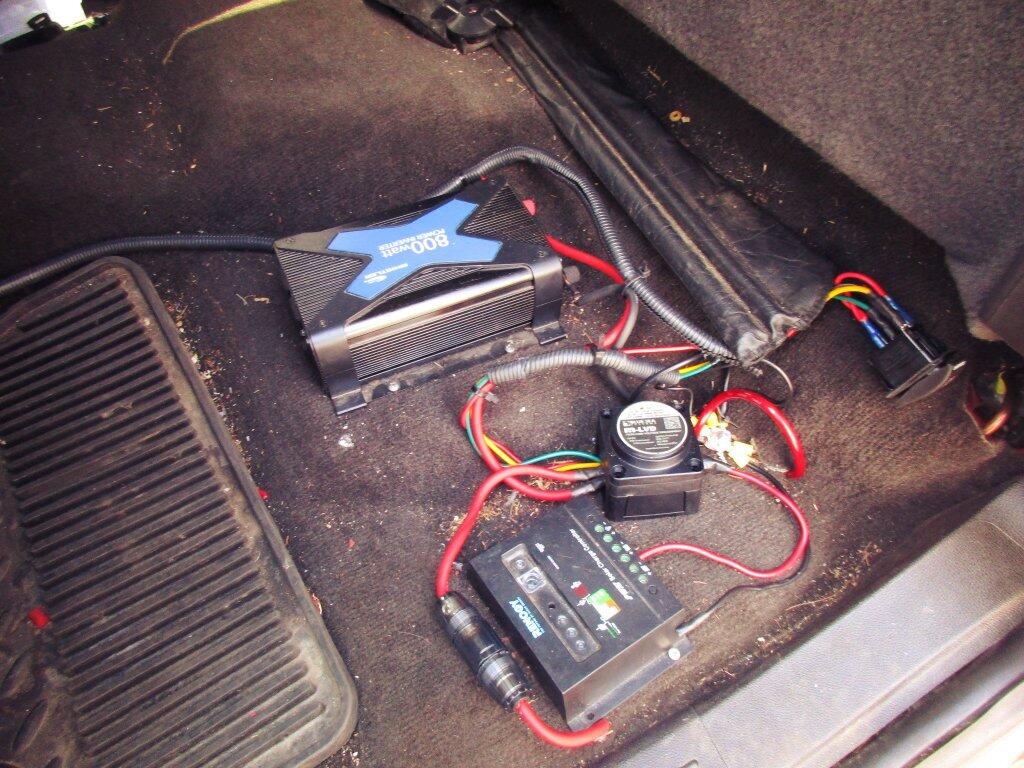
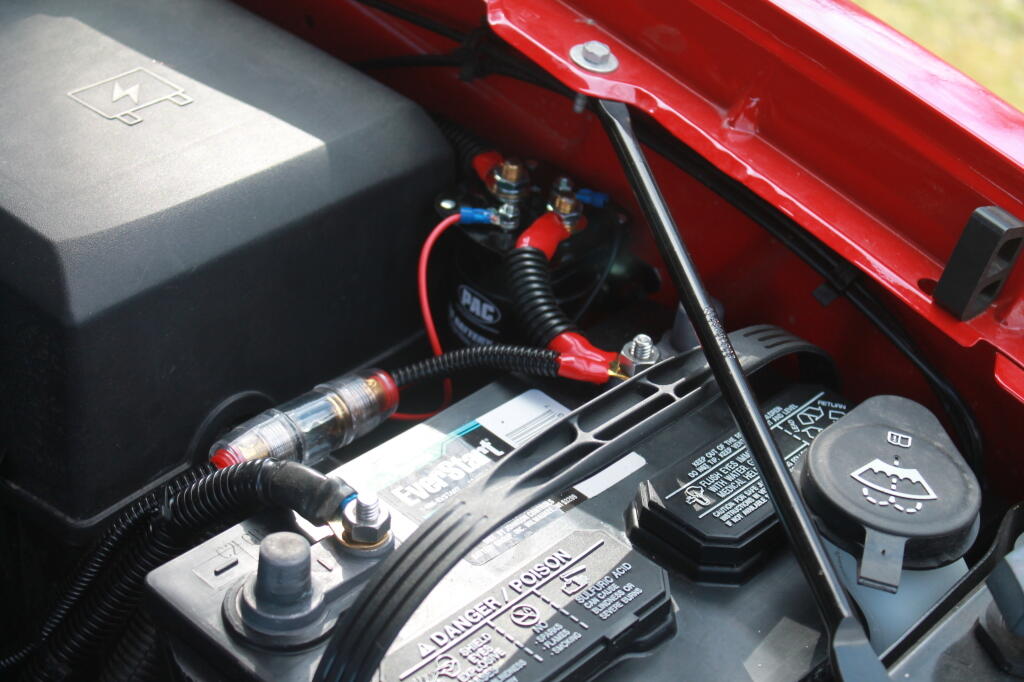
I’ve discovered that adding the low voltage battery disconnect (LVD) is key for maintaining a happy and healthy accessory battery in my truck. Previously, the accessory battery was electrically isolated from the starting battery, which allowed me to run down the battery without worrying about getting started, but nothing protected the accessory battery from overdischarge. Dropping a rechargeable battery’s levels down too low means the chemistry is irreversibly changed and the plates have sulfur collecting on them, which limits the ability to recharge. The alternator also has work much harder and longer to recharge a totally dead battery compared to one that is discharged to a safe level of only 50% charge. Battery life is much longer when you don’t overdischarge the battery, so that 50% consumed, actually can be longer then 80-90% consumed after a few deep discharges. A good deep cycle battery should be able to go into the 75% range safely, but why risk damage when one can disconnect it at a higher voltage? Moreover, you have to leave a bit of battery voltage above the danger range, to keep the low voltage disconnect powered, even though it only uses about 70 milliamp (which can add up over time).
A low voltage disconnect is a combination of a electronic device and electro-mechanical relay that monitors system voltage, and if voltage drops below a certain level for a period of time, the relay opens to disconnect the load from the battery. This keeps the battery from overdischarging. On my truck, I use a BlueSeas 60-amp LVD ($50 on Amazon), which was a nice integrated unit that has both the voltage monitoring circuitry and a 60-amp relay built into the unit, and come with a wired remote for overriding the system or changing the targeted voltage. Read the instructions carefully on wiring the remote – they are a bit confusing. I have the remote hooked up, but I have yet to use it. There are other models out there, but most of them have a separate disconnect controller and relay, and aren’t as elegant.
The low voltage disconnect on my truck is always monitoring the voltage of the accessory battery. As long as the voltage is at 12.1 volts or higher, the relay (switch) inside it remains closed and supplies power to my truck cap lights, inverter, CB radio, dash camera, and all other accessory loads I have connected to it. When the voltage drops to 12.0 volts for more then 30 seconds (a delay to avoid disconnects on temporary high start-up loads of inductive loads like electric motors or the starting of the inverter), the relay opens, disconnecting the load. This means that the lights in the truck cap, inverter and all accessory loads are disconnected. That can plunge you in the darkness, but it also spares the accessory battery. You can always hit the door unlock button, or hop in the truck, and have interior light to get the truck started again.
The low voltage disconnect is constantly polling the battery voltage. When you start the truck up, after 30 seconds of voltage over 13.5 volts, the load is automatically reconnected to the battery, automatically reseting the inverter, turning back on the lights, and other load you have connected. The delay in reconnecting the load is good for the alternator, because it gives it a chance to start recharging the low voltage – a high amperage drain – before you put even more load on it from the accessories.
Prior to the installation of the low voltage disconnect, I relied on both the inverter faulting out for low voltage, and keeping an eye on the battery voltage to know when I should recharge things. But that was a hardly a perfect solution. The inverter wouldn’t raise a fault until 11.8 volts or so, which is closer to 75-80% discharge, and would beep but allow the battery voltage to fall well into the danger range for low voltage, before finally disconnecting. Other loads wouldn’t be disconnected at all. The inverter would chirp and beep when the battery voltage was low – a rather annoying alarm – and require a full reset by reaching down and turning the power switch on an off. Left parked for an extended period of time, sometimes predatory loads from the various USB ports and other minor electronics would discharge the accessory battery below a safe level. It was far from an ideal situation.
The low voltage disconnect does it’s job, silently. It disconnects the load when the battery voltage is low, without any further prompting or annoying beeps or alarms. It reconnects the load when the engine is powered back up and the battery charge is at a safe level once again. It works without fiddling with it or monitoring the voltage yourself. It’s a good safety measure that I would recommend for any rechargable battery-powered application.
I guess not all government workers are bad people 👨🚒
Maybe it’s the field I work in — political communication — but the impression I get of most government workers is they are in for the money primarily, and that most government jobs are about patronage and unwarranted attention seeking. Maybe government workers fill a needed jobs, and some are competent at what they do, but they hardly are the noble public servants, helping those in need, that they use the mass media to portray themselves as. Maybe a necessary evil, but not as noble as they like to portray themselves.
But my views have softened a bit since the fire recovery efforts at John Wolcott’s house. With some careful negotiations with the fire inspector, and some help from current and former local elected officials, we were able to recover a lot of his files. The fire department was very sympathetic and helpful with the recovery effort, working to haul heavy, stinky, soggy wet boxes of files out of the house and ultimately allowed us to secure even more things from inside. They seemed genuinely caring and helpful, willing to go above the bare minimum of their jobs to help out the community. They took time they could have spent doing other activities, they spent actively assisting in the recovery efforts.
So maybe government workers do care about the communities they serve. There are good people in government, even if the incentive structures of government workers sometimes mislead them — be it campaign contributions, promotions, or other benefits from serving the politicians over the people. It’s good to know people in government sometimes actually serve the people, are willing to lend a helping hand to those in need. Not all government workers are just political hacks out for themselves.
Tonight’s ride home wasn’t nearly as wet 🚲, their wasn’t any rain ☔ and while the southernly breeze on Erie Boulevard was though as usual, it wasn’t so hot and humid at five o’clock that I ever felt too exhausted.
I think I found the loose part of the shaft ⚙ on the food processor and glued it back together. I’m hopeful that this will fix the problem. I’m hoping this is the case but I might also get a mini chopper to use for prepping food up at camp. I just love my shredded carrots 🥕 and oatmeal. Onions too!
Out at Five Rivers Environmental Education Center 🐸 listening to the frogs and doing some reading. 📖 Phone touch screen is working good again. 🖕 📱 Maybe I can put off that expense for a bit longer. Do want to get a bolt 🔩 on kickstand for the bike though in the coming weeks.
Each time you pay your landlord, you’re just making him rich / paying off his mortgage
You only have so much time in this world, why aren’t you taking advantage of it today rather then putting off for tomorrow
By not acting now, you’re just taking the default course rather then a better course
Look at all the gains of people you know who have bought a house in the country, raised a family and our now sending their kids to college
What good is all the money you save if you’re not willing to spend it
But those people are not me. It’s not that I don’t eventually want to own my own land nor are not banks super willing to lend me money or real estate agents willing to take my money, but ultimately I am not ready to settle down nor permanently declare New York State my home.
I am convinced that there are far more benefits to renting a small run down apartment than buying a house. I am free to travel, I can ride my bike to work. I don’t have to mow the lawn or maintain a building. I don’t have animals to feed, land and building to tend to.
The truth is that if I would buy or build a house, there is a good chance the New York State would be the state I die in without exploring much of the world or living in a community I care about. It seems vein to put so much money into something you don’t care about or have much of a reason to maintain. New York may be where I get my mail delivered to but I’ve never considered it to be my home.
And it’s not like I’m going to be able to find any place anywhere within reasonable commuting distance like the placesI spend my weekends traveling and camping in. Nearly everything is built up around Albany, you really have to travel a good distance to get away. The kind of trips good for a vacation or a weekend trip but just too far for regular commutes.
People say you’ll have regrets if you don’t do it while you are young. My reply back is you have no regrets when you are dead. Either you get a chance to do it or you get hit by a city bus and you don’t but in the end it’s all the same.