
Is the media just a lap dog of the government or the Democratic Party? 🐶
I can tell you as a Democratic Party operative at times I wish the media was more of a lap dog of the party, handling our clients in the direction of spin we’d like rather than taking their own spin on the matter.
During times of national crisis, the press, including both local and traditional mainstream outlets, often tends to report events without sufficient scrutiny. This is because the press aims to demonstrate loyalty to the nation rather than appear antagonistic, and they strive to uphold the country’s positive aspects. However, the media frequently lacks independent experts who can challenge the official government narrative, and they are hesitant to involve individuals without established credentials.
I recently listened to a podcast by James Howard Kunstler, where he pointed out that this phenomenon is not new and has been observed during events like COVID-19 and conflicts such as Ukraine. I can’t help but recall the media’s consistent support during the post-9/11 period and the Iraq invasion. Similar tendencies were seen during the early stages of the Vietnam War and the Red Scare in the 1950s. Although the mainstream media eventually began to question the Vietnam War, it was only in 1968, with Walter Cronkite’s influential editorial, that a significant shift occurred. Prior to that, mainstream media rarely challenged the prevailing viewpoints, and those opposing the war were often marginalized.
Comparing today’s media behavior to the past, it’s not necessarily worse, but the internet has made it much easier to access alternative perspectives. This is undoubtedly a positive development. My suggestion is to first engage with mainstream media to understand the presented facts, and then explore alternative media sources for different viewpoints. By comparing and contrasting different perspectives, we can gain a more comprehensive understanding of the situation.
Truth is that I got cold feet and didn’t speak at the Guilderland Conservation Committee meeting tonight 👣
I totally should have but I got listening to the developer and then they sort of moved on to the next project. I could have spoken up and had my opportunity to make public comment but I remained silent. I spoke on this project the last meeting and the Pine Bush Commission technical committee pretty much said what I was thinking. And it’s just an advisory commission I told myself.
Something about the developer’s counsel pushed me off to, made me flustered to respond. He was a snake but also acted like he didn’t know or understand the Pine Bush while the Conservation Committee members seemed to be strong advocates. He had such a thick Appalachian accent, a working man like those hillbillies I was smoking with this past weekend. While I was opposing more vinyl houses in the Pine Bush, it felt different to speak after him and nobody from the public was there to bridge me in.
I wasted gas and my time driving all the way out to Guilderland to remain silent. But the room was crowded but no one else in the public wanted to talk about the Pine Bush. I was also flustered as on my way leaving the Rapp Road parking area on the Pine Bush I hit the edge of the pavement hard, felt like I loosened up something in my suspension and then felt every bump on the road and heard every noise. I was like I’m not going to make it home and there goes vacation again. Not as many wildflowers or blackberries in the Pine Bush this evening though I saw a Red Tail Hawk up close.
Truth is that I get pushed around too much, to scared of public speaking and reading my inevitable quotes in the Altamont Enterprise. I’m quotable because not only I’m a conservationist and a Democrat – I really conservative, unscripted and in many people’s minds awful views. I’ve been listening to Dr. Robert Lover’s Dating Advice for Men and the truth is that I need to not be afraid to be rejected, ask questions and listen. Be authentic. You will never get a girl friend if you don’t ask lots of girls – many who may seem less than perfect at first glance.
As long as I’m not too anxious I’ll make it home safely after shopping at Hannaford in Voorheeesville. I wish I had struck up a conversation with that guy I ran into up at the Potholers when I fell – just to learn what he was about – see if he has seen any wildlife or other interesting things while up there. I can’t live my life in fear just because a girl is pretty or a developer speaks in a deep accent and wears a hipster beard.
Outside Morris
There is a lot of nice farm country and rural lands along NY 23.
Thursday August 27, 2020 — Delmar, NY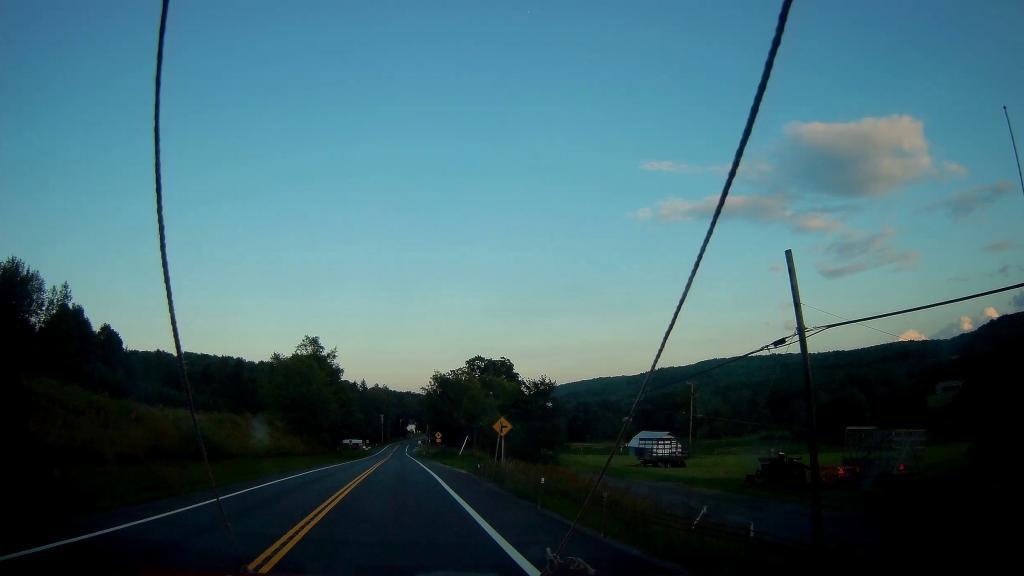

Holland, New York
Holland is a town in Erie County, New York, United States. The population was 3,401 at the 2010 census. The name is derived from the Holland Land Company, the original title-holder to most of the land of Western New York.

Money and junk 💰
“Don’t expect all that much when you trade in Big Red next year for a new truck.” Somehow those words struck me as odd, as I never thought of an automobile as having any resale value whatsoever. I mean I knew at one level autos have a value, you pay money to buy them but then you use them up and they become trash just like the countless other things you buy. Automobiles are widely known as a depreciating asset, though I’ve always thought of them as something for personal transportation and enjoyment – not something for resale value.
“Owning a house means you are building equity.” Likewise, I often think those words are odd because while it’s true housing prices often rise, you are betting a lot of money on a single asset in a single location. Insurance can protect you from certain risks like fire but many financial risks of homeownership like a failed roof or furnace – or that a neighborhood slides downhill – are not protected. Houses aren’t like buying stock or bonds, you most constantly be maintaining them and spending money on them if you want them to retain their value. But alas we all have to live somewhere. Housing is not free if you rent or buy. Housing can build equity but it’s a fairly trivial side benefit, it’s mostly a consumer expense like a car, maybe you’ll come out ahead when you sell your old house or maybe not. There are no guarantees in life.
Some people are really into putting a value on things they own, quickly selling unneeded and unwanted possessions at tag sales and on Ebay. I’ve never done that as I find it hard to know where to start – what to value – and I don’t really know how to sell things. I generally think of stuff as things you buy, you use up all value and throw away. I guess I have a hard time in my mind putting a value on physical things that I own as they are paid for and the money is gone. Physical things just don’t seem like money to me even if they aren’t all garbage with a resale or scap value.
Another type of asset people often refer to is education and work experience. Yet, at one level I know they are valuable but they also don’t seem real because they’re not a number you can point to and aren’t that valuable unless you are seeking a new job. Friends and social connections are other assets I should do more to develop. It’s something I have not spent enough time on admittedly. Probably far more valuable than investable assets.
They call monetary assets like stocks and bonds or even cash investable assets. Those are the only assets that I see as having any real value. Truth is though I’ve never sold a stock or bond so while they have a paper value, it’s really hard to value them either. Markets go up and down each day and there are capital gains taxes to consider. A good accountant could probably spit out a number – or maybe my brokerage website – but I’m quite happy to just keep adding to them and let them grow.
Maybe I just find money to be rather confusing like so many things in this world today.

