"Remember President Trump’s 2019 budget — that big document released in February and then immediately dismissed or ignored? Well, a new analysis released Thursday by the nonpartisan Congressional Budget Office finds that the president’s proposal won’t rein in rising deficits like the White Ho..."
Picardin is a next generation insect repellent designed to replace DEET. 🐜Invented in the 1980s, carefully studied for toxicity in the 1990s it became on the market in the United States in the early 2000s after first being approved in Europe first.
I stumbled upon an article a while back talking about the virtues of Picardin over the long standing insect repellent known as DEET. Unlike DEET it won’t stain most clothing, isn’t as greasy, doesn’t cause the same level of allergic reactions and actually smells fairly nice when first applied. Almost like an apple smell or maybe buttery popcorn.
I find Picardin takes somewhat longer to work then DEET but it’s a whole lot nicer to use, and doesn’t give me the annoying allergic reactions like tingling lips that sometimes I have with DEET. Supposedly Picardin is more effective at repelling ticks than DEET but I find it works well with mosquitoes and horse flies too but not so much black flies – which also aren’t that repealed by DEET.
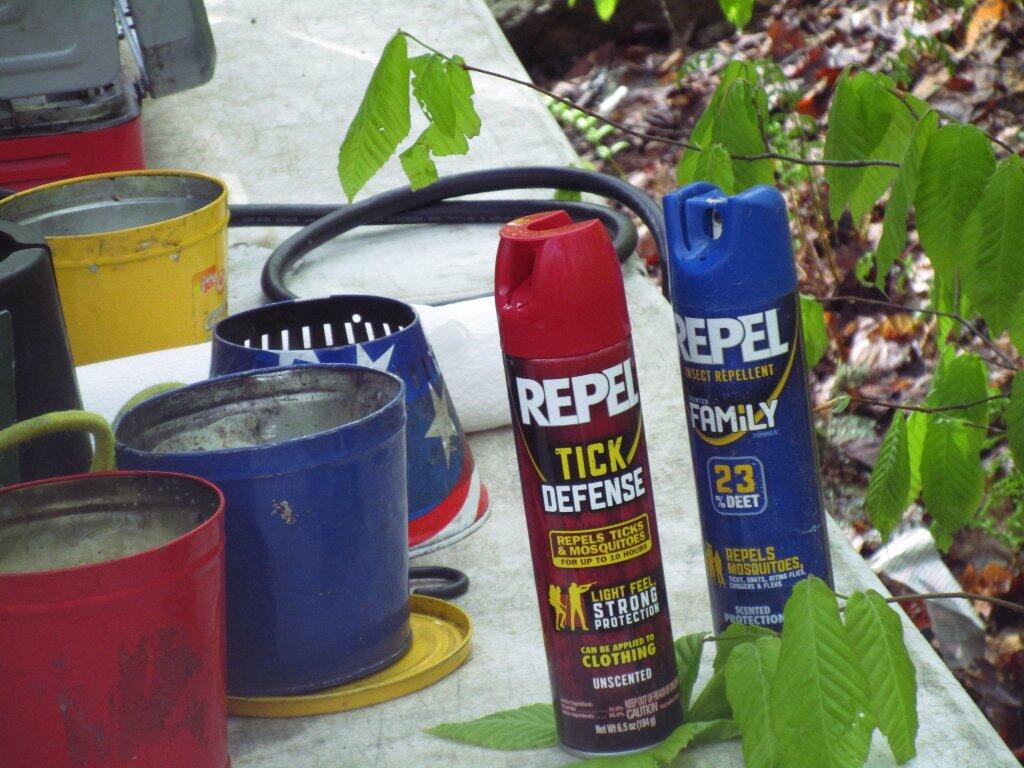
Over the years I’ve bought many containers of DEET so I still use that to a certain extent, because I already have that on hand. But now my go to really is Picardin as it’s much more pleasant to use. Picardin is frequently sold as Repel Tick Defense at Walmart but I’m sure there are other brands out there.
"Canada has become the first wealthy nation in the world to fully legalize marijuana. The Senate approved Bill C-45, also known as the Cannabis Act, on Tuesday. The measure was already approved by the House of Commons, so the Senate’s approval means it’s now set to become law. Canadian and provincial governments are expected to roll out different provisions of the law in the coming weeks and months."
The measure legalizes marijuana possession and sales for adults. Home growing up to four marijuana plants is allowed. The federal government will oversee remaining criminal sanctions (for, say, selling to minors) and the licensing of producers, while provincial governments will manage sales, distribution, and related regulations — as such, provinces will be able to impose tougher rules, such as raising the minimum age. The statute largely follows recommendations made by a federal task force on marijuana legalization. Provinces are expected to need two to three months before retail sales can begin."
"Garfield is a comic created by Jim Davis. Published since 1978, it chronicles the life of the title character, Garfield, the cat; Jon Arbuckle, the human; and Odie, the dog. As of 2013, it was syndicated in roughly 2,580 newspapers and journals, and held the Guinness World Record for being the world's most widely syndicated comic strip."
"Though this is rarely mentioned in print, Garfield is set in Muncie, Indiana, the home of Jim Davis, according to the television special Happy Birthday, Garfield. Common themes in the strip include Garfield's laziness, obsessive eating, coffee, and disdain of Mondays and diets. The strip's focus is mostly on the interactions among Garfield, Jon, and Odie, but other recurring minor characters appear as well. Originally created with the intentions to "come up with a good, marketable character", Garfield has spawned merchandise earning $750 million to $1 billion annually. In addition to the various merchandise and commercial tie-ins, the strip has spawned several animated television specials, two animated television series, two theatrical feature-length live-action/CGI animated films, and three fully CGI animated direct-to-video movies."
"Part of the strip's broad pop cultural appeal is due to its lack of social or political commentary; though this was Davis's original intention, he also admitted that his "grasp of politics isn't strong," joking that, for many years, he thought "OPEC was a denture adhesive"."
This is a very interesting video about street lighting.
It turns out humans (and most animals) have a lot of trouble seeing yellow light after dark, which means that much of supposed efficiency of high pressure sodium lights is wasted. Colder light colors, like that of the mostly obsolete mercury vapor lights of 1950s and 1960s, and modern LED bulb are better at lighting up a street with less actual light output. As the video notes, is some evidence today they made a mistake in 1970s ripping out mercury vapors lights in favor of the more "higher laboratory light output per watt" high pressure sodium.
LEDs can be made any color you want based on the phosphorous. Cold white is popular because you can use a dimmer light while it appears brighter to human and animal eyes. Warm white is less disruptive to sleep and wildlife, more pleasant to the eye, and with less light pollution (in theory) but it's harder humans to see. One interesting idea proposed in the video would be to have street lights start out at a lower-output cold white color in the early evening, and switch to a higher-output warm white color in the early hours of the morning, when fewer people are in the street but you don't to disrupt sleep as much.
Another interesting idea from the comments in the video would be to use high pressure lamps (or warm white LED bulbs) in residential neighborhoods, while using well aimed cold white LED in commercial areas, on highways, and other "high crash areas" such as city centers where there many pedestrians crossing the streets. Mixing warm white and cold white strategically could work to further warn drivers -- suddenly transitioning from a warm white color to cold white color could warn the driver that they are entering a "high crash area" and to use extra care proceeding through that area.