

A History of Powley Place
Located deep within the remote wilderness of the southern Adirondacks in the town of Arietta, Powley Place—often historically spelled “Pauley Place”—stands as a significant site in the environmental and social history of New York. Its story mirrors the broader transition of the Adirondack region from a landscape of early agricultural homesteads to a premier destination for wilderness sports and, eventually, a strictly protected forest preserve.
Early Settlement and Farming
The area first appeared in official records in the 1870 Agricultural census for Arietta, listed as the farm of John Powley. Valued at three hundred dollars, the homestead included 35 acres of improved land and 100 acres of woodlot. John lived there with his wife Rosetta and their children, supporting the family through modest livestock holdings including milk cows and oxen. At that time, the site was a functional island of agriculture in a sea of forest, producing grass and hay to sustain the family and their few laborers.
The Lodge and Sporting Era
By the late 19th century, the property began its transformation into a renowned sportsman’s lodge and hotel. As interest in hunting and fishing in the Adirondacks grew, the buildings at Powley Place became a hub for outdoor enthusiasts.
- Management Transitions: Ownership and management shifted through several hands, including Albert Dunning and his wife Cora, who were renting the lodge by 1898.
- State Acquisition: When New York State began aggressively purchasing land for the Forest Preserve, the property was sold to the state by 1900.
- Squatter Tenure: Interestingly, despite the state taking title, former residents were often allowed to remain as “squatters” to provide essential lodging and services for the influx of sportsmen. In fact, Albert Dunning was even appointed by the state as a game warden to prevent timber theft while continuing to run the lodge.

Fire and Final Removal
The physical history of Powley Place was punctuated by fire and rebuilding. In the early 1900s, while under the management of Frank Fournia, a fire destroyed the main lodge. It was eventually rebuilt and operated by brothers Fred and Harry Fish as a lodging place for hunters until the mid-1910s.
The end of the permanent structures at Powley Place came in the autumn of 1917. As part of the state’s “Forever Wild” mandate, which sought to remove commercial structures and return the wilderness to its natural state, the hotel and lodge were torn down. This marked the conclusion of its era as a settled homestead and commercial outpost.

Modern Legacy
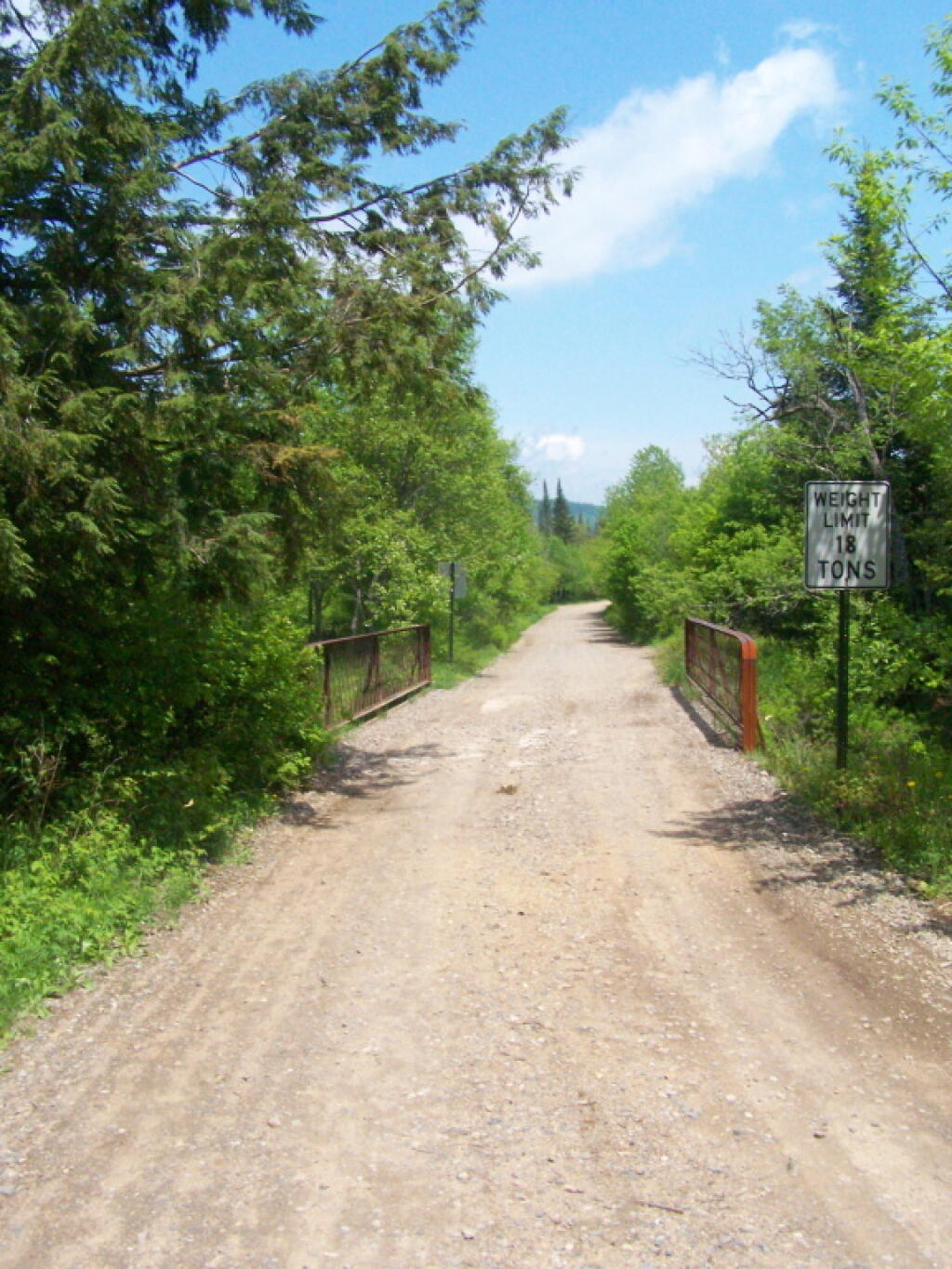
Today, Powley Place is a popular landmark on the Powley-Piseco Road, an unpaved, 17-mile seasonal road that cuts through the Ferris Lake Wild Forest. The site remains a favorite for:
- Natural Beauty: It is home to “the Potholers,” a series of rapids and cascades on East Canada Creek where loose stones have carved deep holes in the flat bedrock over centuries.
- Recreation: It serves as a starting point for hiking, camping, and fishing, preserved as a wilderness area for public use.
Though the buildings are long gone, the name Powley Place endures as a testament to the resilient pioneers and the early sporting culture that defined the southern Adirondacks.
Img 9811


Trout Lilly


Tulips

New Lake Mountain


Not that short of a bed! 🛌
Everybody keeps telling me the 6′ 8″ bed on my SuperDuty is super-short. Maybe by SuperDuty standards where 8′ 2″ long beds are popular but it’s no 5′ 6″ bed found on some half tons and the 5′ bed on short bed Toyota Tacoma.
![Untitled [Expires May 23 2026]](https://andyarthur.org//data/photo_022262_large.jpg)
Here is a comparison of the short bed (6.75′) for the shortbed Ford F-350 and the standard bed (6.5′) for the 2011 Chevy Silverado standard bed:
| Specification | 2011 Chevy Silverado (Ext. Cab / 6.5′ Bed) | 2017–2026 Ford F-350 (SuperCab / 6.75′ Bed) |
|---|---|---|
| Wheelbase | 144.2 inches | 148.0 inches |
| Overall Length | 230.6 inches | 231.8 inches |
| Bed Length | ~78.8 inches | ~81.9 inches |
- Size Gap: With the 148-inch wheelbase, the Ford is about 1.2 inches longer overall compared to the 2011 Chevy.
- Bed Space: Even with a similar footprint, the Ford F-350’s “short” bed is actually about 3 inches longer than the Chevy’s standard box.
More Bed and Clearance Dimensions
| Measurement | 2011 Chevy Silverado (Ext. Cab / 6.5′ Bed) | 2017–2026 Ford F-350 (SuperCab / 6.75′ Bed) |
|---|---|---|
| Bed Length (at floor) | 78.9 inches | 81.9 inches |
| Bed Width (at floor) | 62.4 inches | 66.9 inches |
| Width (between wheels) | 50.6 inches | 50.5 inches |
| Bed Depth (rail to floor) | 21.0 inches | 21.1 inches |
MX Cap Vertical Dimensions
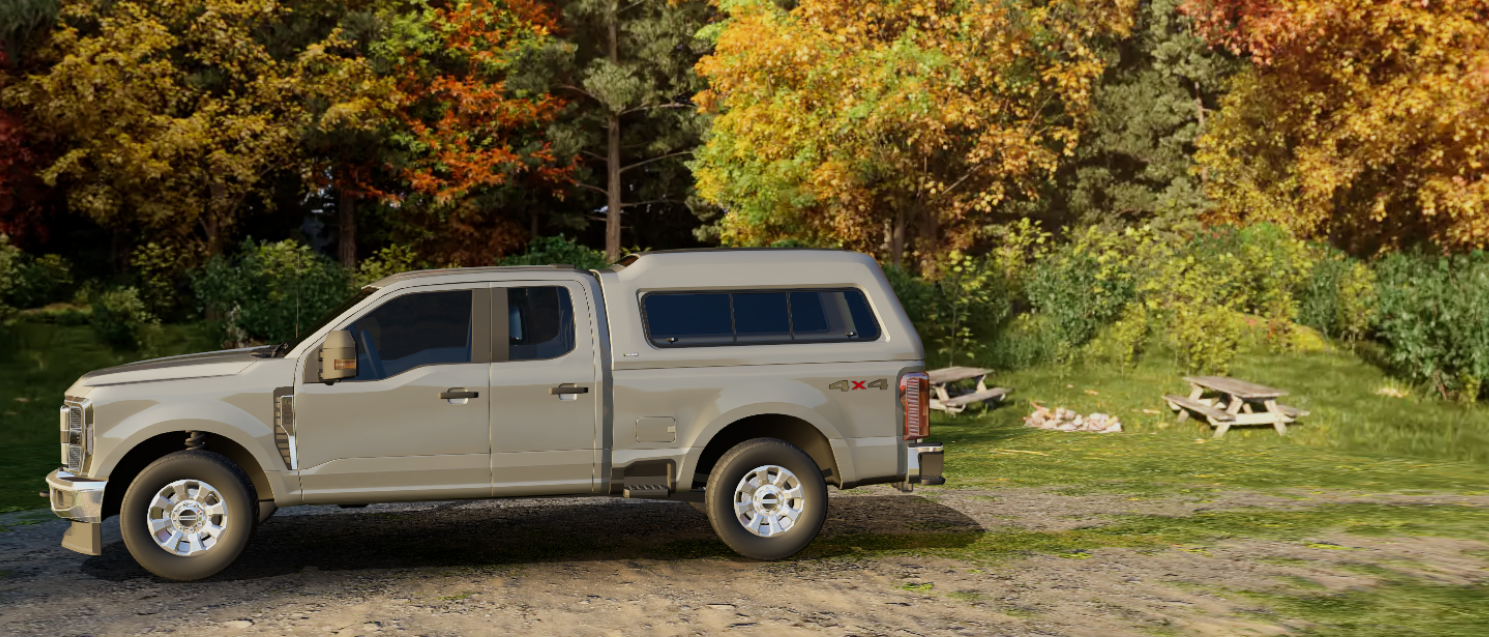
The A.R.E. MX Series is a “mid-rise” cap, meaning it features a sloped roof that starts at cab height and rises toward the rear. On both trucks, this design provides roughly 4 to 6 inches of additional height above the truck’s roof line. The total interior height (from bed floor to the cap’s ceiling) is significantly greater on the modern Ford F-350 because its cab and bed rails sit much higher off the floor than the 2011 Silverado.
| Measurement | 2011 Chevy Silverado (6.5′ Bed) | 2017–2026 Ford F-350 (6.75′ Bed) |
|---|---|---|
| Bed Depth (Rail to Floor) | 21.0 inches | 21.1 inches |
| Cap Height (Rail to Cap Top) | ~28.5 inches | ~28.5 inches |
| Total Interior Height (Floor to Cap) | ~49.5 inches | ~49.6 inches |
| Rise Above Truck Cab Roof | +4 to 6 inches | +4 to 6 inches |
- Headroom vs. Cab Height: While the interior “box” height is nearly identical (~49.5 inches), the Ford F-350 feels much taller because the entire truck sits higher. An F-350 with an MX cap will typically exceed 7.5 feet (90+ inches) in total exterior height, which may prevent it from entering standard 7-foot (84-inch) residential garage doors.
- Cargo Access: The MX Series on the Ford provides a larger rear door opening compared to the Chevy. Because the Ford’s cab is taller, the cap must be built taller to maintain that 4–6 inch rise, giving you a more “walk-in” feel when reaching for gear.
- Aerodynamics: On both trucks, the sloped front of the MX Series is designed to reduce the “sail effect” common with high-rise toppers, though some users report a slight decrease in MPG at highway speeds.
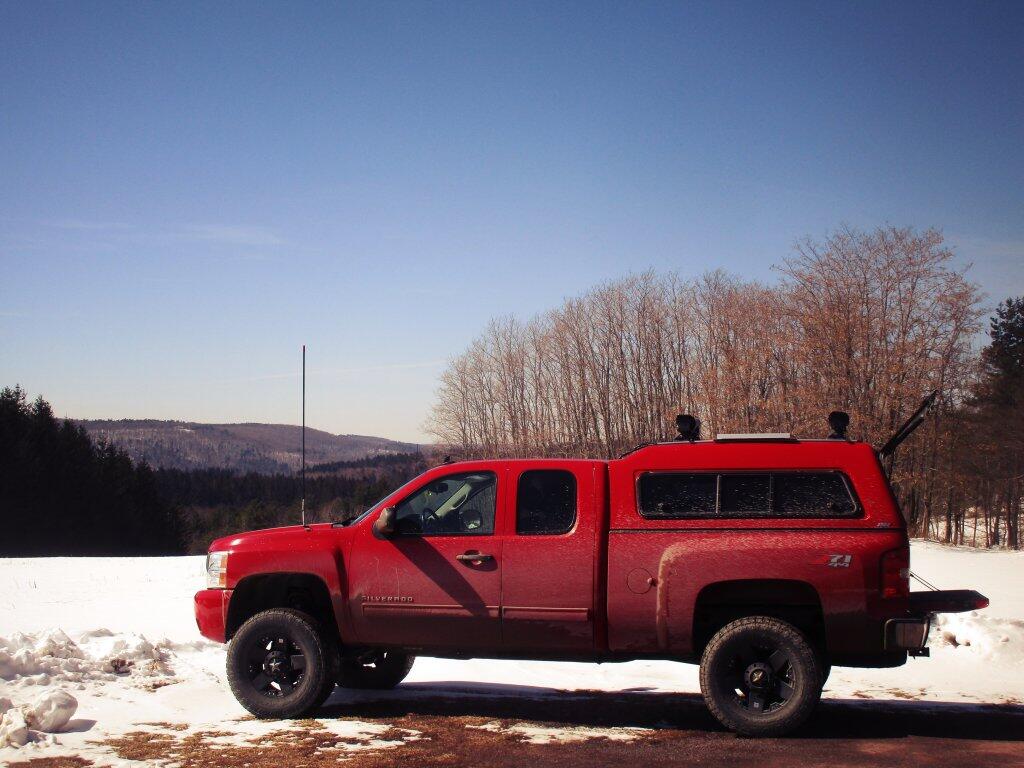
For a 4×4 configuration, the Ford F-350 has a higher roof line relative to the bed floor than the 2011 Chevy Silverado. While the bed depth (floor-to-rail) is nearly identical for both trucks, the Ford’s cab sits taller above the bed rails.
Bed Floor to Roof Line Comparison
The following table shows the vertical distance from the bed floor to the peak of the truck’s roof.
| Measurement | 2011 Chevy Silverado (Extended Cab) | 2017–2026 Ford F-350 (SuperCab) |
|---|---|---|
| Bed Depth (Floor to Rail) | 21.0 inches | 21.1 inches |
| Rail to Roof Peak | ~21.5 inches | ~23.0 inches |
| Total (Floor to Roof Line) | ~42.5 inches | ~44.1 inches |
- Total Interior Space: The Ford F-350 offers approximately 1.6 inches more vertical space from the bed floor to the top of the cab. This is often noticeable when hauling taller items that need to stay below the roof line for aerodynamic reasons.
- A.R.E. MX Cap Impact: Because the A.R.E. MX Series adds about 4–6 inches of height above the cab, the total interior height from the bed floor to the peak of the cap will be roughly 48.5″ on the Chevy and 50.1″ on the Ford.
- Garage Clearance: While the Ford has more room inside the bed, its total height from the ground to the roof is also much higher—often over 81 inches. Adding an MX Cap to an F-350 typically brings the total height to roughly 86–87 inches, which may exceed a standard 7-foot (84-inch) garage door.

