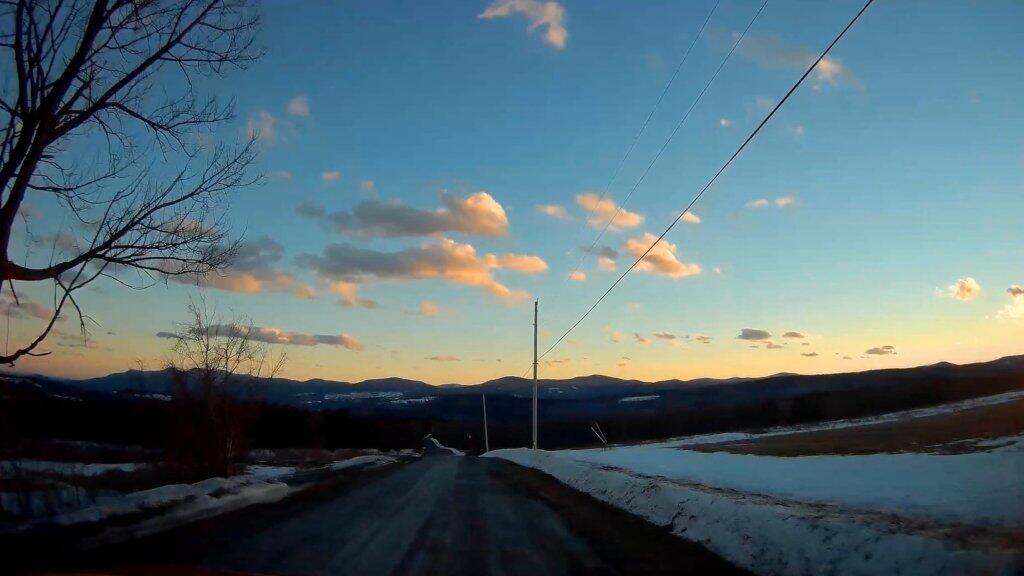
"There's a young man that I know, he's just turned twenty-one He comes from down in southern Colorado Just got out of the service and lookin' for his fun Someday soon, goin' with him, someday soon
My parents cannot stand him 'cause he works the rodeos They say he's not your kind, he'll lead you pine in But if he asks I'll follow him down the toughest row to hoe Someday soon, goin' with him, someday soon
When he visits me my pa ain't got one good word to say I've got a hunch he was wild back in the early days So blow you ol' blue norther, blow him back to me He's likely drivin' back from California He loves his damned old rodeos as much as he loves me Someday soon, goin' with him, someday soon"
I am the child of two college educated parents, but they were homesteaders, and I grew up in a very working class rural neighborhood – and my parents had very working class jobs at the Center for Disability Services.
Having college educated parents that grew up in the suburbs always put me in a different social class then most of the more working class folks who parents graduated high school if even that. My parents had a professional mindset that really wasn’t even in the vocabulary of the hillbillies who lived in trailers down the street.
I was and still am super jealous of them. They always had four wheelers, lots of guns, and livestock. Pigs and cattle. Big bonfires. I’m well aware of what pig manure smells like or for that the distinctively pungent smell of kerosene used to keep their mobile homes warm in the winter – besides the woodstoves they had jerry rigged up. To say nothing of those slurry trucks from Stanton’s Dairy in Coeymans that would traverse the road a few times a year to fertilize the field up the road.
But at the same time, I found it difficult to find connections with them as they were so culturally different in their upbringings and beliefs – the hillbilly way of looking at the world was so foreign to the world I knew with post graduate educated parents. At the same time, despite my college education and professional career I find it difficult to connect with the more professional and educated types with my redneck and small town upbringing.
I want to go back to the country and not just for a weekend trip. Do real hillbilly shit, although I know damn well it will take money, as I don’t have the skills or even the grit and family connections to make it alone in the country. Now I don’t want to live in a fancy house – I’d rather have livestock and junk in my front yard and a garbage burner out back – I just know how important having money is to survive out in the country when you lack so much else that true country boys and girls have to survive and make a life off the land.
Like most towns in New York State, Bethlehem doesn't have Wards. All elected officials are elected at-large.
But could you draw equal population districts that represent actual communities of interest? Not looking a demographics or political competitiveness, but actual communities of interest based on my knowledge of the town -- like Slingerlands, Delmar, Elsmere, Glenmont or South Bethlehem, and have them come out to be equal population? I tried, and here was the results.
There are different ways to look at this problem. One could use an algorithm to draw districts, although I've yet to find one that does a particularly good job. Turns out it's hard to automate district drawing, as often different demographics live next to one and another, and you get stuck with pockets of similar demographics living on opposite ends of the town. You end up packing and cracking or splitting similar demographics, unintentionally. It always seems like equal population is enemy of building communities of interest.
Drawing districts is a fascinating GIS question. But often the best districts are still drawn by humans, watching the totals add up in redistricting plugin, and then looking at maps of demographics. And that involves a lot of acceptance of the fact that districts you have drawn still have a lot of problems with packing and cracking. I don't like how this ultimately came out, but the equal population constraint really causes a lot of problems. Having more districts, might help solve the problem.
The qgis plugin I used for this was the Statto Software Redistricter, using a PL 94-171 Census Data joined against the block-level files. I didn't load any political or demographic graphics, just raw population along with my knowledge of what the neighborhoods look like from a map and having explored them in person, with a goal of grouping highly dense and very rural neighborhoods separately. A goal that was largely a failure in this effort! But it is a fun thought experiment.