New York lawmakers said Wednesday they expect to pass legislation at the end of the week to limit single-use plastic packaging in the state after a bill printing error forced the measure to be amended for the second night in a row, and despite continued pushback from state business leaders.
Despite the unexpected procedural error, senior staff of legislative leaders have negotiated the Packaging and Recycling Infrastructure Act for days to reach a two-way agreement without the Executive Chamber. It was first updated late Monday and would mandate companies with a net income over $5 million reduce their plastic packaging products by 30% in 12 years. It would also prohibit 17 several toxic chemicals commonly in food packaging.
"We're finding microplastics in people's bodies," Assembly sponsor Deborah Glick told Spectrum News 1. "We don't know what the long-term health costs are going to be, so this is a common-sense, staged, stepped program to reduce packaging, share the cost, save our municipalities' and taxpayers' dollars and at the same time, ensure that businesses are keeping up with the demands of the market place."
It signed into law, the measure will create an Extended Producer Responsibility system in the state and require producers of packaging cover the costs of consumer waste and reduce used toxins. The system would charge companies that continue to use the single-use products a fee as the materials threaten to overrun landfills and are known to be harmful to human health.
The post office isn’t going anywhere. The constitution guarantees the post office and federal law requires them to set postal rates equal to their cost. The agency is off budget and doesn’t receive taxpayer money nor should it. If the post office needs money, then it should raise rates. Mail is a lot more expensive than years ago but people are still mailing letters and advertisers are still stuffing my mailbox full constantly.
Honestly, with the amount of mail I send these days, I wouldn’t mind spending a buck or two to mail a letter.Usually letters are at least that valuable to me to mail. Charge advertisers a buck or two too, they clearly can afford it. I rarely send mail, maybe one or two letters a year. But I sure get a lot of junk mail that I’m not interested in reading and it goes straight to the recycling bin. Based on the amount of junk mail I get, I feel like advertisers could pay a heck of a lot more for the amount of trash that is delivered to my mail box daily. I think many weeks the mail delivery is one of my biggest sources of trash.
WASHINGTON, March 28 (Reuters) - Over half of U.S. landfills observed by aerial surveys are super-emitting sources of methane, according to a new study in the journal Science published on Thursday. The study is the largest assessment to date of methane from landfills, the third-largest source of U.S. methane emissions, and suggests an opportunity to tackle climate change by targeting a prevalent and potent greenhouse gas. It was led by research group Carbon Mapper, with researchers from NASA Jet Propulsion Laboratory, Arizona State University, University of Arizona, Scientific Aviation, and the Environmental Protection Agency.
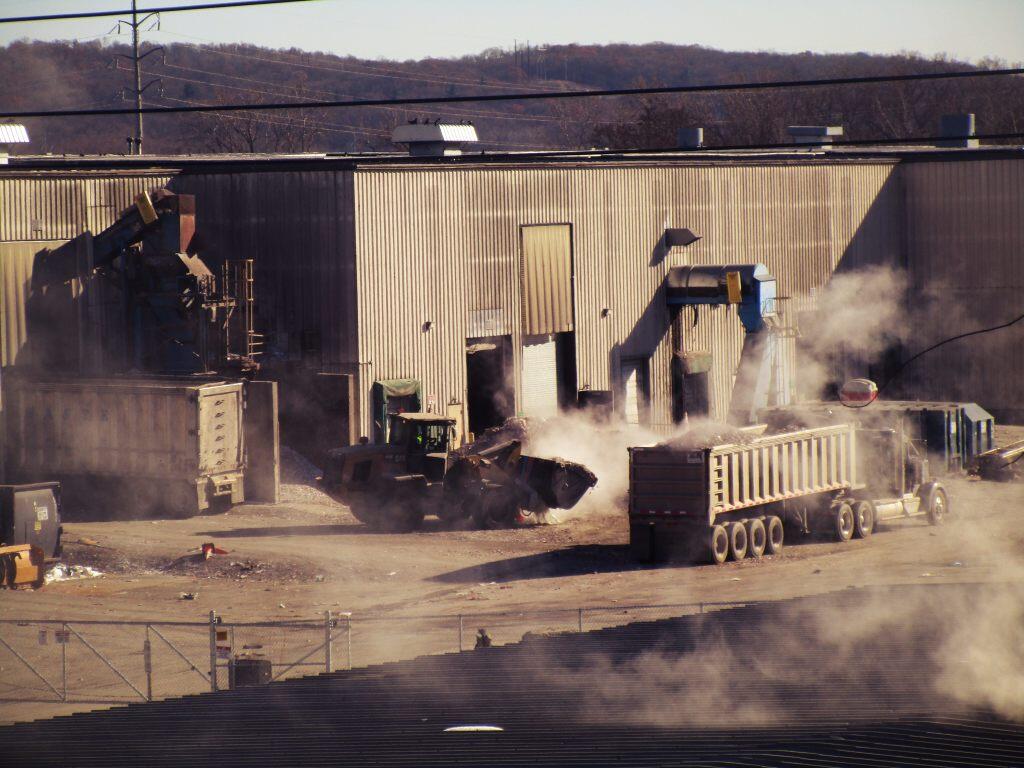
Mill Seat Landfill is owned by Monroe County and operated by Waste Management of New York, LLC. The facility is located on the western edge of Monroe County in the Town of Riga. Mill Seat Landfill was permitted in 1991 and began operation in 1993. In 2002, Monroe County partnered with Waste Management to operate the site. Waste Management is proud to partner with the towns of Riga and Bergen, the villages of Churchville and Bergen, as well as Monroe County.
Notable is how much of this landfill is surrounded by regulated wetlands, as shown in green and yellow on this map.
LEFT - Circa 1995, a few years after opening
RIGHT - Circa 2020, a contemporary aerial photo
Surprisingly the totals for Messer Deprivation were similar for landfills as Title V emitters. I am thinking though the issue is different here, as there are many small, rural landfills, not all of them are in the poorest communities in the state.
With all this talk of plastic in the news, the other day I was thinking what a large part of my trash is plastic milk bottles, as I drink around 2 gallons of milk a week, usually purchased at my local Stewart’s. They have not had a milk bottle program for a long time, instead switching to light-weight plastic milk bottles that you buy, take home, drink the milk in and throw away.
Now, I generally either recycle or burn them when camping in the woods, so none of them ever goes directly to the landfill. But I often think what a waste. Recycling is great, but usually plastic milk bottles and other HDPE products are shipped to China, and turned into some low value use like floor tiles or plastic lumber. I guess it’s better then using virgin materials for those needed purposes, but melting down all those discarded milk bottles for low value commercial products still seems a waste.
I guess I could get milk delivered in glass bottles. Meadow Brook Farms still does milk deliveries locally. That would be a more sustainable option, with less trash to dispose of. But milk in plastic from Stewart’s is more affordable, which is a big thing when you like drinking milk as much as I do. Plus, plastic milk bottles are convenient — you just throw them in the recycling trash can or I can burn them up at camp. You don’t need to return them.
But alas, I guess that is the dilemma known as modern disposable plastics. You like what comes in the package, then you throw it away. Although I do think I could put it to better use when I own my own land.
I can envision find more uses for all the milk bottles I’d otherwise be throwing away in the commercial recycling stream. HDPE is a really good plastic for molding, it can be carefully heated and remolded for various projects around the house. HDPE is a relatively non toxic plastic to burn, if the fire is hot, maybe I could use it heat water, although I wouldn’t want to do that inside where it could cause a chimney fire. Or storage of water or ice, although lately I’ve discovered plastic coffee cans are better for that purpose. Feed scoops and planters are other possible uses, although sometimes heavier plastic like what windshield washer fluid comes it would better.
I just hate seeing all those bottles in the trash and having to take them to the transfer station for recycling.