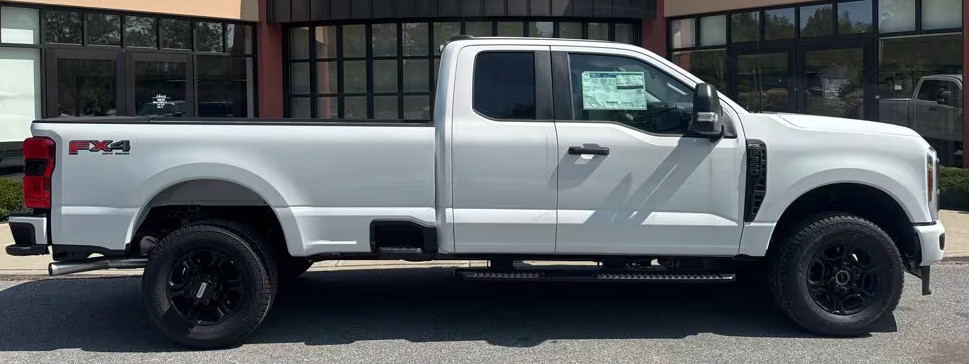
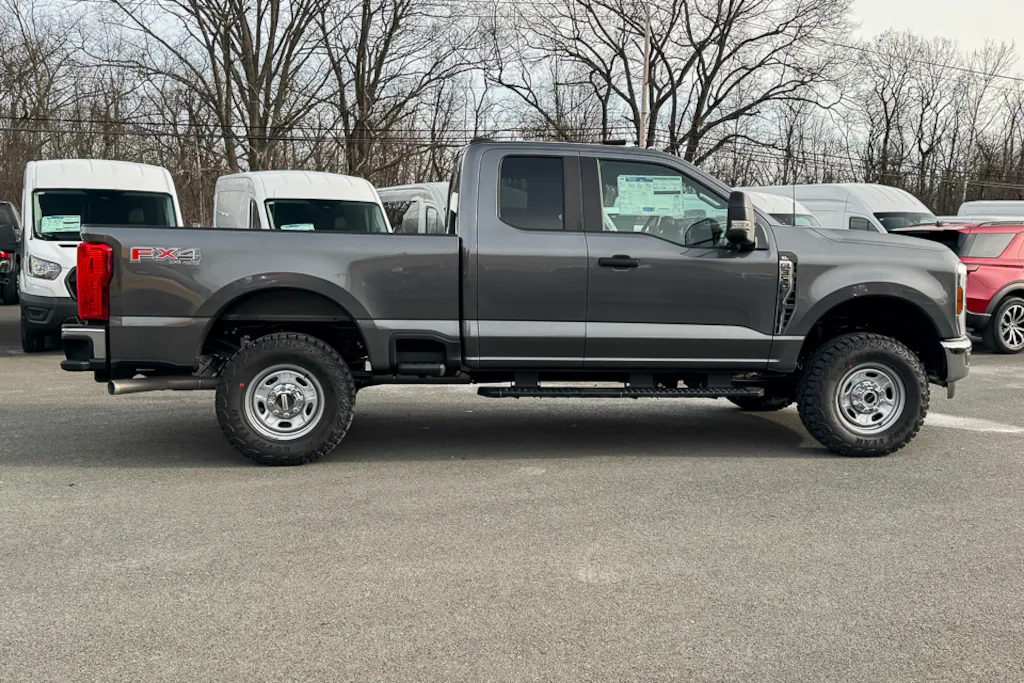
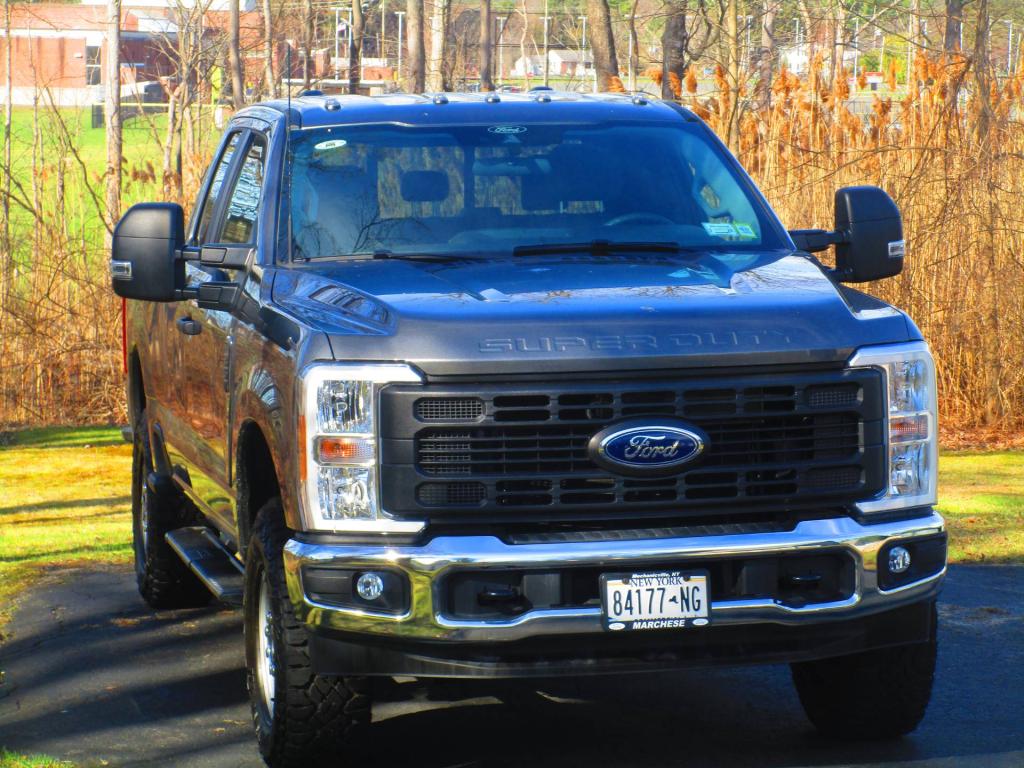
Old Smokey is the nickname I have for my 2026 Ford F-350 SuperDuty which I purchased at the end of March 2026 to replace my former truck, Big Red, a 2011 Chevy Silverado. Why the name Old Smokey? One is it the color is smokey but also it’s the truck that Smokey the Bear drives, at least the latest generation of DEC Forest Ranger trucks tend to be this color gray and built to a similar configuration. Why old? It is a work truck, and while it has some technology, most of the design is tried and true – 6.8L MiniZilla pushrod engine, key ignition, needles for speedometer and all guages, manual climate controls, conventional cruise control.
The Old Smokey truck is a “one-ton” class axle commerical HD pickup truck, extended cab, short bed (6 3/4 foot bed). While the short bed seems small by SuperDuty propotions, it actually is a very good fit for my uses, as it’s long enough to sleep on and camp once I get a camper shell (aka topper or cap) on the truck. It also is reasonably short at 19 1/2 feet, that with the backup camera makes it possible to get into relatively small campsites.
The truck has the FX4 and XL Off Road HD Utility Package, which provides 33-inch Goodyear Wrangler tires, skid plates, specifically tuned off-road shocks, Hill Descent Control, an electronic locking rear differential, a raised air dam for better ground clearance and water-fording vent tubes on the rear axle. It also has dual alternators and batteries, able to supply up to 410 amps of power for camping, and has the upfitter harnasses for additional power and configuraton.
The next step will be ordering the camper shell, moving the solar panel, lead acid batteries, interverter and CB radio to the new truck, and acquiring and installing additional solar panel(s), cellphone booster, and probably a supplemental LiPo battery. By next winter, I also want to add a diesel heater for comfortable winter camping. Stay tuned, as they say. It’s going to be a great rig.
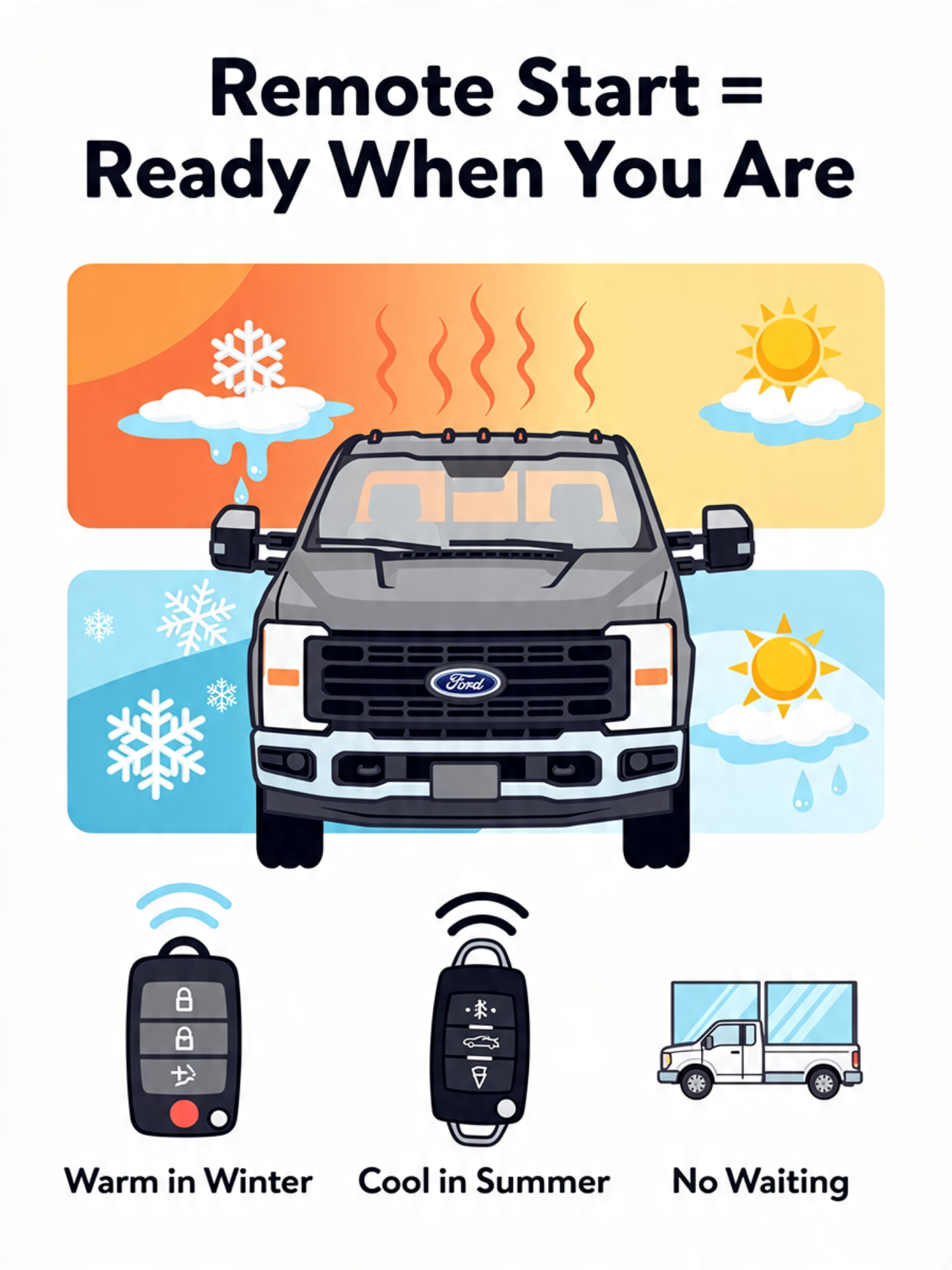
Most people think of remote start as a luxury reserved for those sub-zero January mornings or the sweltering heat of July. When I first got my Ford SuperDuty—affectionately known as Old Smokey—I figured the remote start on my key fob would be a “sometimes” tool, something I’d pull out for camping trips or during a cold snap. But lately, I’ve noticed a shift in my routine. Whether it’s a mild spring afternoon or a quick stop at the hardware store, I find myself hitting that button twice before I even reach the door handle.
It might seem like a small thing, but the more I do it, the more it makes sense. My ritual is simple: as I’m walking back to the truck, I click the remote start. By the time I’ve covered those last few yards, I hit the unlock button, climb in, and slide the key into the ignition. It’s almost no extra effort compared to starting it manually, but those few seconds—or a minute or two if I’m taking my time—make a world of difference for a heavy-duty machine like this.
The primary reason is purely mechanical. A SuperDuty isn’t a compact car; it’s a powerhouse. By starting Old Smokey before I’ve even touched the door, I’m giving the engine a head start on getting the oil flowing through the system. It gives the alternator a chance to start spinning and the grease a moment to loosen up before I ask the truck to shift into gear and move its own weight.
There’s also the electrical side of things to consider. When you unlock the doors, the dome lights kick on, the onboard computers wake up, and various sensors start drawing power. If I start the truck first, the alternator is already providing that juice. I’m not loading down the starting batteries with all those peripheral electronics before the engine has even turned over. Plus, getting the heater or the AC moving just a minute early adds a layer of comfort that’s hard to give up once you’re used to it.
I know there are critics out there. Some folks argue that remote starting is a waste of fuel or that “excessive idling” wears out an engine prematurely. While I wouldn’t leave Old Smokey running in the driveway for twenty minutes for no reason, I have my doubts that a commercial-grade engine is going to suffer from a sixty-second warm-up. In the grand scheme of things, I might burn an extra gallon or two of fuel per year. To me, that’s a tiny price to pay for reducing the wear and tear on my battery and engine components.
At the end of the day, it’s about longevity. Even if the engine is still warm from a previous trip, that extra minute of circulation ensures everything is fully stabilized before I pull out of the parking spot. It’s become as natural to me as using power door locks. It might seem silly to some, but for me and Old Smokey, it’s just the right way to start the journey.
This explanation from Google AI explains the Ford SuperDuty XL Off Road packaged, compared to the Ford SuperDuty XF4 Off Road package. The later is much more common, especially with the Godzilla, but I do like those bigger mud tires on the 17′ steelies.I really can’t justify spending for a Tremor – while nice and I made good money – trucks come and go much too quickly in this world, and I don’t want to spend too much on something that is as fleeting as a vehicle on in my life.
The Ford Super Duty XL Off-Road Package and the FX4 Off-Road Package serve different primary purposes: the XL package is a rugged, budget-friendly workhorse setup exclusive to the base trim, while the FX4 is a “lifestyle” off-road upgrade available across most of the lineup that prioritizes ride comfort and technology.
Old Smokey my truck has both packages.
Comparison Table: XL Off-Road vs. FX4
Feature
XL Off-Road Package
FX4 Off-Road Package
Availability
XL trim only
Most trims (XLT through Platinum)
Tires
33-inch All-Terrain/Mud-Terrain
Standard All-Terrain (size varies by trim)
Suspension
Heavy-duty (standard XL firm ride)
Off-road tuned shocks (smoother ride)
Protection
Steel skid plates (Transfer case, fuel tank)
Steel skid plates (Transfer case, fuel tank)
Technology
Rear electronic-locking differential
Hill Descent Control + Rear locker
Capability
Water fording vent tubes
Standard fording capability
Price (est.)
~$995
~$600
Key Package Highlights
XL Off-Road Package (The “Work” Setup):
Beefier Tires: Specifically includes larger 33-inch Goodyear Duratracs or similar territory tires for better grip in mud and snow.
Protection for Depth: Adds unique water fording vent tubes to the transfer case and axles, and a modified front air dam to improve the approach angle over obstacles.
Utility Focus: Includes a rear electronic-locking differential to ensure both back wheels turn together in slick conditions.
FX4 Off-Road Package (The “Ride” Setup):
Ride Comfort: Its defining feature is the specially tuned off-road shocks (often monotube), designed to handle washboard roads more comfortably than the standard stiff heavy-duty suspension.
Trail Tech: Includes Hill Descent Control, which automatically manages braking and speed on steep declines, allowing the driver to focus solely on steering.
Styling: Features the signature FX4 Off-Road bedside decal.
If you plan to use your truck primarily for job-site toughness or deep mud, the XL package offers better hardware for the price. If you want a smoother daily drive and help with steep descents, the FX4 is the better fit.