Lately in our country, there has been a major push to legalize all kinds of formally banned substances and practices, in order to increase government revenue. The latest has been marijuana, with Massachusetts recently allowing heavily regulated businesses to sell over-priced recreational cannabis to consumers.
The stinky weed, can now be lawfully purchased in Massachusetts, although it would still be illegal to bring across state lines under federal law or possess in New York, at least for now. That’s expected to change. But just because something is lawful, does it mean one should smoke it? I say no.
For one, legal pot in Massachusetts is still very expensive for what you get. A joint or maybe two small ones, which is about a gram for $15-20 is pretty expensive. Even in a high-tax state like New York, a pack of 20-good quality regular cigarettes is less then that. Maybe only a few puffs is necessary for a non-user to get it’s mind-bending effects, but it’s still incredibly stinky nasty stuff, that certainly is no more healthy then smoking cigarettes. I know I’m not willing to spend that kind of money to just burn up.
I concede a drag on a regular cigarette or pint of beer once and while, isn’t the greatest expense ever. When the national ban on marijuana comes to an end, maybe prices will fall lower. That will be bad for people who abuse pot and consume large quantities of it, but it also might make it more affordable and in the reach of the rest of us.
Even with cheaper, legal pot, I really doubt I would ever smoke much. I don’t need the high from drugs, I don’t need the cost. But I think it might be fun on a long weekend, camping up in the wilderness, to have a toke or two. It might open my mind up to new experiences, find a new sense of relaxation. I’m certainly not rushing out to buy cannabis products at currentprices but it’s something I’ll continue to monitor as the laws change.
In old folktales, no one fights for values. Individual stories might show the virtues of honesty or hospitality, but there’s no agreement among folktales about which actions are good or bad. When characters get their comeuppance for disobeying advice, for example, there is likely another similar story in which the protagonist survives only because he disobeys advice. Defending a consistent set of values is so central to the logic of newer plots that the stories themselves are often reshaped to create values for characters such as Thor and Loki – who in the 16th-century Icelandic Edda had personalities rather than consistent moral orientations.
Stories from an oral tradition never have anything like a modern good guy or bad guy in them, despite their reputation for being moralising. In stories such as Jack and the Beanstalk or Sleeping Beauty, just who is the good guy? Jack is the protagonist we’re meant to root for, yet he has no ethical justification for stealing the giant’s things. Does Sleeping Beauty care about goodness? Does anyone fight crime? Even tales that can be made to seem like they are about good versus evil, such as the story of Cinderella, do not hinge on so simple a moral dichotomy. In traditional oral versions, Cinderella merely needs to be beautiful to make the story work. In the Three Little Pigs, neither pigs nor wolf deploy tactics that the other side wouldn’t stoop to. It’s just a question of who gets dinner first, not good versus evil.
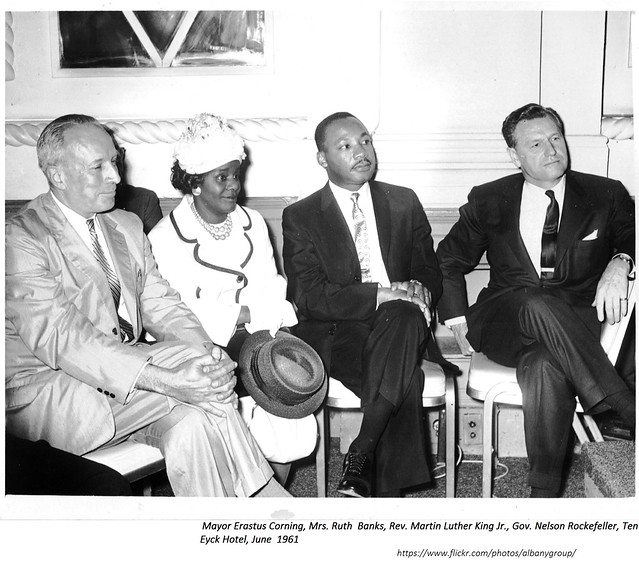
The Albany Movement was a desegregation campaign formed on November 17, 1961, in Albany, Georgia. Local activists from the Student Nonviolent Coordinating Committee (SNCC), the National Association for the Advancement of Colored People (NAACP), the Ministerial Alliance, the Federation of Woman’s Clubs, and the Negro Voters League joined together to create the movement. The Albany Movement challenged all forms of racial segregation and discrimination in the city. Martin Luther King Jr. and the Southern Leadership Conference (SCLC) joined the movement in December 1961.