1) Debt is evil, don’t make it. If you can’t afford to buy something with cash, you can’t afford it. Your poor. Be a grown up and accept that fact.
2) Live in poverty. It’s always bad to have money in your bank account, because it doesn’t earn much interest and means it will get spent on things that you’ll spend later to get rid of at the landfill. I rarely have more then a $1,000 in the bank, because I’d rather live paycheck-to-paycheck, knowing that every time I look at my bank account I can’t afford to buy junk. Lock the rest of the money up in investments and savings accounts, the later that offers more flexibility during emergencies and for buying bigger purchases after a few years.
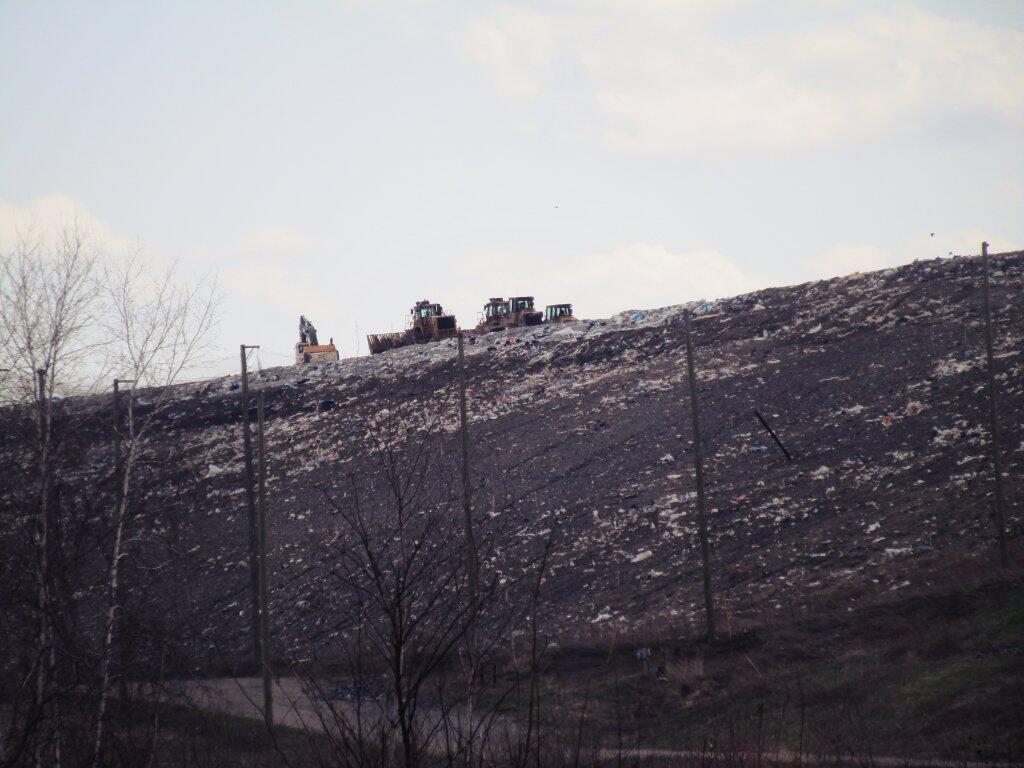
3) Remember 90% of things you buyare going to either become poop or smell like burnt plastic in the burn barrel within 2 weeks of buying it. While we all like playing with fire, watching things melt, and colorful flames, buying things to set on fire is a waste of money. So in other words, don’t buy it.
4) Do antagonize over $20 purchases. Little things add up quickly. Do you really need it? Anything that is non-essential should not be purchased — even if you like watching plastic melt and burn.
5) Don’t take a raise — or at least the majority of a raise. Rather then taking a raise, use automatic deposits to savings accounts, 401ks, IRAs, or any other vehicle that defers the money to make raise never appear in your bank account rather then take it and spend it.
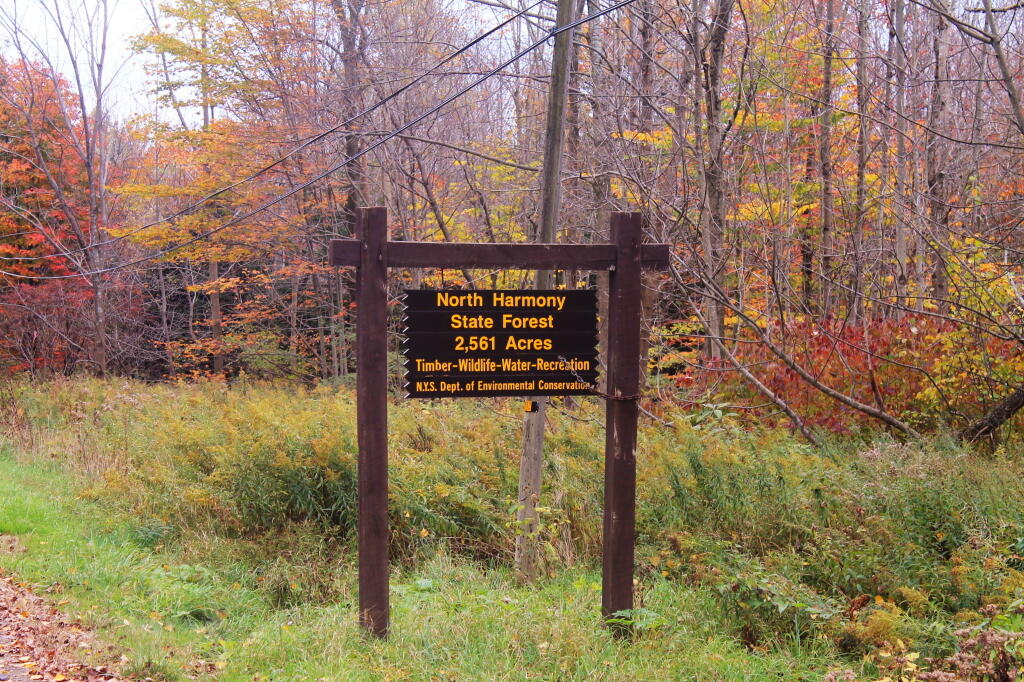
6) Always look for lower-cost ways of doing things. Does the government offer the service for free or low-cost? Public libraries, public transportation, and public forest lands are free (or low cost) for your use and enjoyment.
7) Try to save more then you spend each week. If you take home $1,300 then invest $700 of that check a wide variety of ways. It’s okay to withdraw money every few years for a big purchase, but at least you’ll be getting a better deal then most by buying it with money that has earned compounded interest rather then paying finance charges.
8) Sales are horseshit. Buying things on sale usually is a bad way to save money on the purchase, unless you’ve been deferring a necessary purchase for a number of months.
9) Celebrate when the stock market goes down. It means you can buy more stock for less money. Stock paper is just that — it has no value until you it cash it in. You shouldn’t give a rats ass about the stock market going down — except to look forward to the deals you are going to get. You shouldn’t be buying stock paper unless it’s for long-term goals, that can be sold when the market is booming.
10) Cheap, diverse investments are better then expensive ones. Self-investing in boring, uninteresting broad-based funds are better. If you don’t understand an investment, then you shouldn’t be investing it. Have a dozen different ways of investing with different banks, different funds, and different investment types. It’s good to bet against your own investments with mutually opposing investments. If one thing goes bad, you’ll have other things to fall back.
11) Keeping buying a little bit of your investments each week, when you get paid. The fancy financial types call this cost-based-averaging. It’s also not bad idea to wait until the market drops back down and convert some savings to stock, but be patient and wait for a good drop in the market. When people have been panicking on Wall Street for a week, that’s a good time to drop that $5,000 or $10,000 you don’t really need and toss it in the market for the hell of it — knowing that you might never get the money back — but you might also make out well.
12) Pretend money in retirement accounts and stocks, unmature certificate of deposits is totally inaccessible and for all intents and purposes does not exist. I mean I think have a ballpark idea what is in my investment accounts, but I don’t really give that much of dang, because it changes every day. I’m betting that in 20 years it will be a bigger amount. And for all intents and purposes, stock paper is an imaginary money — as stock paper has zero value until you cash it out.
Writing reveals something about yourself, and putting it on the internet exposes yourself for all the world to see.
While not maybe not all of the world reads your blog, you know the great damage you can do to yourself by expressing your thoughts to the world. You’ve certainly seen when celebrities and even half-bit middle managers have fallen from grace, lost their jobs due to stupid social media posts gone viral.
I generally stay away from politics and controversial matters on my blog, and a definitely don’t post controversial things to social media. But like many people, I have my views on the issues of the day, and I try to write thoughtful commentary about them on my little corner of the internet. Yet every time I write a bit, I know there is somewhat a risk, especially if my views don’t reflect the popular sentiment of the day. But sometimes it’s worth it to express oneself, especially when it’s a bit off the harsh light that social media often casts one’s words.
I have my own views. I am a conservative, and people respect me for my views. I am pro-environment, but I like my guns and the rural life with it’s cows, trees, bonfires and big jacked up trucks. I’m also a Democrat, I work for the Democratic Majority and I work hard to defend the interest of my paying clients, even if I don’t agree with them on every issues. Truth is I can’t think of a client I ever worked with which I fully agreed with on every issue, but I worked hard to get their message out and defend them politically. I don’t talk about my clients or even too much what I do professionally on the internet bar the broad strokes which are public record. You can figure out what I do for a living and how much I earn by visiting NYS Board of Elections and See Through NY, or the Assembly’s Public Information Office.
As I’ve gotten older, I enjoy less and less the public sphere, that is attending public meetings and fighting development in the Albany Pine Bush or attending protests and rallies. I generally shun newspaper columns, I don’t write letters to editor regularly, nor do I post anything political on social media. My blog while not private, is a controlled environment, where I can share my views, while controlling the format they are displayed and who can comment on each post. No name calling or inappropriate threads get started on my blog, as I have to approve comments and can delete or moderate as I so choose. Things only trend on my blog, as much as I left them trend on the feed.
This is part of the reason I thought about shutting down my blog, besides the sheer cost of running it — now hopefully defrayed significantly by advertising. I kind of don’t like how well I’ve gotten known from the maps I’ve made up over the years, it gets harder and harder to travel anonymously when people recognize Big Red parked places, along with my camping set up. At the same time, it does tickle me how many people know about my blog. Yet, sometimes I do wish I could go places, especially in the back country, without being a minor-half-bit internet celebrity.
The Federal Reserve left interest rates unchanged Wednesday, but signaled that it's open to additional rate hikes in the future, if necessary, to combat stubborn inflation.
"In assessing the appropriate stance of monetary policy, the Committee will continue to monitor the implications of incoming information for the economic outlook," members of the Fed's rate-setting body said in a statement.
The central bank has already raised rates 11 times in the last 18 months, most recently in July. That's the most aggressive series of rate hikes since the early 1980s, and leaves the Fed's benchmark borrowing cost between 5.25 and 5.5%.
Well maybe until he let the world know about his views on the COVID-19 vaccine, which from a business perspective probably wasn’t his best decision but is fully consistent with his world views. You can argue still to this day, Salatin is one of the most successful homesteaders out there. I wouldn’t say, go woke, to broke.
I was listening to the NY Magazine podcast this morning when they were talking about the origins of the word “woke”. The term has become associated with left-wing political activism, particularly that worn on one’s sleeve without much conviction. Feel good politics not grounded in reality. And a sober look at how people exploit it.
Humans like stories and good feelings. Many if not most successful businesses – outside of commodities and essentials for living are about telling a story. People need a reason to buy your product. Smart business owners find ways to tell a story.
People should be aware of what is happening in their community and in the world. They should care about others. Good business people are savvy when it comes to maximizing their resources. Salatin has developed some neat ideas to run his homestead that reduce the need for inputs.
And he’s built a story about it and diversified himself both in his ag business and the books and lectures he does. I’ve supported his farm by buying his books even though I’ve never been to his part of Virginia.
Like many people, being woke leaves me with a bad taste in myself as it is often based on denying reality and hiding yourself from the real world. But if you can play into consumer beliefs while being grounded in reality behind the scenes then I see no problems with being woke.
Federal Reserve officials are likely to remain wary about the outlook for inflation following a report released Wednesday: Overall price increases sped up because of a pop in gas prices in August, and a more closely watched index that strips out volatile food and fuel prices climbed at a faster monthly pace than expected.
The Consumer Price Index climbed 3.7 percent in the year through August, the report showed. That was both faster than the 3.2 percent July reading, and slightly quicker than the 3.6 percent that economists had expected.
The Federal Reserve Bank of New York’s Center for Microeconomic Data today released the August 2023 Survey of Consumer Expectations, which shows that inflation expectations were largely stable, rising slightly at the short- and longer-term horizons, and falling slightly at the medium-term horizon. Income growth perceptions declined in August, and job loss expectations rose sharply to its highest level since April 2021. Perceptions about current credit conditions and expectations about future conditions both deteriorated. Households’ perceptions about their current financial situations and expectations for the future also deteriorated.