The current Trump administration has made 70% more changes to government environmental websites during its first 100 days than the first Trump administration did, and those changes are bolder, according to a report published by the Environmental Data and Governance Initiative (EDGI).
EDGI is a nonprofit network of researchers who work with data, started after President Trump took office in 2017. It documents loss of access and usability of government environmental information and preserves that information for public use.
I often like to compare fossil fuel addiction to heroin addiction …
To which I often get response that fossil fuels aren’t chemically addicting, they don’t change the brain’s chemistry, re-wiring it to crave more and more of them. But is that true? There is a lot of evidence that humans become as addicted to fossil fuels as opioids and that the behavior around fossil fuels is very similar to a person who is addicted to heroin, although fossil fuel addiction is much more socially acceptable.
Speed, warmth, light tickle and change our brains
Humans crave speed, warmth, and light — especially colorful lights. Our fossil fuel society makes such things very possible and easy to access. How to make people happier? Go faster, make it more comfortable, make it more bright and colorful.
Spending enormous amounts of money on the habit
Fossil fuel production and consumption is an enormous part of our economy. The average household spends $1,977 a year on gasoline alone. Is that amount of money spent to incinerate refined dinosaur bones, a largely non-sensible activity, is a classic sign of an addiction.
Denial of an addiction
Most people are in denial that they have a problem with fossil fuels and energy consumption more generally. They often dismiss how much energy they consume, they make excuses that it is necessary for modern living. People often react strongly when their utility rates or gas prices go up, or efforts are made to restrict motoring by reducing the number of lanes on roads or parking spaces.
Bizarre behaviors as a result of addiction
Addicts often engage in bizarre behavior when they high. Not only are people likely to defend oil and gas development in terrible places, they’re much too willing to accept climate change, as the price of fossil-fuel freedom. Wasting energy is totally acceptable, if it makes us happy.
Seeking alternative ways to get high
How do people plan to address the climate crisis? Usually it involves building industrial wind turbines and large solar farms, and switching to electric cars. Conservation is often pushed to margins of debate. And lifestyle change is dismissed as being impractical. People — at least on paper — want to address climate change by driving to Walmart in electric car.
A few years ago there was a news report about black lung disease being on an uptick, the highest levels since the early 1970s. It is down somewhat from last year's survey (a five year rolling average), but still close to what it was 50 years ago. You can explore the data here: https://www.cdc.gov/niosh/topics/cwhsp/cwhsp-public-data.html
Centralia is a borough and near-ghost town in Columbia County, Pennsylvania, United States. Its population has dwindled from more than 1,000 residents in 1980 to 63 by 1990, to only five in 2017—a result of the coal mine fire which has been burning beneath the borough since 1962. https://www.history.com/news/mine-fire-burning-more-50-years-ghost-town
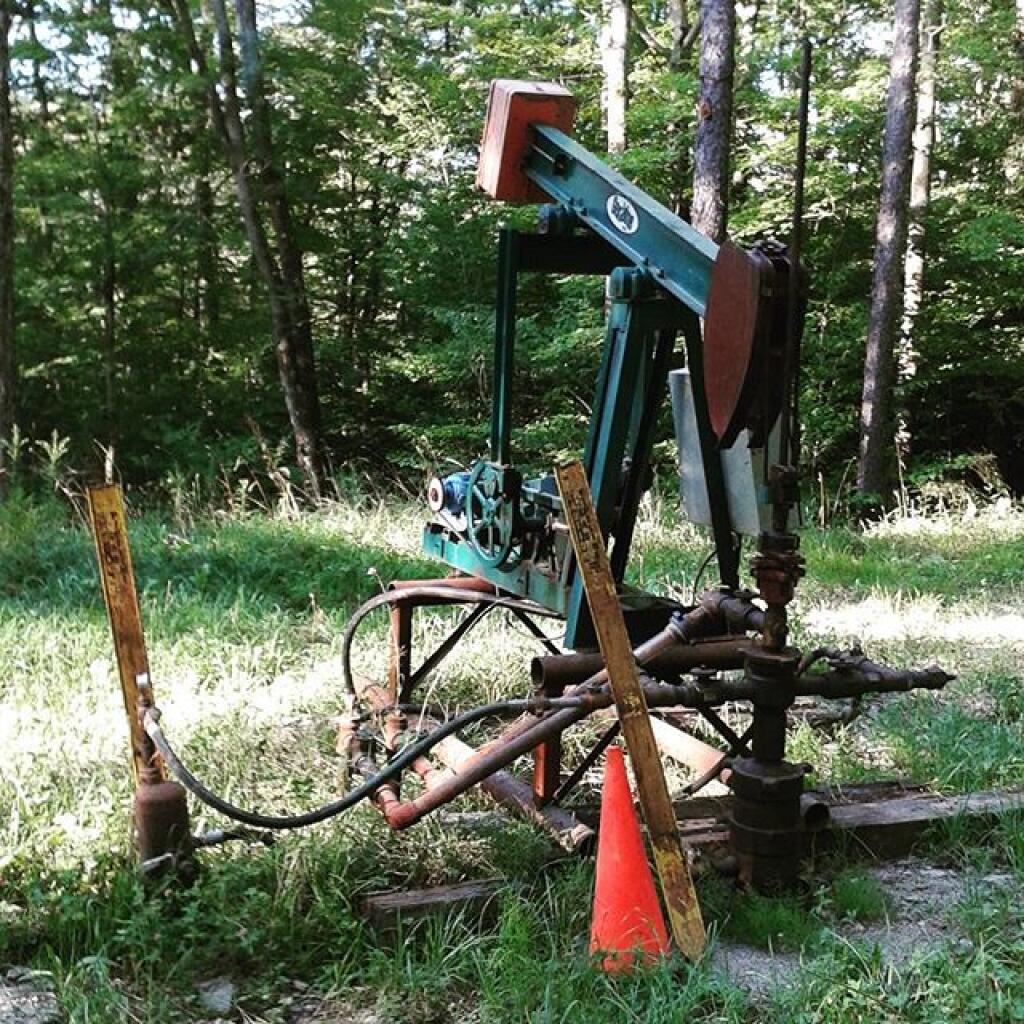
Most people don't think of New York when oil is mentioned, when actually the first recorded discovery of oil in North America was made right here in Allegany county. In 1627 a French missionary was led to the oil spring by local Seneca Indians. The spring is located in what is now Cuba, New York. The Senecas prized the oil for medicinal proposes. The oil spring in Cuba was not the only discovery of oil in New York before the 1881 boom. In 1832 farmers digging for coal in the town of Freedom noted oil seepage into the pit. A well drilled in 1857 near the Seneca Oil Spring, two years before Drake's well didn't produce any significant oil. A well drilled in Rushford in 1860 produces little oil yet substantial natural gas. In 1865 "Job Moses No. 1" located in Limestone becomes New York's first successful oil well at 7 barrels per day. A big strike at Rock City (S.W. of Olean) in 1877 marked the start of New York's first major oil field. The "Triangle No. 1" near Allentown drilled in 1879 causes the town of Petrolia to spring up.
I think it’s absurd to keep closing our eyes about climate change. It’s here already, and it’s going to get a lot worse. Flooding and air pollution are big concerns locally, the fires and droughts are the story out west. It doesn’t help that people are pretending that we can slap a few solar panels up, and buy greenie products, and say the problem is fixed.
It’s not fixed and it’s not likely to be fixed. And it’s going to be real bad, regardless of what we do.