Probably heading up to the Adirondacks to beat the summer heat plus the issue of fire insurance on the building next to my parents house sealed the deal of me not getting that property but I wanted to write down what seemed to be my concerns and the things I liked so I would have the list when considering future properties.
Things I liked.
Great price when you consider the cost of rent over ten years and you’ll recoup some of the cost when you resell it especially if you’ve fixed it up
Chicken coup, horse barn, outdoor sink and overhang for butchering livestock outdoors
Relatively small size of the house
Single floor and a relatively low slung roof that could easily be maintained by a short ladder
Relatively new roof and windows
I could have paid for it with cash and had the title in hand, then only paid homeowners insurance and property tax
Things I disliked.
It’s in New York State with the burn ban and the bad gun laws
Being rural and having to commute each day to the city
Werid shaped property with one of the neighbors’ properties inset within the land
Have to be careful what I burned due to being a residential neighborhood
Vinyl siding, which was covering up obvious wood rot below it
Grid-tied, an ancient oil burner which if it was still functional probably wasn’t energy efficient
No wood stove
No forest land to use as a wood source if I were to burn wood
Cost of property taxes, homeowners insurance, and commuting would exceed my current rent, while getting nothing back in return — investments in stock and cash are
So any unknowns …
No guarantees I’d be able to get insurance on the property until I moved in as it would be a cash purchase
Power is turned off as is the water, so don’t know if there are shorts in the building’s electrical, if the well and septic work. While I would have a home inspection done, that’s a bunch of unknowns and I would have to put up a bunch of cash not knowing what I would get in return.
Floor is collapsing in one area. While it doesn’t seem serious as a one story structure, the whole foundation looks to be mostly of uncemented field stone, and I’m not sure how secure the whole building is without a full home inspection
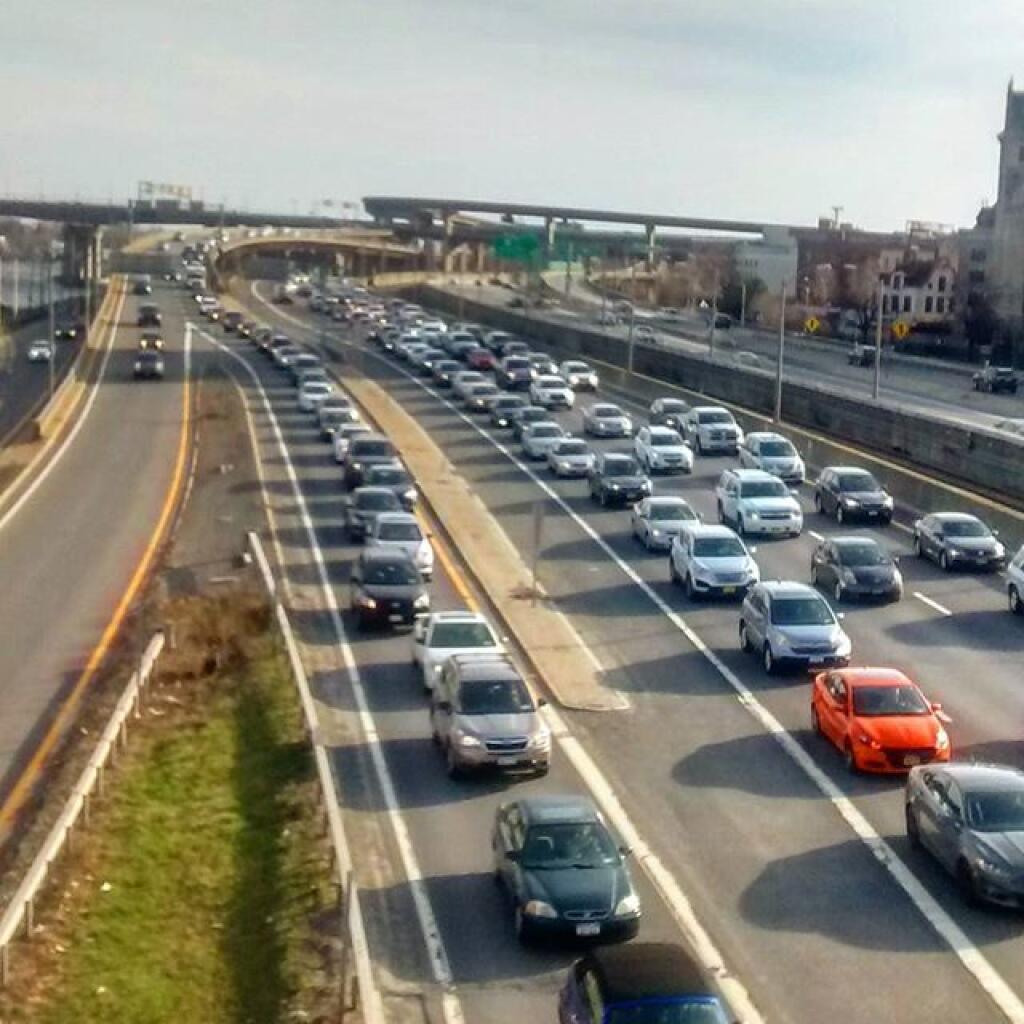
I’ve continued to think about country living and building my off grid homestead. Commuting sucks especially in the big city, as I’ve determined in the past two days when I drove to work – one day for the Pine Bush Hike and the other for heading out to Schoharie to camp.
Traffic jams, traffic speeds up and slows down, you have to pay constant attention.
So many broke down cars and crashes necessitating difficult lane changes due to Move Over Law.
Cops everywhere – checking your speed, if all your tail lights are working, not using your cellphone, following the Move Over Law.
A complete time suck – on the bus you can read and on the bike you get exercise but time driving is wasted.
Expensive automobile maintenance and fuels.
And that was only one trip out of town and a trip up to the Pine Bush!
It’s nice to get out of town, but I’ve come to realize that much of the nice of the really nice land is beyond sensible commuting distance. There is no reason to live in a suburban subdivision surrounded by corn fields that smells like cow shit. Commutes aren’t certainly a good reason to live out in the country.
Maybe for as long as I have to live in big city, focusing on making money, I should continue to live in the city where I can bike to work. Continue to research and plan my dream homestead, but realize it’s not compatible with living in New York or being within commuting distance of my work. It just isn’t possible to put together to incompatible views of my future.
Driving out to the Green Mountain National Forest via Sand Lake, there was a sign advertising 6 to 10 acre house sites. My parents have 8 acres where they live in Westerlo, and I think the town requires a least 3 acres for new home sites, to protect the rural character of the land, even if it ultimately is just promoting sprawl and McMansions with abandoned, farm fields reverting back to woods.
When I eventually move out to the country, I want to own enough land to be back from the road, have privacy, be able to shoot guns, have bonfires, heat wood, burn trash and debris, and listen to music as loud as I want to. I’m not into burning junk tires or super amplified music, but I do like have my freedom to do what I want with my land, and nobody knowing or caring. If I want to butcher a deer or hog in my backyard, so be it. I guess you could figure out far you have to be from the road to be screened, how far smoke travels, how loud your guns are. Obviously, you have to respect local laws on when you burn and how far you have to be from other people’s homes and barns to be shooting. But we all knows that sometimes smoke and noise travels farther then you would like, and that’s why it’s important to have the right kind of neighbors.
No matter how remote you live, there are always neighbors down the way. Many country folk don’t give a fuck about how other people live their life, to them it’s live and let live. Which is good. But it only takes one person to call the cops when they smell the wrong kind of smoke, or are bothered by noise of shooting or music. Rednecks are usually good neighbors while the nosy, moved out of the city in the fancy McMansion is the worse. But you never know, so having distance is important. And sometimes a reasonable person can get annoyed or change. Good people sometimes move out and bad people move in.
Livestock and wood are another consideration. Livestock can require quite a bit of land for forage and you often don’t want them penned up right next to your house, because especially cows can be quite noisy at night and hogs smell like hogs. Wood heat can require a good supply of firewood, especially with those outdoor wood boilers – but even fireplaces can burn through a lot in a cold winter. All considerations on how much land I would need to save up to buy. But those are easy to calculate – in contrast having decent neighbors who don’t make a fuss about nothing is far more important then having a lot of land.
There are many state lands away from big cities that are relatively unrestricted in their use. They are so free only because they are largely unknown by the public and the lack of use means they can be used extensively without serious environmental damage.
The wear and tear by a few pickup trucks, quads, and horses seem minimal compared to the damage we see in far more restricted urban areas. I am inspired by Rural America and how little us humans have destroyed it compared to the big cities.
People can pollute more per capita and do far more damage then would be permissible if more people where out here. A truck can tear up a muddy trail pretty badly, but many people walking on one trail can do far more damage as witnessed in the Northern Catskills. People who live out here can have dirty diesel tractors, big gas-guzzling pickup trucks, and burn trash without significantly compromising their clean air or their quality of life. We could only wish that to be the case in the big city.
My biggest fear is what will happen when the cities expand further and further out into the country. What will happen with a new class of people coming out to enjoy the land? More people will ultimately mean more rules, less, freedom, and certainly no camping or four wheeling. The area won’t be as beautiful as farmsteads and forests get replaced by McMansions enjoying the mountains. What once was empty roads is increasingly becoming houses.
You just have to fear what it will mean when people come out here and settle the land. Outsiders will start demanding that we change, and that we start following their orders. Rural America might ultimately be the Pine Bush of the future a seriously compromised area that only is preserved for historical memories of the great beauty. Life in Rural America is nice now, but how will it be when country ain’t country no more.
I have lately gotten this idea of the parameters of my homestead that I’m putting together.
20 acres
Less then 30 miles, 45 minutes to work each way
Total of $250k for the build
Up to $300k if necessarily with cost-over runs
$100k for land
$100k for house
$50k for infrastructure (road, leach field/septic, water well, possibly solar)
Having these parameters is fine, but in many ways I am pulling these numbers fairly arbitrarily based on some preconceived notions I have i my head that isn’t based on hard data. As a podcast on building an off-grid cabin notes, anchoring oneself to a series of numbers is dangerous because it risks you spending too much or thinking your vision is impossible.
Moreover, I’ve realized many of these numbers might as well be pulled out of thin air and my own biases. But I needed somewhere to start, and as cost and availability data come to be clearer, I will adjust my plan appropriately.
I am thinking I would go all in for the rustic, early 1900s look when electrification was a new thing and buildings were often lit by a single bright light bulb hung from the ceiling with a wire with no fixture surrounding it, hung in the center part of the cabin near the wood-stove. There are so many great retro-LED bulbs, and it would so much like a poor cabin from that era when people had only a few electric lights. Plus very energy efficient to spread out the light over the majority of building, with only separate fixtures in the bathroom, kitchen, and then task lighting like table lamps by the rocking chair or next to the bed.
I was thinking I would do wood-plank style flooring, either over a post and beam floor or poured concrete slab foundation, to keep that rustic look, along with wooden shiplap and/or tongue and groove inside walls with the use of congregated steel in the bathroom and kitchen, and in front of the firewall where the wood stove would be located. I could certainly install those materials myself, and it would not only save money, but also put more sweat equity into the whole project. Plus, while I don’t hate drywall quite as much vinyl siding, plain drywall walls are so ugly, and far less sustainable then pine or even cedar shiplap or tongue and groove. Plus drywall is hard to keep from getting dingy with mud and muck I’m likely to track in from barnyard and hauling wood into the cabin, or the occasional smoke and ash from back-drafts and chimney cleaning. Plus then I could keep the scraps either for heat or bonfires out back. Burning hunks of shiplap in a bonfire out back with a cold beer is probably a hell of lot more fun then paying to landfill hunks of drywall. I guess you can chip and compost gypsum board, but they use fly ash in it which contains heavy metals. Yuck!
Fire safety people probably wouldn’t like the lack of walls in the center part of the cabin, and when I consult with the architect and town building inspector, I would have to figure out what the code requirements would be. Walls are good should a room flash over in a fire, as your bedroom could be closed off from the main section of the building. That said, having good smoke detectors and a nearby window for escape might be sufficient. I really like the idea of minimizing walls, outside of the bathroom, to ease heat dispersion from the wood-stove, simplify building, and be able to light more of the building using that single central light bulb. I want be warm in bed, even in the coldest nights. I don’t have privacy concerns, as I live alone and aren’t real interested in marrying anytime soon.
I’m kind of a dirty hick no matter how you look at it. I just kind of like the look and feel of dirt and mud, the smells of nature. Cleaning is difficult and I’m not sure how healthy it really is with harsh chemicals and the destruction of healthy bacteria that builds the immune system. Plus it’s often hard to get things cleaned without a lot of hard scrubbing.
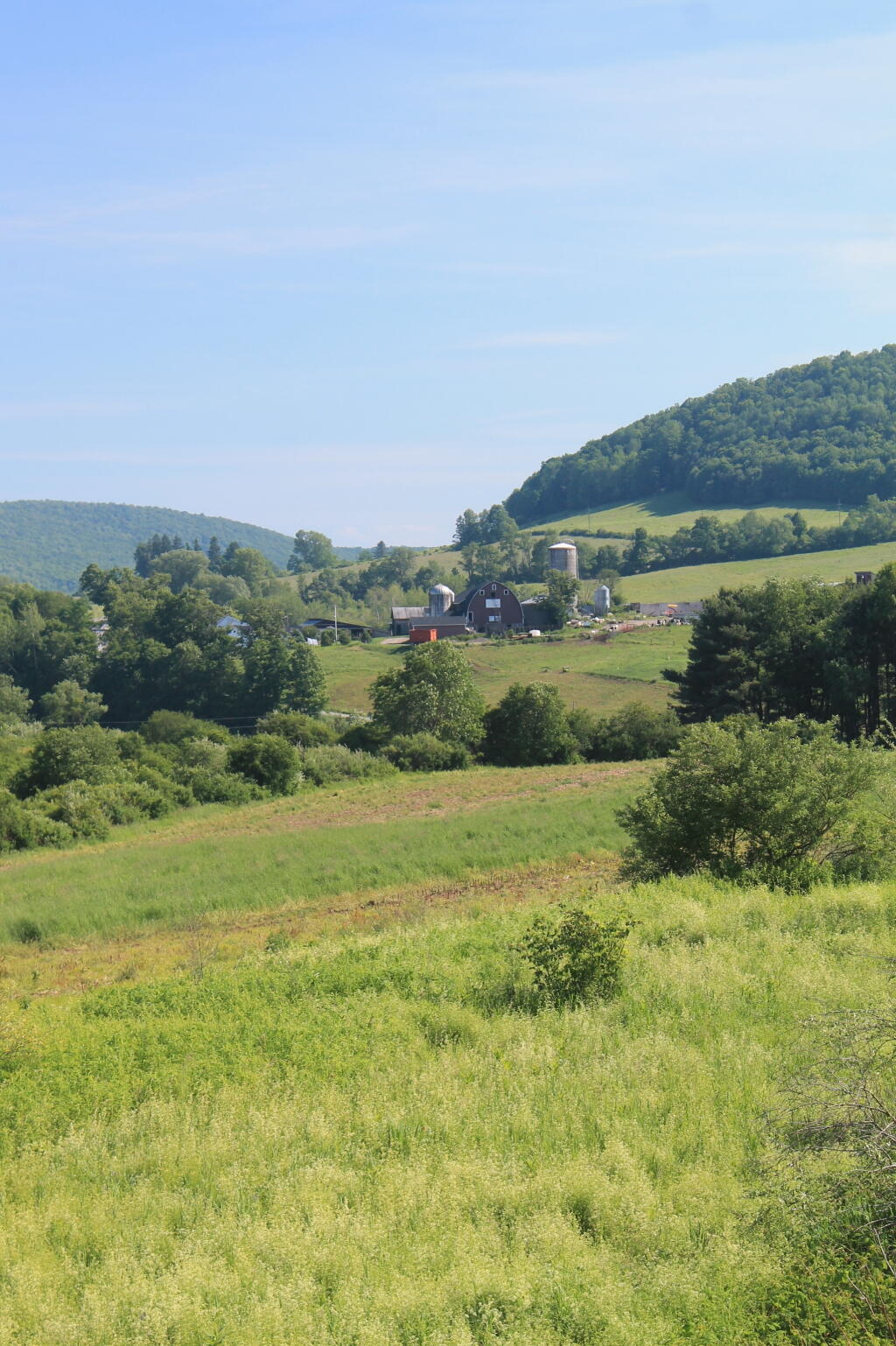
It is pretty common on dairies for parents to bring babies out in a stroller and plop them out between the feed aisles so they can breathe in the barnyard air with the breathe of cattle and the pungent smells of silage and manure. The cows mooing are soothing and the natural bacteria healthy. Barnyards are hardly sterile, they are living natural things.
My apartment is dirty as is my truck and my camping gear. I do some cleaning but I’m not particularly worried about a little bit of mud or dirt. Sometimes things smell bad – I do my best to clean them but I’m not perfect. I probably should do more but what is the harm? Living close to nature means living in the dirt.
Cleanliness has its benefits in the city, although it’s hard to argue most cities are particularly clean – people track in mud and dirt and pollution from buses, trucks, cars and factories can make cities quite gross. Cleanliness can help slow the spread of viruses without vaccines like the common cold virus but even that is somewhat over stated. It looks nice and smells better to be clean but it’s debatable if it’s that much healthier.