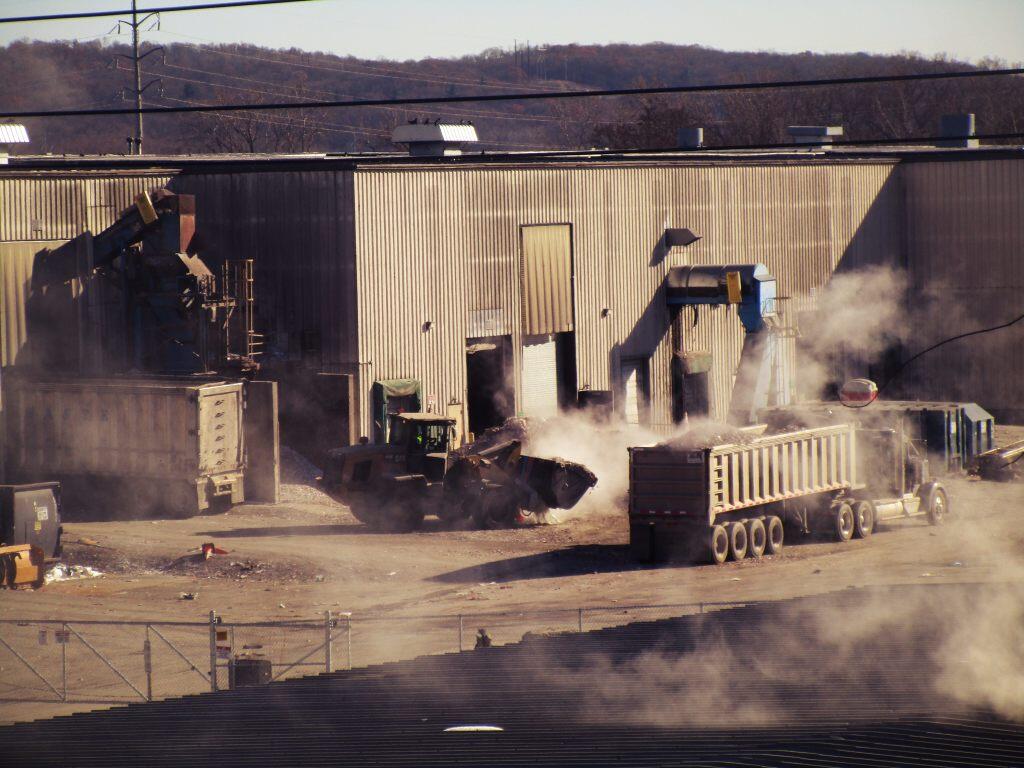
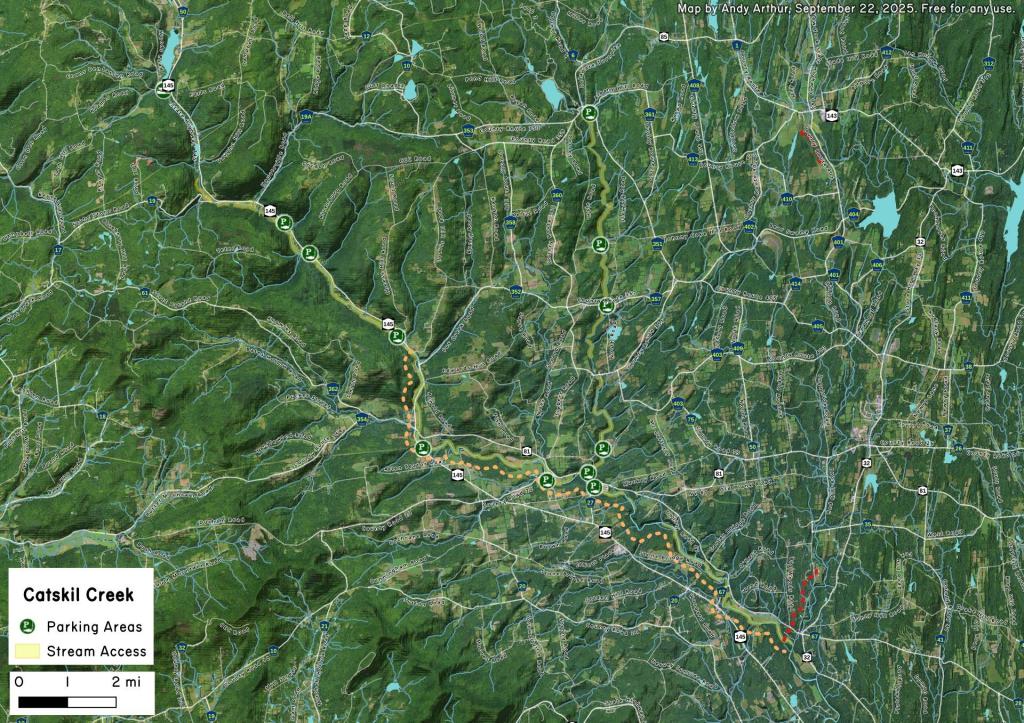
Blue - Brush and land clearing waste Yellow - Municipal solid waste Red - Construction Debris Purple - Industrial Waste Teal - Long Island Ash Landfills
Recycling is a bit of an national obsession and a joke these days. More people recycle in America then vote, it’s looked down upon people who don’t use the proper recycling bins. It’s even gotten to the point where people toss so much crap into recycling bins, that waste disposal and sorting costs at recycling plants has become a major drag on the facilities. People want to do the right thing and feel virtuous.
Now I certainly do recycle my cans and glass in part because I pay $2 a bag to dispose of unrecycled material at the transfer station, and it’s a trip down there that I try to avoid making. Plus I don’t like looking at landfills or thinking about all my crushed debris piled up there indefinably. But I generally don’t have a lot of waste, because I buy in bulk, avoid purchasing material things preferring savings over spending, and don’t eat out — a big source of garbage in a country where people spend more money eating out then eating at home. In the summer months, a lot of my burnable stuff, is used for starting campfires.
But having looked at the actual recycling numbers, very little day-to-day household waste actually gets recycled. Of waste commonly disposed in curbside or transfer station in garbage bags and dumpsters, only 2-3% of it actually is separated out into recyclable materials that have a chance of being sold as scrap and reprocessed into something new. Calling scrapping cars, old washing machines, refrigerators, or composting leaves and wood debris recycling distorts what people actually consider recycling — the stuff put in the blue box or recycling dumpster.
Much common waste, maybe not day to day trash is either landfilled, incinerated or burned, from old computers to mattresses to brick and concrete to broken appliances and headphones. Most of it is mixed in with the ordinary household trash, the banana peals and rotting chicken bones then buried or burned, leaching it’s toxic residue into the air and water. Look around your room — how much of the stuff that you had ten years ago is still around you, and how much of it is now landfill or smoke?
Recycling certainly saves materials and landfill space, although common curbside recycling is kind of a joke. It would do better to reduce material consumption and focus on important recyclables like metals, which have to be mined and can be reprocessed with a large part of the material recycled — although not all as some is always lost as a dross. But I think it’s emphasized too much, and focuses on the wrong kind of things — not the toxic wastes like electronics or the bulk wastes like old appliances and furniture.
A block by block analysis using county tax rolls to calculate the percentage of buildings that likely were constructed with asbestos containing materials.
Lately we’ve been learning how much of a scam recycling really is especially with low value, often contaminated scrap like plastic often is. We are learning how most plastic quickly becomes trash shortly after it’s use with no destination but an incinerator, a landfill or a burn barrel.
Honestly, I don’t think it’s all that big of deal because if anything there is a glut of landfill space out there, and if your going to burn natural gas to heat and light the cities and make oil to power the cars, your also going to make plastic. Garbage is well compacted down a landfill, a few hundred acres of dumping grounds can serve a large community for decades. Plastic in a landfill is no less biodegradable than a discarded Salisbury Steak or head of lettuce or a paper bag – it generally isn’t going to rot much – landfills are permanent resting places for waste. The compaction of the waste means there is no aerobic digestion breaking down the waste in landfills and anaerobic digestion is extremely retarded too even if it does produce some methane which is problematic if not captured properly.
Even burning plastic isn’t as bad as it once was. Municipal incinerators break down plastics down to carbon dioxide and water vapor almost entirely, especially the plastics commonly used in food packaging. With the phase out of polyvinyl chloride number 3 plastics in disposable packaging, which one used chlorine as a low cost building block, the toxicity of common plastics incinerated in a low temperature fire like a trash burn barrel on a farm or rural homestead has greatly been reduced. Sure there are plasticizers that soften the plastics and dyes but they’re a small part of the waste stream and worse of them are being phased out. Not much residue or ash is produced from incinerated plastic and if anything common discarded packaging helps the waste burn better. Plastic isn’t destroying the ozone, it contains no CFCs – even Styrofoam hasn’t blown with ozone depleting chemicals in a decade.
Plastics aren’t perfect and litter both accidental and intentional is a big issue. Animals do get sick from eating plastics, especially sea creatures. It is so easy for a plastic bag to blow out a car window and get trapped in the bushes or the trees above. It’s happened to me. Plastic bags caught in trees is a big problem in cities and areas near landfills where most of the discarded ones are ultimately buried but sometimes get caught in the wind are carried by the wind. Plastic, unless it is burned, doesn’t break down in nature – unlike paper or food waste or manure which will rot when exposed to moisture and air.
There are those who want to swap out disposable plastic for metal or glass packaging, claiming the possibility of more industrial recycling of the scrap bottles and cans. But not only are metal and glass heavier and in the case of glass prone to breakage and waste, they’re less recyclable and closed loop as people want to think. Metal and glass they becomes litter or dumped in the woods is much more harmful than common plastic packaging.
Recycling isn’t closed loop. Bimetal cans, which are relatively valued as scrap metal contain coatings and multiple metals which are only partially recovered when melted down at scrap metal facilities – a portion goes up in smoke or is landfilled as draugh. Glass can be melted down and reshaped into new glass unlimited but often its not, because it’s costly to properly separate glass into seperate colors – and again some of that still becomes waste that is skimmed off and landfilled. Because of the cost of sorting glass and contamination a lot is just crushed and used instead of gravel at landfills for roads and other areas needing back fill.
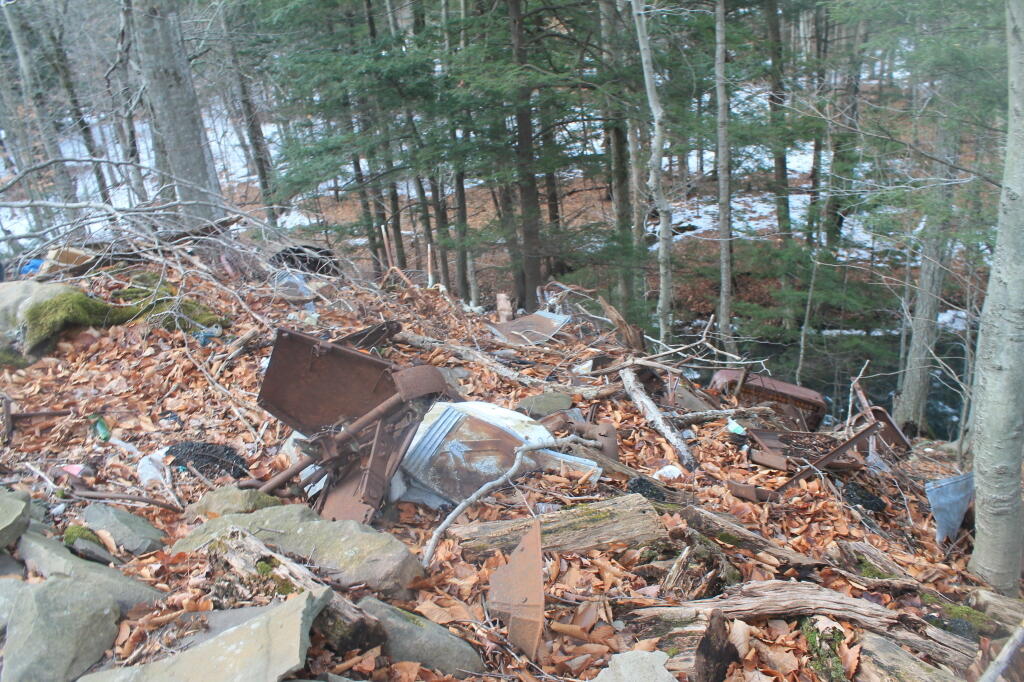
But a bigger problem with glass and metal is unlike paper and plastic it tends to accumulate in the environment more. Paper or plastic often gets burned, metal and glass just breaks up and sticks around forever. Whether it’s a farm dump, a rural homestead, a back country camp or other facility, glass and metal don’t burn so they tend to get dumped in the woods. People may be more responsible today then yesterday, hauling more to the recycling center or municipal landfill but still the vast majority of waste found in the woods dumped is metal or glass. Metal and glass leads to cuts and injury to humans, livestock and other animals. Hardware disease – a cow eats hay that has discarded metal or glass in it – is so deadly that many farmers feed magnets to cows to keep them from cutting their guts open from hunks of metal.
I am not arguing for more plastic, littering or burning of waste. I think urban recycling is important as it provides a good source of raw materials for industry, especially when collected and sorted using dual stream recycling. It also encourages rural residents to keep their ditches free of cans and glass by providing a low cost method of disposal compared to municipal landfill dumping. I think there should be more subsidy for reused milk bottles and reusable packaging but it I’m also not that concerned about it either. But regardless, post consumer recycling has a pretty minimal impact on landfill dumping, it’s oversold as a feel good measure but hardly a way to eliminate the nuisance grounds, as the Canadians call them.
Plastics have been in the news a lot lately, with the relatively low oil prices and the boom in plastics manufacturing brought on fracking. 🛢️ A lot of the articles lately note that not only is plastic a non-renewable material, coming from the co-products of oil and gas production, it’s long chains of carbon atoms are often difficult to break down by bacteria and sunlight. Plastic is only easily broken down by heat and combustion, when the carbon molecules bond to oxygen to produce carbon dioxide and other byproducts.
In many ways, I would argue that plastic is environmentally superior to metals and glass for packaging. 🥫 Metal and glass does not break down in fire, there is no “natural” process to break it down in the environment, it must either be landfilled, buried, or brought back to industrial recycling. In many remote areas, metals and glass become litter that never leaves the land. Glass in particular is notorious, as it can break, leaving dangerous materials that can cut people’s feet, damage tires and produce a long-term nuisance. Metal — especially cans made out of iron rust — but it often lasts a long time in the woods.
The toxicity of some plastics is a concern, more then plastic becoming litter in the environment. Chances are in the back country, on the farm dump, in the woods, plastic is not piling up. It’s getting burnt.🔥 It may not biodegrade by bacteria, but there is a natural process that breaks it down, namely fire, which leaves waste metals and glass untouched. Glass is just so much nastier in the sense it breaks, and doesn’t ever leave the woods unless somebody hauls it away to the landfill.
More needs to be done to reduce the toxicity of common wastes. Replacing PVC with HDPE is a big step forward. ♻I am glad to see things like soap bottles and charcoal lighter packing is no longer coming in vinyl, but instead safer plastics that produce fewer noxious chemicals when leached out to environment or burned. In urban areas, more needs to be done to recycle plastic — something that will get a boost when oil prices inevitably go back up.
Come 50 years from now, I doubt your going to find much in the way of plastics dumped in the woods. You might find metal (although less with the high value of scrap metal), glass, and certainly other things like discarded masonry and plumbing, but not plastic. ⛰ Plastic is lightweight packaging, and while it doesn’t biodegrade, it does combust and is unlikely to have the long-term pollution problems that alternative packaging is likely to have.