Both Twitter and Facebook have removed a post shared by President Trump for breaking their rules against spreading coronavirus misinformation.
Twitter temporarily blocked the Trump election campaign account from tweeting until it removed a post with a video clip from a Fox News interview from Wednesday morning, in which the president urged schools to reopen, falsely claiming that children are "almost immune from this disease."
Facebook also removed a post containing the same video from Trump's personal page. Both Facebook and Twitter said the post violated their rules on COVID-19 misinformation.
So far, Congress has seen about 100 cases among its members and workers, including more than a dozen lawmakers. And last month, Florida Republican Rep. Vern Buchanan said his longtime staffer, Gary Tibbetts, had succumbed to the illness.
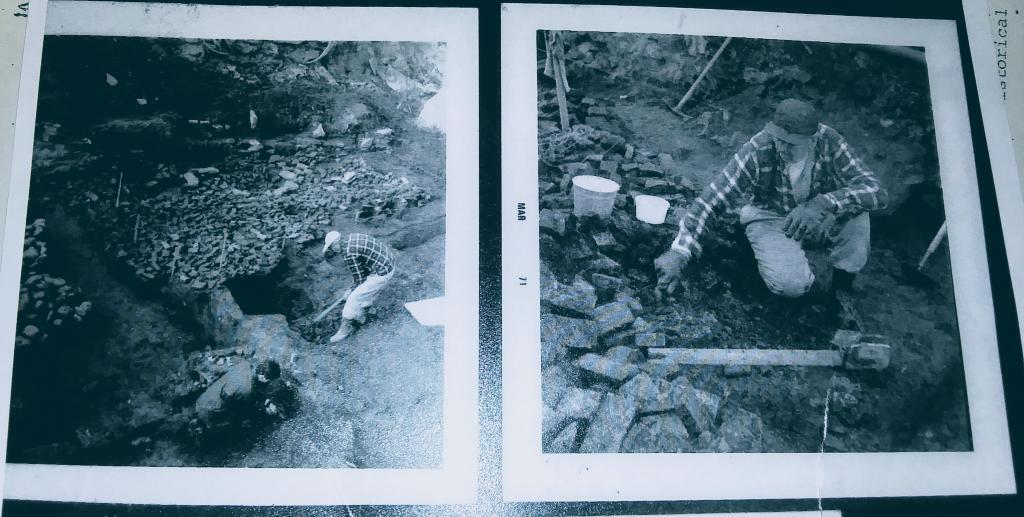
Centuries later, Fort Orange on the surface had long disappeared. But in a six-month period in 1970 and 1971—just ahead of Interstate 787 construction—a small archaeology team from the State Historic Trust (predecessor to the Office of Parks, Recreation and Historic Preservation, or OPRHP), headed by Paul Huey and composed mostly of volunteers, made remarkable discoveries about life in the Dutch colony at Fort Orange. In 2016, a collection of 36,000 artifacts from Fort Orange was transferred from OPRHP to the New York State Museum.
This exhibition examines the momentous discovery of Fort Orange and the lasting impact of events occurring there 400 years ago that shaped the character of the region, New York State, and the nation. The exhibition title is a quote taken from The New World by Johannes De Laet, a director of the Dutch West India Company, recorded in 1625. Select artifacts, film footage from the excavation, and four decades of historical and archaeological research are highlighted—including renderings of the fort by Historical Artist Len Tantillo. Dutch ceramics on loan from the Albany Institute of History & Art help bring life to the story.
"I had a hard time convincing people that there was something there to find," said Huey, who retired as a scientist/archaeologist from the state in 2010. "The state archaeologist didn't think it was worth doing. People in the state Department of Education didn't like the idea. It was the Department of Transportation that deserve a lot of credit. They looked at my proposals and offered to change their scheduling for the building of Interstate 787. Their primary concern was the construction of that new highway, but they were very supportive, as was Mayor [Erastus] Corning, and that helped us get a permit to start digging."
Huey and his crew found a Jew's harp, tobacco pipes, beads, and various forms of earthenware and glassware, as well as a wine bottle that belonged to the second governor of the New York colony, Francis Lovelace. They also uncovered remnants of the original Fort Orange.
Prior to the construction of Interstate 787, there was a partial excavation of Fort Orange on the Hudson River but the excavation was hastily done prior to covering it up with sand and in some cases damaging it with bridge piles.
They use a hand held computer that has all my cow information on it such as her age, her calving date, how many lactations (time between calves) she’s had and previous scores. Every inch of the cows is graded. They look at everything from the length of her teats and the texture of her udder to the strength of her back and legs.
We use this information to breed our cows to a bull that will hopefully improve any traits that are weak. A computer analysis will help us choose the best mate for our cows, or we can pick one from a bull proof chart (also in my photo section). Bulls are also chosen to improve health traits as well as milk, fat and protein production. You can even choose sexed semen to help guarantee a heifer (female) calf. It’s all pretty complex, but it is an important part of our farm.
Rural and small-town homeowners are more likely than the rest of the nation to own their dwelling “free and clear,” a new study by the Housing Assistance Council finds.
But rural homes have lower property values, the study also found.