Researchers at Purdue University’s Nutrition Science department in Lafayette, Indiana took a rainbow of common foods and put them under the microscope to determine just how much dye manufacturers put in some of their most popular products. Their findings were published in the Medical Journal Clinical Pediatrics last month.
Laura Stevens, lead researcher of the study, says that as expected many bright red and orange foods contain high amounts of dye, however there were a few items that surprised her.
“Finding red dye in cherry pie filling was pretty odd, you’d would think the cherries would make it red enough.”
She also found that some brands of pickles have blue and yellow dyes and that even white icing contains artificial color.
Tests have been conducted in the past looking for links between consumption of food dye and behavioral issues in children. Stevens says the tests, conducted in the ’70s and ’80s, used a baseline of 27 milligrams of mixed dyes ”“ around half the amount of dye found in an 8 oz. serving of Burst Cherry Kool-Aid.
Erastus Corning's classic 1969 essay from the Bulletin of Atomic Scientists on the many problems urban communities face across the nation. This essay may be a half century old, but few things have changed in the past 50 years.
Today’s essay is from the Bulletin of the Atomic Scientists in December 1969, penned by Mayor Erastus Corning in 1969. I share this simply for the convenience of reading it online, I can claim no copyright except to point out it should be in the public domain due to being a speech given by a public figure to a public body.
When city officials meet with highway engineers, there is a familiar theme. Where is the automobile leading us? Here is the way one official of a metropolitan center looks at the problem of autos and more autos. Mr. Corning is the mayor of Albany, New York. His comments are adapted from an address to New York Highway Department engineers, April 17, 1969.
For something over half a century, few people gave even the slight thought to the question: Is the automobile here to stay? In the sixties, however there have more and more haunting doubts–more and more question raises. Have we the necessary space for all the automobiles we are buying, using and discarding so freely? Have we the space for the great scotch-tape kind of ribbons of concrete and blacktop that we are pasting on the land? Have we the space to congest and clog up our city streets so that they can neither be cleaned properly in the summer nor have the snow removed in the winter? Have we the space for monumental parking garages and vast parking lots of in prime areas in our cities?
While I have used the word “space” and not spoken of the cost or economics, the relationship between space and economics and becomes and more intimate each year that our earth becomes more and more crowded. When one can reflect that total number of people on the earth today is greater than the number of all members of human race that have walked the earth before us since the dawn of history, we can see dramatically that we are getting pretty crowded.
Speaking of being crowded — brings to mind a number of pretty dramatic statistics. The vastness of the oceans of the world is no longer limitless. Pesticides, hydrocarbons, lead, to mention but a few, are becoming cause for serious alarm as to the universal polluting affect they are already having on our oceans. On a more local scale two-thirds of downtown Los Angeles is devoted to either — highways, arterials, or parking lots. One-half of all the air pollution that exists in the entire world comes from automobiles, carbon monoxide amounting in just the United States alone to some 230,000 tons each and every day.
It sad thing to have to take comfort from the fact while the amount of carbon dioxide that is going into the atmosphere increases the tendency of the atmosphere to act as an a greenhouse trapping the heat of the sunlight and raising the world’s temperature, this balanced by other forms of air pollution that come between us and the sun, cutting down on the amount of actual solar heat that reaches the earth and reducing the temperature to back where it was.
While the medical advances in the last quarter of a century are greater than all such advances that have occurred throughout human history, a less pleasant fact is that in the last 30 years we have used up more minerals and fuels than in all of history, and that use will double again in the next 25 years. It is another sad fact that in half a century we will have increased our per capita use of water in this country twenty-five fold.
In addition to the population explosion, everything else is exploding too. Our use of water, minerals, and fuels has increased even more than our population. Our manufacture of automobiles, packaging materials, bottles, tin cans — these too have increased by geometric proportions.
We are getting crowded; air and water and land becoming more and more at a premium.
You may very well wonder what in the world all this has to do with highways and highway engineering. The plain fact is that we are in a competitive race for space and land and haven’t come even remotely close to realizing it as yet. The hue and cry that we hear on all sides on the disposal of solid wastes is an indication of the start of that realization. The almost complete about-face on the question of thermal pollution resulting from the operation of atomic power plants is but a few months old. The popular appeal of bond issues and vast spending program to combat air and water pollution is a further step along the road realization of the conditions around us.
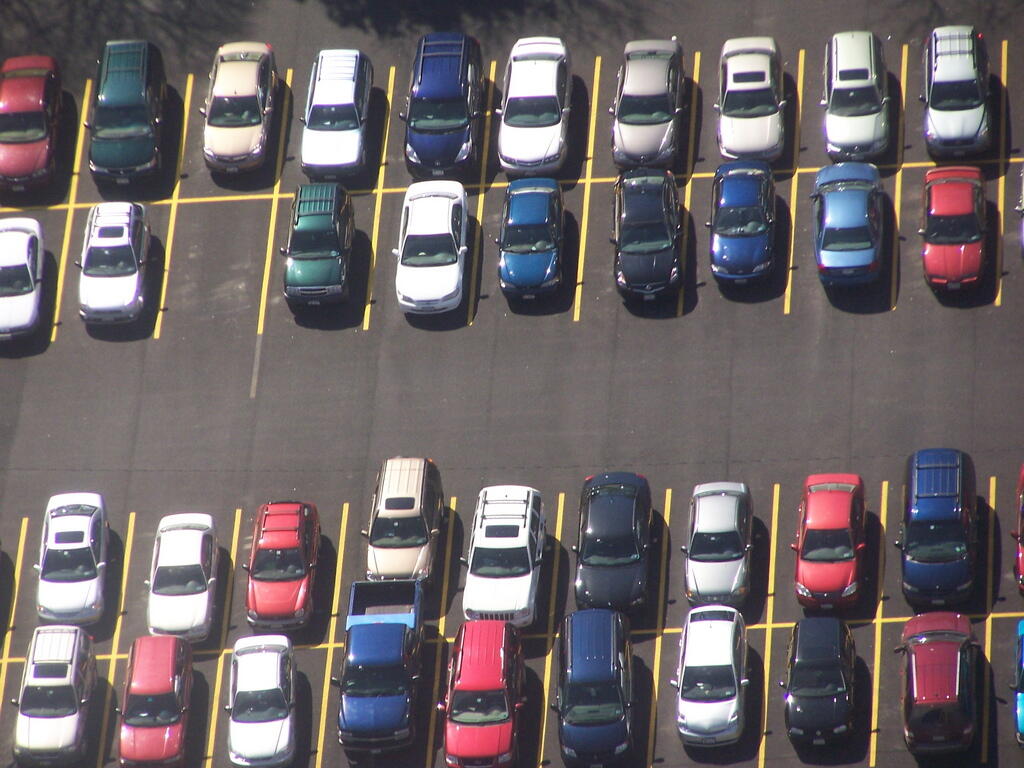
The day of laying out the basis of pure engineering and plain economics is gone. Today your problems are infinitely more complex than they were ten years ago. I do not know much of what is in store for us in the future, but I do know this for certain. If our population continues to climb at its present rate we are not going to have room for both people and automobiles as we know them today. Looking at the State Campus office complex in Albany, one is overwhelmed by the vast sea of automobiles covering a far greater area then all the office buildings. When you come from the Thruway and the Northway to go to this same State office complex, the amount of land covered and surrounded by curliques and cloverleafs seems greater again than all the campus office buildings. There just isn’t going to be enough space for this kind of a thing to continue. The competition is going to be too great, and the automobile, I hope and believe, is going to lose the fight to just plain people.
What can be done about? What can you who are so closely associated with the automobile and where it goes and where it sits quietly most of the time, what can you do? I don’t know but I do have a few suggestions.
The amount of space that automobiles take up just waiting to be used is tremendously wasteful. In our cities, waiting automobiles make it impossible to clean our streets of dirt in the summer and snow and ice in the winter. Perhaps private ownerships of automobiles will become a thing of the past in our cities. We may end up with a fleet of mini-autos, self-driven taxis, owned by the city, autos without keys that can be driven by anyone to anywhere he wants to go and then left for the next person who wants to go someplace else. This would eliminate much of the waste of autos just sitting in one at least 90 per cent of the time.
Certainly mass transportation is going to become more and more important. Our passenger carrying railroads to contrary notwithstanding, the possibilities of innovations and great break-thoughts in mass transportation are infinite and must be found, monorails, moving sidewalks, mini-buses, high speed trains. These are all with us now, but we cannot stop there. We must have a great variety of new ideas in the field of mass transportation. Our locations for bus stations, and what services are provided in these bus stations must be new, must be treated both with imagination and that we have a long, long, way to go in this field.
Multiple uses of our highway properties, particularly in and around our cities are already with us, but here again it must be expanded. Every highway planned from now on must be designed with multiple uses in mind. The use of air rights will become more and commonplace, and highways will have all the features built into them at the outset that will make it easy to use the air rights. Every cloverleaf eventually will be designed so that its interior land can be used for surface parking and, to go one step further, will be designed for two- and three-deck parking garages either over or under, and perhaps both.
Chemical engineering is going to be more and more important. The air over our highways our highways can no longer continue to be filled to suffocation with the wastes from our automobiles.
Note: The rest of the speech was not printed in the article.
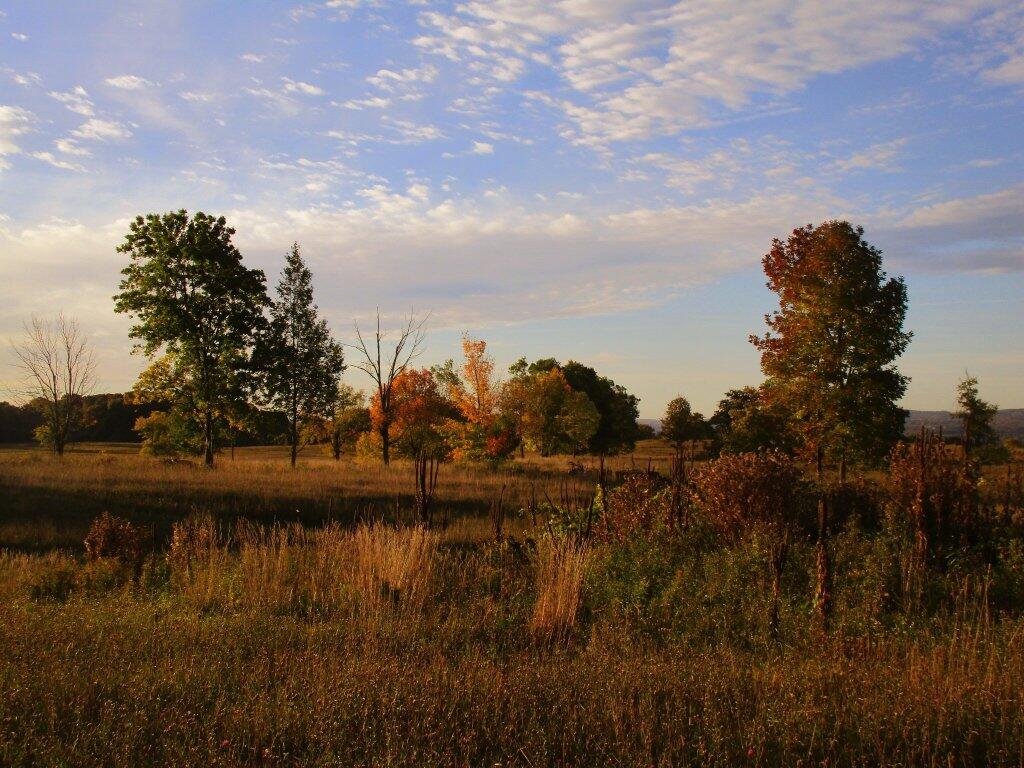
While everybody goes to the lakes at Green Lakes State Park, I often think the best and least known part of the park is the Bird Conservation Area to the west of the developed park.
There are many trails that traverse the open fields, abundant with wildlife — tonight alone I saw several does, rabbits, geese, and many birds. It’s quiet, lacking the crowds that are common in other parts of the park. Great views from the ledge on the old gravel mine and easy parking along NY 290.
Good morning! Where did September go? Winters coming. But first autumn. Two weeks to Columbus Day 🛥️. Partly cloudy and 47 degrees in Delmar, NY. ⛅ Calm wind.
I had a nice breakfast of eggs this morning, so hopefully I’ll have lots of energy to make it through today. ☕ I set my alarm early so I would be up in plenty of time to drop off my truck and be in early to prepare for the Monday meeting.⏰ Hopefully this week will go smoothly, and vacation will happen on Saturday morning bright and early. Rainy though by mid-week but maybe the rain will get out of the system by next week.🌧
Big Red has been dropped off at the shop and he’s being looked at. 🚘 Hopefully today or tomorrow it will be fixed and I’ll be good for vacation. 🔧 New mechanic but the online reviews were good and the receptionist was friendly. Maybe not the tobacco smoke, WGNA country music playing 🎶 with a burn barrel 🔥 out back but I don’t live in the country anymore. 🐮 I do miss having my cars repaired at Lou’s in Greenville, but he must be a million years old now. Great guy though. But certainly driving through Pennsylvania, Maryland, and West Virginia I’ll have plenty of time to see the country in coming week.
I’ll probably buy food for vacation 🍲 on Wednesday so I can test out the truck and have more time to figure out what I forgot before I leave. I want to leave by dawn on Saturday. Should be a nice trip down there. Friday I will also go to the laundromat and get some books to read at the library. I also want to buy two additional SD cards 🎴 so I have plenty of recording capacity for my dash cam to make scenic videos.
Today will be mostly sunny 🌞, with a high of 67 degrees at 3pm. One degree above normal, which is similar to a typical day around September 29th. Maximum dew point of 47 at 6pm. Light and variable wind becoming south around 6 mph in the morning. A year ago, we had mostly sunny skies. The high last year was 66 degrees. The record high of 88 was set in 1905.
The sun will set at 6:39 pm with dusk around 7:07 pm, which is one minute and 46 seconds earlier than yesterday. 🌇 At sunset, look for rain showers 🌧 and temperatures around 66 degrees. The dew point will be 47 degrees. There will be a south-southeast breeze at 7 mph. Today will have 11 hours and 48 minutes of daytime, an increase of 2 minutes and 52 seconds over yesterday.
Tonight will have a chance of showers, mainly between midnight and 2am. Mostly cloudy 🌧, with a low of 55 degrees at 6am. 10 degrees above normal, which is similar to a typical night around September 8th. Maximum dew point of 52 at 5am. South wind 6 to 9 mph. Chance of precipitation is 30%. New precipitation amounts of less than a tenth of an inch possible. In 2018, we had cloudy skies in the evening, which became mostly clear by the early hours of the morning. It got down to 52 degrees. The record low of 28 occurred back in 1993.
A picture perfect weekend to start out my vacation on tap. 😎 Saturday, sunny, with a high near 59. Sunday, mostly sunny, with a high near 62. Maximum dew point of 45 at 5pm. Typical average high for the weekend is 64 degrees. Temperatures are dropping rapidly now that we are into October.
I plan to get a really early start on Saturday and probably get scrapple in Pennsylvania just to try it out. 🐽 Then visit a few state parks on the northern tier before overnighting near Towanda. I’ll probably take Interstate 88 down to Pennsylvania, even though I hate driving it as I want as much time as possible to visit state parks in Pennsylvania on Saturday.
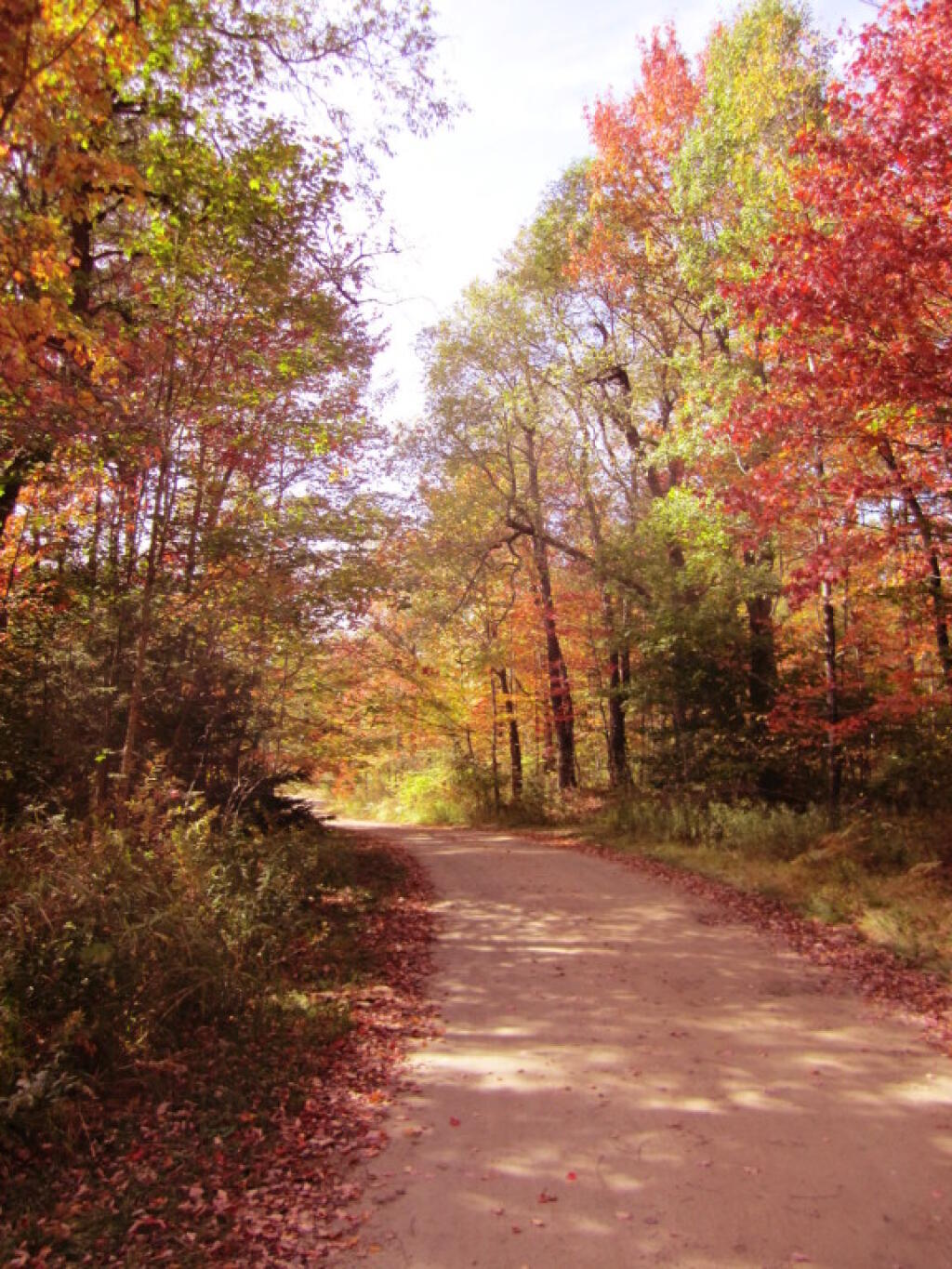
The latest forecast for Thomas WV is talking about more rain ☔ for Monday and Tuesday but that could change again. I’m going to bring my tent, tarps and heater in case it’s really cold and wet. ⛺ I don’t mind a few quiet days but I hope at least the balance of week is sunny. Cloudy days as was common during my vacation in 2017 and 2018 are kind of depressing. ☁ Sometimes though if you get the exposure right cloudy days can be excellent for fall foliage pictures. Might also be a good day for some camp cooking and baking, now that my camp stove is working really well.
I am glad that this week is a pay week, 🤑 because between the car insurance, the repair bill for my truck, rent, and certain expenses related to vacation, there is a lot of money going out and not a lot coming in. My day-to-day fund balance as of the weekend is the lowest it’s been in recent years, although I do keep a bit more in their in years past as a cushion. That said, based on the fact that it’s another month before my credit card bill is due, I think things will balance out, especially as expenses except for heat decline in the winter months.
As previously noted, there are 2 weeks until Columbus Day 🛥️ when the sun will be setting at 6:15 pm with dusk at 6:43 pm. On that day in 2018, we had mostly sunny and temperatures between 59 and 40 degrees. Typically, the high temperature is 61 degrees. We hit a record high of 81 back in 1920.
“In school I read of men who died by the gun
But not of those who died by the hoe
The land has drunk the rains of many a farmer’s blood
Now forgotten and buried long ago”
“Where are the hands that plowed fields without sleep
Hands that saved a dying calf without rest
Where are the feet that walked down them hot dusty trails
On their way to seek their fortunes going west”
“And where are the fathers who died in the dust
And mothers who died hungry in the snow
And where are the kids that watched the banks plow their houses down
Those are the things I guess my teaches never knowed”