then

Bachelors Degrees Are a Wealthy Suburban Thing

If you ask many people today, the assumption would be almost everybody has a Bachelors Degree, if not more education then that. Yet, except in the most suburban (and wealthy) portions of state, Bachelors Degrees are relatively uncommon — often held by fewer then 1 in 10 people over 25 years of age.

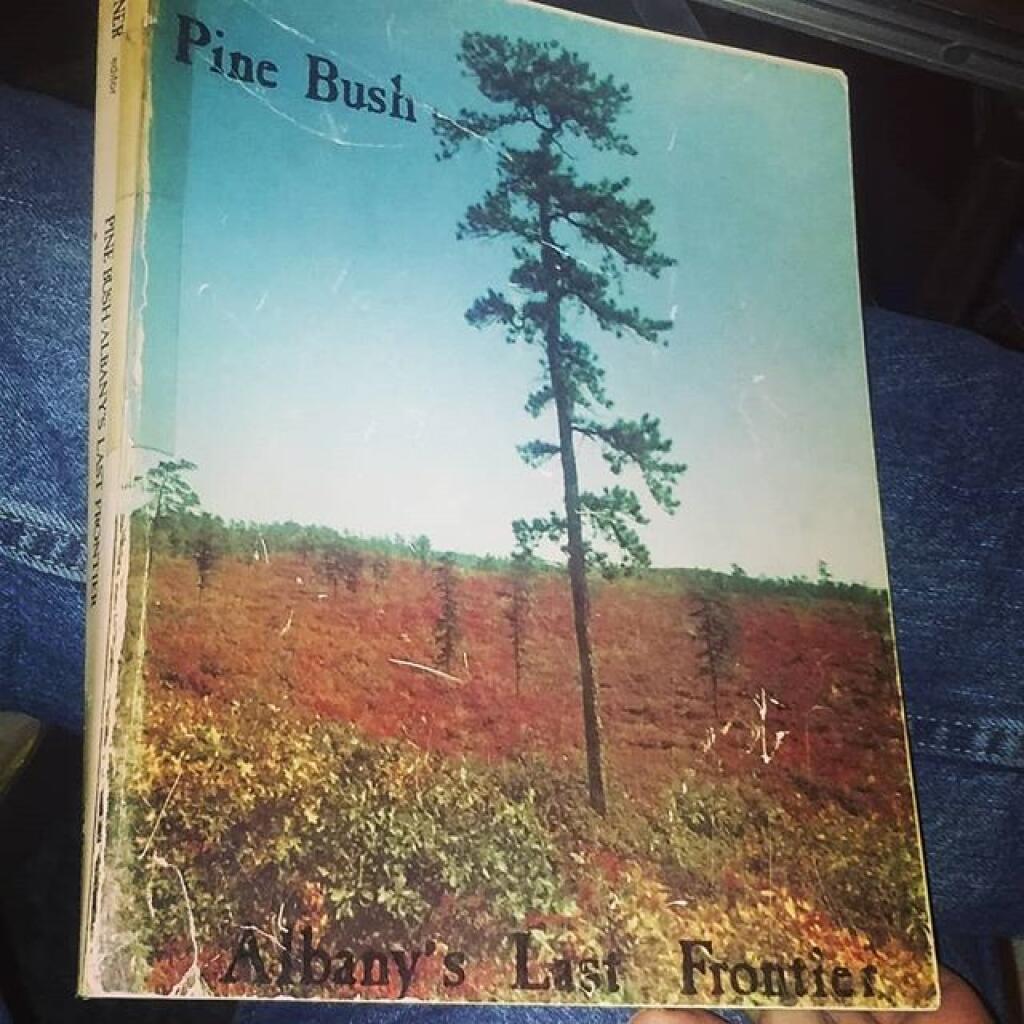
Fascinating book to thumb through

It turns out there is a close connection between suburban lifestyles and having a bachelors degree. Zoomed into closer into a map of the Capital District, you will note how closely link suburbanization is to number of people with a bachelors degree.

Engine Run

That said, obtaining that Bachelors Degree might be worth your while — if you avoid college debts, and land a good job after college. Indeed, the wealthiest portions of state tend to have the highest percentage of those with Bachelors Degree, e.g. the suburbs.

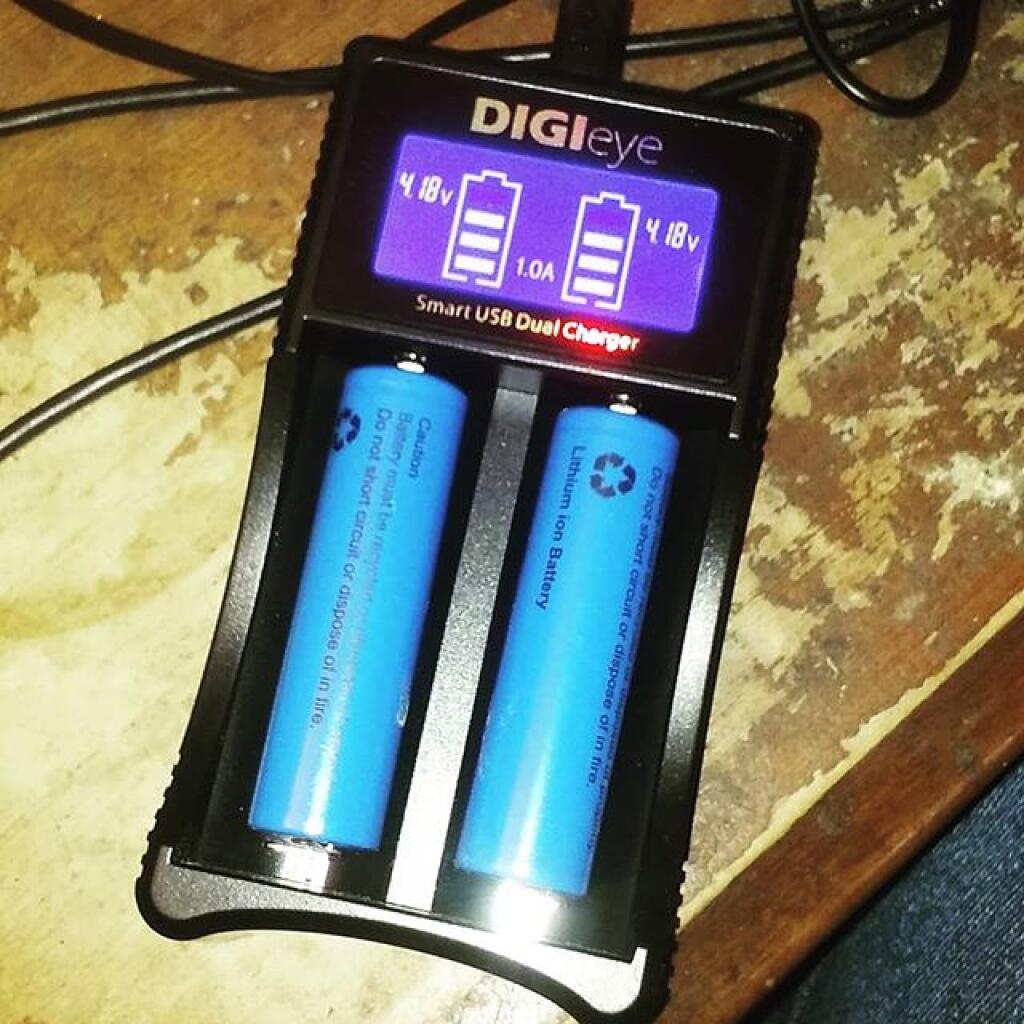
Got 18650 battery charger and batteries

It’s probably wrong to assume one is wealthy or well off with a Bachelors Degree, or that all rural folks are backwards hicks leaving in poverty. It’s more that the more affluent (in money terms) suburban life tends to require more schooling then more rural or urban occupations.

The Pros and Cons of Getting a Camping Permit

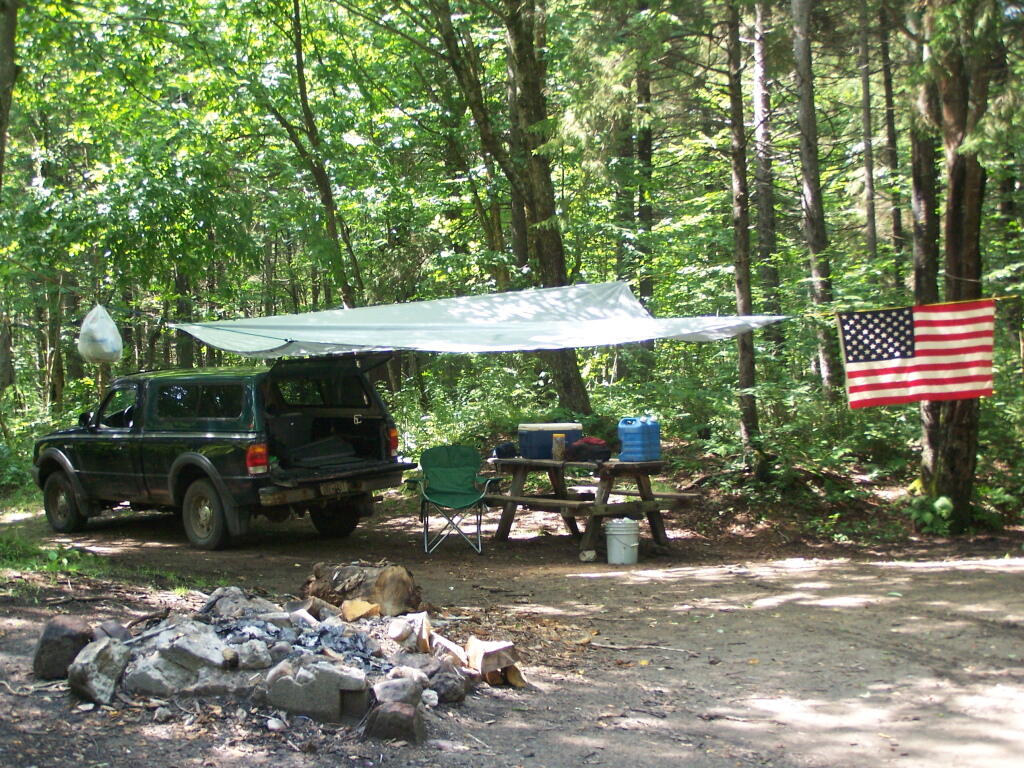
New York State requires you to get a camping permit if you stay in a spot or a campsite for more then 3 nights. I have never bothered to get a permit, unless the rare times I see a forest ranger, and he asks me to fill out a camping permit. I generally do not get camping permits, because I don’t stay more then 3 nights in any one spot – if I was a hunter, setting up a base camp in big game season – it might be different.

Pros.

  • It shows that you are using the land, providing justification for the DEC to spend more funding on that piece of land versus another piece of land.
  • It’s nice to stay at one site for an extend period, if you plan to stay in that general area, so you don’t have to pick up and remake camp every couple of night.
  • You don’t have to necessarily camp at a designated spot or farther then 150 feet from road or water if you get the permit for another place.
  • In case you are reported lost or injured, the forest ranger knows where to look.
  • There is no charge, and all you have to do give forest ranger a call with your license plate and other basic information.

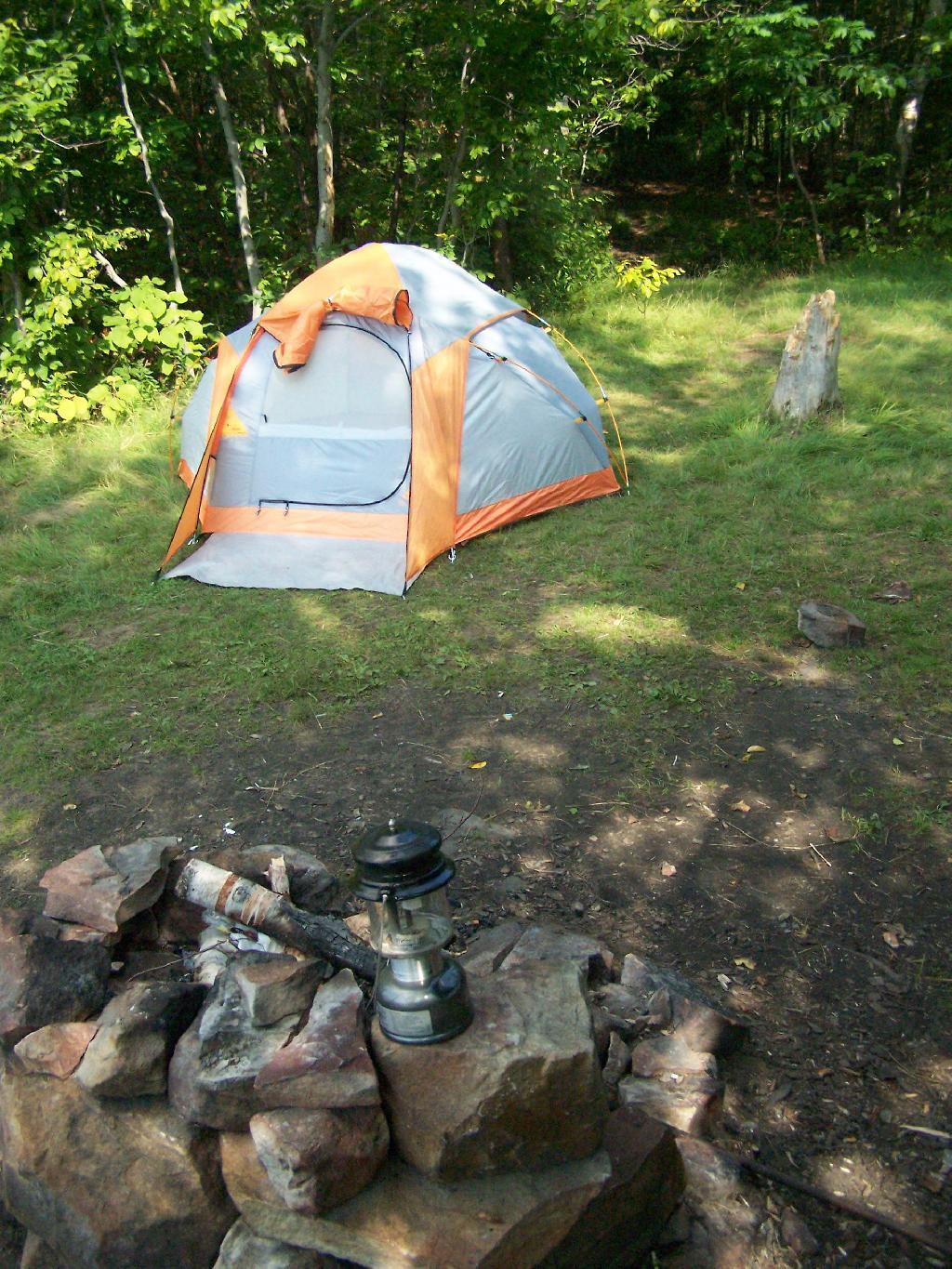
Tent

Cons.

  • You have to plan where you are going a couple of weeks in advance to give the forest ranger a change to mail you the perm
  • Staying in one place leads to more wear on the campsite.
  • It can be be boring to camp in one site for an extended period.
  • Do you really want to tell the government where your camping, so it can track you?

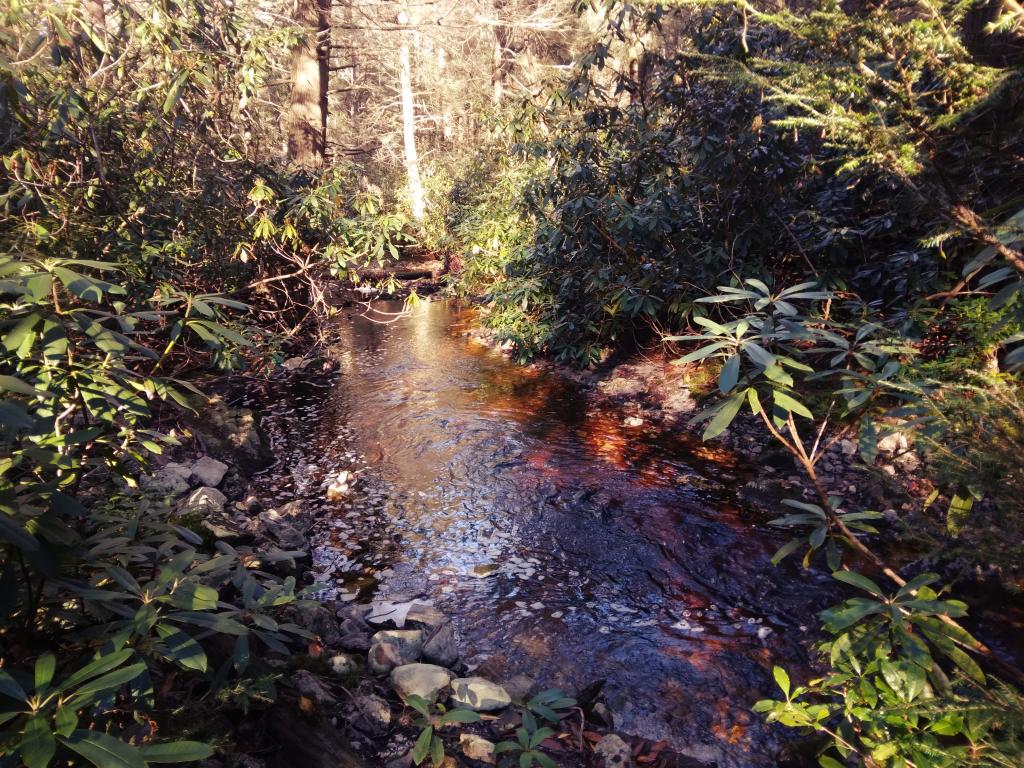
Camping Down By Otter Brook

… in many ways the cons are longer then the pros.

Why the Negative Sign?

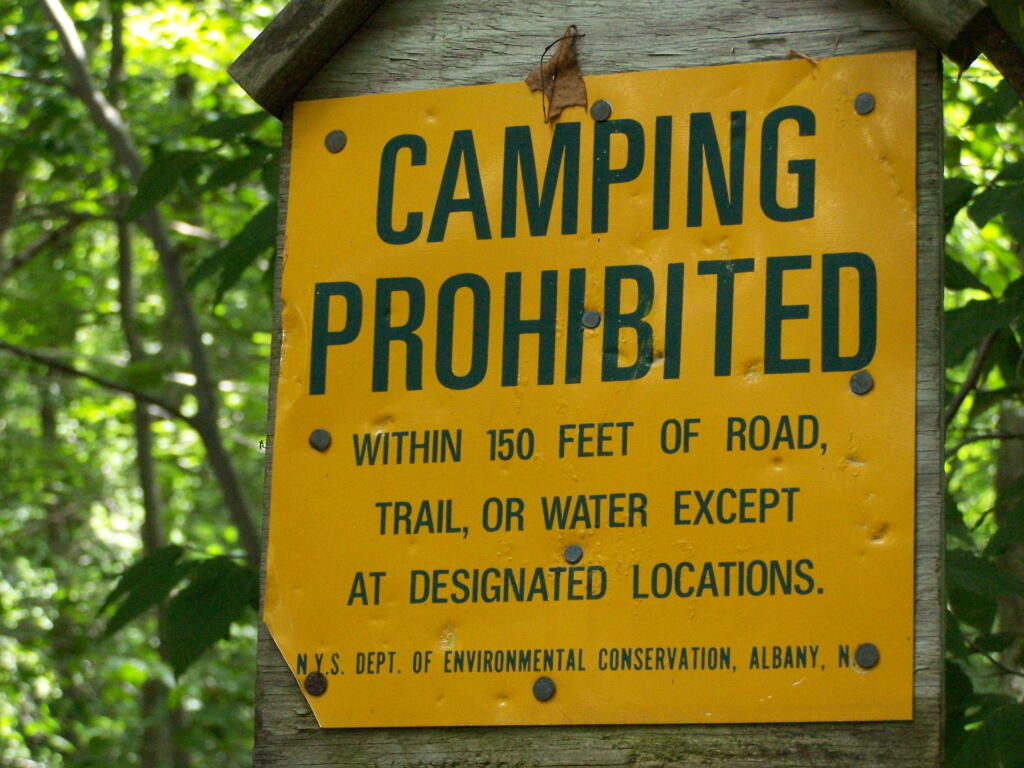
Camping Prohibited

One question I have for the Department of Environmental Conservation, is why is almost all signs that they post phrased in the negative? Why emphasize what is prohibited, rather then what is allowed?

Couldn’t the DEC just have said:

HELP PRESERVE OUR FOREST!

Please camp more then 150 ft from trails, streams, roadways, except at designated locations. It’s the law!

That message is so much more friendly.

Federal Government vs State Government Signs.

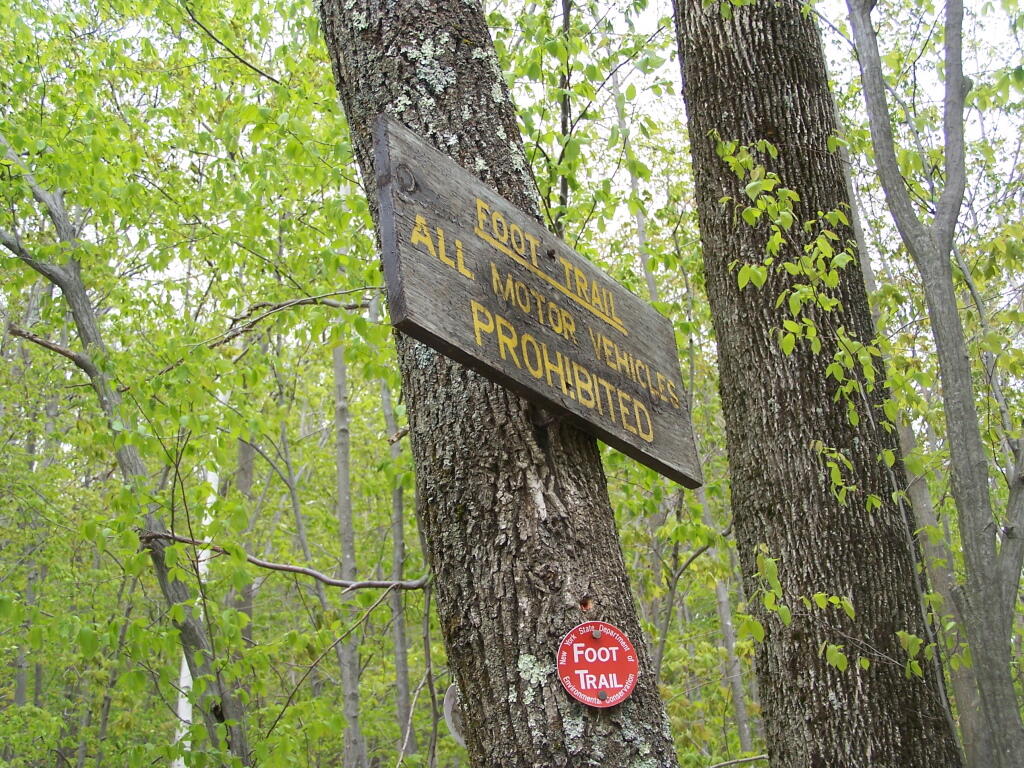
And compare these two signs with the same message — one federal (Allegany National Forest) and one state (Black Dome Wilderness):

Foot Trail Only

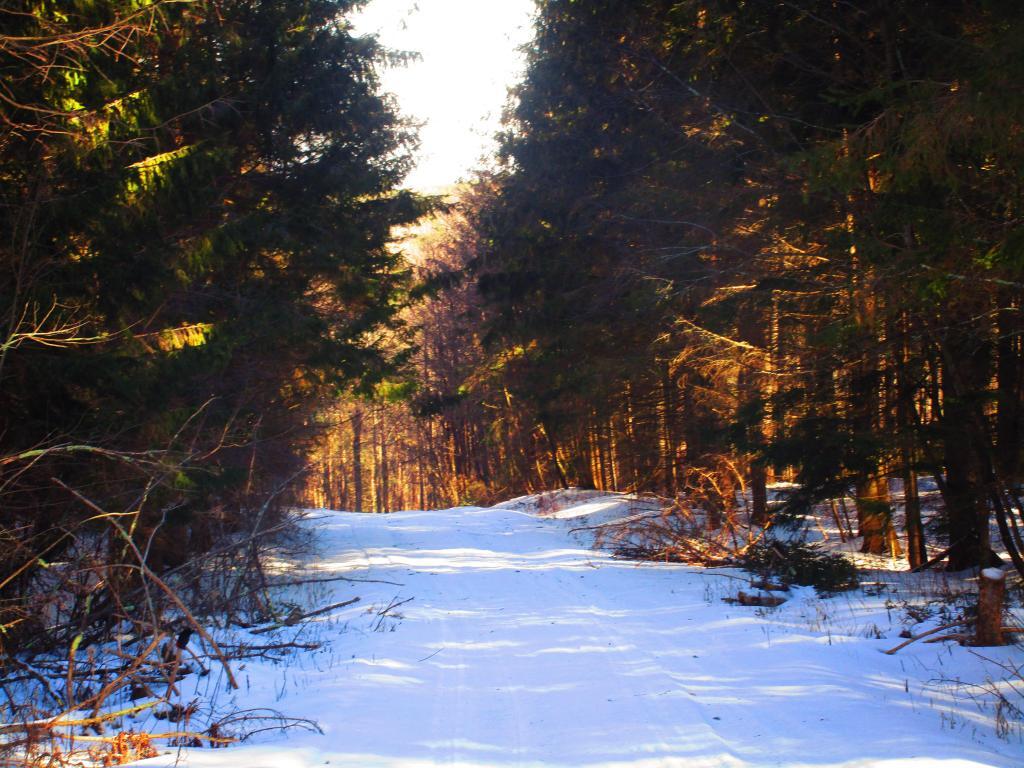
Enough Snow to Ski

…Same message, only one is sounds nicer.

Why Not Make Electrically-Powered “Trolley” Cars and Trucks?

I’ve always wondered what the fascination with battery technology is, when the proven technology used by trolleys and streetcars for over 120 years is electricity via rail or wire. There are no limitations on range or power delivered electrified lines, and use avoid the inefficiency of power stored in a battery.

I could envision the car of a future being a gasoline engine with complete cylinder deactivation, where the complete engine is shut off by a solenoid disconnecting the rocker arms controlling the valves ala the Active Fuel Management widely used in General Motors pickup trucks today.

On major highways and other high traffic roads where “electric wires” are available, as sensed by a radio signal, the car would automatically pop up trolley poles through the roof like a power radio antenna. Electric consumption and billing information would be transmitted through a signal in the wire to the billing municipality, public authority, or power company.

An electric motor/generator in the transmission of the car would spin the drive train and engine, including pushing up and down engine pistons (using the exhaust in the cylinders and shut valves as a choosen) and flywheel. When braking or going downhill, the motor acting as a generator would put recovered power back into the electric line.
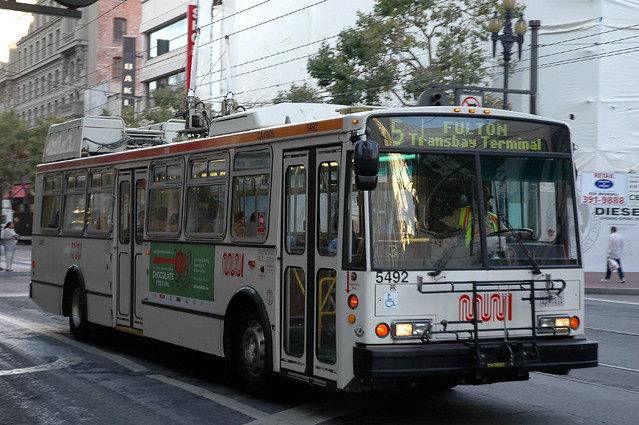
Electric Bus

The nice thing about this system is there is no range or weight limitation, and uses existing technologies. You could power even semi-trucks or buses with this technology. Moreover, if you become disconnected temporarily from the electric line, the motion of engine’s pistons decompressing the exhaust left in the cylinders and the standard flywheel, would keep the car coasting until electricity came back or the solenoids reconnected the push-rods to the rocker arm and started feeding the engine gasoline once again (the later could happen basically instantly if there is such a power demand).

Because your still moving the pistons up and end down and compressing waste gases, the engine never gets cold, always has warm coolant to heat the inside of the car, and is always ready to burn gasoline at proper operating temperature whenever electricity is dropped.

I can not imagine a future where cars don’t have at least some kind of internal combustion engine that burns gasoline or diesel, at least part of the time. We have been refining Internal Combustion Engines for 110 years now, and the technology is so well engineered and reliable, that it seems likely that cars will use Internal Combustion Technology of some sort for at least another 110 years, if not longer. Internal Combustion Engines are only going to be come cleaner and less polluting as pollution control standards and technology improves, and they are only going to burn less gas or diesel in decades to come.

Map: Margaret Burke Wildlife Management Area
Map: Whaupaunaucau State Forest