Dear Decision Maker:
I am writing you to express my concerns with the Regional Solid Waste Management Authority Study, recently completed by Albany County. I became concerned with solid waste issues back in 2003 when I was a college student studying part-time at SUNY Albany, and stumbled upon the Albany Pine Bush, and discovered how wasteful our urban societies really are.
I grew up on my parents land out in Westerlo in Hilltowns of Albany County. We never had trash pick up, in part because we never had a lot of trash. My parents where working class, they struggled to find good paying work after the early-1990s recession. We grew or raised a lot of our food, burned and composted what “waste” we could on our little farm. It was a sin to toss a recyclable can or bottle in with the burnable trash, and food scraps and other organics wasn’t just something to be wasted in burn barrel. Some see a carved up animal carcass, I see valuable organic materials. On my parents farm, trips to transfer station where rare. We often took more home from the Westerlo transfer station, then we sent to the Albany landfill.
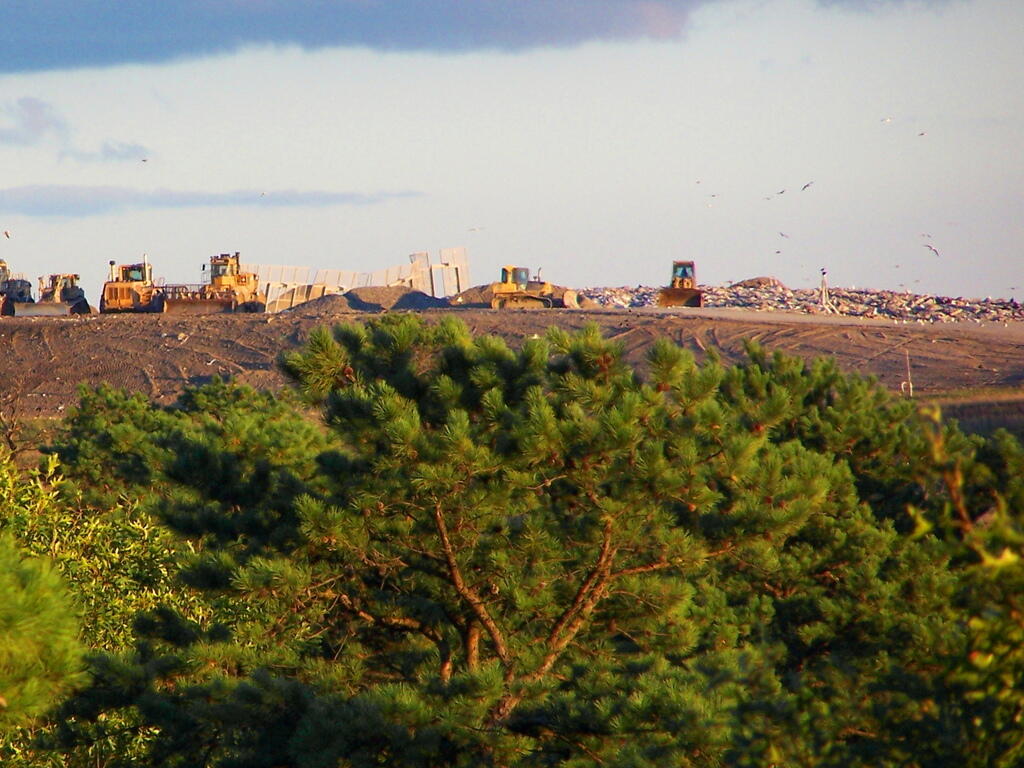
This was totally different then what I saw going on in the city, where food waste was “just garbage”, recycling was at best window dressing or a political statement, and people didn’t really care much about the impact of their garbage output. I saw this urban garbage was being dumped in beautiful Albany Pine Bush — are rare ecological oasis in an urban waste land. This landfill will close soon due to this wastefulness. I couldn’t believe city folk would even dream of tossing a valuable aluminum can in the trash.
Today, I also am very aggressive in avoiding waste myself, bringing organic waste out to my parents farm, and hauling the carefully separated recyclables and a minimal amount of trash to the Rupert Road Transfer Station a couple of times of year. I don’t have weekly trash pickup here. Just following what I learned growing up, I know it’s wrong to be wasteful and generate a lot of trash.
I believe we must change how we deal with waste in our cities.
Since becoming a resident of Town of Bethlehem in 2007, I have voted in all elections including primaries and school board, and are involved in numerous local political campaigns, particularly when there are true progressive leaders fighting to change our community for the better. I am an active member of Save the Pine Bush, and are constantly advocating for more conservation of the Albany Pine Bush, and for better recycling and especially organic waste recovery policies in our cities.
Below are my comments on the “Regional Solid Waste Management Authority Study”, please review them carefully. Thank you for your consideration! If you have questions, please don’t hesitate to call my cell at 518-281-9873 or email [email protected].
Sincerely,
Andy Arthur
“The policy of the state shall be to conserve and protect its natural resources and scenic beauty and encourage the development and improvement of its agricultural lands for the production of food and other agricultural products.”
— Article XIV Section 4, NY State Constitution
Point 1: Study Should Analyze Best Way to Get to Zero Waste
- Study spends too much time considering how to build and construct a disposal facility. There are more then adequate trash landfills and incinerators to dispose of waste within our state for the foreseeable future.
- Study should define best practices for maximizing recycling and organics recovery, not disposal.
- Many studies have shown that large disposal facilities — incinerators or landfills — are expensive to run and cannibalize recycling efforts.
- If a solid waste agency builds a 1,000 ton per day incinerator or landfill, it will require that much trash. If it can’t find that amount of trash, it will reduce recycling efforts to have enough trash to fill the incinerator or landfill. This undermines efforts to get to zero waste or near zero waste by increasing recycling and composting of organic materials.
- The study should include a 20-year plan similar to that of the recently submitted Albany Solid Waste Management Plan that proposes steady reductions in disposal of waste in favor of recycling.
- The study should have a Zero Waste goal, where nearly all waste is recycled and organics are recovered. Many communities across the country have adopted a Zero Waste goal and are vastly more aggressive in recycling and organics recovery then what this study is proposing.
Point 2: Public Authorities Are Anti-democratic
- The study fails to acknowledge the benefits of competition, and how having competing transfer stations or disposal facilities could lower disposal costs.
- Authorities are anti-democratic. Citizens have the right to influence their leaders on what solid waste facilities are build and what solid waste laws are implemented. The study should not call for the authority to decide on disposal facilities — it’s up to elected officials to decide.
- The lack of competition with an Authority will lead to large bureaucratic overhead, waste, fraud, and abuse.
- Citizens and elected officials have a right to know ahead of time what kind of disposal facilities if any would be constructed prior to creation of an authority.
- Local communities should have a voice in process and all decisions should be made by consensus of all communities. A large governmental body makes consensus impossible.
- Communities named in an authority’s legislation are stuck in the authority until the legislature amends the law or allows it sunset, regardless of democratic choice. Any solid waste agency should be democratic in nature, and allow communities to freely join or leave it with sufficient notice (e.g. 90 days).
Point 3: Study Fails to Acknowledge Alternatives
- The study does not analysis the effectiveness of a Solid Waste District similar to those in Vermont. A Solid Waste District would have no employees or bureaucracy, but is a consistent set of regulations and permitting guidelines administered by multiple towns.
- The study fails to show what is wrong with the current ANSWERS structure. While the current ANSWERS disposal facility will close shortly, ANSWERS for many years has relied on communities contracting with private recycling brokers. Why can’t communities also contract with private disposal brokers, while maintaining a coordination of solid waste planning through the current ANSWERS board?
- Citizens should be free to choose what hauler and disposal or recycling facility they use. Some may choose a landfill for disposal of their waste, while others seeking a more different option, may prefer extra to have waste hauled to an incinerator. The choice of disposal facility should be a key part of a any plan, to allow citizens weight costs and benefits of different facilities.
- Consider creating a “Green Rating” system for trash haulers. Let consumers choose if what lower-value materials they wish to be recycled, and what kind of disposal facility they wish to pay for.
Point 4: Town of Colonie, 8 Other Counties Have Not Expressed Interest in this Proposed Authority
- The study claims to be on behalf of a 9-county region. However, only ANSWERS Communities have given resolutions in support of this study, and most notably the Town of Colonie has not given a resolution of support of the study. No other town or county, has formally stated their support or opposition to creation of a regional authority. Why not?
- Would Saratoga or Rensselaer Counties want to join the Authority, if they knew a massive 1,000 tons per day incinerator or landfill was going to built in their county, and all of the trash from Albany County through Otsego County was going to be hauled there?
- If other counties and non-ANSWERS towns are interested in creating an authority, they should be at the table now, and their citizens and elected officials should be kept fully informed. All counties, all towns, and all regions MUST have regular meetings on this topic, and a full debate in each community must occur prior joining any solid waste agency.
Point 5: 9 County Regional Authority Would Ignore Need for Rural Area Flexibility, Differences in Urban vs Rural Waste Stream
- Waste compositions varies by town and by county. Different regions have different disposal needs. For example, farmers and rural residents may burn or bury some of their wastes on site rather then needing a centralized facility. Wastes generated on a farm are significantly different then those generated by a commercial center or urban resident.
- In rural communities, it may make sense to have town owned and operated source-separated organics composting facilities or even disposal facilities for non-toxic farm and household trash. Decentralized composting and disposal facilities (e.g. less then 20 tons per day) will have a far lower impact on surrounding communities then large facilities.
- Recycling programs should be tailored towards large generators of waste in a community. An centralized authority could not adequately focus on need to recycle agricultural plastics and agricultural chemicals, while also focusing on recycling of urban organic wastes or electronic waste.
Point 6: Polluter Pays, No Taxpayer Subsidies
- Any disposal program should operate without taxpayer subsidies. Polluter pays. There should be no volume discounts — a person who disposes 10 lbs of trash should pay the same proportional rate as a corporation who disposes of 200 tons of trash.
- Those who do not use the services of ANSWERS should not pay for it. For example a farmer or rural resident who burns or buries non-toxic waste on their property, should not be charged for disposal of that waste. Those who compost on their property should not pay for commercial composting operations.
- No taxpayer subsidies for waste disposal, all services administered by ANSWERS should come from those who seek to recycle or dispose of a material.
Point 7: Small is Beautiful
- Study over states the benefits of scaling up facilities and bureaucracy.
- Numerous political science studies show that larger bureaucracies are less efficient, more subject to waste, fraud, and abuse. If a bureaucracy employees hundreds of persons it is difficult to maximize productivity and keep employees from watching Youtube at work.
- Avoiding the bureaucracy of an authority, by simply using existing structures reduces cost and waste.
- Large landfills, trash incinerators, recycling plants are more polluting. While large facilities may have better pollution controls then small facilities, large facilities inherently release more pollution in aggregate, have more truck traffic, and more potential for serious harm.
- A 1,000 tons per day incinerator puts out 1,000 tons per day of carbon dioxide. That’s 365,000 tons per year of carbon dioxide, that could be avoided — or possibly a multiple of the number, by increasing recycling or organics composting.
- Ask yourself, would you prefer to live next door to a 20-tons per day unlined town landfill, only consisting of local household trash and farm waste, or a massive 1,000 tons per day incinerator burning unsorted and largely unregulated mixed waste next door? How about being downwind of a neighboring farm’s burn barrel vs living next to a 1,000 tons per day incinerator burning mixed waste from far away? Again, while some pollutants may be better controlled by a mega-facility, the reality is other pollutants will increase and be particularly burdensome to the host community.
- No disposal or recycling facility should be larger then 100 tons per day, and all facilities should be decentralized and close to sources of waste generation. Where scale is necessary to overcome costs of pollution control, it must be as small as possible and use the least toxic processes possible.
- A large incinerator or landfill would incur significant costs and would require a large amount of trash to be disposed on it. This would undermine attempts at expanding recycling efforts.
- Least desirable facilities (incinerators, landfills, recycling plants, composting plants) should be spread over as many communities as possible to be fair and democratic. It should not just target poor rural or urban communities, but include facilities in wealthy suburban communities too.
- No one community should have the burden of disposal of waste for a nine-county region. It is especially obscene to site a large disposal facility in a rural or farming region, where many farmers may have traditionally disposed of their own waste on-farm, and are not responsible for the entire region’s long-term solid waste problem.