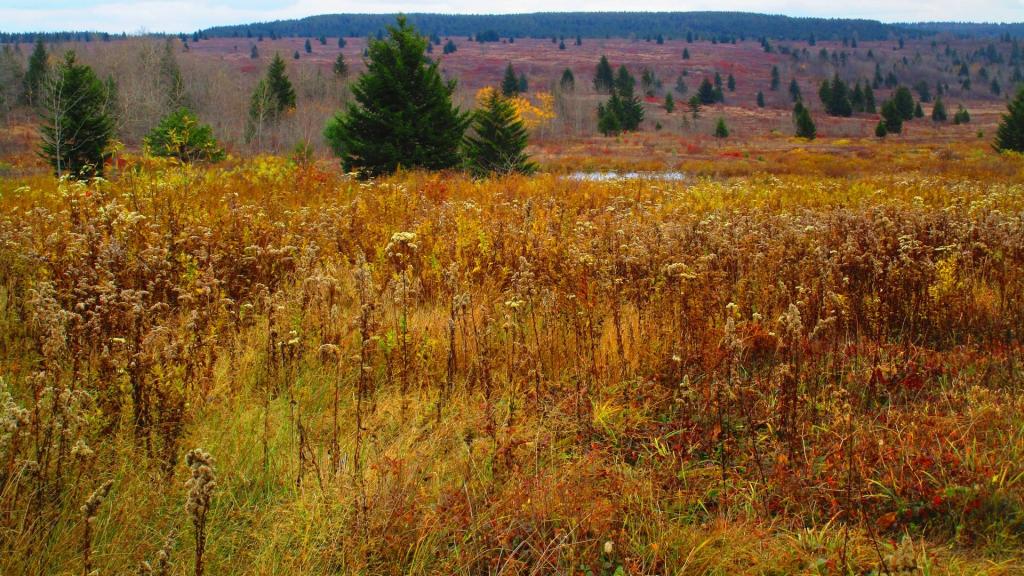
Dolly Sods Wilderness


Always a nice place to sit down by the lake.
Sunday October 18, 2020 — Glimmerglass State Park — Glimmerglass State Park 🗺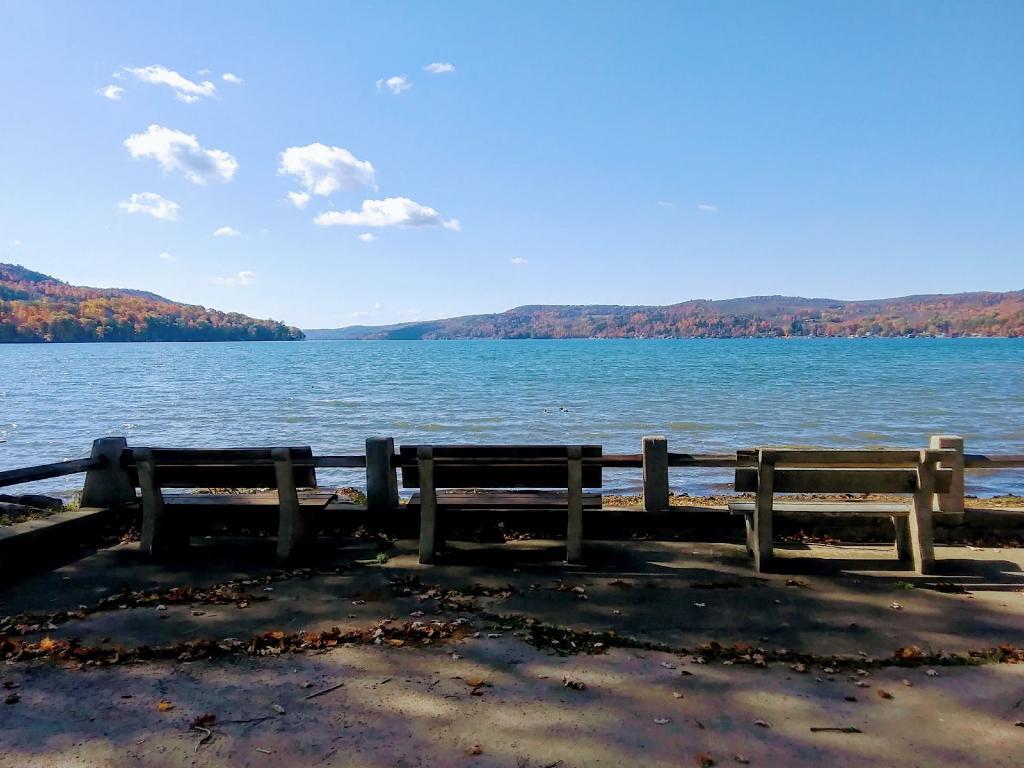

Most states like New York have Street Address Management system where you can download every address in the state as a Shapefile then upload it to a locally running PostGIS database.
library(tidyverse)
library(RPostgreSQL)
library(sf)

con <- DBI::dbConnect(RPostgres::Postgres(), dbname='gis', host='localhost',
                      port=5432, user='postgres', password='xxxxx')

# function that uses PostGIS query to return the closest
# point in the SAM database
reverseGeocode <- function(geom) {
  # convert sf geom object to text
  geom <- st_as_text(geom)

  # query
  sql <- str_c("
SELECT
  *,
  \"Shape\" <-> 'SRID=26918;", geom, "'::geometry AS dist
FROM
  nys_sam_points
ORDER BY
  dist
LIMIT 1;")

  query <- dbGetQuery(con, sql)

  str_c(query$addresslabel,
        ', ',
        query$citytownname,
        ', NY ',
        query$zipcode
        ) %>% return
}

# obtain centroids for each county
ny.county.centroids <- tigris::county_subdivisions('ny') %>%
  st_centroid()

# get addresses of properties by reverse gecoding
ny.county.centroids %>%
  st_transform(26918) %>%   # use same projection
                            # as your postgis database
  mutate(
    # obtain address using purr and map_chr using the
    # reverseGeocode Function defined above
    Address = map_chr(geometry, reverseGeocode)
  )
For locations that don’t have points in SAM database, you can interpolate an address from the SAM Streets file.
library(tidyverse)
library(RPostgreSQL)
library(sf)

con <- DBI::dbConnect(RPostgres::Postgres(), dbname='gis', host='localhost',
                      port=5432, user='postgres', password='xxxxx')

# function that uses PostGIS query to interpolate an address from the
# streeet high and low adress
reverseGeocode <- function(geom) {
  # convert sf geom object to text
  geom <- st_as_text(geom)

  # query
  sql <- str_c("
SELECT
  CAST (
  (leftfromaddress +
  (righttoaddress - leftfromaddress) *  ST_LineLocatePoint(ST_LineMerge(roadline), 'SRID=26918;", geom, "'::geometry)) AS integer) AS hno,
  completestreetname, leftzipname

  FROM (
SELECT
  CAST(leftfromaddress AS double precision), CAST(righttoaddress AS double precision), completestreetname, leftzipname,
  \"Shape\" as roadline,
  \"Shape\" <-> 'SRID=26918;", geom, "'::geometry AS dist
FROM
  nys_sam_streets
ORDER BY
  dist
LIMIT 1)")


  dbGetQuery(con, sql)

  query <- dbGetQuery(con, sql)

  str_c(query$hno %>% as.character() %>% replace_na(''),
        ' ',
        query$completestreetname,
        ', ',
        query$leftzipname,
        ', NY ',
        query$leftpostal
  ) %>% return
}

# obtain centroids for each county
ny.county.centroids <- tigris::county_subdivisions('ny') %>%
  st_centroid()

# get addresses of properties by reverse gecoding
ny.county.centroids %>%
  st_transform(26918) %>%   # use same projection
                            # as your postgis database
  mutate(
    # obtain address using purr and map_chr using the
    # reverseGeocode Function defined above
    Address = map_chr(geometry, reverseGeocode)
  )



I heard that the wrappers of most frozen food packaging isn't recyclable, though it certainly does burn well. And you get a lot of food for low cost that rarely expires and has to be tossed in compost bin or fed to livestock.