that

There Ought To Be Sunlight on Non-Profit Organizations

One thing that concerns me is the lack of transparency for all not-for-profit organizations that are involved in influencing government polic or representing themselves in front of government agencies.

While all not-for-profit organizations must disclose how they spend their money, at least on an yearly bases on publically avaliable IRS Form 901, they do not have to disclose individual donors, or the amount each donor gives. In many cases, through the advocacy and other works of not-for-profits, substantial government lobbying and political influence is given by the organization, yet few actually know who is funding the organization, or what the true rational for the organization’s actions.

Round Mountain

If persons are afraid to give to not-for-profit organizations, for fear of disclosure, then they should not give. Not all not-for-profit organizations serve the public interest, as many spend a substantial amount of their funds advocate for policies that are highly detrimental to the public interest. Likewise, there should be public pressure on not-for-profit organizations avoid taking donations from corrupting sources of funds.

A great deal of advocacy on behalf of major corporations takes on behalf of citizens groups. Many cases, grass roots efforts are amplified by large corporate donations, but nobody really knows where the money comes from, except that they report large donations as being a key to sustaining their organization. For sake of openess, all not-for-profit organizations should have to disclose all donations and where they came from.

Why I Don’t Own Any Propane Camping Appliances

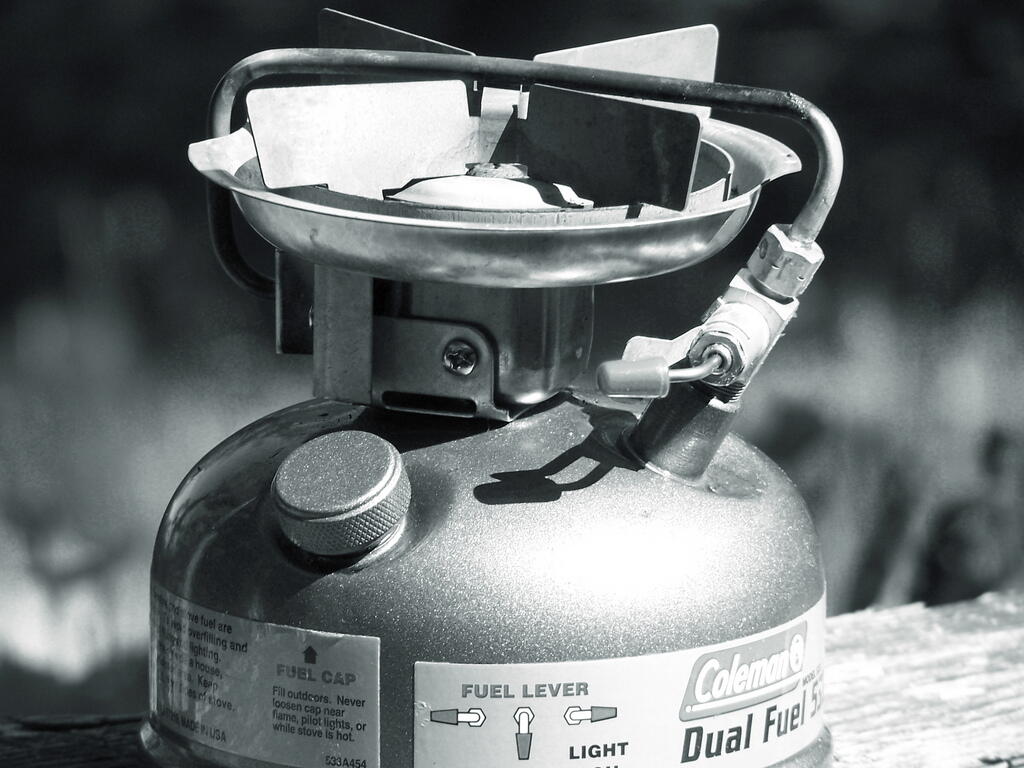
I spent a little extra when I bought my Coleman lantern and Coleman stove, and went for the dual fuel models over the propane models. Dual fuel appliances can burn either automobile gasoline or Coleman fuel.

Stove

I like using liquid fuels, primarily gasoline, for a couple of reasons…

First off it’s cheap.Second, there are no containers to discard or recycle. Propane containers are often difficult to recycle. Gasoline, in contrast, you purchase and put in a reusable gasoline container. You buy gasoline at any gas station, put it in a portable gasoline container, and you can reuse the gasoline container for a long period of time.

Third, having extra gasoline is handy in an emergency. You never know when you run your tank a little low, and the extra gallon or two of gasoline can get you to the gas station.

There is a slight inconvience of having to pump liquid fuel stoves and lanterns, but compared to all of the benefits of using automobile gasoline, nothing beats them.

Places to Roadside Camp in Early Spring in Adirondacks

The two longest back country roads in Adirondacks — Cedar River-Limekiln Lake Road and Piseco-Powley Road — are generally closed during mud season. Other dirt roads like Moose Club Way tend to be muddy, and their is a risk you’ll get stuck back there.

It’s always a good idea to bring extra weight in your truck bed, a come-a-long or whinch, and snow shovel. You might not be far from a blacktop road at these campsites, but that is no guarantee you won’t get stuck.

1) NY Route 8 / East Branch of Sacandaga River

The campsites are all off NY 8, an all season plowed and maintained asphalt road. Some sites are reinforced with gravel. Be aware some sites may be plowed full of snow from the winter clearing of NY 8. Roughly 15 campsites along this road, however some may be too muddy for this time of year.

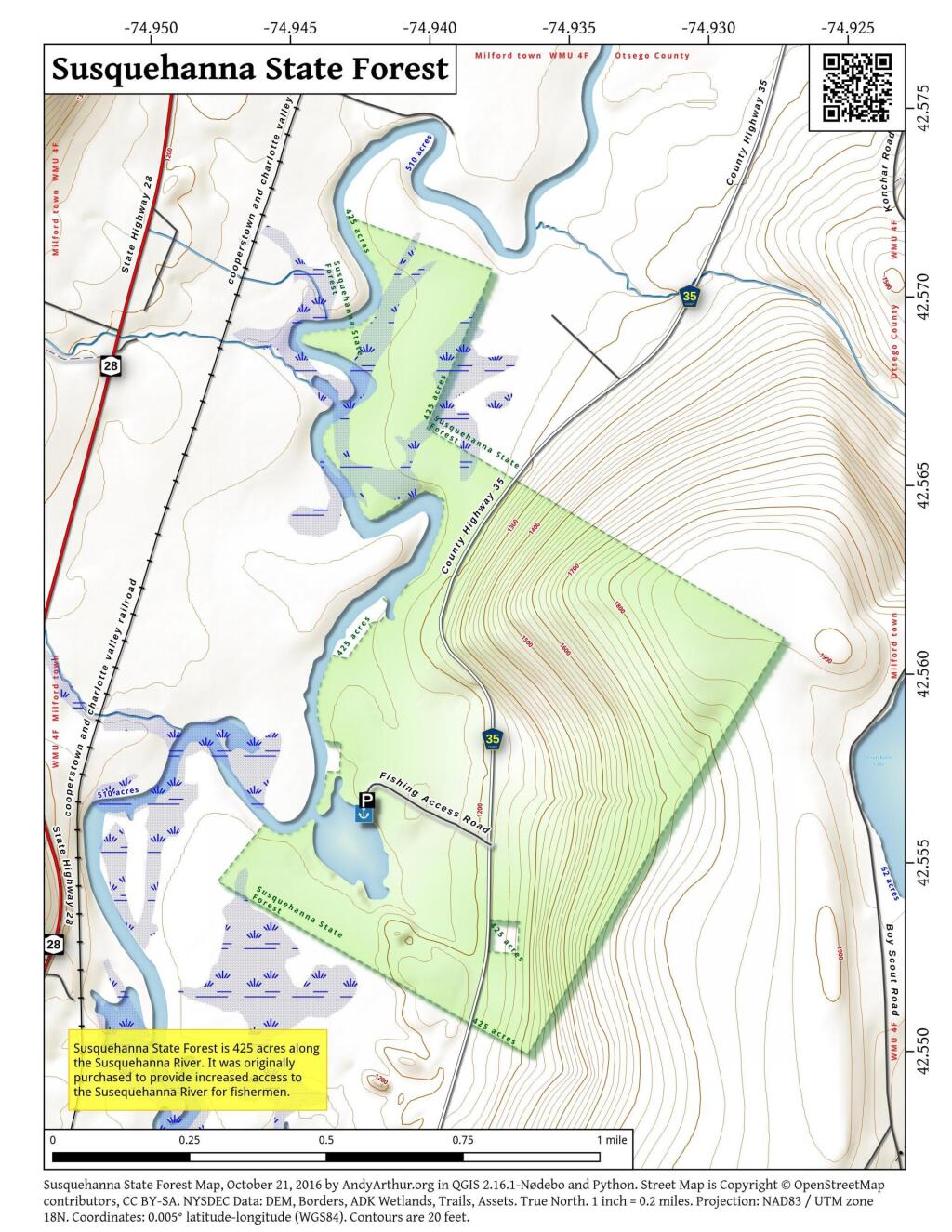
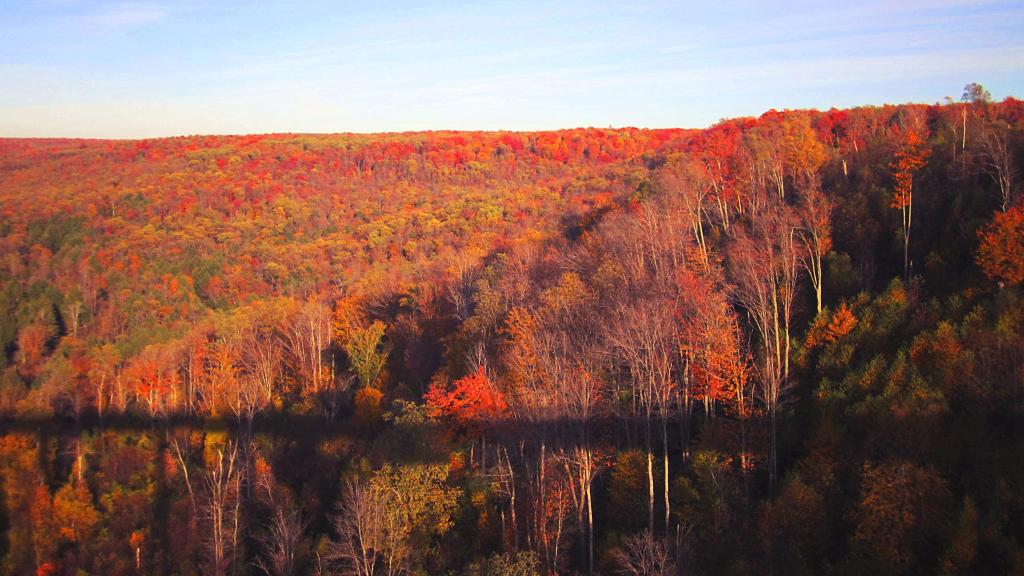
 Susquehanna State Forest

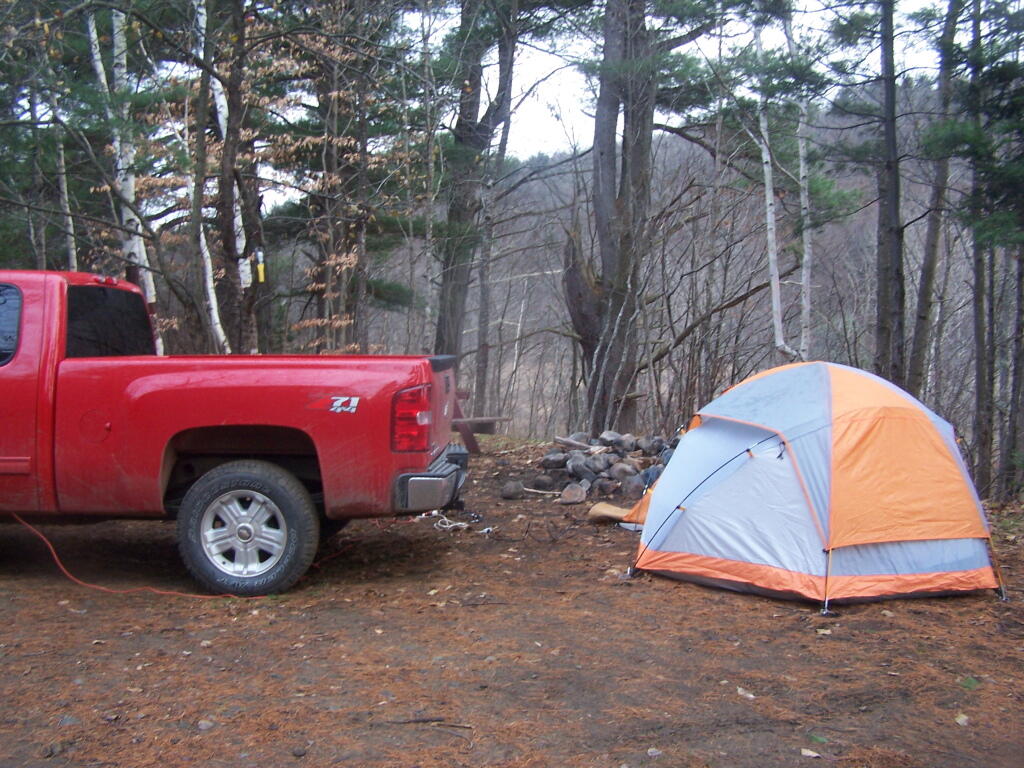
Tent Camping at Foxx Lair

2) South of Arietta Town Line on Piseco-Powley Road

There are 7 campsites along Piseco-Powley Road, north of Stratford, prior to the Arietta Town Line gate, which is near the Potholers on East Canada Creek. This road is well packed dirt, reinforced with gravel up to gate, and should be accessiable year round, minus the snow.

Renters vs Population Density - NY Census Tracts

Very Winter Looking Campsite Along East Canada Creek

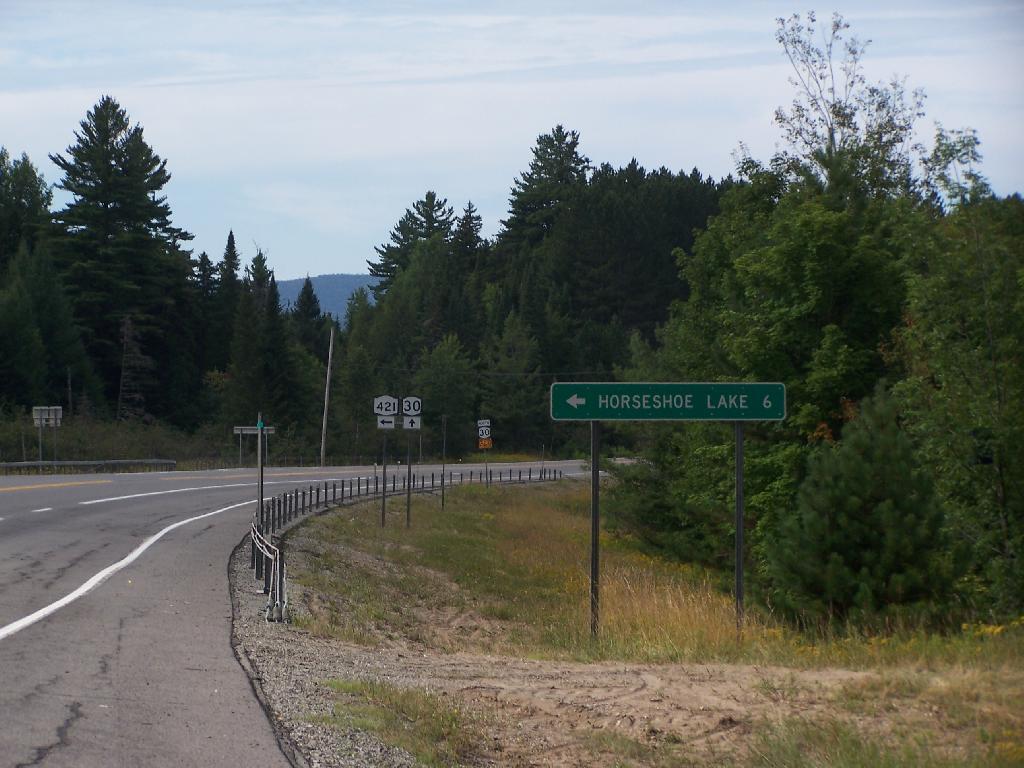
3) NY 421 at Horseshoe Lake

NY 421 is an asphalt road, and there are 4 campsites prior to the gates for Horseshoe Lake Road and Lows Lower Dam Road. These gates will be closed, but the sites along NY 421 before the asphalt runs out should be good as long the snow is off of NY 421..

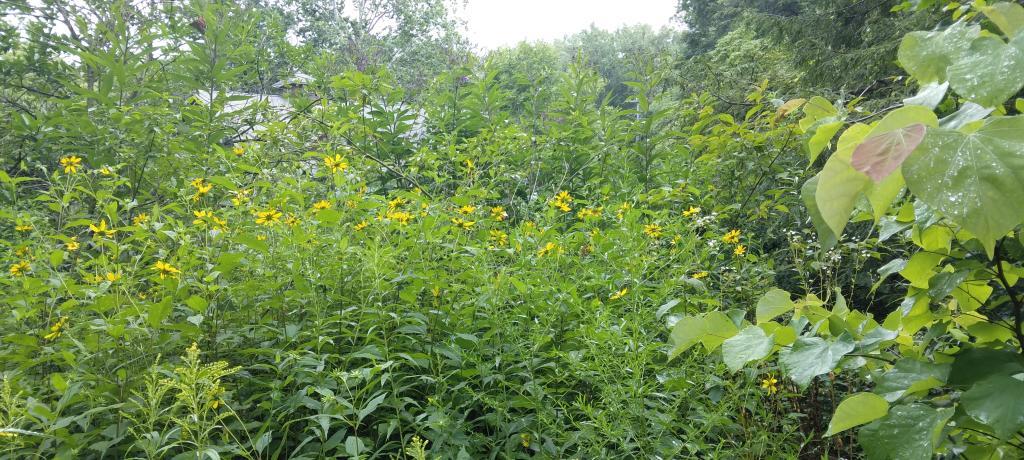
In the Wildflower Gardens

Six Miles to Horseshoe Lake

4) Mountain Pond

Mountain Pond Campsites are on an old routing of NY 30. While now unplowed in the winter, the road is mostly hard asphalt, asphalt chips, and gravel. Many of the campsites are reinforced with gravel, but be careful with some of the sites.

Campsite No 4

5) First Campsite on Wolf Lake Road.

There is a campsite on Wolf Lake Road, right before the parking area and winter road gate for Wolf Lake Road Extension. This campsite is grass, however if it’s relatively dry, snow and mud free, this is possiblity.

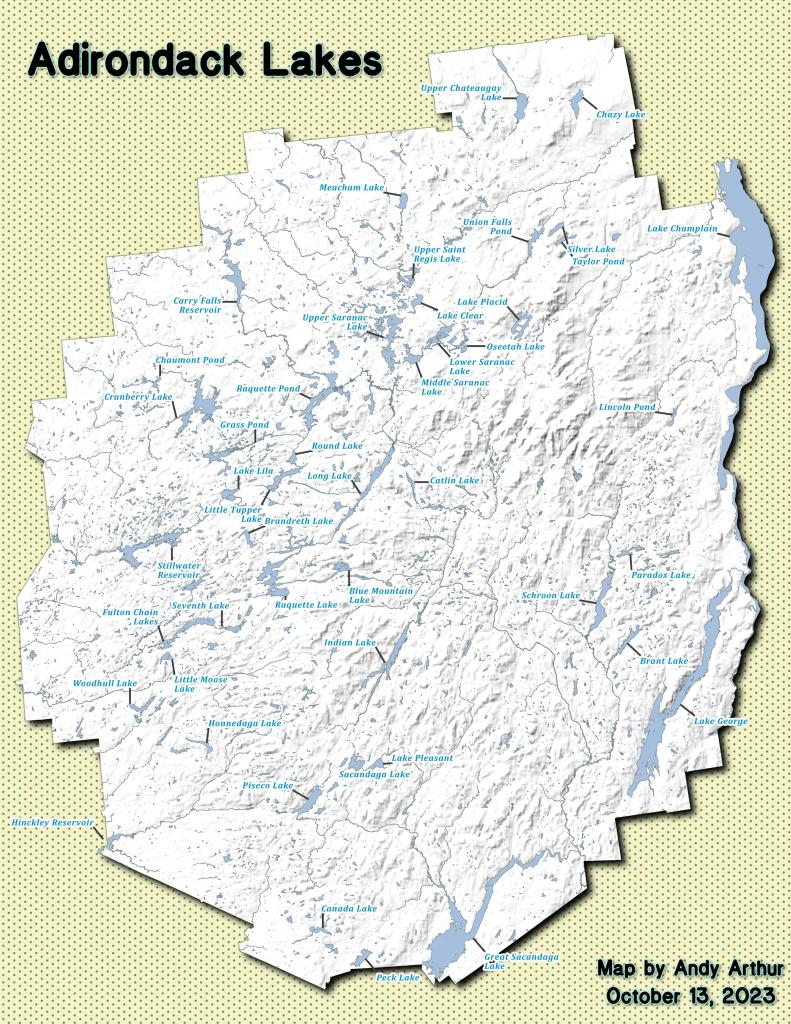
Adirondack Lakes

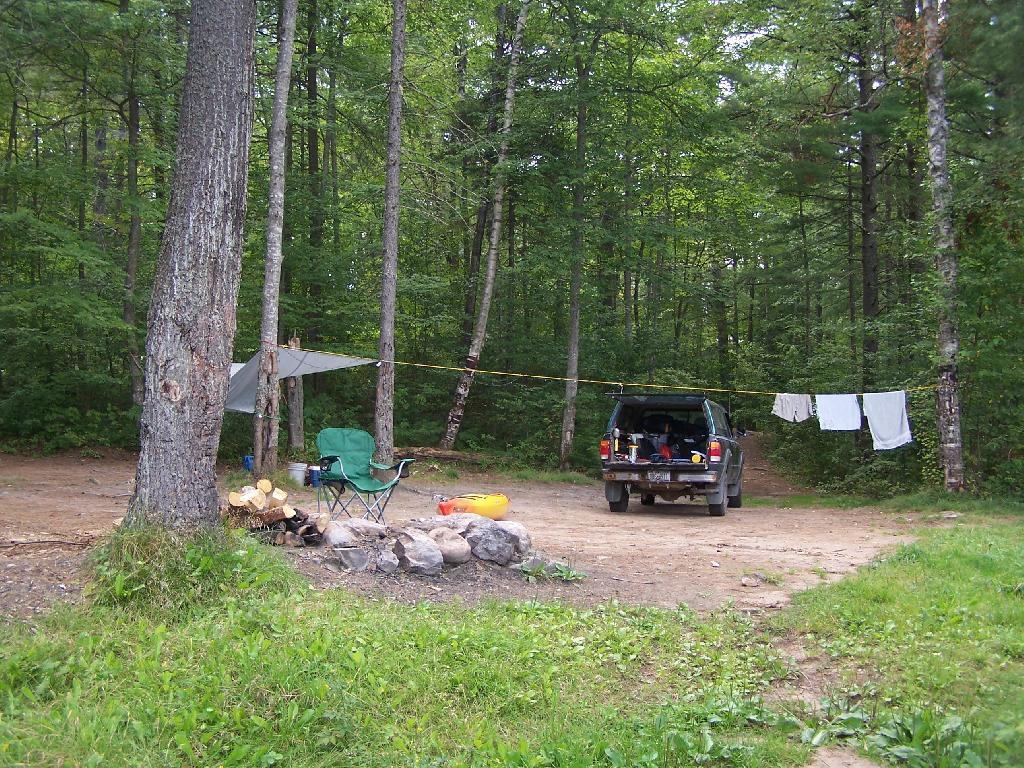
Roadside Campsite

6) Reeds Pond Campsite.

Before the black top runs out, there is a campsite along Reeds Pond, which is nice for it’s solitude, but nearness to a dirt road. The campsite may be muddy, depending on the conditions.

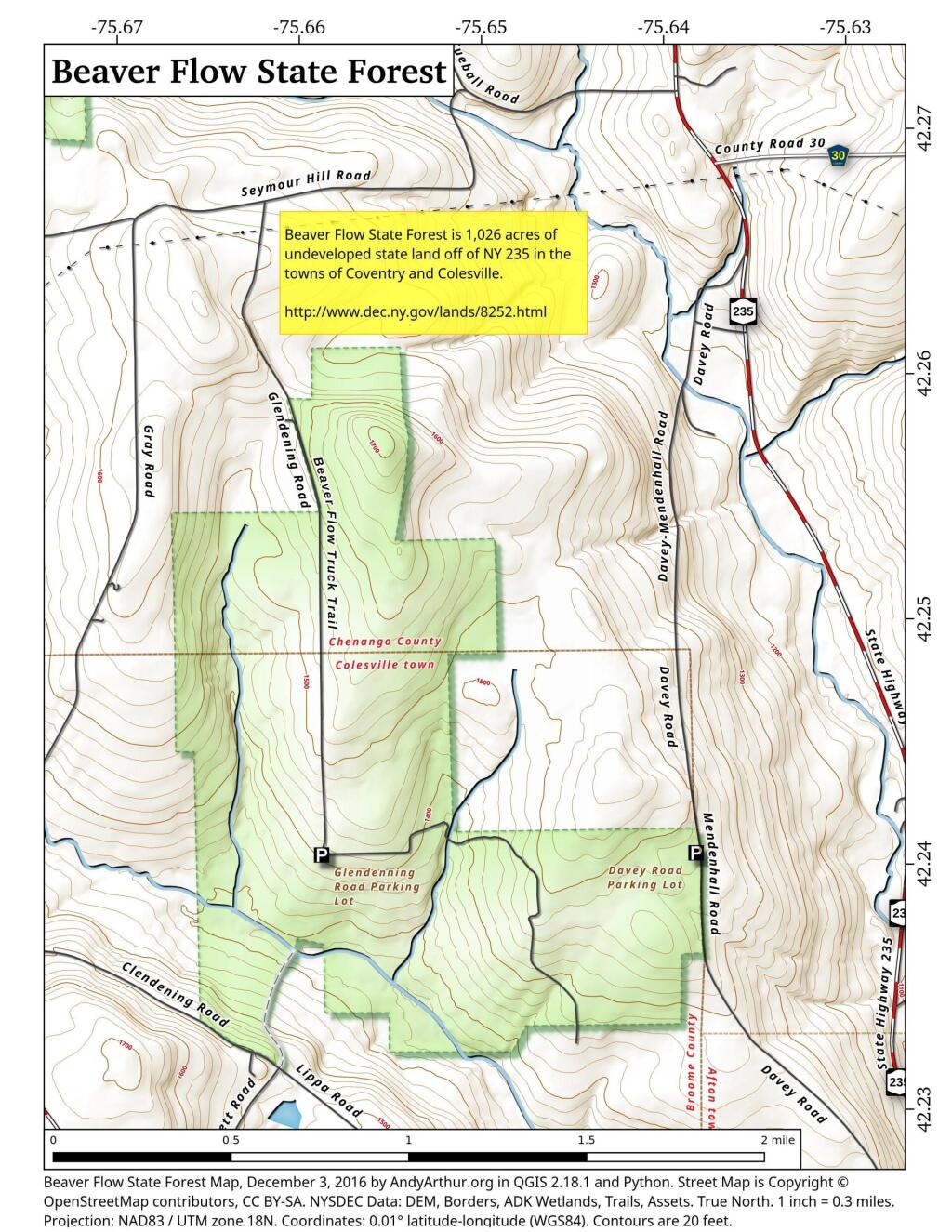
 Beaver Flow State Forest

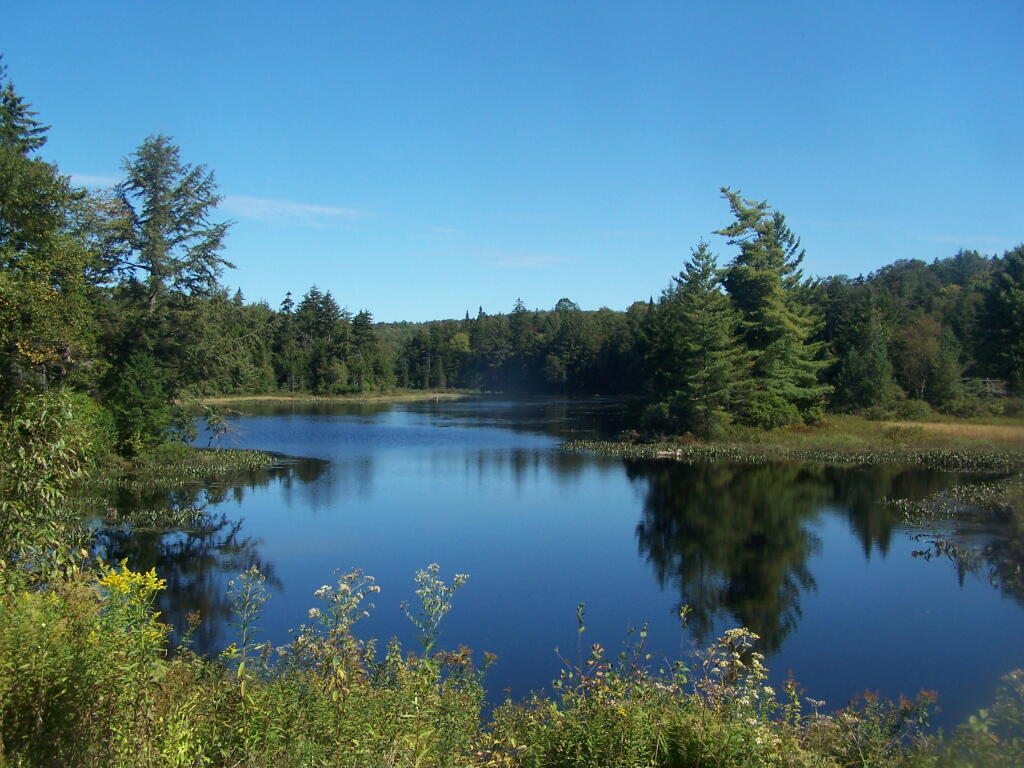
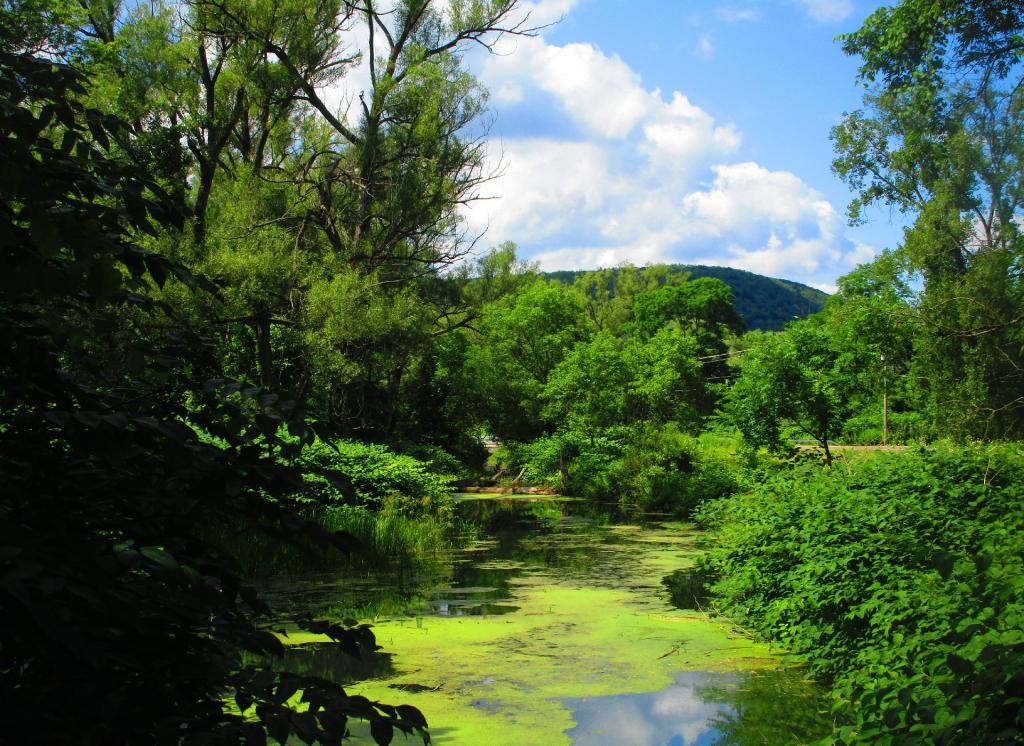
Reeds Pond

How’s Your Luck? Hike to Good Luck Lake or Bad Luck Pond.

In the Adirondack Park there is a Bad Luck Mountain and Bad Luck Pond, along with a Good Luck Mountain and Good Luck Cliffs. I have only been to later, but maybe sometime I will get a chance to visit the much more remote Bad Luck Pond as described by CNY Hiking.

In Good Luck Lake

If you are not feeling particularly lucky, consider visiting Big Bad Luck Pond, off of NY 28, roughly halfway between Northville and Indian Lake. It’s a little too far to carry a kayak back into, but it is a 3 mile hike from the trailhead to the pond, passing over the col of Bell Mountain, and several other small ponds. There are some designated campsites near the lake, and it’s below Bad Luck Mountain.

Old Catharine Creek Canal

Alternatively, if your feeling lucky, consider visiting Good Luck Lake. Located north of Caroga Lake on NY 10, there are 12 paddle-in or hike-to campsites along the lake, which is located below Good Luck Mountain. It is a delightful paddle on in, but if you go, make sure to visit Good Luck Cliffs and Good Luck Mountain above it.

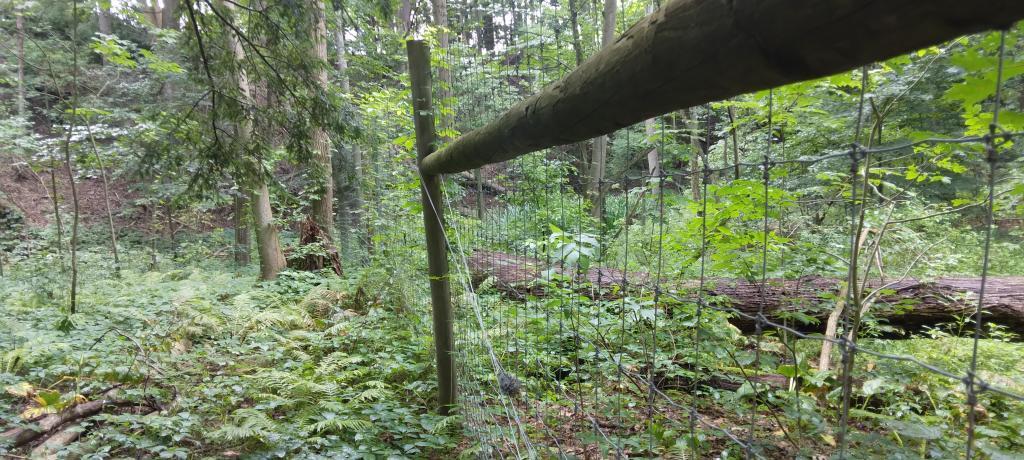
Deer grazed vs deer protected areas in the Wildflower Gardens ?

Edge of the hollow

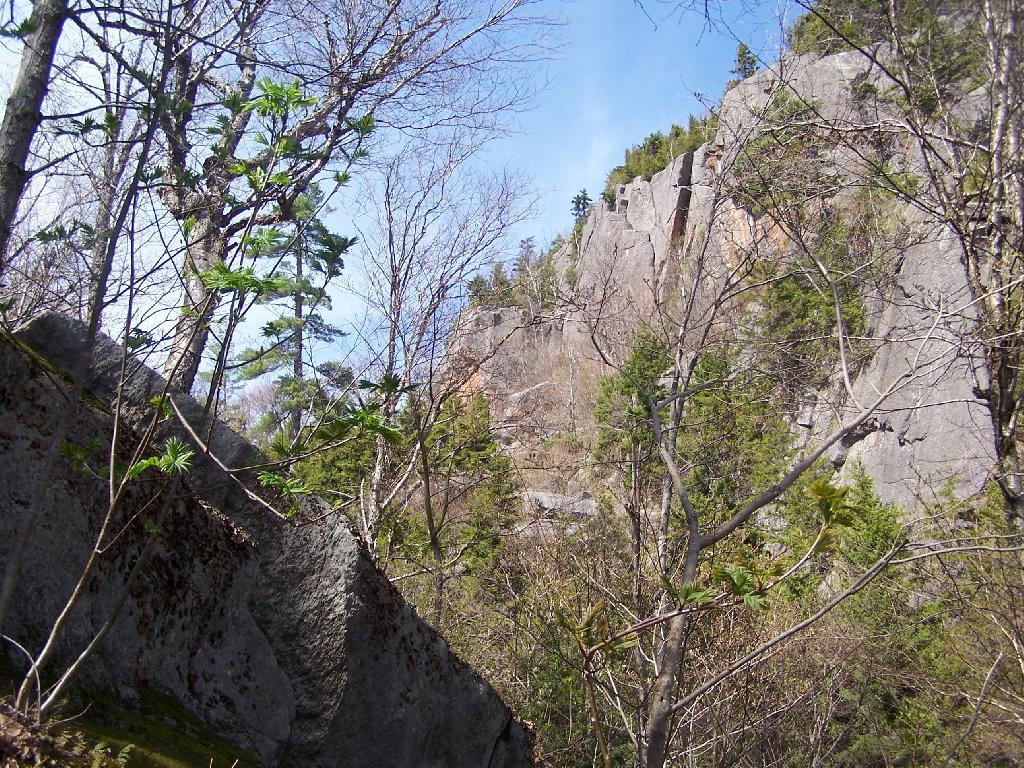
Good Luck Cliffs

How To Make Maps from Redistricting Block Lists

When a city council, county legislature, or state legislature redistricts itself to reflect changing population, they usually release data in two formats:

  1. Census Block Equivalency – A list of census blocks in each district, generated by the commerical GIS program (such as Mapitude) used for redistricting.
  2. Metes and Bounds – A legal description of each district, used in resolving court disputes over district boundaries, and assisting board of elections on where to put voters whose property might be crossed by a Census block

If you planning on making a map, Metes and Bounds won’t be particularly useful. Computers don’t understand english very well, they need numbers and lists. In contrast, the Census Block Equivalency is very useful for mapping things.

Every year, the Census Bureau puts out series of ERSI Shapefiles known as TIGER/Line. You can download TIGER/Line for any state and county in the United States from their website. They provide many different shapefiles and layers such as a Highway, Faces, Edges, and County Subdivision layers, however the one you will be most interested for making district maps is the Tabulation Block (tabblock) layer.

You can use these files in the free program known as Quantum GIS or QGIS. While this tutorial will not explain the ins and outs of QGIS, this should get you started on making redistricting maps.

The Tabulation Block Layer is the file containing all of the Census Blocks for a particular county. A Census Block is the smallest unit of population gathered by Census Block, and consists of all bordering features (bounds) — roads, rivers, shorelines, along with all imaginary lines (metes) — town lines, village lines, other lines drawn for statisitical purposes.

Each Census Block has a number, that is a subdivision of the Census Block, County ID, and State ID that it resides within. For example, the Governor’s Mansion in Albany is located in Census Block 2000 in Census Track 23.00 (zero padded to 002300) in Albany County (Federal Information Processing Standard — FIPS ID: 01) which is in NY State (FIPS ID: 36). County subdivisions are not applied to Census Tract Numbers, as they may in some cases cross county subdivisions, as is the case of smaller districts.

You put those numbers together to get the GEOID — which is the key used for redistricting block lists and most other block-level census data. The Governor’s Mansion is located at a block with a GEOID 360010023002000.

36 001 002300 2000
State ID County ID Zero Padded Census Tract Number Census Block Number

The block list you get from a redistricting commission typically is in Database Exchange Format (.DBF) or Comma Deliminated Format (.CSV) which are both openable by common spreadsheet applications like Microsoft Excel or OpenOffice Spreadsheet and GIS programs like ArcGIS or Quantum GIS.

This is taken from the LATFOR State Senate Proposed Districts (January 2012) DBF file. It shows you that the Governor resides in Proposed Senate District 44. Across the river in Census Block 4010, Census Tract 524.03, in Rensselear County (FIPS ID 83), NY State (FIPS ID: 36) is located in Proposed Senate District 43.

360010023002000 SD44
360010021002008 SD44
360010021002004 SD44
360010021002001 SD44
360830524034017 SD43
360830524034010 SD43

Download the TIGER/line “Tabulation Block” Shpaefile file for the district you are interested in. You will want the 2010 version. You can download a state-wide tabulation block file, however that is not recommended as the next step will be impossibly slow on most computers. You may also want to open the .CSV or .DBF file in your spreadsheet program and cut out the county you want to speed things up.

You will then want to open up the file in Quantum GIS. You will get a nice map of the county you downloaded, showing all of the Census Blocks.

  • From there, go to the Vector -> Join Attributes submenu.
  • Make sure that the Target vector layer matches the Tabulation Block Shapefile you wish to join against, then set Target join field to GEOID10 .
  • Select click Join dbf table and select the DBF or CSV file you wish to join.
  • Change the Join field to BLOCK or whatever the GEOID is titled in your redistricting block file.
  • Enter in a location to save the Output Shapefile
  • Click okay.

Then wait. A typical county will take 10-40 minutes to join on my 5 year old laptop; your computer may be quicker. If you have a dual processor machine, go on to doing other work in other programs. You will end up with a map that looks like this (stylized for your enjoyment). Each block will be assigned a Senate District (in this example).

Halfway there. Now you need to “dissolve” each Census Block into it’s larger political district. Go to Vector -> Geoprocessing Tools -> Dissolve . Set the Input vector layer to the file you previously joined. Then set the Dissolve field to the field containing the district number — such as DISTRICTID or whatever it is named. Enter a name to safe the file. Click Dissolve.

Outputed will be a Shapefile containing all the political districts in the county you joined and dissolved. This will take 5-20 minutes on my laptop. Other data may exist in that file, such as Census Block number, however at this point that data will be invalid, as only the district number is accurately preserved in such a join. All other data will be picked at random, so delete those columns.

I hope this is helpful. If you just want the Proposed State Senate or State Assembly Districts you can download them from Center for Urban Research. These are the same data, joined using the above process by somebody with a much faster computer. I have also made up a Shapefile containing the Albany County Legislative Districts using this process.

Map: Wilcox Lake - Willis Lake Trail
Map: Auger Falls Via Griffin (East Side)